
Imagine stepping into your orchard in late spring, expecting clusters of tiny developing fruits after a spectacular bloom… only to find sparse, misshapen apples, tiny pears, or almost no cherries at all. 😔 This frustrating scenario plagues many home growers, small-scale farmers, and hobby orchardists every year. The culprit? Inadequate pollination — often due to mismatched varieties, low pollinator activity, bad weather timing, or simple planning oversights.
The good news: with the right pollination tips for orchard trees, you can dramatically improve fruit set, increase yields by 20–50% or more in many cases, and enjoy larger, better-quality fruit. Proper cross-pollination ensures more seeds per fruit, which directly correlates to bigger size, better shape, higher calcium content, and longer storage life (as shown in research from institutions like Penn State Extension and Washington State University). In this comprehensive guide, you’ll discover expert, natural strategies to solve common pollination problems and build a thriving, bee-friendly orchard ecosystem. Whether you’re managing a backyard plot or a small farm, these actionable steps — from smart planting layouts to boosting wild bees — will help you harvest the bountiful crops your trees are capable of producing. 🐝 Let’s dive in!
Why Pollination Matters for Orchard Trees 🌟
Pollination is the magical transfer of pollen from the anther (male part) to the stigma (female part) of a flower, triggering fertilization, seed development, and fruit growth. Without sufficient pollination, flowers may drop, or fruit forms poorly — small, lopsided, or absent entirely.
Most orchard trees fall into two categories:
- Self-fruitful (self-fertile): Peaches, nectarines, apricots, tart cherries, and some plums can set fruit using their own pollen. However, even these benefit from cross-pollination for heavier, more consistent yields and better fruit quality.
- Self-sterile (self-unfruitful): Apples, pears, most sweet cherries, and many plums require pollen from a different but compatible variety (cross-pollination).
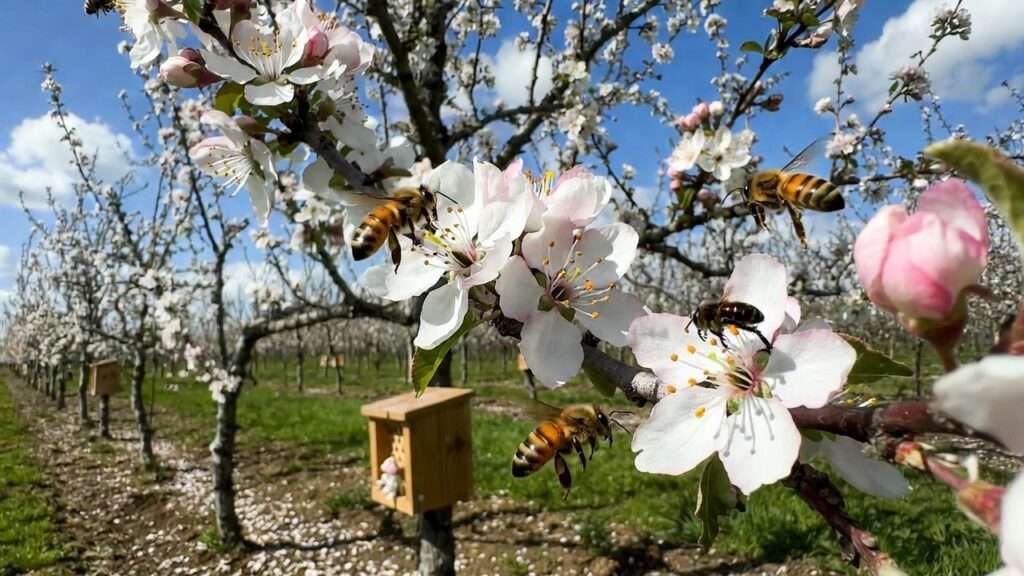
Cross-pollination relies primarily on insects — especially bees — as wind rarely moves pollen effectively between trees. Over 40 species of wild solitary bees (like mining bees, mason bees, and bumblebees) visit orchard blossoms, often outperforming honey bees in efficiency for certain crops. Honey bees remain crucial for larger orchards, but supporting natives creates resilience.
Signs of poor pollination include:
- Low fruit set (few flowers develop into fruit)
- Small, deformed, or seedless fruit
- Premature fruit drop
- Biennial bearing (heavy crop one year, none the next)
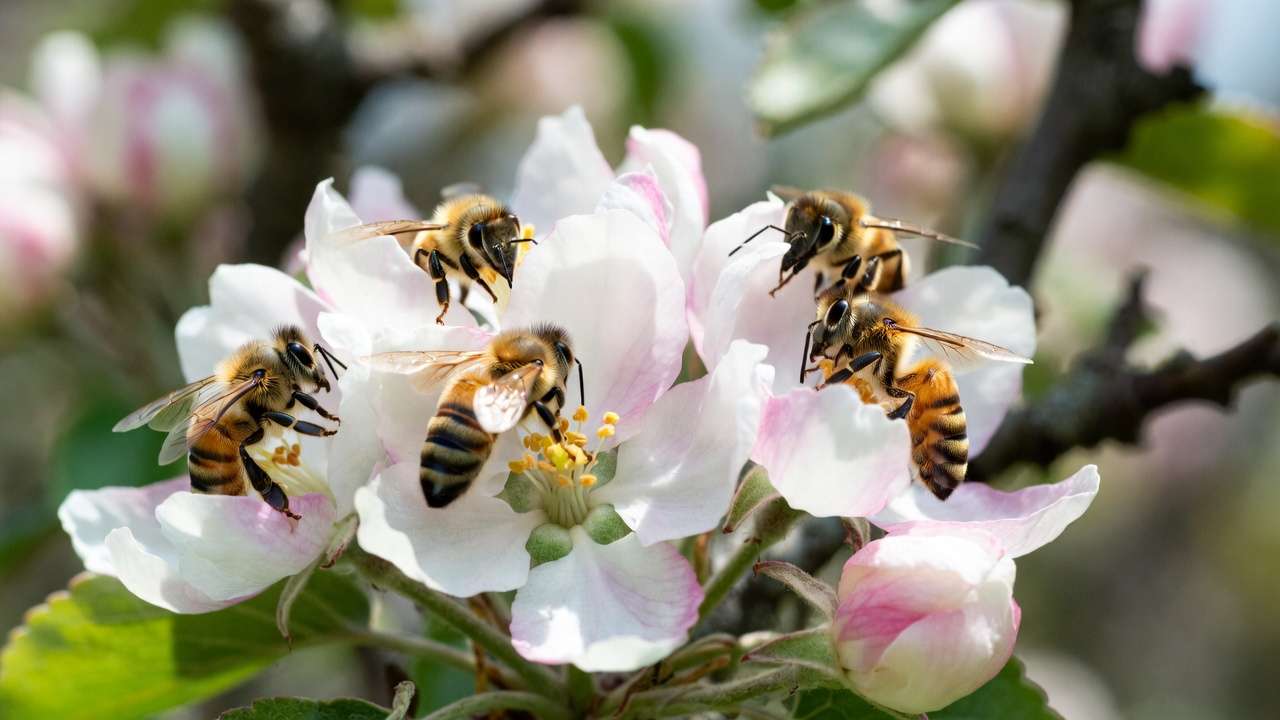
Addressing these naturally boosts not just quantity but quality — think crisp, juicy apples with perfect shape and flavor! 🍏
Understanding Your Orchard’s Pollination Needs 📊
Key Fruit Tree Types and Their Requirements
Here’s a quick reference for common orchard trees:
- Apples 🍏: Nearly all require cross-pollination. Even “self-fruitful” varieties like Golden Delicious produce more reliably with a partner. Triploid varieties (e.g., Jonagold, Mutsu) have sterile pollen and need two fertile pollinizers.
- Pears 🍐: Most are self-unfruitful; cross-pollination is essential. Bloom periods are short, and nectar is less attractive to bees, so plan carefully.
- Sweet Cherries 🍒: Almost all need cross-pollination (exceptions: Stella, Lapins, Sweetheart are self-fertile). Many groups are intersterile (e.g., Bing won’t pollinate Lambert).
- Tart Cherries 🍒: Usually self-fruitful — one tree is enough, but multiples improve yields.
- Stone Fruits (peaches, nectarines, apricots, plums): Often self-fruitful, but cross-pollination enhances size and set, especially in plums and apricots.
Use tools like the Orange Pippin pollination checker for precise variety matches based on bloom groups (1–6 for apples/pears, similar for others).
Bloom Timing & Compatibility Groups
Bloom overlap is critical — pollen must be viable when the receiving flower is receptive (typically 2–4 days per bloom). Apples and pears use flowering groups:
- Group 1 (very early): e.g., Gravenstein
- Group 3–4 (mid): e.g., Honeycrisp, Bartlett
- Group 6 (late): e.g., Granny Smith
Crabapples make excellent universal pollinizers — long-blooming, heavy pollen producers like Manchurian (early–mid), Dolgo, or Snowdrift (mid–late). Plant them every 50–100 feet for best results.
For cherries, check compatibility charts from Oregon State or WSU Extension to avoid intersterile pairs.
Common Pollination Problems & Quick Fixes ⚠️
Many growers face these hurdles — here are solutions backed by extension research:
- No compatible pollinizer nearby: Solution — Add a crabapple row or graft branches of a compatible variety onto existing trees.
- Bloom timing mismatch: Mix early-, mid-, and late-bloom varieties; use multi-variety grafted trees for small spaces.
- Low bee activity (cold <65°F, rain, wind): Protect with windbreaks; use cold-tolerant mason bees; hand-pollinate small orchards.
- Pesticide damage during bloom: Never spray insecticides during bloom; choose bee-safe options and time applications pre- or post-bloom.
- Competing blooms (dandelions, weeds): Mow orchard floor before bloom to direct bees to your trees.
- Declining wild pollinators: Build habitats (more below) — studies show wild bees can suffice in smaller orchards when supported.
Essential Pollination Tips for Orchard Trees: Step-by-Step Guide 🐝
1. Plan Your Planting Layout for Maximum Cross-Pollination
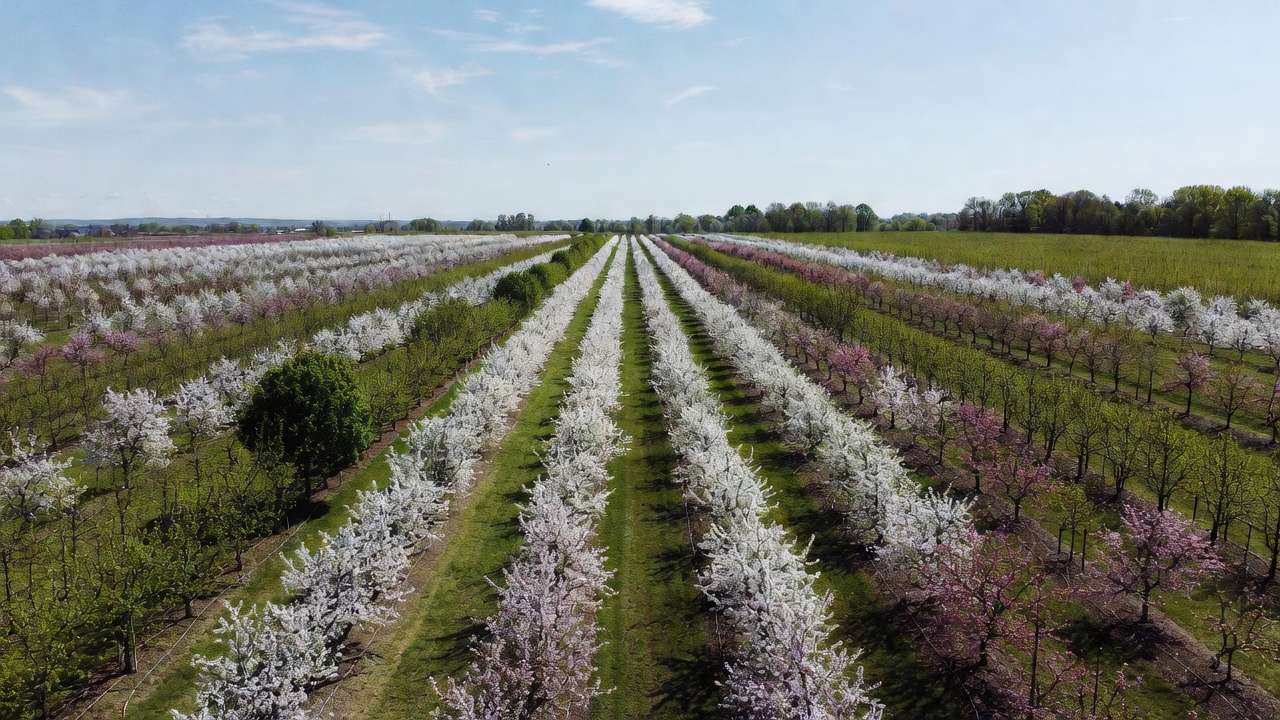
Distance matters: Keep pollinizers within 50–100 feet (closer is better; bees fly short distances efficiently). In rows:
- Plant every 4th tree or row as a pollinizer.
- Stagger offsets for even coverage.
- For high-density/dwarf setups, use slender spindle or pole pollinizers to minimize space loss.
Pro tip: In home orchards, plant 2–3 compatible varieties together — even neighbors’ trees can help if within range!
2. Choose & Plant the Best Pollinizers
Top crabapples for apples:
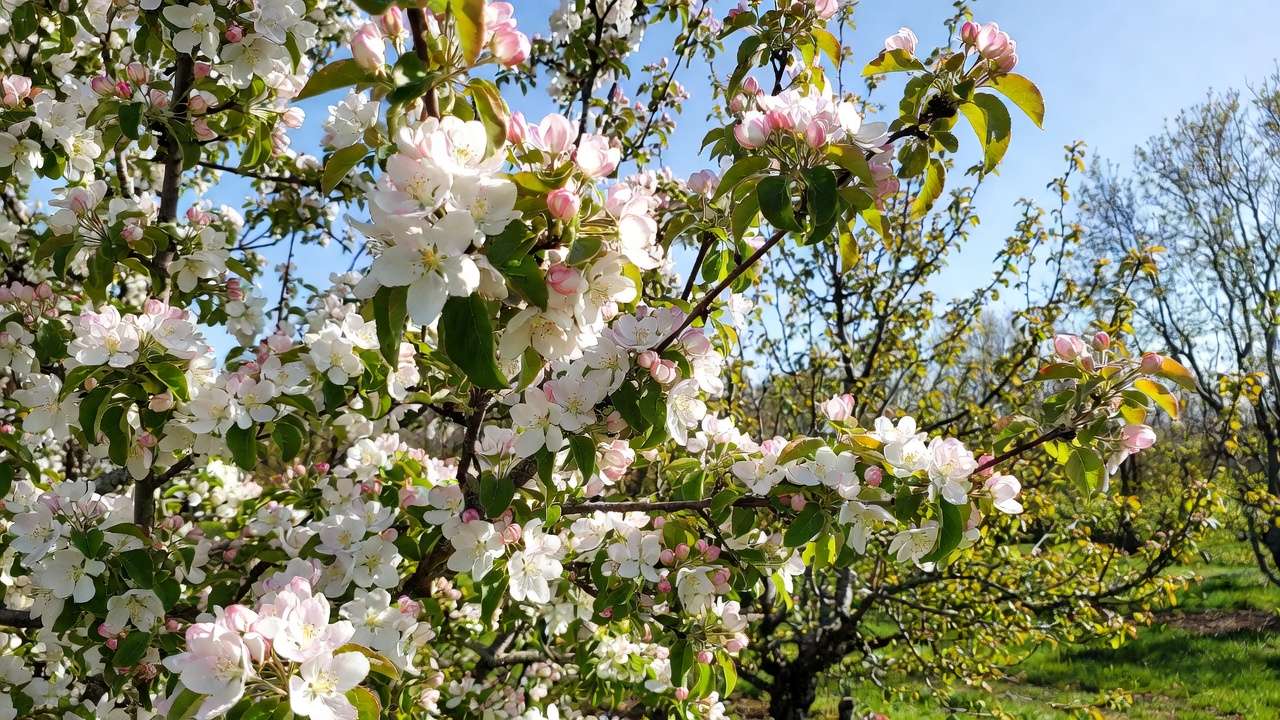
- Manchurian: Profuse white blooms, early–mid.
- Dolgo, Golden Hornet, Snowdrift: Reliable, disease-resistant.
For pears: Use compatible European varieties or hybrids like Summercrisp.
For cherries: Universal like BlackGold or self-fertile Stella as backups.
If your orchard is established, top-work (graft) branches — a cost-effective fix!
3. Boost & Protect Pollinators Naturally
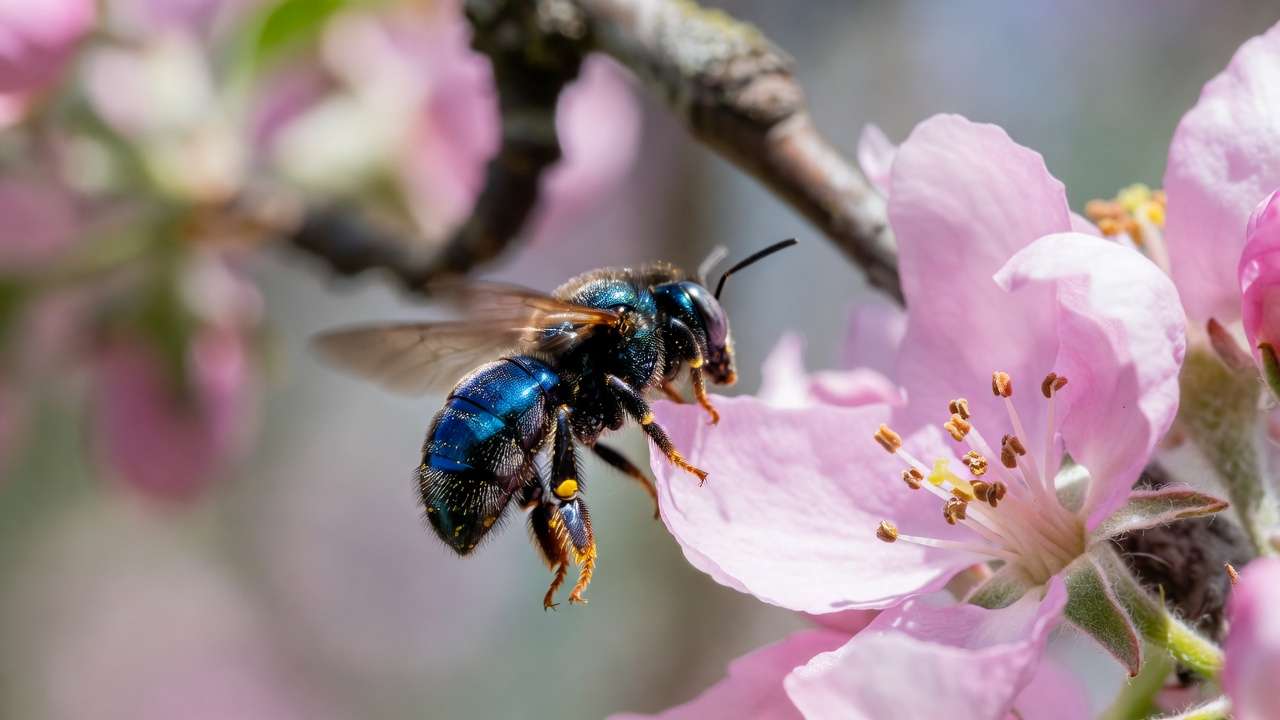
Wild bees (over 40 species in orchards) are super-efficient — blue orchard mason bees pollinate up to 2,000 flowers/day and work in cooler weather than honey bees.
Attract them:
- Install mason bee houses (drilled wood blocks or reed tubes, 5/16″ holes, 4–6″ deep) facing south/east, protected from rain.
- Provide mud sources (bare soil patches) and shallow water dishes with pebbles.
- Plant bee-friendly borders: Early bloomers like crocus, willow; mid like phacelia, borage; late like asters, coneflower.
For honey bees: Rent 1–2 strong hives/acre for apples/pears (2+/acre for pears); place at bloom start, remove after.
Avoid all pesticides during bloom — even “bee-safe” can harm larvae.
4. Support Pollinators During Bloom
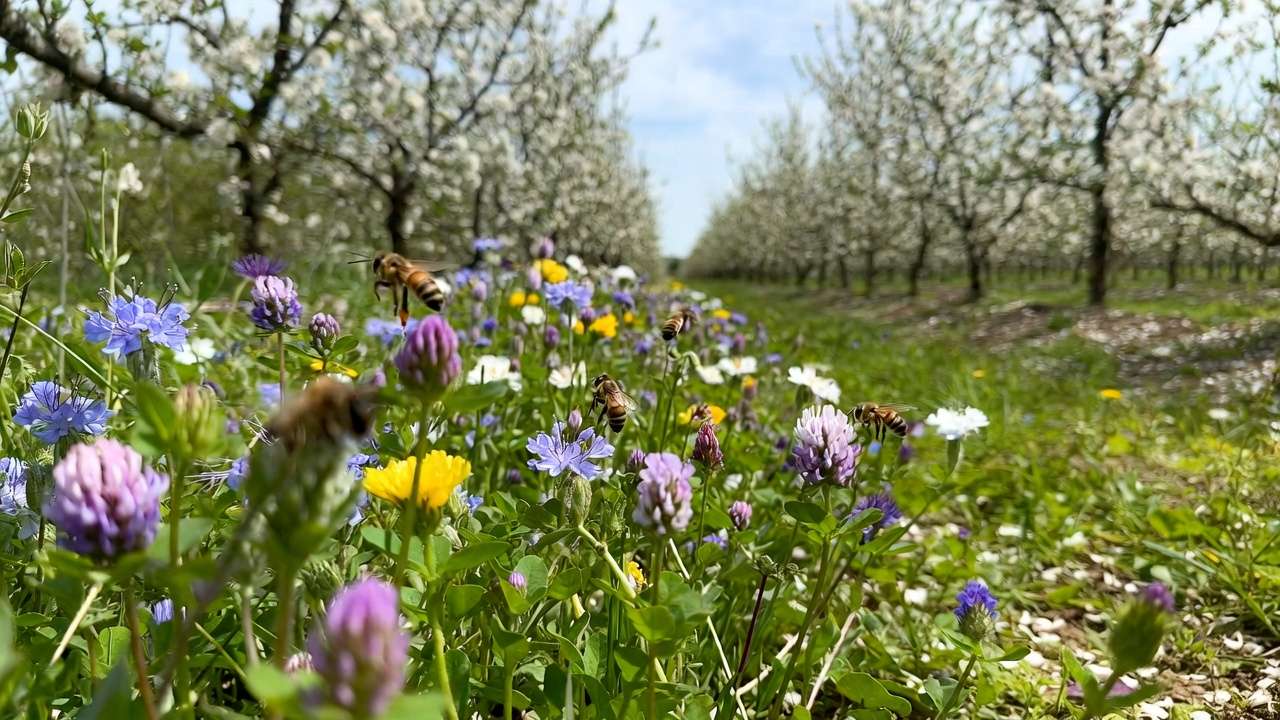
- Remove competing weeds (mow dandelions pre-bloom).
- Plant insectary strips with clover, buckwheat, cosmos around edges.
- Monitor weather: If cold/rainy, consider hand-pollination for small trees (soft brush transferring pollen).
5. Handle Adverse Weather & Emergency Measures
Frost can kill blossoms — use row covers, sprinklers, or fans.
For poor conditions: Hang bouquets of compatible blossoms in water buckets in trees; use pollen inserts/sprays (advanced).
Advanced Tips from Orchard Experts 💡
- Seed count matters: Aim for 6–10 well-developed seeds per apple for optimal size/calcium (per Massachusetts research).
- Organic resilience: Diverse habitats reduce pest pressure and support beneficial insects.
- Track success: Count fruit set % (target 80%+ for commercial yields); observe bee visits.
- Case example: Penn State studies show wild bees alone can achieve good set in smaller orchards with habitat support.
Frequently Asked Questions (FAQs) ❓
Do all fruit trees need cross-pollination? No — many stone fruits are self-fruitful, but cross boosts yields.
How many beehives per acre? 1–2 for most; 2+ for pears; strong colonies (50,000+ bees) cover more in ideal conditions.
Can I hand-pollinate my trees? Yes! Use a soft brush on small orchards during dry, calm mornings.
What’s the best pollinizer for Honeycrisp? Crabapples like Manchurian or compatible mid-bloom apples (check charts).
How do I attract mason bees? Provide nesting tubes, mud, and early blooms — they often colonize naturally!
Conclusion: Transform Your Orchard This Season 🌳
By following these pollination tips for orchard trees — planning compatible layouts, choosing reliable pollinizers, and nurturing a bee-friendly environment — you’ll overcome common barriers and unlock your orchard’s full potential. Start small: Add one crabapple this year or install a mason bee house. Soon, you’ll enjoy heavier, tastier harvests while supporting vital pollinators. Your trees (and the bees) will thank you! 🍏🐝 Happy growing!











