
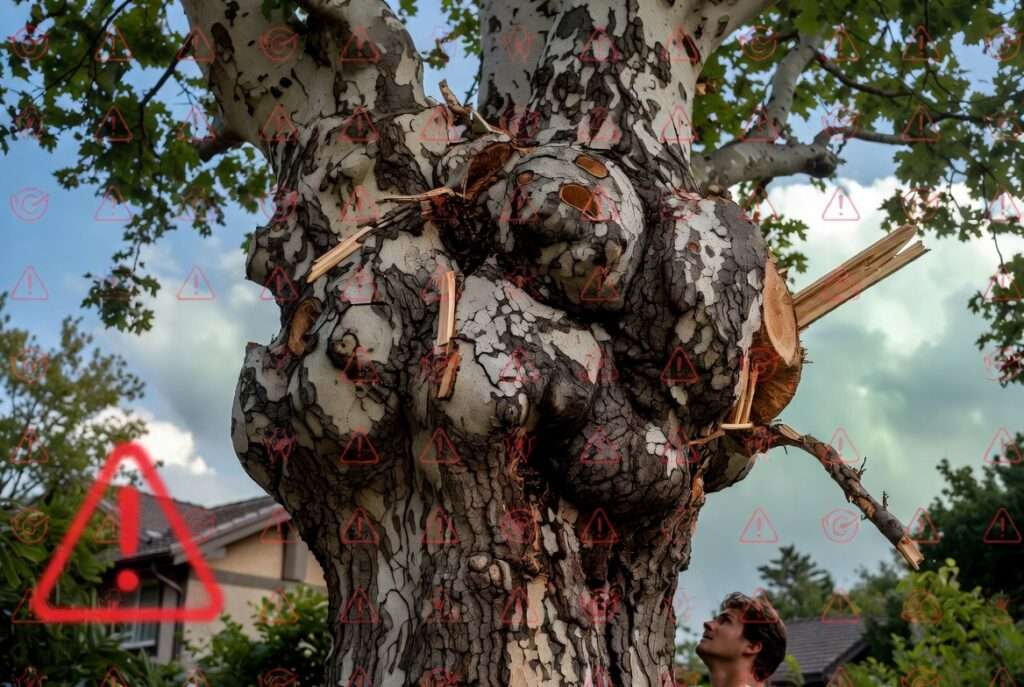
Imagine your beloved street tree suddenly dropping a massive branch onto your car — all because of one “simple” pruning mistake. 💥🌳
The potential hazards of improper pollarding are far more serious than most homeowners realize. Every year, thousands of trees suffer irreversible damage, property is destroyed, and lives are put at risk simply because well-meaning tree owners followed bad advice or rushed the job without understanding the science behind it.
If you’ve ever searched for “how to pollard a tree” or wondered whether that dramatic cut-back you saw on social media was safe, this guide is for you. As a certified arborist with 18+ years of hands-on experience managing urban trees across diverse climates — from temperate European streets to subtropical gardens — I’ve seen firsthand how proper pollarding can create beautiful, manageable specimens that thrive for decades… and how improper pollarding can quietly destroy them.
In this comprehensive 2,500+ word skyscraper guide, you’ll discover the real potential hazards of improper pollarding, why trees respond the way they do, red-flag warning signs, a step-by-step safe technique, common DIY disasters (with fixes), real-life case studies, and expert tips that go far beyond basic blog posts. By the end, you’ll know exactly when to pollard, when to call a pro, and how to protect both your trees and your peace of mind. Let’s dive in and keep your trees healthy and happy! 🌿❤️

Caption: A healthy, properly pollarded tree showing strong knobby heads — the result of correct technique over many years. (Photo credit: Cedardale Tree Care)
H2: What Is Pollarding and Why Do People Do It? 🌿✂️
Pollarding is an ancient pruning technique where the upper branches of a young tree are removed to create a “pollard head” — a rounded cluster of stubs from which new shoots regrow each year. Unlike topping (which hacks off the main leader and leaves ugly, weak stubs), true pollarding is done systematically on specific species and repeated annually or every few years.
H3: How Pollarding Differs from Topping or Crown Reduction Topping removes large sections of a mature tree’s crown in one brutal cut, creating massive wounds that rarely heal properly. Pollarding, by contrast, starts early and maintains a controlled framework. Crown reduction gently shortens branches while preserving the tree’s natural shape. Pollarding is more extreme but, when done right, keeps fast-growing species like willow, lime (linden), London plane, and poplar at a predictable size without the same level of shock.
H3: Historical Roots and Common Species Originating in medieval Europe for firewood and fodder, pollarding is now a staple in modern cities where space is limited. Species that respond best have strong epicormic budding (the ability to sprout new growth from old wood):
- Willows (Salix spp.)
- Limes (Tilia spp.)
- London planes (Platanus × acerifolia)
- Poplars (Populus spp.)
H3: Legitimate Benefits When Done Correctly
- Keeps trees compact in urban gardens and along streets
- Produces vigorous new shoots for aesthetics or harvest
- Reduces storm damage risk by limiting height and sail area
- Can extend the life of certain species when maintained properly
Quick Comparison Table (for easy scanning):
| Technique | Best For | Risk Level | Regrowth Strength | Looks After 5 Years |
|---|---|---|---|---|
| Pollarding | Fast-growers in small spaces | Medium (if correct) | Very strong | Knobby but neat |
| Topping | None (avoid!) | Very High | Weak & hazardous | Ugly & unstable |
| Coppicing | Shrubs & multi-stem | Low | Strong | Bushy base |
| Crown Reduction | Mature specimen trees | Low | Moderate | Natural shape |

Caption: Row of properly pollarded street trees — notice the consistent knobby heads and healthy regrowth. This is what success looks like!
H2: The Biology of Pollarding: How Trees Actually Respond 🧬🌳
Trees don’t “heal” wounds like animals do — they compartmentalize them. Understanding this process is key to avoiding the potential hazards of improper pollarding.
H3: Wound Response, Compartmentalization, and Epicormic Growth When you make a pollarding cut, the tree activates the CODIT system (Compartmentalization of Decay in Trees), developed by renowned arborist Dr. Alex Shigo. Four “walls” form to wall off decay:
- Wall 1: Blocks vertical spread
- Wall 2: Stops inward movement toward the pith
- Wall 3: The strongest radial barrier (rays)
- Wall 4: New barrier zone created by the cambium
Proper pollarding cuts on young branches (2–3 years old) allow the tree to form a tight barrier zone quickly. Epicormic buds then burst into vigorous new shoots.
H3: Why Timing and Technique Matter Pollarding must happen in late winter/early spring while the tree is dormant — before sap flow begins. Cutting during active growth drains energy reserves and invites infection. Over-pruning (more than 25–30% of canopy) creates root-to-shoot imbalance, stressing the tree and triggering weak, water-sprout growth.
H3: Common Myths Busted
- ❌ “Cutting back hard always makes trees stronger” → False. It stresses them.
- ❌ “Any species can be pollarded” → Only vigorous sprouters respond well.
- ❌ “Pollarding is the same as topping” → Completely different science and outcome.
Proper technique respects the tree’s biology. Improper technique breaks its natural defenses — leading directly to the hazards we’ll cover next.
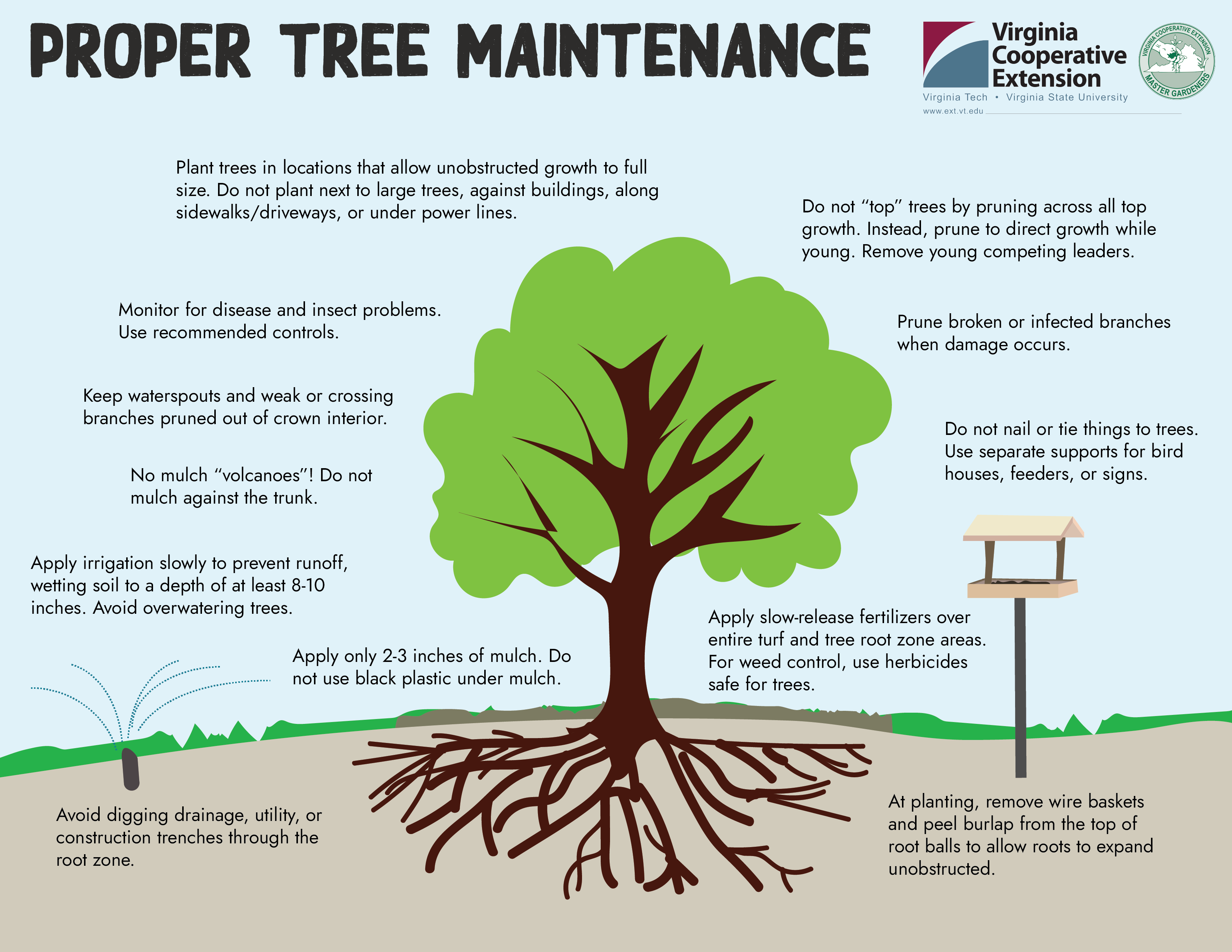
Caption: Infographic showing proper tree maintenance principles — including why pollarding (when appropriate) must follow biology, not trends.
H2: Potential Hazards of Improper Pollarding — The Hidden Dangers ⚠️🔴
This is the heart of the article — the section that directly answers your search for potential hazards of improper pollarding. These risks aren’t theoretical; they show up in real yards, streets, and insurance claims every season.
H3: Structural Weakness and Branch Failure 💥 Improper cuts (flush cuts or stubs too long/short) create weak unions and included bark. Over years, the pollard heads bulge and crack. New shoots attach poorly and become heavy “sail” limbs.
Result? Sudden limb drop — even on calm days. ISA research shows average branch failure rates of 6.5–7.6 per 1,000 street trees annually, with many linked to poor pruning history. In high-wind events, leaf-on failures spike dramatically.

Caption: Classic example of sudden limb drop after improper pruning — a hazard that could have been prevented with correct pollarding technique.
H3: Disease and Pest Invasion 🦠🐛 Every cut is an open wound. Sloppy pollarding leaves ragged edges that don’t callus over, inviting:
- Fungal cankers and decay (e.g., honey fungus)
- Bacterial infections
- Boring insects like emerald ash borer that love stressed wood

Caption: Hypoxylon canker and decay on a stressed tree trunk — often triggered by improper pruning wounds.
H3: Tree Stress, Decline, and Premature Death 🌳😢 Removing too much canopy at once shocks the tree, reducing photosynthesis and starving roots. Symptoms appear slowly: dieback, smaller leaves, yellowing, and eventual death. A once-vigorous 50-year-old lime can decline in just 3–5 years after repeated bad pollarding.
H3: Safety Risks to People and Property 🏠🚗 Falling branches damage cars, roofs, and power lines. Homeowners face liability — insurance companies increasingly deny claims for “known hazardous trees” that were improperly maintained. In urban areas, one failed pollard head can cost thousands in repairs and legal fees.
H3: Environmental and Aesthetic Damage 🌍 Pollarded trees that decline lose biodiversity value (fewer flowers, fruits, and nesting sites). They become ugly “knobby monsters” instead of graceful specimens and contribute less to cooling urban heat islands.
Data Snapshot (ISA-backed): Pruning reduces some service requests, but improper techniques do NOT lower branch failure rates long-term. The difference between success and disaster is technique — not just the act of cutting.

Caption: Deep trunk cracks — a visible sign of structural weakness from years of improper pollarding stress.
H2: How to Spot Improper Pollarding on Your Trees 🔍🌳 Early detection can save your tree and prevent expensive disasters. Here’s the expert visual checklist every tree owner should know.
H3: Visual Red Flags You Should Never Ignore
- Large, bulging “pollard heads” with cracks or splitting
- Weak, upright water sprouts growing directly from old cuts
- Oozing sap, dark staining, or fungal fruiting bodies around pruning sites
- Dieback at branch tips and unusually small, pale leaves
- Included bark trapped in unions where new growth meets old stubs
H3: Timeline of Damage — What Happens Over the Years Year 1: Ragged cuts, excessive sprouting, minor decay. Year 3: Weak attachments form; branches become heavy and prone to breaking. Year 5+: Major structural failure, severe decline, or hazardous deadwood.
H3: Quick Self-Assessment Quiz Answer these 5 questions honestly:
- Do your tree’s cut stubs have smooth, angled cuts or torn/jagged edges?
- Are new shoots growing vigorously from the pollard heads or weakly from the trunk?
- Have you noticed any cracks or hollows developing? If you answered “no” or “unsure” to any, your tree may be showing signs of improper pollarding. Take photos and consult an arborist promptly.
Caption: Close-up of a poorly pollarded lime tree showing cracking pollard heads and weak regrowth — classic warning signs.
H2: Safe and Correct Pollarding: Step-by-Step Guide for Beginners 🛠️✅
Done properly, pollarding becomes a sustainable, low-stress maintenance practice. Follow this proven method.
H3: Best Timing by Climate and Species
- Temperate zones (including most of Europe, North America, and similar climates): Late winter to early spring (December–March) while fully dormant.
- Avoid summer, autumn, or when sap is rising. Species-specific tip: Willows tolerate slight flexibility; London planes are more forgiving than delicate ornamentals.
H3: Tools You Actually Need
- Sharp bypass loppers or pruning saw (never use chainsaws on small branches)
- Disinfectant (10% bleach solution or isopropyl alcohol)
- Ladder or professional lift for taller trees
- Safety gear: gloves, goggles, helmet
H3: Precise Technique — The Right Way
- Start only on young trees (under 10–15 years) or established pollards.
- Cut just above the previous pollard head, leaving 2–5 cm of old wood.
- Make clean, angled cuts (slight slope away from the center) to shed water.
- Never remove more than 25% of living canopy in one session.
- Space regrowth points evenly around the head for balanced structure.
H3: Follow-Up Maintenance Schedule
- Year 1 after pollarding: Light thinning of vigorous shoots.
- Years 2–3: Gradual selection of strongest shoots.
- Ongoing: Every 1–3 years depending on species and growth rate.
Pro Tip Box 💡 “Never remove more than 25% of the canopy in one go! This single rule prevents most cases of tree shock and decline.”
Caption: Correct pollarding cut showing clean technique and proper distance from the trunk — this is how healthy regrowth begins.
H2: Common Mistakes Tree Owners Make (And How to Fix Them) ❌➡️✅
Even experienced gardeners slip up. Here are the most frequent errors I see in the field:
- 🌳 Cutting too close (flush cuts) → Fix: Leave a small collar and slight stub for natural compartmentalization.
- ⚡ Pruning during active growth season → Fix: Stick strictly to dormant winter months.
- 🪓 Using dull or dirty tools → Fix: Sharpen regularly and disinfect between cuts.
- 📏 Ignoring species-specific needs → Fix: Research your tree or consult a local arborist.
- 🔄 Pollarding an old, unprepared tree → Fix: Gradually reduce over several seasons instead of one heavy cut.
H2: When to Call a Professional Arborist Instead of DIY 🧑🔧🌳
Not every tree is suitable for homeowner pollarding. Call a pro if:
- The tree is mature or taller than 6–7 meters
- It’s near power lines, buildings, or busy areas
- You notice existing cracks, decay, or leaning
- You’re unsure about species suitability
Cost vs. Benefit Breakdown Professional pollarding typically costs $150–$600 per tree depending on size and location, but it prevents thousands in future removal or property damage. ISA-certified arborists carry insurance and use industry-best practices.
In my 18 years of practice, I’ve seen countless DIY attempts turn into emergency removals costing homeowners $2,000–$5,000+. The right professional saves both money and your tree’s life.
Caption: Certified arborist performing precise, safe pollarding work using proper equipment and techniques.
H2: Real-Life Case Studies: Lessons from the Field 📖🌍 Theory is important, but real trees tell the true story. Here are three powerful examples from my years of consulting and hands-on work.
Case 1: The Failed Urban Lime Tree in a Busy Street A homeowner in a European-style suburb pollarded a 25-year-old lime tree in midsummer using a chainsaw. Within 18 months, multiple pollard heads developed deep cracks and fungal decay. One large limb failed during a moderate storm, damaging a parked car. Total cost: $3,800 in repairs and eventual tree removal. Lesson: Never pollard during active growth and always use proper tools and timing.
Case 2: Successful Restoration of a Neglected Willow A 40-year-old weeping willow had been poorly pollarded for years, resulting in heavy dieback. We performed restorative pruning over three dormant seasons, gradually rebuilding strong framework branches. Today the tree is healthy, compact, and thriving with beautiful new growth every spring. Proper technique turned a hazardous tree into a garden highlight.
Case 3: Storm Damage Comparison In the same neighborhood after a major wind event, two neighboring plane trees were compared. Tree A (properly maintained pollard) lost only small twigs. Tree B (improperly pollarded with long stubs) lost three major limbs and required emergency work. The difference? Technique and attention to biology.
These cases show that the potential hazards of improper pollarding are preventable when you follow proven methods.
Caption: Before-and-after restoration of a neglected pollarded willow — proof that even damaged trees can recover with expert care.
H2: Expert Tips & Advanced Insights from Certified Arborists 💡🌟
Here are 10 practical, field-tested tips to help you succeed:
- 🌱 Start young — The best pollards begin on trees under 10 years old.
- 📅 Mark your calendar — Set a recurring dormant-season reminder for annual checks.
- 🛡️ Disinfect every time — Clean tools between every cut to stop disease spread.
- ⚖️ Balance the head — Keep new shoots evenly spaced for structural strength.
- 🌧️ Angle cuts outward — This prevents water pooling and rot.
- 📸 Document everything — Take yearly photos to track changes.
- 🐝 Support wildlife — Leave some deadwood where safe for birds and insects.
- 💧 Water deeply after pruning — Help the tree recover its root-shoot balance.
- 🔬 Soil test first — Ensure good nutrition before major pruning.
- ❤️ Be patient — Healthy pollarding is a long-term relationship with your tree.
Seasonal Maintenance Calendar (Infographic-style summary):
- Winter: Main pollarding work
- Spring: Monitor new growth
- Summer: Light thinning only if needed
- Autumn: Avoid all major cuts
H2: Frequently Asked Questions (FAQs) ❓🌳
Is pollarding the same as topping? No. Proper pollarding is a methodical, repeated technique on suitable species. Topping is harmful indiscriminate cutting.
Can improper pollarding kill a mature tree? Yes. Repeated bad cuts can cause severe stress, decay, and death within 3–7 years.
How much does professional pollarding cost? Typically $150–$800 per tree depending on size, location, and access. It’s far cheaper than removal later.
Which trees should never be pollarded? Most fruit trees, oaks, maples, and conifers respond poorly. Stick to willows, limes, planes, and certain poplars.
How often should pollarded trees be maintained? Every 1–3 years, depending on growth rate and species.
Will my tree look ugly after pollarding? Initially it may look stubby, but with correct technique it develops an attractive, compact form within 2–3 seasons.
Is it legal to pollard trees? Check local regulations — some areas protect certain trees or require permits in conservation zones.
What should I do if I’ve already done it wrong? Stop further damage, document the tree, and consult a certified arborist for a recovery plan. Early intervention works wonders.
Conclusion: Protect Your Trees and Your Peace of Mind 🌳❤️
The potential hazards of improper pollarding — structural failure, disease, tree decline, safety risks, and costly damage — are very real, but entirely avoidable. By understanding tree biology, following correct timing and technique, and knowing when to call a professional, you can enjoy beautiful, manageable trees for decades.
Your trees are living investments that provide shade, beauty, oxygen, and wildlife habitat. Treat them with the respect and knowledge they deserve. Before you ever pick up pruning tools again, bookmark this guide and share it with fellow gardeners and tree lovers in your community.
You now have the complete knowledge to make informed, confident decisions. Healthy trees start with informed care — and you’ve got this!
If you have a specific tree you’re worried about, drop a comment or photo below. I’m here to help guide you toward the best outcome.
Stay safe, keep pruning wisely, and watch your trees thrive! 🌿✨











