Have you ever brought home a lush, cascading beauty from the nursery, only to watch it slowly transform into two lonely, stringy vines with miles of bare stem? If so, you are definitely not alone. The pothos plant (Epipremnum aureum) is famously marketed as the ultimate “unkillable” houseplant, perfect for beginners and dark corners alike. But there is a massive difference between a plant that is merely surviving and a plant that is vigorously thriving.
When a pothos is stressed or under-resourced, it enters a survival state known as etiolation, sacrificing fullness and leaf size just to keep growing toward the nearest light source. As experienced horticulturists and houseplant specialists who have diagnosed and rehabilitated hundreds of struggling indoor plants, we see the same handful of environmental and structural errors repeatedly stunting these resilient vines.
In this comprehensive guide, we are breaking down the exact biological mistakes stunting your plant and providing actionable, science-backed steps to encourage massive, bushy, show-stopping growth. Let’s transform those sad, leggy strings back into a lush indoor jungle. 🌿
🛑 Mistake #1: The “Low Light” Myth is Starving Your Plant ☀️
The most pervasive myth in the houseplant community is that pothos plants actually prefer low light. Because they are incredibly resilient, they will tolerate a windowless bathroom or a dark hallway corner longer than most other indoor plants. However, tolerance is not the same as preference.
When you place your plant in a low-light environment, its rate of photosynthesis plummets. To survive, the plant physically stretches its stems in a desperate search for a stronger light source. Botanically, this is called etiolation. The space between the leaves (the internode) becomes elongated, resulting in that dreaded “leggy” look. Furthermore, highly variegated varieties, like the Marble Queen or Snow Queen pothos, will revert to solid green leaves because they need to produce more chlorophyll to absorb whatever faint light is available.
How to Find the Lighting Sweet Spot 🪟
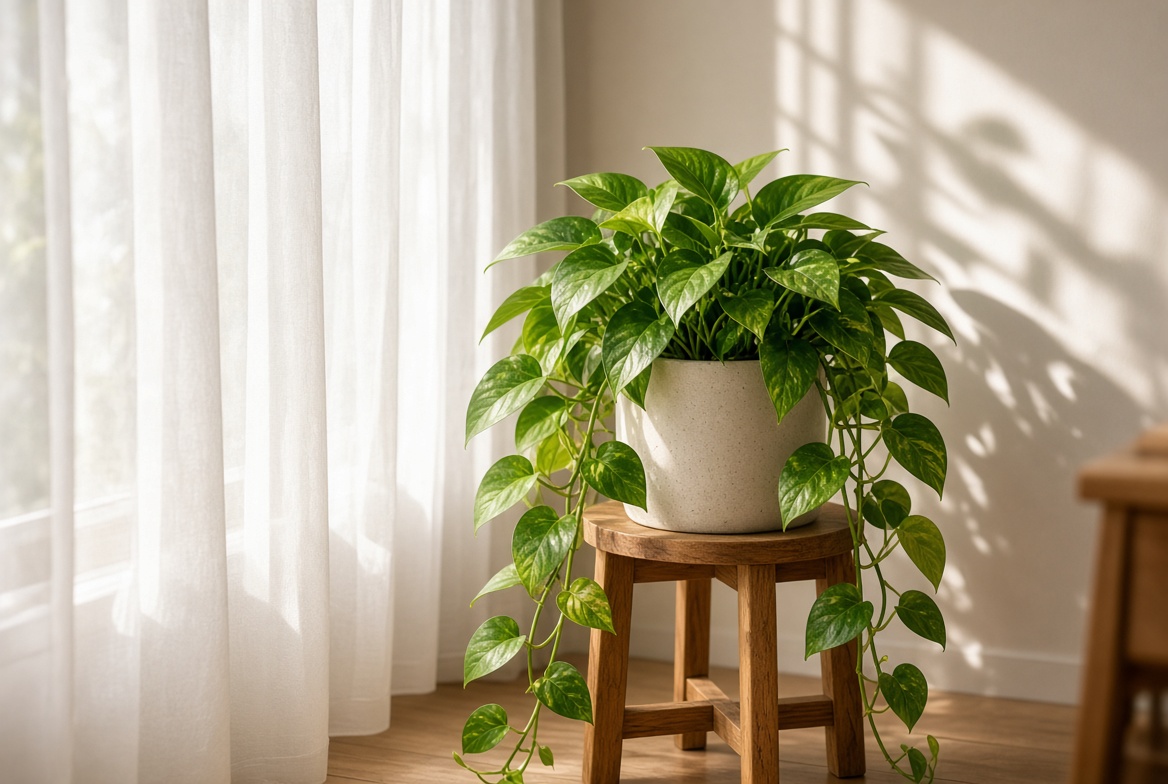
To encourage dense, compact growth with large leaves, you need to maximize bright, indirect sunlight.
-
Direct vs. Indirect Light: Pothos originate beneath the dense canopy of tropical rainforests. While they need brightness, harsh, direct afternoon sun (especially from an unobstructed South-facing window) will scorch their leaves, leaving brown, crispy patches.
-
The Best Placement: An East-facing window is often the holy grail for a pothos, providing gentle morning sun and bright ambient light for the rest of the day. If you only have South or West exposures, simply diffuse the harsh rays by placing a sheer white curtain over the window or pulling the plant three to five feet back into the room.
-
💡 The Expert “Shadow Test”: Not sure if your light is right? Hold your hand about 12 inches above your plant at midday. Look at the shadow your hand casts on the leaves. If the shadow is sharp and highly defined, the light may be too intense. If you can barely see a shadow, the light is too low. If the shadow is soft, fuzzy, and blurry around the edges, you have found the perfect bright, indirect lighting sweet spot.
🛑 Mistake #2: Watering on a Schedule (Instead of Reading the Soil) 💦
One of the quickest ways to stunt a houseplant’s growth is treating watering like a weekly chore rather than a biological response. Watering your plant every Sunday simply because it is “watering day” completely ignores the micro-climate of your home, the changing seasons, and the plant’s actual metabolic needs.
Overwatering is the number one killer of indoor plants. When soil is constantly soggy, all the tiny air pockets within the dirt fill with water. Plant roots need oxygen to respire; without it, they literally drown, leading to a fungal infection known as root rot (Phytophthora or Pythium). If the root system is rotting beneath the surface, the upper foliage is starved of nutrients and water, immediately stunting all new growth and causing the oldest leaves to turn a sickly, mushy yellow.
Conversely, chronic under-watering leads to dry rot and crispy, brown leaf tips, forcing the plant to drop its leaves to conserve moisture.

The “Soak and Dry” Method for Explosive Growth 🚿
To build a robust, deep root system that supports rapid upper vine growth, you must mimic the tropical rainfall patterns these plants evolved to expect: a heavy deluge followed by a period of drying out.
-
Ditch the Schedule: Never water until the top 2 to 3 inches of the potting mix are completely dry.
-
The Finger Test: The easiest way to check is to push your index finger into the soil down to your second knuckle. If you feel any dampness, wait a few more days. Alternatively, use a wooden chopstick—if it comes out with dark, moist soil clinging to it, hold off on watering.
-
Water Deeply: When it is time to water, take the plant to the sink or shower. Pour room-temperature water evenly over the soil surface until it flows freely out of the bottom drainage holes. This flushing action pulls fresh oxygen down into the root zone and washes away built-up mineral salts from tap water. Never let the plant sit in a saucer of standing water for more than 15 minutes.
🛑 Mistake #3: Skipping Fertilizer During the Growing Season 🌱
A very common oversight among houseplant owners is assuming that the potting soil their plant came in will provide an endless buffet of nutrients for the rest of its life. In reality, a potted plant lives in a closed ecosystem. Every time you water your plant, trace amounts of vital nutrients are flushed out through the drainage holes.
Pothos plants are incredibly vigorous growers when given the right conditions. Because they produce so much foliage so quickly, they rapidly deplete their soil of macronutrients—specifically Nitrogen (which fuels green, leafy growth), Phosphorus (for root health), and Potassium (for overall cellular strength). When a plant exhausts its soil, growth grinds to a halt, new leaves emerge tiny and pale, and older leaves may prematurely yellow and drop off.
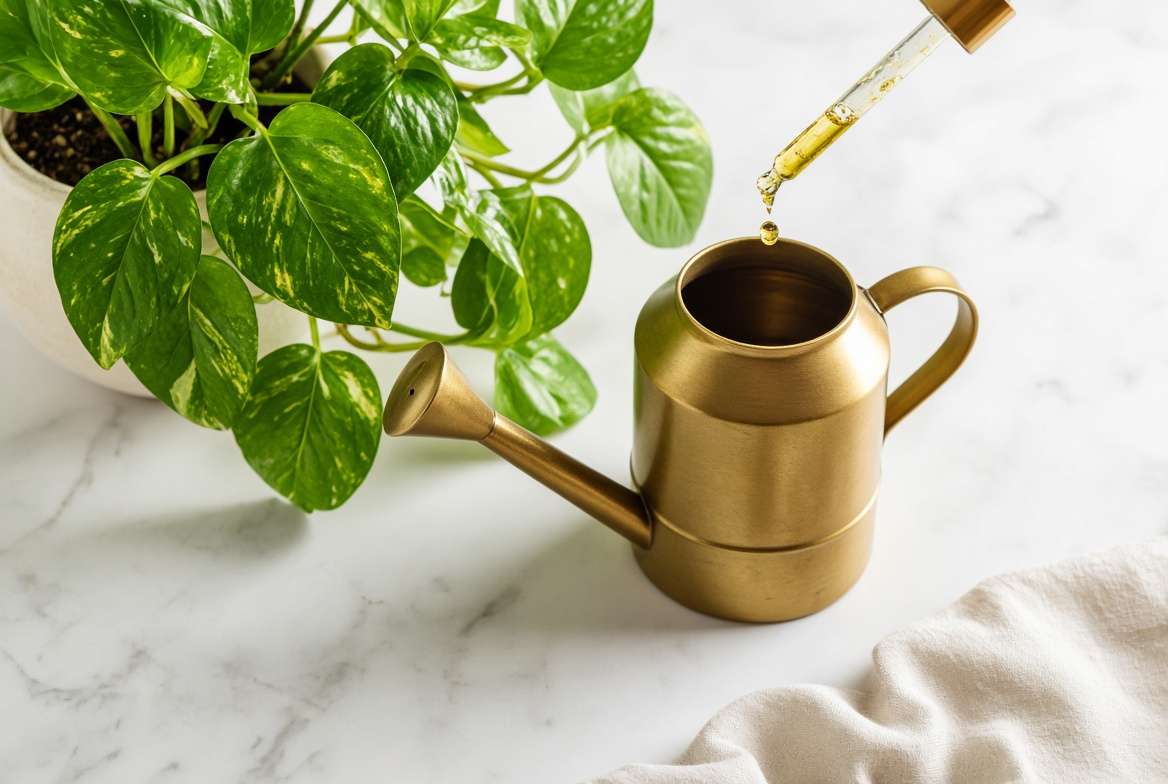
The Ultimate Pothos Feeding Schedule 🧪
To fuel those cascading vines and encourage larger, vibrant foliage, you must replenish the soil’s nutrient bank. However, over-fertilizing is just as dangerous as under-fertilizing, as it can cause mineral salt buildup that chemically burns the roots.
-
Spring & Summer (Active Growth): From early spring through late summer, your plant is in its active growing phase. We recommend using a high-quality, balanced liquid houseplant fertilizer (an N-P-K ratio of 10-10-10 or 20-20-20 works beautifully). Dilute the liquid fertilizer to half of the manufacturer’s recommended strength and apply it every 2 to 4 weeks instead of plain water. Diluting the formula ensures your plant gets a steady, gentle supply of nutrients without the risk of root burn.
-
Fall & Winter (Dormancy): As daylight hours decrease in the autumn and winter, indoor plants naturally slow their metabolic rate and enter a period of semi-dormancy. Stop fertilizing entirely during these cooler, darker months. Feeding a resting plant will only result in unused minerals accumulating toxically in the soil.
-
Organic Alternatives: If you prefer natural amendments, top-dressing your potting mix with a handful of worm castings every spring is an incredible, gentle way to introduce slow-release nitrogen and beneficial microbes into the root zone.
🛑 Mistake #4: Being Afraid of the Pruning Shears ✂️
It sounds completely counterintuitive: If I want a big, long, bushy plant, why on earth would I cut it?
Many beginners equate the length of a vine with the health of the plant, refusing to trim even when a vine is almost entirely bald with just two leaves at the very end. However, plants operate on a biological principle known as apical dominance. The plant’s central growth hormone (auxin) is heavily concentrated at the very tip (the apex) of the vine. The plant pours all its energy into pushing that single tip further and further to find sunlight, actively suppressing the growth of side shoots or new leaves higher up the stem.
If you never prune, your pothos will inevitably become stringy and sparse.
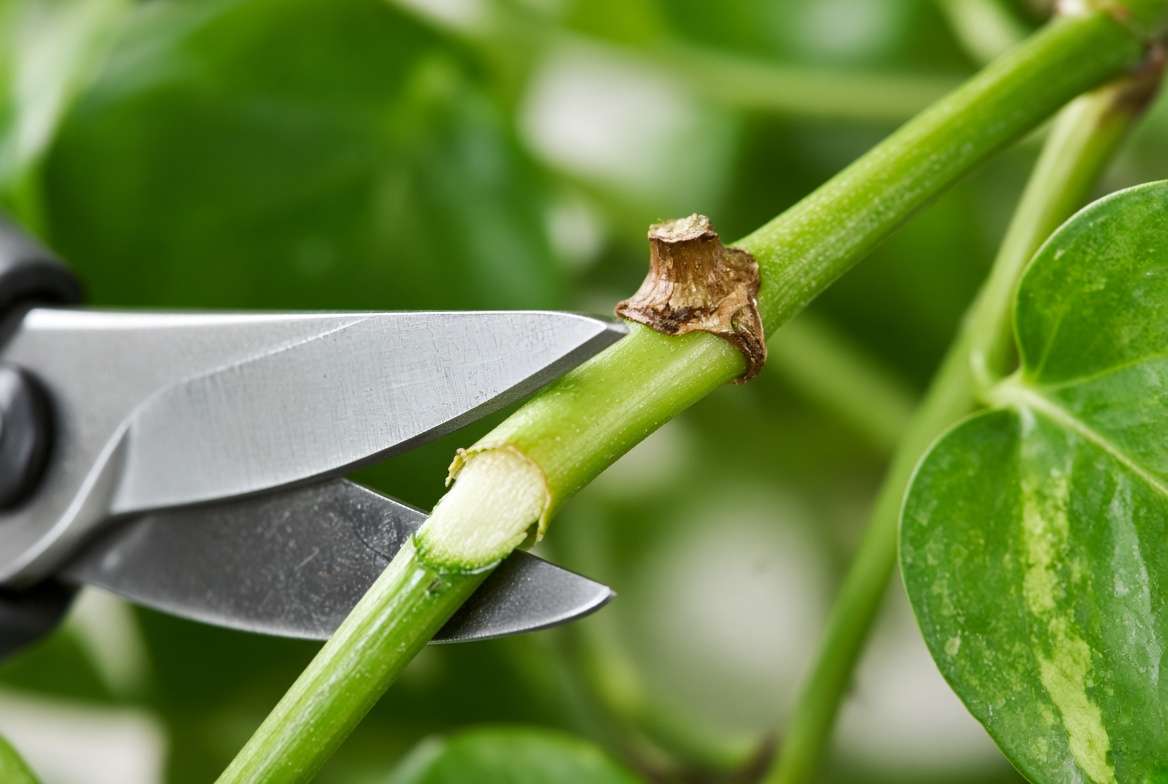
How to Prune for a Bushier Pothos 🪴
Pruning breaks apical dominance. When you snip the end off a long vine, the growth hormone redistributes backward, signaling the plant to activate dormant buds further up the stem and near the soil line. This results in a bushier, fuller plant rather than just one long string.
-
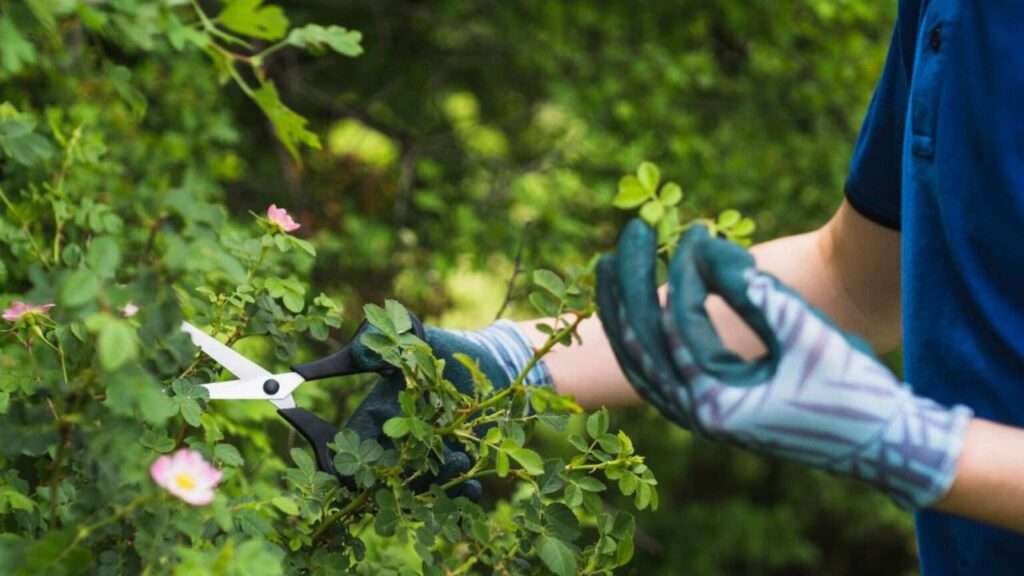
The Chop and Prop: Grab a pair of sharp, sterilized pruning shears (rubbing alcohol works great to clean the blades). Identify a bare or overly long vine. Look for a node—the small, brownish, knobby bump on the stem where a leaf attaches (or used to attach). This node contains the cellular blueprint to create new roots.
-
Making the Cut: Make a clean, 45-degree angled cut about a quarter-inch below the node. Your mother plant will now push out new growth from the node just above your cut.
-
Don’t Waste the Cutting! Take the piece you just chopped off, ensure it has at least one healthy leaf and one bare node, and pop it into a glass of water. Place it in a bright, warm spot. Within 2 to 4 weeks, you will see fresh white water-roots sprouting from the node! You can then plant this rooted cutting right back into the top of the mother plant’s pot to make it instantly thicker.
🛑 Mistake #5: Ignoring Root Health and Pot Dynamics 🪴
What happens beneath the soil is arguably more important than what happens above it. Houseplant roots are the engine of the plant. A major mistake stunting pothos growth is failing to manage their housing correctly—either by leaving them in their original nursery pot for years until they strangle themselves, or repotting them into a massive decorative pot way too soon.
When a plant is severely rootbound (the roots are swirling tightly around the inside of the pot in a dense mat), there is virtually no soil left to hold moisture. Water simply rushes down the sides of the pot and out the bottom. The plant is essentially dying of thirst no matter how often you water it.
Conversely, if you take a small plant and put it in a giant pot, the small root system cannot drink all the moisture held in that massive volume of wet soil. The soil stays soggy for weeks, creating the perfect anaerobic environment for root rot.
Creating the Perfect Pothos Environment 🏡
-
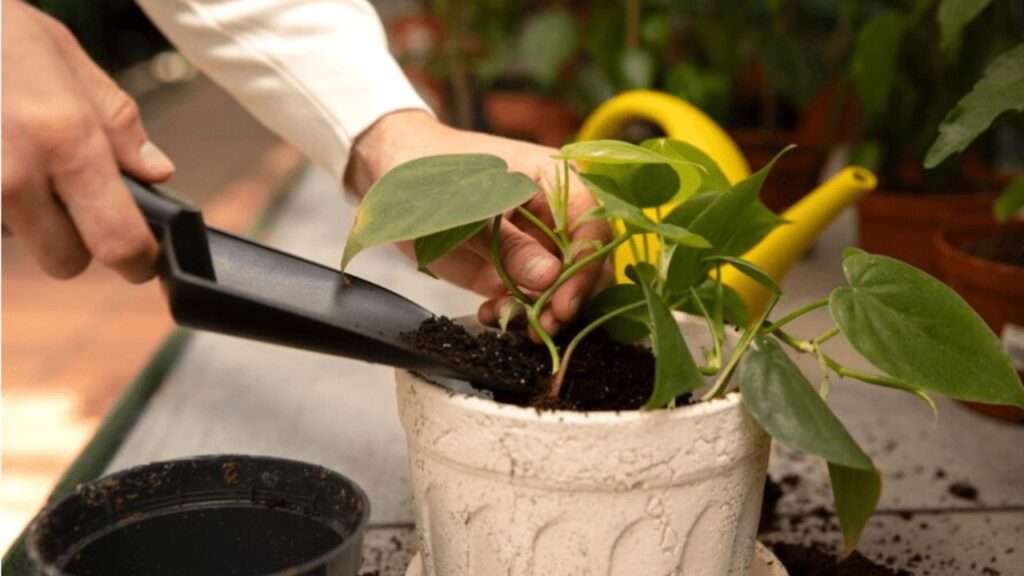
The 2-Inch Rule: When it is time to repot (usually every 12 to 18 months, or when roots are actively poking out of the drainage holes), only upgrade the pot size by 1 to 2 inches in diameter. If it is currently in a 4-inch pot, move it to a 6-inch pot. This provides enough room for fresh growth without holding excess water.
-
Choosing the Right Soil: Throw out the heavy, dense, generic indoor potting soil. Pothos need a well-aerated, “chunky” aroid mix. To create the ideal environment, mix 50% high-quality potting soil, 25% perlite (for drainage and aeration), and 25% fine orchid bark (to create air pockets for oxygen). This mimics their natural tropical environment and makes it nearly impossible to overwater them.
-
Drainage is Non-Negotiable: Never plant a pothos directly into a decorative pot without drainage holes. Always keep it in a plastic nursery pot with holes that slips inside the decorative outer cachepot.
✨ The Pro Secret: The “Bobby Pin Trick” for Instant Fullness 👩🌾
If your vines are thriving but the top of your pot looks terribly bald and sparse, you don’t necessarily have to chop your plant up to fix it. Enter the “Bobby Pin Trick,” a highly effective, advanced technique used by indoor greenhouse experts to force a plant to fill out its topsoil.
In the wild, pothos naturally crawl along the forest floor. When a vine touches the damp soil, its aerial roots dig in and create a new anchor point, eventually shooting up new foliage. You can replicate this indoors!
Step-by-Step Execution:
-
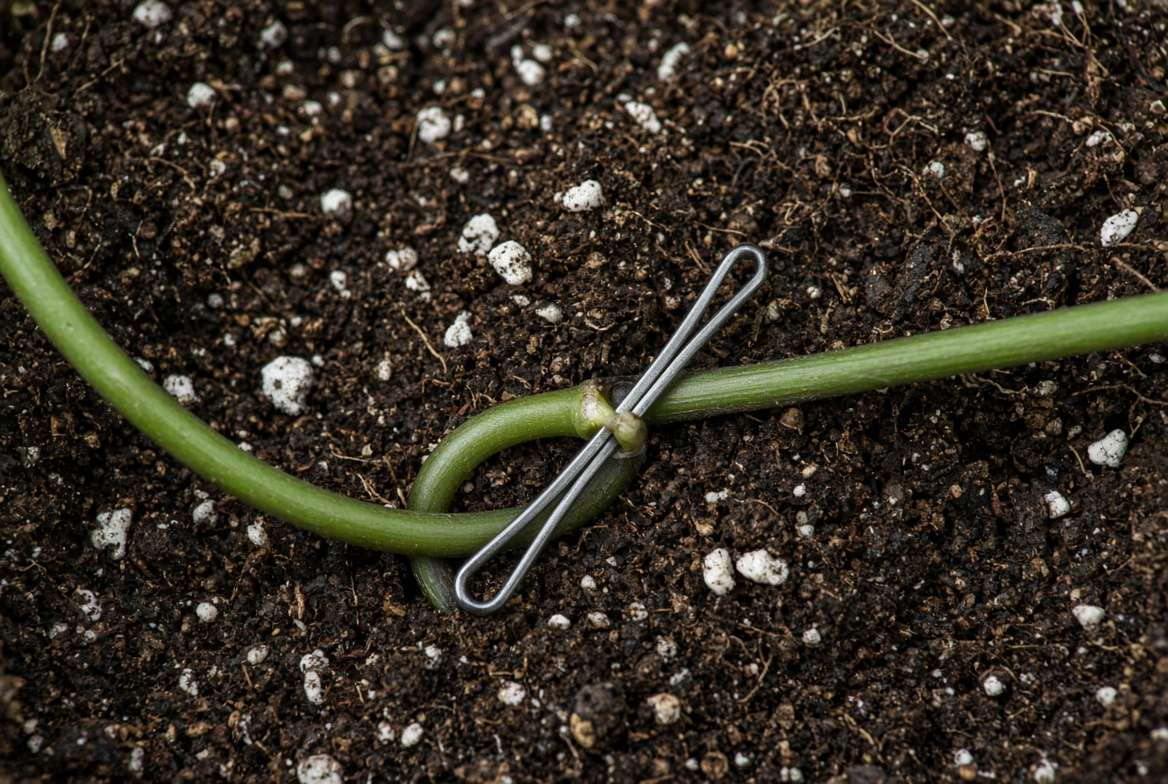
Take a long, bare section of an existing vine and gently loop it back up into the pot, laying it across the bare topsoil.
-
Identify an aerial root (the little brown bump on the stem) and ensure it is touching the dirt.
-
Take a standard, clean bobby pin (or a floral U-pin) and gently pin the vine down into the soil so the node remains in constant contact with the dirt. Be careful not to crush the stem.
-
Lightly mist that specific area of topsoil every few days to keep the ambient humidity high around the node.
-
The Result: Within a few weeks, that node will root directly into the soil. Once rooted, it will trigger a brand-new growth point, shooting fresh leaves straight up from the top of the pot. It is the easiest way to achieve that lush, greenhouse-quality fullness!
❓ Frequently Asked Questions (FAQ) About Pothos Growth 🤔
Why are the leaves on my pothos plant getting smaller and smaller? If your plant is pushing out increasingly tiny leaves, it is almost always a structural or lighting issue. First, ensure it is receiving enough bright, indirect light. Second, pothos are natural climbers (epiphytes). When they hang downward, gravity signals to the plant to produce smaller leaves. If you want massive leaves, you need to provide a climbing support.
Can I put my pothos outside during the summer? Yes, but with strict caveats. Pothos love the heat and humidity of a summer outdoors, but they must be kept in complete, dappled shade (like under a covered patio or a large leafy tree). Even an hour of direct outdoor sunlight will severely scorch their leaves. Always inspect them for pests before bringing them back indoors for the autumn!
Does a moss pole actually make a pothos grow faster? It doesn’t necessarily make it grow faster, but it radically changes how it grows. When a pothos is given a damp moss pole to climb, the aerial roots anchor into the moss. This physical support signals maturity to the plant. In response, the plant will start producing significantly larger foliage, and eventually, the leaves will even develop beautiful fenestrations (splits and holes) just like a Monstera!
💚 Conclusion: Your Path to a Thriving Indoor Jungle
Watching your pothos plant struggle with stunted, stringy growth can be disheartening, but the good news is that these plants are incredibly forgiving. They want to grow. By stepping back and addressing the foundational elements of their environment, you can trigger an absolute explosion of lush, vibrant foliage.
Remember the five golden rules of pothos care: ditch the dark corners for bright, indirect light; water deeply only when the topsoil is dry; feed them regularly during the spring and summer; don’t be afraid to use your pruning shears to break apical dominance; and always provide a chunky, well-draining soil mix in a properly sized pot.
Whether you are going to try the chop-and-prop method this weekend or you are excited to test out the bobby pin trick, your plant is going to reward your efforts with beautiful, cascading vines.
Now it’s your turn! How long is your longest pothos vine right now? Are you dealing with bare spots at the top of your pot? Drop a comment below, or share a photo of your newly propagated cuttings with us on social media. Happy growing! 🌿