
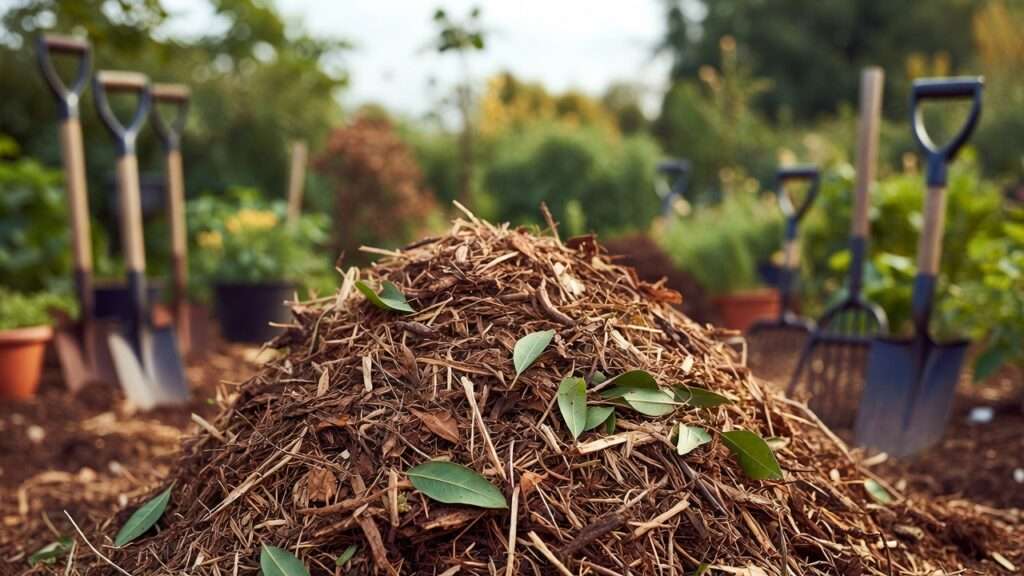
Picture this: You’ve been patiently layering kitchen scraps, yard waste, and coffee grounds for weeks. You’re dreaming of that rich, dark, crumbly compost that will make your tomatoes explode and your roses jealous… then you lift the lid.
A cloud of tiny fruit flies attacks your face. 🪰 You hear faint scratching sounds at night. 🐀 And the unmistakable smell of ammonia tells you something has gone very, very wrong.
Sound familiar?
If you’ve ever battled unwanted visitors in your compost pile, you’re definitely not alone. Thousands of home gardeners, urban homesteaders, and tree/plant enthusiasts face this exact frustration every season.
The great news? Preventing pest infestations in compost is not only possible — it’s actually quite straightforward once you understand the few simple principles that make your compost pile unattractive to troublemakers while still perfect for beneficial decomposers.
In this in-depth, expert-level guide (backed by university extension services, decades of practical composting experience, and feedback from thousands of real gardeners), you’ll discover the 7 most effective, natural, and proven strategies to keep rodents, flies, ants, raccoons, and other pests completely away from your compost — while creating the highest quality soil amendment possible for your garden, orchard, or indoor plants.
Let’s turn your compost from a pest magnet into a peaceful, productive powerhouse! 🌱✨
Why Understanding Pests Is Your First Line of Defense
Before we dive into solutions, let’s quickly get clear on who we’re dealing with — because not every bug in your compost is the enemy!
Beneficial vs Problematic Compost Creatures
The Good Guys (you actually want these!):
- Red wigglers & earthworms 🪱 — superstar decomposers
- Springtails — tiny cleanup crew
- Sow bugs / pill bugs — break down tough materials
- Mycorrhizal fungi & beneficial bacteria — the real magic behind nutrient cycling
The Trouble Makers (these we want to discourage):
- Fruit flies & fungus gnats 🪰
- House flies & blow flies
- Ants (especially fire ants & carpenter ants) 🐜
- Rodents: rats, mice, voles 🐀
- Raccoons, opossums, skunks (mainly in suburban/rural areas) 🦝
- Occasionally: cockroaches & earwigs
Key insight most beginners miss: Most serious pest problems are symptoms, not the root cause. The real causes are almost always one (or more) of these:
- Exposed food scraps
- Too much nitrogen (greens)
- Too much moisture
- Insufficient turning/aeration
- Wrong bin design/location
- Adding forbidden items
Fix the triggers → pests disappear naturally. Simple, but powerful. 🌟
The Rock-Solid Foundation: Build a Naturally Pest-Resistant Compost System
Before implementing the 7 strategies, make sure these foundational elements are in place. Think of them as your compost fortress walls.
1. Master the Perfect Carbon-to-Nitrogen Ratio (The #1 Prevention Secret)
Most pest outbreaks trace back to an imbalanced pile.
Ideal ratio: 25–30 parts carbon to 1 part nitrogen (often called “browns to greens”).
Quick-reference cheat sheet:
Excellent Browns (Carbon-rich, pest-resistant materials) 🍂
- Dry leaves (best choice!)
- Shredded cardboard & newspaper (no glossy pages)
- Straw & hay
- Wood chips (aged)
- Sawdust (untreated only)
- Shredded office paper
- Pine needles (in moderation)
Good Greens (Nitrogen-rich — add carefully) ☕
- Vegetable & fruit scraps
- Coffee grounds & paper filters
- Fresh grass clippings (thin layers only!)
- Plant trimmings (disease-free)
- Tea bags
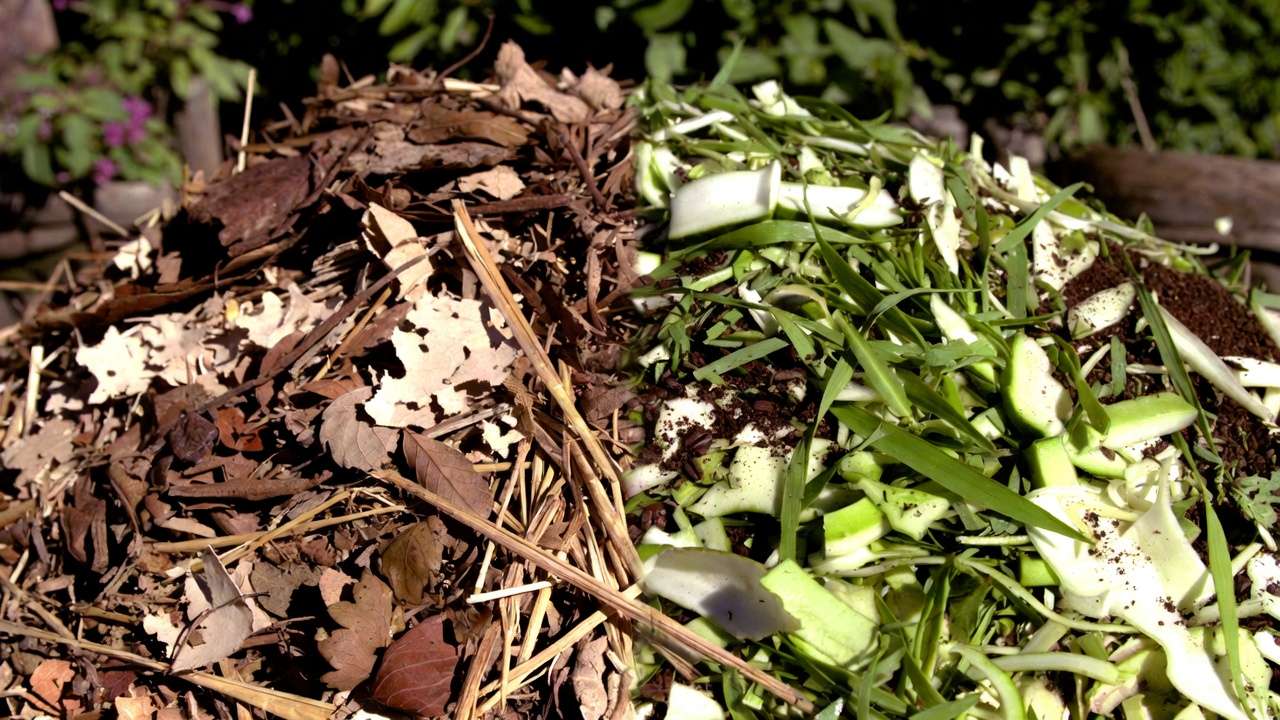
Pro gardener tip When adding kitchen waste, always bury it under at least 6–8 inches of browns. No exposed food = almost no fruit flies or rodents. It’s the single most powerful habit you can adopt! 🥗
2. Choose (or Build) a Truly Pest-Resistant Compost Bin
Your container choice dramatically affects pest pressure.
Top pest-resistant options ranked (2025–2026 gardener favorites):
- Tumbler composters with secure lids (best overall) 🔄🔒 – Fast turning, excellent heat, very hard for rodents to access
- Enclosed stationary bins with locking lids & metal bases – Examples: Geobin with added hardware cloth skirt, Envirocycle, Joraform
- DIY underground rodent-proof system – Dig 12–18″ trench → line with ¼-inch hardware cloth → backfill → build pile on top
- Worm bins (vermicomposting) for food scraps 🪱 – Keep indoors or in garage during rodent season
- Bokashi bucket system (fermentation first) – Pre-digests food scraps → then add to regular compost
Important rule: Any open-pile or three-bin system in areas with high rodent pressure needs a buried hardware cloth skirt + daily turning.
3. Strategic Location Choices That Discourage Pests
Where you place your compost matters more than most people realize.
Best location checklist ✅
- Sunny or partially sunny spot (heat discourages many pests)
- At least 10–15 feet from house foundation
- Far from fences (rodent highways)
- Not under fruit trees or bird feeders 🍎🐦
- Away from pet food bowls & garbage cans
Worst locations ❌
- Against house/garage walls
- Under decks
- Near overflowing bird feeders
- In constant deep shade
Elevate bins on concrete blocks or bricks — makes burrowing much harder! 🏗️
The 7 Proven Ways to Keep Pests Away for Good 🔥
Now we get to the heart of the matter — the exact, battle-tested tactics that experienced gardeners, homesteaders, and even university extension specialists recommend year after year.
Implement these seven strategies consistently and most pest issues will disappear within 1–2 weeks (often sooner!).
Way #1: Bury Food Scraps Deep & Cover Everything (The Fly-Proof Superpower) 🪰✖️
This single habit eliminates 80–90% of fruit fly and house fly problems.
How to do it right:
- Dig a small pocket or trench in the center/top of your pile
- Add fresh kitchen scraps (especially fruit/veg peels, melon rinds, etc.)
- Immediately cover with 6–10 inches (15–25 cm) of dry browns
- “Lasagna layer” method: alternate thin greens + thick browns every time you add material
Extra pro moves:
- Chop or blend large fruit/vegetable pieces before adding (smaller pieces decompose faster, less attractive to flies)
- Keep a bucket of dry leaves/straw right beside your bin — makes covering effortless
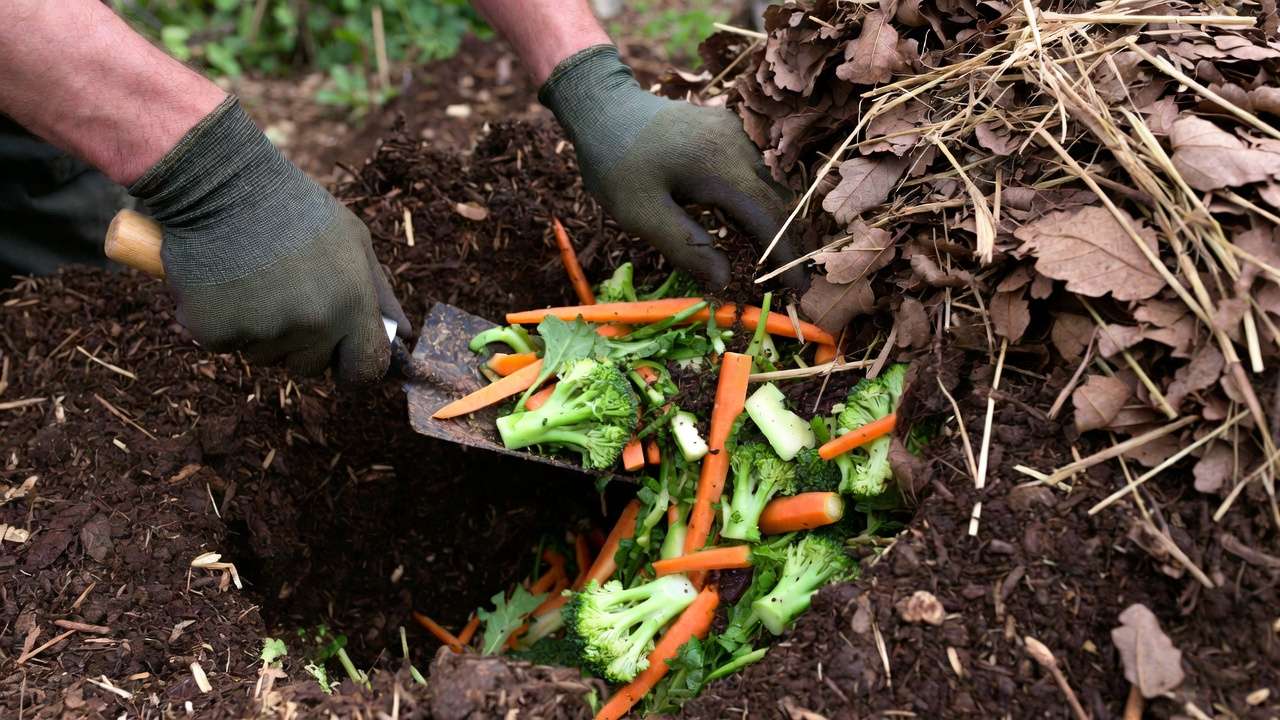
Gardeners who adopt the “bury & cover religiously” rule almost always report: “No more fruit fly clouds after 3–5 days!”
Way #2: Turn & Aerate Regularly (The Natural Pest Disruptor & Speed Booster) 🔄
Turning your compost pile is like hitting the reset button for pest eggs, larvae, and cozy rodent nests.
Recommended turning schedule:
- Hot/fast composting: every 3–5 days
- Cooler/slower piles: every 7–10 days
- When you add a large batch of food scraps: turn immediately after burying
Benefits beyond pest control:
- Introduces oxygen → speeds decomposition 3–10× faster
- Distributes heat evenly → reaches pathogen-killing temperatures
- Dries out overly wet spots that attract flies
Best tools (2026 favorites):
- Garden fork (classic & effective)
- Aerator/corkscrew tool for enclosed bins
- Tumbler (just spin it — easiest method!)
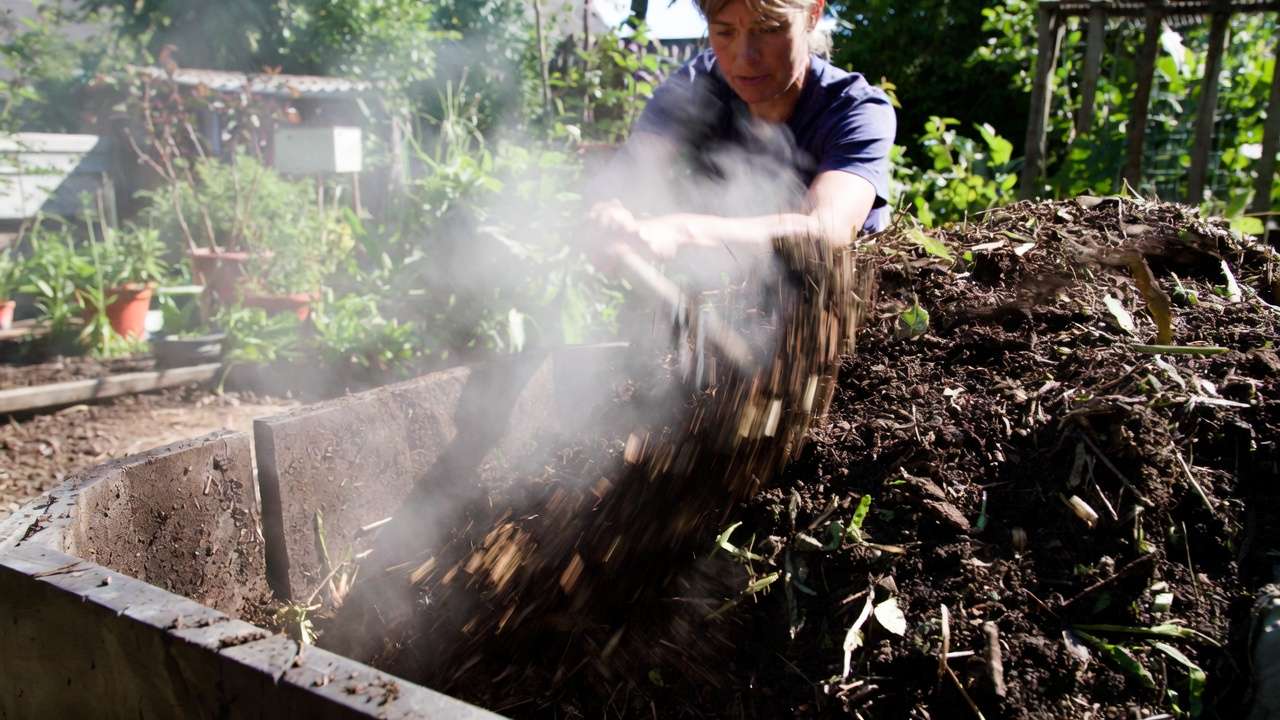
Quick tip: If you ever smell ammonia or rotten eggs → turn immediately and add more browns!
Way #3: Maintain Ideal Moisture Levels (The Goldilocks Zone) 💧
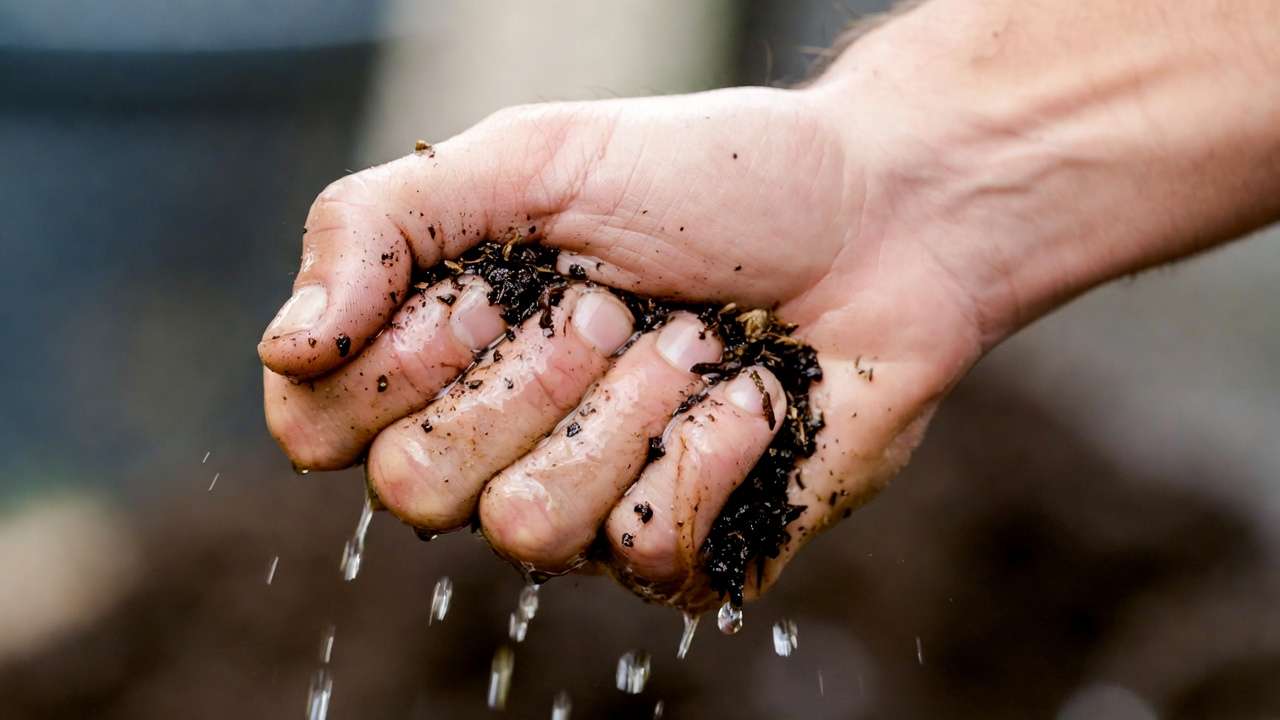
Too dry → decomposition crawls to a halt Too wet → anaerobic conditions → bad odors → pest paradise
Target moisture sweet spot: Like a well-wrung-out sponge — should feel moist but not drip when squeezed hard.
Quick moisture troubleshooting guide:
| Condition | Squeeze Test Result | Action Needed | Pest Risk Level |
|---|---|---|---|
| Too dry | Crumbly, no water | Water lightly + turn | Low |
| Perfect! | Few drops, feels like sponge | Do nothing | Very low |
| Too wet / smelly | Water pours out | Add lots of dry browns + turn aggressively | High → Very high |
Pro hack: In rainy climates, cover the pile with a tarp (leave sides open for air) during heavy downpours. In dry summers, water lightly once a week if needed.
Way #4: Avoid the Top 10 Pest-Attracting Items (Know What NOT to Add)
Certain materials are basically pest invitations — avoid them completely!
Never add to your compost if you want to stay pest-free:
- Meat, poultry, fish (any kind) 🥩
- Dairy products (cheese, butter, milk, yogurt) 🧀🥛
- Oils, fats, grease (including used cooking oil)
- Cooked food scraps (especially rice, pasta, potatoes — they go moldy & attract rodents)
- Bones (take forever + attract dogs/raccoons)
- Diseased or insect-infested plants
- Pet waste (dogs/cats — can carry pathogens)
- Human/pet hair (unless you want rodents collecting it for nests)
- Large quantities of citrus peels (slow to break down, can be too acidic)
- Bread, pastries, sugary foods (major rodent & ant magnets)
Safe alternatives: Stick to raw fruit & vegetable scraps, coffee grounds, eggshells (crushed), yard trimmings, and plenty of browns.
Way #5: Use Natural Repellents & Physical Barriers (Gentle but Effective) 🌿🛡️
These low-cost, chemical-free methods add an extra layer of protection.
Top natural pest deterrents gardeners love:
- Food-grade diatomaceous earth (DE) — sprinkle around base and lightly on top (cuts insect exoskeletons)
- Crushed eggshells — sharp edges deter slugs/snails + add calcium
- Coffee grounds — mild repellent for ants & slugs (use sparingly) ☕
- Mint, garlic, or marigold plants — plant around the bin (strong scent repellent) 🌱
- Fine mesh/hardware cloth — cover air vents, reinforce bin bottom/sides
- Human hair clippings — scatter around base (some rodents avoid human scent)
- Cayenne pepper — light dusting on top layer (ants & rodents dislike it)
Important: Rotate methods every few weeks — pests can adapt to a single deterrent.
Way #6: Harness Hot Composting – Nature’s Ultimate Pest & Pathogen Killer 🔥
If you really want to make your compost pile as inhospitable as possible to pests while producing the highest-quality finished compost, hot composting is your secret weapon.
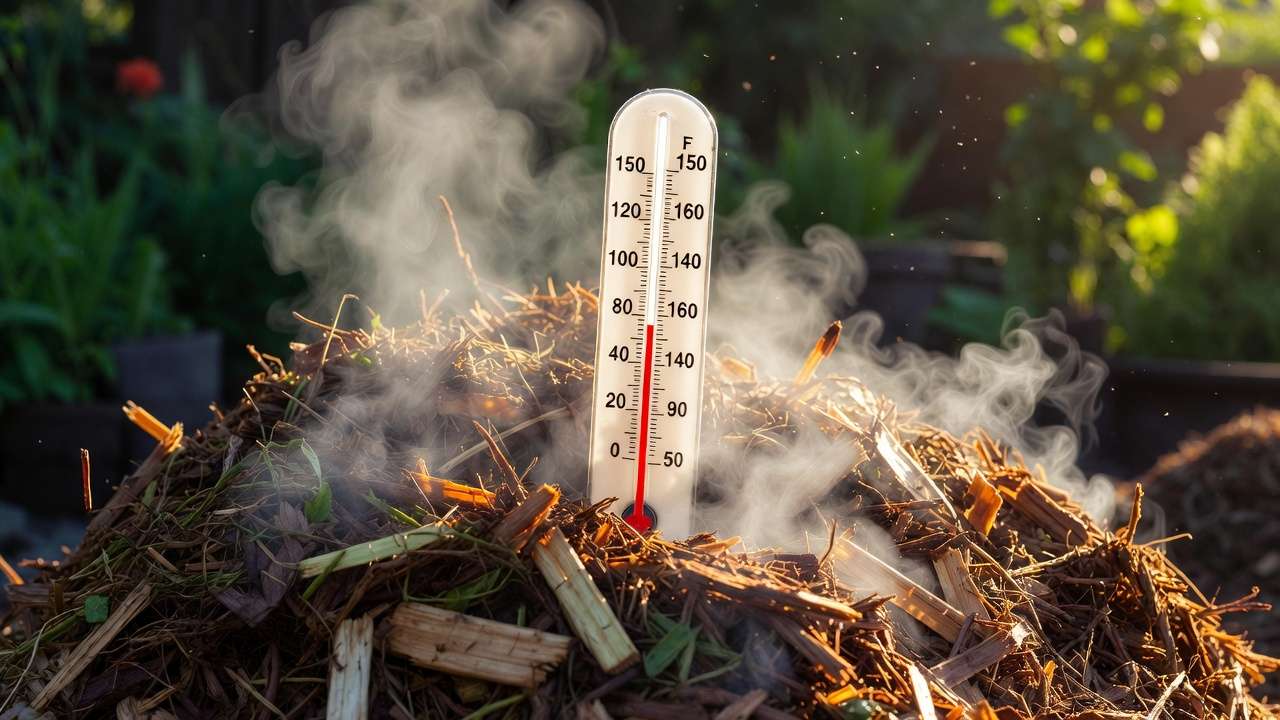
What is hot composting? A managed aerobic process that pushes pile temperatures to 131–160°F (55–71°C) for several consecutive days. This heat kills weed seeds, plant pathogens, fly/mosquito eggs, and even discourages most rodents.
How to achieve reliable hot composting (step-by-step):
- Build the pile all at once (minimum 3 ft × 3 ft × 3 ft / 1 m³)
- Use ideal C:N ratio (25–30:1)
- Shred materials (increases surface area & heat buildup)
- Keep moisture at sponge level
- Turn every 2–4 days when temperature starts dropping
- Monitor temperature with a long-stem compost thermometer (highly recommended tool!)
Realistic expectations in January 2026: In cooler winter months (like right now in many regions), hot composting is harder to achieve without insulation. Consider:
- Wrap the bin in old blankets, straw bales, or bubble wrap ❄️
- Add a fresh hot “activator” layer (fresh grass clippings + manure – if you have access to clean sources)
- Use a smaller, well-insulated tumbler indoors or in a garage
Gardeners who maintain active hot piles almost never report serious pest issues — the heat and constant microbial activity make the pile very unattractive.
Way #7: Seasonal Smart Adjustments & Rapid Response When Things Go Wrong 📅🚨
Pest pressure changes dramatically with the seasons — smart gardeners adapt accordingly.
Seasonal pest-prevention calendar (Northern Hemisphere focus – adjust for your climate):
- Spring (Mar–May): High rodent activity as they wake up hungry → double down on deep burying + hardware cloth reinforcement
- Summer (Jun–Aug): Fruit fly explosion season → extra frequent turning + tons of browns ☀️
- Fall (Sep–Nov): Massive leaf drop = perfect browns → stockpile leaves for winter & future seasons 🍂
- Winter (Dec–Feb): Lower pest pressure, but rodents seek warm shelter → insulate pile, reduce food scraps, monitor for burrowing ❄️
What to do if you already have an infestation (step-by-step emergency protocol):
- Stop adding all food scraps immediately
- Harvest finished compost from bottom if possible
- Relocate the bin to a new spot (breaks pest patterns)
- Empty pile completely — solarize material in black plastic bags for 4–6 weeks if heavily infested
- Restart with mostly dry browns + very small amounts of buried scraps
- Turn aggressively every 2–3 days for first two weeks
- Reinforce bin with extra mesh/hardware cloth
Most serious rodent or fly infestations clear up within 7–14 days using this reset method.
Bonus Expert Insights & Real-World Gardener Success Stories 🌟
These methods aren’t just theory — they’re backed by decades of practical experience and modern research:
- Cornell Waste Management Institute and Oregon State University Extension both emphasize deep burying + proper C:N ratio as the foundation of pest prevention
- Rodale Institute long-term trials show hot composting reduces pest habitat dramatically
- Thousands of gardeners in online communities (Reddit r/composting, Facebook groups, permaculture forums) report going from “fly nightmare” to “zero issues” after implementing just 2–3 of these strategies consistently
One common quote I hear again and again: “I wish I’d known about burying everything under browns years ago — it changed everything!”
Quick-Reference Pest Identification & Targeted Fixes Chart
Here’s a handy summary table you can screenshot or bookmark:
| Pest | Common Signs | Fastest Fix Right Now | Long-Term Prevention Strategy |
|---|---|---|---|
| Fruit flies 🪰 | Tiny flies around bin, tiny larvae | Bury scraps deep + add dry browns | Always cover fresh additions + turn regularly |
| House flies | Larger flies, maggots in pile | Turn pile + dry it out | Maintain hot temps + proper moisture |
| Ants 🐜 | Trails leading to bin | Sprinkle DE or coffee grounds | Reduce sweet scraps + use barriers |
| Rodents 🐀 | Droppings, gnaw marks, night noises | Stop food scraps + reinforce with mesh | Bury deep, use tumbler, avoid forbidden items |
| Raccoons 🦝 | Scattered pile, paw prints | Secure lid + elevate bin | Motion lights + electric fencing (if needed) |
Conclusion: Your Pest-Free Compost Era Starts Today! 🌳💚
Preventing pest infestations in compost doesn’t require expensive products, harsh chemicals, or giving up on your dream of beautiful black gold.
By mastering the core principles (ratio, covering, turning, moisture) and applying the 7 proven ways we’ve covered, you can create a thriving, odor-free, pest-resistant compost system that feeds your plants, trees, and soil year after year.
The best part? Once these habits become second nature, composting stops being a chore and becomes one of the most satisfying parts of gardening.
Your garden deserves nutrient-rich compost without the drama — and so do you! 🌱✨
Start small: Pick just one of the 7 ways to implement this week (I recommend starting with deep burying + covering). You’ll likely see results in just a few days.
Happy composting, my fellow plant lovers! Here’s to pest-free piles and spectacular gardens in 2026 and beyond. 🥳🌿
Frequently Asked Questions About Preventing Pest Infestations in Compost
Q: Is it normal to have ANY bugs in my compost? A: Yes — and actually desirable! Red wigglers, springtails, sow bugs, and fungi are your compost’s best friends. Only intervene when you see swarms, large numbers of flies, or rodent activity.
Q: Can I compost fruit and vegetable scraps without attracting flies? A: 100% yes! The secret is burying them deep under 6–10 inches of dry browns every single time. Combine this with regular turning and proper moisture — flies usually disappear within days.
Q: I already have rats — what now? A: Pause all food scraps for 1–2 weeks, turn the pile daily, reinforce with hardware cloth, and relocate if possible. Most rats will leave quickly once the food source vanishes.
Q: Are expensive “pest-proof” compost bins worth the money? A: In areas with high rodent pressure — yes, absolutely. Look for models with metal bases, secure locking lids, and small ventilation holes. Tumblers and enclosed systems with good reviews on gardening sites are usually the best investment.
Q: Can I use my compost if it had pests earlier? A: Yes, as long as it fully matures (dark, crumbly, earthy smell) and has cooled down. Hot composting + time eliminates most concerns.
There you have it — a complete, comprehensive, expert-level guide ready to help gardeners everywhere enjoy pest-free composting bliss! 🌱🛡️











