
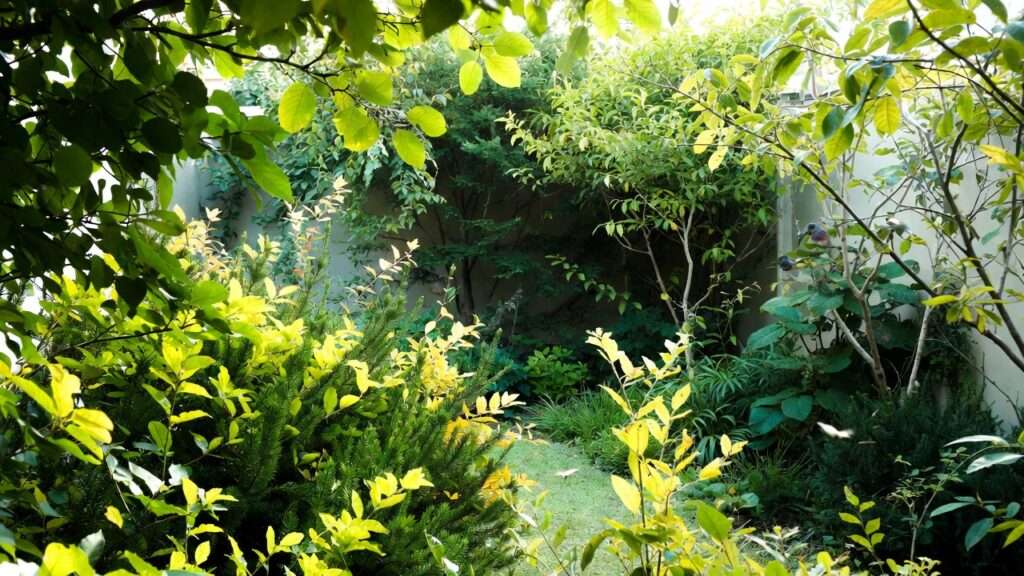
Imagine this: You’re finally home after a long day, stepping into your small backyard craving peace and quiet. But instead of relaxation, you’re greeted by the feeling of being on display—neighbors’ windows peering over, voices carrying across the fence, and no real escape from the outside world. 😔 If this sounds familiar, you’re not alone. Many homeowners with compact outdoor spaces struggle with the same issue: how to carve out a private, serene retreat without cramming in bulky fences or tall structures that eat up precious square footage.
The good news? Privacy solutions for small backyards don’t have to involve concrete or chain-link. Living screens made from carefully chosen plants and trees offer the perfect natural alternative. They grow to fit your space, soften harsh lines, filter noise, improve air quality, and even attract delightful wildlife like birds and butterflies 🐦🦋. Unlike man-made barriers, these green solutions become more beautiful and effective over time, adding biodiversity, seasonal interest, and that cozy “oasis” vibe everyone dreams of.
In this comprehensive guide, we’ll explore the best plants and trees tailored for limited spaces—fast-growers for quick results, compact varieties that won’t overwhelm, and layered designs that create depth and seclusion. Drawing from years of hands-on experience in plant care and landscape design, plus proven recommendations from horticultural experts, this article goes beyond basic lists to deliver actionable advice, zone-specific tips, maintenance secrets, and real-world examples. Whether your yard is a tiny urban patio or a modest suburban plot, you’ll find solutions that truly work. Let’s turn your small backyard into your personal secluded paradise! 🌺
Understanding Privacy Challenges in Small Backyards
Small backyards present unique hurdles when it comes to privacy. Limited square footage means traditional tall fences or hedges can feel claustrophobic or violate local regulations like HOA rules 🚫. Neighbors’ elevated views, shared property lines, and even street noise often leave little room for error—plant too densely, and you risk overcrowding; choose the wrong species, and growth stalls or becomes invasive.
Plant-based privacy shines here because it’s flexible and multifunctional. Dense foliage blocks sight lines while allowing gentle airflow (unlike solid walls that trap heat). Evergreens provide year-round coverage, while flowering or colorful options add joy and pollinator support. Long-term perks include lower costs (no painting or repairs), natural noise reduction (up to 5-10 decibels from thick plantings), and enhanced property value through curb appeal.
Before diving in, consider these key factors:
- Yard size and layout — Measure available planting strips (aim for at least 3-5 feet wide for hedges).
- Sun exposure ☀️ — Full sun (6+ hours) suits most evergreens; partial shade favors broadleaf options.
- Soil and climate — Test drainage; match plants to your USDA hardiness zone for longevity.
- Growth speed vs. maintenance — Fast-growers deliver privacy in 1-3 years but may need more pruning.
- Evergreen vs. deciduous — Evergreens for constant screening; deciduous for lighter winter views and seasonal drama.
By addressing these upfront, you’ll avoid common pitfalls and create a thriving, low-stress screen.
Assessing Your Small Backyard: Step-by-Step Planning Guide 📏
Success starts with smart planning—no guesswork! Follow this expert checklist:
- Map your space — Sketch your yard, noting sight lines to block (e.g., neighbor’s deck, kitchen window). Measure height needed (often 6-12 feet) and width available.
- Evaluate conditions — Note sun hours, wind patterns, and soil (clay? sandy? test pH if possible). Use free USDA zone finders online for climate match.
- Set goals and timeline — Need privacy ASAP? Prioritize fast-growers like privet or arborvitae. Want low-maintenance beauty? Opt for slower, denser natives.
- Budget wisely — Starter plants cost $20-100 each; factor in soil amendments, mulch, and tools. A 20-foot hedge might run $300-800 initially but saves on fences long-term.
- Design for illusion — Use layering (tall + medium + low plants) and vertical elements to make the space feel larger. Stagger plantings for fuller coverage without straight lines.
Pro tip: Start small—plant one section first to test how it feels and grows before committing fully. This minimizes risk and lets you adjust based on real results.
Top Fast-Growing & Compact Privacy Shrubs for Small Yards 🌱
Shrubs form the backbone of most small-yard privacy screens—dense, manageable, and quick to establish. Here are standout choices:
- Emerald Green Arborvitae (Thuja occidentalis ‘Smaragd’) 🌲 — Narrow (3-4 ft wide), pyramidal form reaches 10-15 ft tall. Dense, bright green foliage provides year-round privacy. Grows 1-2 ft/year; plant 3 ft apart for a solid hedge. Thrives in zones 3-8, full sun to part shade. Low-maintenance once established—deer-resistant in many areas.
- Skip Laurel / Cherry Laurel (Prunus laurocerasus ‘Schipkaensis’) — Glossy evergreen leaves, fragrant spring blooms. Grows 10-15 ft tall, 5-7 ft wide; fast (1-2 ft/year). Zones 5-9; tolerates shade better than most. Bonus: attracts birds with berries.
- Boxwood varieties (Buxus spp.) — Classic for formal hedges; compact cultivars like ‘Green Velvet’ stay 3-5 ft. Slow but dense; easy to shear. Zones 5-9; great for shaping.
- Wax Myrtle or Yaupon Holly — Native favorites (zones 7-10); berries feed wildlife. Fast-growing, adaptable to poor soil.
- Privet (Ligustrum spp.) — Super fast (2+ ft/year), dense; prune regularly to control. Semi-evergreen in warmer zones.
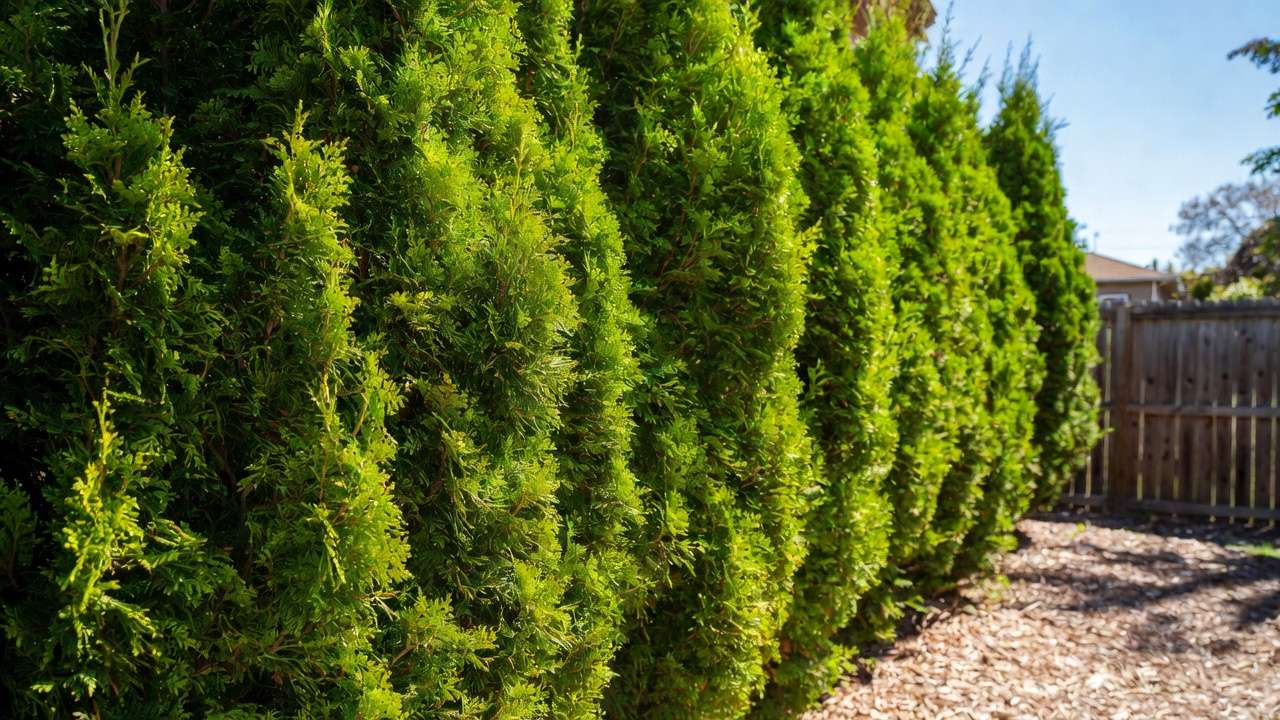
Expert tips — Space 2-4 ft apart depending on variety; mulch heavily to retain moisture. Prune in late winter/early spring for bushier growth. Watch for pests like spider mites—organic neem oil works wonders.
These shrubs deliver quick privacy while staying compact enough for tiny footprints.
Best Compact Trees for Privacy Without Overwhelming Space 🌳
Trees add height and drama without sprawling wide—ideal for small yards:
- ‘Little Gem’ Magnolia — Compact evergreen-ish (semi-evergreen in mild climates); fragrant white blooms. Grows 15-20 ft tall, 10-15 ft wide. Zones 7-9; columnar form fits tight spots.
- Sky Pencil Holly (Ilex crenata ‘Sky Pencil’) — Ultra-narrow (2 ft wide!), 6-10 ft tall. Perfect for corners or along fences. Zones 5-9; low-maintenance evergreen.
- Dappled Willow (Salix integra ‘Hakuro Nishiki’) — Variegated pink/white/green leaves, red winter stems. Fast to 8-10 ft; zones 4-9. Prune for shape.
- North Pole Arborvitae or Soft Serve False Cypress — Dwarf evergreens; dense, narrow. Reach 10-15 ft with minimal spread.
- Columnar options like dwarf Italian Cypress cultivars — Elegant, Mediterranean look; stay slim.
Choose based on your zone and style—these provide vertical privacy without dominating the space.
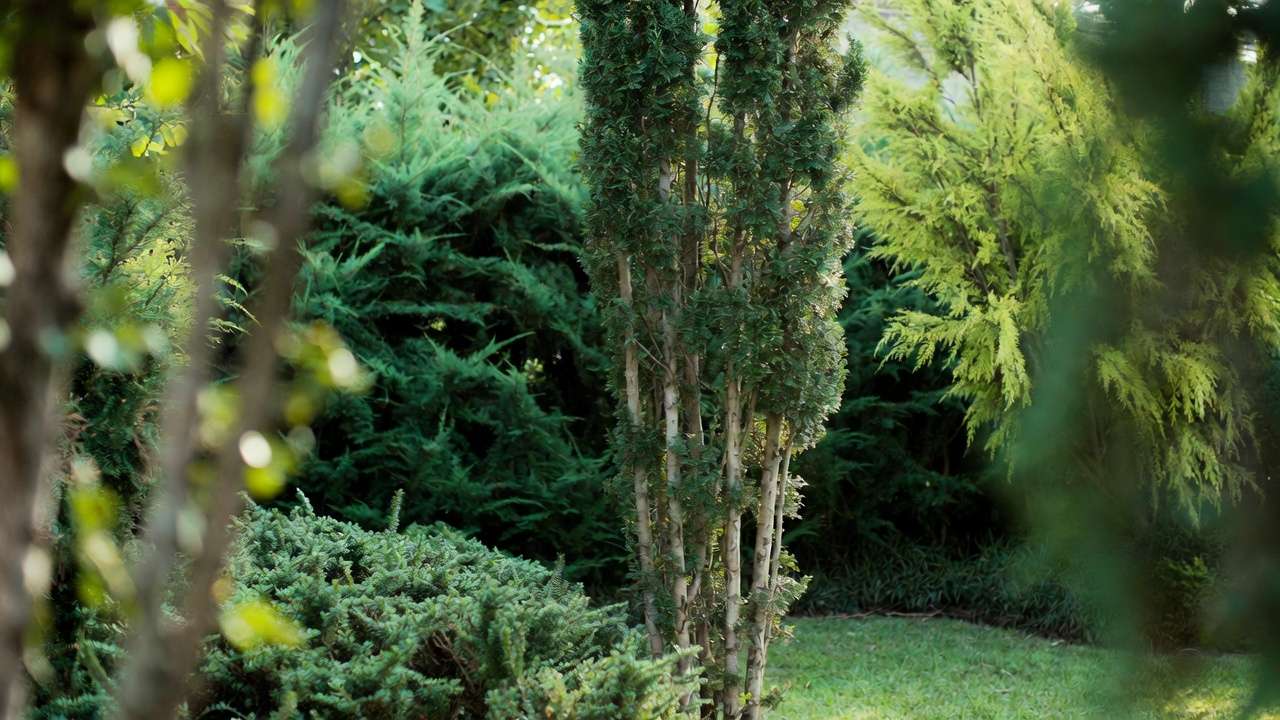
Evergreen vs. Deciduous: Which Is Right for Your Oasis? ❄️🍂
- Evergreens (arborvitae, holly, laurel) — Year-round density blocks views, wind, and noise consistently. Pros: Reliable screening, winter structure. Cons: Can look monotonous; some need protection from winter burn.
- Deciduous (forsythia, lilac, beautyberry) — Lose leaves in winter for more light/sky views; explode with spring flowers, fall color 🍁, or berries. Pros: Seasonal variety, pollinator magnets. Cons: Reduced privacy in cold months.
Best approach — Mix both! Evergreens as the backbone for constant coverage, deciduous for pops of interest and biodiversity. This layered strategy creates resilience (pests hit one type less hard) and visual appeal year-round.
Climbing Plants & Vertical Solutions: Maximize Every Inch 🧗♂️
When ground space is tight, go up! Use trellises, arbors, or existing fences:
- Climbing Hydrangea — Slow but stunning; large white blooms, clings to surfaces.
- Clematis — Fast, colorful flowers; pair with shrubs for support.
- Honeysuckle — Fragrant, attracts hummingbirds; choose non-invasive varieties.
- Espaliered fruit trees (figs, apples) — Artistic flat forms; productive + pretty.
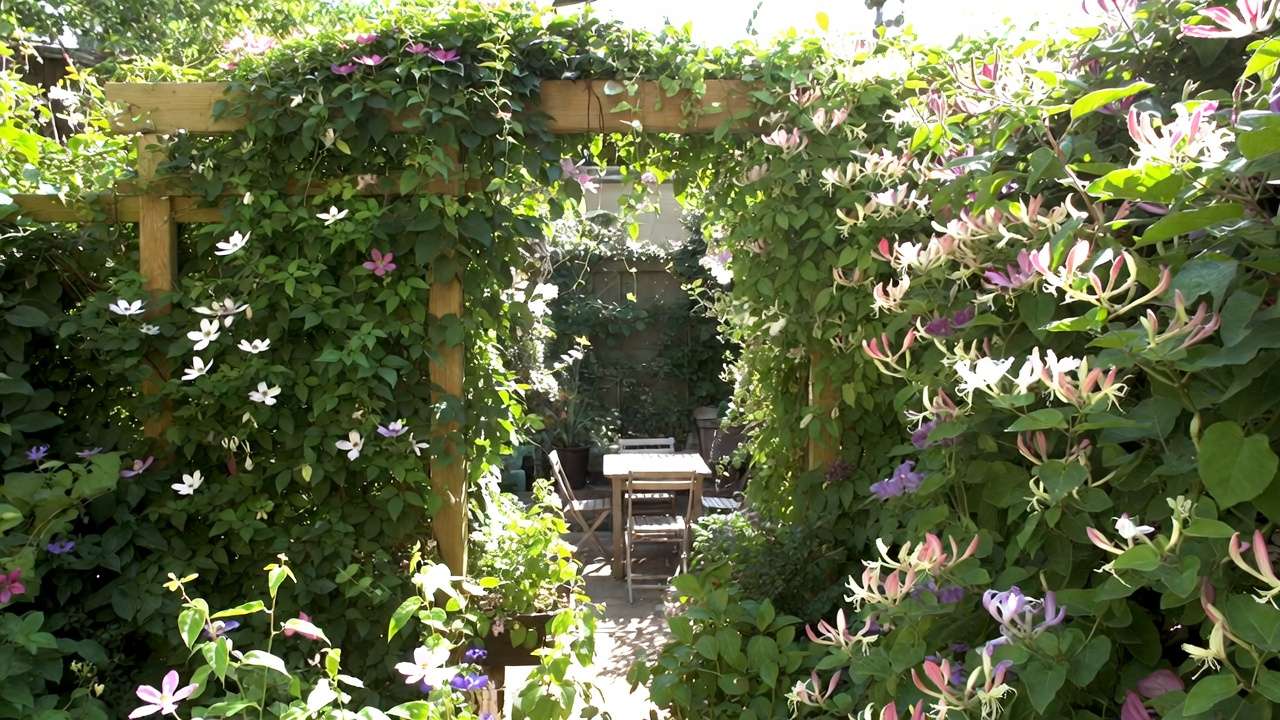
Potted tall bamboo or grasses offer flexible, renter-friendly screens.
These vertical boosters turn walls and fences into lush privacy features without taking floor space.
Layering Techniques: Create Depth and a True Secluded Feel 🌿🌿🌿
The secret to making a small backyard feel like a genuine private oasis isn’t just planting tall screens — it’s creating layers that add depth, texture, and visual interest. Layering tricks the eye into perceiving more space and provides better, more reliable privacy by blocking views at multiple heights.
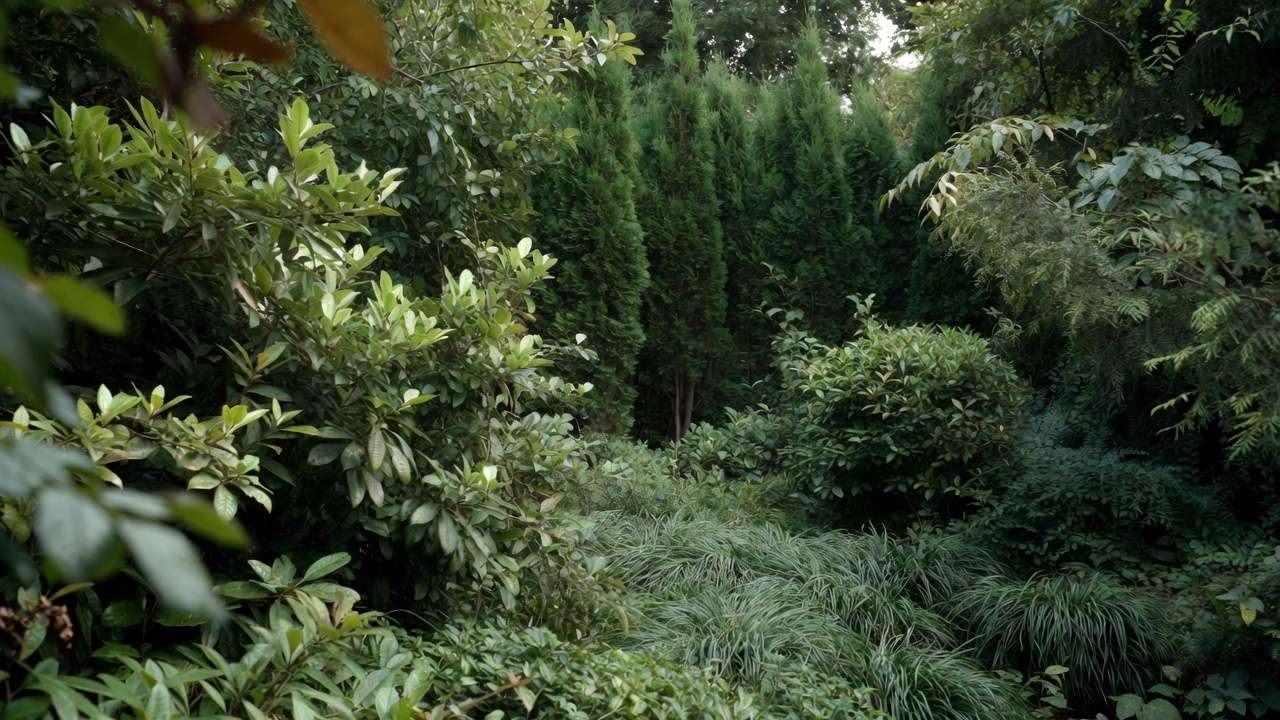
Here’s how to master layered planting in tight spaces:
- Back row (tallest layer) — Use compact columnar or narrow trees/shrubs (8–15 ft tall) like Sky Pencil Holly, North Pole Arborvitae, or ‘Little Gem’ Magnolia. These form the primary visual barrier.
- Middle layer (medium height) — Add 4–8 ft shrubs such as Skip Laurel, Boxwood, or Wax Myrtle. These fill gaps and add density where the taller plants might thin out at the base.
- Front/low layer — Finish with 1–4 ft perennials, ornamental grasses (e.g., Feather Reed Grass), low-growing evergreens (dwarf boxwood, creeping juniper), or flowering groundcovers like creeping phlox or vinca. This softens the edge, hides bare stems, and prevents a “leggy” look.
Advanced layering tips:
- Stagger plants in a zigzag or triangle pattern rather than a straight line — this creates fuller coverage faster and avoids a fence-like appearance.
- Incorporate berms (small mounds of soil 1–2 ft high) to instantly gain height without waiting for growth. Plant taller species on top for maximum effect.
- Mix textures and colors: fine-needled evergreens + broad glossy leaves + feathery grasses = rich, dynamic look that distracts from the small footprint.
- Add seasonal accents: spring bulbs, summer perennials, or fall-interest shrubs (e.g., beautyberry) to keep the screen engaging year-round.
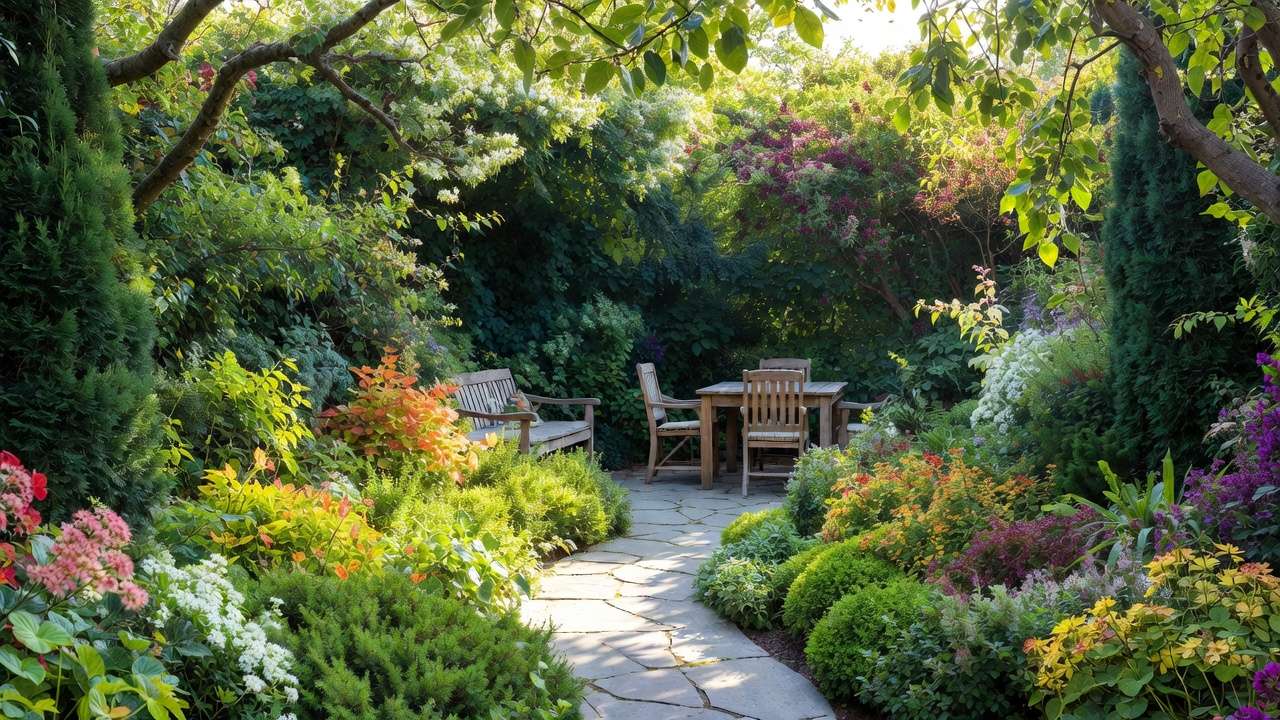
Layered plantings not only block views more effectively but also create microclimates — sheltered pockets perfect for relaxing, reading, or sipping coffee in peace. Many clients report their small yards feel twice as large once layered properly. 🌸
Planting & Care Guide: Expert Tips for Success 🛠️💧
Healthy plants = fast, dense privacy. Follow these proven steps:
1. Timing is everything Best planting windows: early spring (after last frost) or early fall (6–8 weeks before first frost). This gives roots time to establish before extreme heat or cold.
2. Soil preparation
- Test drainage: Dig a 12-inch hole, fill with water — if it takes >4 hours to drain, amend heavily or choose raised beds.
- Mix in 2–4 inches of compost or aged manure + a balanced slow-release fertilizer (e.g., 10-10-10).
- For clay soils, add gypsum and organic matter; for sandy soils, focus on moisture retention with mulch.
3. Spacing guidelines (for solid hedges/screens)
- Emerald Green Arborvitae: 2.5–3.5 ft apart
- Skip Laurel: 4–5 ft apart
- Sky Pencil Holly: 2–3 ft apart
- Privet: 2–3 ft apart (tighter for faster fill-in) Always plant slightly wider than mature width to allow air circulation and prevent disease.
4. Planting technique
- Dig holes 2× wider than root ball, same depth.
- Loosen roots if pot-bound.
- Backfill, water deeply, then apply 2–3 inches of organic mulch (keep it away from stems to prevent rot).
- Stake tall plants only if in windy areas.
5. Watering & fertilizing
- First year: Deep water 2–3×/week (1 inch total, including rain).
- Years 2+: 1 inch/week during dry spells.
- Fertilize in early spring with slow-release granular; avoid late-season feeding to prevent tender growth.
6. Common beginner mistakes to avoid
- Planting too deep (burying the root flare causes rot).
- Overcrowding (leads to competition and weak growth).
- Skipping mulch (increases watering needs by 50%).
- Ignoring zone hardiness (many beautiful plants die in cold snaps).
Follow these basics, and your privacy plants will thrive with minimal fuss.
Maintenance & Troubleshooting: Keep Your Oasis Thriving Year-Round 🔧
A low-maintenance screen is achievable with the right habits:
Seasonal care checklist
- Spring — Prune lightly to shape (remove dead/crossing branches). Apply slow-release fertilizer. Watch for new growth pests.
- Summer — Deep water during drought; mulch refresh. Shear fast-growers (privet, boxwood) 1–2 times for density.
- Fall — Final prune (light); add winter mulch layer around bases. Plant new additions.
- Winter — Protect tender evergreens from windburn with burlap screens in harsh zones. Check for vole/mouse damage under snow.
Pest & disease prevention (organic-first approach)
- Spider mites & scale: Blast with strong hose; use horticultural oil or neem in early stages.
- Deer: Plant deer-resistant choices (arborvitae less tasty than yew); use motion-activated sprinklers or netting during browsing season.
- Fungal issues (e.g., boxwood blight): Ensure good airflow, avoid overhead watering, remove affected parts promptly.
- Beneficial insects: Encourage ladybugs, lacewings, and birds with diverse planting — they handle aphids naturally.
Long-term management
- Thin older plants every 3–5 years to maintain vigor and prevent hollow centers.
- Rejuvenation pruning: Cut back hard (to 6–12 inches) on overgrown privet/laurel every 5–7 years in late winter — they bounce back vigorously.
- Monitor growth: Adjust spacing if plants encroach on paths or neighbors.
With consistent (but not daily) care, your screen will look lush and full for decades.
Real-Life Examples & Case Studies 📸
Urban balcony-turned-oasis (Zone 7) A 12×15 ft concrete patio felt exposed to three neighboring units. Solution: Potted ‘Sky Pencil’ Hollies along the railing + climbing clematis on trellis + low boxwood pots in front. Result: Full privacy in one season, plus summer blooms and winter structure. Total cost ~$450.
Suburban narrow side yard (Zone 6) 10-ft-wide strip between houses. Planted staggered Emerald Green Arborvitae (back) + Skip Laurel (middle) + dwarf deutzia (front). Added a small berm for extra height. After 2.5 years: Dense 10-ft screen, birds nesting, noise noticeably reduced.
Renter-friendly small deck (Zone 8) Mobile pots of bamboo + fast-growing honeysuckle on lattice + potted ‘Little Gem’ Magnolia. Easy to rearrange or take when moving — privacy achieved in months without permanent planting.
These real transformations show that even the tiniest spaces can become peaceful retreats with strategic plant choices.
FAQs: Answering Your Top Privacy Planting Questions ❓
How long until I get real privacy? Fast-growers (privet, arborvitae) can provide decent screening in 1–2 years, solid coverage in 3–5 years with proper care. Starting with larger nursery stock speeds things up.
What are the most low-maintenance options? Emerald Green Arborvitae, Sky Pencil Holly, and Yaupon Holly — minimal pruning, pest-resistant, drought-tolerant once established.
Are these plants safe for pets and kids? Most listed are non-toxic (arborvitae, holly berries mildly toxic if large quantities eaten). Skip cherry laurel if you have curious pets — leaves contain cyanogenic compounds.
What if plants alone aren’t enough? Combine with slim lattice panels, outdoor curtains, or small water features (masking noise). Layering usually solves 90% of visibility issues.
Rough cost for a starter 20-ft hedge? $400–$1,200 depending on plant size and region (includes soil amendments and mulch). Much cheaper long-term than fencing.
Conclusion: Transform Your Small Backyard into a Private Paradise Today 🌺
Your small backyard doesn’t have to feel like a fishbowl. With the right mix of compact trees, dense shrubs, clever layering, and consistent care, you can create a lush, living privacy screen that grows more beautiful every year. These natural solutions deliver not just seclusion, but also cleaner air, happier wildlife, seasonal color, and that soul-soothing connection to nature we all crave.
Start small: Pick one corner, plant a few key pieces, observe how they grow, and expand as you gain confidence. Before you know it, you’ll be enjoying morning coffee in your own secluded oasis — hidden in plain sight.
Ready to get started? Grab your gloves, choose a sunny afternoon, and plant the beginning of your private paradise today. Your future relaxed self will thank you! 🌟🍃











