
Imagine stepping outside on a crisp winter morning, only to find your prized juniper bonsai’s needles browned and brittle, or worse—your maple’s fine roots frozen solid in its shallow pot, leading to a slow decline come spring. 😔 This heartbreaking scenario plays out for many bonsai enthusiasts every year when unexpected frosts hit hard. The good news? Protecting outdoor bonsai from frost is entirely achievable with the right strategies, and it can mean the difference between thriving trees and devastating losses.
As someone who’s nurtured and overwintered bonsai collections through harsh winters in various climates (including zones pushing -15°C/5°F and below), I’ve seen firsthand how proper preparation prevents root freeze, wind desiccation, and freeze-thaw damage. Bonsai in pots face unique vulnerabilities compared to in-ground trees: their roots lack deep soil insulation, making them prone to rapid temperature drops that kill fine feeder roots while the trunk and branches appear unharmed. 🌲
In this comprehensive guide, we’ll dive deep into the science of frost damage, species-specific tolerances, proven protection methods (from simple ground placement to advanced cold frames), watering rules, monitoring tips, and spring recovery. Whether you’re a beginner in a cold climate or an experienced grower refining your winter routine, these actionable steps will help safeguard your outdoor bonsai—keeping them healthy, vigorous, and ready for stunning spring growth. Let’s ensure your miniature masterpieces survive—and thrive—through the coldest months! ✨
Why Frost Damages Outdoor Bonsai (The Science Behind the Risk) ❄️🔬
Understanding frost damage is key to effective protection. Unlike landscape trees with deep root systems insulated by earth, bonsai roots sit in shallow containers exposed on all sides—including the bottom. This setup allows temperatures to plummet quickly, often dropping 10–15°C (18–27°F) below air temperature in pots elevated on benches.
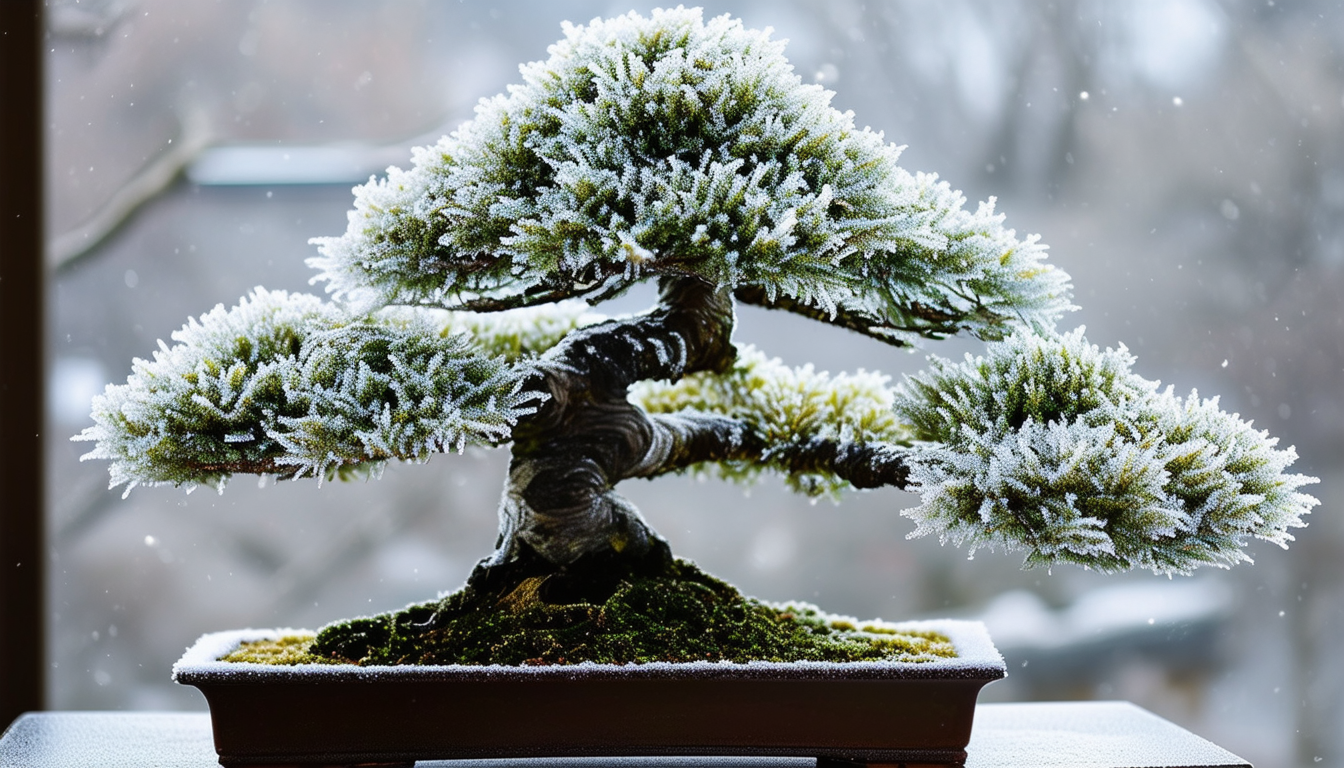
Freeze-Thaw Cycles Harm Shallow Roots The real killer isn’t just steady cold—it’s repeated freezing and thawing. When soil freezes, ice crystals expand and rupture delicate root cells. Thawing then causes further damage as water rushes in unevenly, leading to rot or desiccation. Roots of most temperate species tolerate brief freezes but suffer when cycles repeat daily.
Wind Desiccation vs. Direct Freezing: The Hidden Killers Evergreens like junipers and pines lose moisture through foliage even in dormancy. Freezing winds accelerate this “winter burn,” turning needles brown from the tips inward. Deciduous species fare better against wind but still risk branch dieback if roots can’t uptake water post-thaw.
Species-Specific Tolerance Levels (Quick Reference Table) 🌲
- Fully Cold Hardy (survive -20°C/-4°F or lower with basic help): Juniper (Juniperus spp.), Pine (Pinus spp.), Larch (Larix), Spruce.
- Semi-Hardy (need moderate protection below -10°C/14°F): Japanese Maple (Acer palmatum), Beech (Fagus), Hornbeam (Carpinus), Elm (Ulmus).
- Marginal/Frost-Sensitive (extra insulation required): Azalea/Rhododendron, Olive (Olea), Pomegranate (Punica), some flowering cherries.
Expert insight: In pots, even hardy species lose one hardiness zone— a zone 5 juniper might act like zone 6 without protection. Always check your USDA hardiness zone and local microclimate (e.g., urban heat islands vs. exposed rural spots).
Assess Your Setup: Before Winter Hits Checklist 📋
Don’t wait for the first freeze—start prepping in early fall!
- Check your hardiness zone and note average first/last frost dates (use tools like local weather apps).
- Inventory species and group by protection needs (hardy vs. sensitive).
- Inspect health: Treat pests, prune lightly if needed, ensure good drainage to avoid wet-root freeze.
- Gather materials: Mulch (pine bark, leaves), horticultural fleece, bubble wrap, frost cloth, cold frame supplies, moisture meter. 🛒
A quick audit now saves panic later!

Best Protection Methods: From Simple to Advanced 🏠❄️
The heart of protecting outdoor bonsai from frost lies in choosing (and often combining) methods that insulate roots, block wind, and maintain stable temperatures without forcing premature growth. Here’s a ranked progression from easiest/low-cost to more involved setups—pick based on your collection size, climate severity, and space.
Method 1: Place Pots on the Ground (The Easiest First Step) 🌍 Elevated benches expose pots to the coldest air and wind; simply moving them down to soil level can add 5–10°C (9–18°F) of insulation because the earth acts as a thermal buffer.
- Dig a shallow trench if possible or cluster pots tightly together.
- Position against a north-facing wall, fence, or evergreen hedge to cut wind chill.
- Pro tip: Lay pots on bricks or tiles to prevent waterlogging from ground contact. This alone suffices for hardy species in milder zones (e.g., USDA 6+).
Method 2: Bury Pots in the Garden or Mulch Heaps 🌱 For superior root protection, bury containers up to the rim in garden soil, raised beds, or deep mulch piles. Soil and organic mulch moderate temperature swings dramatically—many growers report zero root loss even in -15°C (5°F) spells. Step-by-step:
- Choose a sheltered, well-drained spot (avoid low-lying frost pockets).
- Dig holes or use pre-made mulch trenches; place pots in and backfill around sides.
- Top with 10–20 cm (4–8 inches) of pine bark, straw, or leaves—snow on top adds extra insulation!
- Mark locations for easy spring retrieval. Pros: Natural, effective, low-maintenance. Cons: Harder on balconies; risk of rodent damage (use wire mesh). Recovery in spring involves gradual unearthing to avoid shock.
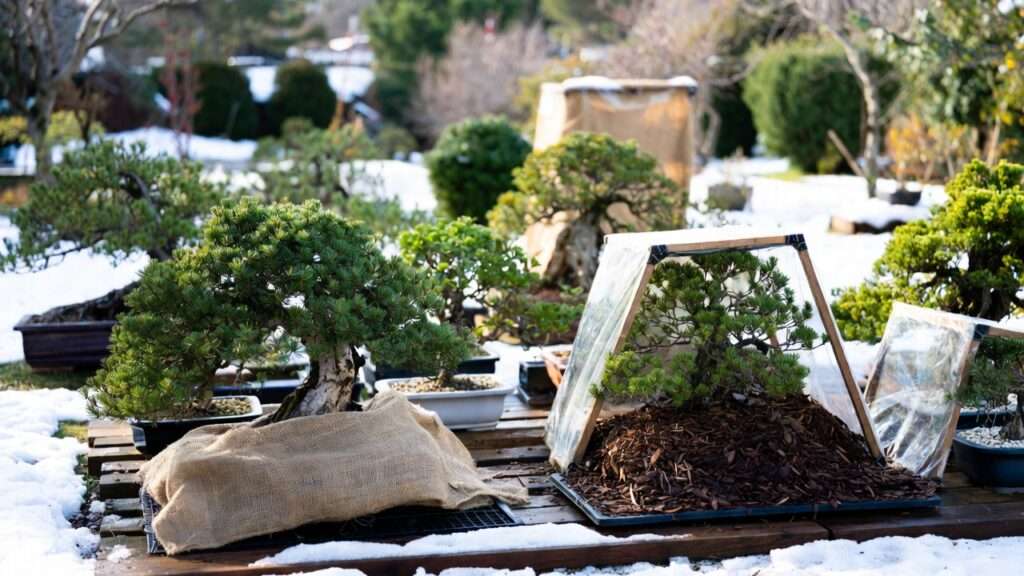
Method 3: Build or Buy a Cold Frame / Mini Greenhouse 🏡 Cold frames provide excellent controlled protection—ideal for semi-hardy and marginal species or larger collections. They trap daytime solar heat while shielding from night freezes. DIY tutorial:
- Use old windows/sashes or polycarbonate panels for the lid (slanted south-facing for max sun).
- Build a wooden or cinder-block frame ~60–90 cm (2–3 ft) tall; line bottom with gravel for drainage.
- Vent on warm days (>5°C/41°F) to prevent overheating and early budding. Commercial options: Look for mini polytunnels or portable cold frames (brands like Palram or budget Amazon versions work well). Monitor with a max/min thermometer—many pros use these exclusively for maples and azaleas.
Method 4: Insulate Pots Individually (Budget-Friendly for Small Collections) 🛡️ Perfect for balconies or limited space—wrap each pot for localized protection.
- Surround with 5–10 cm (2–4 in) bubble wrap or styrofoam sheets (foil-backed for extra heat reflection).
- Cover soil surface with mulch; wrap trunk base if needed (but leave foliage exposed for evergreens).
- Place wrapped pots in larger plastic totes filled with mulch or straw.
- For extra-sensitive trees: Add low-wattage soil heat mats (set to 2–5°C/35–41°F) with thermostat—never use unmonitored heating cables! This method boosts hardiness by 1–2 zones effectively.

Method 5: Full Shelter Options (Garage, Shed, Unheated Greenhouse) 🚪 For severe winters or tender species: Move to an unheated structure with natural light.
- Requirements: Bright, cool spot (0–10°C/32–50°F ideal); good airflow to prevent mold (small fan helps).
- Avoid heated rooms—warmth breaks dormancy prematurely, leading to weak growth.
- Water sparingly; check weekly. Many urban growers use south-facing garages successfully. Extra layers for all methods: Drape horticultural fleece or frost cloth over groups during hard freezes; apply anti-desiccant sprays (e.g., Wilt-Pruf) to evergreens to reduce winter burn.
Winter Watering, Monitoring & Maintenance During Winter 💧👀
One of the biggest mistakes in overwintering bonsai is overwatering—or assuming no water is needed at all. In dormancy, trees transpire minimally, but roots still need slight moisture to avoid desiccation. The golden rule: Water only when the top 2–5 cm (1–2 inches) of soil thaws and feels dry, and then only lightly—aim for just enough to prevent complete dry-out without soaking.
- Use a moisture meter or the classic finger/chopstick test: Insert into soil; if it comes out clean and dry, water sparingly.
- Water during the warmest part of the day (midday thaw) with room-temperature water to avoid shocking roots.
- In prolonged freezes, pots can ice over—gently thaw the surface with warm (not hot) water if checking reveals bone-dry soil beneath. Never force water into frozen media; it expands and damages roots further.
- Evergreens (junipers, pines) may need slightly more frequent checks due to foliage moisture loss, while deciduous species often go months with minimal intervention.
Watch for Signs of Trouble Yellowing needles, excessive needle drop, shriveled bark, or cracking on trunks can signal root issues from freeze damage or drought stress. Early detection allows you to adjust protection (e.g., add mulch) before irreversible harm occurs.
Spring Transition: Safely Bringing Bonsai Out of Winter Protection 🌸
As days lengthen and temperatures rise above freezing consistently (check your local last frost date—typically mid-April to May in many zones), it’s time to gradually reintroduce your trees to full outdoor conditions. Rushing this causes “spring shock”—sunburn, bud drop, or renewed frost vulnerability.
Step-by-step acclimation:
- Start by uncovering or moving pots to partial shade on mild days (>10°C/50°F), returning to shelter at night if freezes threaten.
- Increase exposure over 7–14 days: Morning sun first, then full day.
- Monitor for pests (aphids, scale) that awaken with warmth—treat organically early.
- Once stable, repot if roots show winter stress (mushy or black tips) or if the tree is root-bound. Use fresh bonsai soil mix for drainage.
Done right, your bonsai emerge vigorous, with strong spring push and better resilience for the year ahead.
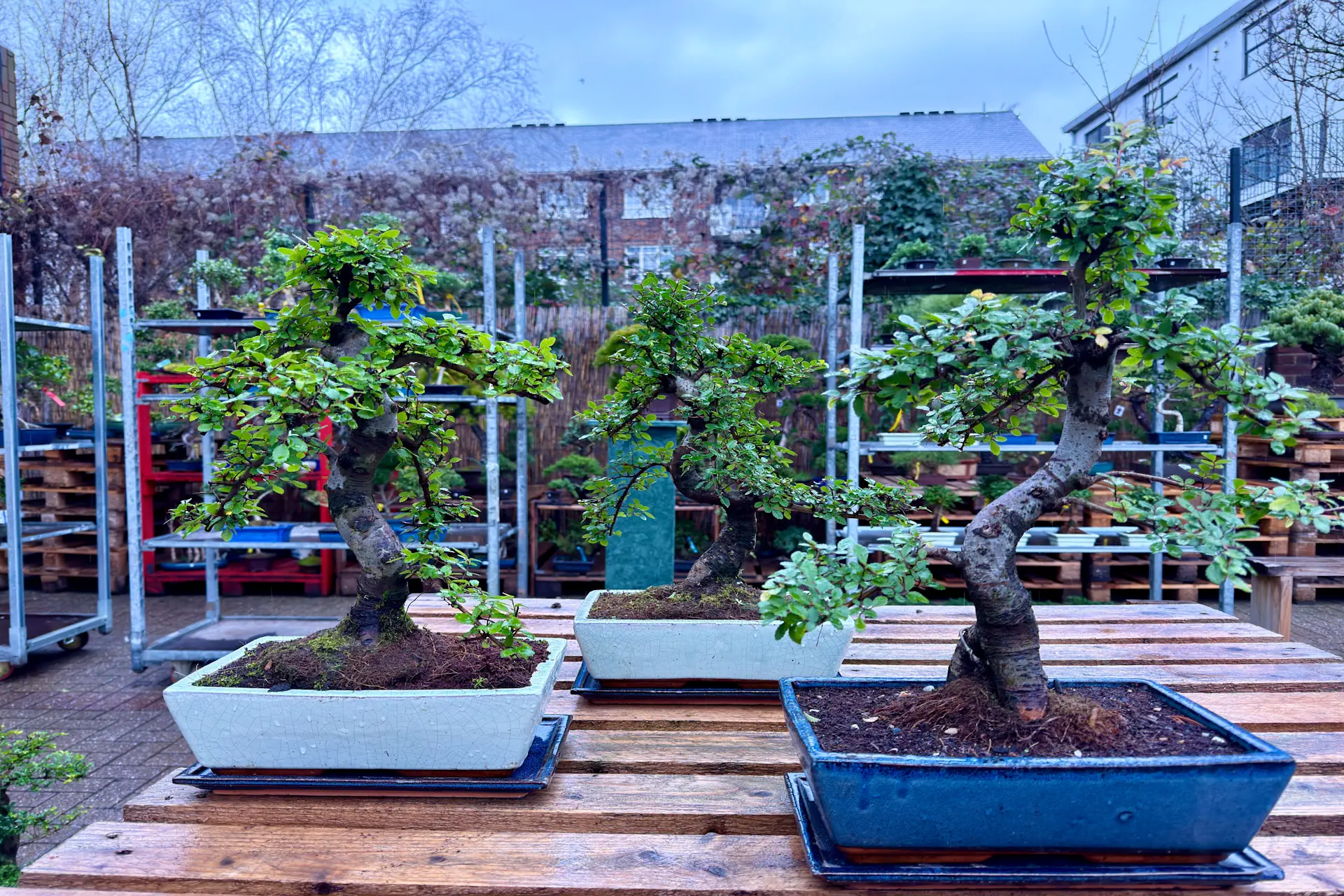
Common Mistakes & Expert Troubleshooting 🛑
Even seasoned growers slip up—here are pitfalls I’ve seen (and fixed) repeatedly:
- Bringing trees indoors too early/late: Warm houses force weak, leggy growth; cold snaps kill unprotected foliage. Solution: Stick to gradual transitions.
- Overwatering in dormancy: Leads to root rot in cool, wet conditions. Fix: Water less than you think needed.
- Ignoring wind barriers: Causes severe desiccation on evergreens. Add burlap screens or plant windbreaks.
- Poor drainage in protection setups: Mulch heaps can hold excess water—ensure good slope/raised bases.
- Forgetting ventilation in cold frames: Mold or fungal issues arise; prop lids open on sunny days.
Pro fix: Keep a simple winter journal noting dates, temps, and actions—it builds your personal expertise over seasons.
FAQs: Protecting Outdoor Bonsai from Frost ❓
How cold is too cold for juniper bonsai? Most junipers handle -20°C (-4°F) or lower with basic ground placement/mulch, but prolonged sub -15°C (5°F) without insulation risks fine root death.
Can I use Christmas lights for warmth? Low-watt incandescent strings can add gentle heat in extreme cold (wrap loosely around pots), but use timers/thermostats to avoid overheating or fire risk. LEDs don’t produce enough warmth.
What if I have no garden space (apartment balcony tips)? Use individual pot wrapping + large mulch-filled totes or movable cold frames. Cluster against a building wall for reflected heat.
Do tropical bonsai need the same protection? No—tropicals (Ficus, Jade) must come indoors above 10°C (50°F) or use heated greenhouses. This guide focuses on temperate/hardy outdoor species.
Is snow good or bad for bonsai? Snow is excellent insulation when it blankets protected pots—acts like a natural blanket! Just brush heavy wet snow off foliage to prevent breakage.
How do I know if roots survived winter? In spring, gently scratch a root tip: Green/white = alive; brown/black/shrivelled = damage. Healthy trees show strong bud swell.
Can I leave bonsai on benches all winter? Only in very mild zones (USDA 8+) with wind protection; otherwise, elevation increases freeze risk dramatically.
What about anti-desiccant sprays? Yes, products like Wilt-Pruf reduce winter burn on evergreens—apply in late fall before hard freezes.
And more: Always prioritize species needs—research your exact variety!
Conclusion & Final Winter Protection Checklist
Your bonsai aren’t just plants—they’re living art that can endure decades with thoughtful care. By understanding frost risks, preparing early, choosing layered protection methods, monitoring wisely, and easing into spring, you’ll dramatically reduce losses and enjoy healthier, more beautiful trees year after year. 🌟❄️
Printable Winter Protection Checklist
- Audit species & zone in early fall
- Inspect health & drainage
- Gather mulch, fleece, wraps
- Move to ground/sheltered spot
- Bury/wrap/insulate as needed
- Set up cold frame if using
- Water only when thawed & dry
- Monitor weekly for issues
- Ventilate shelters on warm days
- Gradually acclimate in spring
Try at least one new method this season—you’ll be amazed at the results! Share your winter bonsai setup or questions in the comments below. For more expert tree care guides, subscribe today. Your miniature forests thank you! 🌲💚











