
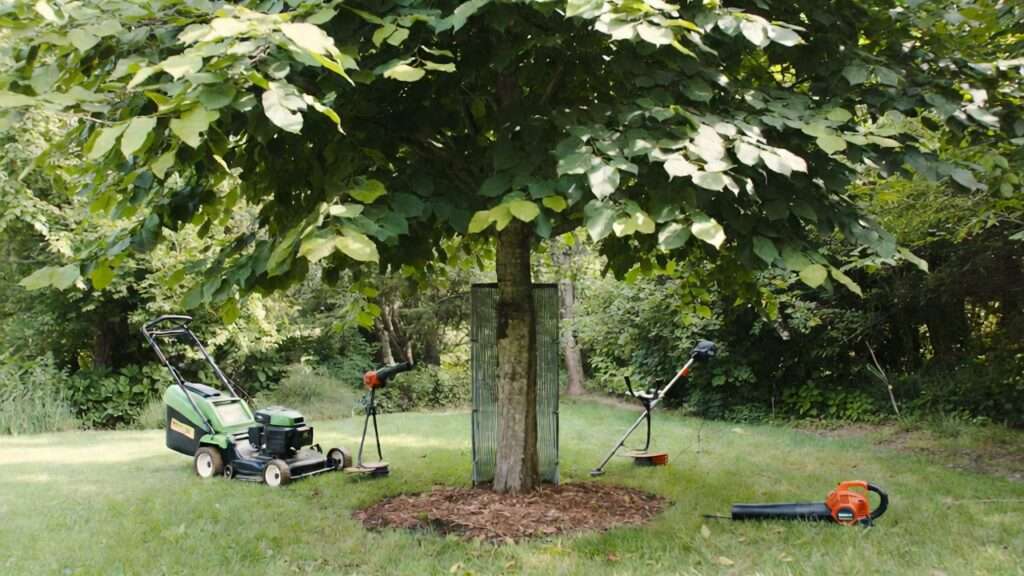
Imagine this: You’ve carefully planted a young tree in your yard, watered it through dry spells, and watched it grow taller each season. Then, one careless swipe with a string trimmer or a quick bump from the lawn mower scars the tender bark at the base. What starts as a small wound invites decay, insects, and disease — and over time, that thriving tree begins to decline or even dies prematurely. 😔
Protecting tree trunks from lawn equipment is one of the most overlooked yet critical aspects of tree care in home landscapes. String trimmers (often called weed whackers) and mower decks are responsible for countless cases of mechanical damage every year, especially to young trees and thin-barked species like maples, cherries, and fruit trees. This preventable issue ranks high among causes of urban tree mortality, with studies showing that mechanical wounding from lawn tools affects a shocking percentage of landscape trees — sometimes over 60% in surveyed areas show at least one wound!
In this in-depth guide, backed by recommendations from university extension services (such as Purdue, University of Minnesota, and others), certified arborists, and real-world best practices, we’ll explore why this damage happens, its serious long-term consequences, and the most effective, proven strategies to safeguard your trees forever. Whether you’re a homeowner, gardener, or landscaper, these tips will help you create healthier, longer-living trees — saving you time, money, and heartbreak. Let’s dive in and make sure your trees stay strong! 🌱💪
Why Lawn Equipment Damages Tree Trunks (And Why It Matters) ⚠️
Trees have a thin protective layer called bark that shields the vital cambium — the living tissue just beneath it responsible for transporting water, nutrients, and sugars throughout the tree. When lawn mowers scrape the base or string trimmers slice into the bark, they wound this cambium, disrupting the tree’s circulatory system.
Even minor, repeated injuries add up quickly. A single deep cut from a high-speed trimmer line can girdle (encircle) part or all of the trunk, starving the upper tree of essentials and inviting pathogens.
Statistics paint a grim picture:
- In urban and suburban settings, mechanical damage from lawn equipment is a leading cause of young tree mortality. Studies of urban tree survival show annual mortality rates for newly planted trees often range from 2.8% to over 9% in the first few years, with equipment damage frequently cited alongside water stress and poor planting.
- One survey found that 62.9% of observed trees had at least one wound from lawn tools, with surface-rooted trees affected even more severely (up to 93.6%).
- Young trees (under 5–10 years old) are especially vulnerable, as their thin bark offers little resistance. In many cases, this contributes to high replacement rates in landscapes, where 25% or more of young trees may be lost early on.
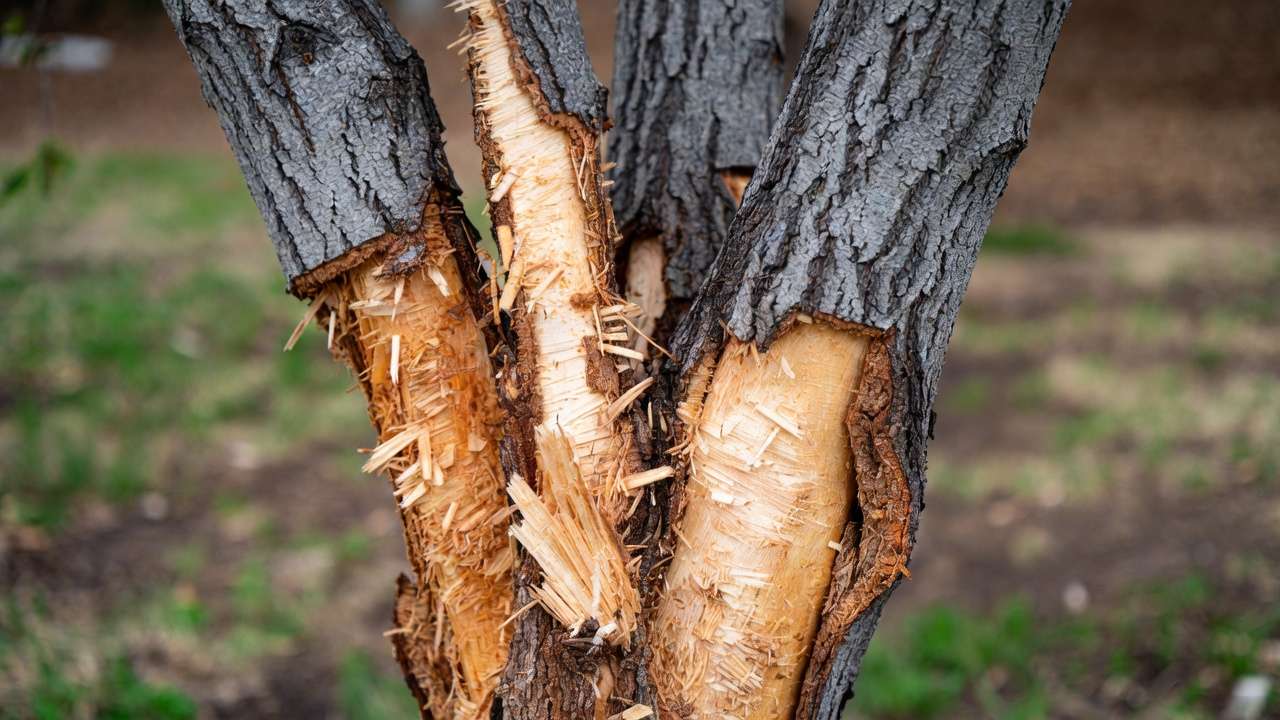
The consequences go beyond looks: Wounds create entry points for decay fungi, borers, and other pests. Over years, this weakens structural integrity, increases storm failure risk, and shortens lifespan dramatically. Replacing a mature tree? It can cost hundreds to thousands of dollars — not to mention lost shade, wildlife habitat, and property value. 💸 Protecting trunks early prevents these cascading problems and promotes resilient, beautiful trees.
Vulnerable species include:
- Maples 🍁
- Fruit trees (apples, cherries) 🍎
- Dogwoods, birches, and other thin-barked ornamentals 🌸
Understanding the Main Culprits: Mowers vs. String Trimmers 🏍️🌿
Lawn mowers cause damage primarily through deck edges, wheels, or blades scraping the root flare (where trunk meets roots). This often happens when grass grows right up to the base, forcing operators to get too close. Repeated bumps create horizontal scars and expose roots.
String trimmers are even more destructive. Their nylon line spins at high speeds (often 6,000–10,000 RPM), acting like a tiny saw. A momentary lapse slices bark cleanly, removing strips or creating deep gouges. Trimmers target the lower 6–12 inches — exactly where the cambium is most critical.
Combined, they deliver weekly micro-injuries during growing season (spring/summer), when bark is looser and sap flow is active. Fall and winter add risks from leaf cleanup or snow equipment. The result? Cumulative stress that weakens defenses against drought, pests, and disease.
The #1 Best Prevention Strategy: Create a “No-Equipment Zone” Around Every Tree 🚧
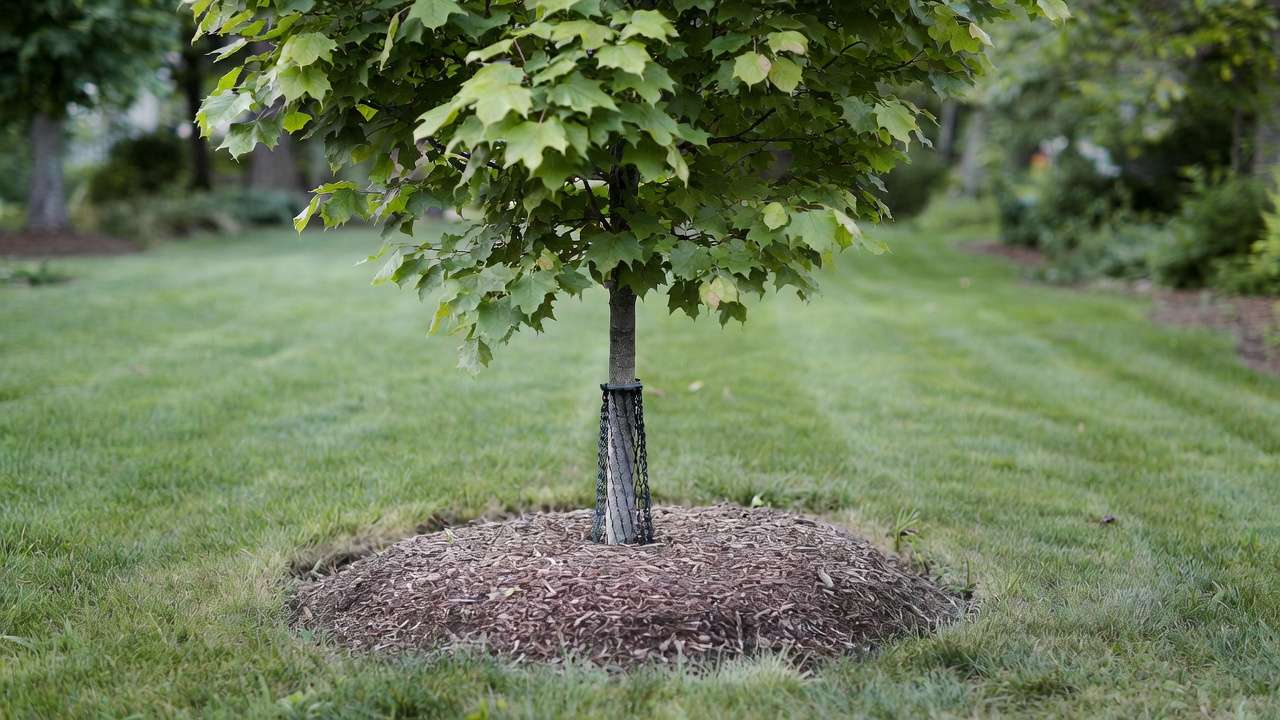
The simplest, most effective way to stop damage? Eliminate the need to mow or trim close to the trunk with a mulch ring — the gold standard recommended by arborists and extensions everywhere.
How to create one:
- Size: Aim for 3–8 feet in diameter (or to the drip line for larger trees). Bigger is better for root health!
- Depth: 2–4 inches of mulch. Too deep suffocates roots.
- Materials: Organic options like wood chips, shredded bark, or leaves work best. They decompose slowly, enriching soil. 🌿
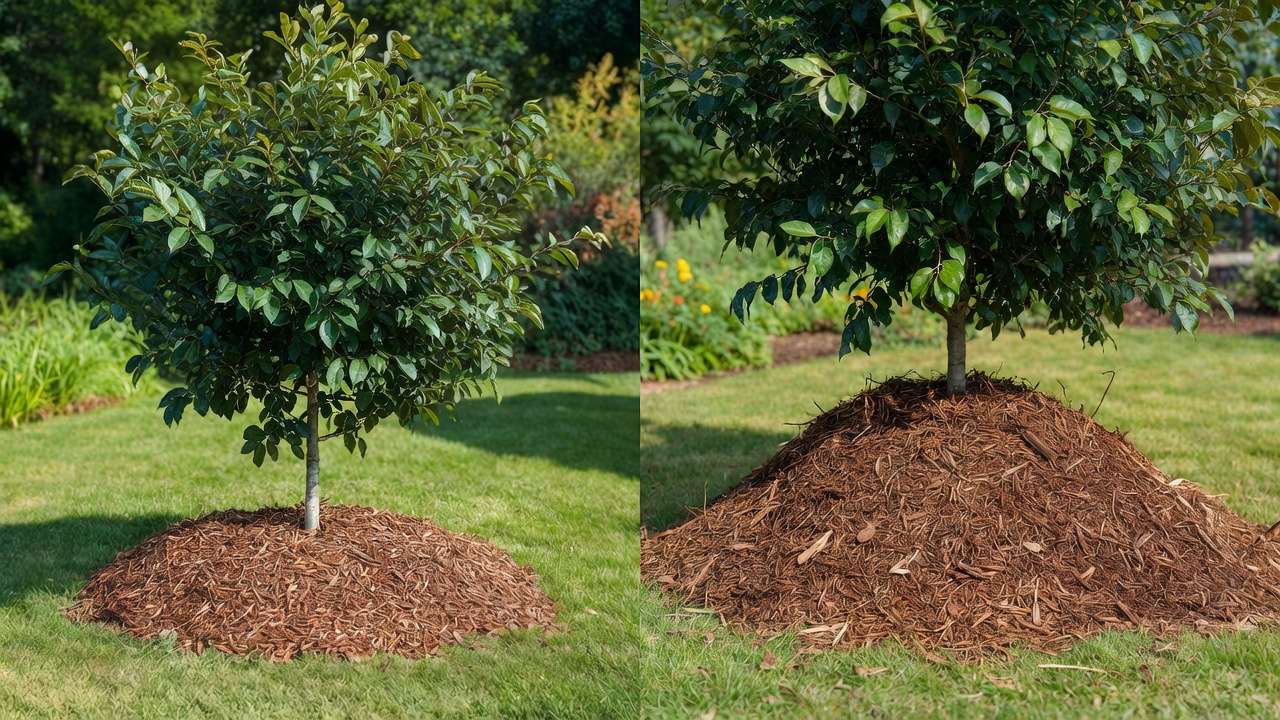
- Shape: Form a flat “donut” — keep mulch 2–6 inches away from the trunk to avoid rot, rodents, or girdling roots. Never pile it up!
Benefits galore:
- Suppresses grass/weeds, removing the reason to get close.
- Retains soil moisture (reduces watering needs).
- Moderates temperature extremes.
- Feeds beneficial microbes and roots.
- Acts as a visual cue: “Stay away!” for mower operators.
If mulch isn’t feasible (e.g., formal lawns), use low groundcovers like clover or hand-weeding zones. Pro tip: Refresh mulch annually and check for “volcano mulching” — that mounded pile against the trunk is a common mistake that traps moisture, rots bark, and invites pests. ❌ Always pull it back!
Physical Trunk Guards & Protectors: Which Ones Actually Work? 🛡️
For extra defense — especially young trees — add physical barriers. Here’s a comparison of top options based on expert recommendations:
| Type | Pros | Cons | Best For |
|---|---|---|---|
| Expandable coiled plastic guards (e.g., ArborGard, EasyFlex) | Ventilated, expands with growth, blends with bark, recycled options | May need replacement every few years | Young trees, string trimmer protection 🌿 |
| White/reflective tube guards | Prevents sunscald + equipment damage | Can trap heat if non-ventilated | Thin-barked species, winter areas |
| Corrugated drain pipe (DIY slit) | Cheap, durable, easy to install | Less aesthetic | Budget-friendly, larger trunks |
| Hardware cloth/metal mesh | Strong against animals + equipment | Can rust or heat up | High-risk areas, rodents too |
| Tree shelters/tubes | Full enclosure for saplings | Removable after establishment | Very young/newly planted |
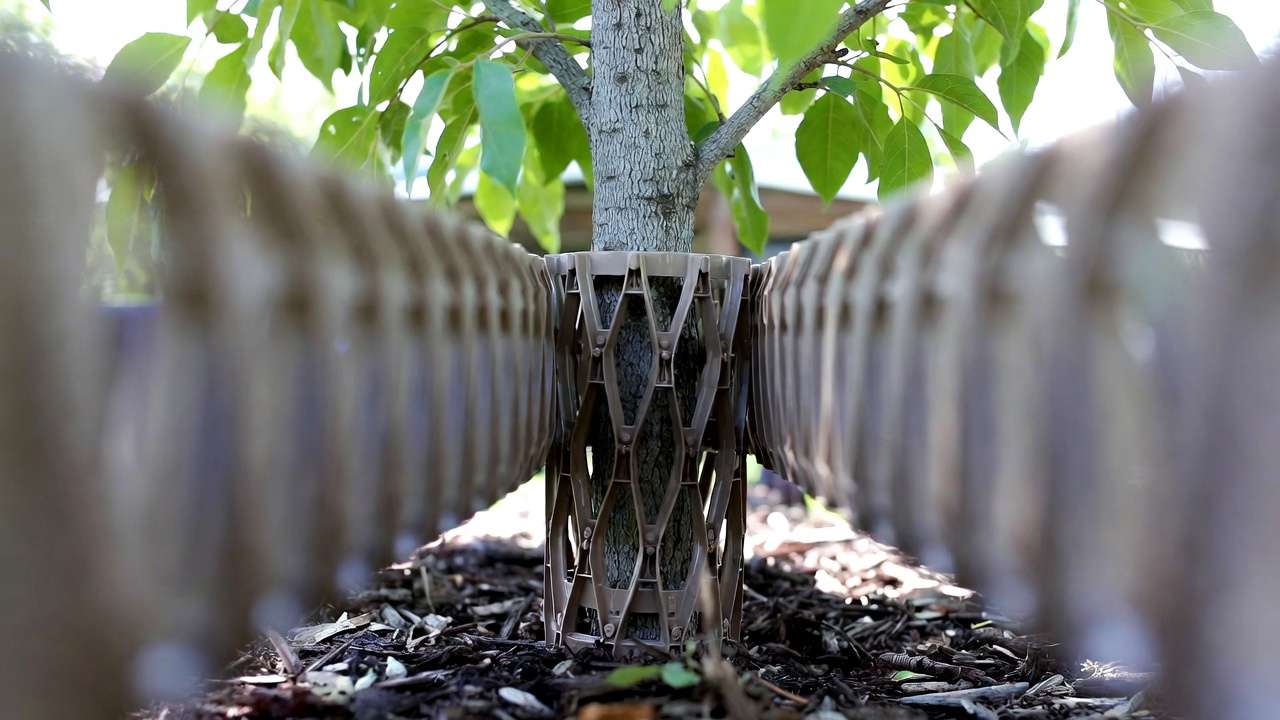
Avoid: Rigid black plastic (traps heat/moisture), tight wraps that girdle as tree grows, or anything non-ventilated.
Installation steps:
- Clean area around base.
- Place guard 1–2 inches above soil.
- Secure loosely (no tight ties).
- Height: 18–36 inches (cover vulnerable zone).
- Check yearly; remove after 5–10 years when bark thickens.
These guards shine when combined with mulch rings — together, they create near-bulletproof protection!
Advanced & Creative Protection Methods for Tough Situations 🛠️
For larger trees or tricky spots:
- Install wooden/metal posts as “bumpers” around the trunk (never attach to tree!).
- DIY hacks: Slit old plastic bottles or use hardware cloth cylinders.
- Redesign: Add edging, raised beds, or reroute lawn paths.
- Mature trees: Wider mulch zones + teach family/contractors careful techniques.
Common Mistakes That Actually Harm Your Trees (And How to Fix Them) ❌
- Volcano mulching: Piling against trunk → rot, pests, girdling roots. Fix: Flatten to donut shape, keep away from bark.
- Leaving guards too long/tight → girdling. Fix: Annual checks + removal.
- Non-ventilated materials → moisture traps. Fix: Choose breathable options.
- Ignoring root flare → buries it, causes decline. Fix: Expose gently.
- Guards alone without mulch → equipment still sneaks in. Fix: Combine methods.
How to Repair Tree Trunk Damage If It’s Already Happened 🩹
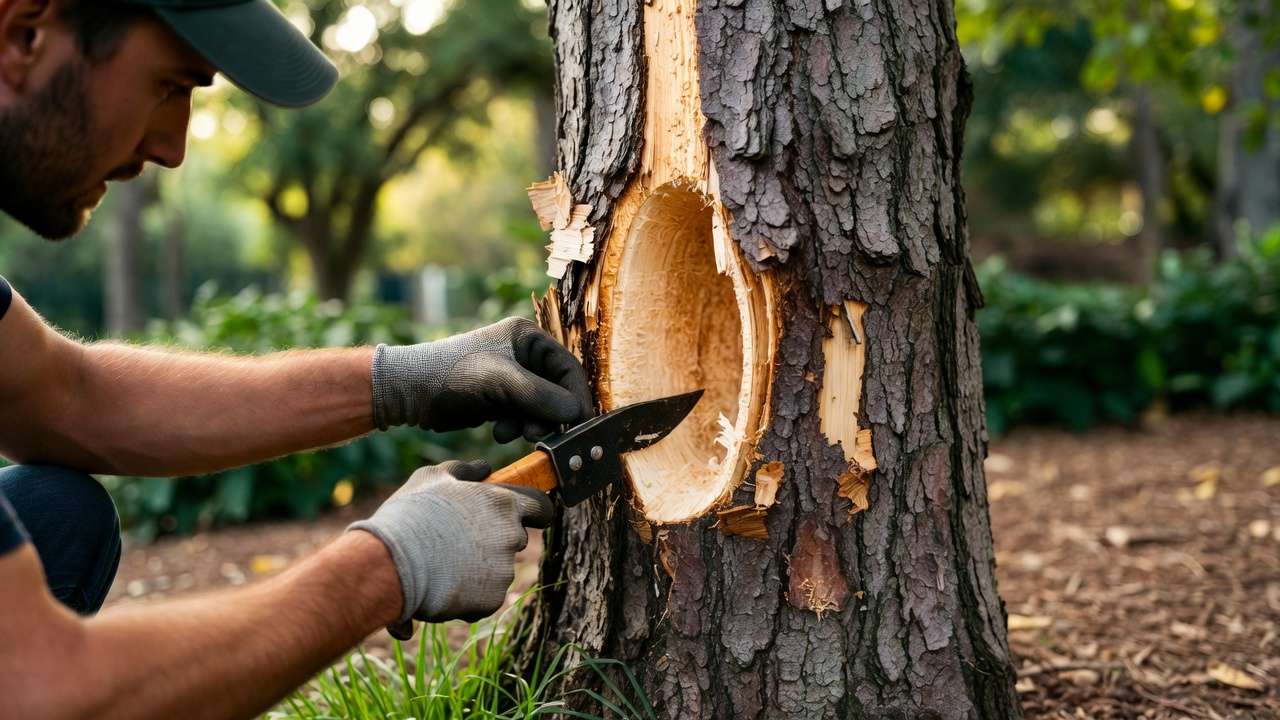
Even with the best intentions, accidents happen. If your tree already shows signs of mower or trimmer damage — vertical scars, missing bark strips, exposed wood, or oozing wounds — quick and proper response can save it. Here’s the expert-recommended repair process step by step.
-
Assess the severity
- Minor wounds (less than 25–30% of trunk circumference): Trees usually compartmentalize and heal over time with good care.
- Moderate (30–50%): Still recoverable for most healthy trees, but monitor closely.
- Severe (>50–60% girdling): Critical risk — the tree may slowly starve above the wound. Call a certified arborist immediately 🌳.
Look for:
- Fresh, clean cuts vs. jagged tearing
- Exposed cambium/wood color (light tan = recent)
- Presence of decay, fungi, insects, or discoloration spreading upward
-
Clean the wound properly
- Do not use wound dressings, paints, or sealants — modern arboriculture consensus (from ISA, university extensions, and research since the 1980s) shows they often trap moisture and promote decay rather than prevent it.
- Gently remove only loose, hanging bark flaps with clean, sharp pruning shears or a knife. Cut back to living tissue in a smooth, oval shape (helps callus roll-over). Never gouge into healthy wood.
- Clean tools with 10% bleach or alcohol between trees to prevent disease spread.
-
Support long-term recovery
- Water deeply during dry spells (especially the first 1–2 growing seasons after injury).
- Apply 2–4 inches of mulch in a wide ring (but never touching the trunk).
- Fertilize lightly only if soil test shows deficiency — over-fertilizing stresses injured trees.
- Avoid additional mechanical damage at all costs — install protection immediately.
- Monitor annually for signs of decay pockets, fungal brackets, or structural weakness.
-
When to call a professional arborist
- Wound covers >50% circumference
- Signs of serious decline (wilting, dieback, cankers)
- Large or mature trees where structural safety is a concern
- Suspected pest/disease complications
With prompt care, many trees recover remarkably well — bark callus can close over small wounds in 1–3 years, and healthy trees often wall off damage effectively. Prevention remains far easier than repair!
Bonus Expert Insights & Real-World Tips from Arborists 🌟
Here are distilled recommendations gathered from trusted sources — university extensions, International Society of Arboriculture (ISA), and practicing arborists:
- Purdue Extension & University of Minnesota: “The best protection is physical separation — mulch rings outperform guards alone because they eliminate the need to mow right up to the trunk.”
- UF/IFAS (University of Florida): Recommends 3–5 ft mulch circles for young trees and warns strongly against “volcano mulching” which is one of the top landscape mistakes leading to tree decline.
- Arborist consensus on guards: Use ventilated, expandable models. Remove them after 5–8 years or when trunk diameter exceeds guard size to prevent constriction.
- Seasonal checklist
- Spring → Install/refresh mulch rings and guards before mowing season starts.
- Summer → Weekly visual checks; keep grass short around base by hand if needed.
- Fall → Remove fallen leaves from mulch ring to prevent rot; consider winter sunscald protection for thin-barked species.
- Winter → Inspect for rodent damage under snow/leaf litter; tighten or adjust loose guards.
- Eco-friendly bonus: Choose FSC-certified wood mulch or local arborist chips (often free!). These support pollinators, improve soil biology, and reduce landfill waste — win-win for your yard and the planet 🌍🐝.
- Special case: Fruit & ornamental trees 🍎🌸 Young apple, cherry, peach, and plum trees are especially thin-barked and valuable. Double protection (mulch ring + guard) is standard practice in orchards and home landscapes to protect future fruit production and aesthetic value.
Frequently Asked Questions (FAQs) ❓
How close can I safely mow to a tree? Never closer than the outer edge of your mulch ring (ideally 18–48 inches). If no mulch, stay at least 12–18 inches away and mow outward from the trunk to avoid scalping roots or scraping bark.
Are tree guards enough on their own? No — they’re secondary. The #1 defense is a wide mulch ring that eliminates the reason to get equipment close. Guards add insurance, especially against trimmers.
What’s the best tree guard for string trimmers? Expandable coiled plastic guards (such as ArborGard or similar ventilated designs) consistently rank highest among arborists for durability, breathability, and growth accommodation.
Can trunk damage kill a mature tree? Yes — if repeated or severe enough to girdle more than half the circumference over time. Mature trees have thicker bark and better compartmentalization, but chronic wounding still shortens life and increases storm breakage risk.
How long should I keep protectors on young trees? Typically 5–10 years, or until the trunk diameter exceeds the guard size and bark thickens noticeably. Check every spring and remove if constriction appears.
What’s the best mulch type for tree protection? Coarse wood chips or shredded hardwood bark (2–4 inches deep). Avoid fine mulch, dyed products, or anything piled against the trunk. Free arborist chips are often excellent and eco-friendly.
Conclusion: Save Your Trees Today for a Lush Tomorrow 🌳❤️
Protecting tree trunks from lawn equipment isn’t just about aesthetics — it’s one of the highest-impact actions you can take to ensure your landscape trees live long, healthy lives. A single mulch ring and a simple guard can prevent decades of decline, thousands in replacement costs, and the heartbreak of watching a favorite tree slowly fade.
This weekend, walk your yard and pick just one tree to protect. Clear grass, spread a wide mulch ring, add a ventilated guard if it’s young, and teach everyone in the household (or your landscaper) the “no-equipment zone” rule. Small effort today = massive payoff for generations.
Your trees will thank you with stronger growth, better storm resistance, more shade, cleaner air, and beautiful presence in your yard. 🌿✨
Have you already saved a tree from mower damage? Share your before-and-after story or photos in the comments — I’d love to hear your success! And if you found this guide helpful, check out our other tree care articles on proper planting, watering deeply, and choosing the right species for your climate.
Happy tree protecting! 🚀🌱











