
Imagine stepping into your backyard and spotting that towering, ancient apple tree you’ve almost given up on. Its branches reach wildly toward the sky, the canopy so dense that sunlight barely reaches the ground below, and the few apples it produces are small, spotty, and lacking that crisp, sweet flavor you remember from childhood. Sound familiar? Many homeowners inherit or plant these neglected heritage apple trees, only to watch them become overgrown, unproductive, and prone to pests and diseases over the years.
The good news? Pruning old apple trees for rejuvenation can breathe new life into even the most neglected specimens. With a careful, multi-year approach, you can reduce height for easier harvesting, open up the canopy for better light and air circulation, improve fruit size and quality, and restore overall tree health—all without shocking the tree or losing its character. This isn’t about drastic “topping” that leads to weak, chaotic regrowth; it’s a thoughtful renovation process backed by decades of research from university extension services like Iowa State, Penn State, NDSU, RHS, and others.
In this in-depth guide, we’ll walk you through every step: assessing your tree, timing your cuts perfectly, essential tools and safety tips, a year-by-year pruning plan, common techniques, aftercare, mistakes to avoid, and what results to expect. Whether you’re a home gardener, homesteader, or just someone who loves fresh, homegrown apples 🍏, this comprehensive resource will help you transform your old tree into a productive, beautiful asset that rewards you with abundant, high-quality harvests for years to come. Let’s get started—your tree’s revival begins now! 🌱
(Word count so far: ~320)
Understanding Neglected Apple Trees: Signs and Causes 🚩
Neglected apple trees often show clear signs that they’re crying out for help. The most common indicators include:
- Excessive height (often 20–30+ feet), making harvesting impossible without professional equipment.
- Dense, overcrowded canopy with little light penetration to the interior, leading to shaded, weak branches and poor fruit development.
- Small, misshapen, or low-sugar fruits — apples stay tiny, poorly colored, and bland because energy is spread too thin across too many competing buds and branches.
- Dead, damaged, diseased (the “Ds”), drooping, or crossing branches, plus vigorous water sprouts (upright shoots) and basal suckers draining resources.
- Increased pest and disease pressure, like apple scab, fire blight, codling moth, or canker, thriving in the humid, shaded interior.
Why does this happen? Apple trees, like people, reach peak productivity around 20–30 years old but can live 100+ years. Without annual pruning, the tree allocates energy to endless vertical growth and overcrowding rather than quality fruit production. Lack of light and airflow creates ideal conditions for fungal issues, while poor structure leads to branch breakage under fruit load or wind.
Rejuvenation is worthwhile if the trunk and major scaffold branches (main limbs) remain structurally sound—no major rot, hollowing, or severe cracking. Apples and pears respond best to renovation; if the tree is too far gone (e.g., mostly dead wood or severe trunk damage), grafting scions onto new rootstock or planting a young tree might be smarter. But most backyard old-timers have plenty of life left with proper care! Expert insight: Patience is key—old trees regain vigor gradually, rewarding you with character and wildlife benefits (pollinators love the blossoms 🐝, birds and deer enjoy the fruit 🦌).
When Is the Best Time to Prune for Rejuvenation? ⏰
Timing is crucial for successful pruning old apple trees for rejuvenation—get it wrong, and you risk disease entry, excessive stress, or weak regrowth.
The ideal window is late winter to early spring during full dormancy, just before buds swell (typically late February to early April in temperate climates). Why this period?
- The tree is leafless, so you see the branch structure clearly.
- Cuts heal faster as spring growth begins.
- Lower risk of spreading diseases like fire blight (which spreads in warm, wet conditions).
- Minimal sap flow reduces “bleeding.”
Avoid fall pruning—it stimulates tender growth vulnerable to winter damage and invites pathogens. Summer pruning works for light corrective work (e.g., removing water sprouts or low branches), but save major renovation for dormancy.
Regional adjustments: In cooler zones (like parts of Bangladesh’s winter), aim for January–March when temperatures are consistently above freezing at night. Always check local frost dates—prune after the last hard freeze but before active growth.
Pro tip: If your tree shows active disease, prune affected areas anytime and burn/dispose of debris to prevent spread.
Essential Tools and Safety Preparation 🛠️🔒
Proper tools make clean cuts that heal quickly and reduce disease risk—dull blades tear bark and invite infection.
Must-have tools:
- Bypass pruners for branches up to ¾ inch.
- Loppers for ¾–1½ inch branches.
- Pruning saw or folding saw for larger limbs.
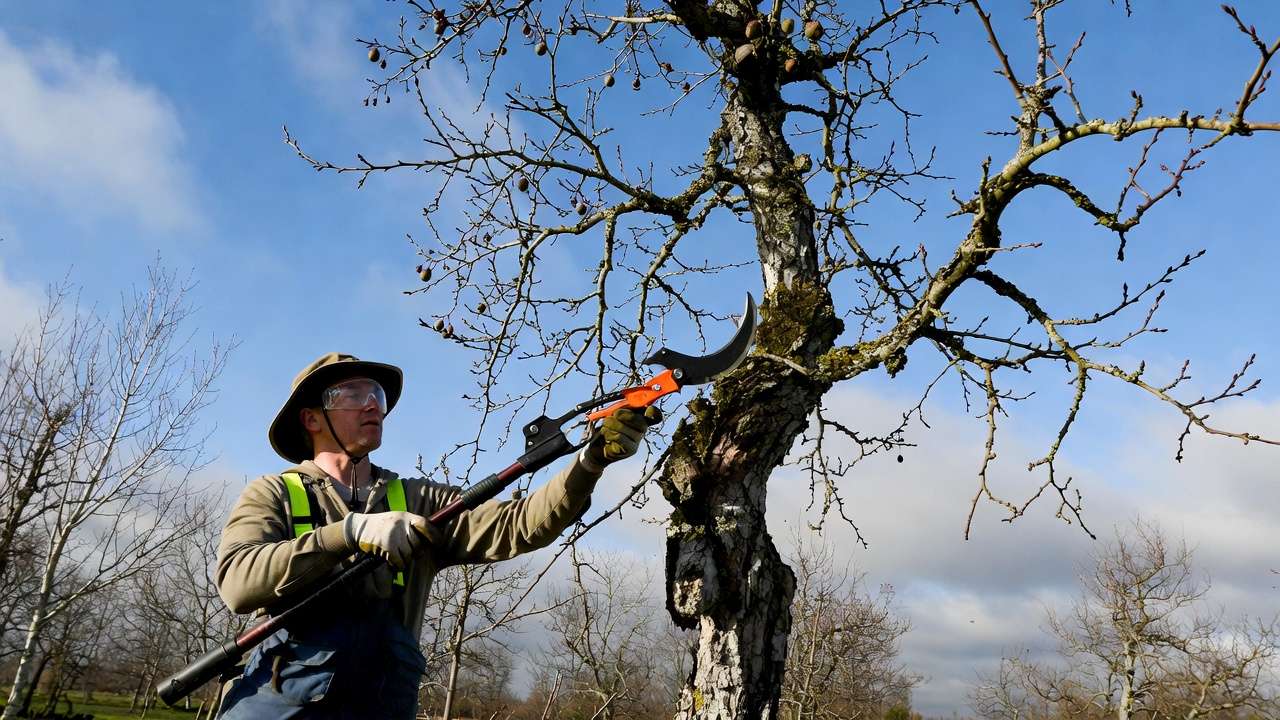
- Pole pruner for high reaches without dangerous ladders.
- Sharpening stone and disinfectant (10% bleach or rubbing alcohol).
Safety gear is non-negotiable, especially for tall trees:
- Sturdy gloves, safety glasses, helmet.
- Long sleeves/pants, sturdy boots.
- Stable ladder or platform (never lean on weak branches!).
Use the three-cut method for large branches: Undercut 12–18 inches out to prevent bark tear, top-cut further out to remove weight, then final cut just outside the branch collar (swollen area where branch meets trunk).
Disinfect tools between cuts, especially if disease is present. Sharp tools = precise cuts = faster healing. 🌿
Step-by-Step Rejuvenation Pruning Plan (Over 2–3 Years) 📅✂️
Rejuvenation is gradual—remove no more than 25–30% of the canopy per year to avoid shock, sunscald on newly exposed bark, or explosive water sprout regrowth.
Year 1: Assess, Clean, and Open the Canopy (Remove ~20–30% max)
Start conservatively to let the tree adjust.
- Step 1: Remove all dead, damaged, diseased, dying, drooping branches (the “Ds”) first 🍂. Cut back to healthy wood or the branch collar.
- Step 2: Eliminate suckers at the base and water sprouts (vigorous upright shoots on trunk/branches).
- Step 3: Thin crossing, rubbing, or parallel branches; favor outward-growing laterals at ~60° angles (imagine clock positions: 2 and 10 o’clock for strongest crotches).
- Step 4: Reduce height gradually—head back tall upright scaffolds to strong outward laterals, removing 3–5 feet max. Work top-down for balance.
Goal: Improve light/airflow without over-stressing. The tree may produce vigorous regrowth— that’s normal!
Year 2: Refine Structure and Further Reduce Height
Build on Year 1 progress.
- Remove additional weak/interior branches and any new water sprouts.
- Continue height reduction (another 3–4 feet if needed) to target 10–15 feet for home harvesting.
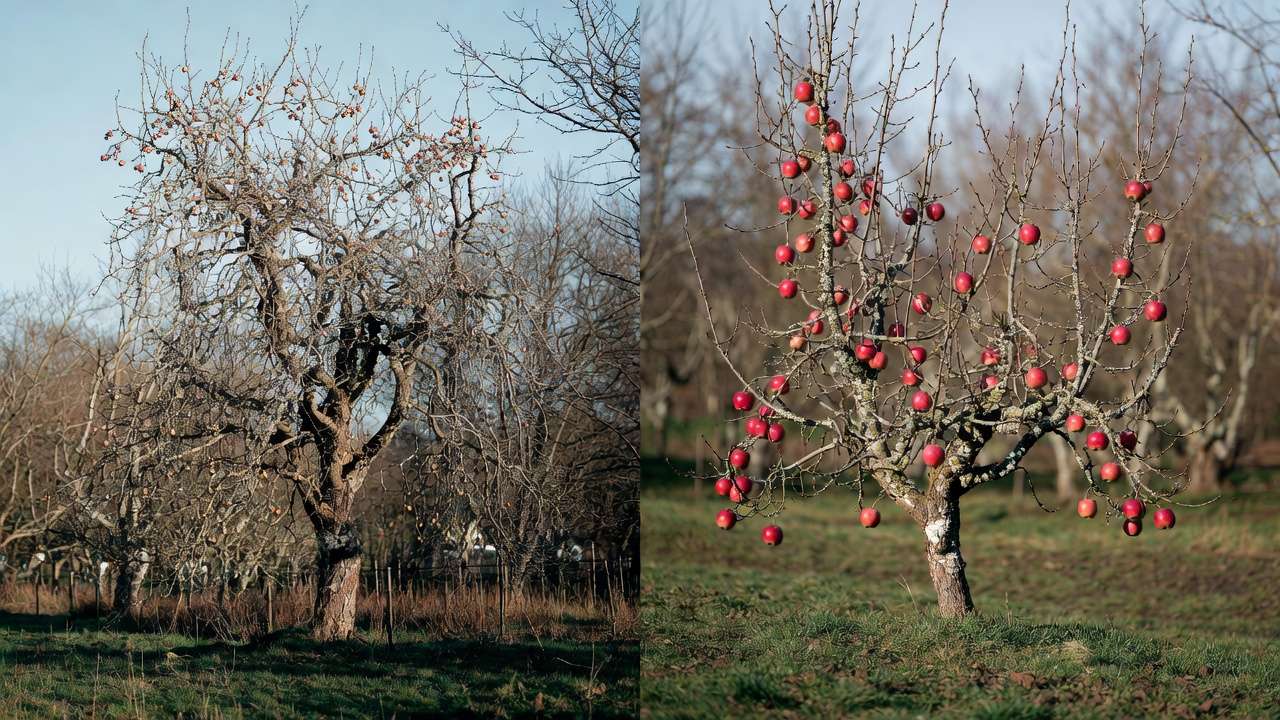
- Shape toward an open-center (vase) or modified central leader/umbrella form—ideal for old standards, allowing light to all parts.
- Thin crowded zones progressively, prioritizing top-down removal.
Year 3: Final Shaping and Transition to Maintenance
- Fine-tune: Select 4–6 strong scaffold branches; eliminate competitors.
- Encourage horizontal fruiting wood; lightly tip-prune for balance if needed.
- Shift to annual moderate pruning: Remove 10–20% yearly to maintain shape, airflow, and productivity.
This phased approach, recommended by extensions like NDSU and Penn State, minimizes stress while maximizing recovery.
Common Pruning Techniques Explained with Visual Descriptions 🖼️
Understanding cut types prevents common errors:
- Thinning cuts — Remove entire branch to origin or lateral. Preferred for rejuvenation—reduces density without stimulating excessive regrowth.
- Heading cuts — Shorten branch tips. Use sparingly; encourages bushier growth but can lead to weak tips if overdone.
- Branch collar cuts — Cut just outside the swollen collar for fastest healing (tree produces callus tissue).
- Avoid: Flush cuts (into trunk, removes collar), stubs (dieback risk), topping/dehorning (weak, upright regrowth explosion).
Branch angle matters: Wide crotches (50–70°) = strong, productive limbs; narrow = breakage-prone; very wide = weak attachment.
Visualize: Before—dense mess. After—open, balanced structure with light reaching interior spurs where best fruit forms.

Aftercare: Fertilizing, Watering, and Pest/Disease Management 🌿🛡️
Pruning stresses the tree—support recovery!
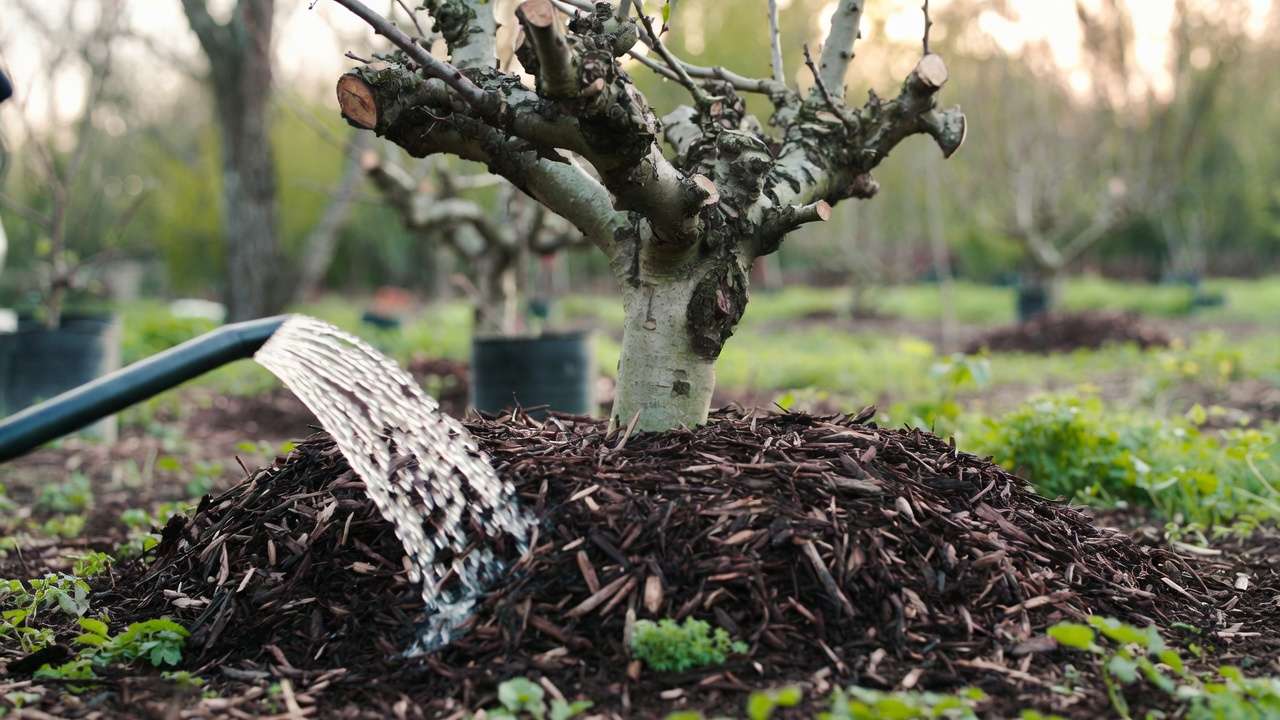
- Watering: Deep soak during dry spells (1–2 inches/week); mulch 2–4 inches around base (keep off trunk) to retain moisture and suppress weeds.
- Fertilizing: Light only after Year 3. Use balanced (e.g., 0.5 lb 5-10-10 per inch trunk diameter, measured 18–24″ up). Avoid excess nitrogen during renovation—it fuels unwanted vegetative growth.
- Regrowth monitoring: 12–18 inches ideal; excessive? Summer prune lightly.
- Pest/Disease: Improved airflow reduces fungal risks (scab, powdery mildew). Monitor for codling moth, aphids. Use integrated methods: organic sprays if needed, encourage beneficial insects.
Healthy soil and consistent care ensure long-term success.
Common Mistakes to Avoid and Troubleshooting Tips ⚠️🔧
Even experienced gardeners can slip up during rejuvenation pruning—here are the most frequent pitfalls and how to fix or prevent them:
- Removing too much wood in one season (over 30%)
- Consequence: Severe stress → sunscald on newly exposed bark, dieback of remaining branches, heavy water sprout production, and sometimes tree death.
- Fix: Stick religiously to the 20–30% rule per year. If you accidentally cut too much, provide extra water, mulch, and avoid fertilizing that season.
- Topping or dehorning (cutting large upright leaders flat across the top)
- Consequence: Triggers dozens of weak, vertical water sprouts that create an even denser, broom-like canopy.
- Prevention: Always cut back to a strong lateral branch at a 45–60° angle. Never leave stubs.
- Ignoring tool sharpness and sanitation
- Consequence: Torn bark invites pathogens; dull cuts slow healing.
- Solution: Sharpen every few cuts and disinfect between diseased branches.
- Applying heavy fertilizer too soon
- Consequence: Explosive nitrogen-driven vegetative growth (water sprouts everywhere!) instead of fruiting wood.
- Tip: Wait until Year 3 for balanced, light feeding. Use slow-release or compost instead of high-N synthetic fertilizers during renovation.
- Pruning during the wrong season
- Consequence: Fall cuts = winter injury + disease entry; growing-season heavy pruning = excessive sap loss and stress.
- Reminder: Dormant season is king for major work.
- Leaving narrow-angled branches or bark inclusions
- Consequence: Future splitting under fruit/wind load.
- Troubleshooting: Prioritize wide-crotch branches; remove narrow ones early.
Quick troubleshooting checklist:
- Too many water sprouts next spring? → Light summer thinning in June/July.
- Exposed bark cracking/sunburn? → Apply tree wrap or white latex paint (diluted 50:50 with water) on south/west sides.
- Little regrowth after pruning? → Check for root issues, drought, or severe girdling roots; improve soil drainage and mulch.
Learning from these mistakes turns good pruners into great ones 🌱✨.
Expected Results and Long-Term Maintenance 🌟📈
Patience is the secret ingredient in pruning old apple trees for rejuvenation. Here’s a realistic timeline of what you can expect:
- End of Year 1: Cleaner structure, better light penetration, fewer disease pockets. The tree may look a bit sparse, and you’ll see vigorous regrowth (mostly water sprouts—don’t panic!). Fruit production usually remains low.
- Year 2: Noticeable improvement in fruit size, color, and flavor on remaining spurs. Height is more manageable. Canopy opens further, reducing fungal pressure. Some trees start bearing decent crops again.
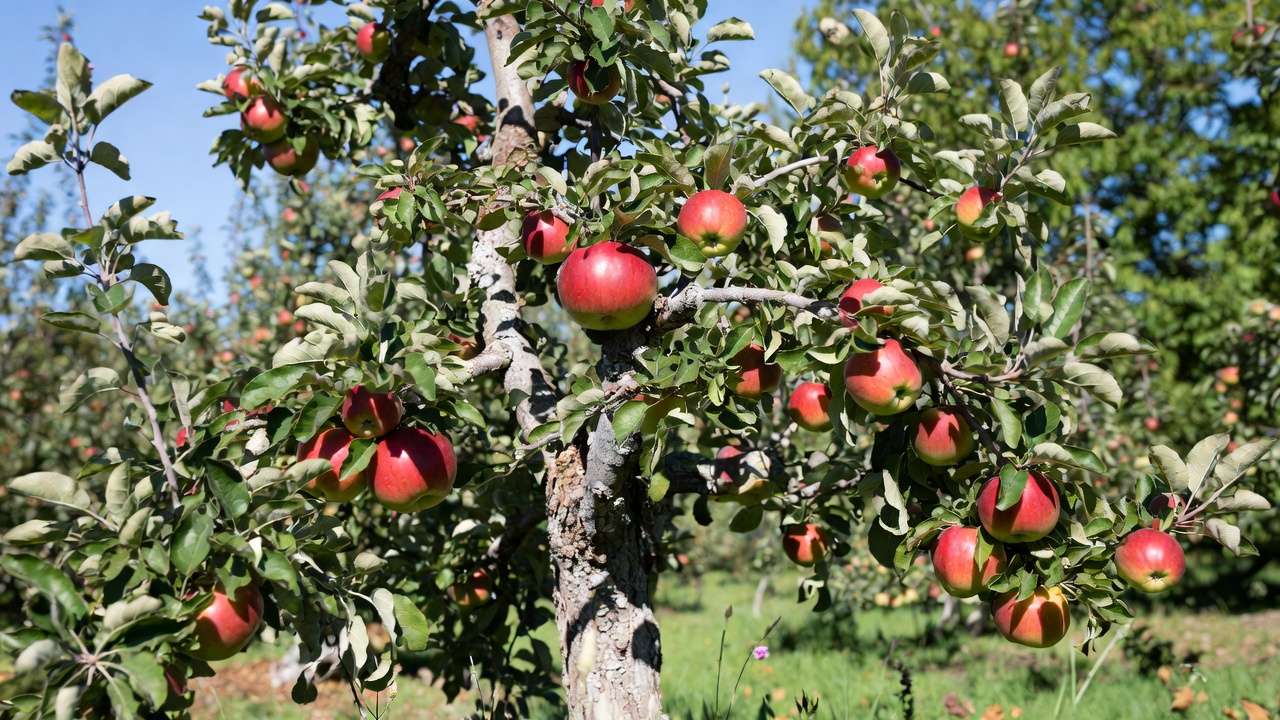
- Year 3–5: Full transformation! Tree stabilized at 10–15 ft (ideal home-garden height), open vase or umbrella shape, abundant medium-to-large apples with better sugar content and fewer blemishes. Annual maintenance pruning becomes much easier (15–20 minutes per tree).
- Long-term (5+ years): Consistent high-quality harvests, stronger branch attachments, lower pest/disease issues, and a beautiful, character-filled tree that can produce reliably for another 20–40+ years.
Ongoing annual maintenance (once rejuvenated):
- Late winter: Remove the “Ds,” thin crowded areas, eliminate water sprouts/suckers, maintain 4–8 strong scaffold limbs, keep center open.
- Summer (optional): Pinch or remove excessive upright shoots.
- Every 3–5 years: Light renewal pruning on older fruiting wood to stimulate new spurs.
Bonus benefits: Revived trees become pollinator magnets in spring 🐝, provide wildlife food in fall 🦌🦊, increase property value, and give you that proud “I saved this tree!” feeling 🍏💚.
Frequently Asked Questions (FAQs) ❓
Can I rejuvenate any old apple tree? Yes, most can be revived if the trunk and main scaffolds are solid (no extensive heart rot or splitting). Apples and pears respond best; stone fruits (peach, plum) are less forgiving.
How much wood is safe to remove each year? No more than 25–30% of the total canopy volume. Going beyond risks severe stress or death. When in doubt, prune less.
What if my tree is too far gone—mostly dead wood and hollow trunk? If over 70% of major limbs are dead or the trunk is severely compromised, replacement or top-working (grafting new varieties onto the old trunk) is usually more practical and faster.
What’s the best shape for an old standard apple tree after rejuvenation? An open-center (vase) or modified central-leader/umbrella shape works best. These forms keep the tree shorter, allow excellent light penetration, and make picking/ spraying much easier.
Will severe pruning stop my tree from ever bearing fruit again? No—quite the opposite! Done gradually, it redirects energy from excess wood to quality fruit. Most revived trees produce better crops within 2–4 years.
My tree is in a small backyard—can I keep it smaller permanently? Absolutely. After reaching 10–15 ft, annual maintenance pruning keeps it compact and productive. You can even espalier or train it against a wall if space is very limited.
Do I need to seal pruning cuts? No—modern research (including from university extensions) shows wound dressings can trap moisture and encourage decay. Clean, proper cuts heal fastest on their own.
How do I know if I’ve pruned too aggressively? Signs include: heavy dieback of remaining branches, excessive sunscald, very little bud break next spring, or sudden heavy water-sprout growth from the trunk/base. If this happens, focus on aftercare and lighten pruning next season.
Conclusion: Bring Your Apple Tree Back to Life Today! 🍏💚
You don’t have to live with a tall, tangled, low-yielding apple tree any longer. With the right timing, tools, gradual approach, and consistent aftercare, pruning old apple trees for rejuvenation can turn your backyard giant into a healthy, beautiful, and bountiful producer once again.
Start this coming dormant season—grab your pruners, assess your tree, and take it one careful year at a time. The rewards are worth it: crisp, flavorful homegrown apples, easier harvesting, fewer disease headaches, and the satisfaction of reviving a living piece of your landscape.
Have you started rejuvenating an old apple tree? Share your progress, before-and-after photos, or any questions in the comments below—I’d love to help you along the way! 🌳✂️🍎
Happy pruning, and here’s to many delicious harvests ahead!











