
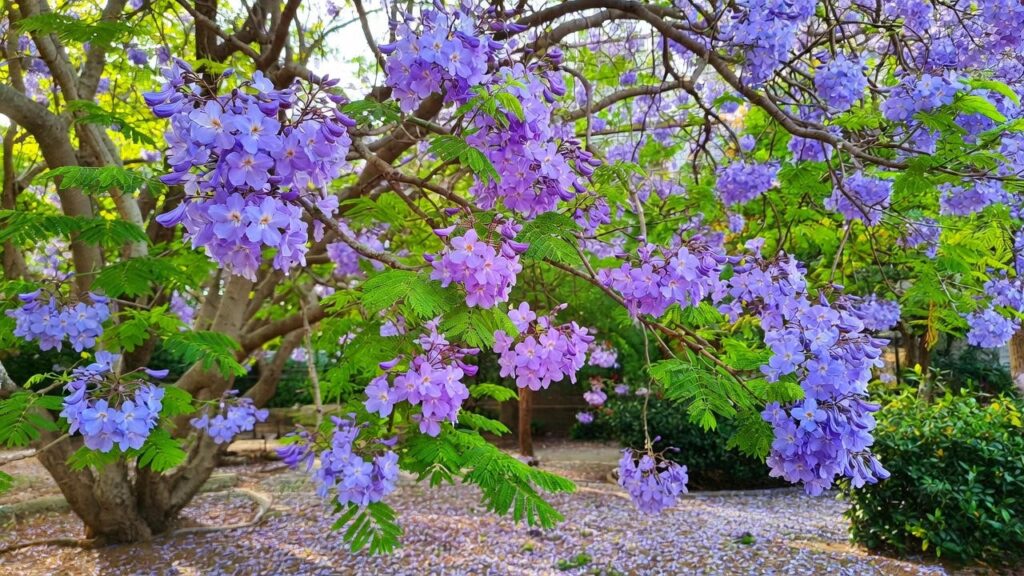
Imagine walking through your garden in late spring, only to be greeted by a breathtaking canopy of vibrant lavender-blue trumpet flowers cascading like a purple waterfall, creating a magical carpet of petals on the ground below. 🌺 This isn’t a dream—it’s the reality of owning a jacaranda tree (Jacaranda mimosifolia), one of the most spectacular flowering trees for warm climates. If you’re searching to purchase jacaranda tree specimens that will transform your landscape into a tropical paradise with minimal effort, you’ve come to the right place.
As a horticulturist with over 15 years of hands-on experience cultivating ornamental trees in subtropical regions—including successful jacaranda plantings in Southern California, Florida, and Texas—I’ve guided countless homeowners through selecting, buying, planting, and caring for these beauties. In this ultimate guide, we’ll cover everything you need to make an informed purchase and enjoy decades of stunning purple blooms with easy, low-maintenance care. Whether you’re a beginner gardener or seasoned plant enthusiast, this comprehensive resource will help you avoid common pitfalls and achieve jaw-dropping results. 🌳
Why Choose a Jacaranda Tree? The Allure of Purple Blooms 💜
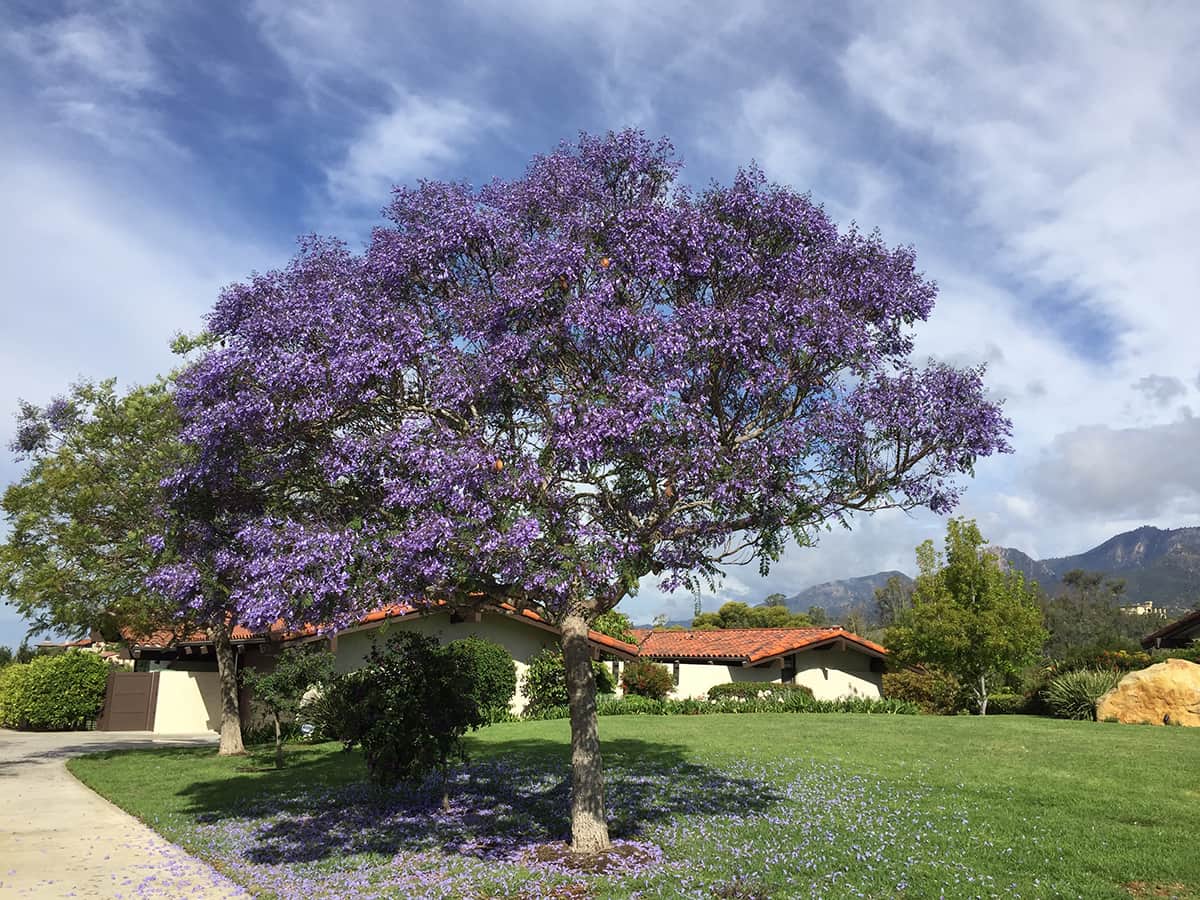
Jacaranda trees have captivated gardeners worldwide for their dramatic seasonal display. Native to South America (primarily Argentina and Bolivia), Jacaranda mimosifolia explodes into bloom in late spring to early summer, often covering the entire tree in clusters of tubular, lavender-blue flowers before the leaves fully emerge. The fallen petals create a stunning purple carpet that lasts for weeks—a sight that’s earned them nicknames like “purple panic” in university towns where blooms coincide with exams! 🐝
Key benefits that make jacarandas a top choice:
- Fast-growing shade provider: Reaches 25-50 feet tall and 15-30 feet wide (sometimes up to 60 feet in ideal conditions), offering dappled shade perfect for patios or lawns.
- Drought-tolerant once established: Ideal for water-conscious gardens in warm, dry climates.
- Attracts pollinators: Bees, butterflies, and hummingbirds love the nectar-rich flowers.
- Fern-like foliage: Delicate, bipinnate leaves provide a soft, tropical texture year-round in frost-free areas.
- Low-maintenance drama: Compared to other flowering trees like crepe myrtle or royal poinciana, jacarandas require less pruning and feeding while delivering more visual impact.
Unlike messier alternatives (e.g., heavy leaf drop from ficus), jacarandas are deciduous in cooler parts of their range, dropping leaves cleanly in winter before the spectacular spring show. In the U.S., they’re non-invasive and thrive without outcompeting natives, making them a responsible, rewarding addition to your yard. 🌿
Understanding Jacaranda Varieties Available for Purchase 🌳
Most Common Variety: Jacaranda mimosifolia
The classic blue jacaranda (Jacaranda mimosifolia) is the one most people envision—and the most widely available when you purchase jacaranda tree stock. It features trumpet-shaped, lavender-blue flowers in large panicles, ferny green leaves, and a spreading, umbrella-like canopy. Mature trees bloom profusely, with peak displays in May-June in many regions.
Other Options and Hybrids
While the standard species dominates nursery offerings, look for these standout cultivars:
- ‘Alba’ (White Christmas Jacaranda): Rare white-flowering form with similar size and habits; blooms may start earlier (April in warm spots) and last longer.
- ‘Bonsai Blue’ (or similar dwarfs like Jacaranda jasminoides hybrids): Compact varieties growing 10-12 feet tall and 6-8 feet wide—perfect for small yards, containers, or patios. Deep purple blooms and heat tolerance make them ideal for urban gardens.
- Jacaranda jasminoides ‘Maroon’: Another dwarf (10-25 feet) with darker maroon-purple flowers; great for year-round interest in pots.
When purchasing, grafted or rooted cuttings bloom faster than seed-grown trees (which can take 7-14 years). Always ask nurseries for provenance to ensure you’re getting true-to-type plants. 🪴
Is a Jacaranda Tree Right for Your Climate and Yard? 🗺️
USDA Hardiness Zones and Regional Suitability
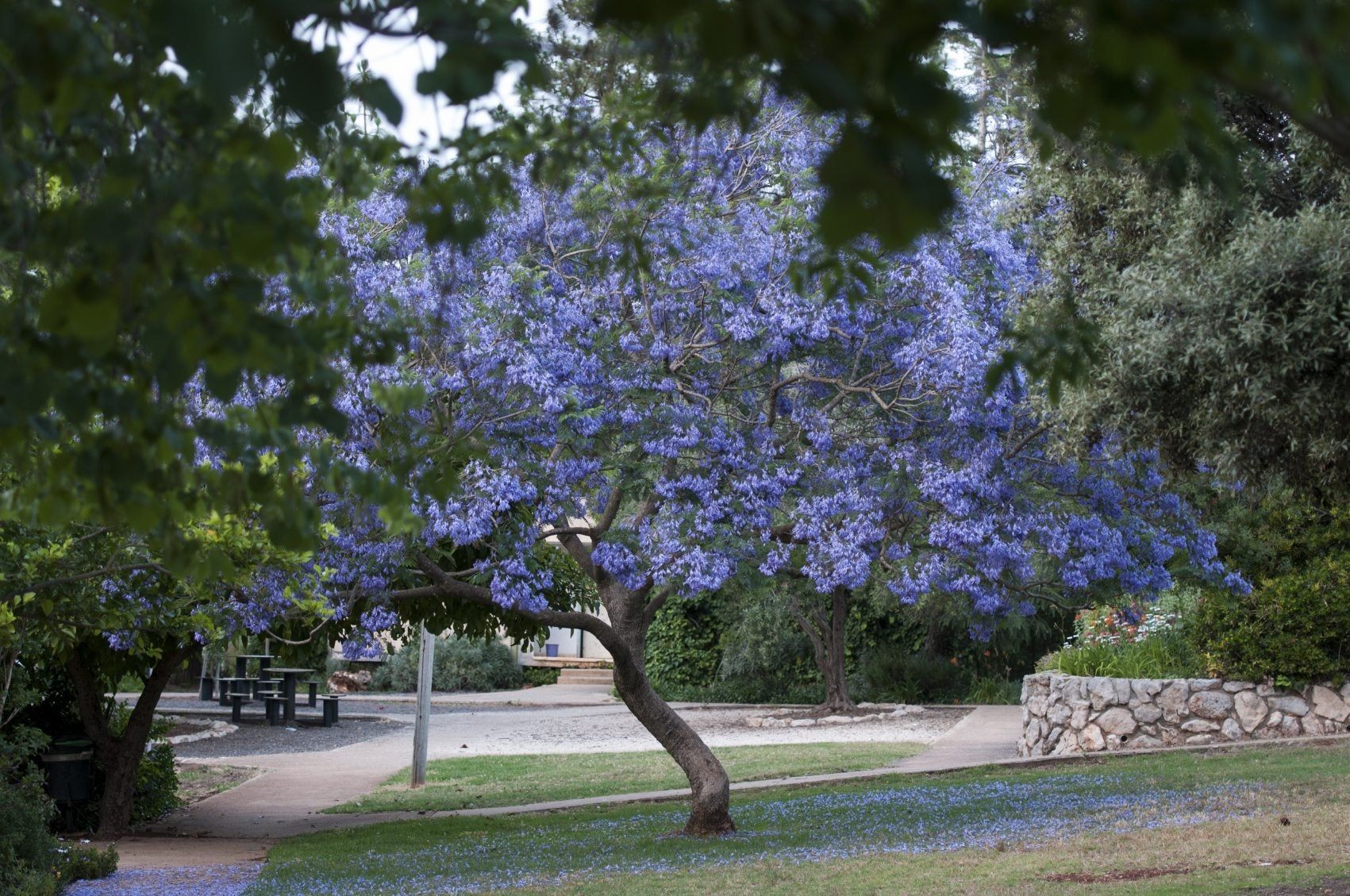
Jacarandas thrive in USDA zones 9b-11, where winters stay above 20-25°F (-6 to -4°C). They’re perfect for:
- Southern California (iconic in Santa Barbara and Los Angeles)
- Florida (South and Central regions)
- Texas (coastal and southern areas)
- Arizona, Hawaii, and parts of Louisiana
In zone 9a, provide winter protection for young trees (e.g., frost cloth). Avoid zones 8 and colder—prolonged freezes can kill them. Success stories abound in Pretoria (South Africa) and Brisbane (Australia), but note: they’re considered invasive in some international spots like South Africa and Queensland. In the U.S., they’re safe and non-invasive. ❄️
Assessing Your Space
- Mature size: 25-50 feet tall, 15-60 feet wide—plant at least 15-20 feet from structures, pools, or sidewalks to avoid surface roots or branch issues.
- Root system: Vigorous but non-invasive in most soils; prefers space to spread.
- Sun and soil needs: Full sun (6-8+ hours daily) for best blooms; well-draining, sandy or loamy soil with slightly acidic pH. Tolerates poor soil but hates soggy roots.
Pro tip from my experience: Test drainage by digging a hole and filling with water—if it doesn’t drain in a few hours, amend with sand or choose a raised site.
Where to Purchase Jacaranda Tree: Trusted Sources 🛒
Local Nurseries vs. Online Retailers
Buying in-person lets you inspect health and structure, while online offers convenience and larger selections (especially dwarfs). Both can ship healthy stock with guarantees.
Recommended Reputable Sellers
Top-rated as of 2025:
- Fast Growing Trees: Excellent for container-grown, well-rooted specimens with arrival guarantees.
- Moon Valley Nurseries: Specializes in larger, mature jacarandas for instant impact (great in Southwest).
- Brighter Blooms and Plants Express: Reliable for dwarfs like ‘Bonsai Blue’.
- Local options: Check independent garden centers in warm states for regionally acclimated stock.
Look for reviews, health guarantees, and photos of actual inventory. Avoid big-box stores if possible—specialty nurseries provide better quality.
Sizes and Prices: What to Expect
- Small saplings (3-6 feet): $50-150—faster to establish, cheaper shipping.
- Mid-size (7-12 feet): $200-500—quicker shade and blooms.
- Mature specimens (15+ feet): $800+—instant landscape transformation (professional planting recommended).
Seasonal deals peak in spring/fall. Bulk or multi-trunk options add character. 💰
How to Choose a Healthy Jacaranda Tree When Buying 🔍
Selecting a vigorous specimen is the foundation of long-term success. In my years working with clients, I’ve seen too many disappointments stem from rushed purchases—trees that struggle or fail within the first year. Here’s how to spot a winner.
Key Inspection Tips at the Nursery or Upon Delivery
- Strong central leader and branching: Look for a straight trunk with well-spaced branches forming a balanced shape. Avoid trees with co-dominant stems (two leaders competing), as they split easily in wind.
- Healthy foliage: Leaves should be vibrant green, fern-like, and free of spots. New growth at tips indicates active vigor.
- Root health (if visible): Gently tip the pot—if roots are white and circling moderately, it’s fine; excessive circling means root-bound (still okay if addressed at planting).
- Trunk and bark: Smooth, unscarred bark without cracks or sunscald. A slight taper from base to top shows good nursery care.
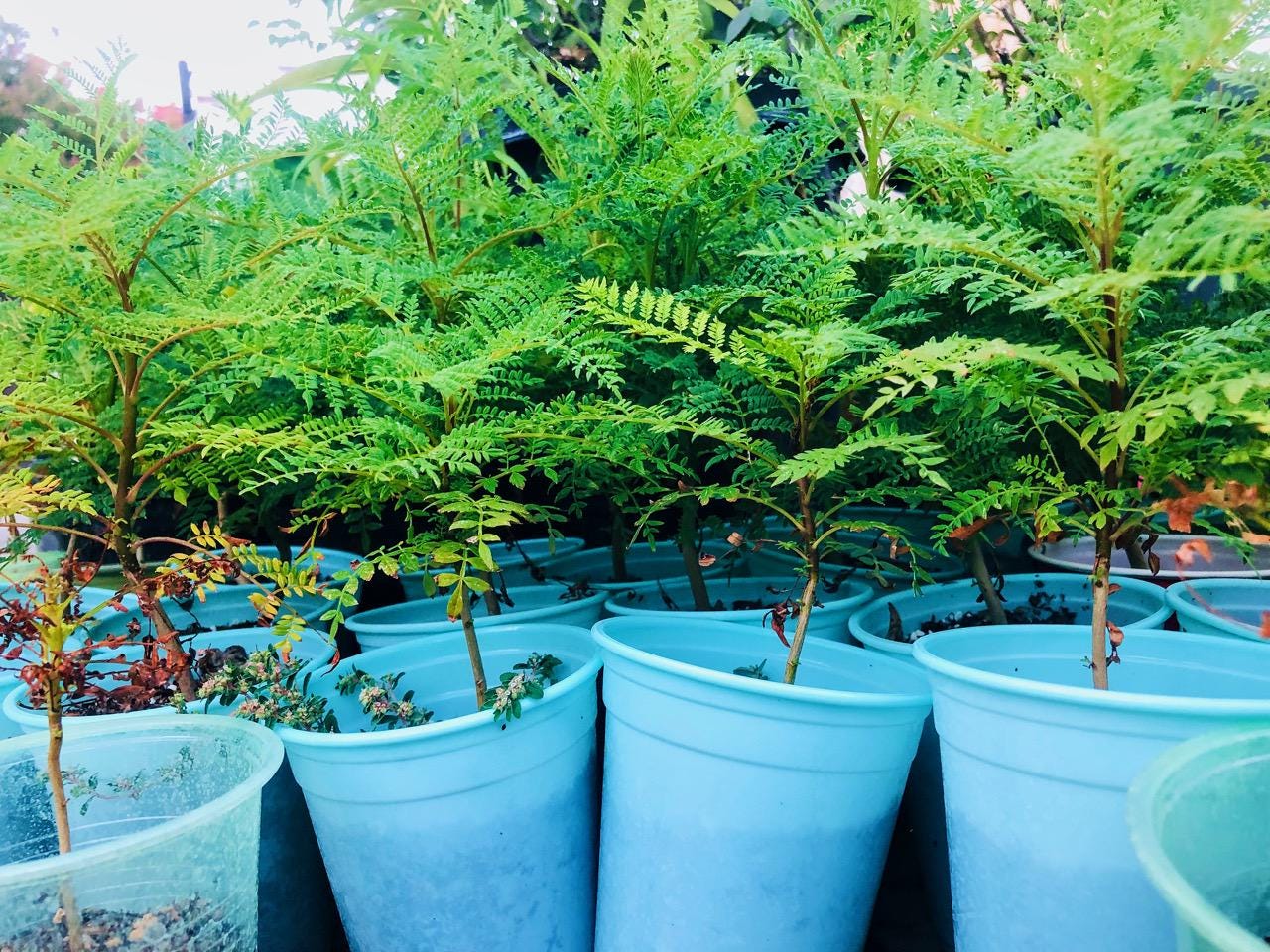
A healthy sapling looks perky and full—exactly like these examples from reputable sources. 🌱
Red Flags to Avoid
- Yellowing or dropping leaves: Often signals overwatering, poor roots, or stress during shipping.
- Pests or disease signs: Check undersides for aphids, scale, or glassy-winged sharpshooter (vector for bacterial scorch). Spots, wilting, or dieback are deal-breakers.
- Weak or damaged structure: Leaning trunks, broken branches, or girdling roots visible at the base.
- Overly pot-bound or dry soil: Roots bursting out drain holes excessively, or bone-dry root balls indicate neglect.
These issues can set your tree back years—or doom it entirely. Here’s what trouble looks like so you can steer clear. ⚠️

Expert insight: Grafted jacarandas (common in quality nurseries) bloom reliably within 3-5 years, while seed-grown may take 10+. Ask the seller—it’s a mark of transparency and better performance.
Common Mistakes to Avoid When Purchasing and Planting Jacaranda Trees ⚠️
Even experienced gardeners slip up. Here are the pitfalls I’ve witnessed most:
- Buying for the wrong climate zone → leading to frost kill.
- Ignoring mature size → planting under power lines or too close to pools (flower drop clogs filters).
- Skipping soil prep → poor drainage causes root rot.
- Overwatering new plants → jacarandas hate “wet feet.”
- Purchasing in full bloom → trees expend energy flowering in pots; post-bloom buys establish better.
Pro tip: Plan for the mess—petals are beautiful but slippery on walkways. Place away from decks if that’s a concern.
Step-by-Step Planting Guide for Success 🕳️
Proper planting sets the stage for decades of health.
Best Time to Plant
- Spring or fall in zones 9-11 → avoids extreme heat/cold stress.
- After last frost in marginal areas.
- Avoid summer planting unless you can provide intensive watering.
Site Preparation and Planting Technique
- Dig a hole twice as wide as the root ball but no deeper—planting too deep is a top killer.
- Amend heavy clay with compost/sand for drainage; jacarandas tolerate average soil but thrive in improved.
- Remove burlap/wire if present; tease circling roots gently.
- Position so root flare (where trunk widens) sits at or slightly above soil level.
- Backfill, water deeply to settle, then mulch 3-4 inches thick (keep away from trunk).
Staking only if needed in windy spots—use flexible ties to allow movement for stronger trunks.

Initial Watering and Staking
- Water deeply 2-3 times weekly first month, then taper to weekly.
- Stake loosely if tree is tall/thin—remove after 1 year.
Easy Care Guide: Keeping Your Jacaranda Thriving 🌱
Jacarandas earn their “easy” reputation once established.
Watering Schedule
- First year: Deep soak weekly (more in heat).
- Mature: Drought-tolerant—supplemental water only during prolonged dry spells. 💧
- Avoid overhead watering to prevent fungal issues.
Fertilizing and Soil Tips
- Young trees: Balanced slow-release (e.g., 10-10-10) in spring.
- Established: Minimal feeding—excess nitrogen reduces blooms.
- Maintain slightly acidic soil (pH 6-7.5); add sulfur if alkaline.
Pruning for Shape and Health ✂️
- Best time: Late winter/early spring before growth.
- Remove suckers, crossing branches, and weak wood.
- Shape young trees for strong structure—mature ones need little beyond deadwood removal.
- Never “top” or heavily prune in bloom season—stresses tree and skips flowers.
Correct pruning promotes airy canopy and prolific flowering.
Pest and Disease Management
- Common pests: Aphids (honeydew/sooty mold), sharpshooters.
- Controls: Hose off aphids; insecticidal soap or neem oil.
- Diseases: Rare, but watch for bacterial leaf scorch (no cure—prevent via healthy practices).
- Organic approach: Encourage ladybugs and beneficials. 🐞
Expert Tips for Maximizing Blooms and Longevity ✨
After years of cultivating jacarandas for clients and in my own demonstration gardens, I’ve learned that small tweaks can turn a good tree into a spectacular one. Here are my proven strategies:
- Encouraging prolific flowering: Jacarandas bloom on new wood, so light pruning after bloom promotes more branches (and thus more flowers next season). Avoid high-nitrogen fertilizers—they push leafy growth at the expense of blooms. Instead, use a phosphorus-rich formula (e.g., 5-10-10) in early spring. Full sun is non-negotiable; even partial shade reduces flower quantity dramatically.
- Stress for success (in moderation): Slight drought stress in late winter/early spring often triggers heavier blooming—mature trees can handle dry spells, but don’t let young ones wilt severely.
- Container growing for colder zones 🪴: In zone 9a or marginal areas, grow dwarfs like ‘Bonsai Blue’ in large pots (at least 24-36 inches wide). Use well-draining potting mix with perlite. Wheel indoors or to a protected spot during rare freezes. These container jacarandas still deliver impressive purple displays on patios or balconies.

-
Companion planting ideas: The dappled shade and flower drop create a unique understory environment. Plant shade-tolerant, drought-resistant companions like:
- Agapanthus or daylilies for blue/purple harmony
- Lantana, salvia, or pentas for pollinator attraction
- Succulents (agaves, aloes) in drier spots
- Groundcovers like Asian jasmine or liriope to handle petal litter gracefully
Avoid heavy feeders or water-lovers directly under the canopy.

-
Seasonal maintenance calendar:
- Winter (Dec-Feb): Minimal care; protect young trees from frost.
- Early Spring (Mar-Apr): Fertilize lightly, prune if needed.
- Late Spring/Summer (May-Jul): Enjoy blooms! Water during heat waves.
- Fall (Aug-Nov): Reduce watering as leaves drop; mulch roots.
Consistent timing yields the best results year after year.

Frequently Asked Questions (FAQs) ❓
When does a jacaranda tree bloom? Peak bloom is late spring to early summer (May-June in most U.S. regions), lasting 4-8 weeks. Some areas see a lighter second flush in fall.
Is jacaranda invasive in my area? In the continental U.S., no—it’s not listed as invasive. It’s considered invasive in parts of South Africa, Australia (Queensland), and Hawaii due to self-seeding in those ecosystems.
How fast does it grow? 10-20 feet in the first 5-10 years under good conditions, then slower. Expect 2-4 feet annually once established.
Can I grow it in a pot? Yes! Dwarf varieties thrive in containers with proper care. Standard types can stay potted when young but eventually need ground planting.
What if it doesn’t bloom? Common causes: Too young (under 5-7 years for grafted), insufficient sun, excess nitrogen, or root stress. Patience and adjustments usually fix it.
Are jacaranda trees messy? Yes—flower drop creates a slippery purple carpet, and deciduous leaves fall in winter/spring. Site thoughtfully away from high-traffic areas.
How long do jacaranda trees live? 50-100+ years with good care. Many iconic specimens are over a century old.
Do they have invasive roots? Roots are vigorous but not typically damaging like ficus. Plant 15+ feet from foundations/pipes.
Can I grow jacaranda from seed? Possible, but slow (10-14 years to bloom) and variable. Buy grafted for reliable, faster results.
What’s the best soil for jacaranda? Well-draining, loamy or sandy. They tolerate poor fertility but hate waterlogged conditions.
Do jacarandas attract wildlife? Yes—bees, butterflies, hummingbirds during bloom; birds nest in the canopy.
Conclusion: Bring Home Your Dream Jacaranda Today! 🌺
You’ve now got the complete roadmap to purchase jacaranda tree specimens confidently, plant them correctly, and nurture them into breathtaking purple-blooming masterpieces with truly easy care. From selecting healthy stock at trusted nurseries to avoiding pitfalls and maximizing those iconic lavender displays, this guide equips you for success that lasts decades.
Jacarandas aren’t just trees—they’re living art that transforms ordinary yards into tropical oases, boosting curb appeal, providing shade, and creating unforgettable seasonal magic. 🌸 With the right start, your jacaranda will reward you (and future generations) with effortless beauty and joy.
Ready to add this stunner to your landscape? Visit a reputable nursery soon—spring planting season approaches! If you have questions about your specific site, feel free to consult a local arborist. Happy gardening! 🌿💜











