
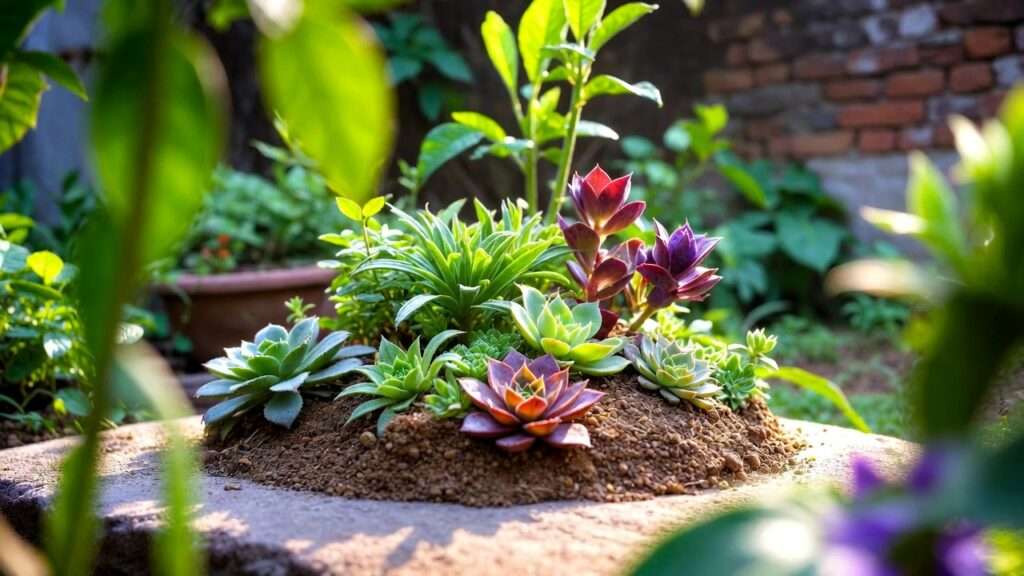
If you’ve ever watched a beautiful succulent turn into a mushy, collapsed mess seemingly overnight, you know the heartbreak of root rot. 😩 It’s the #1 killer of these charming desert darlings, and the culprit is almost always the same: soil that stays too wet for too long. Succulents evolved in arid, rocky environments where water drains away quickly — yet most of us pot them in dense, moisture-holding potting soil designed for thirsty houseplants. The result? Soggy roots, fungal infections, and sad, droopy plants.
The good news? You can change that dramatically with a quick-draining mix for succulents that mimics their natural habitat. This custom blend allows excess water to escape in seconds, promotes excellent aeration, and keeps roots healthy and happy. As a plant care enthusiast who’s grown and rescued hundreds of succulents over the years (including many that arrived half-dead from overwatering), I’ve tested dozens of recipes. The ones in this guide consistently deliver thriving plants with vibrant colors, strong growth, and far fewer losses — even in humid climates like Dhaka’s! 🌿
In this comprehensive guide, you’ll discover why standard soil fails, the science of perfect drainage, ingredient breakdowns, multiple tested DIY recipes (including budget-friendly and local-option ones), step-by-step instructions, care tips, troubleshooting, and more. By the end, you’ll have everything needed to create the ultimate quick-draining succulent soil and say goodbye to root rot for good. Let’s dive in! 🚀
Why Succulents Need a Quick-Draining Mix (The Science Behind It) 🔬
Succulents store water in their thick, fleshy leaves, stems, or roots — they don’t need constant soil moisture like ferns or peace lilies. Their shallow root systems are adapted to infrequent rains followed by fast-drying conditions in sandy, gravelly soils.
When soil stays wet:
- Roots can’t access oxygen → anaerobic conditions set in.
- Harmful fungi (like Fusarium or Pythium) thrive → root rot begins.
- Roots turn black/mushy → plant wilts, leaves drop, or the whole thing collapses.
A quick-draining mix (often called fast-draining or well-draining succulent soil) prevents this by:
- Allowing water to pass through rapidly (ideally in 10–30 seconds after thorough watering).
- Providing high porosity and aeration for oxygen flow to roots.
- Avoiding compaction over time (many commercial mixes compact and hold more water as they age).
- Balancing slight moisture retention (via minor organic content) so plants don’t dry out completely between waterings.
Key ideal properties:
- Drainage speed: Water should not pool on top or sit at the bottom.
- Aeration: Air pockets around roots to prevent suffocation.
- pH neutrality: Slightly acidic to neutral (6.0–7.0) suits most succulents.
- Low organic matter: Typically 20–40% to minimize decomposition and water-holding.
Myth busted: “More grit = always better.” Too much inorganic material can starve thin-leaved varieties (like haworthias) of needed moisture/nutrients. Balance is everything! 🌟
Common Mistakes with Succulent Soil (And How to Avoid Them) ⚠️
Even experienced growers slip up — here are the top pitfalls I’ve seen (and fixed):
- Using regular potting soil straight — Too dense and peat-heavy; holds water like a sponge.
- Fix: Always amend or replace entirely.
- Over-relying on perlite alone — It’s lightweight, floats to the top, and breaks down/compacts over time.
- Fix: Combine with heavier grits like pumice or chicken grit.
- Ignoring local climate — In humid Dhaka summers/monsoons, extra grit is essential to combat slow evaporation.
- Fix: Bump inorganic ratio to 70–80%.
- No drainage holes or bottom layer — Water pools at the base even in good mix.
- Fix: Use pots with holes + 1–2 cm layer of pebbles/gravel.
- Repotting issues — Too frequent disturbs roots; too rare leads to nutrient depletion/compaction.
- Fix: Repot every 1–2 years or when roots circle the pot.
Pro tip: Always test your mix! Pour water through a potted sample — it should drain freely without pooling. If it takes >1 minute, add more grit. 💧
Ingredients Breakdown: What to Use & Why 🧪
Building your mix starts with understanding each component:
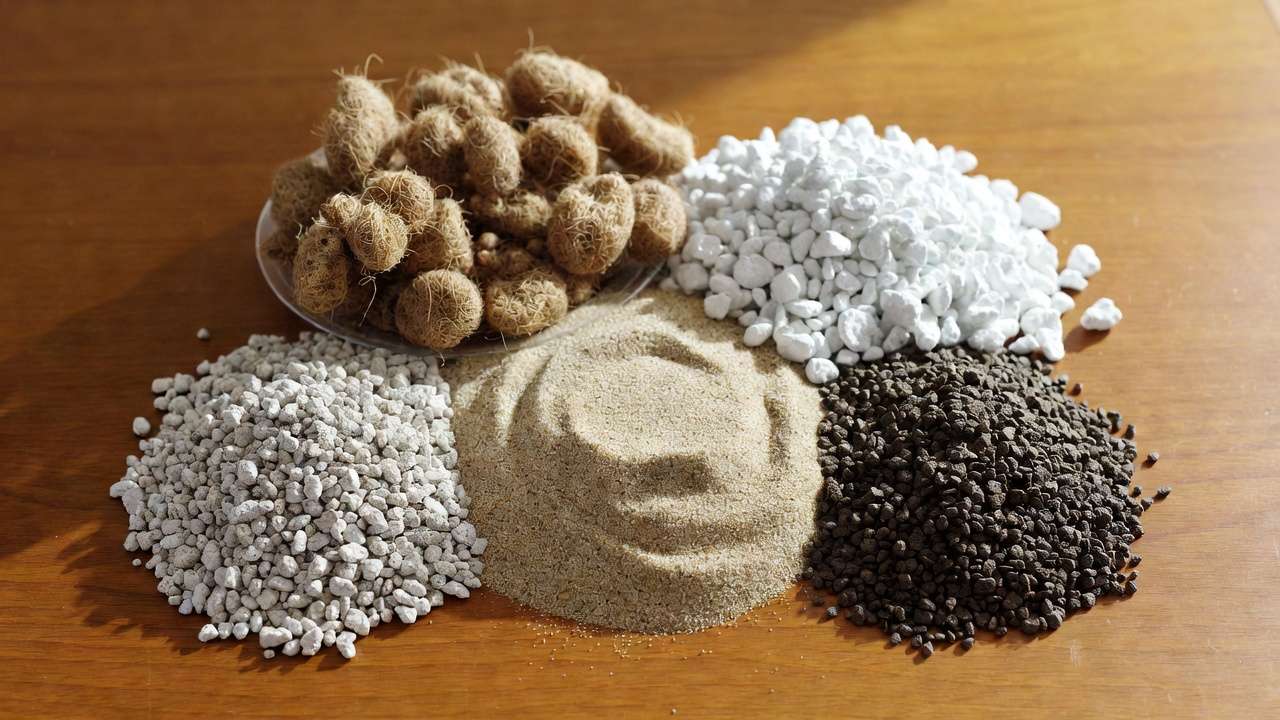
Organic base (20–40%) — Provides minimal nutrients and slight moisture hold.
- Coco coir — Sustainable, pH-neutral, excellent water retention without sogginess; resists compaction.
- Peat-free potting soil — Affordable, nutrient-rich; use cheap generic brands.
- Compost/worm castings — Light feeding; use sparingly (5–10%) to avoid excess organics.
Inorganic grit (60–80%) — Core for drainage/aeration.
- Perlite — Cheap, lightweight, great aeration; but floats and can compact long-term.
- Pumice — Superior choice: porous volcanic rock holds some moisture/nutrients, doesn’t float, lasts forever, excellent weight/stability.
- Coarse sand/builders sand — Affordable drainage; avoid fine play sand (compacts).
- Chicken grit/crushed granite/lava rock — Heavy, stable, prevents tipping in tall pots; adds minerals.
- Calcined clay (Turface/MVP) — Holds moisture lightly, prevents compaction, great for arid mixes.
Optional add-ins:
- Horticultural charcoal — Reduces odors, prevents mold/bacteria.
- Slow-release fertilizer pellets — For light feeding (spring/summer).
- Orchid bark — Extra chunkiness for epiphytic types.
Sourcing in Dhaka/Bangladesh: Look for perlite/coco coir at garden centers (e.g., in Gulshan or online via Daraz), coarse sand from hardware stores, chicken grit/pumice alternatives from poultry/feed shops or nurseries. Lava rock or granite chips often available cheaply. 🌍
The Best DIY Quick-Draining Mix Recipes (Tested & Ranked) 🌱
Here are my top recipes (by volume — use measuring cups/buckets for consistency). I’ve ranked them for different needs.
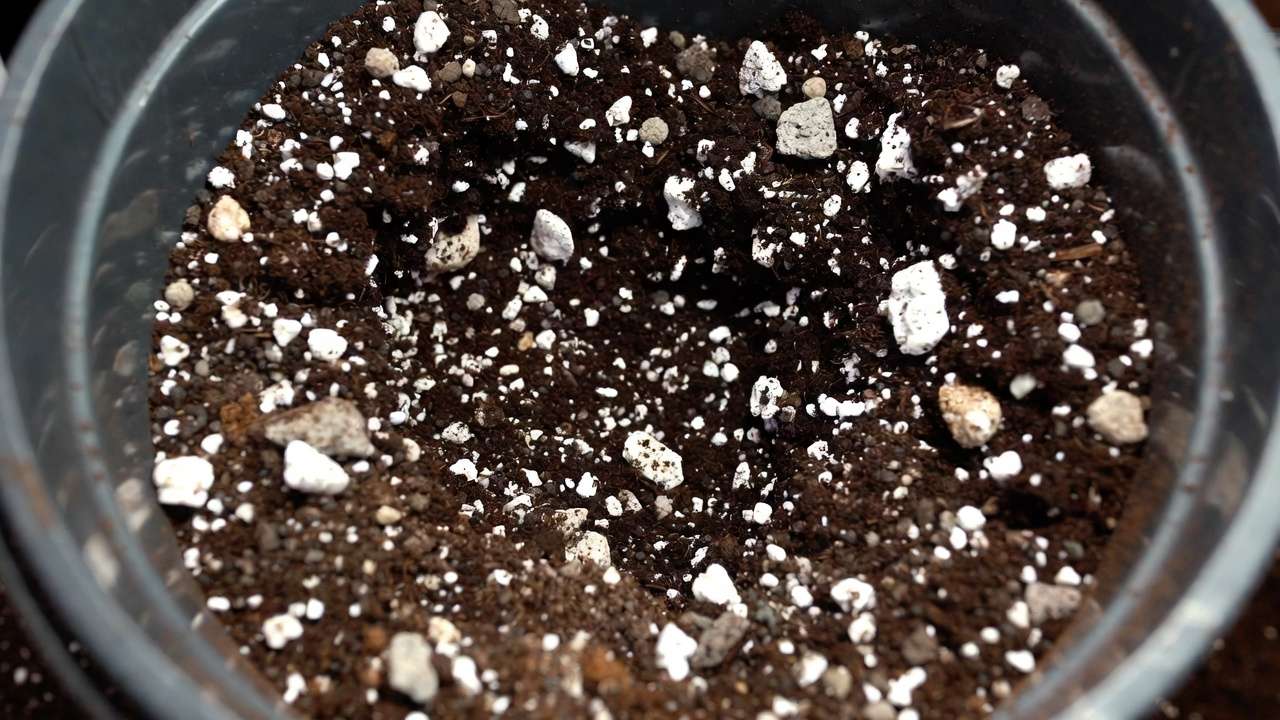
- Beginner-Friendly Balanced Mix (My Most Recommended All-Rounder)
- 1 part coco coir or basic potting soil
- 1 part perlite
- 1 part pumice (or coarse sand/chicken grit if pumice unavailable) Pros: Easy, balanced moisture/drainage; great for echeverias, sedums, haworthias, most common succulents. Cons: None major — versatile! Best for: Beginners, indoor collections, moderate humidity.
- Ultra-Fast Draining Gritty Mix (Pro Level – Best Root Rot Prevention)
- 1 part potting soil or coco coir
- 2 parts pumice
- 1 part chicken grit/lava rock/crushed granite Pros: Extremely fast dry-out; ideal for hot/humid climates or rot-prone plants. Cons: Dries quicker — water more often in very dry conditions. Best for: Cacti, fat-stemmed succulents (aloe, jade), outdoor pots, monsoon-proofing.
- Budget 2-Ingredient Mix (Cheap & Effective – Dhaka-Friendly)
- 1 part generic potting soil
- 2–3 parts Turface/MVP, perlite + coarse sand blend (or chicken grit if available locally) Pros: Costs pennies per pound; uses easy-to-find items. Cons: Slightly less premium than pumice-heavy. Best for: Large collections, beginners on a budget.
- Custom Variations by Need
- Humid/tropical (Dhaka summers): Increase grit to 70–80%.
- Dry/arid indoors (AC/winter): Add 10% more organic for slight hold.
- Seedlings/propagation: Finer texture (more coir + smaller perlite).
- Epiphytic types (some rhipsalis): Add orchid bark for chunkiness.
Quick Comparison Table:
| Recipe | Drainage Speed | Cost | Best Plants | Humidity Suitability |
|---|---|---|---|---|
| Balanced (1:1:1) | Medium-Fast | Low | Most succulents | Moderate |
| Ultra-Gritty | Very Fast | Med | Cacti, rot-prone | High/Humid |
| Budget 2-Ingredient | Fast | Very Low | Large/beginner collections | All |
Step-by-Step: How to Make & Use Your Quick-Draining Mix 🛠️
Now that you’ve chosen your recipe, let’s get hands-on. Making your own quick-draining mix is surprisingly simple, takes 10–15 minutes, and gives you complete control over quality.
Tools & Materials You’ll Need
- Large mixing bucket or tub (5–20 liters depending on batch size)
- Measuring container (old yogurt tub, cup, or liter jug works great)
- Gardening gloves (grit can be dusty!)
- Dust mask (especially when handling dry perlite or pumice — it’s very fine)
- Small trowel or scoop
- Optional: kitchen sieve (to remove dust from grit for cleaner mix)
Step-by-Step Mixing Instructions
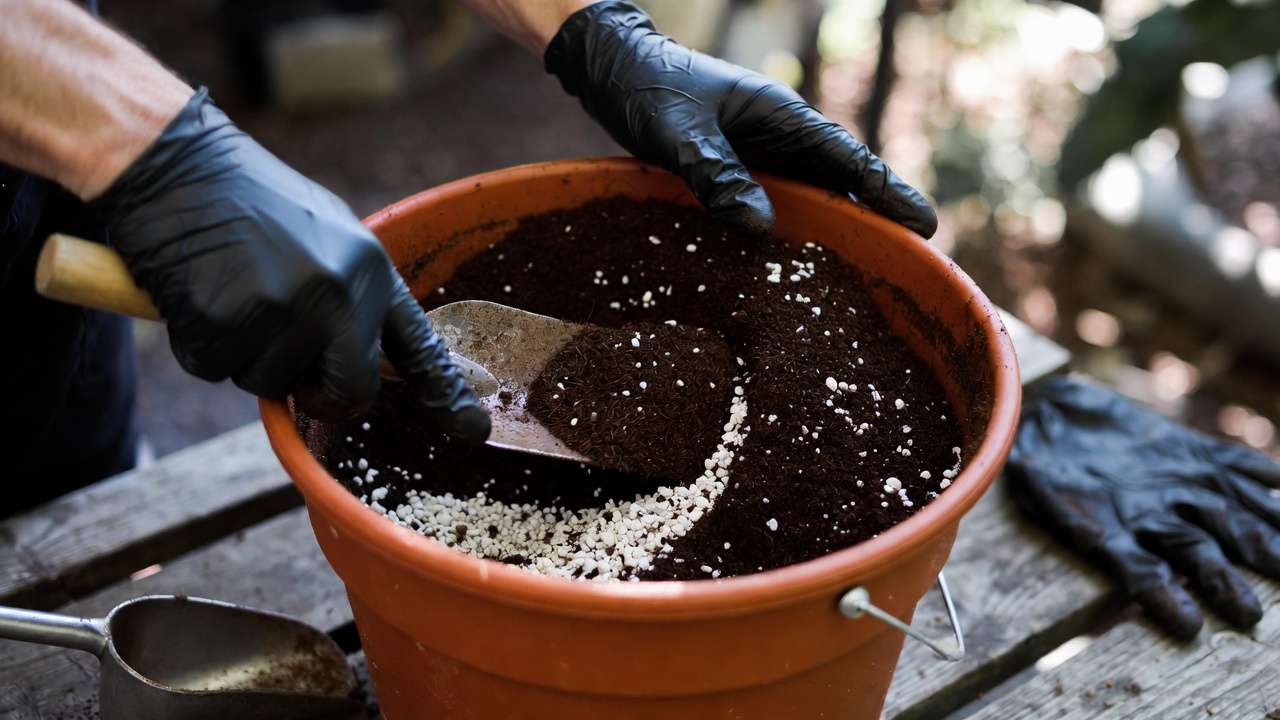
- Work in a well-ventilated area — outdoors or near an open window. Dry ingredients create dust clouds. 😷
- Measure ingredients dry — Use the same container for every part to keep ratios accurate. Example for the Balanced Mix: 1 part = 1 liter → 1 L coco coir + 1 L perlite + 1 L pumice.
- Add the organic base first — Dump coco coir or potting soil into the bucket.
- Layer in the grits — Add perlite, pumice, sand, etc. on top.
- Mix thoroughly — Use your hands (gloved), a trowel, or even a clean garden hoe. Stir until the color and texture look uniform — no clumps or streaks of pure coir or pure perlite.
- Break up any chunks — Coco coir especially can come compressed; massage and fluff it.
- Optional: add charcoal or slow-release pellets — Mix in 5–10% horticultural charcoal or a light sprinkle of slow-release granules now.
- Test the mix — Scoop some into a small pot with drainage holes. Water thoroughly from the top. The water should run straight through the bottom within 10–30 seconds with no pooling on the surface. If it’s too slow, add 10–20% more inorganic grit and remix.
Potting Your Succulents with the New Mix
- Choose the right pot — Terracotta or unglazed ceramic is best (breathable); plastic works if it has plenty of drainage holes.
- Add a drainage layer — Place 1–2 cm of small pebbles, gravel, broken pottery shards, or lava rock at the bottom. This prevents soil from clogging holes and adds extra drainage insurance.
- Fill partially — Add a layer of your quick-draining mix.
- Position the plant — Gently remove the succulent from its old pot. Shake off old soil. Trim any black/mushy roots with clean scissors (sterilize with alcohol first). Place so the base of the plant sits at the same level it was growing before (don’t bury the stem too deep).
- Fill around roots — Add mix, gently tapping the pot to settle soil into air pockets. Leave ~1 cm space below the rim for watering.
- Top dress (optional) — Add a 0.5–1 cm layer of decorative top dressing (pebbles, grit, crushed shells) to reduce splash, deter fungus gnats, and look pretty! 🌸
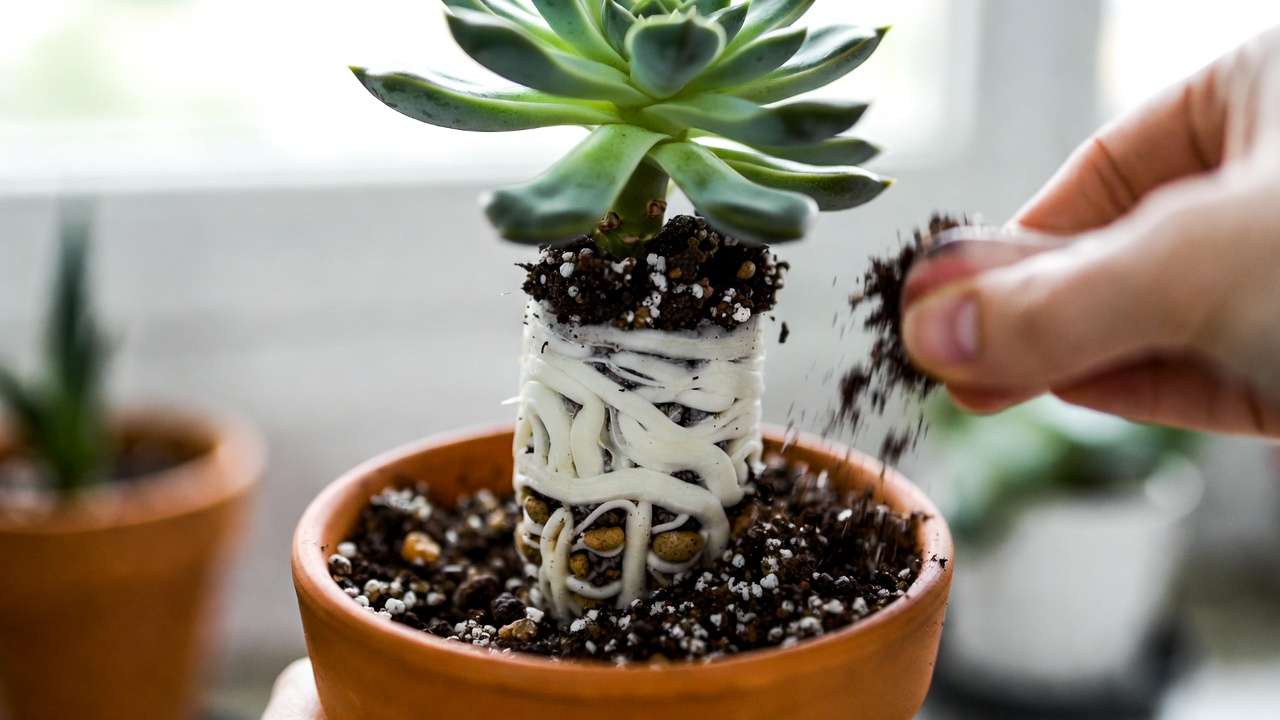
First Watering After Repotting Wait 5–7 days before the first thorough watering (longer if roots were damaged/trimmed). This gives cut roots time to callus over and reduces rot risk.
Watering & Care Tips with Your New Quick-Draining Mix 💧
The biggest advantage of a quick-draining mix is that it forces you to water less frequently — but more deeply — which is exactly how succulents like it.
The “Soak and Dry” Method (Gold Standard)
- Water thoroughly until it runs freely out the drainage holes.
- Empty the saucer immediately — never let the pot sit in water.
- Wait until the mix is completely dry before watering again (check by sticking your finger 3–5 cm deep or lifting the pot — dry pots feel very light).
- In Dhaka’s hot/humid months (April–October), this might be every 7–14 days indoors; in cooler/drier winter, every 14–30 days.
How the Mix Changes Your Routine
- Faster drainage = you’ll water more often than with regular soil, but the plant stays safer.
- Use the “lift test” or moisture meter for precision.
- Signs of overwatering even in gritty mix: yellowing lower leaves, soft/transparent leaves, black spots at base.
- Signs of underwatering: shriveled leaves, leaf drop from bottom up, soil pulling away from pot edges.
Fertilizing in Gritty Mix Succulents are light feeders. Use a balanced, diluted liquid fertilizer (e.g., 10-10-10 or cactus-specific) at ¼–½ strength only during active growth (March–September in Bangladesh).
- Apply once a month max.
- Or mix slow-release pellets into the soil at repotting for even lower maintenance.
Seasonal Adjustments for Dhaka Climate
- Monsoon (June–September): Extra caution — increase grit if rot appears; ensure excellent airflow.
- Winter (November–February): Reduce watering dramatically; many succulents go semi-dormant.
- Summer heat: Morning watering is best; avoid midday sun scorch on freshly repotted plants.
Troubleshooting: What If It’s Still Not Working? 🛑
Even with the best quick-draining mix, occasional hiccups can happen—especially when adjusting to a new routine or dealing with extreme local conditions in Dhaka. Here are the most common issues I’ve encountered (and fixed) across hundreds of succulents, plus targeted solutions.
Problem 1: Mix Dries Out Way Too Fast (Leaves Shriveling Quickly)
- Cause: Too much inorganic grit (especially in very dry indoor AC environments or winter months).
- Fixes:
- Increase the organic portion slightly (e.g., shift from 1:2:1 to 2:2:1 coco coir:perlite:pumice).
- Add 5–10% worm castings or high-quality compost for better moisture retention.
- Water more frequently but still deeply—check every 5–7 days instead of 10–14.
- Move pots to slightly higher humidity spots (near a pebble tray or away from direct AC vents).
Problem 2: Soil Still Stays Soggy / Root Rot Persists
- Cause: Not enough grit, poor airflow, lack of drainage holes, or overwatering habit.
- Fixes:
- Remake with higher grit ratio (aim for 70–80% inorganic).
- Ensure pots have multiple/large drainage holes; add a thicker bottom gravel layer (2–3 cm).
- Improve air circulation — use a small fan on low if indoors during monsoon.
- Unpot, inspect roots: Trim all black/mushy parts with sterilized scissors, let callus 2–7 days in shade, then repot into fresh ultra-gritty mix.
- Water only when top 5–7 cm is bone-dry; use a moisture meter for precision during the learning phase.
Problem 3: White Crust / Powdery Buildup on Soil Surface
- Cause: Mineral salts from hard tap water or over-fertilizing accumulating as water evaporates.
- Fixes:
- Flush the pot thoroughly with distilled/rainwater once every 2–3 months (water until it runs clear from bottom).
- Switch to rainwater or let tap water sit 24 hours to off-gas chlorine (though fluoride/chloramine in Dhaka water is usually low).
- Reduce fertilizer frequency or switch to lower-salt options.
Problem 4: Fungus Gnats or Mold Appearing
- Cause: Excess moisture near surface + organic matter.
- Fixes:
- Add a 1 cm thick top dressing of dry grit/pebbles to dry the surface faster.
- Use yellow sticky traps or beneficial nematodes (available at some garden shops/online).
- Mix in 5–10% horticultural charcoal next batch—it naturally suppresses mold and odors.
Problem 5: Plant Looks “Off” After Repotting (Wilting, Leaf Drop)
- Cause: Transplant shock, root disturbance, or sudden change in watering/light.
- Fixes:
- Place in bright, indirect light (not full sun) for 1–2 weeks post-repot.
- Avoid fertilizing for at least 4–6 weeks.
- Mist leaves lightly once a day for the first week if humidity is very low.
Quick expert mantra: When in doubt, underwater and wait. Succulents are far more forgiving of drought than wet feet! 🌵
Bonus: Top Pre-Mixed Options If DIY Isn’t for You 🏪
Not everyone has time or access to bulk ingredients. Here are reliable ready-made alternatives that still deliver quick drainage (amend them if needed):
- Bonsai Jack Succulent & Cactus Gritty Mix — Gold standard for pros; very fast-draining, long-lasting. Pricey but worth it for valuable plants.
- Miracle-Gro Cactus, Palm & Citrus Mix — Widely available; decent but often needs 20–30% extra perlite/pumice added for Dhaka humidity.
- Local nursery “Cactus Mix” — Varies by shop; test drainage and amend with chicken grit or sand if it feels too heavy.
- Hoffman Organic Cactus & Succulent Mix — Good balance; sustainable ingredients.
When to buy vs. DIY: Buy for small collections or convenience; DIY saves money and lets you customize perfectly for your climate and plants.
Frequently Asked Questions (FAQs) ❓
Q: Can I use regular garden soil in the mix? A: No—garden soil compacts, drains poorly, and often brings pests/weeds. Stick to potting soil or coco coir as the organic base.
Q: Perlite vs. pumice—which is better? A: Pumice is superior (doesn’t float, lasts longer, better nutrient/moisture hold), but perlite is cheaper and easier to find. Use pumice when possible, especially for larger pots.
Q: How long does a homemade quick-draining mix last? A: 1–2 years indoors before repotting. Pumice-based mixes can last 3+ years with minimal breakdown.
Q: Is this mix okay for all succulents? A: Yes for most! Mesembs (living stones), lithops, and some haworthias prefer slightly finer/more organic versions—adjust accordingly.
Q: My succulents are stretching (etiolation). Is the soil the problem? A: Usually not—etiolation is from insufficient light. Move to brighter spot (south-facing window or grow lights).
Q: Can I sterilize the mix? A: Not necessary for most ingredients. If concerned about pests, bake at 80–90°C for 30 min or microwave damp mix in bursts.
Q: What about bottom-watering with this mix? A: Possible but less ideal—top-watering mimics rain better and flushes salts. Bottom-water only occasionally.
Q: Is coco coir better than peat moss? A: Yes—more sustainable, better structure, less acidic over time.
Conclusion & Final Expert Tips 🌟
Creating your own quick-draining mix for succulents is one of the single biggest upgrades you can give your plants. It directly attacks the root cause of most failures (pun intended 😄) and sets the foundation for vibrant, long-lived succulents that reward you with beautiful rosettes, pups, and even flowers.
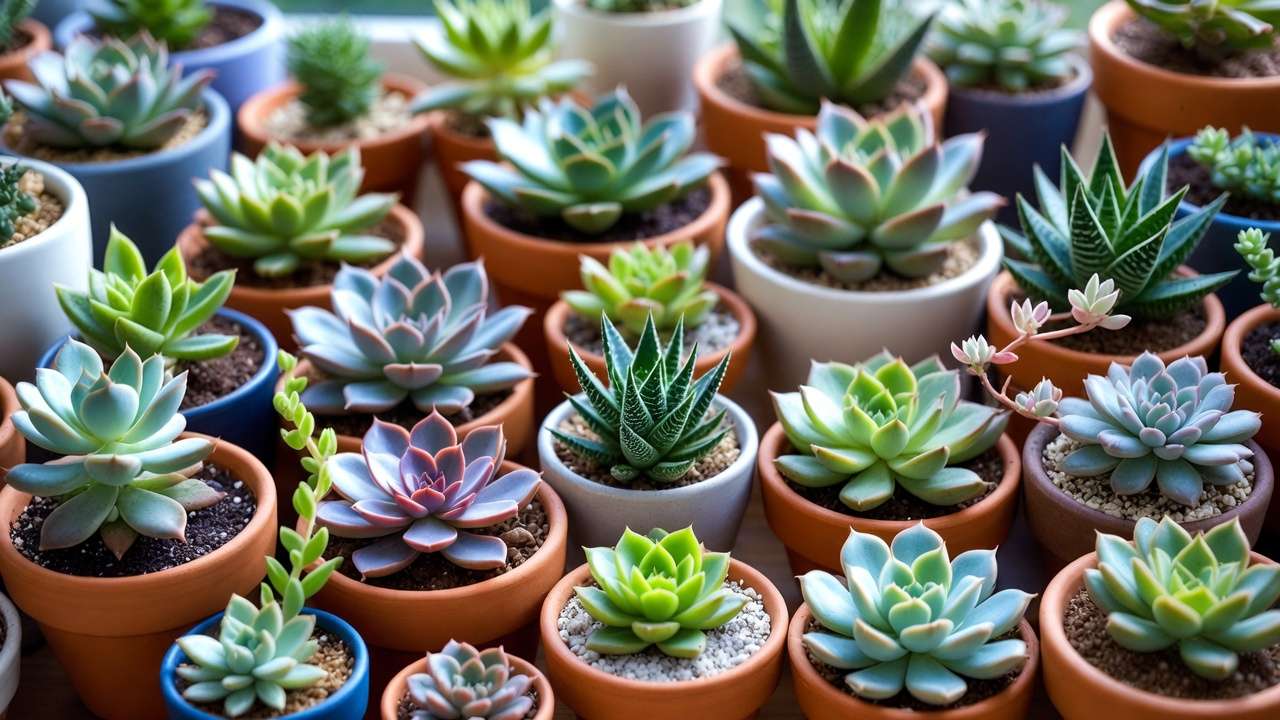
Start simple: Try the Beginner-Friendly Balanced Mix this weekend. Take before/after photos, track watering dates, and adjust as you observe your plants’ response. Within a few months, you’ll notice firmer leaves, stronger roots, and far fewer casualties—even during Dhaka’s challenging humid seasons.
Remember these golden rules:
- Drainage > everything else.
- Soak deeply, then let dry completely.
- Bright light + good airflow = happy succulents.
Your collection is about to level up! If you try one of these recipes, drop a comment below or tag me—I’d love to see your thriving plants. Happy growing! 🌿💚











