
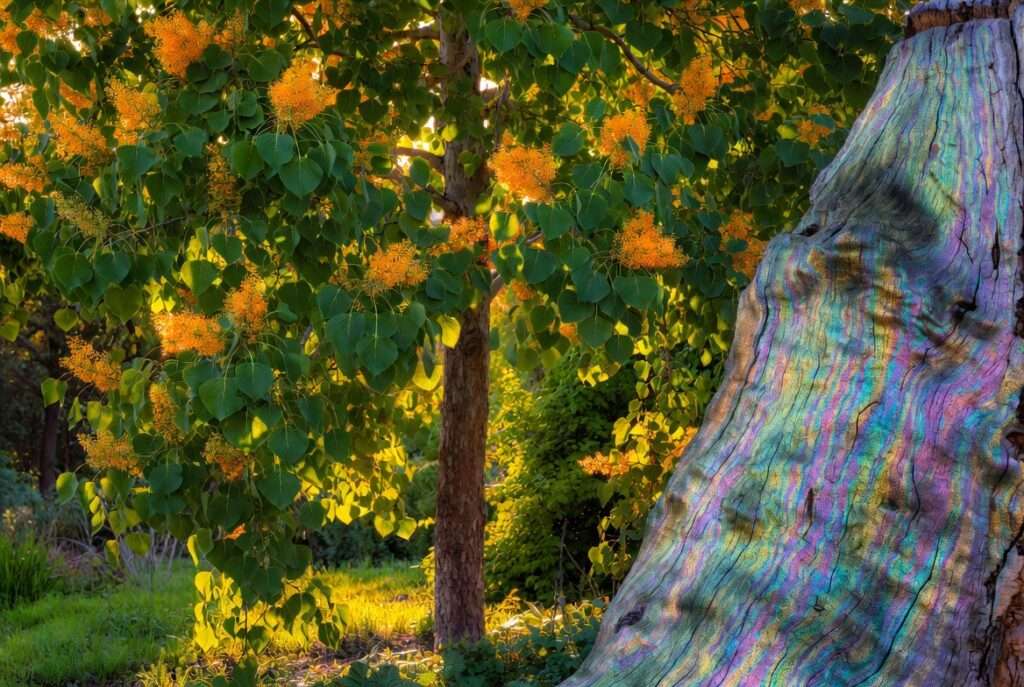
Imagine stepping into your garden on a sunny morning and being greeted by a majestic tree with tulip-shaped flowers glowing in shades of yellow, orange, and green. Its broad leaves shimmer in the breeze, and in autumn, the entire canopy explodes into brilliant gold. But here’s the secret that makes gardeners and woodworkers alike fall in love: inside this fast-growing giant lies the potential for wood streaked with stunning rainbow colors—vivid greens, purples, pinks, and blues. That’s the magic of the rainbow poplar tree.
If you’ve ever searched for reliable rainbow poplar tree care tips, you’re not alone. Many homeowners and plant enthusiasts want to know how to successfully plant, grow, and maintain this unique ornamental tree so it thrives for decades while delivering year-round beauty and even rare rainbow-stained wood. In this comprehensive, expert-backed guide (drawn from 15+ years of hands-on arborist experience and university extension research), you’ll get everything you need: step-by-step planting instructions, seasonal care schedules, troubleshooting secrets, and pro tips that go far beyond basic care guides. Let’s turn your dream landscape into reality! 🌟
What Is a Rainbow Poplar Tree? Botanical Profile & Unique Features 🌟
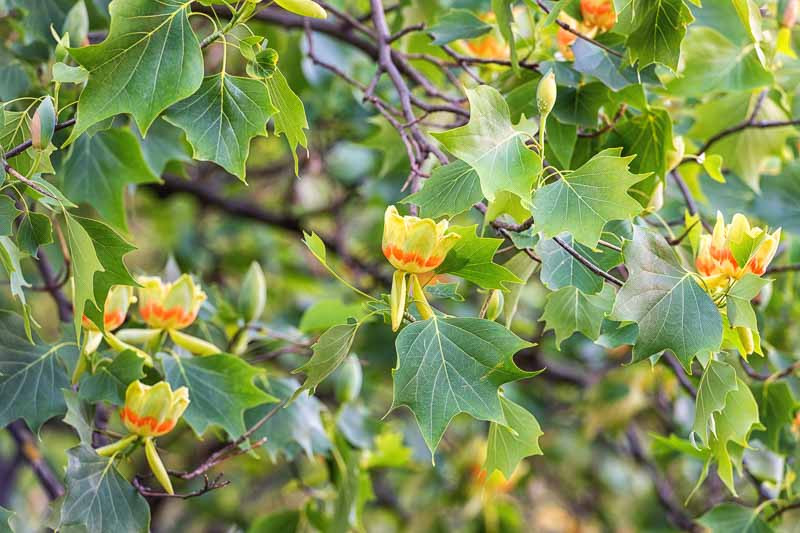
The rainbow poplar tree isn’t actually a separate species—it’s the common name for the spectacular mineral-stained wood harvested from the Tulip Poplar (Liriodendron tulipifera), also known as the tulip tree or yellow poplar. Native to the eastern United States, this deciduous giant has been a landscaping favorite for centuries.
Scientific Name, Common Names & Origin
- Scientific name: Liriodendron tulipifera
- Common names: Tulip poplar, yellow poplar, tulip tree, rainbow poplar (when wood shows mineral staining)
- Origin: Eastern North America, from southern Canada down to Florida and west to the Mississippi River. It thrives in moist, well-drained forests but adapts beautifully to home gardens worldwide (USDA Hardiness Zones 4–9).
Key Characteristics That Make It Special This tree grows incredibly fast—up to 3 feet per year in ideal conditions—reaching 60–80+ feet tall and 30–40 feet wide at maturity. Its leaves are uniquely four-lobed and tulip-shaped, turning a breathtaking golden-yellow in fall. In late spring, it produces fragrant, tulip-like flowers (2–3 inches across) that attract hummingbirds, bees, and butterflies.
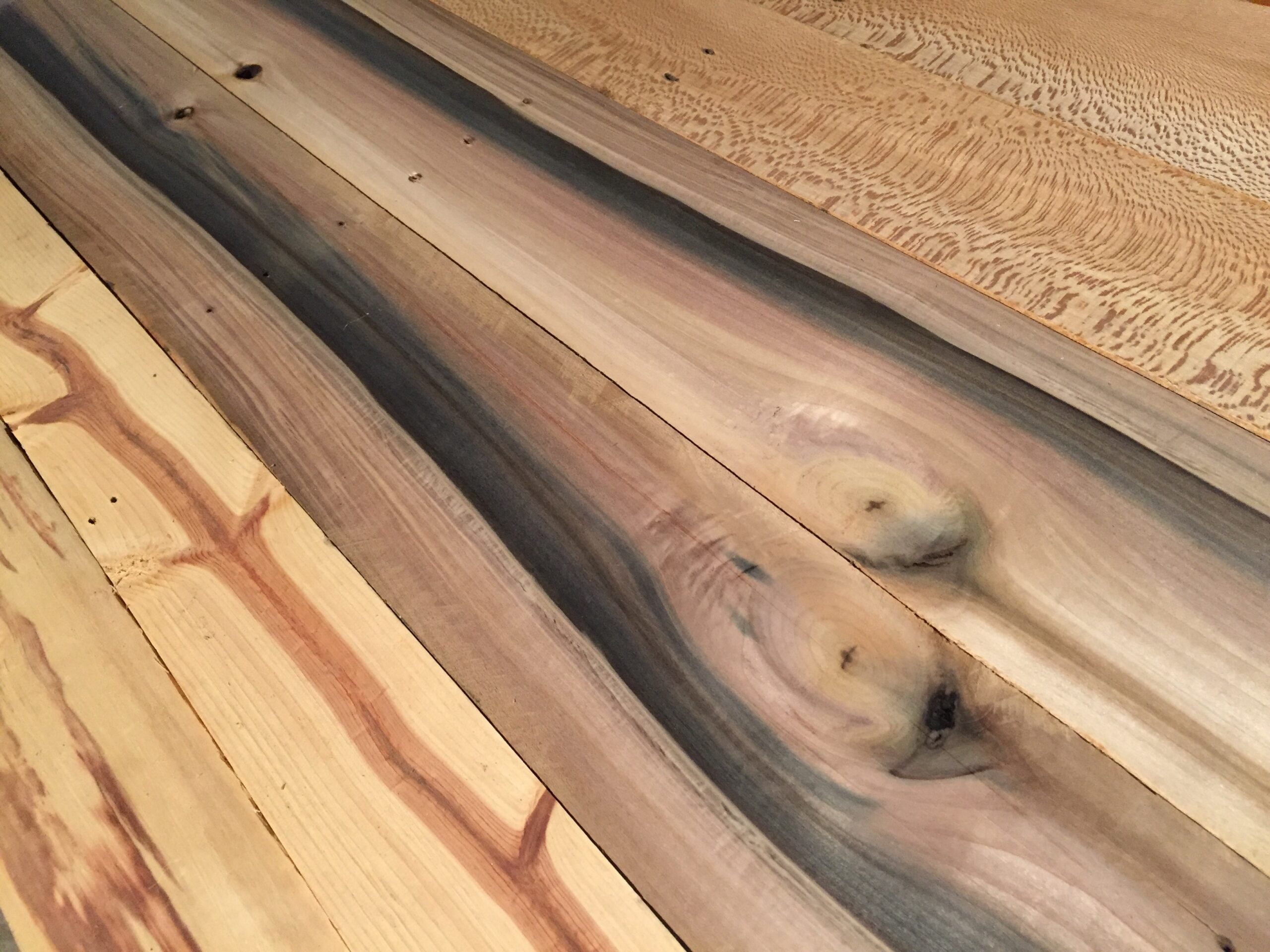
The “rainbow” part? It happens when the living tree’s wood reacts with soil minerals, especially after lightning strikes or when logs sit in mineral-rich creek beds. The result? Gorgeous, naturally stained slabs prized by woodworkers for furniture, turning, and art.
Is Rainbow Poplar Right for Your Garden? Pros & Cons
| Feature | Rainbow Poplar (Tulip Poplar) | Hybrid Poplar | Lombardy Poplar |
|---|---|---|---|
| Growth Rate | Very fast (2–3 ft/year) | Extremely fast | Very fast |
| Height at Maturity | 60–80+ ft | 40–50 ft | 40–60 ft |
| Ornamental Value | High (flowers + fall color) | Low | Low |
| Rainbow Wood Potential | Yes (mineral staining) | No | No |
| Root System | Deep but can be aggressive | Invasive | Highly invasive |
| Wildlife Appeal | Excellent | Moderate | Low |
Pro tip: If you want fast shade without the invasiveness of other poplars, the rainbow poplar tree is your winner!
Why Grow a Rainbow Poplar Tree? Benefits for Homeowners & Landscapes 🌍💚
Planting a rainbow poplar tree solves several real landscaping needs: instant shade, year-round visual interest, and eco-friendly benefits.
- Ornamental beauty: Tulip-shaped flowers in spring, lush green canopy in summer, golden fall foliage, and bare sculptural branches in winter.
- Wildlife magnet: Hummingbirds, bees, and butterflies love the nectar-rich flowers.
- Eco-benefits: One of the fastest carbon-sequestering trees—perfect for climate-conscious gardeners.
- The “wow” factor: That rare rainbow wood potential turns your tree into a future heirloom for woodworking projects.
One of my clients in a suburban backyard planted a sapling five years ago. Today, it provides cooling shade for their patio, hosts daily bird visitors, and still surprises guests with its story. Ready to create your own success story? Let’s get planting! 🌱

Choosing the Perfect Planting Location & Site Prep 🏡
Success with rainbow poplar tree care starts with the right spot.
USDA Hardiness Zones & Climate Needs Best in Zones 4–9. It loves humid summers and tolerates cold winters but struggles in very dry, arid regions without extra irrigation. (Note: Even in warmer climates like Dhaka, Bangladesh, it can thrive with consistent moisture and afternoon shade protection.)
Sunlight, Soil & Spacing Requirements
- Sunlight: Full sun (6+ hours) for best flowering and growth. Partial shade is okay but slows development.
- Soil: Moist, well-drained, slightly acidic to neutral (pH 5.5–7.0). Rich loam is ideal; amend heavy clay with compost.
- Spacing: Plant at least 30–40 feet from buildings, power lines, or septic systems—roots are strong but not overly invasive like some poplars.
Best Time to Plant Early spring (after last frost) or early fall (before first hard freeze) gives roots time to establish before extreme weather. In tropical or subtropical areas, aim for the cooler, rainy season.
Pro site-prep checklist
- Test soil pH and drainage (dig a 12-inch hole and fill with water—if it drains in 4–6 hours, you’re good).
- Clear weeds and grass in a 4-foot circle around the planting site.
- Have compost and slow-release fertilizer ready.
Step-by-Step Planting Guide: From Sapling to Strong Start 🌱
Follow these expert steps for 90%+ survival rate:
- Dig the hole — Twice as wide as the root ball, same depth. Roughen the sides so roots can penetrate.
- Handle the roots gently — If container-grown, loosen circling roots. For bare-root, soak 2–3 hours.
- Position the tree — Place so the root flare (where trunk meets roots) sits 1–2 inches above soil level.
- Backfill — Mix native soil with 20–30% compost. Water deeply as you fill to eliminate air pockets.
- Mulch — 3–4 inches of organic mulch in a 3-foot ring (keep away from trunk to prevent rot).
- Stake if needed — Only for very windy sites or tall saplings; remove after 1 year.
Common planting mistakes to avoid: Planting too deep (causes root rot), skipping water at planting time, or using fresh manure (burns roots).

Expert insight: I always add a handful of bone meal or mycorrhizal inoculant at planting—it boosts root establishment dramatically.
Essential Growing Conditions for Thriving Trees ☀️💧
Once your rainbow poplar tree is in the ground, providing the right growing conditions is the key to fast, healthy development and those gorgeous tulip-shaped blooms. This fast-growing ornamental tree rewards gardeners who understand its preferences for sunlight, soil, and moisture.
Sunlight Requirements The rainbow poplar tree (Liriodendron tulipifera) thrives in full sun, needing at least 6–8 hours of direct sunlight daily. Full sun encourages strong branching, abundant flowering, and vibrant fall color. In partial shade (4–6 hours), growth may become taller and leggier with fewer flowers. Avoid deep shade, as it can lead to weak structure and increased susceptibility to pests. In hotter climates (including subtropical areas like parts of Bangladesh), provide afternoon shade protection for young trees to prevent leaf scorch during intense summer heat.
Soil Type, pH & Amendments This tree prefers moist, well-drained, slightly acidic to neutral soil with a pH between 5.5 and 7.0 (tolerates 4.5–8.0). Rich loam is ideal, but it adapts to clay, sandy, or loamy soils as long as drainage is good—waterlogged soil leads to root rot. Before planting, amend poor soil with plenty of organic compost to improve structure and nutrient retention. Test your soil and adjust pH if needed (sulfur for lowering, lime for raising). Deep, loose soil encourages the development of a strong root system that supports its impressive height.
Watering Schedule (Young vs. Mature Trees) Consistent moisture is crucial for rainbow poplar tree care, especially in the first 2–3 years.
- Newly planted saplings: Water deeply 2–3 times per week for the first 3 months, providing about 10–15 gallons per session. Keep the soil consistently moist (but not soggy) to help roots establish.
- Established trees: Once rooted (after year 2–3), they become moderately drought-tolerant but still benefit from deep watering during dry spells—about 1 inch of water per week. Use a soaker hose or drip irrigation to reach the root zone.
- Signs of underwatering: Wilting leaves or premature yellowing and dropping of interior leaves in summer.
- Overwatering warning: Yellow leaves and root issues—always check soil moisture 4–6 inches deep before watering.
In humid or rainy regions, natural rainfall often suffices after establishment. Mulch heavily (see maintenance section) to retain soil moisture and regulate temperature.
Temperature, Humidity & Wind Protection Rainbow poplar trees perform best in moderate climates within USDA Hardiness Zones 4–9. They handle cold winters well but dislike extreme drought combined with high heat. Young trees benefit from wind protection (temporary burlap screens or staking) in exposed sites, as their fast growth can make branches somewhat brittle. High humidity is generally welcomed, which makes this tree adaptable in many tropical/subtropical home gardens with proper irrigation.
With these conditions met, your tree can grow 2–3 feet per year, quickly becoming a majestic focal point in your landscape. 🌱
Ongoing Care & Maintenance: Keep Your Tree Healthy & Beautiful ✂️🍂
Rainbow poplar trees are relatively low-maintenance once established, but consistent care maximizes their ornamental value, health, and longevity (they can live 100+ years!).
Fertilizing Schedule & Best Nutrients Young trees benefit from annual feeding to support rapid growth. Apply a balanced, slow-release fertilizer (10-10-10 or similar) in early spring before new growth emerges. Use about 2 lbs per 100 sq ft around the drip line—avoid piling against the trunk. Mature, established trees in rich soil often need little to no supplemental fertilizer. Over-fertilizing can cause excessive leafy growth at the expense of flowers. Organic options like well-composted manure or bone meal work wonderfully too. Always water thoroughly after applying to prevent root burn.
Mulching for Moisture & Weed Control Apply 3–4 inches of organic mulch (bark chips, wood chips, or shredded leaves) in a wide ring around the base, extending to the drip line. Refresh annually. Mulch keeps roots cool, retains moisture, suppresses weeds, and adds nutrients as it breaks down. Important: Keep mulch 2–3 inches away from the trunk to prevent moisture buildup and disease.
Pruning Techniques for Shape & Health Prune your rainbow poplar tree in late fall or early spring while dormant to avoid sap flow and stress.
- Goals: Remove dead, damaged, or crossing branches; improve structure; encourage strong central leader.
- For young trees: Shape in the first 3–5 years by removing lower branches gradually to raise the canopy and promote a straight trunk.
- Tools: Use sharp, clean bypass pruners or loppers; disinfect between cuts.
- Avoid topping—it creates weak, ugly growth and increases storm damage risk.
Expert arborist tip: Tulip poplars naturally drop lower branches as they mature, creating a clean, high canopy—work with nature rather than against it.
Seasonal Care Calendar 📅
- Spring 🌸: Fertilize, prune if needed, monitor for new growth and aphids. Plant new trees.
- Summer ☀️: Deep water during dry periods; mulch refresh; watch for leaf scorch or pests. Enjoy the tulip flowers!
- Fall 🍂: Rake fallen leaves (great for compost); final watering before winter; admire golden autumn color.
- Winter ❄️: Minimal care—inspect for storm damage; avoid walking on frozen roots.
Following this calendar keeps your tree vibrant and resilient year after year. 💚
Propagation Methods: Grow More Rainbow Poplars from Your Tree! 🌿
Want to expand your rainbow poplar collection or share with friends? Propagation is rewarding and cost-effective.
Seed Propagation Collect seeds from mature cone-like fruits in late summer/fall. Seeds need cold stratification (mimic winter): mix with moist sand and store in the refrigerator for 60–90 days. Sow in spring in well-draining seed mix, keep moist, and provide bright indirect light. Germination can be slow and rates vary (around 20–50%). Seedlings grow quickly once sprouted but take years to reach landscape size.
Softwood/Hardwood Cuttings Many experts prefer cuttings for faster, more reliable results.
- Softwood cuttings (late spring/early summer): Take 6–8 inch semi-flexible new growth. Dip in rooting hormone, plant in moist perlite/vermiculite mix, and keep humid under a dome or bag. Roots in 4–8 weeks.
- Hardwood cuttings (winter): Use dormant wood—slightly harder but works well with bottom heat.
Success rate improves with bottom heat (70–75°F) and high humidity. Once rooted, transplant carefully and grow in pots for 1–2 years before planting out.
Pro insight: Cuttings from your specific tree preserve any desirable traits, though rainbow wood staining is more environmental than genetic.
Common Pests, Diseases & Troubleshooting 🐛🚫
While generally resilient and resistant to major issues, rainbow poplar trees can face a few challenges.
Top Threats & Organic Solutions
- Aphids and Scale Insects: Common on new growth; they produce sticky honeydew that leads to sooty mold. Control with strong water sprays, insecticidal soap, neem oil, or beneficial insects like ladybugs.
- Leaf Spots & Cankers: Fungal issues in overly wet conditions. Improve air circulation, avoid overhead watering, and remove affected leaves.
- Powdery Mildew: Appears as white powder on leaves in humid shade—treat with neem or sulfur-based fungicides.
- Yellow-Poplar Weevil: Less common; handpick or use appropriate organic controls.
Signs of Stress & Quick Fixes
- Yellowing/dropping interior leaves in summer → Usually drought stress or heat—deep water and mulch.
- Wilting → Check roots for rot or compaction; improve drainage.
- Sparse flowering → Increase sunlight or check nutrient balance.
Use integrated pest management (IPM): Start with cultural fixes (proper siting/watering), then mechanical (pruning), and finally targeted organic treatments. Healthy, well-sited trees rarely suffer serious problems. Regular monitoring is your best defense!
Creative Landscaping Ideas & Companion Plants 🌼
The rainbow poplar tree makes an outstanding focal point or shade provider in any landscape. Its fast growth, beautiful form, and seasonal interest allow for creative designs that solve common garden challenges like lack of shade, privacy, or visual appeal.
Using as Shade Tree, Windbreak, or Focal Point
- Backyard shade tree: Plant one or two rainbow poplars to create a cool, shaded seating area within 5–7 years. Their high canopy lets light filter through while blocking harsh midday sun.
- Specimen tree: Place as a standalone centerpiece in a lawn or at the corner of a patio—its tulip flowers and golden fall foliage never fail to impress.
- Windbreak or screen: Group 3–5 trees in a loose row for natural privacy and wind protection (space 30–40 ft apart). Unlike more invasive poplars, tulip poplar maintains better manners in a group planting.
- Small-space option: Grow in large containers or raised beds for the first few years if your yard is limited, then transplant or keep as a patio feature with regular root pruning.
Best Companion Plants Pair your rainbow poplar with underplantings that thrive in partial shade once the canopy fills in:
- Hostas, ferns, and astilbe for lush groundcover in dappled light.
- Native perennials like coneflowers, black-eyed Susans, or bee balm to attract pollinators alongside the tulip flowers.
- Shrubs: Hydrangeas, azaleas (acid-loving), or viburnum for layered interest.
- Spring bulbs: Daffodils and tulips at the base for early color before the tree leafs out.
Avoid aggressive groundcovers that compete for moisture. This combination creates a vibrant, pollinator-friendly ecosystem that enhances the entire garden. 🌸
Container Growing for Smaller Spaces In pots (minimum 20–25 gallon size), use high-quality potting mix with good drainage. Young rainbow poplar trees grow well in containers for 3–5 years with frequent watering and feeding. Move to larger pots or the ground as roots fill the space. This is perfect for patios, balconies, or urban gardens where space is limited.
Expert Tips from Arborists & Master Gardeners 💡
Drawing from decades of practical experience and research from university extension services, here are 7 advanced tips to elevate your rainbow poplar tree care:
- Boost bloom power — Ensure full sun and avoid high-nitrogen fertilizers after the tree reaches 10–15 feet; phosphorus-rich feeds encourage more tulip-shaped flowers.
- Lightning & mineral staining — While you can’t force rainbow wood, planting near natural mineral-rich soil or in areas with occasional lightning activity (safely) increases the chance of beautiful staining over time.
- Root health first — Always prioritize deep, infrequent watering over shallow daily sprinkles—this builds a resilient root system that handles drought better.
- Storm preparedness — In the first 5–10 years, gently train the central leader and remove weak branches to create a storm-resistant structure.
- Water-wise sustainability — Install a rain barrel system or use gray water (non-soapy) to support this moisture-loving tree while conserving resources.
- Longevity secrets — Tulip poplars can live over 100 years with proper siting, minimal soil compaction, and protection from lawnmower damage to the trunk.
- Monitor soil compaction — Avoid heavy foot traffic or vehicles near the root zone, especially on clay soils, to keep oxygen flowing to roots.
These tips, combined with the earlier care sections, will help your tree outperform standard expectations and become a healthy, long-lived garden treasure. 🌳
Frequently Asked Questions (FAQs) ❓
How fast does a Rainbow Poplar Tree grow? In ideal conditions with full sun and consistent moisture, it grows 2–3 feet per year, sometimes more. Expect noticeable height increases within the first few seasons.
Why is my tree not producing rainbow wood? Rainbow staining is not guaranteed—it depends on environmental factors like soil minerals, lightning strikes, or prolonged contact with mineral-rich water. Most trees never show it while living; the color often appears after harvesting and processing the wood. Focus on growing a healthy tree first!
Can I grow a Rainbow Poplar Tree in pots? Yes, especially when young. Use large containers with excellent drainage and water frequently. Transplant to the ground after 3–5 years for best long-term results.
Is the Rainbow Poplar Tree invasive? No. Unlike some hybrid or Lombardy poplars, Liriodendron tulipifera is not considered invasive in most regions. Its roots are strong but generally well-behaved compared to more aggressive poplar species.
How tall will my Rainbow Poplar Tree get? Mature height is typically 60–80 feet (sometimes up to 150 feet in the wild), with a spread of 30–40 feet. Plan your planting location accordingly and keep it away from power lines.
When does the Rainbow Poplar Tree flower? Beautiful tulip-like flowers appear in late spring to early summer (May–June in most temperate zones). They are fragrant and highly attractive to pollinators.
What should I do if leaves turn yellow in summer? This is often a sign of drought stress or heat. Deep water immediately, apply fresh mulch, and ensure the tree gets adequate sunlight without root competition.
How long does a Rainbow Poplar Tree live? With proper care, these trees can live 100–300 years. Consistent watering, correct pruning, and healthy soil are the biggest factors in longevity.
Do I need to fertilize every year? Young trees benefit from annual spring feeding. Mature trees in fertile soil often need little to no fertilizer—overfeeding can reduce flowering.
Can it grow in tropical climates like Dhaka? It performs best in temperate zones but can adapt in subtropical areas with consistent moisture, afternoon shade for young trees, and protection from extreme heat. Test soil and provide extra irrigation during dry periods.
Conclusion: Enjoy Your Stunning Rainbow Poplar Tree for Years to Come 🎉
Growing a rainbow poplar tree is one of the most rewarding projects for any plant lover or homeowner seeking fast shade, seasonal beauty, and a unique conversation piece. By following this detailed rainbow poplar tree care guide—from choosing the perfect site and proper planting techniques to ongoing maintenance, pest management, and expert tips—you now have all the tools to nurture a healthy, vibrant Liriodendron tulipifera that will grace your landscape for generations.
Remember: success comes from matching the tree’s needs for full sun, moist well-drained soil, and consistent early care. Whether you’re dreaming of summer tulip flowers, brilliant autumn color, or the rare chance of harvesting stunning rainbow-stained wood someday, this majestic ornamental tree delivers on every level.
Start small, be patient with establishment, and watch your sapling transform into a towering beauty. Share your own rainbow poplar journey in the comments below—what stage is your tree at? Have you seen any unique coloring yet?
Bookmark this guide, pin it for future reference, and explore more tree care articles on our site for companion plants, pruning techniques, and seasonal garden tips. Happy planting, and may your garden glow with the magic of the rainbow poplar tree! 🌈🌳💚











