
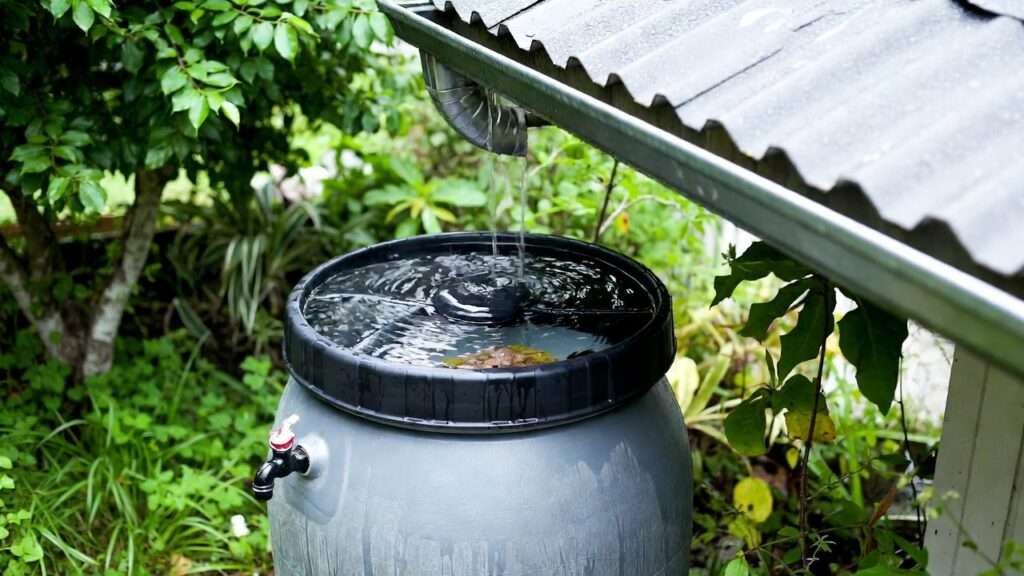
Imagine this: It’s a scorching summer day in your garden. Your newly planted fruit tree looks wilted, the leaves on your favorite perennials are drooping, and your water bill just arrived—higher than ever. 😩 But what if the solution was falling from the sky for free? Rainwater harvesting barrels capture that pure, natural rainfall right from your roof, turning it into an endless supply of soft, chlorine-free water that’s perfect for thirsty plants and trees. 🌱💧
Rainwater harvesting barrels 101 is exactly what beginners need to get started. These simple systems collect roof runoff during storms, store it in sturdy barrels, and let you dispense it whenever your garden calls for a drink. In regions facing increasing droughts, water restrictions, and rising utility costs (especially relevant in places like Bangladesh with seasonal monsoons), a rain barrel isn’t just eco-friendly—it’s a smart, money-saving upgrade for any plant lover. 🌳
The best part? Rainwater is often superior to tap water for irrigation. It’s naturally soft, slightly acidic, free of harsh chemicals like chlorine and fluoride, and packed with dissolved oxygen that helps roots thrive. University extension services from Penn State, University of Minnesota, and others confirm: rainwater promotes better nutrient uptake, reduces soil salt buildup, and boosts overall plant health—making your trees more drought-resistant and your garden more vibrant. 🌿✨
In this complete beginner’s guide, you’ll learn everything from why rainwater is “plant-loving” magic to choosing the right barrel, step-by-step installation, maintenance secrets, and pro tips tailored for garden and tree care. By the end, you’ll be ready to set up your own system and watch your plants thank you with lush growth! Ready to harvest free water and build a more sustainable garden? Let’s dive in. 🚀
What Is Rainwater Harvesting and Why Barrels Are Perfect for Beginners? 🌧️
Rainwater harvesting means intentionally collecting and storing rain for later use, instead of letting it run off into storm drains or evaporate. For most homeowners, rain barrels are the easiest starting point—affordable (often $100–$300), compact, and quick to install without major plumbing or permits in many areas.
Unlike large cisterns or underground tanks, barrels sit above ground near a downspout, relying on gravity to dispense water through a spigot. They’re ideal for small to medium yards focused on watering gardens, shrubs, trees, and even houseplants. No fancy engineering required—just basic tools and an afternoon! 🛠️
In the plant care world, this matters because natural rainfall is what most trees and perennials evolved with. Rainwater mimics that: slightly acidic (pH around 5.5–6.5), low in salts, and oxygenated—perfect for root health and microbial soil life. 🌱
Why Rainwater Is Superior for Your Plants and Trees 🌿💚
Tap water often contains chlorine (to kill bacteria in pipes), fluoride, and high mineral levels that can build up in soil over time, especially in potted plants or heavy clay soils. Well water might carry excess iron or hardness. Rainwater? It’s naturally “soft” and pure.
Key advantages backed by extension experts (Penn State Extension, UMN Extension, EPA):
- No chlorine or fluoride — These chemicals can harm beneficial soil microbes and inhibit nutrient absorption. Rainwater lets roots breathe easier.
- Better pH balance — Slightly acidic rainwater helps unlock nutrients like iron and phosphorus, crucial for acid-loving plants (azaleas, blueberries) and many fruit trees.
- Oxygen-rich — Fresh rain has dissolved oxygen that supports root respiration and prevents anaerobic conditions in soggy soils.
- Trace minerals — Rain picks up small beneficial elements from the atmosphere, acting like a gentle foliar feed.
- Drought resilience for trees — Deep, infrequent watering with rainwater encourages strong root systems. Studies show irrigated trees establish faster and handle dry spells better.
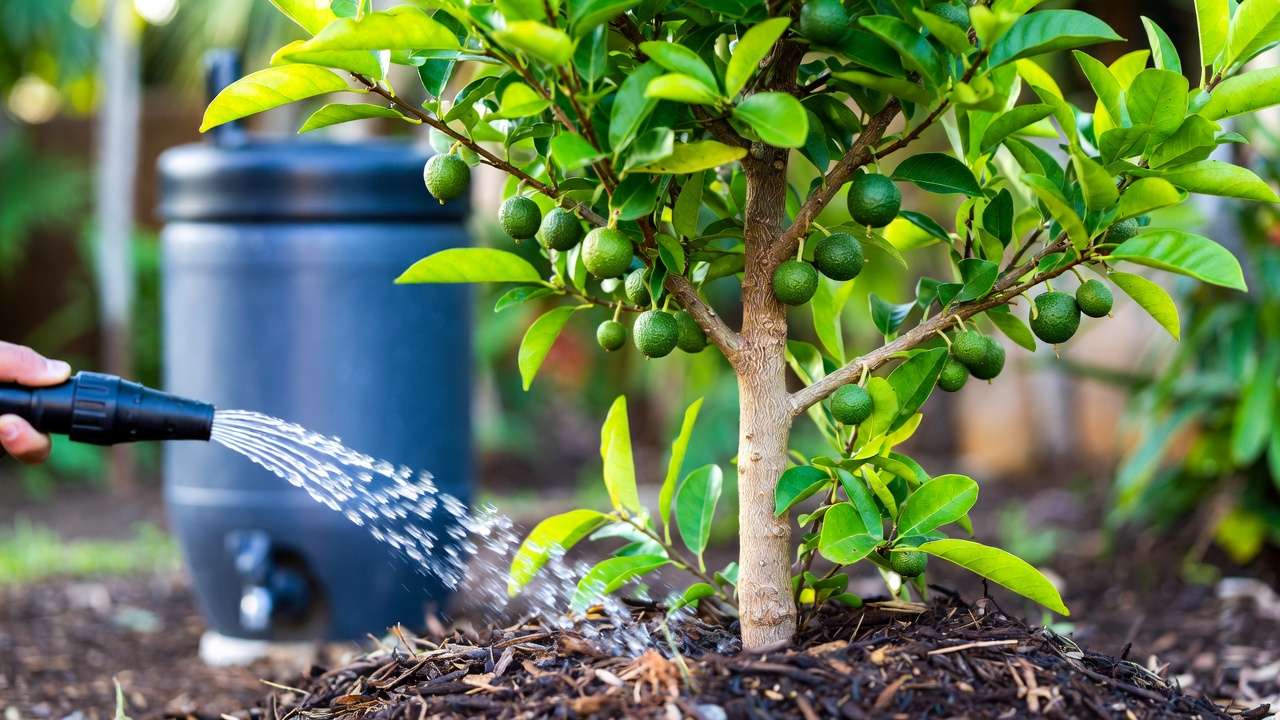
Real-world wins: Fruit trees (mango, citrus) produce better fruit with softer water; evergreens stay greener without needle burn; perennials bloom longer. In tests, plants watered with rainwater often show 10–20% better growth in nutrient uptake compared to chlorinated tap water.
Quick Comparison Table:
| Water Type | pH Level | Chlorine/Fluoride | Mineral Buildup | Best For |
|---|---|---|---|---|
| Rainwater | 5.5–6.5 | None | Low | Trees, shrubs, ornamentals, most gardens 🌟 |
| Municipal Tap | 7–8 | Present | High | Edibles with caution |
| Well Water | Varies | None | Often high | Depends on test |
Bottom line: Switching to rainwater isn’t just sustainable—it’s healthier for your beloved plants and trees. 🌳💚
How Rain Barrels Work: The Basic Setup Explained 🔧
A rain barrel is a gravity-fed system with these core parts:
- Collection area: Your roof and gutters capture rain.
- Diversion: A downspout adapter or diverter directs water into the barrel (and overflows back to the gutter when full).
- Storage: Food-grade plastic barrel (usually 50–90 gallons) holds the water.
- Outlet: Brass or plastic spigot at the bottom for easy hose attachment or bucket filling.
- Overflow: A hose or pipe at the top redirects excess water safely away from your foundation.
- Screen: Fine mesh over the inlet prevents leaves, debris, and mosquitoes. 🦟
Water enters through the top, debris is filtered, and clean(ish) water sits ready. Elevate the barrel on bricks or a stand for better flow pressure—gravity does the work!
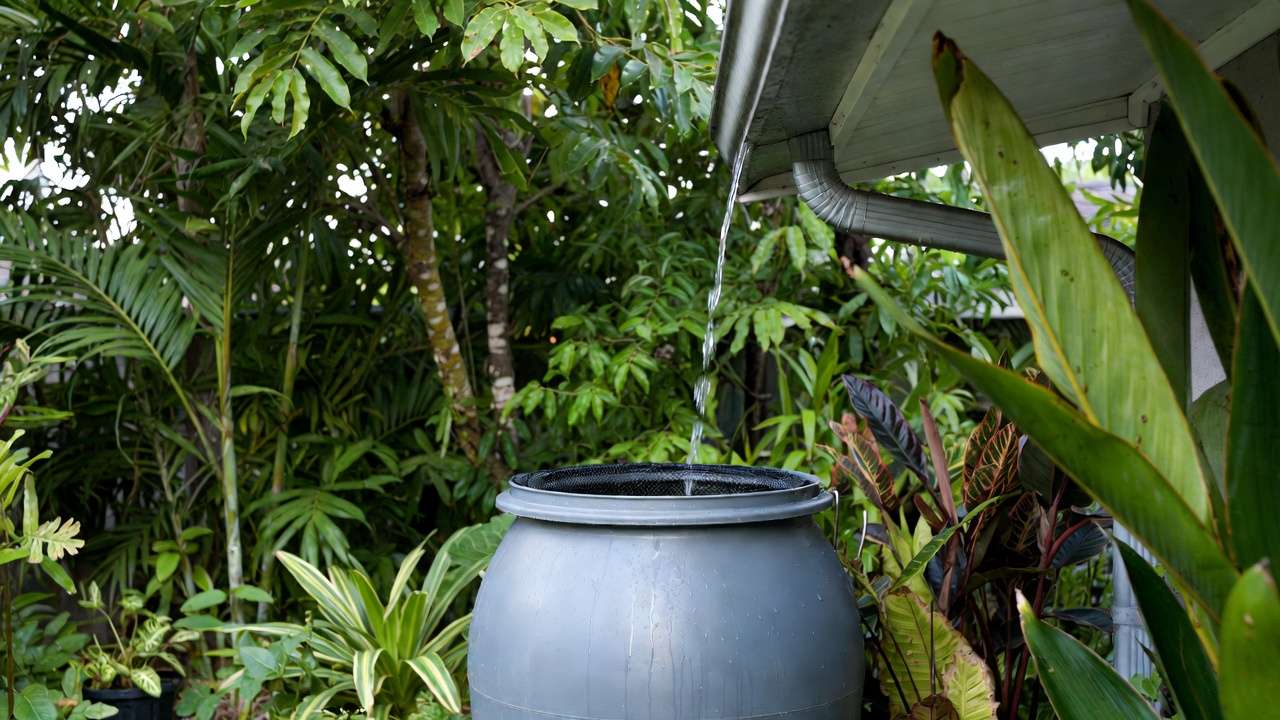
(Pro tip: Include a simple labeled diagram here in the full article for visual learners.)
Step-by-Step: How to Choose & Install Your First Rain Barrel 🛠️🌧️
Choosing the Right Barrel (H3)
Look for food-grade plastic (BPA-free) to avoid leaching chemicals into your plant water. Popular 2025–2026 recommendations from reviews (The Spruce, Better Homes & Gardens, Southern Living):
- Good Ideas Impressions 50-Gallon Nantucket — Top-rated for dual spigots, planter top option, and sturdy build (~$150–$200).
- FCMP Outdoor 50-Gallon Flat Back — Space-saving against walls, great for small yards.
- Algreen Cascata or EarthMinded — Affordable, decorative options with good overflow features.
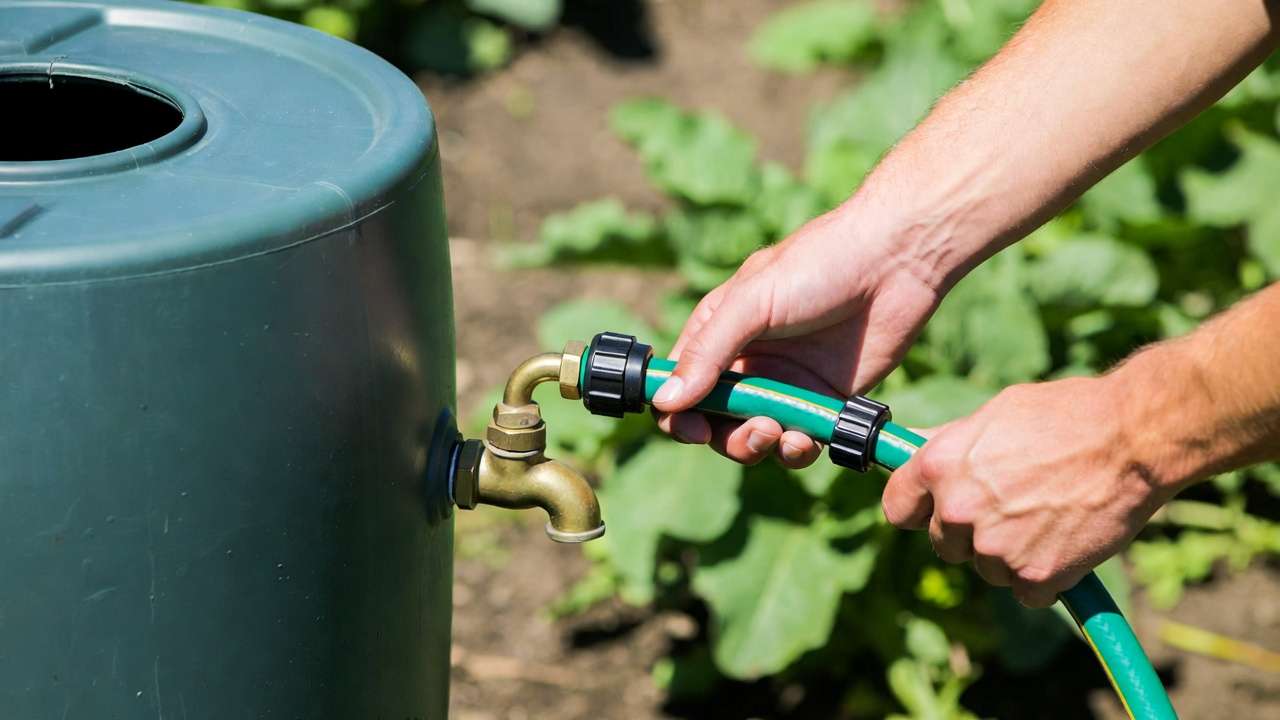
Key features to prioritize:
- Built-in overflow & screen.
- Child/pet-safe screw-on lid.
- Brass spigot for durability.
- Planter top for extra garden space.
Size tip: Start with 50–65 gallons—one good storm can fill it multiple times!
Site Selection & Preparation (H3)
Choose a downspout near high-water-use areas (trees, veggie beds, or shrubs). Ensure level ground—uneven bases can tip barrels. Elevate 12–18 inches on cinder blocks or a sturdy stand for hose access and pressure.
Clear grass, add gravel for drainage, and level with a tamper.
Installation Guide (H3 – Numbered Steps)
- Assemble & prepare the barrel — Install spigot, overflow fitting, and screen per manufacturer instructions.
- Position & elevate — Place on level base next to downspout.
- Measure & cut — Mark downspout where it meets the barrel top; cut with tin snips or hacksaw.
- Install diverter — Attach a diverter kit (or elbow) to redirect water in—seal tightly.
- Add inlet screen — Secure fine mesh (window screen or hardware cloth) over the opening to block debris and mosquitoes.
- Connect overflow — Run hose to a rain garden, tree drip line, or away from foundation.
- Test — Pour water in or wait for rain—check for leaks and flow.
DIY option: Convert a food-grade 55-gallon drum with fittings (cheaper but more work). Always check local regs—some areas offer rebates!
Maximizing Your Barrel System for Garden & Tree Success 🌳💧
Once your rain barrel is up and running, the real magic happens when you optimize it for your plants and trees. Here are practical ways to get the most out of every gallon collected.
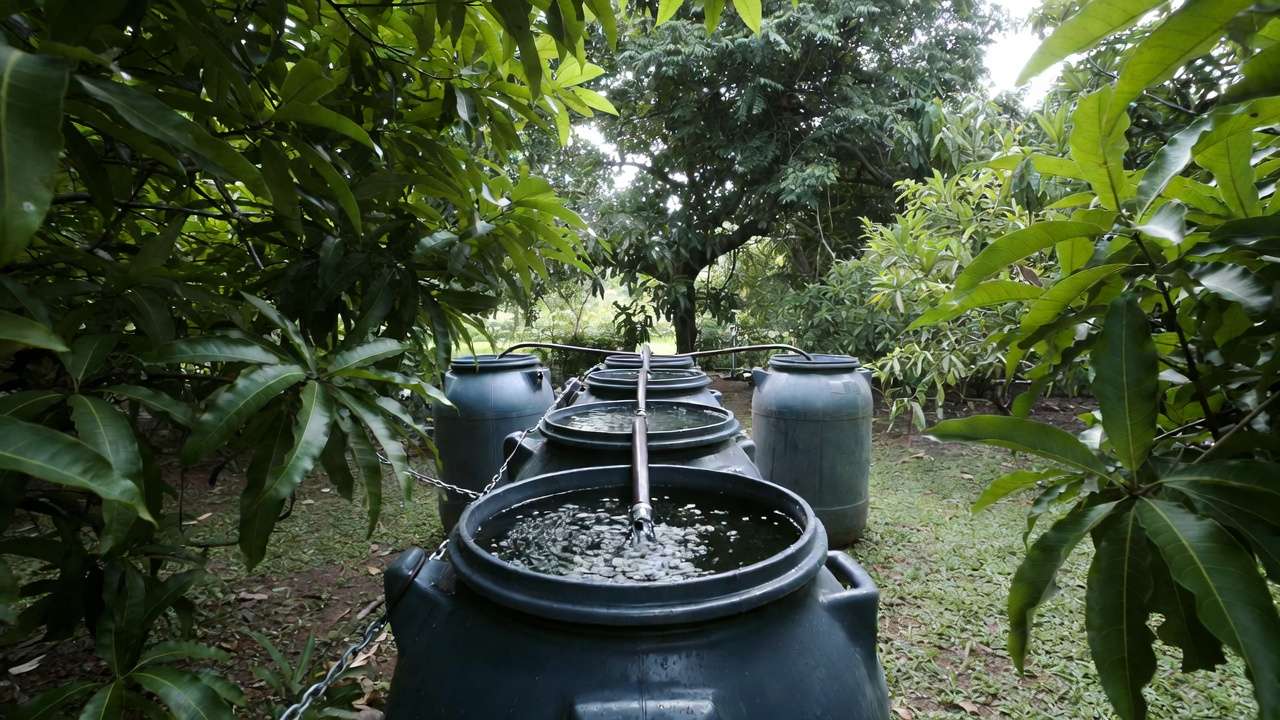
- Link multiple barrels — Chain 2–3 barrels together using overflow hoses. When the first fills, excess flows to the next. This creates 150–300 gallons of storage—enough for deep tree watering during dry spells common in Barisal’s seasonal climate. Use PVC or flexible tubing with bulkhead fittings for leak-free connections.
- Direct overflow wisely — Never let overflow erode your foundation. Route the overflow hose to a rain garden, swale, or mulch basin around trees/shrubs. This creates a passive irrigation zone that soaks slowly into roots.
- Seasonal strategies — In monsoon-heavy areas like Bangladesh, barrels fill fast—use the water promptly to avoid stagnation. During dry pre-monsoon months, prioritize deep watering for fruit trees (mango, jackfruit) and perennials. Aim for 1–2 inches per week on trees, applied slowly at the drip line.
- Watering techniques — Attach a soaker hose or drip irrigation kit to the spigot for efficient delivery. For trees, use a tree watering bag or slow-drip setup to encourage deep roots. Foliar sprays work great too—rainwater’s softness makes it ideal for misting leaves without burn.
Pro tip: Calculate your potential harvest to plan better! The standard formula is: Gallons collected = Roof area (sq ft) × Rainfall (inches) × 0.623 (conversion factor for gallons per sq ft per inch).
Example: A 1,000 sq ft roof section during a 2-inch rain yields ~1,246 gallons. Even a modest 500 sq ft roof in a 1-inch storm gives ~311 gallons—plenty for several trees! Adjust for efficiency losses (~75–90% capture) due to first-flush diversion and evaporation.
Maintenance & Safety Tips Every Gardener Needs ⚠️🧼
Regular care keeps your system safe, clean, and mosquito-free—essential for plant-loving water.
- Cleaning schedule — Scrub inside every 3–6 months (or after heavy pollen/debris season) with warm soapy water or a vinegar solution (1:10 ratio). Rinse thoroughly. For algae, use hydrogen peroxide or dilute bleach (1:10), then rinse well—never use harsh chemicals near plants.
- Mosquito prevention 🦟 — Always keep the inlet screen secure (fine mesh, no gaps). Add Bti mosquito dunks (safe, bacteria-based larvicide) monthly during warm months—they target larvae without harming plants or beneficial insects. Empty stagnant water if unused for weeks.
- Winterizing (if freezes occur, though rare in Barisal) — Drain completely, disconnect hoses/spigots, and store indoors or upside down to prevent cracking.
- Safety first — Use child/pet-proof lids (screw-on or lockable). Label “Non-potable – Garden Use Only.” Shade the barrel to reduce algae growth (opaque models help too).
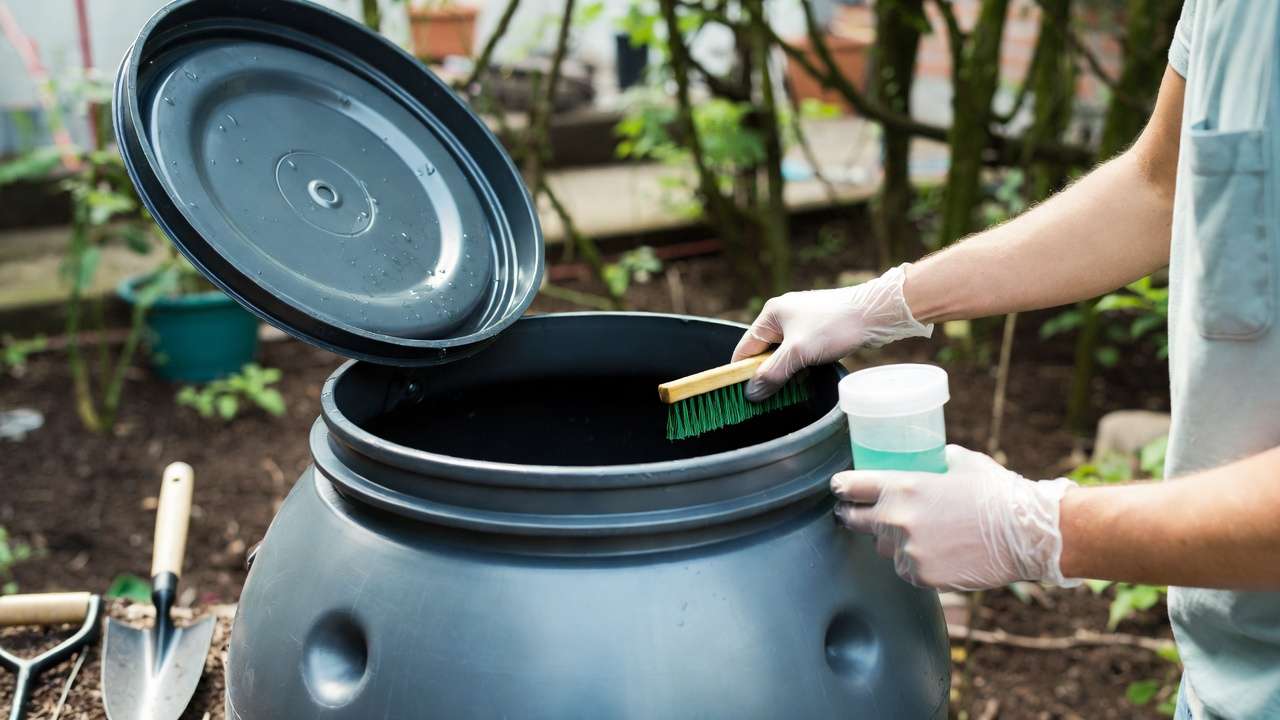
Consistent maintenance ensures crystal-clear, plant-safe water year-round! 🌿
Common Mistakes Beginners Make (and How to Avoid Them) 🚫
Newbies often trip on these—learn from others’ experience:
- Poor placement — Barrel too low or far from plants = weak gravity flow. Fix: Elevate 12–18 inches on stable blocks.
- No/inadequate screen — Leads to debris clogs and mosquitoes. Always install tight-fitting mesh.
- Ignoring overflow — Water spills onto foundation. Solution: Add proper overflow hose to safe drainage.
- Using on edibles without caution — Roof runoff can carry bird droppings, dust, or pollutants. Guidelines from university extensions (e.g., UMN, Clemson, UAEX): Best for ornamentals, trees, shrubs. For veggies/fruits: Water soil only (avoid foliage/fruit contact), rinse produce thoroughly with tap water before eating. Use first-flush diverters to discard initial dirty runoff. Many gardeners safely use it on non-edibles or root crops with precautions—test your roof material (asphalt shingles usually low-risk).
- Undersized barrel — Fills too fast in heavy rains. Start small, then expand.
Avoid these, and your system will thrive!
Expert Insights & Pro Tips for Plant Lovers 🌳✨
As someone who’s helped countless gardeners set up sustainable watering in tropical/subtropical zones (like Barisal’s humid climate), here are insider gems:
- Rainwater excels for post-planting tree establishment—its softness reduces transplant shock and builds drought tolerance faster than chlorinated tap water.
- Bonus hack: Occasionally add diluted compost tea or seaweed extract to the barrel for a nutrient boost—great foliar feed for leaves.
- In monsoon regions: Harvest aggressively during rains, then store/use in dry spells. Pair with mulch around trees to retain moisture longer.
- Personal favorite: Use rainwater for acid-loving plants (blueberries, gardenias if you grow them) or young fruit saplings—they respond with vigorous growth!
These small tweaks turn basic barrels into a powerhouse for healthier gardens.
FAQs: Rainwater Harvesting Barrels Answered ❓
Is rainwater safe for vegetables/fruits? Generally yes with precautions—avoid direct contact on edible parts. Water at soil level, rinse produce well. Great for trees/shrubs/ornamentals. Many extensions recommend it primarily for non-edibles due to potential roof contaminants, but proper screens/diverters minimize risks.
How much water can I collect? Use the formula: Roof sq ft × rainfall inches × 0.623. Example: 800 sq ft roof × 4-inch monsoon storm = ~1,994 gallons potential (real capture ~75–90%).
Do I need permits? In most areas (including Bangladesh), small residential barrels don’t require permits. Check local municipality for incentives/rebates—some regions offer them!
Best barrels for 2026? Top picks: Good Ideas Impressions 50-Gallon (sturdy, planter top), EarthMinded RainStation 45-Gallon (great diverter), FCMP Outdoor models (space-saving). Look for food-grade, screened, overflow-equipped.
How to prevent mosquitoes/algae? Tight screens + Bti dunks for mosquitoes; shade/opaque barrel + regular use/scrubbing for algae.
Can I use it indoors for houseplants? Yes! Many indoor gardeners swear by rainwater for tropicals—soft, chemical-free, and plants love it. Just filter if needed.
Conclusion: Start Harvesting Rain Today for a Thriving Garden Tomorrow 🌧️→🌿
Congratulations—you now have the full Rainwater Harvesting Barrels 101 roadmap! From understanding why rainwater is superior for plant health to installing, maintaining, and optimizing your setup, you’re equipped to capture free, eco-friendly water that makes trees stronger, gardens lusher, and your wallet happier.
In a world of rising water costs and unpredictable weather, a simple rain barrel is one of the easiest steps toward sustainable plant and tree care. Pick a downspout, grab a quality barrel, and start today—your plants (and the planet) will thank you! 🌱💚
Have questions or success stories? Drop them in the comments—I’d love to hear how your garden grows with harvested rain! 🚀











