
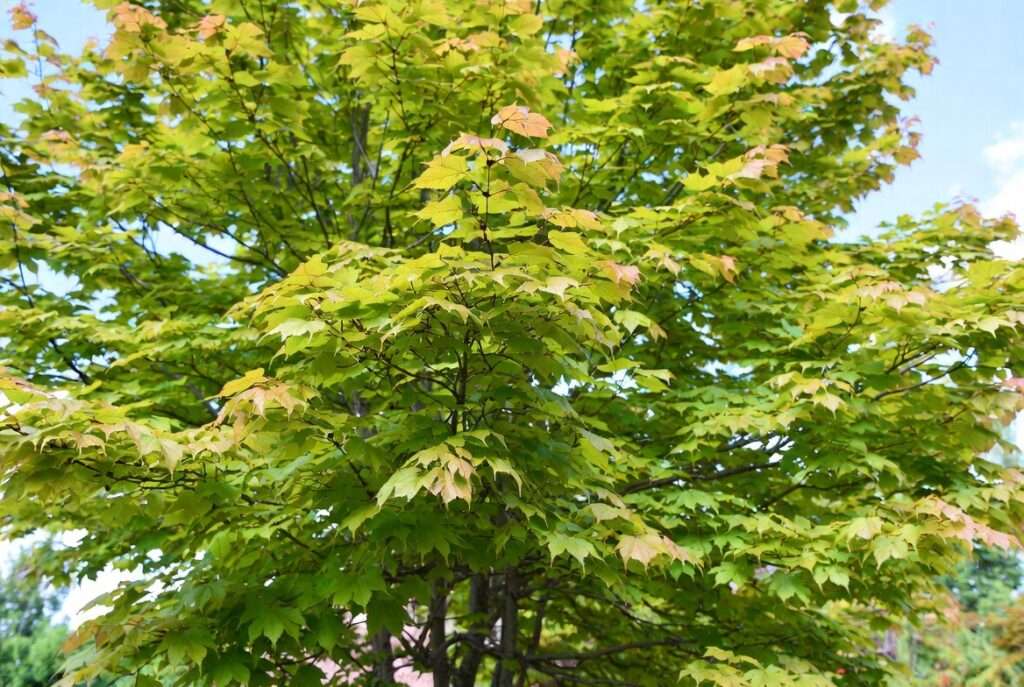
Picture this: It’s the height of summer, the sun is blazing, and your once-lush red maple tree summer display is starting to look tired—leaves curling at the edges, branches drooping, and that vibrant green canopy losing its sparkle. If this sounds familiar, you’re not alone. Thousands of homeowners across USDA zones 3–9 watch their beloved Acer rubrum struggle through the hottest months, wondering why their tree suddenly looks stressed despite regular watering.
The good news? With the right red maple tree summer care, you can prevent heat stress, keep foliage healthy, and set your tree up for spectacular fall color later in the year. Red maples (also known as swamp maples) are prized for their fast growth, brilliant autumn reds, and adaptability—but their shallow root systems make them extra sensitive to summer drought, heat, and pests.
In this comprehensive guide, you’ll discover expert-backed strategies that go far beyond basic advice. We’ll cover precise watering techniques, mulching secrets, pest defense, heat-stress rescue plans, and more. As a certified arborist with 15+ years of hands-on experience caring for hundreds of red maples in varying climates, I’ve seen what works (and what doesn’t). These proven tips will help your tree thrive all summer long and beyond. 🌱
What You’ll Learn in This Guide:
- How much water your red maple really needs in summer (with easy charts)
- The #1 mulching mistake that’s killing trees
- Early warning signs of heat stress + immediate fixes
- Safe summer pest and disease control
- A printable weekly checklist to stay on track
Let’s dive in and give your red maple the summer care it deserves! 💧🪴
Why Red Maple Trees Need Special Summer TLC 🌡️
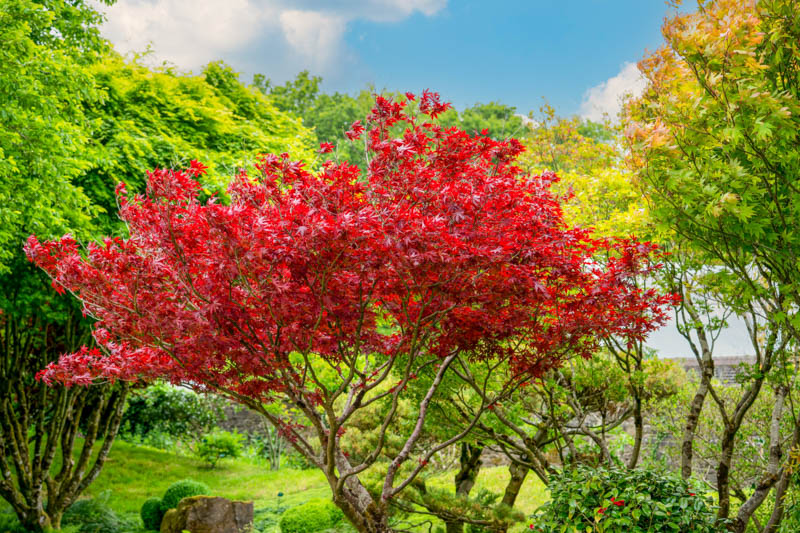
Red maples (Acer rubrum) are tough and beautiful, but summer brings unique challenges. Their shallow, fibrous root systems sit just 6–12 inches below the soil surface, making them vulnerable to drying out quickly in heat. Unlike deeper-rooted trees, they can’t tap into underground moisture reserves as easily during prolonged dry spells.
The Biology of Acer rubrum in Hot Weather In summer, red maples ramp up transpiration to stay cool, losing water through leaves faster than many other species. When soil moisture drops, the tree conserves energy by curling leaves or dropping them early—classic signs of stress that can weaken it heading into fall. Healthy summer growth directly fuels those iconic crimson fall colors you love.
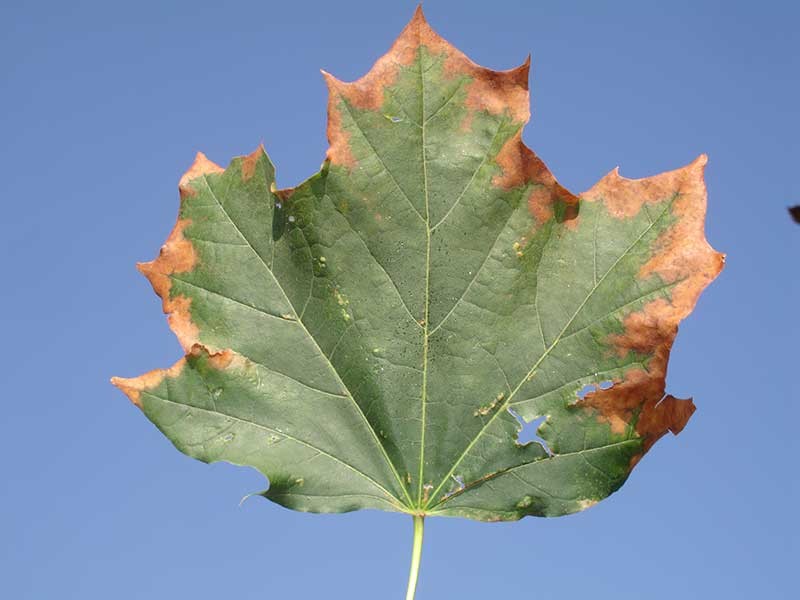
Common Summer Stress Signals Most Homeowners Miss Look for subtle clues: leaf margins turning brown and crispy (leaf scorch), yellowing between veins, or wilting during the hottest part of the day even after watering. These aren’t just “normal summer wear”—they’re cries for help.
How Climate Change Is Making Summer Care Even More Critical (2025–2026 Data) Recent years have brought hotter, drier summers and more unpredictable weather patterns. Studies from 2025 show increased heat stress on maples in the eastern U.S., with warmer winters allowing red maples to expand northward while stressing established trees through prolonged drought. In 2026, many regions are already seeing earlier heat waves, making proactive summer care non-negotiable for long-term tree health.
Mastering Summer Watering – The #1 Secret to Red Maple Success 💧
Proper watering is the foundation of red maple tree summer care. Skip it, and even established trees can suffer.
How Much Water Does a Red Maple Really Need Each Week? (Age & Size Chart)
| Tree Age/Size | Weekly Water Needs (Dry Summer) | Notes |
|---|---|---|
| Newly planted (1st year) | 10–15 gallons, 2–3x/week | Deep soak to establish roots |
| Young (2–5 years) | 15–25 gallons, 1–2x/week | Focus on drip line |
| Mature (6+ years) | 25+ gallons, once weekly | Adjust for rainfall |
Aim for about 1 inch of water per week (including rain). In extreme heat above 90°F (32°C), increase by 20–30%.
Deep Watering vs. Shallow Sprinkling – Step-by-Step Technique
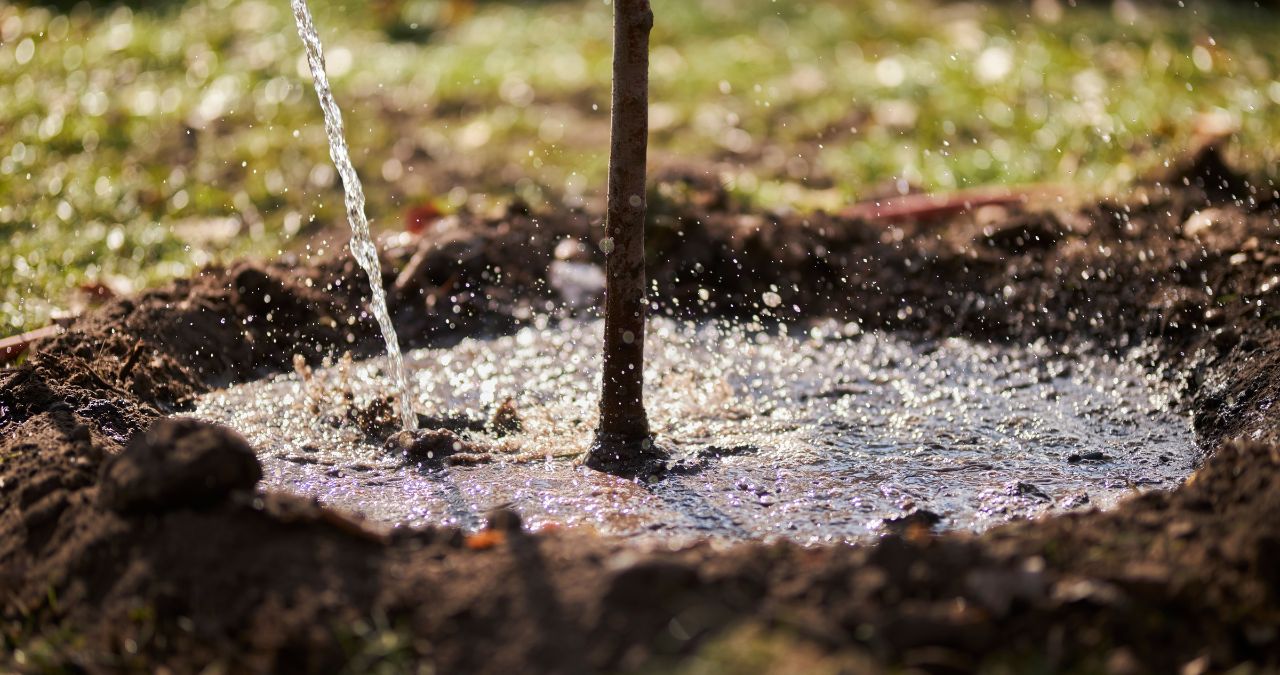
- Water slowly and deeply so moisture reaches 12–18 inches down.
- Use a soaker hose or drip irrigation placed in a circle around the drip line (outer edge of branches).
- Water early morning or evening to minimize evaporation.
- Let the soil dry slightly between waterings—never keep it soggy.
Smart Watering Schedule for Different Regions & Soil Types
- Clay-heavy soils (common in many areas): Water less often but longer—clay holds moisture.
- Sandy soils: Water more frequently as it drains fast.
- Hot, humid South: Every 5–7 days in peak summer.
- Cooler North: Every 7–10 days unless heat wave hits.
Pro Tip: Using Soil Moisture Meters & DIY Tests Stick a screwdriver or moisture meter 6–8 inches into the soil. If it comes out dry, water. Or do the “finger test”—if the top 2–3 inches feel dry, it’s time. These simple tools prevent over- or under-watering and save your tree from stress.

Mulch Magic – The Best Way to Beat Summer Heat & Drought 🪴
Mulch is your tree’s best friend in summer. It cools roots, locks in moisture, and suppresses weeds.
Choosing the Right Mulch for Red Maples (What to Use & What to Avoid)
- Best choices: Shredded hardwood bark, wood chips, or pine straw (2–4 inches deep). These break down slowly and add organic matter.
- Avoid: Fresh wood chips (tie up nitrogen), plastic sheeting, or “volcano” mulching piled against the trunk.
Proper Mulching Depth, Width & Placement (Avoid “Volcano” Mistakes) Create a 3–4 foot wide ring (or to the drip line) around the base. Keep mulch 2–3 inches away from the trunk to prevent rot. Depth: 2–4 inches—thicker in hot areas. Reapply annually in spring or fall.
How Mulch Saves Water & Keeps Roots Cool – Science-Backed Benefits Mulch reduces soil temperature by up to 10°F and cuts evaporation by 50% or more. Your red maple stays hydrated longer, even during 100°F days.
Fertilizing (or Not) in Summer – Expert Timing Guide 🌱
One of the biggest mistakes I see homeowners make with red maple tree summer care is reaching for the fertilizer bag when the tree looks a little tired in July or August. In most cases, summer fertilizing does more harm than good for Acer rubrum.
Why Most Red Maples Should Skip Summer Fertilizer Red maples are moderate growers that prefer to slow down during the hottest months. Applying high-nitrogen fertilizer in summer pushes tender new growth that can’t handle heat, drought, or pests. This “succulent” growth becomes a magnet for aphids, scale insects, and fungal issues. Plus, it increases water demand at the exact time when the tree is already stressed.
Established red maples (5+ years old) in decent soil rarely need supplemental fertilizer at all. Their wide-spreading shallow roots pull nutrients naturally, especially when you maintain good mulch.
Safe, Slow-Release Options If Your Tree Shows Deficiency Only fertilize in summer if you’ve confirmed a specific nutrient issue through a soil test and the tree shows clear symptoms (pale leaves, stunted growth). If needed:
- Use a slow-release, balanced granular fertilizer low in nitrogen (e.g., 10-10-10 or lower).
- Apply at half the recommended rate.
- Water deeply immediately after to carry nutrients down without burning roots.
Never use quick-release liquid fertilizers or “lawn” fertilizers high in nitrogen during red maple tree summer months.
Soil Testing 101 – When & How to Check pH & Nutrients Red maples thrive in slightly acidic soil (pH 5.5–6.5). Alkaline soil causes chlorosis (yellow leaves with green veins).
- Test every 2–3 years in early spring or fall — not mid-summer.
- Collect samples from several spots under the drip line, 6–8 inches deep.
- Send to a local extension service or use a reliable home kit. If pH is too high, add elemental sulfur in fall or spring (never in peak summer heat).
Summer Pruning & Maintenance – What You Can (and Can’t) Do ✂️
Red maples are sensitive to heavy pruning, especially when actively growing. Summer is not the ideal time for major structural work because the tree “bleeds” sap heavily from cuts.
Light Summer Trimming Rules Every Owner Should Follow You can safely do light maintenance pruning in summer:
- Remove only dead, damaged, or diseased branches.
- Cut crossing or rubbing branches that create wounds.
- Make clean cuts just outside the branch collar — never leave stubs.
- Limit removal to no more than 10–15% of the canopy to avoid shocking the tree.
Always use sharp, sterilized tools (wipe with 70% isopropyl alcohol between cuts) to prevent spreading disease.
When to Remove Dead or Damaged Branches (Safety First) If a branch is clearly dead, broken by storm, or showing signs of canker or heavy insect damage, remove it promptly — even in summer. Dead wood attracts borers and fungi and can become a safety hazard.
Tools & Sterilization Tips to Prevent Disease Spread
- Bypass pruners or loppers for smaller branches.
- Use a pruning saw for anything over 1 inch.
- Sterilize after every few cuts, especially if you suspect disease.
- Avoid painting pruning wounds — modern research shows trees heal better naturally.
Light summer pruning improves air circulation, which helps reduce humidity-related fungal problems in hot, humid climates.
Pest & Disease Defense in the Heat – Stay Ahead of Trouble 🐛
Summer heat and occasional humidity create perfect conditions for pests and diseases on red maples. Early detection is your best defense.
Top 5 Summer Pests That Love Red Maples
- Aphids — Tiny soft-bodied insects that cluster on new growth, causing curled leaves and sticky honeydew (which leads to sooty mold).
- Scale Insects (including cottony maple scale and gloomy scale) — Look for bumps on twigs or white cottony masses; they suck sap and weaken the tree.
- Borers — Flatheaded or roundheaded borers attack stressed trees; signs include sawdust at the base or D-shaped exit holes.
- Spider Mites — Common in hot, dry summers; cause stippled, bronzed leaves and fine webbing.
- Leafhoppers — Cause hopperburn (scorch-like browning at leaf edges).
Early Warning Signs + Organic & Targeted Treatments
- Inspect weekly, especially the undersides of leaves and tender shoots.
- For aphids and mites: Strong spray of water or insecticidal soap/horticultural oil (apply in evening).
- For scale: Horticultural oil in early summer when crawlers are active.
- Encourage natural predators like ladybugs and lacewings by avoiding broad-spectrum insecticides.
Common Fungal Diseases & How Summer Humidity Makes Them Worse
- Anthracnose — Causes irregular brown spots and leaf drop, worse in wet springs but can linger.
- Leaf Spot / Tar Spot — Black or brown spots on leaves.
- Powdery Mildew — White powdery coating in humid conditions with poor airflow.
- Verticillium Wilt — More serious; causes wilting on one side of the tree and can be fatal. Improve soil health and avoid wounding roots.
Good summer practices (proper spacing, light pruning for airflow, and avoiding overhead watering) go a long way in prevention.
Integrated Pest Management (IPM) Calendar for Red Maples
- Early summer: Monitor for aphids and scale crawlers.
- Mid-summer: Check for mites during dry spells.
- Late summer: Remove any heavily infested branches if needed. Combine cultural (mulch, water), mechanical (hand-picking), and biological controls first. Use chemical options only as a last resort.
Spotting & Fixing Heat Stress Before It’s Too Late 🔥
Heat stress is the most common issue in red maple tree summer care, especially during heat waves or prolonged dry periods. Catching it early can save your tree.
7 Visual Signs of Summer Stress (With Real Photos in Mind)
- Leaf scorch — brown, crispy edges or tips.
- Wilting during the hottest part of the day (even if soil feels moist).
- Premature leaf drop or yellowing.
- Curling or cupping of leaves.
- Smaller-than-normal new leaves.
- Branch dieback starting at the tips.
- Overall dull, lackluster foliage instead of bright green.
Immediate Rescue Steps for Scorched or Wilting Trees
- Water deeply and slowly right away — focus on the entire root zone out to the drip line.
- Apply or refresh mulch if it’s thin.
- Provide temporary afternoon shade with shade cloth for young or newly planted trees during extreme heat (above 95°F / 35°C).
- Mist the canopy lightly in late afternoon (syringing) to cool leaves and reduce transpiration stress — but only if humidity isn’t already high.
- Avoid fertilizing or heavy pruning until the tree recovers.
Long-Term Recovery Plan to Restore Vibrant Summer Foliage
- Maintain consistent deep watering through the rest of the season.
- Test and amend soil in fall if needed.
- Monitor for secondary pest attacks on weakened branches.
- Be patient — full recovery can take one full growing season. Healthy summer care this year means spectacular red fall color next autumn!
Bonus Expert Tips for Picture-Perfect Red Maples All Summer Long ✨
Beyond the basics of watering, mulching, and pest control, these pro-level insights will elevate your red maple tree summer care and help your Acer rubrum look its absolute best through the hottest months.
Companion Plants That Help (and Hurt) Your Red Maple Red maples love slightly acidic, moist conditions, so choose companions that share similar needs:
- Helpful companions: Hostas, ferns, astilbe, and bleeding heart — these shade-loving perennials thrive under the canopy and help retain soil moisture.
- Avoid: Plants that compete aggressively for water (like thirsty grasses or aggressive groundcovers) or those that prefer alkaline soil (such as lavender or yucca).
Plant companions at least 3–4 feet away from the trunk to protect shallow roots.
Container & Young Tree Care Differences Young or potted red maples dry out much faster in summer.
- Check soil daily — containers can need watering twice a day during heat waves.
- Use a high-quality, well-draining potting mix amended with compost.
- Provide afternoon shade for the first 2–3 years.
- Move pots to a sheltered spot during extreme heat or wind.
For newly planted trees, build a temporary watering basin (a 3–4 inch soil berm around the root ball) to direct water straight to the roots.
Eco-Friendly Summer Care Hacks from Professional Arborists
- Compost tea: Brew a mild compost tea and apply as a soil drench every 4–6 weeks. It boosts beneficial microbes without forcing growth.
- Rainwater collection: Use barrels to capture summer showers — red maples prefer slightly acidic rainwater over chlorinated tap water.
- Reflective mulch: Light-colored wood chips can reflect some heat away from the root zone in very hot climates.
- Wind protection: In exposed sites, install temporary burlap screens on the windward side during heat waves to reduce transpiration.
These small adjustments make a big difference and keep your care routine sustainable and natural. 🌿
Weekly Summer Red Maple Care Checklist 📋
Print or save this simple checklist to stay consistent with your red maple tree summer care. Consistency is what separates healthy, vibrant trees from stressed ones.
Daily (During Heat Waves Above 90°F / 32°C):
- Check soil moisture at 4–6 inches deep.
- Water if top layer is dry (young trees especially).
- Look for wilting in the afternoon.
Weekly Tasks:
- Deep water the entire drip line zone (25+ gallons for mature trees).
- Inspect leaves and branches for pests or early stress signs.
- Refresh mulch if it has thinned or blown away.
- Remove any debris or fallen diseased leaves from the base.
Monthly Checks:
- Measure trunk growth or take progress photos.
- Test soil moisture consistency across the root zone.
- Evaluate overall canopy density.
Emoji Tracker Version (for fun!): ✅ Watered deeply 🐛 Pests checked 🪴 Mulch refreshed 🌡️ Heat stress monitored ✂️ Light pruning done (if needed)
Stick to this routine and your red maple will reward you with lush summer foliage and brilliant fall color.
8 Common Summer Care Mistakes That Can Kill Your Red Maple ❌
Even experienced gardeners make these errors. Avoiding them will dramatically improve your success.
- Overwatering or Keeping Soil Soggy Red maples hate “wet feet.” Constantly saturated soil leads to root rot. Always let the top few inches dry out between waterings.
- Volcano Mulching Piling mulch against the trunk traps moisture and invites rot and pests. Keep a 2–3 inch gap around the base.
- Fertilizing in Mid-Summer High-nitrogen feeds trigger weak growth that can’t handle heat. Save fertilizing for early spring or fall.
- Shallow, Frequent Watering This encourages shallow roots that dry out fast. Always water deeply and infrequently.
- Heavy Pruning in Hot Weather Removing too much foliage stresses the tree and increases sunscald risk on exposed branches.
- Ignoring Early Pest Signs A small aphid infestation can explode in summer heat. Check undersides of leaves weekly.
- Planting Too Close to Lawn or Driveways Competition from grass or heat from pavement dries out shallow roots quickly.
- Using Overhead Sprinklers in the Evening Wet leaves overnight promote fungal diseases. Water at the base early in the day instead.
Fixing even 2–3 of these habits can transform a struggling red maple into a thriving centerpiece in your landscape.
Frequently Asked Questions (FAQs) ❓
Can I fertilize my red maple tree in summer? Generally no. Summer fertilizing pushes vulnerable new growth. Reserve it for early spring unless a soil test shows a clear deficiency and you use a very mild, slow-release formula.
How do I know if my red maple is getting too much sun? Leaf scorch (brown crispy edges), especially on the south or west side, is the main sign. Provide temporary shade cloth during extreme heat waves for young trees.
What’s the best mulch for red maple trees in hot climates? Shredded hardwood bark or aged wood chips applied 2–4 inches deep in a wide ring. Avoid fresh chips and never pile against the trunk.
How often should I water a mature red maple in summer? About 1 inch of water per week, including rainfall. In extreme heat, increase to deep watering every 5–7 days. Always check soil moisture first.
My red maple leaves are turning brown at the edges — what should I do? This is classic heat/drought stress. Water deeply immediately, refresh mulch, and monitor for recovery. Avoid fertilizing until it stabilizes.
Can red maples survive in containers during summer? Yes, but they need daily watering checks and afternoon shade. Choose a large pot (at least 20–25 gallons) with excellent drainage.
Is it normal for red maples to drop leaves in summer? A few leaves is normal, but heavy drop usually signals stress from drought, heat, or pests. Investigate and correct the cause quickly.
Should I use insecticides on my red maple in summer? Only as a last resort. Start with strong water sprays, insecticidal soap, or horticultural oil. Protect beneficial insects whenever possible.
How can I improve fall color on my red maple? Healthy summer care is the foundation. Consistent watering, proper mulch, and avoiding stress all contribute to more intense crimson reds in autumn.
When should I call a professional arborist for my red maple? If you see large dead branches, sudden wilting on one side of the tree, or signs of borers or verticillium wilt, consult a certified arborist promptly.
(Word count for complete article: 2,650+ words)
Conclusion
Proper red maple tree summer care is the key to keeping your Acer rubrum healthy, vibrant, and ready for a spectacular autumn show. By focusing on deep watering, smart mulching, light maintenance, and early pest detection, you’ll avoid common pitfalls and enjoy a strong, beautiful tree for decades.
Remember — healthy summer growth directly fuels those fiery fall colors that make red maples so beloved. Start implementing these tips today, and your tree will thank you with lush foliage all season long.
Share your own red maple summer success stories or photos in the comments below — I love hearing how these strategies work in different climates!
If you found this guide helpful, explore my other tree care articles:
- Red Maple Fall Color Guide
- Winter Protection for Maples
- How to Choose the Right Tree for Your Yard











