
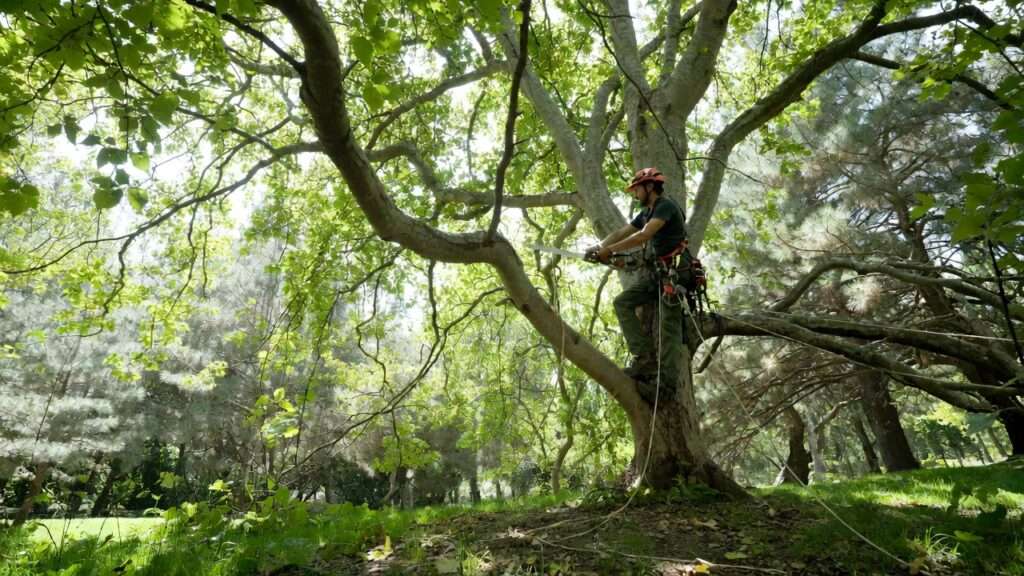
Imagine stepping into your yard one sunny morning and noticing your once-perfect shade tree now towers dangerously close to your roof, scrapes against power lines during every breeze, or blocks that beautiful view you loved. 😱 Your first instinct might be to grab a saw and chop the top off for a quick fix… but stop right there!
Reducing tree height safely is a real concern for countless homeowners, and unfortunately, the common practice of tree topping (also called hat-racking) is one of the most damaging things you can do to your tree. According to the International Society of Arboriculture (ISA) — the gold standard in tree care — topping severely stresses trees, invites decay and disease, creates weak regrowth, and can dramatically shorten a tree’s lifespan.
The good news? There is a proven, professional, and tree-friendly alternative: crown reduction pruning. This method carefully reduces height while preserving the tree’s natural shape, structural integrity, and long-term health. 🌟
In this comprehensive guide, we’ll explore why topping is so harmful, how crown reduction works (with step-by-step expert advice), when it’s the right choice, and how to avoid costly mistakes. Whether you’re dealing with an overgrown maple, oak, or pine in your Dhaka garden or anywhere else, you’ll leave here knowing exactly how to protect your trees the right way. Let’s save those trees! ❤️
Why Do Trees Grow Too Tall? Common Reasons & Risks 🌿⚠️
Trees don’t grow “too tall” out of spite — it’s usually a combination of nature and human choices.
Many popular landscape species like rain trees (Samanea saman), mango trees, jamun, neem, or fast-growing exotics such as silver oak and eucalyptus can easily reach 15–30+ meters if not managed early. Planting the wrong species too close to houses, driveways, or utility lines is a classic mistake.
Other common triggers include:
- Lack of formative pruning in the tree’s younger years
- Excessive fertilization or ideal soil conditions that accelerate vertical growth
- Changes in landscape use (new roof extensions, added second floor, nearby construction)
The risks of letting a tree grow unchecked are serious:
- Structural hazards — heavy limbs can fail in storms (especially during monsoons 🌧️)
- Property damage — branches scraping roofs, gutters clogged with leaves, roots invading foundations
- Utility dangers — contact with power lines can cause outages or fires
- Safety & liability — falling branches pose real threats to people and vehicles
When height becomes a genuine problem, reduction is sometimes necessary — but it must be done safely to avoid turning a manageable issue into a long-term disaster.
The Dangers of Tree Topping: What Most People Do Wrong (And Why It Hurts) 😞
Tree topping involves cutting large branches or the main leader back to stubs, often leaving flat tops or jagged ends. It looks like a quick solution… but the consequences are heartbreaking.
Here are shocking real-world examples of what happens after topping:

Immediate damage includes:
- Massive loss of foliage → reduced photosynthesis and starvation
- Huge open wounds that trees struggle to compartmentalize → rapid decay, fungal infections, insect attacks
- Weak, vertical water sprouts (epicormic shoots) that grow extremely fast but are poorly attached → high risk of breaking in wind
Long-term effects:
- Ugly, bushy appearance that never regains natural form
- Dramatically reduced lifespan (many topped trees decline within 5–15 years)
- Increased future maintenance costs and safety hazards
The ISA and virtually every professional arborist organization worldwide condemns topping as an unacceptable practice. It’s not “pruning” — it’s mutilation. 😔
Crown Reduction Pruning: The Safe, Professional Way to Reduce Height 🌟
Crown reduction is a selective structural pruning technique that shortens the height and/or spread of a tree by cutting branches back to suitable lateral branches (at least 1/3 the diameter of the removed portion).
The goal? Reduce size while maintaining natural shape, improving strength, and enhancing overall health.
Key benefits include:
- Preserves photosynthetic capacity (fewer leaves lost)
- Reduces wind sail effect → better storm resistance
- Improves light penetration and air circulation → healthier tree
- Maintains aesthetic beauty and property value
- Long-lasting results (often 10–20+ years before needing another reduction)
See the dramatic difference in these real before-and-after transformations:

Quick comparison table (Topping vs Crown Reduction):
- Health impact → Topping: Severe damage | Crown Reduction: Minimal stress
- Appearance → Topping: Ugly stubs & bushy regrowth | Crown Reduction: Natural & attractive
- Storm safety → Topping: Much worse | Crown Reduction: Significantly better
- Longevity → Topping: Shortens life | Crown Reduction: Extends healthy years
Crown reduction follows ANSI A300 pruning standards and ISA best practices — the professional gold standard.
Step-by-Step Guide: How Crown Reduction Works (Expert Insights) 🛠️✨
Crown reduction is not a casual trim — it’s a precise, thoughtful process that follows strict arboricultural standards. Here’s how professionals (and confident DIYers on smaller trees) do it safely.
Rule #1: Never remove more than 20–25% of the live canopy in one session This is the golden rule from the International Society of Arboriculture (ISA) and ANSI A300 pruning standards. Removing more causes severe stress, dieback, and weak regrowth. For very large or stressed trees, even 15% may be the safe maximum.
Best Timing for Crown Reduction ⏰
- Ideal window: Late fall through late winter (dormant season) — November to February in most climates (including Dhaka’s mild winters). Trees are leafless, wounds heal faster in spring, and you can clearly see branch structure.
- Acceptable alternative: Early spring before bud break.
- Avoid: Summer (active growth season — high stress + pest/disease risk) and monsoon season (wet wounds invite rot).
Tools & Safety Gear You’ll Need 🔧
- Sharp bypass pruners (for branches <2 cm)
- Loppers (2–5 cm branches)
- Pruning saw or pole saw (larger branches)
- Chainsaw (only for pros on big limbs!)
- Safety essentials: Helmet, eye protection, gloves, sturdy boots, harness & ropes for climbing (if >4 m height — hire a pro!)
The Crown Reduction Process – Step by Step
-
Assess the Tree Thoroughly Walk around the entire tree. Identify:
- Problem height zones (usually the top leader or upper laterals)
- Strong lateral branches to cut back to (must be at least ⅓–½ the diameter of the branch being removed)
- Overall shape you want to preserve
Pro tip: Many experts recommend having a certified arborist perform the initial assessment — even if you plan to DIY smaller cuts.
-
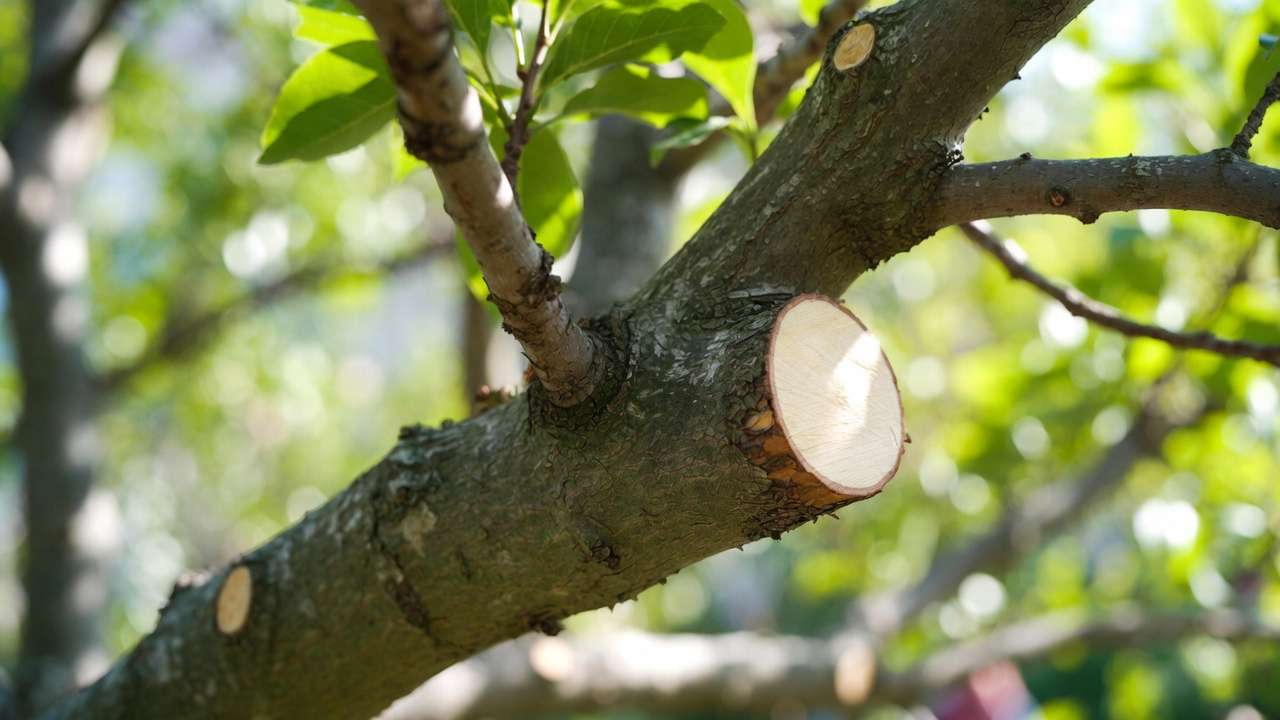
Make Precise Reduction Cuts Always cut just beyond the branch collar (never leave stubs!). The ideal cut leaves a lateral branch that can take over as the new leader. Angle cuts slightly to shed water.
Here are some clear diagrams showing proper vs. improper cuts:
(Imagine clean, labeled diagrams here — proper branch collar cut, lateral reduction, no topping stubs)
-
Prioritize Height Reduction Safely Work from the top down. Reduce the central leader first (if needed), then upper laterals. Maintain the tree’s natural taper — wider at base, narrower at top. Never create flat-topped or “table” shapes.
-
Aftercare is Critical 🌱
- Mulch a wide ring (8–10 cm deep, keep away from trunk)
- Water deeply during dry periods for 1–2 years
- Monitor for stress signs (wilting, dieback, excessive sprouts)
- Avoid fertilizer for the first year — let the tree recover naturally
Species-Specific Tips for Common Trees in Bangladesh & Similar Climates
- Rain tree (Samanea saman): Responds very well to crown reduction; can handle 20–25% removal.
- Mango & Jamun: Reduce in late winter; avoid heavy cuts during fruiting season.
- Neem & Bakul: Excellent recovery; focus on removing crossing/rubbing branches too.
- Silver oak & Eucalyptus: These fast-growers may need more frequent light reductions (every 5–7 years).
- Evergreens (Deodar, Pine): More conservative cuts (10–15%) — they recover slower.
When DIY is Okay vs. When You MUST Call a Pro ⚠️ DIY is reasonable only for: small/young trees (<6–8 m), easy access, and you feel confident with tools. Call a professional immediately if:
- Tree >10 m tall
- Near power lines, buildings, or roads
- Requires climbing or heavy equipment
- You’re unsure about branch selection
Safety first — a falling branch can be deadly! 😰
When Should You Consider Reducing Tree Height? Signs It’s Time ⏰
Not every tall tree needs reduction. Watch for these red flags:
- Branches within 3 m of power lines or roofs
- Excessive swaying or heavy upper limbs in wind
- Blocking sunlight to garden/home
- History of storm damage or branch failure
- Neighbor complaints or municipal notices
Better alternatives to consider first:
- Crown thinning (remove inner crossing/dead branches)
- Crown raising (remove lower limbs for clearance)
- Full removal + replanting with a smaller species (sometimes the smartest long-term solution)
Hiring a Professional Arborist: What to Look For & Questions to Ask 🤝
For anything beyond a small ladder job, hire a certified arborist. Here’s how to choose wisely (2026 standards):
- Look for ISA Certified Arborist credential (or equivalent local certification)
- Full liability insurance & workers’ compensation
- Written contract with scope of work, no “topping” clause
- References & before/after photos from similar jobs
- No-pressure sales tactics
Key questions to ask:
- “Do you follow ISA/ANSI A300 standards?”
- “Will you perform crown reduction instead of topping?”
- “What’s your plan for debris removal and cleanup?”
- “Can I see your insurance certificate?”
Cost guide (Dhaka & similar markets, 2026 estimates): Small–medium tree: BDT 5,000–15,000 Large mature tree: BDT 20,000–60,000+ (depends on access & risk)
Get 2–3 quotes — the cheapest is often the riskiest!
FAQs About Reducing Tree Height Safely ❓
Can you stop a tree from growing tall forever? No — trees are genetically programmed to reach mature height. Regular light pruning can slow vertical growth, but complete stopping requires dwarf varieties or removal.
Is crown reduction the same as pollarding? No. Pollarding is extreme, repeated cutting back to the same points (common in Europe for street trees). Crown reduction is gentler and preserves natural form.
How often should you reduce height? Every 7–15 years, depending on species and growth rate. Always remove <25% live wood.
What if my tree was already topped? Can it be saved? Yes, often! Remove weak water sprouts gradually over several years, encourage strong laterals, and reduce remaining height properly. Recovery takes time but is possible.
More questions? Feel free to ask in the comments — I’m here to help! 🌳
Conclusion: Protect Your Trees the Right Way 🌳❤️
Reducing tree height safely isn’t about quick hacks — it’s about making smart, informed choices that protect your tree’s health, your property, and your peace of mind for decades.
Crown reduction pruning stands head and shoulders above topping as the professional, long-lasting solution. By following ISA guidelines, timing cuts correctly, and knowing when to call in experts, you can keep your trees beautiful, safe, and thriving.
Your trees are living investments — in shade, beauty, air quality, and the planet 🌍. Treat them with the respect they deserve!
Have you ever had to reduce a tree’s height? Share your experience below — or ask any questions. Let’s keep our gardens green and our trees happy! 🌱✨











