
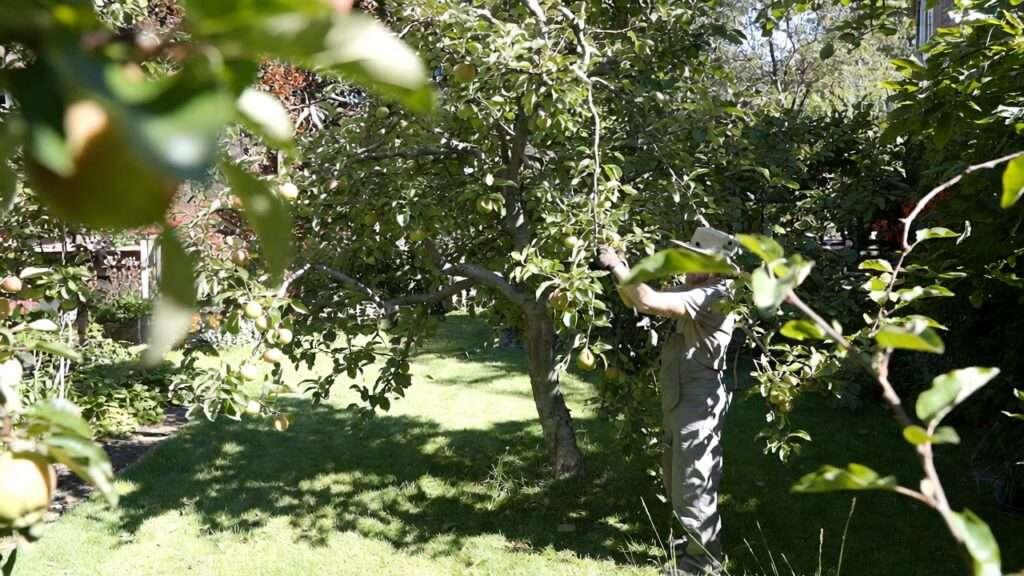
You’re not alone! Many homeowners inherit neglected apple, pear, or other fruit trees that produce tiny, sparse fruit—or none at all—while dominating the garden like unruly giants. These old trees often become eyesores: tall, dense canopies block light, branches rub and break, pests thrive in the shade, and fruit quality plummets with small, misshapen, low-sugar apples or pears.
The good news? Renovating neglected fruit trees is absolutely possible and incredibly rewarding. With the right pruning techniques, aftercare, and patience, you can transform these legacy trees into productive, manageable beauties that yield baskets of delicious, high-quality fruit again. This comprehensive guide draws from trusted sources like the Royal Horticultural Society (RHS), Penn State Extension, Oregon State University Extension, and Purdue Extension to provide a skyscraper-level resource—more detailed, step-by-step, and practical than most online articles.
We’ll cover why renovation often beats starting over, realistic expectations (typically 2–4 years to full recovery), tools, timing, phased pruning strategies, common pitfalls, and ongoing care. By following this expert-backed plan, you’ll restore heirloom varieties, boost biodiversity, save money on removal, and enjoy homegrown fruit for decades. Let’s dive in and bring your old tree back to life! 🍐✨
Why Renovate Neglected Fruit Trees Instead of Cutting Them Down?
🤔 Many people face this dilemma: Is the tree worth the effort, or should I just replace it?
Renovation offers compelling advantages, especially for apples and pears on vigorous old rootstocks:
- Restore unique heirloom varieties 🌟: Many old trees are rare cultivars with exceptional flavor—think tangy Bramley’s Seedling apples or juicy Conference pears—that you can’t easily buy as young plants.
- Sentimental and ecological value: These trees support wildlife (birds, bees, insects), provide shade, and hold family history. Renovating preserves biodiversity without the carbon footprint of removal and replanting.
- Faster and bigger yields long-term: A renovated mature tree can produce 3–4 times more fruit than a new dwarf tree by year 4, with larger, better-colored, sweeter fruit thanks to improved light and air circulation.
- Cost and hassle savings: Professional tree removal can be expensive and disruptive; renovation uses existing roots for quicker establishment.
When replacement makes more sense ❌:
- Severe structural issues (hollow trunk >50%, major rot, instability risking property).
- Heavy disease (e.g., untreatable fire blight in pears or canker).
- Stone fruits like peaches, nectarines, apricots, or plums—these respond poorly to heavy pruning due to brittle wood and silver leaf disease risk; often better to replant on dwarf rootstock.
- If you want quick, low-maintenance production from compact trees.
Expert insight from RHS and OSU Extension: Apples and pears are the most forgiving for renovation—cherries somewhat—while stone fruits usually aren’t worth it. If your tree has a sound trunk and some past fruiting history, renovation is often the smarter choice!
Assessing Your Neglected Fruit Tree: Is It Salvageable?
Before you grab those pruners, evaluate carefully to avoid wasting time on a lost cause. 🔍
Key Inspection Points
- Overall health check 🌿: Examine the trunk and major limbs for hollows, extensive rot, cankers (sunken, discolored areas), or severe dieback. Probe gently with a screwdriver—if it sinks deep into soft wood, structural integrity is compromised. Look for signs of pests like woolly aphid wool or rosy apple aphid, or diseases like apple scab/powdery mildew.
- Structure and age estimation 🪵: Old trees (30–60+ years) on seedling rootstocks grow huge (20–40 ft tall). Check for a graft union (bulge low on trunk)—if present, note rootstock type if possible. Assess framework: Too many crossing/rubbing branches? Dense center blocking light?
- Fruit history and quality 🍏: Talk to previous owners or taste any remaining fruit. Heirloom varieties with great flavor are prime candidates. Sparse or no fruit often stems from shade, not age.
- Safety and space considerations ⚠️: Are large limbs at risk of falling? Does the tree fit your yard long-term post-reduction? For very tall trees, consult a qualified arborist for stability checks.
Pro tip: Take clear photos from multiple angles (trunk base, canopy, branches) and visit your local agricultural extension office or fruit society for free/vetted advice. In many regions, they offer tree ID and health assessments.
If the tree passes muster—healthy trunk, some new growth, past productivity—proceed with confidence!
Tools & Safety Gear You’ll Need
🛠️ Proper equipment makes renovation safer and more effective:
- Pruning tools: Sharp bypass pruners (for <1-inch branches), loppers (1–2 inches), curved pruning saw or folding saw (for larger limbs). Pole pruner/saw for height without dangerous climbing.
- Safety essentials: Sturdy orchard ladder or steps (never A-frame on uneven ground), helmet, safety glasses, gloves, long sleeves/pants, and non-slip boots.
- Hygiene & care: Bucket with 10% bleach solution or rubbing alcohol to disinfect tools between cuts (prevents disease spread).
- Aftercare supplies: Organic mulch (wood chips), slow-release balanced fertilizer (low-N initially), compost, and soil test kit.
Safety first—never prune high branches alone, especially in wind. If heights exceed 15–20 ft safely, hire a pro for initial major cuts. 🌬️
When to Prune: Best Timing for Renovation
⏰ Timing is crucial for success and tree health.
The best time is late winter to early spring (November–March in mild climates; February–April in colder zones), during full dormancy after the coldest weather passes but before buds swell.
Why dormant season?
- Leafless branches give a clear view of structure.
- Lower disease risk (cuts heal before pathogens active).
- Strong spring regrowth uses stored energy efficiently.
Avoid:
- Summer (except light thinning of water sprouts).
- Fall (cuts heal slowly, inviting infection).
Step-by-Step Renovation Pruning Guide (Years 1–3+)
This phased approach, backed by RHS, PSU, and OSU Extension, prevents shock while rebuilding structure. Never remove more than 25–33% of the canopy in one year! 🌱
Year 1: Major Cleanup & Initial Reduction
- Remove the 3 Ds first: All dead, diseased, damaged branches back to healthy wood or trunk.
- Clear suckers and water sprouts: Eliminate vigorous upright shoots from base, trunk, or main limbs—they steal energy.
- Open the center: Thin crossing, rubbing, inward-growing branches for light/airflow. Aim for well-spaced scaffold branches (main limbs) 18–24 inches apart.
- Reduce height gradually: Lower tall leaders by cutting to strong outward laterals—no topping! Limit to 1/3 total removal.
- Thin dense areas: Space branches 1.5–2 ft apart; favor horizontal/angled over vertical for fruiting.
Goal: Improve access, light penetration, and reduce disease. Some fruit possible if buds remain.
Year 2: Refinement & Shaping
- Balance vigorous regrowth: Remove excessive upright shoots/water sprouts.
- Thin fruiting spurs (stubby branches): Space 4–6 inches apart for better fruit size.
- Continue height reduction if needed (another max 1/3).
- Select strong, outward-angled branches as new framework—encourage 45–60° angles for strength/fruiting.

Year 3+: Maintenance & Fine-Tuning
- Shift to annual moderate pruning (<20–25% removal).
- Promote horizontal fruiting wood; thin excess to prevent biennial bearing.
- Summer prune lightly if needed (late July–August) to control growth.
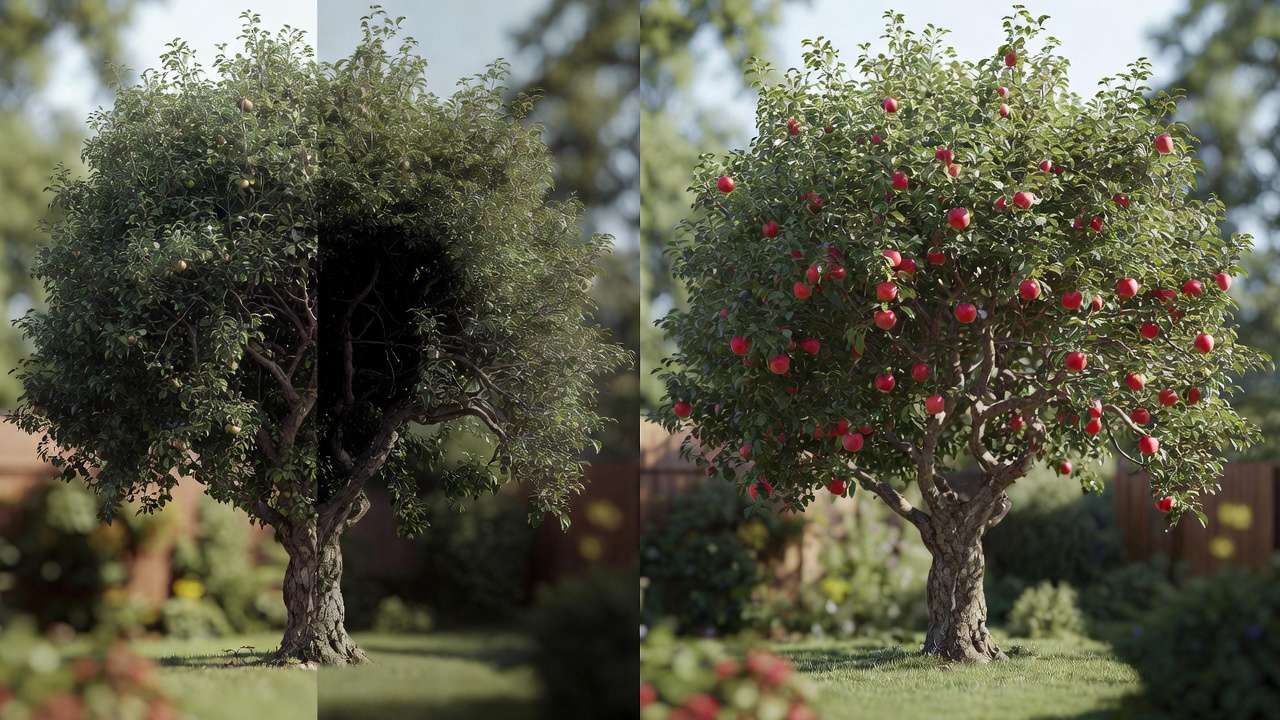
Visualize progress: Dense jungle → open vase shape → bountiful, easy-to-harvest tree! 📸
Aftercare: Watering, Mulching, Fertilizing & Soil Health
Pruning is only half the battle—support recovery for best results! 💧
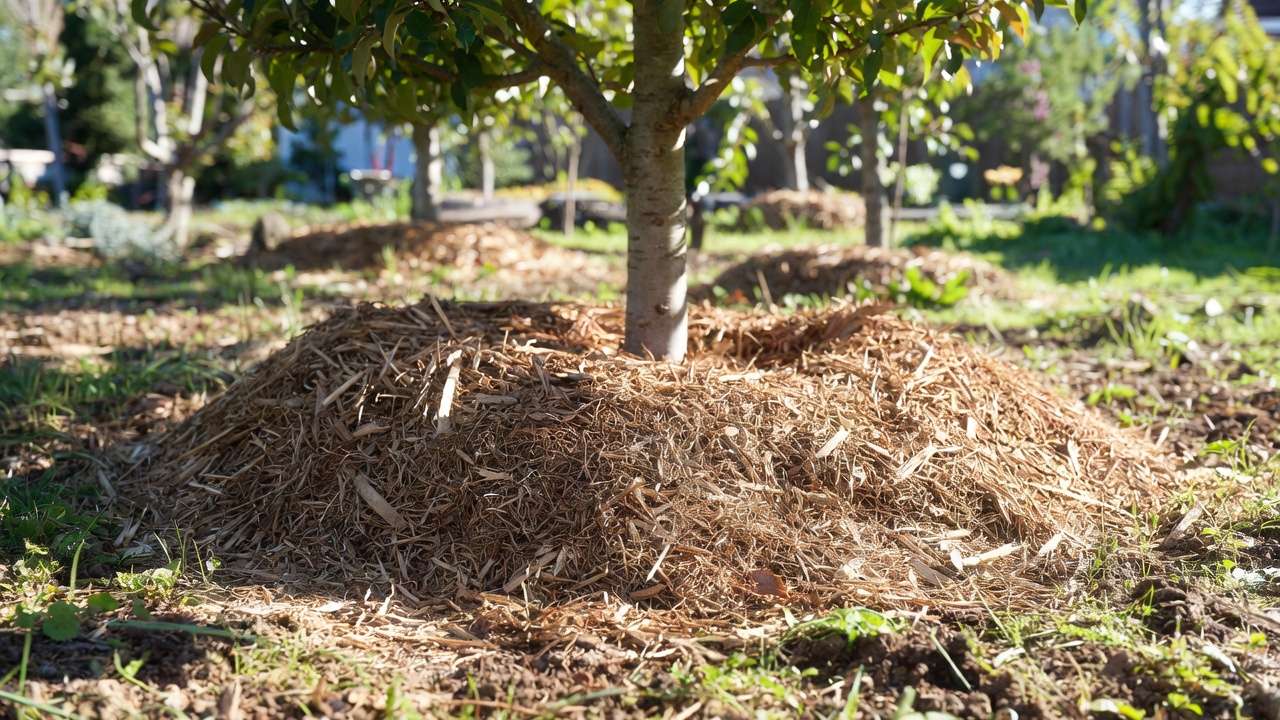
- Mulch generously 🌿: Apply 3–4 inches of wood chips or compost in a wide circle (drip line radius, no volcano around trunk) to suppress weeds, retain moisture, and improve soil.
- Water deeply: Especially post-pruning in dry spells; mature trees need 1–2 inches/week during establishment.
- Fertilize wisely ⚖️: Soil test first (pH ideally 6.0–7.0; lime if acidic). Low nitrogen year 1 to avoid excessive shoots; then balanced slow-release (e.g., 5-10-10) in spring. Apply around drip line.
- Weed control: Keep 90cm+ radius clear to reduce competition.
Pest & Disease Management During Renovation 🚫 Renovating stressed trees with fresh pruning wounds creates temporary vulnerability—open cuts are entry points for pathogens, and dense old canopies often already harbor problems. Proactive management is essential for long-term success.
Common Pests & Diseases in Neglected Fruit Trees
- Apples 🍎: Apple scab (black velvety spots on leaves/fruit), powdery mildew (white coating), codling moth (wormy fruit), rosy apple aphid, fire blight (in some regions).
- Pears 🍐: Fire blight (blackened shoots looking scorched), pear psylla, pear rust.
- General issues: Scale insects, canker fungi, borers, brown rot (especially if stone fruit present nearby).
Integrated Pest & Disease Management (IPM) Strategies
- Cultural controls first 🌱 (most important during renovation):
- Improve airflow and sunlight penetration → drastically reduces scab, mildew, and fire blight pressure.
- Sanitation: Rake and destroy fallen leaves/fruit in autumn (overwintering sites for scab, codling moth).
- Thin fruit early (once pea-sized) to 1 fruit per cluster, 6–8 inches apart → larger, healthier fruit and less disease.
- Monitoring 🔍:
- Weekly checks during growing season: Look under leaves, in buds, on new shoots. Use sticky traps for codling moth flights.
- Identify early: Many problems are manageable if caught before severe spread.
- Organic & low-impact options 🐝:
- Neem oil or insecticidal soap for aphids/psylla (apply early morning, avoid bees).
- Sulfur-based sprays for powdery mildew (safe during renovation).
- Kaolin clay (Surround) barrier spray for codling moth/pear psylla.
- Pheromone mating disruption traps for codling moth in larger orchards.
- Chemical options (last resort):
- Only if thresholds exceeded and after cultural fixes. Follow local regulations (Bangladesh/Bangla-speaking regions often have restricted lists). Copper-based sprays can help prevent fire blight during bloom (very timing-specific).
- Always cover new growth thoroughly—renovated trees have much better spray penetration!
Expert note from Penn State & OSU Extension: Renovation itself is one of the best long-term disease-management tools—many growers see 70–90% reduction in scab/mildew after 2–3 years of open-canopy pruning.
Common Mistakes to Avoid When Renovating Neglected Fruit Trees
❌ Even experienced gardeners slip up—here are the biggest pitfalls and how to dodge them:
- Removing too much canopy at once (>33% in year 1) → tree goes into shock, produces thousands of water sprouts, delays fruiting by years. Fix: Stick to the phased 1/3 rule and spread major cuts over 2–3 winters.
- Topping / dehorning indiscriminately → creates weak, upright regrowth that never fruits well and is prone to breakage. Fix: Always cut back to an existing strong lateral branch angled 45–60°.
- Over-fertilizing with high-nitrogen early → explosive leafy growth at expense of fruit buds. Fix: Soil test first; use low-N or no fertilizer year 1; focus on mulch/compost.
- Skipping tool disinfection → spreads fire blight, canker, etc. from tree to tree. Fix: Dip blades in 10% bleach or 70% alcohol between every major cut.
- Trying heavy renovation on stone fruits (peaches, nectarines, apricots, plums) the same way → high risk of silver leaf disease and dieback. Fix: Limit to light thinning or replace these trees.
- Ignoring aftercare → pruned trees are thirsty and nutrient-hungry; neglect leads to weak recovery. Fix: Commit to consistent mulching, watering, and soil improvement.
Avoid these and your success rate skyrockets!
Expected Timeline & Results: What to Realistically Expect
📅 Patience is key—renovation is not an overnight miracle, but the payoff is huge.
- Year 1 (post-first major prune): Tree looks dramatically tidier and more open. Some small fruit possible on remaining spurs, but expect light crop or none. Focus = structural improvement.
- Year 2: Vigorous regrowth (manage with summer pinching if needed). Noticeably more flowers/fruit set. Fruit size and quality start improving.
- Year 3: Good crop likely—larger, better-colored, sweeter fruit. Tree much easier to manage and harvest. Disease pressure often drops sharply.
- Year 4+: Full productivity returns—many renovated trees produce 3–5 times more usable fruit than before, often rivaling or exceeding young semi-dwarf trees. Size stabilized at 10–15 ft tall/wide (depending on variety/rootstock).
Real-world example (from extension case studies): A 50-year-old neglected ‘Gravenstein’ apple renovated in Oregon yielded ~12 bushels of excellent fruit by year 4—compared to <1 bushel of tiny apples pre-renovation.
Your results depend on variety, rootstock, climate (Dhaka’s warm, humid conditions favor good regrowth but require excellent disease/airflow management), soil, and care consistency.
FAQs About Renovating Neglected Fruit Trees
Q: Can I renovate any type of fruit tree? A: Apples and pears respond best and are safest. Sweet cherries can work moderately well. Sour cherries, plums, and apricots are riskier. Peaches, nectarines, and most stone fruits usually aren’t suitable for heavy renovation—replace them instead.
Q: How long until I get really good fruit again? A: Most see meaningful improvement in year 2–3, with excellent quality and quantity by year 4. Some vigorous varieties fruit lightly even in year 1.
Q: My tree is over 30 feet tall—can I make it small enough to pick without a ladder? A: You can reduce height significantly (to ~12–18 ft over 3–5 years), but old vigorous rootstocks won’t become true dwarfs. Focus on lowering leaders and encouraging lower fruiting wood.
Q: Is it better to cut it down and graft new varieties onto the old trunk (top-working)? A: Top-working is an option if you dislike the current variety, but full renovation often gives faster results with the existing (often excellent) cultivar. Grafting adds 1–2 extra years.
Q: Will renovation stop biennial bearing? A: It helps a lot—better light and thinning reduce the on/off cycle common in neglected trees.
Q: I live in a hot, humid area like Dhaka—any special tips? A: Yes! Prioritize excellent airflow (very open center), aggressive sanitation, and mulch to keep roots cool/moist. Watch extra closely for fungal diseases during monsoon.
Final Thoughts & Expert Encouragement
Reviving a neglected fruit tree is one of the most satisfying projects in home horticulture 🌟. You’re not just saving a tree—you’re preserving genetic diversity, reducing waste, creating habitat, and securing decades of homegrown, chemical-light fruit for your family.
Start small: Assess this winter, prune conservatively in late winter/early spring, care diligently, and watch the transformation unfold year by year. The tree will reward you with beauty, shade, wildlife, and—most importantly—delicious, abundant harvests 🍎🍐✨
Have you already begun renovating an old tree? Drop your before/after photos, variety, or questions in the comments—I read and reply to every one!
Happy pruning and happy harvesting! 🌱











