
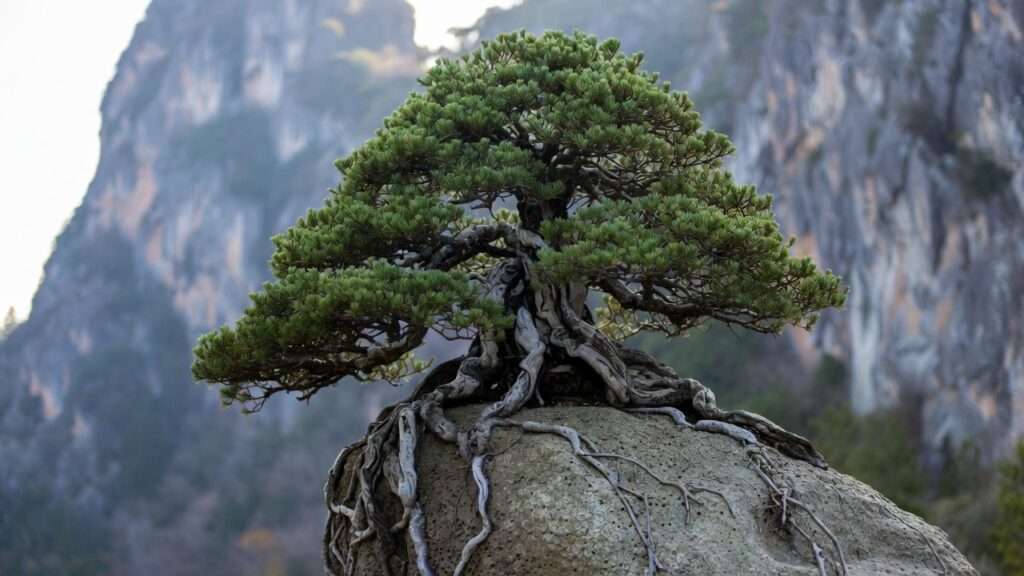
Imagine a lone juniper defying gravity on a sheer cliff face, roots desperately gripping porous stone while fierce winds whip its branches year after year. This raw, enduring beauty is the essence of ishitsuki — the Japanese art of rock planting (also called clinging-to-rock or root-on-rock style). Yet for many experienced bonsai enthusiasts, basic attempts at ishitsuki fall short: roots weaken and detach, soil erodes with every watering, and the tree struggles to thrive in its minimal-volume environment. 😔
If you’re searching for rock planting (ishitsuki) advanced methods, you’re likely past beginner rock-over-root experiments and ready to create museum-worthy, dramatic displays that evoke wild mountain resilience. This in-depth guide draws from techniques honed by masters like Jan Culek (known for crafting custom rocks and oxygen-rich mixes) and Terry Erasmus (expert in pine/firethorn ishitsuki with collected stones and keto blends), plus traditional Japanese practices. We’ll master precise root anchoring, optimized soil mixtures (including sticky keto-based recipes), and decade-spanning care strategies to solve common failures like drying out, poor stability, and nutrient starvation. By the end, you’ll have the tools to elevate your bonsai artistry to breathtaking levels. Let’s dive in! 🌟

What Is Ishitsuki (Rock Planting) – Beyond the Basics? 🤔
True ishitsuki captures nature’s harshest scenes: trees clinging tenaciously to rock in exposed, nutrient-poor conditions. Unlike simpler root-over-rock (seki-joju), where roots drape over a stone into pot soil below, pure ishitsuki confines roots almost entirely to rock crevices or pockets — a true test of endurance.
Understanding True Ishitsuki vs. Root-Over-Rock (Sekijoju)
- Clinging-to-Rock (Pure Ishitsuki): Roots grow directly into rock holes, cracks, or carved pockets with minimal external soil. The rock acts as both anchor and “pot.” This style demands advanced skills for long-term survival. 🏔️
- Root-Over-Rock Hybrid: Roots wrap the stone dramatically but extend into a shallow tray or pot for more soil volume — easier for beginners but less “pure” in dramatic effect.
- Slab/Planted-on-Rock Variations: Trees planted atop flat slabs with roots spreading across the surface, often accented with moss or small plants.
The aesthetic goal? Convey struggle and triumph — windswept forms, exposed nebari-like roots hugging stone, evoking ancient cliffs or coastal bluffs.
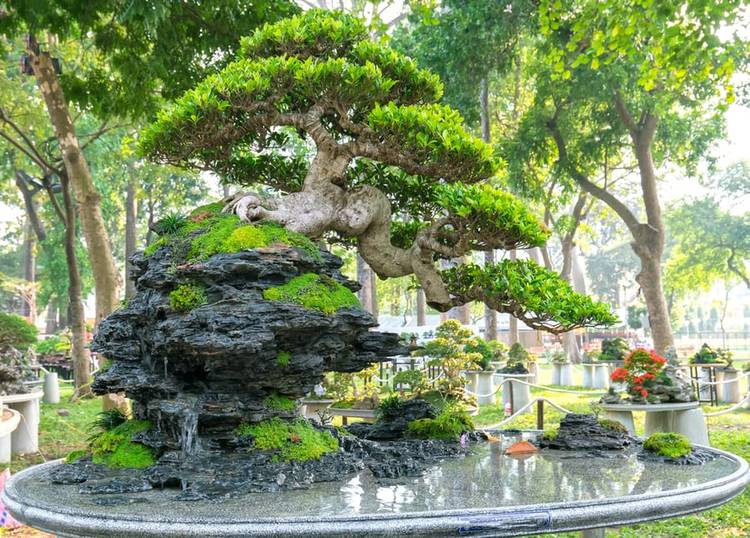
Selecting the Perfect Rock and Tree Combination (Foundation for Success) 🪨🌲
Success starts here: mismatched rocks or trees doom even the best techniques.
Choosing Rocks That Support Advanced Root Development
Porous, textured materials allow root penetration and moisture retention without waterlogging.
- Ideal Porous Materials: Tufa, lava rock, limestone, or keto-compatible volcanic stones. Avoid dense granite — roots can’t grip.
- Crevice Depth, Holes, and Texture: Seek deep fissures (at least 2–5 cm) and natural holes for root entry. Rough surfaces promote better adhesion.
- Sourcing/Ethical Collecting Tips + DIY Carving: Collect ethically from landscapes (check local laws) or carve custom rocks using chisels and drills (Jan Culek’s signature approach for perfect fits). Soak porous rocks before use to prevent shocking roots.
Tree Species Mastery for Ishitsuki
Conifers excel due to resilience; deciduous add seasonal drama.
- Top Choices: Junipers (Shimpaku/Itoigawa for tight foliage), pines (Japanese Black/White for rugged bark), maples (for fiery autumn color), firethorn (Pyracantha for berries), azaleas/Satsuki (flowering accents).
- Age/Root Length Prep: Grow candidates in large training pots 1–3 years to develop long, flexible roots. Avoid young seedlings — they lack vigor.
- Multi-Tree Compositions for Drama: Combine a dominant pine with shohin accents (e.g., firethorn) for layered mountain scenes.

Advanced Root Anchoring Techniques (The Core Skill) 🔗
This is where most ishitsuki fail — weak anchoring leads to collapse or dieback.
Preparing Roots for Rock Integration
- Root Pruning and Spreading Strategies: Gently tease roots apart, prune thick ones to encourage fine feeder roots. Spread them fan-like to fit crevices.
- Training Roots in Advance: Use wire guides or split training pots to direct roots toward desired rock positions over 1–2 seasons.
Step-by-Step Anchoring Methods
- Position the tree on/against the rock, aligning nebari for natural flow.
- Secure temporarily with aluminum wire loops threaded through holes or around protrusions (hidden for invisibility).
- Keto Soil Direct Attachment (Sticky Mud Technique): Mix keto (sticky river mud) with akadama dust — apply thickly to bind roots to rock and prevent washout.
- Wire + Clip Systems: Use stainless clips or multiple wire points for wind resistance.
- Epoxy/Modern Adhesives vs. Traditional: Epoxy for permanent holds (risky if roots need adjustment); traditional prefers natural binding via roots + keto.
- Multi-Point Anchoring: Secure at base, mid-trunk, and apex for stability in dramatic windswept designs.
Expert Tip ⚙️: “Use aluminum wire loops hidden in crevices — allows future adjustments without damage.” (Inspired by Jan Culek’s precision work.)
Common Advanced Problems and Expert Fixes 🚨
Even with perfect anchoring and soil, ishitsuki presents unique long-term challenges due to its extreme minimalism. Here are the most frequent issues advanced practitioners face — and proven solutions drawn from real-world experience.
Drying Out & Nutrient Starvation – Solutions
- Symptoms: Needle/leaf tip burn, slow growth, thinning foliage despite regular watering.
- Root Cause: Evaporation from exposed rock surfaces + tiny soil volume.
- Fixes:
- Apply a thin top layer of living moss (Hypnum or sheet moss) to shade soil and retain humidity — many masters consider this essential after year 2. 🌿
- Use anti-evaporation sprays (e.g., Wilt-Pruf or diluted latex-based products) on foliage during heatwaves.
- Supplement with weekly foliar feeds of diluted seaweed extract — roots absorb nutrients directly through leaves when soil uptake is limited.
- Place slab-mounted ishitsuki on a humidity tray filled with gravel and water (keep rock base above water line).
Root Dieback & Weak Anchorage – Recovery Steps
- Symptoms: Loose feel when gently testing tree, visible root shrinkage or browning at rock interface.
- Causes: Over-pruning during repot, winter desiccation, or initial poor contact.
- Recovery Protocol:
- Gently remove tree from rock (cut wires carefully).
- Trim dead roots, dust live ones with rooting hormone.
- Re-apply fresh keto mix + wire securely at multiple points.
- Place in high-humidity recovery box (clear plastic dome) for 4–8 weeks with bottom heat (22–25°C).
- Mist daily; avoid full sun until new white root tips appear. Many recovered trees actually develop stronger gripping roots afterward — a silver lining!
Pest/Disease Challenges in Rock Environments
- Common Threats: Spider mites (love hot, dry rock surfaces), scale on junipers/firethorn, fungal rot in overly wet keto pockets.
- Prevention & Treatment:
- Weekly inspections + strong hose spray to dislodge mites.
- Systemic insecticides (imidacloprid-based) for scale; apply sparingly to avoid root burn.
- Improve airflow — avoid clustering too many trees together.
- For rot: Reduce watering, improve drainage holes in rock if possible, apply cinnamon powder or sulfur as natural fungicide.
Moss & Accent Plant Integration Without Competition 🌿
- Small accent plants (ferns, selaginella) add realism but can steal water/nutrients.
- Solution: Plant them in separate micro-pockets with their own small soil volume, or use epiphytic/semi-epiphytic species that draw moisture from air. Keep accents small and prune aggressively.
Gallery of Inspiration: Real-World Advanced Ishitsuki Examples 📸
Study these masterpieces to visualize what mastery looks like:
- Jan Culek’s famous tufa cliff juniper – deep carved pockets, multi-point wire anchoring, thick keto layer now almost invisible after 8 years of root grip.
- Terry Erasmus collected lava pine ishitsuki – dramatic windswept form, roots wrapping like veins, subtle moss accents.
- Traditional Japanese shohin firethorn on limestone slab – berries popping against gray rock, roots fully fused after 12+ years.
- Multi-tree mountain scene: Dominant black pine + smaller maple accents on porous volcanic rock – creates depth and scale.
- Satsuki azalea cascade over tufa – vibrant spring flowers contrasting rugged stone.
(Imagine high-resolution photos here showing close-ups of root integration, nebari wraps, and overall dramatic composition — these examples prove that with advanced methods, ishitsuki can rival any formal upright or literati style in impact.)
FAQs: Answering Expert-Level Questions ❓
Q: How long until roots fully grip the rock naturally? A: 3–7 years depending on species and conditions. Junipers and firethorn often show strong fusion by year 4–5; pines take longer but develop incredible woody adhesion.
Q: Can ishitsuki survive without a pot indefinitely? A: Yes — many museum pieces live solely on slabs or freestanding rocks for decades — but only after roots have thoroughly colonized crevices and the tree is vigorous. Start with a shallow tray for the first 2–4 years.
Q: Best fixes for cracking keto soil over time? A: Top-dress with fresh keto mix every 2–3 years. Add more sphagnum during repacking to improve elasticity. Cracks often self-heal as roots expand and bind the mix.
Q: Is epoxy safe for permanent anchoring? A: Only as last resort — it prevents future root adjustment and can block oxygen if over-applied. Traditionalists avoid it entirely.
Q: How do you achieve that aged, weathered look on the rock? A: Use naturally aged stones, encourage lichen/moss growth with buttermilk spray, or lightly acid-etch new rocks for texture.
Conclusion: Elevate Your Bonsai Art with Ishitsuki Mastery 🎨
Rock planting (ishitsuki) isn’t just a technique — it’s a philosophy of resilience, patience, and intimate partnership with nature. By mastering advanced root anchoring, crafting high-performance soil mixtures, and committing to vigilant long-term care, you transform fragile plantings into enduring symbols of endurance that stop viewers in their tracks.
Start small: Pick one tree and one suitable rock this season. Apply just one new technique from this guide — whether it’s multi-point wiring, a refined keto blend, or strategic moss integration. Over the years, you’ll watch roots fuse, bark weather, and the whole composition mature into something truly breathtaking.
The mountains don’t rush — neither should your ishitsuki. Share your progress in the comments or on bonsai forums; the community thrives when we learn from each other. 🌟🪴











