
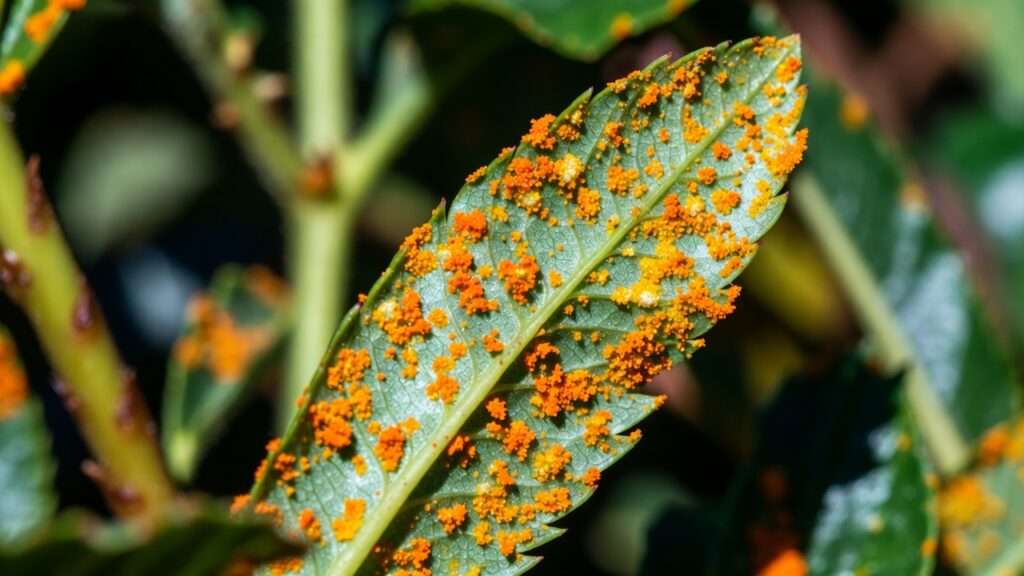
You step into your garden one sunny morning, coffee in hand, only to spot those alarming orange, yellow, or rusty-brown spots dotting the leaves of your favorite roses, hollyhocks, or apple tree. 😱 Your heart sinks — is rust fungus taking over? Is your plant doomed?
The good news: Rust fungus on leaves is one of the most common yet highly manageable fungal diseases in home gardens. With prompt action, most plants recover quickly and thrive again. As a horticulture enthusiast who’s helped countless gardeners battle this issue (drawing from trusted sources like the Royal Horticultural Society, University of Minnesota Extension, and Penn State Extension), I can assure you: acting fast is key to saving your plants.
Rust (caused by various Puccinia and Gymnosporangium species) thrives in humid, warm conditions, spreading via wind-blown spores and splashing water. It weakens plants by reducing photosynthesis, leading to yellowing, premature leaf drop, stunted growth, and fewer blooms or fruits. But don’t panic! This comprehensive guide walks you through immediate steps, effective treatments (organic and chemical), plant-specific advice, and proven prevention strategies to stop rust in its tracks — and keep it from returning. 🌱💚
By the end, you’ll know exactly what to do when rust appears, backed by expert-recommended methods that work in real gardens. Let’s get your plants healthy again — starting right now!
What Is Rust Fungus? Understanding the Enemy 🔍🍂
Rust isn’t just one disease — it’s a group of over 5,000 fungal species, mostly from the Pucciniaceae family. These obligate parasites need living plant tissue to survive and reproduce, making them sneaky and persistent.
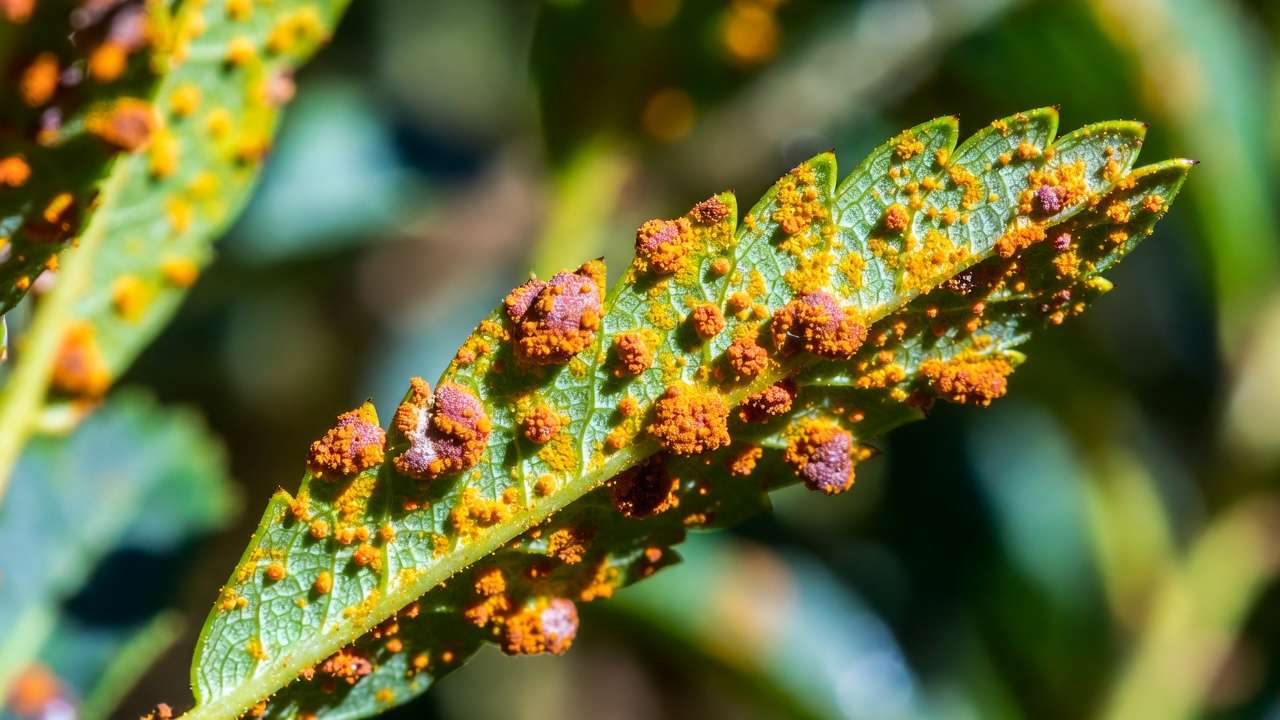
The name “rust” comes from the powdery, rust-colored pustules (uredinia) that erupt on leaves, stems, and sometimes fruits. Colors range from bright orange and yellow to reddish-brown or black, depending on the fungus and host plant. Early infections show as tiny pale flecks or spots on the upper leaf surface, while the classic raised, spore-filled bumps appear mostly on the undersides.
Many rust fungi have complex life cycles involving alternate hosts. For example:
- Cedar-apple rust (Gymnosporangium juniperi-virginianae) cycles between apples/crabapples and eastern red cedars/junipers.
- Hollyhock rust (Puccinia malvacearum) stays on mallow-family plants without needing a second host.
Spores spread easily via wind, rain splash, tools, or even clothing. Warm temperatures (55–75°F / 13–24°C) and prolonged leaf wetness (from dew, rain, or poor airflow) trigger infections. Once established, rust reduces plant vigor, making hosts more susceptible to other stresses like drought or pests.
How does it differ from look-alikes?
- Powdery mildew: White, talcum-like coating on upper surfaces (no pustules).
- Black spot (on roses): Circular dark spots with yellow halos, no raised bumps.
- Leaf spot fungi: Flat brown/black lesions, often with concentric rings.
Accurate identification prevents wasted effort on the wrong treatment. Always flip leaves over — rust loves hiding underneath! 🔎
Common Symptoms of Rust Fungus on Leaves ⚠️
Spotting rust early gives you the best chance to save your plants. Watch for these progressive signs:
- Early stage: Small yellow or white flecks/pale spots on upper leaf surfaces (may look like nutrient deficiency at first).
- Mid-stage: Raised, powdery pustules erupt — orange-yellow for many types, brick-red on roses, or cinnamon-brown on beans. Pustules burst to release masses of spores (rub your finger over them — you’ll see colorful powder!).
- Advanced stage: Leaves turn yellow or bronze, curl, distort, or develop necrotic areas. Heavy infection causes premature defoliation (leaves drop en masse), exposing stems and reducing energy production.
- Whole-plant impact: Stunted growth, fewer flowers/fruits, weakened branches prone to winter damage. Severely affected plants may die if defoliation repeats year after year.
Rust often appears mid-to-late summer through autumn in humid climates, peaking after rainy spells. In cooler regions, it may overwinter on debris or alternate hosts. Check undersides weekly during warm, wet weather — early detection = fast recovery! ⏱️
Plants Most Commonly Affected by Rust Fungus 🌸🌳
Rust is picky — each species targets specific hosts, so one plant’s rust rarely jumps to unrelated species. Here’s a quick reference:
| Plant Type | Common Rust Type | Key Symptoms & Notes |
|---|---|---|
| Roses | Rose rust (Phragmidium spp.) | Orange pustules on undersides; common in damp UK/US gardens |
| Hollyhocks | Hollyhock rust (Puccinia malvacearum) | Bright orange spots; notorious for biennials |
| Apples/Crabapples | Cedar-apple rust | Yellow-orange spots on leaves/fruit; galls on junipers |
| Snapdragons | Snapdragon rust | Yellow spots turning brown |
| Beans | Bean rust | Reddish-brown pustules; reduces yield |
| Leeks/Alliums | Leek rust | Orange pustules; affects garlic/chives too |
| Lawns/Turf | Lawn rust | Orange powder on grass blades; worsens in shade |
| Fuchsia/Heuchera | Various rusts | Speckled leaves, drop in humid shade |
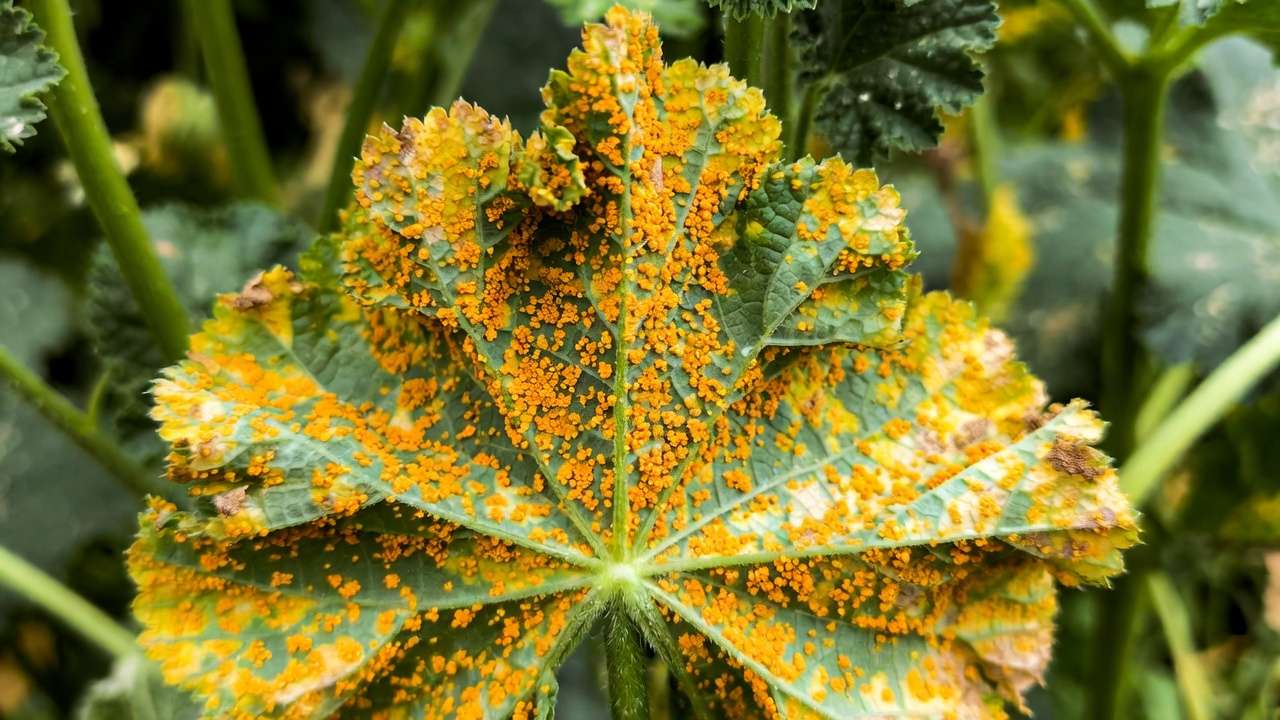
Other victims include asparagus, mint, pelargoniums, chrysanthemums, and some serviceberries/hawthorns. If your plant isn’t listed, snap a photo of both leaf sides and compare to extension service images for confirmation.
Immediate Steps: What to Do Right Now When You Spot Rust 🚨✂️
Time is critical — rust spreads fast in favorable conditions. Follow these steps immediately:
- Isolate if possible — Move potted plants away or mark affected areas in beds to avoid touching healthy ones.
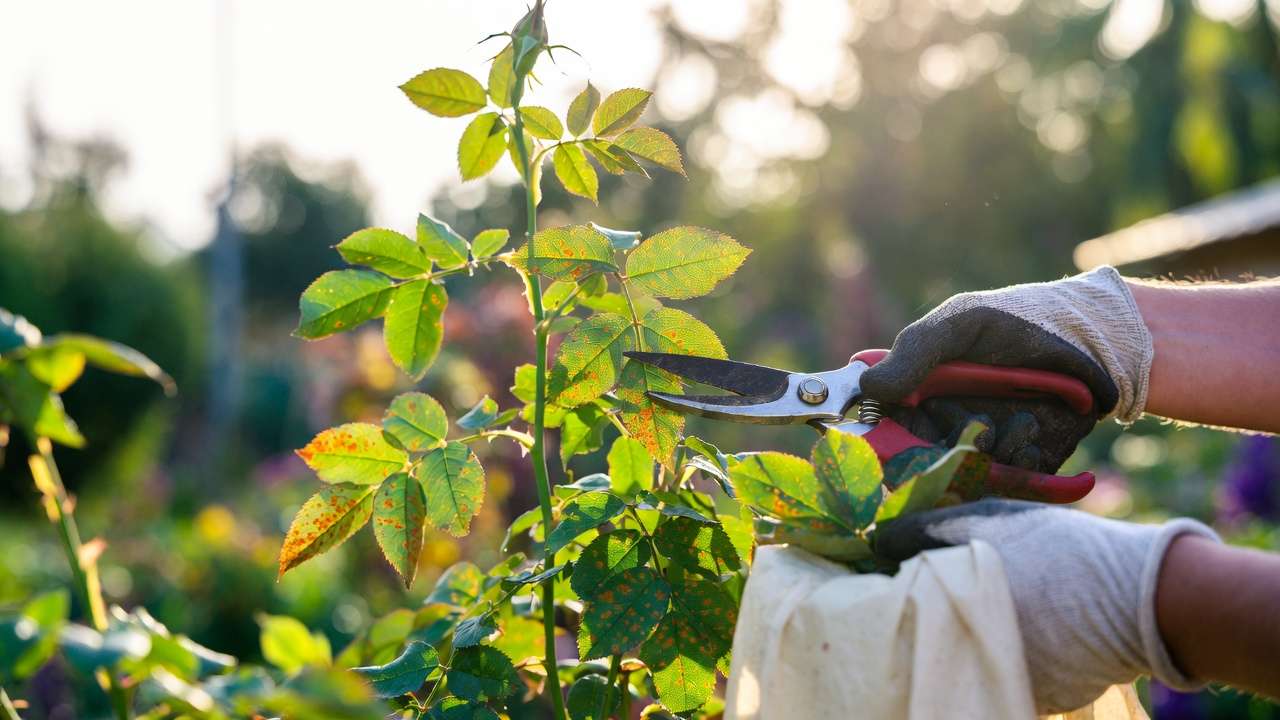
- Remove infected parts — Use clean, sharp pruners (sanitize with 10% bleach or alcohol between cuts) to clip off all spotted leaves, stems, or branches. Remove no more than 1/3 of foliage at once to avoid shocking the plant. Bag debris in plastic (don’t compost fresh material — spores survive!) and dispose in trash or burn where allowed.
- Clean up surroundings — Rake fallen leaves/debris thoroughly. This breaks the spore cycle and prevents reinfection.
- Improve airflow & conditions instantly — Thin crowded branches, space plants better next season. Water only at the base (drip/soaker hose) early in the morning so leaves dry quickly — avoid overhead watering entirely.
- Monitor daily — Check for new spots; repeat removal as needed.
These actions alone can halt mild infections within days and give treatments a fighting chance. Speed saves plants! 💨🌿
Effective Treatment Options: Organic vs. Chemical Solutions 🧪🌿
Organic & Natural Treatments (Start Here for Eco-Friendly Control)
Prioritize cultural fixes first, then layer on these proven options:
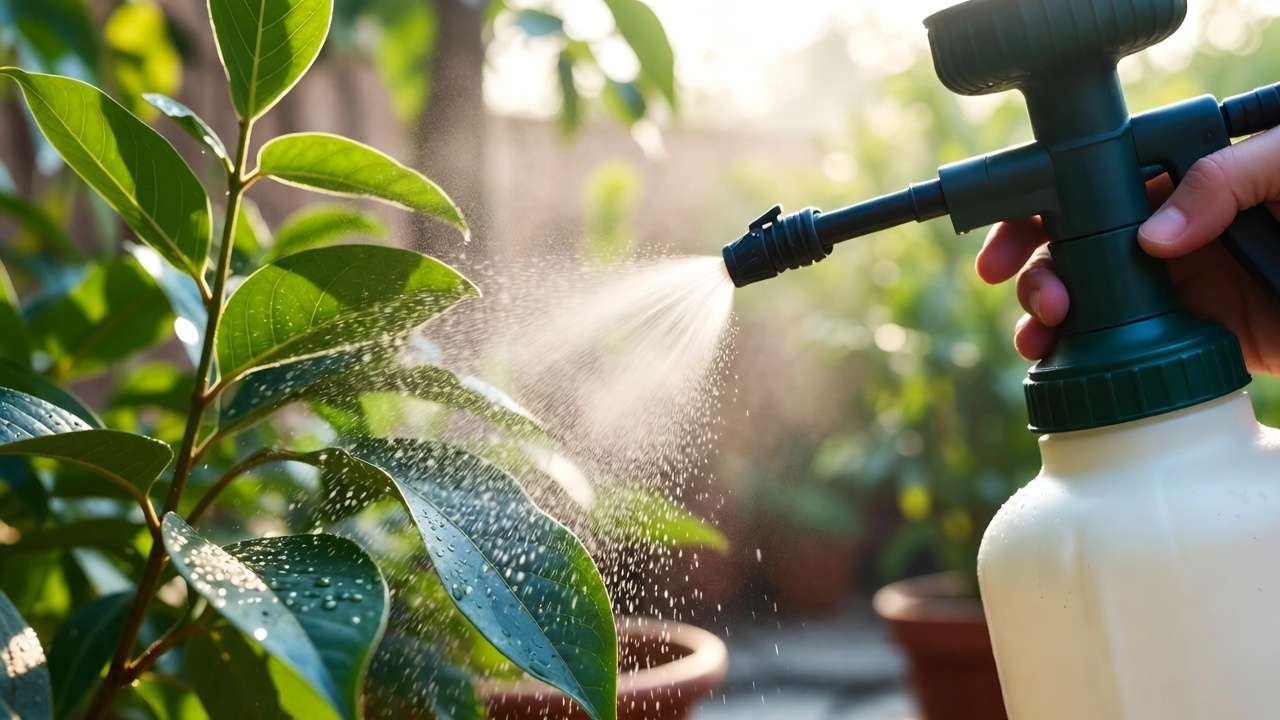
- Sulfur dusting/powder: Apply wettable sulfur weekly at first sign or preventively. Traditional, safe for most plants; disrupts spore germination. (Avoid hot days >85°F to prevent leaf burn.)
- Neem oil: Mix per label (usually 1–2 tsp per quart water + dash of dish soap). Spray thoroughly, covering undersides. Acts as fungicide and repellent; repeat every 7–14 days.
- Baking soda spray: 1 tsp baking soda + 1 tsp horticultural oil or soap per liter water. Alkaline environment inhibits fungi; effective for early rust.
- Milk solution: 1 part milk to 2–3 parts water. Surprisingly good for some rusts (antifungal proteins); spray weekly.
- Biofungicides: Bacillus subtilis or Bacillus amyloliquefaciens products (e.g., Serenade). Beneficial microbes outcompete rust; safe for pollinators.
- Hydrogen peroxide (3%): Dilute 1:4 with water for mild cases; oxygen boost kills surface spores.
Apply in evening or cloudy weather; always test small area first.
Chemical Fungicides (For Severe or Persistent Cases)
When organic isn’t enough (e.g., heavy infection or valuable plants):
- Contact protectants: Chlorothalonil, mancozeb, copper-based (Bordeaux mixture). Broad-spectrum; prevent new infections.
- Systemic options: Myclobutanil, propiconazole, tebuconazole. Absorbed into plant; curative for early stages.
- Timing: Start at first sign or preventively in humid seasons; repeat every 7–10 days, covering both leaf sides. Rotate modes of action (FRAC groups) to prevent resistance.
Safety first: Follow label exactly, wear PPE, avoid blooming periods to protect bees. Many experts (RHS) recommend cultural/organic priority over routine chemicals.
Comparison Table:
| Method | Effectiveness | Pros | Cons | Best For |
|---|---|---|---|---|
| Cultural removal | High early | Free, immediate | Labor-intensive | All cases |
| Sulfur/Neem | Medium-High | Organic, pollinator-safe | May need frequent apps | Mild/organic gardens |
| Biofungicides | Medium | Eco-friendly, soil health | Slower action | Preventive |
| Myclobutanil etc. | High | Curative, long protection | Resistance risk, not organic | Severe outbreaks |
Choose based on your garden philosophy and infection level.
Prevention: Stop Rust Before It Starts (Long-Term Strategies) 🛡️📅
The absolute best way to deal with rust fungus is to prevent it from taking hold in the first place. Prevention combines smart cultural practices, variety selection, and ongoing vigilance — strategies endorsed by leading experts at the Royal Horticultural Society (RHS), University of Minnesota Extension, Purdue Extension, and others. These methods reduce spore sources, limit favorable conditions (humidity, leaf wetness), and build plant resilience.
-
Choose resistant varieties — This is your strongest defense! Many modern cultivars resist common rust strains.
- Roses: Opt for series like Knock Out, Pavement, Canadian Explorer, or varieties such as ‘Blaze of Glory’, ‘Golden Showers’, ‘Heart Song’, ‘New Dawn’, and ‘Olympiad’ — these show good resistance to rose rust while delivering beautiful blooms.
- Hollyhocks: Go for rust-resistant types like the ‘Halo’ series (e.g., ‘Halo Red’), Russian hollyhock (Alcea rugosa), or Figleaf hollyhock (Alcea ficifolia) instead of common Alcea rosea. These often stay healthier longer in humid areas.
- Apples/Crabapples: Select rust-resistant options like ‘Liberty’, ‘Freedom’, ‘Adirondack’, or ‘Wealthy’ — many are also scab- and fire blight-resistant for multi-disease protection.
- Others: Look for resistant snapdragons, daylilies, ivy geraniums (Pelargonium peltatum), and turfgrasses bred for lower rust susceptibility.
Note: Resistance can sometimes be overcome by evolving rust strains, so combine with other practices.
-
Site selection and spacing — Plant in full sun (at least 6 hours daily) where possible — shade increases humidity and rust risk. Space plants generously (follow mature size guidelines) to promote airflow, which dries leaves quickly and starves spores of the moisture they need.
-
Watering wisely — Always water at the soil level using drip irrigation, soaker hoses, or a watering can directed at the base. Avoid overhead sprinkling, especially late in the day — wet foliage overnight is rust heaven. Water early morning so any splash dries fast.
-
Balanced fertilization — Feed with a balanced, slow-release fertilizer in spring. Avoid excess nitrogen, which pushes soft, lush growth that’s extra vulnerable to rust. Healthy, steady growth resists infection better.
-
Year-round sanitation — Crucial! In fall, rake and remove all fallen leaves, stems, and debris — many rust spores overwinter here. Dispose in trash or burn (where permitted); avoid composting unless your pile reaches high temperatures (>140°F/60°C) to kill spores. Clean tools with 10% bleach or alcohol after pruning diseased plants.
-
Manage alternate hosts — For heteroecious rusts (those needing two hosts):
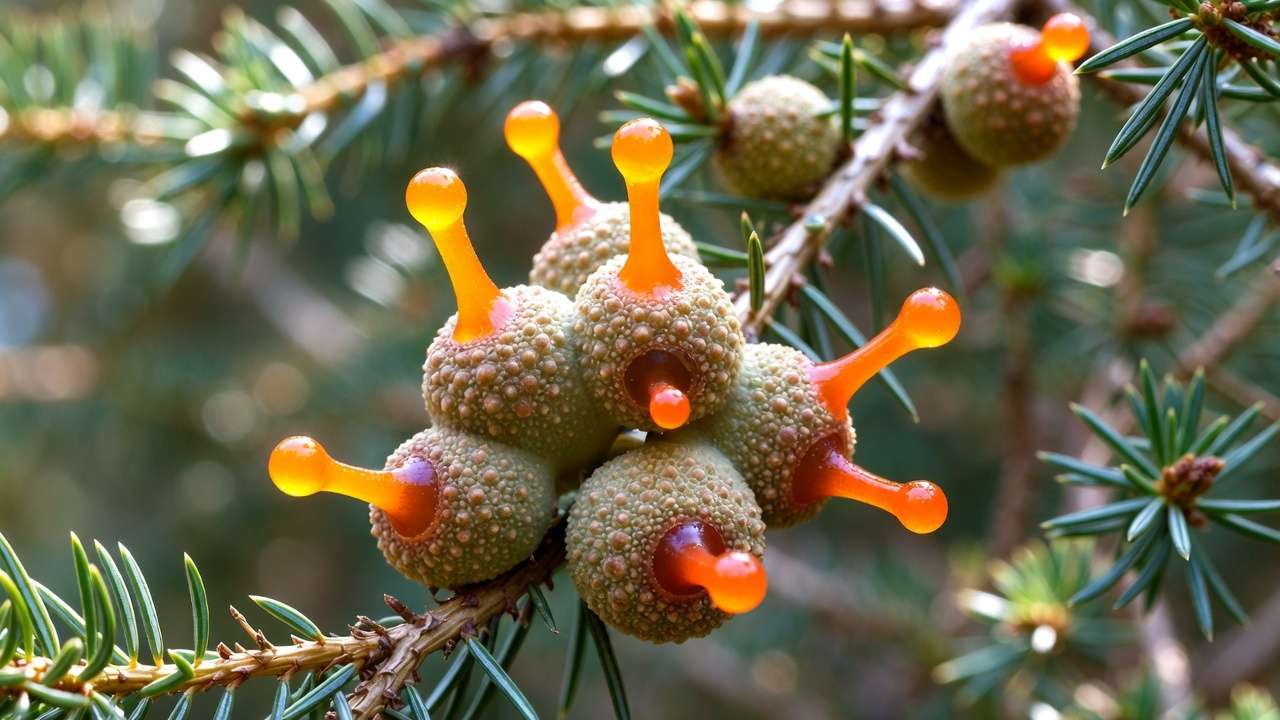
- Cedar-apple rust: Remove or widely space nearby eastern red cedars/junipers (alternate hosts) if growing apples, crabapples, hawthorns, or serviceberries. Prune galls off junipers in spring before orange telial horns emerge.
- Other examples: Pear rust (juniper hosts), fuchsia rust — scout and manage nearby susceptible plants.
-
Ongoing monitoring & seasonal prep — Inspect leaves weekly during warm, humid periods (spring through fall). In greenhouses or high-humidity areas, use fans to circulate air and keep humidity below 80%. Quarantine new plants for 2–3 weeks to catch hidden infections.
Implementing these habits dramatically cuts rust outbreaks — many gardeners report near-zero issues after switching to resistant varieties and better airflow! 🌟
Plant-Specific Guides & Real-World Examples 📖🌷
Tailoring your approach to the plant makes a huge difference. Here are expert-backed tips for the most common victims:
- Roses 🌹: Rose rust loves humid, shaded spots. Start preventive sulfur sprays in spring (before symptoms). Remove affected leaves promptly. Grow resistant cultivars like Knock Out series — many gardeners share success stories of rust-free bushes even in rainy seasons. Pair with good pruning for open centers.
- Hollyhocks 🌻: These biennials are rust magnets, especially older varieties. Plant rust-resistant ‘Halo’ or Alcea rugosa types. Pick off first spots immediately; some gardeners cut plants back hard after flowering and mulch heavily. One common win: Starting fresh seeds each year in sunnier, windier spots reduces recurrence.
- Cedar-apple rust on apples/crabapples 🍎: Focus on alternate-host removal or wide spacing from junipers. Preventive fungicides (myclobutanil) work well in spring. Resistant apples like ‘Liberty’ often need little intervention — backyard growers in rust-prone areas rave about bumper crops after switching varieties.
- Lawn/Turf rust ⚽: Common in shaded, low-fertility grass. Mow regularly (don’t scalp), fertilize with nitrogen in early fall, and aerate for better airflow. Rust usually fades as weather cools or grass strengthens — rarely needs fungicide on home lawns.
- Vegetables (beans, leeks) 🫘: Rotate crops yearly. Space widely, stake for airflow. Early sulfur or neem prevents spread; harvest promptly to limit damage.
Real-world insight: In humid regions like parts of the UK or Midwest US, gardeners who combine resistant plants + strict sanitation often eliminate rust entirely after 1–2 seasons. Your garden can too!
Frequently Asked Questions (FAQs) ❓
Can rust fungus kill my plant? Rarely outright — it weakens plants severely through repeated defoliation, making them vulnerable to other issues like winter damage or pests. Healthy plants usually recover with intervention.
Is rust contagious to other plants? Yes, via wind, water splash, tools, or contact — but usually only to the same or related host species. Isolate affected plants to contain it.
Can I compost rusty leaves? Avoid fresh, heavily infected material unless your compost pile gets very hot (kills spores). Late-season dry debris is often safer, but trash is safest to prevent reinfection.
What’s the best time to apply fungicide? Preventively (before symptoms) in humid seasons, or at first sign. Spray in evening/cloudy weather; repeat every 7–14 days as labeled.
Organic vs. chemical — which is better? Organic (sulfur, neem, cultural) works great for mild cases and eco-gardens; chemical for severe outbreaks needing fast/curative action. Many experts prioritize cultural + organic first.
Will rust come back every year? Not if you break the cycle — remove debris, choose resistant varieties, improve conditions. Spores need hosts and moisture to persist.
Does milk really work on rust? Anecdotal success for some (antifungal proteins), but evidence is stronger for powdery mildew. Try 1:2 milk:water sprays weekly; combine with others for best results.
How do I know if it’s rust or something else? Flip the leaf — powdery orange/yellow raised pustules on undersides scream rust. Compare to photos from RHS or extension sites.
Is rust worse in certain climates? Yes — warm, humid summers (55–75°F with wet leaves) favor it. Drier or cooler areas see less.
Can I save seeds from rusty plants? Usually yes (rust doesn’t infect seeds), but choose healthy-looking pods and avoid if heavily diseased.
Conclusion: Take Action Today & Enjoy Healthy Plants Again! 🎉
Rust fungus on leaves doesn’t have to ruin your garden season. By spotting it early, removing infected parts swiftly, choosing the right treatments (starting organic), and building strong prevention habits, you can save your plants fast — and often stop future outbreaks cold.
You’ve got the full toolkit now: identification know-how, immediate rescue steps, proven organic and chemical options, plant-specific strategies, and expert-backed prevention. Most gardeners see dramatic improvement within a week or two of action, with lush, spot-free foliage returning soon after.
Your garden deserves to thrive — start inspecting those leaves today! Share your rust battle wins (or before/after photos) in the comments below; I’d love to hear how these tips work for you. Subscribe for more practical plant care guides, and happy gardening! 💪🌿😊











