
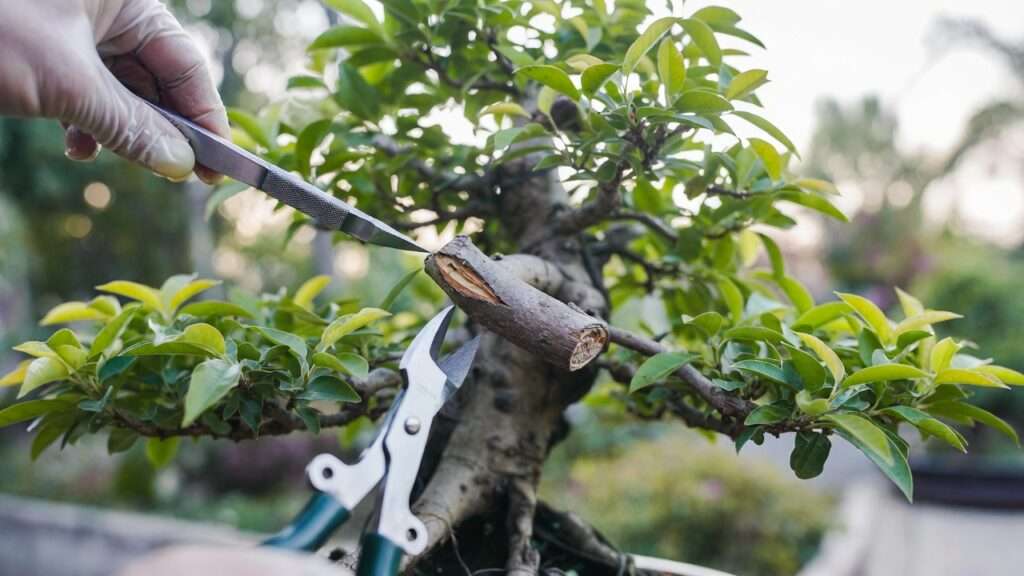
Imagine this: Your cherished bonsai, years in the making, has a thick, stubborn branch that’s throwing off the entire design—crossing awkwardly, blocking light, or ruining the taper. You know it has to go… but one wrong move could trigger die-back down the trunk, leave an ugly flat scar that never heals properly, or shock the tree into decline. 😱
If you’ve ever hesitated before making that big cut, you’re not alone. Removing large branches on bonsai is one of the most intimidating yet essential skills in bonsai cultivation. Unlike pinching small shoots or trimming fine twigs, large branch removal disrupts sap flow, removes significant foliage mass, and creates substantial wounds that demand precise technique to heal cleanly and quickly.
The good news? With the right timing, tools, preparation, and aftercare, you can safely remove those problematic large branches while protecting your tree’s health and enhancing its aesthetic beauty. In this in-depth guide, I’ll walk you through expert-level methods drawn from decades of bonsai practice (inspired by masters like those using Japanese techniques for species like maples, elms, and hornbeams). We’ll cover everything from preventing die-back in sensitive species to achieving concave wounds that close beautifully over time.
By the end, you’ll have the confidence to tackle those big cuts without fear—turning potential disasters into stunning improvements. Let’s dive in! 🌟
Why Large Branch Removal Is Different (and Riskier) Than Regular Pruning ⚠️🌳
Structural pruning—removing branches thicker than a pencil—fundamentally differs from maintenance pruning. Small cuts affect only local growth; large ones impact the entire tree’s energy distribution and vascular system.
Die-back: What It Is and Why It Happens Die-back occurs when the tree loses sap flow support beyond the cut point, causing branch tips or even trunk sections to wither and die. Species like Japanese maples (Acer palmatum), trident maples, elms, and hornbeams are especially prone because they “bleed” sap heavily or have less aggressive compartmentalization. Removing a large basal branch without rerouting energy can cause the trunk to die back to the next viable bud—sometimes all the way to the soil line! 😔
Scarring Issues: Flat vs. Concave Cuts and Healing Dynamics A flat or protruding cut leaves a raised scar that callus struggles to roll over, often resulting in ugly, persistent marks. Concave cuts (hollowed inward) encourage the bark to heal inward and roll smoothly, minimizing visible scars over 1–3 years. Proper healing depends on wound size, tree vigor, and protection from infection or desiccation.
Stress Factors: Energy Loss, Wound Size, and Recovery Challenges Rule of thumb: Never remove more than 20–30% of the tree’s foliage/energy in one session on a healthy specimen. Larger cuts stress the tree, slowing recovery and inviting pests/disease. Always prioritize tree health—weak or recently repotted trees should wait.
Expert Insight: Many pros (including those working with yamadori or field-grown stock) use “sacrifice branch” strategies: Grow thick branches temporarily for trunk thickening or wound closure, then remove them gradually after rerouting sap flow to backups. This prevents catastrophic die-back. 📈

(Example: Before-and-after of a Chinese elm after major pruning—notice how the tree bounces back beautifully with proper technique!)
(Another stunning transformation showing structural pruning results.)
When to Remove Large Branches: Timing Is Everything ⏰🍃
Timing can make or break success—prune at the wrong time, and you risk excessive bleeding, poor healing, or severe die-back.
Species-Specific Timing Guidelines
- Japanese Maple & Trident Maple: Early to mid-summer (after spring flush hardens) is safest—avoid spring bleeding and winter vulnerability. Staged cuts reduce shock.
- Elm, Hornbeam & Beech: Late spring/early summer or after full leaf-out; these respond well to energy rerouting.
- Ficus & Tropicals: Year-round in warm conditions (forgiving healers with quick callus).
- Pine, Juniper & Conifers: Avoid large cuts if possible—prefer branch selection or candle pinching. If needed, late winter/early spring before new growth.
Signs Your Tree Is Ready Look for vigorous growth, dense foliage, and strong roots. The tree should be in active phase but not peak heat stress.
Times to Avoid Dormant winter (most species bleed or dry out), extreme summer heat, immediately after repotting, or during defoliation recovery.
Pro Tip: For sacrifice branches, “pre-thin” by removing 50–70% of foliage months ahead—this redirects energy safely before the final cut. 🕒
Essential Tools for Clean, Safe Large Branch Removal 🛠️🔧
Quality tools prevent jagged tears that invite rot and slow healing.
Concave Branch Cutters vs. Knob Cutters: Differences and Best Uses Concave cutters create the signature hollow wound for fast rolling callus—ideal for branches up to 1–1.5 inches. Knob cutters excel at stubs or tight spots, leaving a rounded divot.
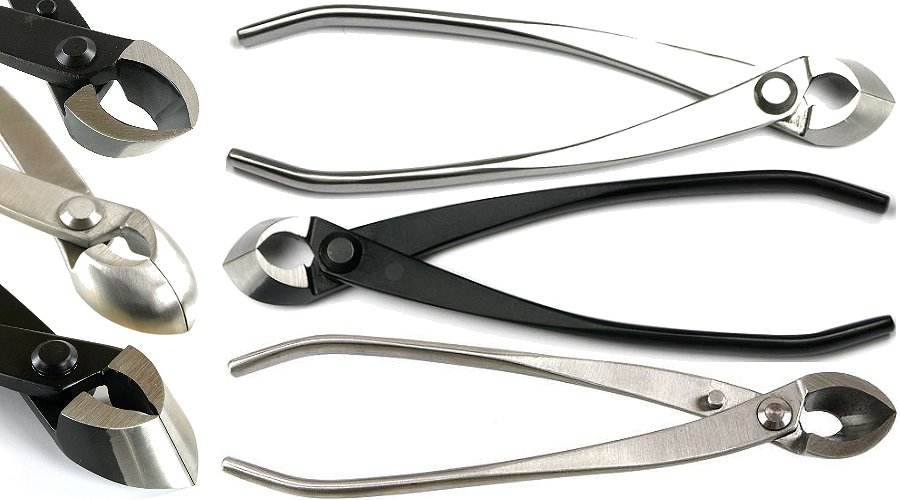
(Various concave cutters—notice the curved jaws for that perfect hollow cut!)
(Curved stainless steel branch cutter—great for precise work.)
When to Use Saws, Chisels, or Dremel for Very Thick Branches For branches >2 inches, use a fine-toothed pull saw first (Japanese ryoba style), then refine with knob cutters or chisels. A Dremel with carving bit smooths ultra-thick wounds.
Supporting Tools
- Branch splitters (to prevent tearing on thick wood)
- Cut paste/sealants (e.g., Kiyonal or wound putty—essential for bleeding species)
- Sharpening stones (dull tools crush tissue)
Expert Recommendation: Invest in Japanese brands like Kaneshin or Masakuni—their sharpness and ergonomics make a huge difference in clean cuts and reduced scarring. Cheap tools often cause more harm than good. 🏆
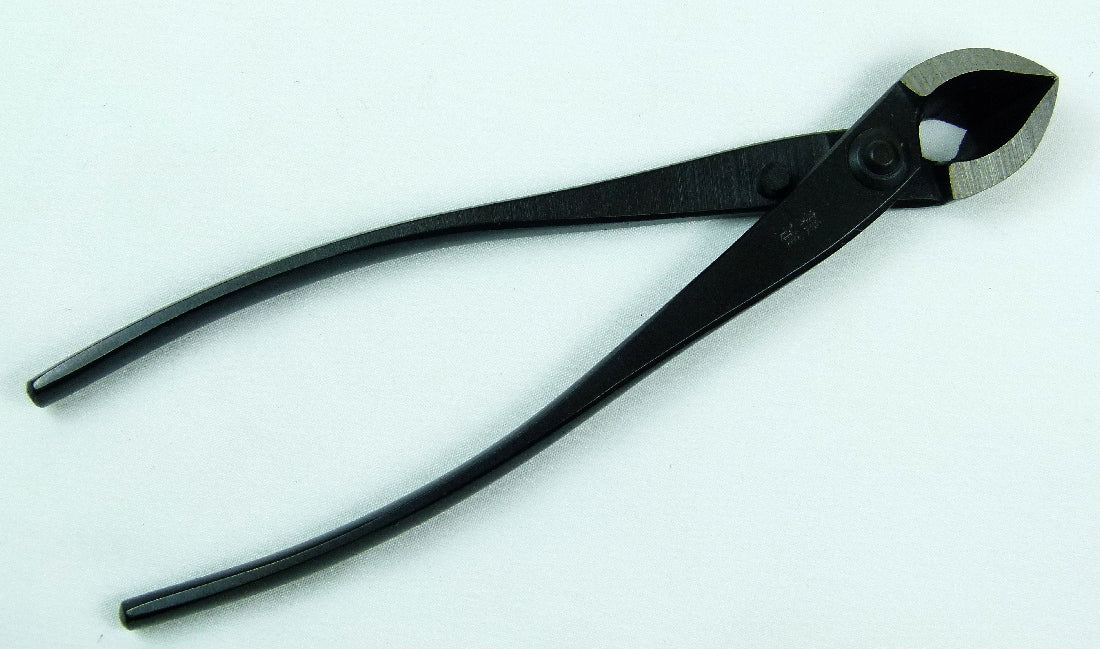
(Kaneshin straight blade cutter—classic for bonsai pros.)
Step-by-Step Guide: Safely Removing Large Branches 📋✂️
This is the heart of the process—follow these steps meticulously to minimize risk and maximize healing.
Step 1: Assess and Plan 🧠 Before any cut, step back and visualize the final design. Ask: Does this branch truly need removal? Is there a back-up branch or bud that can take over its role? Map the sap flow—identify which branches supply energy to the area below the cut. Sketch or photograph the tree from multiple angles. Pro Insight: In deciduous trees, prioritize keeping apical growth strong to pull sap upward after removal.
Step 2: Pre-Pruning Preparation ⚙️ Thin the foliage on the target branch by 50–70% a few weeks to months in advance (especially for sacrifice branches). This reduces transpiration shock and redirects energy to remaining parts. For very large branches, consider staged reduction: remove outer sections first over 1–2 seasons.
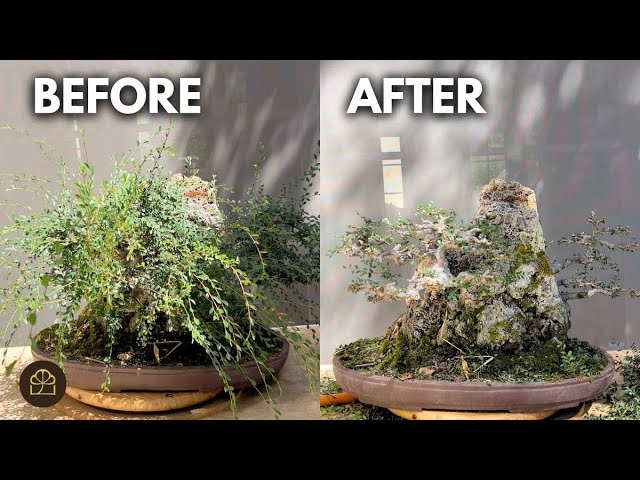
(Beautiful before-and-after of an overgrown bonsai transformed by careful structural pruning—notice how balance improves dramatically!)
(Another Chinese elm makeover—overgrown to refined in one major session with proper prep.)
Step 3: Making the Cut ✂️ Use the famous 3-cut method for branches thicker than ½ inch to prevent bark tearing:
- Undercut 1/3 through from below, a few inches out from the trunk.
- Cut from the top slightly further out to remove the bulk.
- Final cut close to the trunk, angled slightly downward, using concave cutter to create a hollow wound. Never cut flush—leave a small collar if present, but aim for concave so callus rolls in. Cut just outside the branch collar (swollen area where trunk and branch meet).
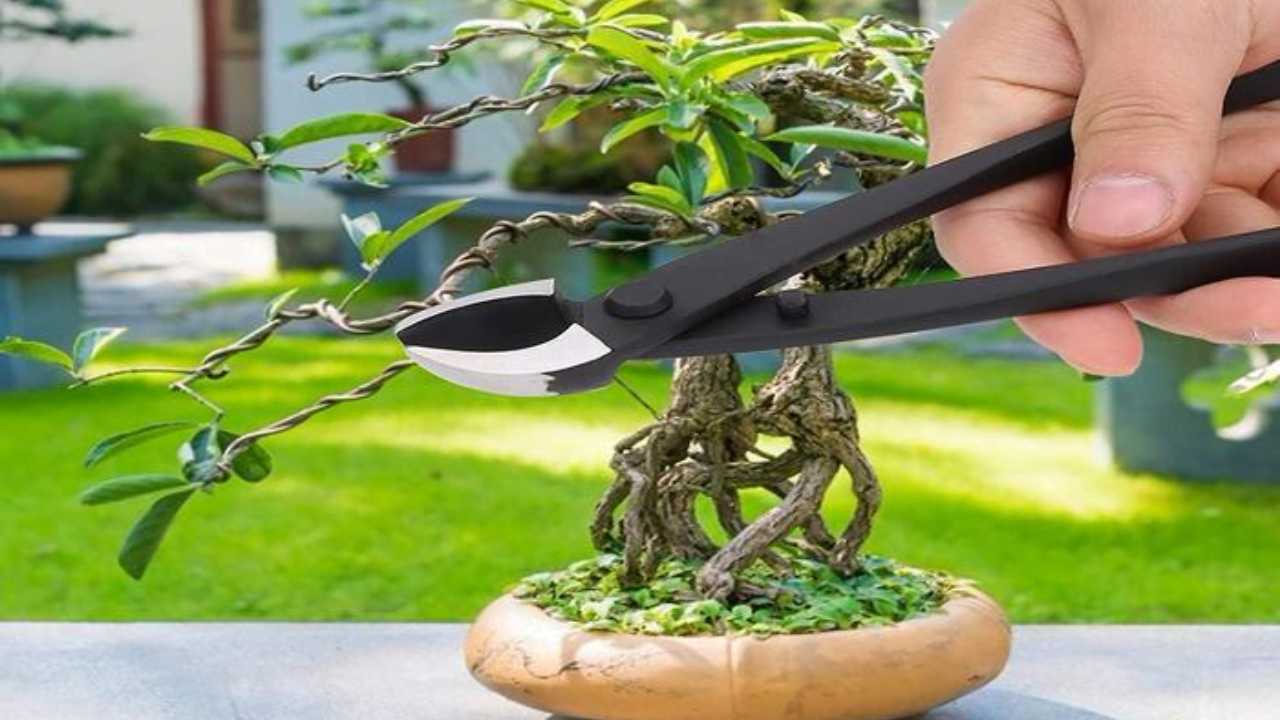
(Concave branch cutter in action—see how the curved jaws create that perfect hollow!)
(Final pruning step showing clean, open structure after major cuts.)
Step 4: Finishing the Wound 🩹 If the cut isn’t concave enough, use a chisel or knife to carve a slight hollow. Apply cut paste (Kiyonal, cut paste, or tree wound sealant) immediately—especially on maples, elms, and hornbeams to prevent drying and infection. For conifers, many skip paste as they compartmentalize well. Leave the wound exposed to air for fastest callus—don’t cover completely unless bleeding is extreme.
Step 5: Immediate Aftercare 🌡️ Place in bright indirect light (no direct sun for 2–4 weeks), water normally but avoid over-fertilizing. Mist foliage daily if humidity is low. Monitor daily for wilting or browning tips (early die-back signs).
(Healing a major chop wound—techniques like this speed recovery on thick removals.)
Species-Specific Techniques and Considerations 🌱🗂️
Different bonsai species react uniquely to large branch removal due to variations in sap flow, healing speed, and die-back risk. Tailoring your approach is key to success.
Japanese Maple & Trident Maple 🍁 (High die-back risk) These are among the most sensitive—large cuts in spring can cause heavy bleeding and die-back extending far beyond the cut.
- Best time: Early to mid-summer after the first flush hardens.
- Technique: Staged removal—reduce the branch in sections over 1–2 years if possible. Always leave a small “sacrifice” stub initially, then refine later. Use knob cutters for precise stub removal and apply thick cut paste to seal.
- Reroute energy: Ensure strong apical or nearby branches remain to pull sap flow upward.
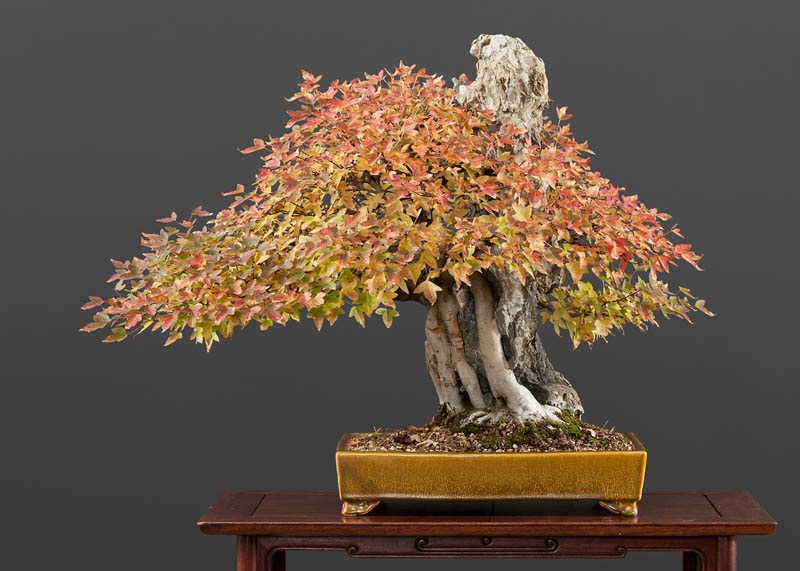
(A stunning trident maple in full autumn color—perfect structure achieved through careful large branch management over time.)

(Defoliated trident maple showing refined branching after summer work—notice clean healed areas from prior structural cuts.)

(Another trident maple displaying beautiful nebari and branch placement—evidence of safe large pruning history.)
Elm, Hornbeam & Beech 🌳 These deciduous hardwoods heal well but benefit from energy rerouting tricks.
- Timing: Late spring/early summer after full leaf-out.
- Technique: Use knob cutters to leave small rounded stubs initially; they dry and fall off naturally or can be carved later. Pre-thin heavy branches months ahead. Hornbeams especially respond to “back budding” encouragement post-cut.

(European hornbeam development over 8 months—dramatic improvement from structural pruning and wiring after safe large branch work.)
(55-year-old hornbeam repotting and inspection—healthy trunk and branches show excellent recovery from past major cuts.)
Ficus & Tropicals 🌴 Highly forgiving healers with rapid callus formation and year-round growth in warm climates.
- Timing: Almost any time (best in active growth).
- Technique: Cut flush or slightly concave; they often heal completely in 6–12 months. No need for heavy paste—simple sealant suffices if any. Great for aggressive redesigns.

(Mature ficus retusa with impressive air roots and trunk—thrives after bold large branch removals.)

(Pruning a ficus bonsai—demonstrating clean cuts on tropical species that recover quickly.)
Pine, Juniper & Conifers 🌲 Avoid large branch removal whenever possible—these species don’t back-bud easily on old wood, and big cuts can leave dead zones.
- Preference: Branch selection, pinching, or wiring to reposition rather than remove.
- If unavoidable: Late winter/early spring; cut to a strong side branch or bud. Never leave long stubs—they die anyway.

(Juniper bonsai styled carefully—focus on branch placement to avoid needing large removals.)

(Another juniper example—healthy pads developed without major chops.)
Expert Insight: In my experience working with collected yamadori and nursery stock, patience with conifers pays off—many beautiful pines and junipers you see in shows have never had a large branch removed after styling began. Focus on preventive design instead! 🌟
Common Mistakes and How to Avoid Them ❌🚫
Even experienced enthusiasts slip up—here are the top pitfalls and fixes.
Cutting Too Flush or Leaving Stubs Flush cuts damage the branch collar → slow, ugly healing. Long stubs die and attract rot. Fix: Always aim for concave with proper cutters; cut just outside the collar.
Removing Too Much Foliage at Once Exceeding 20–30% energy loss shocks the tree. Fix: Stage major work or pre-thin. Follow the “1/3 rule” for safety.
Ignoring Wound Sealing or Using Wrong Products Bleeding species dry out or infect without paste. Fix: Use Kiyonal-style cut paste on maples/elms; skip or use minimal on conifers.
Poor Timing Leading to Die-back or Rot Spring cuts on maples = bleeding disaster. Fix: Stick to species guidelines and check vigor first. Quick Checklist: ✅ Assess design → ✅ Time correctly → ✅ Prep with thinning → ✅ Use sharp concave tools → ✅ Seal properly → ✅ Shade & monitor post-cut.

(Example of a poorly healed large wound—notice the sunken, rotten area from improper technique.)

(Video-style still showing a necessary large wound creation—learn from this to make better cuts.)
Aftercare and Healing: Helping Your Bonsai Recover Fast 💚🩹
Post-cut care determines success.
Monitoring for Die-back and Infection Check daily for wilting tips or blackening—prune affected areas immediately if die-back starts. Watch for fungal signs (white fuzz, soft wood).
Fertilization and Watering Adjustments Reduce fertilizer by 50% for 4–6 weeks; resume gradually. Keep soil evenly moist but not soggy—use humidity trays if needed.
What to Expect: Healing Timelines Deciduous: Callus rolls in 6–18 months; full closure 1–3 years. Tropicals: Often invisible in 1 year. Conifers: Slow but compartmentalize well.
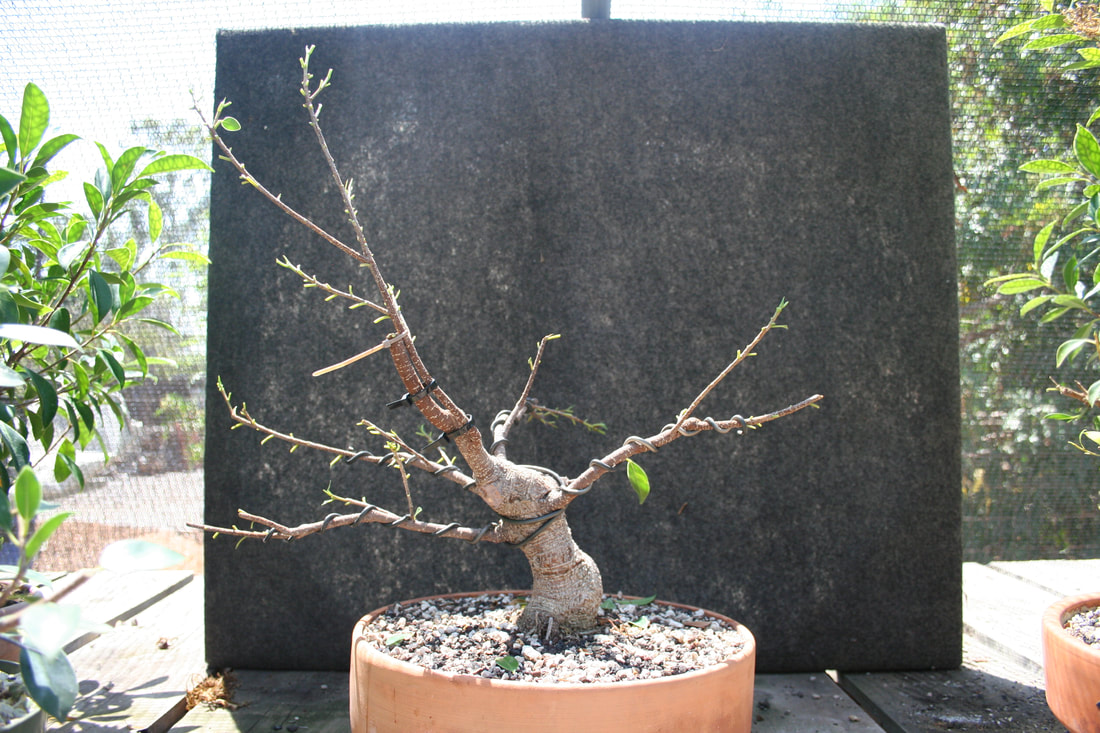
(Ficus after structural work—new growth filling gaps beautifully.)
When to Consider Grafting or Thread Grafting If a large removal leaves an empty area, thread graft a new branch in the next season to fill it aesthetically.
Pro Tip: Patience is your best tool—many “ruined” trees become masterpieces after 2–3 years of healing. 📈
FAQs: Safely Removing Large Branches on Bonsai ❓
Can I remove a large branch in winter? Generally no for most species—risk of drying or poor sap flow. Exceptions: Some conifers in late winter.
What if the cut doesn’t heal concave? Carve it slightly deeper next season or accept a small scar—proper initial technique prevents most issues.
How do I fix die-back after a big cut? Prune dead tips back to live wood; boost vigor with shade, humidity, and light feeding. Severe cases may need grafting.
Is cut paste always necessary? No—essential for bleeding deciduous like maples; optional or avoided on conifers and some tropicals.
What’s the difference between concave and knob cutters again? Concave creates hollow wounds for rolling callus; knob cutters make rounded divots ideal for stubs or tight spots.
Conclusion 🌟🌿
Safely removing large branches on bonsai combines art and science: precise timing, quality tools, thoughtful preparation, expert technique, and diligent aftercare. Master these, and you’ll transform awkward, overgrown trees into balanced, healthy masterpieces—without the heartbreak of die-back or permanent scars.
Start small if you’re nervous, practice on less valuable material, and always prioritize your tree’s health. Share your before-and-after stories in the comments—I’d love to hear how these techniques work for you!
For more expert bonsai care, check out our guides on wiring basics, soil mixes, or seasonal maintenance. Happy pruning! ✂️🌳











