
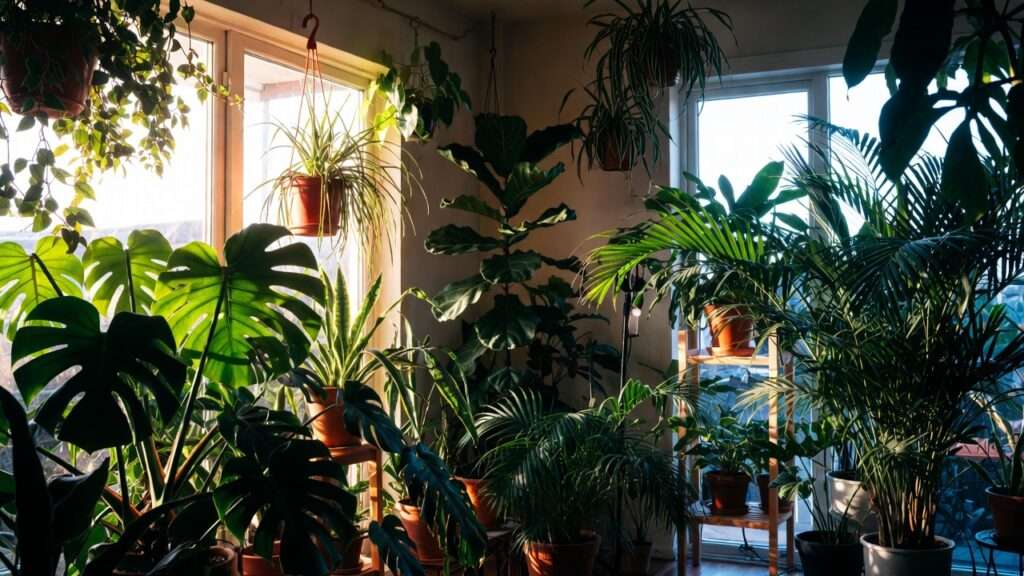
Have you ever walked into your living room in mid-winter and noticed your beloved fiddle leaf fig looking sad—leaves yellowing, stems stretching awkwardly toward the window like it’s desperately reaching for something missing? 😩 Or perhaps in summer, your once-happy calathea suddenly sports crispy, bleached edges after a few hot days? You’re not a bad plant parent; the real culprit is often seasonal changes in sunlight indoors.
Even in your cozy, temperature-controlled home, sunlight isn’t constant. The Earth’s 23.5-degree axial tilt causes the sun’s path to shift dramatically throughout the year—lower and more southern in winter, higher and more overhead in summer. This alters not just the intensity and duration of light entering your windows but also how far it penetrates into your rooms. Houseplants, especially tropical varieties we love indoors (think monstera, pothos, ficus trees, and citrus), are highly attuned to these natural cues. They respond with changes in growth rate, leaf color, and even dormancy periods—often leading to frustration for indoor gardeners.
As someone who’s nurtured hundreds of houseplants through countless seasons (and consulted university extension resources like those from UGA and NCSU along the way), I can tell you these shifts are predictable and manageable. In this in-depth guide, we’ll dive deep into the science behind seasonal light variations, the exact ways they impact your plants, and a practical, month-by-month action plan to adapt your care routine. You’ll learn how to reposition pots, supplement intelligently, avoid common pitfalls, and group plants for success—turning potential problems into thriving greenery year-round. 🌱✨
By implementing these expert strategies, you’ll prevent leggy growth in low-light winters, avoid sunburn in intense summers, and enjoy healthier, more vibrant plants—no matter the calendar date.
Understanding Seasonal Changes in Sunlight Indoors 🌍
The foundation of indoor plant success lies in grasping why light isn’t static indoors.
Why Sunlight Changes Seasonally Indoors The Earth’s tilt means the sun appears lower on the horizon in winter (around December in the Northern Hemisphere), sending rays at a steeper angle through south-facing windows—often penetrating deeper into rooms for longer periods. North, east, and west windows receive far less direct light. In summer (around June), the sun climbs higher overhead, so south-facing windows might get intense but brief midday sun, while east and west exposures capture longer morning or afternoon rays. Day length shrinks to 9-10 hours in winter but stretches to 14-15 in summer, directly affecting total photosynthetic hours.
These aren’t minor tweaks—plants measure photoperiod (day length) and light quality via photoreceptors, triggering hormonal responses like reduced metabolism in shorter days.
How This Differs from Outdoor Plants Outdoors, plants adapt to gradual seasonal shifts with protective mechanisms (e.g., thicker cuticles). Indoors, stable temperatures and humidity mask the light change, but plants still “know” winter is coming via reduced photons. This can cause unexpected dormancy or stress in species that prefer consistent tropical conditions.
Common Misconceptions Many think, “My home is always bright with artificial lights.” Yet overhead bulbs rarely match natural PAR (photosynthetically active radiation) levels or spectrum. Seasonal dips still cause etiolation (leggy, weak stems) even in well-lit homes.
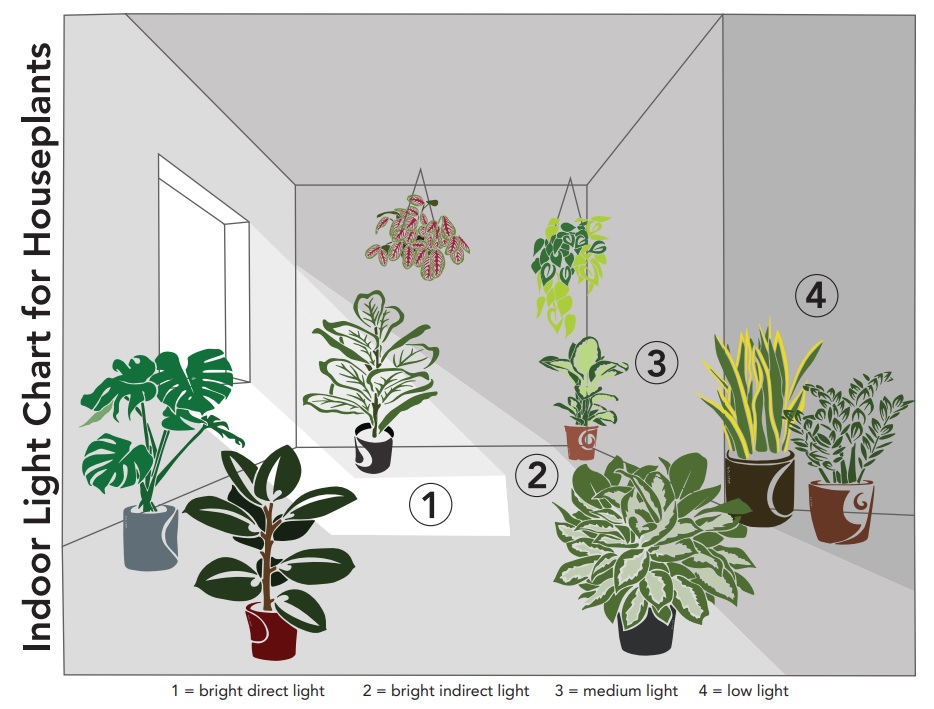
(Indoor light chart showing how window directions create different light zones year-round—super helpful for planning!)
How Seasonal Light Shifts Impact Your Houseplants ⚠️🌱
Light drives photosynthesis—the engine of plant health. When it fluctuates seasonally, symptoms appear quickly.
Winter Low-Light Challenges Shorter days and lower sun angle reduce intensity by 50-70% in many windows. Plants slow growth, enter semi-dormancy, use stored energy, and show:
- Leggy, stretched stems (etiolation) as they reach for light
- Pale or smaller new leaves
- Leaf drop (especially older ones)
- Increased pest vulnerability (e.g., spider mites love stressed plants)
Common victims: fiddle leaf figs, pothos, philodendrons, and snake plants suddenly look “tired.”

(Example of leggy succulent growth from insufficient winter light—classic etiolation!)
Summer High-Intensity Issues Longer, stronger rays cause overheating and photoinhibition. Direct sun scorches leaves (brown, crispy edges or bleached patches), especially on thin-leaved tropicals. Soil dries faster, risking underwatering stress.
Examples: ferns, calatheas, and peace lilies burn easily; succulents and cacti often thrive but others suffer wilting or faded variegation.
:strip_icc()/Sunburned-houseplants-85e812eb7ebe4e9d96eabbbd8f6c09e4.jpg)
(Sunburn on houseplant leaves—yellowing and browning from intense summer rays hitting too directly.)
Spring & Fall Transition Effects Gradual increases spark new growth spurts (exciting!); decreases signal slowdown. Abrupt moves without acclimation cause shock—yellowing or drop.
Signs Your Plants Are Affected – Quick Checklist 🌟 🥀 Excessive leaf drop 🌿 Leggy, stretched stems 🔥 Scorched or bleached leaf tips/edges 😴 Stunted or no new growth 🟡 Pale, small foliage 🐛 Sudden pest outbreaks
Spot these early, and adjustments save your collection!
Seasonal Adjustments: Your Month-by-Month Action Plan 📅✨
The key to year-round success is proactive adaptation. Here’s a detailed, season-specific roadmap based on real-world horticultural best practices (drawing from sources like university extensions and my own trials with over 200 indoor specimens). Adjust based on your exact location, window orientations, and plant types.
Winter (Low Light Season – Typically November to February) ❄️ This is when most indoor plant struggles peak due to reduced intensity and shorter days.
- Reposition Strategically → Move plants as close as possible to the brightest south- or west-facing windows (without touching cold glass). East windows work for low-light lovers, but north-facing spots often need supplementation.
- Rotate Regularly → Give pots a ¼ turn every 7-10 days to prevent one-sided leaning. This promotes symmetrical growth and counters phototropism.
(A simple hand rotation on a lazy Susan-style turntable—easy way to keep growth even!)

(Plants on a sunny windowsill benefiting from regular rotation for balanced foliage.)
- Supplement with Grow Lights → Essential for most homes in winter. Use full-spectrum LEDs (4000-6500K color temperature) for 10-14 hours daily. Position 12-24 inches above foliage, depending on wattage. Timers make it effortless.
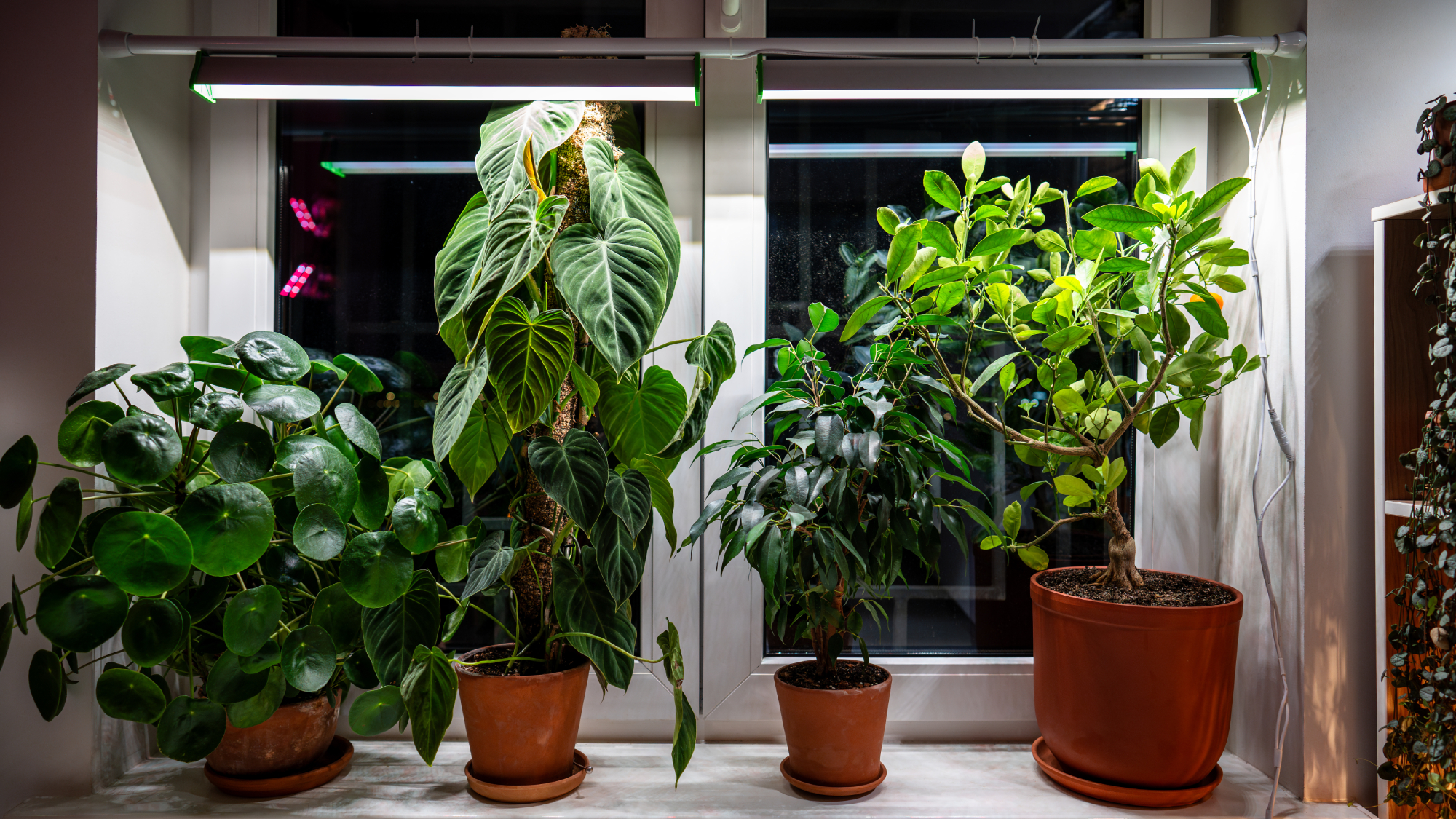
(LED bar grow lights over anthurium and citrus tree—perfect winter boost!)
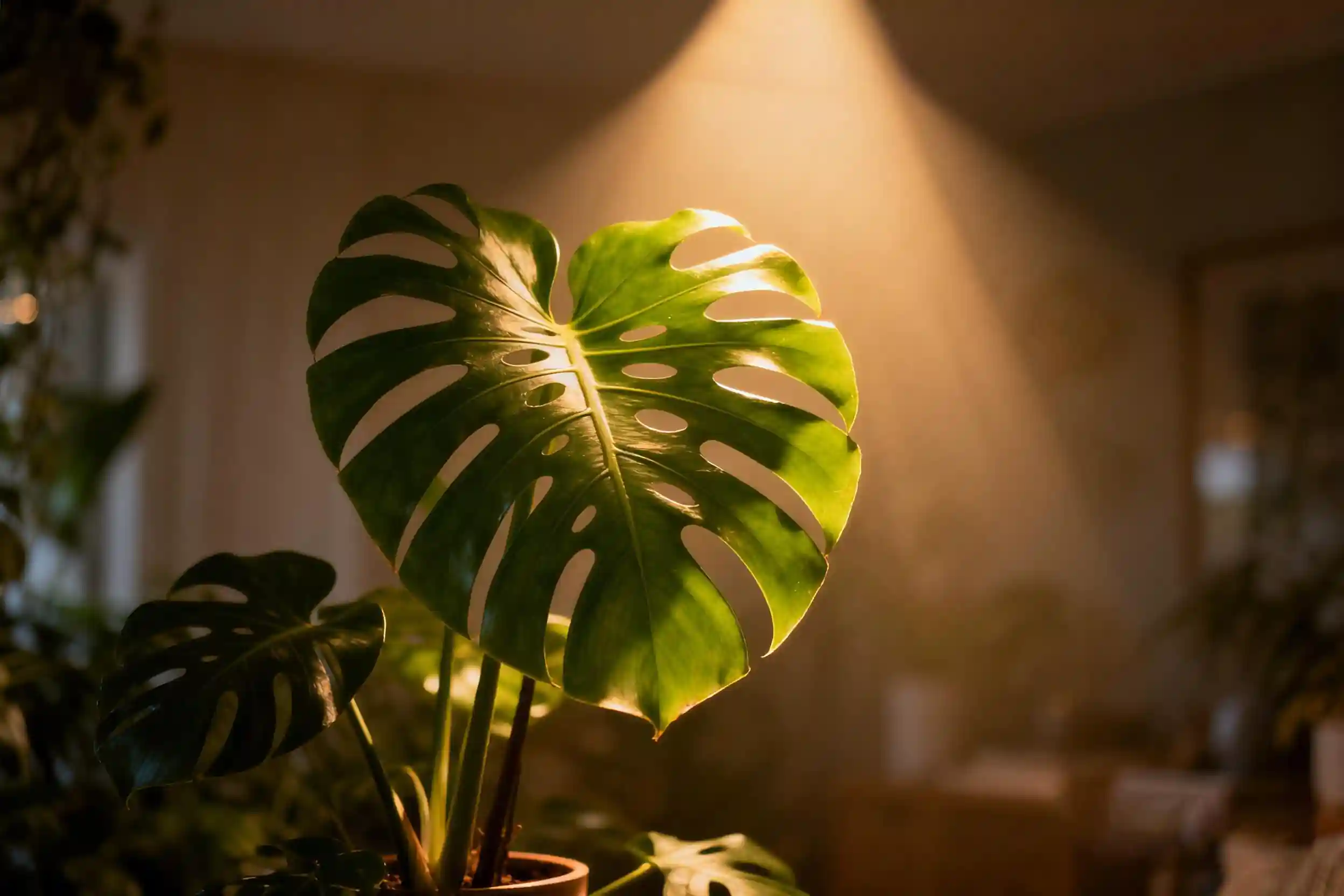
(Monstera thriving under warm grow light—notice the lush, even leaves.)
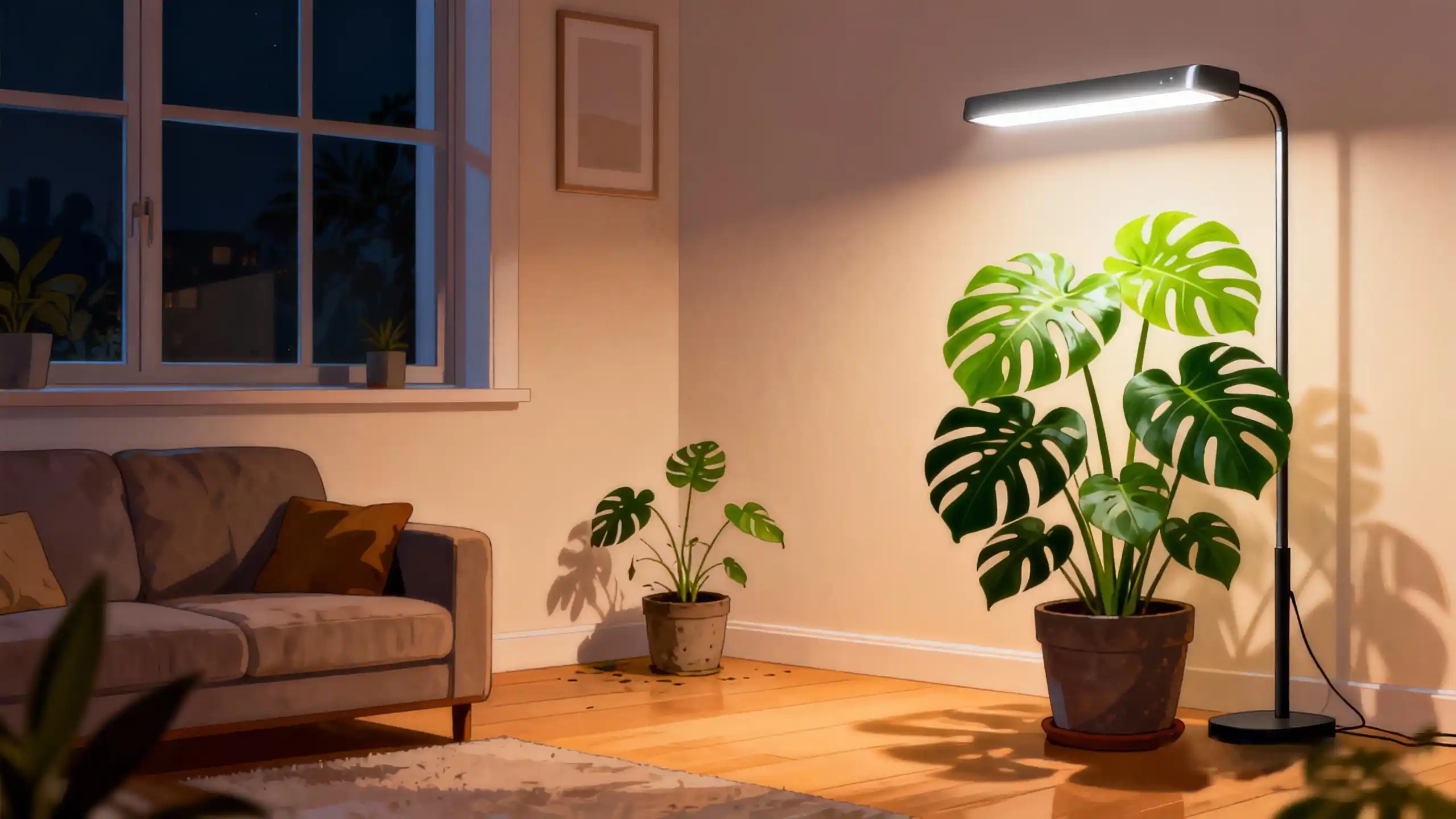
(Before-and-after: leggy Monstera vs. compact, happy one under proper lighting.)
- Adjust Water & Humidity → Water less frequently (let top 2 inches dry out) since transpiration slows. Boost humidity to 50-60% with pebble trays, humidifiers, or grouping plants.
:max_bytes(150000):strip_icc()/SPR-how-to-make-a-pebble-tray-7371481-Hero-C-5d303cbb85744594b59e9839a63d5abd.jpg)
(Classic pebble tray setup—water evaporates slowly, raising local humidity for happy tropicals!)
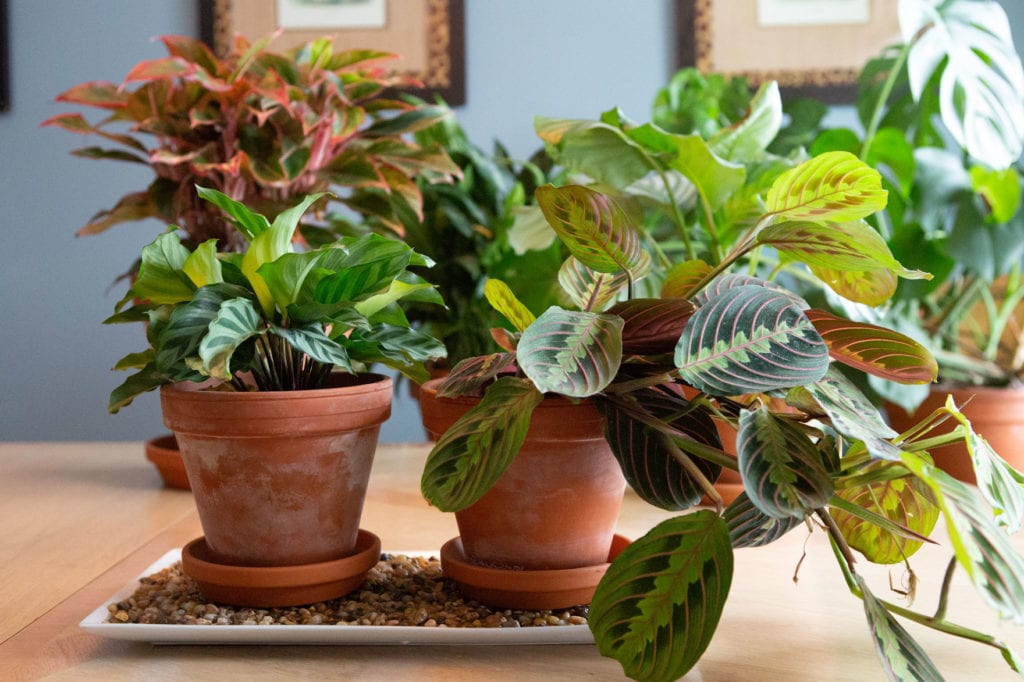
(Multiple plants on a large pebble tray—great for calatheas and ferns in dry winter air.)
- Fertilize Sparingly → Hold off or use ¼ strength every 6-8 weeks only if growth continues.
Spring (Light Increasing – March to May) 🌸 Plants wake up—new growth appears rapidly!
- Gradual Repositioning → Slowly move plants back from intense windows to avoid shock. Start with 1-2 feet farther each week.
- Prune & Propagate → Trim leggy winter growth; root cuttings in water or soil for new plants.
- Resume Full Care → Increase watering as soil dries faster; start regular fertilizing (balanced 10-10-10 or plant-specific formulas) every 4 weeks.
Summer (High Light Season – June to August) ☀️🔥 Long days and high sun angle bring intensity challenges.
- Diffuse Harsh Rays → Install sheer curtains, blinds, or UV-filtering film on south/west windows during peak hours (10 AM-4 PM).
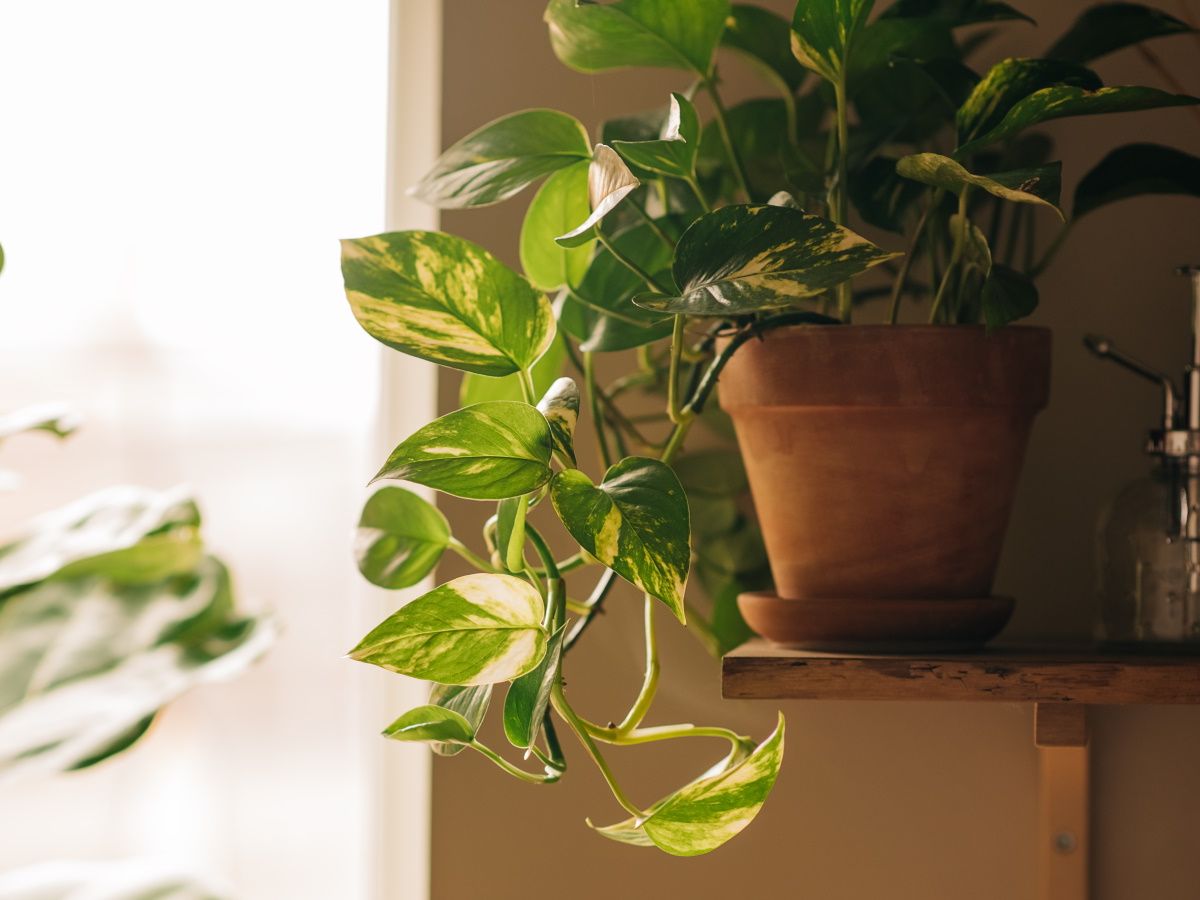
(Sheer curtain softly filtering summer sun—protects variegated pothos from scorching while allowing light through.)
- Monitor & Relocate → Watch for sunburn signs; move sensitive plants (ferns, prayer plants) to east-facing or indirect spots. Tougher ones (succulents, dracaena) can handle more direct exposure.
- Water More Frequently → Check soil daily—evaporation skyrockets. Bottom-water to prevent root rot.
- Outdoor “Vacation” Option → If safe (no pests, gradual acclimation), give hardy plants dappled outdoor shade for a natural boost.
Fall (Light Decreasing – September to October) 🍂 Prepare for the slowdown.
- Clean Windows & Reposition → Wipe glass for maximum transmission; move plants closer to light sources gradually.
- Reduce Care Gradually → Taper watering and fertilizing to ease into dormancy. Inspect for pests that thrive in stress transitions.
Expert Pro Tip ✨ Use a free light meter app (like Photone or Lux Light Meter) to measure foot-candles or PPFD seasonally. Aim for:
- Low-light plants: 75-200 FC
- Medium: 200-500 FC
- High: 500+ FC Track changes month-to-month for data-driven decisions.
Choosing & Grouping Plants by Seasonal Light Needs 🪴
Not all houseplants react the same way to seasonal light swings. Matching plants to your home’s changing light profile—and grouping them smartly—can dramatically reduce stress and maintenance headaches.
Low-Light Tolerant All Year 🌑 These champs barely notice winter dips and rarely burn in summer:
- ZZ plant (Zamioculcas zamiifolia)
- Snake plant (Sansevieria)
- Cast iron plant (Aspidistra)
- Pothos (especially golden or marble queen varieties)
- Peace lily
Place them anywhere from north-facing windows to brighter indirect spots—they forgive inconsistent light.
Medium/Flexible Light Lovers ⚖️ These handle moderate seasonal shifts with minor tweaks:
- Philodendron (heartleaf, Brasil, birkin)
- Monstera deliciosa
- Rubber plant (Ficus elastica)
- Dracaena varieties
- Spider plant
They appreciate being rotated closer to south/west windows in winter and pulled back slightly in summer.
High-Light Demanding Plants ☀️ These crave bright conditions and suffer most from winter shortages:
- Fiddle leaf fig
- Citrus trees (lemon, lime, calamondin indoors)
- Bird of paradise
- Succulents & cacti collections
- Croton
- Schefflera (umbrella tree)
In winter, prioritize the brightest south-facing windows + grow lights. In summer, use sheer diffusion to prevent scorching.
Smart Grouping for Microclimates 🤝 Group plants with similar needs:
- Create a “tropical humidity corner” near an east window with calatheas, ferns, and prayer plants—share moisture from pebble trays or a small humidifier.
- Put high-light sun-worshippers together on a bright south sill.
- Cluster low-light forgiving plants in dimmer corners or hallways.
This not only makes care easier but also raises local humidity and creates beautiful, cohesive displays. Bonus: plants transpire more collectively, helping each other in dry seasons.
(A cozy grouping of low-light plants on a north-facing shelf—notice how they look lush even without direct sun!)
Supplemental Lighting Solutions for Any Season 💡
When natural light falls short (especially winter in northern latitudes or homes with small/shaded windows), grow lights become your secret weapon.
When to Use Grow Lights
- Winter days under 10 hours or measured light below 100-200 FC for most houseplants
- North-facing apartments
- Rooms with heavy overhangs, trees blocking windows, or deep interiors
Best Types of Grow Lights
- Full-spectrum LED panels/bars — Most efficient and closest to sunlight (4000-6500K). Great for shelves or large collections.
- Clip-on or gooseneck LEDs — Ideal for single plants or small groups; adjustable height and angle.
- T5 fluorescent tubes (older but still effective) — Good broad coverage for plant stands.
Avoid cheap “pink/purple” grow bulbs—they’re less effective for foliage plants.
Placement, Duration & Timer Tips
- Hang 12–24 inches above canopy (closer for seedlings, farther for mature leaves to avoid burn).
- Run 10–14 hours in winter; 8–12 in shoulder seasons.
- Use plug-in timers for consistency—plants love routine!
- Combine with natural light: position so grow lights supplement (not replace) window light for best spectrum balance.
Pro tip: Start with 10 hours and watch plant response. New compact growth = success. Stretching = add time or lower fixture.
(Modern full-spectrum LED grow light setup over a shelf of tropicals—clean, energy-efficient, and effective year-round.)
Additional Care Ties to Light Changes 🌡️💧
Light doesn’t act alone—it influences every aspect of care.
- Watering Adjustments → Low light = slower transpiration → water less often (check soil moisture 2–3 inches deep). High light = faster drying → check more frequently, especially in summer.
- Humidity & Temperature Synergies → Winter heating dries air → pair low-light-tolerant humidity lovers together. Summer heat + intense light = higher watering + occasional misting. Ideal range: 40–60% humidity for most houseplants.
- Pest & Disease Risks → Stressed plants from light extremes attract spider mites (dry winter), fungus gnats (overwatering in low light), or powdery mildew (poor airflow + high humidity). Inspect weekly and treat early with neem oil or insecticidal soap.
Common Mistakes to Avoid 🚫
Even experienced growers slip up—here are the top pitfalls tied to seasonal light:
- Ignoring window direction changes → Plants lean dramatically toward the brightest source.
- Overwatering in low light → Roots rot quickly when soil stays wet too long.
- Skipping rotation → One-sided growth looks lopsided and weakens stems.
- Sudden moves without acclimation → Leaf shock and drop (always adjust gradually over 7–14 days).
- Using regular household bulbs → They lack sufficient blue/red wavelengths for photosynthesis.
- Forgetting to clean windows → Dust blocks up to 20–30% of incoming light!
FAQs: Seasonal Changes in Sunlight Indoors ❓
Do houseplants really notice seasonal light changes indoors? Yes! Even with stable temperature, most tropical houseplants are photoperiod-sensitive and respond to shorter days with slower growth or dormancy.
How do I know if my plant needs more winter light? Look for leggy new growth, smaller/paler leaves, excessive leaf drop, or no new growth for months.
Can grow lights replace natural sunlight completely? They can come very close with high-quality full-spectrum LEDs run long enough hours, but combining both usually gives the best results (natural light has a broader, dynamic spectrum).
What if I only have north-facing windows? Choose low- to medium-light plants (ZZ, pothos, snake plant, peace lily) and rely on supplemental grow lights in winter for anything more demanding.
Should I move all plants outdoors in summer? Only hardy ones—and acclimate slowly over 7–10 days to avoid sunburn. Most tropical houseplants prefer dappled shade outdoors rather than full sun.
How often should I rotate my plants? Every 7–14 days is ideal—especially in seasons when light direction changes noticeably.
Do curtains help in summer? Absolutely! Sheer or semi-sheer curtains diffuse harsh midday rays while still letting plenty of light through.
Is etiolation permanent? Not fully—the stretched parts stay stretched, but new growth under better light will be compact and healthy. Prune leggy sections to encourage bushier regrowth.
Conclusion 🌟
Seasonal changes in sunlight indoors are one of the most overlooked yet powerful factors influencing the health and appearance of your houseplants. The good news? Once you understand the predictable rhythm of the sun’s path—lower and gentler in winter, higher and fiercer in summer—you gain the ability to stay one step ahead of your plants’ needs.
Here’s a quick recap of the most impactful takeaways from this guide:
- Observe and anticipate → Watch for early warning signs like leggy growth, pale leaves, leaf drop, or scorched tips. These are your plants’ way of saying the light has shifted.
- Reposition proactively → Move pots closer to the brightest windows in winter, pull them back or diffuse light in summer, and rotate regularly for even growth.
- Supplement intelligently → Full-spectrum grow lights are a game-changer during the darker months—especially for high-light lovers like fiddle leaf figs, citrus trees, and monsteras.
- Adjust everything else accordingly → Water less in low light, more in high light; boost humidity in dry winters; fertilize lightly or not at all during dormancy periods.
- Group strategically → Cluster plants with similar light and humidity preferences to create supportive microclimates that make care easier and more effective.
- Avoid the big mistakes → No sudden moves, no overwatering in winter, no ignoring dust on windows or skipping rotation.
By making small, consistent adjustments throughout the year, you’ll prevent the most common seasonal disappointments—leggy, stretched-out stems in winter; crispy, sunburned leaves in summer—and instead enjoy lush, balanced, vibrant growth season after season.
Your plants are remarkably resilient. They just need you to meet them where the light (literally) is. Start with one simple change this week—maybe rotate a few pots, wipe down a window, or set up a grow light timer—and watch how quickly they respond with fresh new leaves and stronger stems. 🌱✨











