
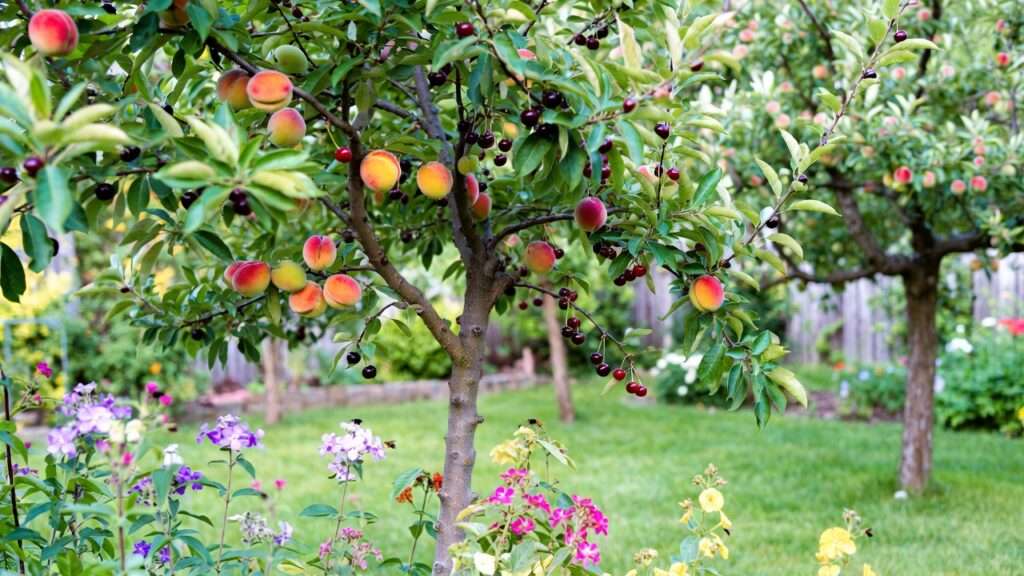
Imagine stepping into your backyard, plucking a perfectly ripe peach or a handful of sweet cherries — all from just one single tree. No need for a second variety, no worrying about compatible pollinators nearby, and no disappointing empty branches after a stunning spring bloom.
If you’ve ever planted a fruit tree only to harvest nothing because it needed a “pollination partner,” you’re not alone. Many home gardeners face this exact frustration, especially in small urban yards, patios, or when space limits you to solo plantings.
That’s where self-pollinating fruit trees (also known as self-fertile or self-fruitful varieties) become game-changers. These trees have flowers with both male and female parts, allowing them to set fruit reliably with their own pollen — often with help from bees 🐝 or wind.
In this in-depth guide, we’ll explain self-pollination clearly, highlight the best reliable varieties backed by university extension resources and grower experience, share pro tips to boost your yields, and help you avoid pitfalls. Whether you’re a beginner dreaming of homegrown fruit or an experienced gardener optimizing limited space, you’ll find everything needed for success. Let’s turn your yard into a productive mini-orchard! 🍑🌳
(Word count so far: ~320)
What Does “Self-Pollinating” (or Self-Fertile) Really Mean?
🤔 The terms “self-pollinating,” “self-fertile,” and “self-fruitful” are often used interchangeably in gardening, but they describe trees capable of producing fruit without cross-pollination from a different variety.
Here’s the breakdown:
- True self-pollination occurs when pollen from the same flower (or flowers on the same tree) fertilizes the ovule, leading to fruit set. This happens in “perfect” flowers containing both stamens (male pollen producers) and pistils (female parts).
- Partial self-fertility means the tree can set some fruit alone, but yields are significantly higher (often 20-50% more) with cross-pollination from a compatible variety.
- Self-sterile / self-unfruitful trees require pollen from another variety — common in many sweet cherries, apples, pears, and Japanese plums.
Important nuance: Even fully self-pollinating trees depend on pollinators like honeybees, bumblebees, or solitary bees for efficient pollen transfer within the flower. In poor weather or low-insect areas, hand-pollination with a soft brush can help. Wind can assist in some cases, but insects are the MVPs for maximum production!
From horticultural research (e.g., university extensions like Illinois, Virginia Tech, and others), most stone fruits like peaches, nectarines, apricots, and sour cherries are reliably self-fruitful, while pome fruits (apples/pears) vary by cultivar.
:max_bytes(150000):strip_icc()/ms-lars-peach-360d67a20e2c40a88f32ee46cf118b31.jpg)
(These show lush self-pollinating peach trees loaded with fruit — proof one tree is enough! 🍑)
Why Choose Self-Pollinating Fruit Trees? (The Real-Life Benefits)
Choosing self-fertile varieties solves common home-gardening headaches:
- Limited space — Ideal for small backyards, balconies, containers, or urban lots where planting multiples isn’t feasible 🏡.
- Guaranteed results — Avoid the “lots of flowers, no fruit” disappointment that plagues beginners.
- Simpler planning — No need to research bloom overlap or compatible pollinizers.
- Faster harvests — Many self-fertile trees (especially dwarfs) fruit earlier in life.
- Low-maintenance appeal — Perfect for busy gardeners wanting beauty + bounty without complex orchard setups.
Bonus: In regions with erratic springs (frosts, wet weather reducing bees), self-fertile trees often outperform partial ones. They’re also great for wildlife gardens, as a single productive tree attracts more pollinators overall.
Top Self-Pollinating Fruit Trees: The Ultimate List
Here’s a curated, comprehensive selection of the most dependable self-pollinating varieties for home growers. Prioritized by reliability, availability, and performance across USDA zones — drawn from extension services, nursery data, and long-term grower feedback.
Stone Fruits (Drupe Family) – Mostly Self-Pollinating Winners! 🍑
Stone fruits dominate the self-fertile category — nearly all peaches, nectarines, apricots, and sour cherries set excellent crops solo.
- Peaches & Nectarines 🌸 Almost universally self-fertile. Top picks:
- Elberta (classic large, juicy freestone; zones 5-9)
- Redhaven or Contender (early, disease-resistant)
- Reliance (super cold-hardy to zone 4)
- Dwarf varieties like Belle of Georgia thrive in pots!

- Apricots 🌼 Most are fully self-pollinating. Favorites:
- Moorpark, Goldcot, Harcot (reliable, flavorful; zones 5-8)
- Early bloomers mean first harvests of the season.
- Sour (Tart/Pie) Cherries 🍒 Fully self-fertile and compact.
- Montmorency (classic for pies/jams)
- North Star (dwarf, heavy producer)
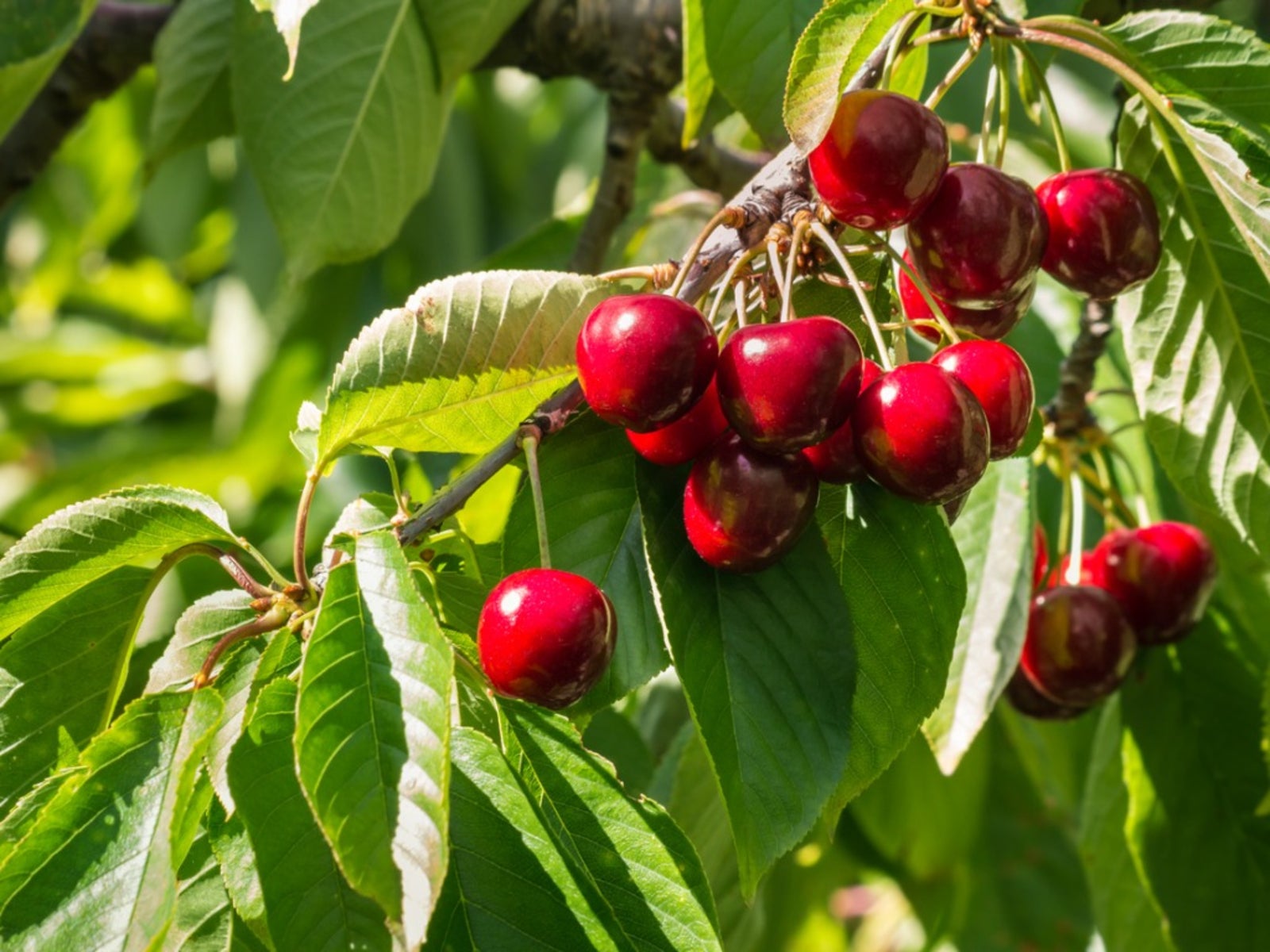
- Sweet Cherries 🍒 Most need partners, but these standouts are self-fertile:
- Stella (dark red, sweet; zones 5-9; semi-dwarf options perfect for small spaces)
- Lapins, Sweetheart, Compact Stella
Plums & Related
- European Plums (Prunus domestica) 🍑 Often self-pollinating.
- Stanley (prune-type, excellent for drying)
- Italian Prune, Empress (cold-hardy, productive)
Japanese plums usually need cross-pollination — opt for European types for solo success.
Pome Fruits (Apple & Pear Family)
- Apples 🍎 Many are partially self-fertile; choose fully reliable ones:
- Golden Delicious (classic, sweet; boosts others too)
- Granny Smith, Gala, Honeycrisp (in suitable climates)
- Liberty, Braeburn, Empire (disease-resistant)
For guaranteed solo crops, look for Falstaff or Scrumptious.
:max_bytes(150000):strip_icc()/dwarf-fruit-trees-4588521-01-5dd100fb457a4bc8b3491fb7c54ad3b3.jpg)
(Thriving dwarf apple trees in a home setting — space-efficient and fruitful! 🍎)
- Pears 🍐 European varieties like Bartlett or Conference are partially self-fertile (better with a partner). Asian pears often need cross-pollination.
Other Fantastic Self-Pollinating Options
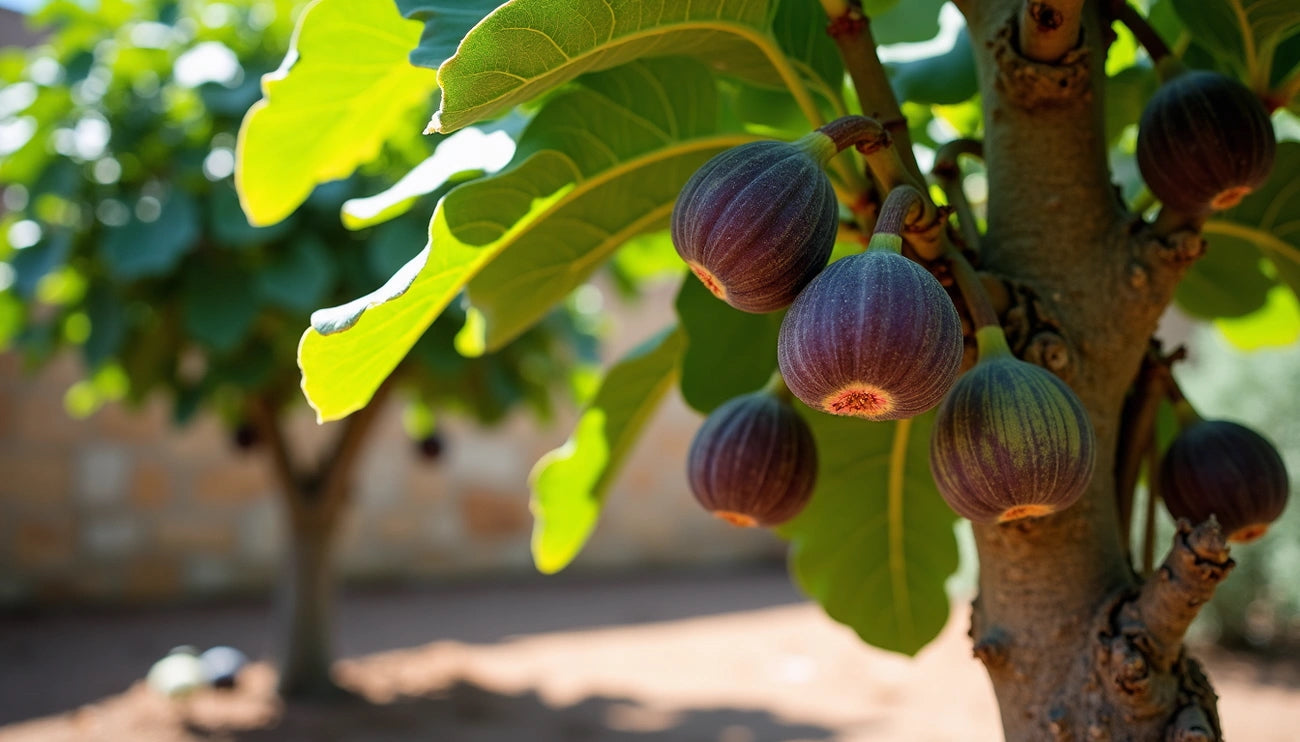
- Figs 🌿 No pollination required (persistent/common types).
- Varieties like Brown Turkey, Celeste — drought-tolerant, container-friendly.
- Persimmons (American & Asian) 🍊 Most self-fertile; low-maintenance gems.
- Citrus (e.g., Meyer Lemon) 🍋 Self-pollinating; ideal for pots in zones 9+ or indoors.
Pro tip: Always check variety tags or nursery info — self-fertility can vary slightly by region/climate!
How to Maximize Fruit Set on Self-Pollinating Trees Even the most reliably self-fertile varieties produce better with a little extra care. Here are proven, expert-recommended strategies to turn good crops into abundant ones.
- Attract and support pollinators 🐝 Bees are still essential for efficient pollen movement — even inside the same flower. Plant companion flowers like lavender, borage, marigolds, clover, or bee balm nearby to draw them in. Avoid spraying insecticides during bloom time. If bee activity is low (rainy/cold springs), gently hand-pollinate by dabbing flowers with a soft brush or cotton swab.

(Close-ups of bees hard at work pollinating peach and apple blossoms — nature’s perfect helpers! 🐝)
- Ensure full sun exposure ☀️ Most fruit trees need 6–8+ hours of direct sunlight daily for strong flowering and fruit development. In partial shade, blooms may be sparse or fruit set poor — even on self-fertile trees.
- Plant in well-drained, fertile soil 🌱 Amend heavy clay or sandy soils with plenty of organic compost. Aim for slightly acidic to neutral pH (6.0–7.0 for most). Good drainage prevents root rot, a common killer of young trees.
- Prune for structure, light, and air flow ✂️ Use open-center (vase) shape for stone fruits or modified central leader for apples/pears. Remove crossing branches, suckers, and dead wood annually in late winter/early spring. This improves light penetration and reduces disease.

(Beautiful pruned dwarf apple tree thriving in a backyard — open structure means more fruit! 🌳)
- Thin fruit early 🍑 Nature often sets way more fruit than the tree can support. Thin young fruitlets (when marble-sized) to 6–8 inches apart on peaches/nectarines or 4–6 inches on apples. This channels energy into fewer, larger, tastier fruits and prevents branch breakage.

(Young peach fruitlets ready for thinning — do this for bigger, better peaches! 🍑)
- Fertilize smartly Apply balanced organic fertilizer (e.g., 10-10-10 or compost) in early spring. Avoid high-nitrogen feeds after mid-summer — they promote leafy growth over fruit. Test soil every 2–3 years for precise needs.
- Water consistently 💧 Deep, infrequent watering (1–2 inches per week during dry spells) encourages deep roots. Mulch around the base to retain moisture and suppress weeds.
Common Mistakes to Avoid with Self-Pollinating Fruit Trees
🚫 Assuming all varieties in a species are fully self-fertile (e.g., many sweet cherries and Japanese plums still need partners — always double-check!). 🚫 Ignoring local chill hours — peaches/apricots need 400–1,000 winter hours below 45°F (7°C) for proper dormancy and bloom; mismatched varieties may flower poorly. 🚫 Planting too deep — Keep the graft union 2–4 inches above soil to prevent rot. 🚫 Skipping protection from late frosts — Use row covers or site trees on slopes for cold-air drainage in zone 5–7. 🚫 Over-fertilizing or over-watering — Leads to lush foliage but weak fruit set. 🚫 Neglecting pest/disease scouting — Peach leaf curl, brown rot, aphids, and codling moth can ruin crops fast.
FAQs About Self-Pollinating Fruit Trees
Q: Can self-pollinating trees produce even MORE fruit with a second tree nearby? A: Absolutely — especially partially self-fertile ones like many apples or European pears. Cross-pollination often increases yield by 20–50% and can improve fruit size/quality. If space allows, pair them for bonus harvests! 🌟
Q: Are dwarf or columnar fruit trees usually self-pollinating? A: Yes — many popular dwarf peaches, nectarines, Stella cherries, and some apples (e.g., Golden Delicious on dwarf rootstock) are self-fertile and perfect for patios/containers.

(Dwarf peach and citrus in pots — proof you can grow fruit anywhere! 🪴)
Q: What should I do if my tree flowers beautifully but sets little or no fruit? A: First, confirm it’s truly self-fertile. Then check: pollinator activity, late frosts killing blooms, poor weather during flowering, nutrient imbalances, over/under-watering, or insufficient chill hours. Hand-pollinate next season as a test.
Q: What’s the easiest self-pollinating fruit tree for complete beginners? A: A dwarf peach (like Reliance or Contender) or sour cherry (Montmorency) — forgiving, productive, and quick to fruit (often year 2–3 after planting). Figs are ultra-easy in warmer zones too!
Q: Do self-pollinating trees work well in pots long-term? A: Yes! Choose dwarf or semi-dwarf rootstocks, use large containers (15–25 gallons), refresh soil every 2–3 years, and fertilize regularly. Meyer lemons, dwarf peaches, and figs excel this way.
Final Thoughts & Next Steps
Self-pollinating fruit trees remove the biggest barrier to home fruit growing: the need for multiple trees. With reliable varieties like peaches, sour cherries, Stella sweet cherries, European plums, figs, and select apples, you can enjoy fresh, homegrown bounty from a single plant — even in tiny spaces. 🍒🍑
Start by checking your USDA hardiness zone (or local climate equivalent), pick a sunny, well-drained spot, buy from a reputable nursery, and follow the care tips above. In just a few seasons, you’ll be harvesting your own delicious fruit!
Have a favorite self-fertile variety or a question about your specific conditions? Drop it in the comments — happy to share more tailored advice based on years of growing and helping gardeners succeed.
Happy planting and harvesting! 🌳😊











