
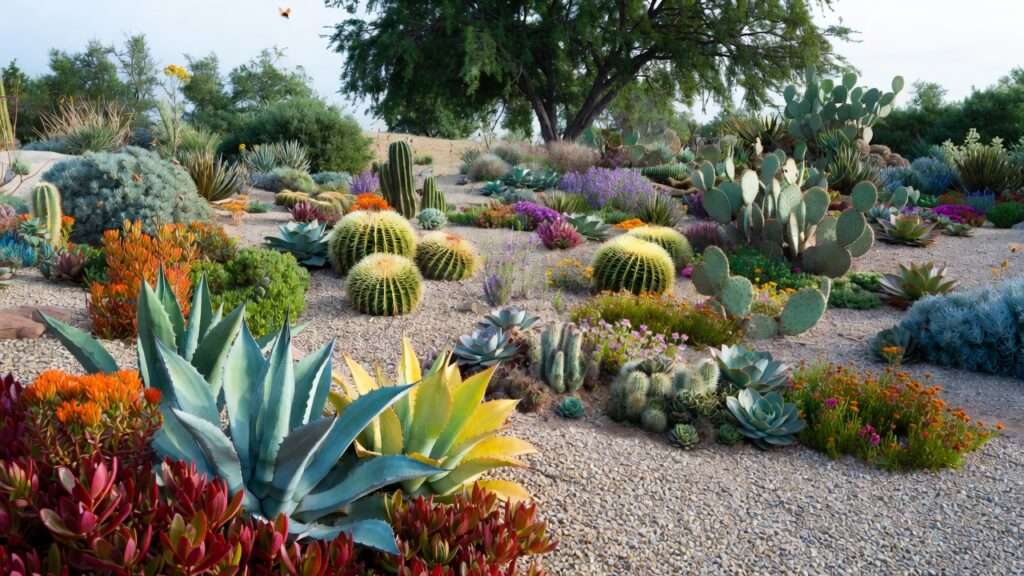
Imagine stepping into your backyard on a scorching summer afternoon: vibrant colors pop against textured gravel, pollinators dance around hardy blooms, a shady tree offers cool relief, and your water bill remains surprisingly low. No more brown patches, no endless mowing, and no guilt over wasted resources. This isn’t a fantasy—it’s the reality of thoughtful semi-arid climate landscaping suggestions that embrace xeriscaping principles to create beautiful, resilient outdoor spaces. 🌿
In semi-arid regions—where annual rainfall hovers between 10–20 inches, summers blaze hot, winters can dip cold, and evaporation rates soar—traditional lawns and thirsty exotics quickly become high-maintenance headaches. Water restrictions tighten, bills climb, and yards suffer. But with smart, drought-tolerant designs, you can slash outdoor water use by 50–75% (sometimes even more, with studies showing up to 80% reductions in targeted conversions), support local wildlife, boost property value, and enjoy a low-effort paradise year-round. 💧
As a plant and tree care specialist with extensive experience in dry-climate gardening, I’ve helped countless homeowners transform water-guzzling yards into thriving, eco-friendly havens. Drawing from proven guidelines like those from Denver Water and Colorado State University Extension—pioneers in xeriscaping since the 1980s—this comprehensive guide goes beyond basic tips. You’ll get detailed planning strategies, plant recommendations (including natives and adapted varieties), real design ideas, step-by-step implementation, mistake avoidance, and maintenance calendars. Whether you’re starting fresh or revamping an existing space, these semi-arid climate landscaping suggestions deliver genuine solutions for beauty that lasts with minimal water. Ready to create your own stunning, sustainable yard? Let’s dive in! ✨
Understanding Semi-Arid Climates: Why Standard Landscaping Fails (and How Xeriscaping Wins)
Semi-arid climates feature low precipitation, intense sun, high winds, and often alkaline or clay-heavy soils that drain poorly or compact easily. Evapotranspiration rates exceed rainfall most of the year, making conventional turfgrass and non-adapted plants unsustainable—they demand frequent, deep watering just to survive, leading to runoff, waste, and weak root systems. 🌞
The good news? Xeriscaping (from the Greek “xeros” meaning dry) flips the script. This approach uses seven core principles to design landscapes that work with nature, not against it. Benefits include:
- Water savings: 50–75% less outdoor use on average, with some conversions saving 55+ gallons per square foot of replaced turf annually.
- Lower costs: Reduced bills, less mowing/fertilizing, and fewer repairs.
- Environmental wins: Supports pollinators, birds, and native ecosystems while preventing soil erosion.
- Year-round appeal: Texture, color, and structure thrive through seasons.
By focusing on drought-tolerant plants, efficient watering, and smart design, your yard becomes resilient to drought, heat waves, and restrictions—perfect for today’s changing climate. 🌍
The 7 Core Principles of Xeriscaping for Semi-Arid Success
These foundational principles, refined by experts at Denver Water and Colorado State University, form the backbone of every successful dry-climate landscape:
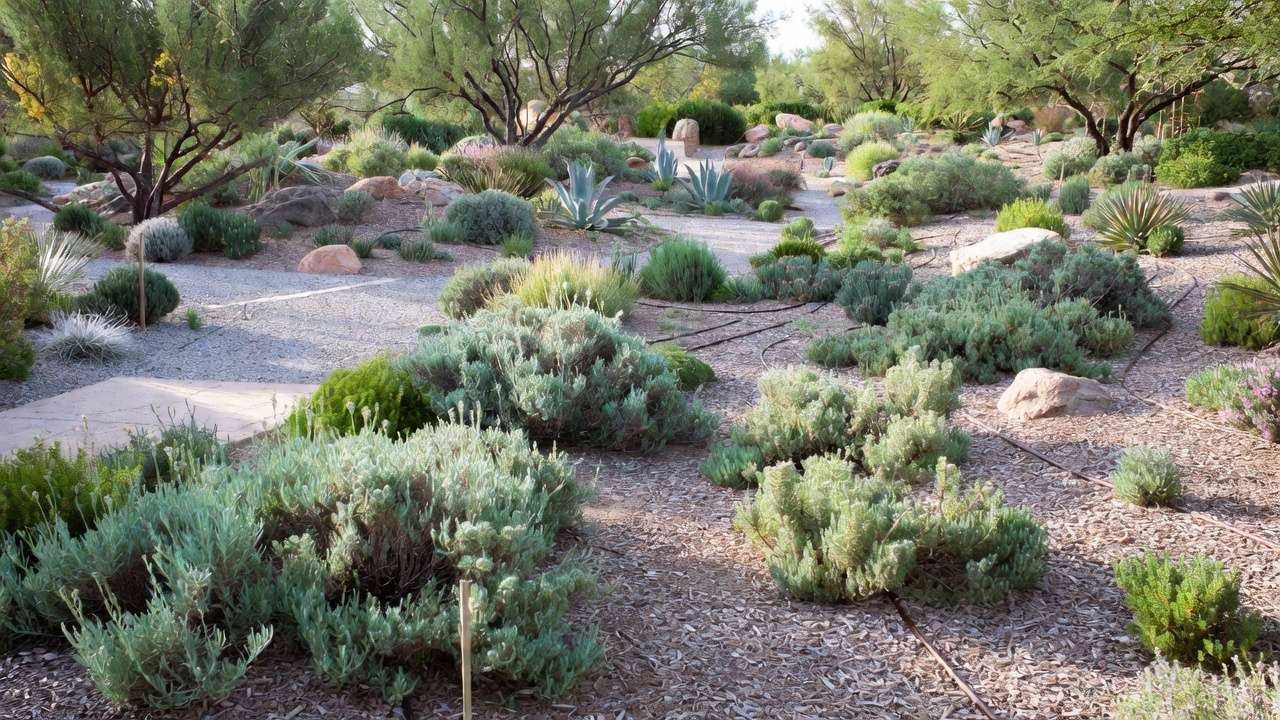
1. Thoughtful Planning & Design Start with a site analysis: Map sun exposure, shade patterns, slopes, wind directions, and soil type (get a simple soil test!). Create functional zones—entertainment areas near the house, utility spaces hidden, wildlife-friendly pockets farther out. Sketch hydrozones: group plants by water needs to avoid over- or under-watering. Pro tip: Incorporate hardscaping like paths, patios, and boulders early for structure and reduced planted area. 📏
2. Soil Improvement – The Hidden Hero Semi-arid soils often lack organic matter. Amend with compost to boost water retention (up to 20% more) and drainage. Aim for 2–4 inches worked into the top 6–12 inches. Avoid tilling too deeply to prevent compaction. Healthy soil means deeper roots and less supplemental water long-term. 🪴
3. Practical Turf Alternatives Limit grass to small, high-use spots (or eliminate it!). Replace with native groundcovers like blue grama grass, buffalo grass, or creeping thyme; microclover mixes; or gravel/meadow blends. These options need mowing far less and use a fraction of the water. 🌾
4. Efficient Irrigation Systems Ditch overhead sprinklers—they lose 30–50% to evaporation. Install drip irrigation, soaker hoses, or micro-sprayers targeted at roots. Add smart controllers that adjust based on weather. Water deeply but infrequently to encourage deep roots—once established, many plants need little to none. 💦
5. Right Plant, Right Place (Hydrozoning) Match plants to microclimates: high-water near the house, moderate in transitions, very low farther out. Prioritize natives or regionally adapted varieties for best performance and pollinator support. 🌸
6. Mulching Magic Apply 2–4 inches of organic (bark, wood chips) or inorganic (gravel, decomposed granite) mulch. It cuts evaporation by up to 70%, suppresses weeds, moderates soil temperature, and adds finished look. Replenish annually. 🪨
7. Appropriate Maintenance Focus on establishment (first 1–2 years: regular deep watering). Then, prune selectively, monitor for pests (fewer in dry gardens!), and adjust seasonally. Low-input beauty! ✂️
Master these, and your landscape thrives sustainably.
Best Drought-Tolerant Plants for Semi-Arid Landscapes
Selecting the right plants is key—here’s a curated list of reliable performers, emphasizing natives/adapted species for beauty, function, and low care:
Iconic Succulents & Cacti 🌵
- Agave (e.g., Agave americana or parryi): Architectural rosettes, dramatic spines; full sun, minimal water once established.
- Yucca (e.g., Yucca filamentosa or elata): Sword-like leaves, tall flower spikes; tough and evergreen.
- Sedum and Sempervivum: Ground-hugging, colorful varieties for rock gardens.
Flowering Perennials & Shrubs
- Lavender (Lavandula angustifolia): Fragrant purple spikes, silver foliage; pollinator favorite.
- Russian Sage (Perovskia atriplicifolia): Airy blue-purple blooms, aromatic; thrives in heat.
- Salvia (e.g., greggii or leucantha): Long-blooming reds/purples; hummingbird magnets.
- Penstemon: Tubular flowers in vibrant hues; native-adapted winners.
Ornamental Grasses & Groundcovers
- Blue Grama (Bouteloua gracilis): Native, fine texture, drought-proof turf alternative.
- Fountain Grass (Pennisetum): Graceful plumes; some varieties invasive—choose carefully.
- Ice Plant (Delosperma): Succulent groundcover with dazzling daisy-like flowers.
Trees for Shade & Structure
- Desert Willow (Chilopsis linearis): Trumpet blooms, willow-like leaves; fast-growing shade.
- Palo Verde (Parkinsonia): Green bark photosynthesizes, yellow spring flowers.
- Mesquite (Prosopis): Tough, nitrogen-fixing; provides dappled shade.
Herbs & Edibles
- Rosemary, Thyme, Oregano: Fragrant, culinary, ultra-drought-tolerant.
Choose based on your USDA zone, soil, and sun—start with natives for easiest success! 🌱
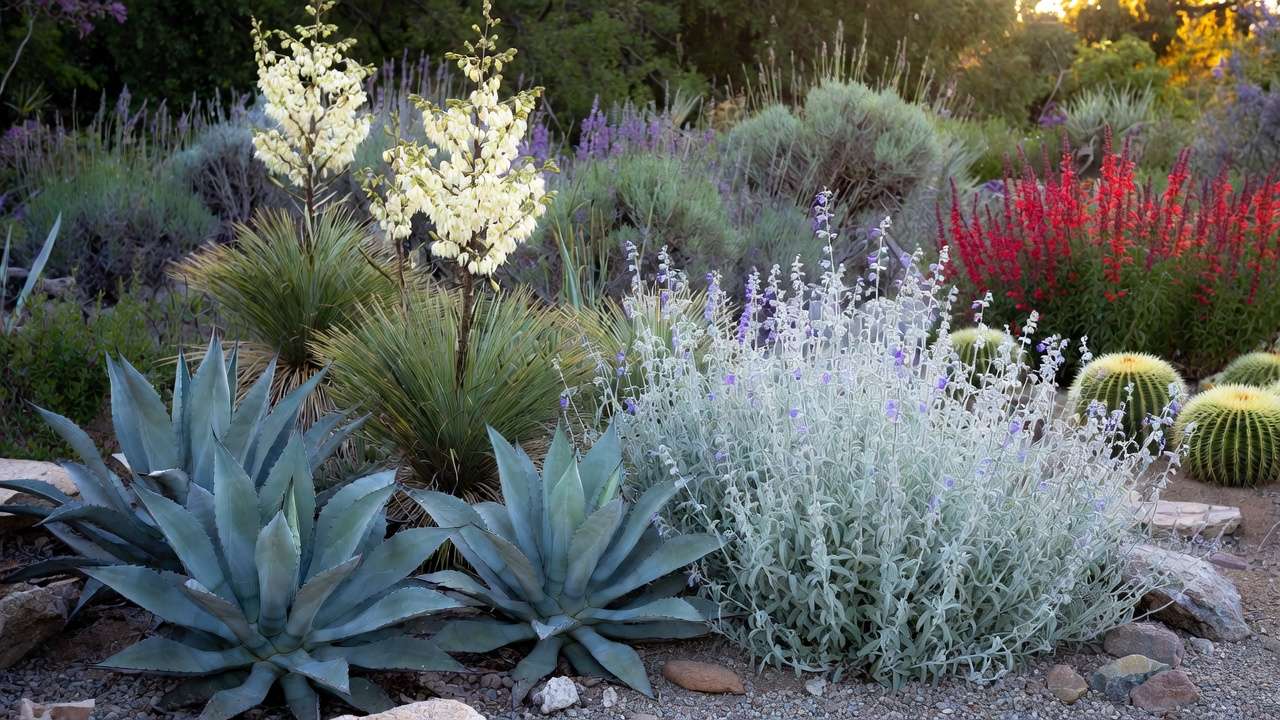
Stunning Design Ideas & Layouts to Inspire You 🏡
Now that you know the principles and plants, let’s bring it all together with real-world design inspiration. These ideas prove semi-arid landscapes can be lush, modern, colorful, or minimalist—tailored to your style and space.
Front Yard Makeovers Transform your curb appeal with low-water elegance. Use gravel or decomposed granite as the base for easy maintenance and excellent drainage. Plant focal points like large agave or yucca for architectural drama, then layer in colorful perennials like salvia and penstemon along pathways. Add boulders for natural texture and a welcoming entry path.
Here are some inspiring examples:

These show how succulents, cacti, and strategic hardscaping create welcoming, drought-proof entrances that impress without high water demands. 🌵
Backyard Oasis Vibes Create a relaxing retreat with shade trees like desert willow or mesquite for dappled light and cooling. Surround a patio or fire pit with gravel, stepping stones, and clusters of agave, yucca, and ornamental grasses. Incorporate a small water feature (drip or recirculating) if desired—many use minimal water.
Modern minimalist designs shine here:
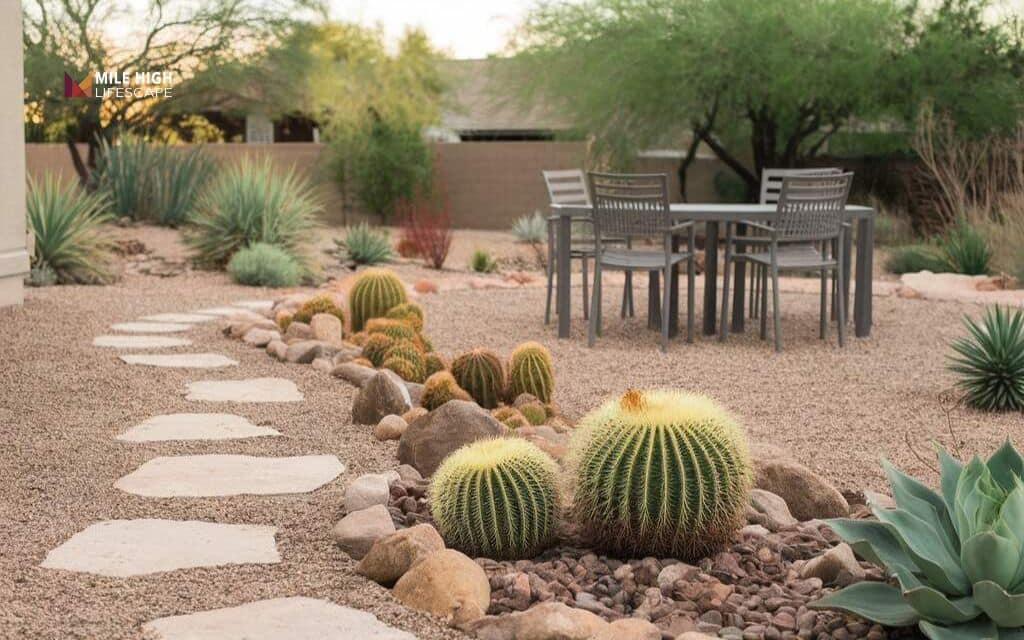
Clean lines, strategic boulders, and bold cacti make for serene, low-maintenance outdoor living. 🪴
Colorful & Lush (Yes, Possible!) Layer plants for vibrant, pollinator-friendly displays. Russian sage provides airy purple clouds, paired with bright salvia reds, lavender silvers, and penstemon tubes. Add blooming groundcovers and grasses for movement and texture year-round.
These flowering combos bring pops of color that thrive in heat and dry conditions. 🌸
Trees for Shade & Structure A well-placed desert willow adds graceful form and trumpet-shaped blooms.
Plant it as a focal point or near seating for natural shade without heavy watering. 🌳
Small Space / Courtyard Solutions Even tiny yards work wonders with containers, vertical planters, or wall-mounted succulents. Use potted rosemary, thyme, and agave for fragrance and interest, plus gravel mulch to tie it together. Perfect for balconies, patios, or urban lots.
These designs show xeriscaping adapts to any size or aesthetic—proving beauty and sustainability go hand in hand.
Step-by-Step: How to Create Your Semi-Arid Landscape
Follow this practical roadmap for success:
- Site Analysis & Sketch Walk your yard noting sun/shade, slopes, soil, views, and usage needs. Draw a rough plan with zones and hydrozones. 📍
- Soil Preparation Test soil pH and texture. Add 2–4 inches compost; till lightly into top 8–12 inches. Level and remove weeds. 🧑🌾
- Plant Selection & Hydrozoning Choose from the recommended list. Group high-water plants near the house, moderate in middle zones, low-water at edges. Buy natives/adapted varieties from local nurseries.
- Install Hardscape & Mulch Lay paths, patios, boulders first. Apply 3-inch mulch layer (gravel for modern look, organic for beds).
- Irrigation Setup Install drip lines or soakers zoned by plant needs. Connect to timer/controller. Test for even coverage.
- Planting & Establishment Dig holes twice as wide as root ball. Water deeply after planting. For first year: water every 7–10 days (adjust for rain/heat). Taper to every 2–4 weeks in year two, then as needed. Most plants become very low-water after establishment.
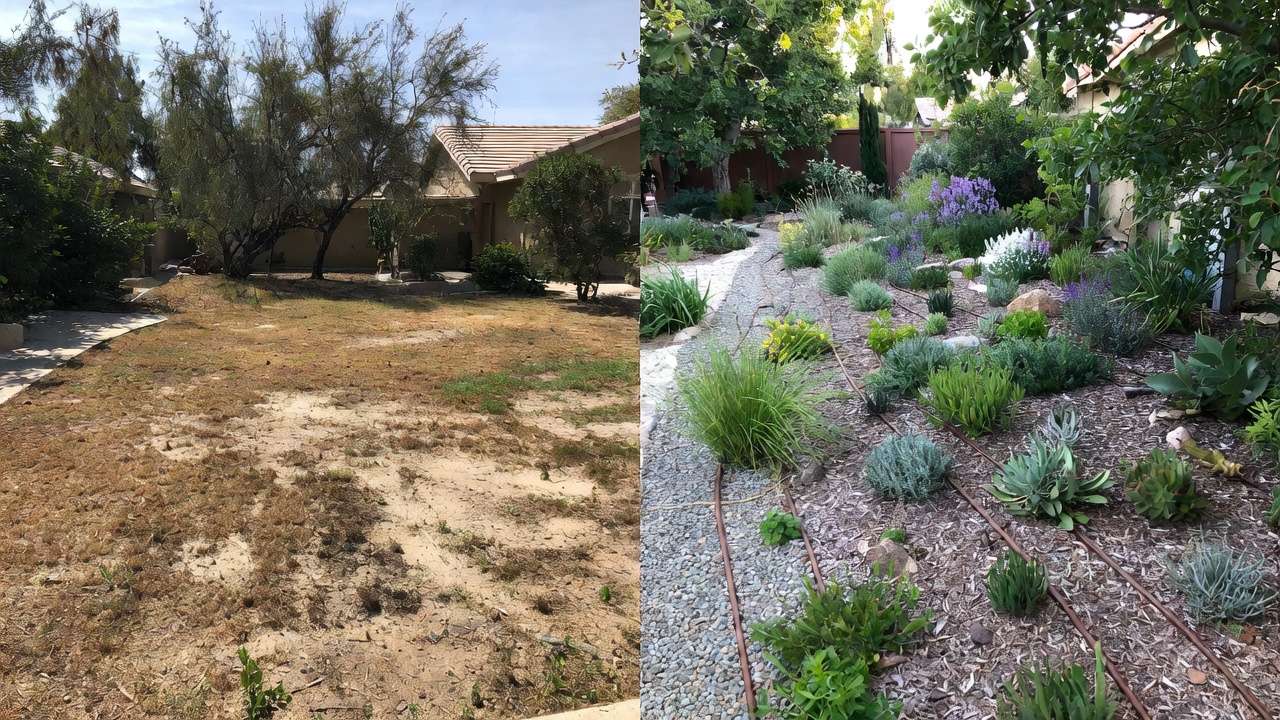
Follow this sequence, and your yard establishes strong roots quickly. Patience here pays off big!
Common Mistakes to Avoid (and Fixes) ⚠️
- Overwatering new plants → Leads to shallow roots and rot. Fix: Stick to deep, infrequent schedule; check soil moisture 6 inches down before watering.
- Choosing non-adapted plants → They struggle and die. Fix: Stick to natives/regional drought-tolerant varieties.
- Skipping mulch → Soil dries fast, weeds invade. Fix: Always apply 2–4 inches.
- Planting too close → Overcrowding as they mature. Fix: Check mature sizes and space accordingly.
- Ignoring soil prep → Poor drainage/retention. Fix: Amend early.
Avoid these, and your landscape succeeds long-term.
Maintenance Tips for Long-Term Thriving
- Spring: Prune dead growth, fertilize lightly (if needed—many natives don’t require it), refresh mulch.
- Summer: Deep water during heat waves; monitor for pests (rare in dry gardens).
- Fall: Plant new additions; cut back spent perennials.
- Winter: Protect tender plants if freezes occur; minimal watering.
- General: Hand-pull weeds early; prune for shape/health; adjust irrigation seasonally.
With proper setup, maintenance drops dramatically—often just a few hours per season.
Expert Insights & Real-World Success Stories
Colorado State University Extension reports many xeriscape conversions cut water use by 60%+ while increasing biodiversity. One Denver-area family replaced thirsty turf with native plants and drip irrigation, saving over 40,000 gallons annually and gaining a pollinator haven. University trials show properly hydrozoned landscapes use 1/3 the water of traditional yards after establishment.
These proven results highlight xeriscaping’s reliability.
Frequently Asked Questions (FAQs)
How much water does a xeriscape really save? Typically 50–75%, with some achieving 80%+ by replacing turf entirely. Savings grow as plants establish.
Can I keep some lawn? Yes—limit to small, high-use areas with drought-tolerant varieties like buffalo grass.
Best plants for beginners? Start with yucca, Russian sage, lavender, agave, and blue grama—forgiving and showy.
How to handle cold winters in semi-arid areas? Choose hardy natives (USDA zones 5–9 common); mulch roots; avoid late-season pruning.
Is xeriscaping expensive to start? Initial costs similar to traditional (plants/hardscape), but long-term savings on water/labor offset quickly—often payback in 3–5 years.
Conclusion: Transform Your Yard Today 🌟
Semi-arid climate landscaping doesn’t mean sacrifice—it’s about smarter, more beautiful choices. With drought-tolerant designs, thoughtful principles, and resilient plants, you gain a stunning yard that saves water, supports wildlife, reduces work, and thrives through heat and drought.
Start small: Pick one zone, apply the principles, and watch it grow. Your future self (and the planet) will thank you. Ready to begin? Grab a sketchpad and get planning—your thriving oasis awaits! 🚀











