
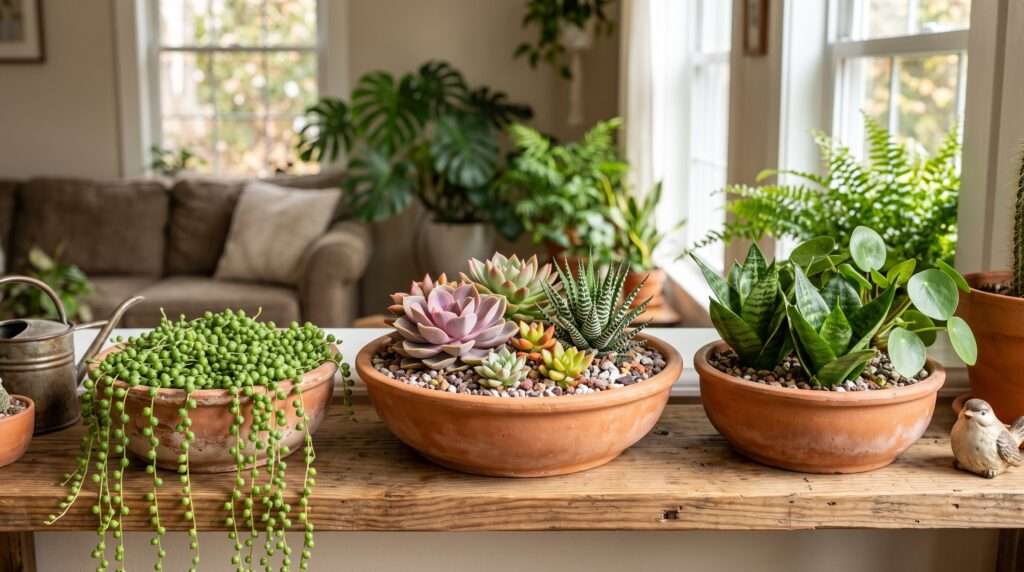
We’ve all been there: watching a prized houseplant slowly turn yellow, its stems going mushy despite our best care. The culprit is almost always overwatering and the resulting root rot. Deep, glazed, or plastic pots trap moisture at the bottom, suffocating delicate root systems before you even realize there is a problem. The most effective, natural safeguard against this silent indoor killer is a shallow terra cotta planter. 🪴 By pairing a breathable, low-profile vessel with susceptible plants, you eliminate the soggy soil conditions that breed fungal pathogens and practically guarantee your plants will thrive.
The Science of the Soil: Why Porous Clay Works 🧱
Understanding how water behaves in containers is the first step to mastering plant care. Standard deep pots often create a “perched water table”—a saturated layer of soil at the very bottom of the pot that never quite dries out, even if the top two inches feel bone dry.
Fired, unglazed clay acts as a natural wick. It actively pulls excess moisture from the potting medium and allows it to evaporate through the breathable walls of the pot, drastically increasing oxygen exchange at the root zone. Furthermore, shallow pots (traditionally known as azalea or bulb pots) hold a smaller total volume of soil. This low profile ensures the mix dries out rapidly and evenly, mimicking the arid, rocky environments that many indoor plants originate from. As an added structural bonus, the heavy, low center of gravity of a clay bowl prevents top-heavy plants from tipping over.
Ideal Houseplants for Low-Profile Planters 🌿
Not every plant wants deep soil. Epiphytes, succulents, and arid-climate natives have evolved specifically to spread their roots wide rather than deep.
-
String of Pearls (Senecio rowleyanus) 📿: These striking trailing succulents possess extremely fine, delicate root systems. When planted in standard deep pots, the excess damp soil quickly leads to rot. The fast-drying environment of a shallow clay bowl is mandatory for keeping their roots healthy and their pearl-like leaves plump.
-
Lithops (Living Stones) 🪨: Native to the harsh, rocky landscapes of South Africa, Lithops are highly adapted to drought. If they sit in wet soil, their cells will literally swell and burst. A low-profile clay pot perfectly replicates their natural, fast-draining habitat.
-
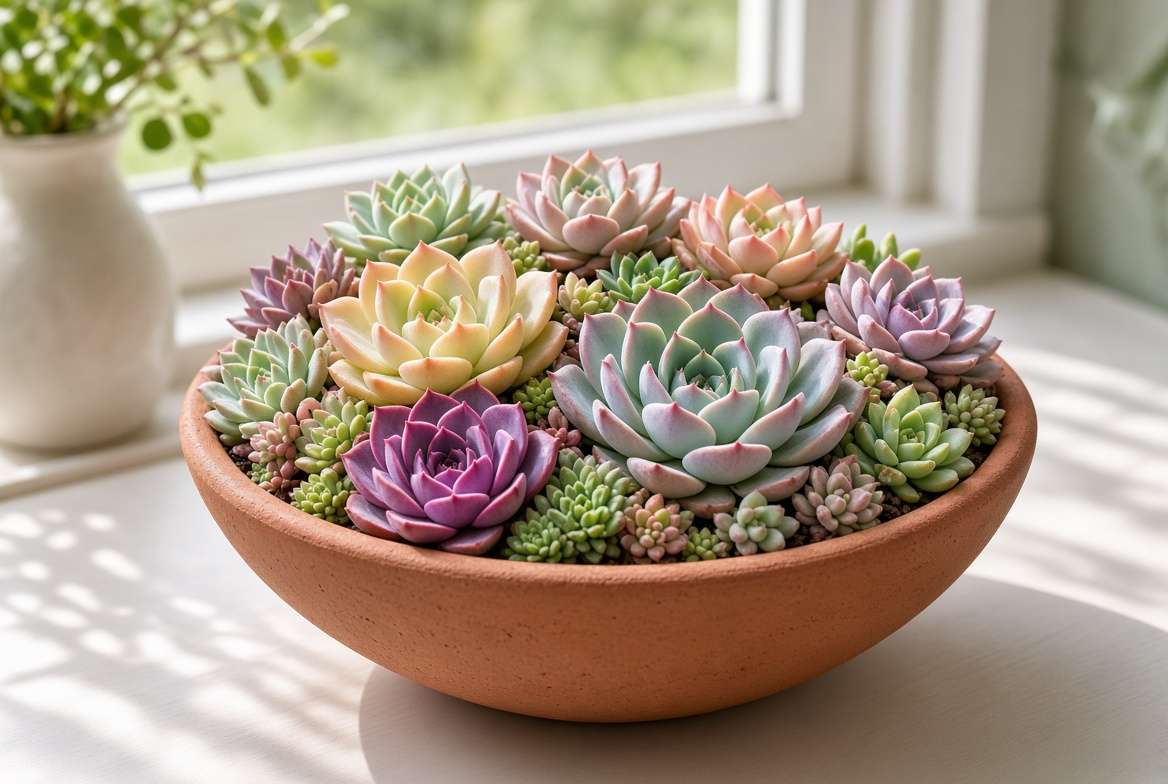
Echeveria & Rosette Succulents 🌸: With wide, spreading roots that sit just beneath the soil surface, Echeverias thrive when their root zones dry out entirely between waterings. The low rim of a shallow planter also perfectly showcases their symmetrical rosette growth without casting shadows on the lower leaves.
-
Pilea Peperomioides (Chinese Money Plant) 🪙: This popular, modern plant produces offsets (pups) through shallow, creeping rhizomes. A wide, shallow space encourages rapid propagation, giving the pups room to breach the surface while preventing the “wet feet” that cause the mother plant to drop her iconic round leaves.
The Perfect Potting Mix for Shallow Clay 🧑🌾
The vessel is only half of the equation; the soil dynamics inside a shallow terra cotta planter dictate your ultimate success. Standard bagged indoor potting soil is generally too dense and peat-heavy, designed to retain moisture for tropical foliage plants.
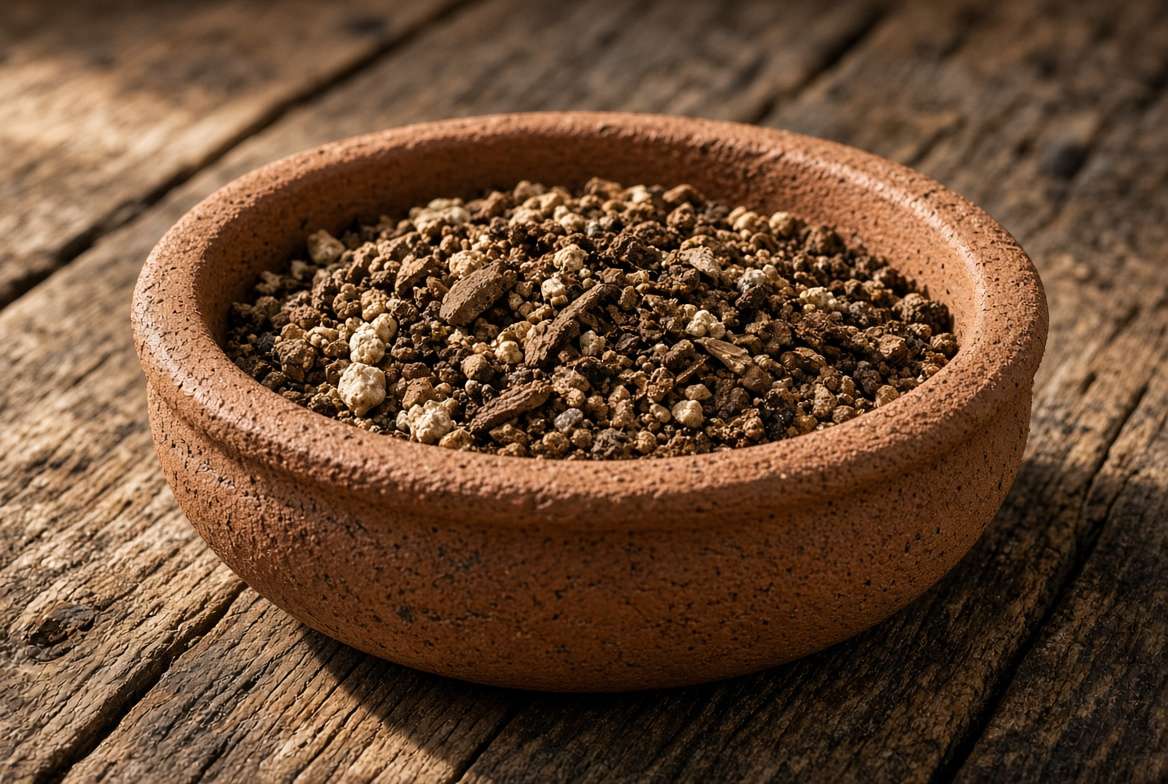
For low-profile clay pots, you need a “chunky,” highly aerated mix. Blend 40% high-quality succulent soil, 30% pumice or coarse perlite, 20% fine orchid bark, and 10% horticultural charcoal. When this porous, fast-draining mix is used inside a breathable terra cotta vessel, water flushes through immediately, and oxygen floods the root zone.
-
Dwarf Snake Plants (Sansevieria trifasciata ‘Hahnii’) 🐍: Snake plants are renowned for their hardiness, but they have one Achilles’ heel: soggy soil. Because they store water in their fleshy leaves, they succumb to root rot almost instantly in damp conditions. Dwarf varieties, like the bird’s nest snake plant, look structurally stunning when clustered in a low terra cotta bowl, where the shallow depth guarantees rapid drying.
-
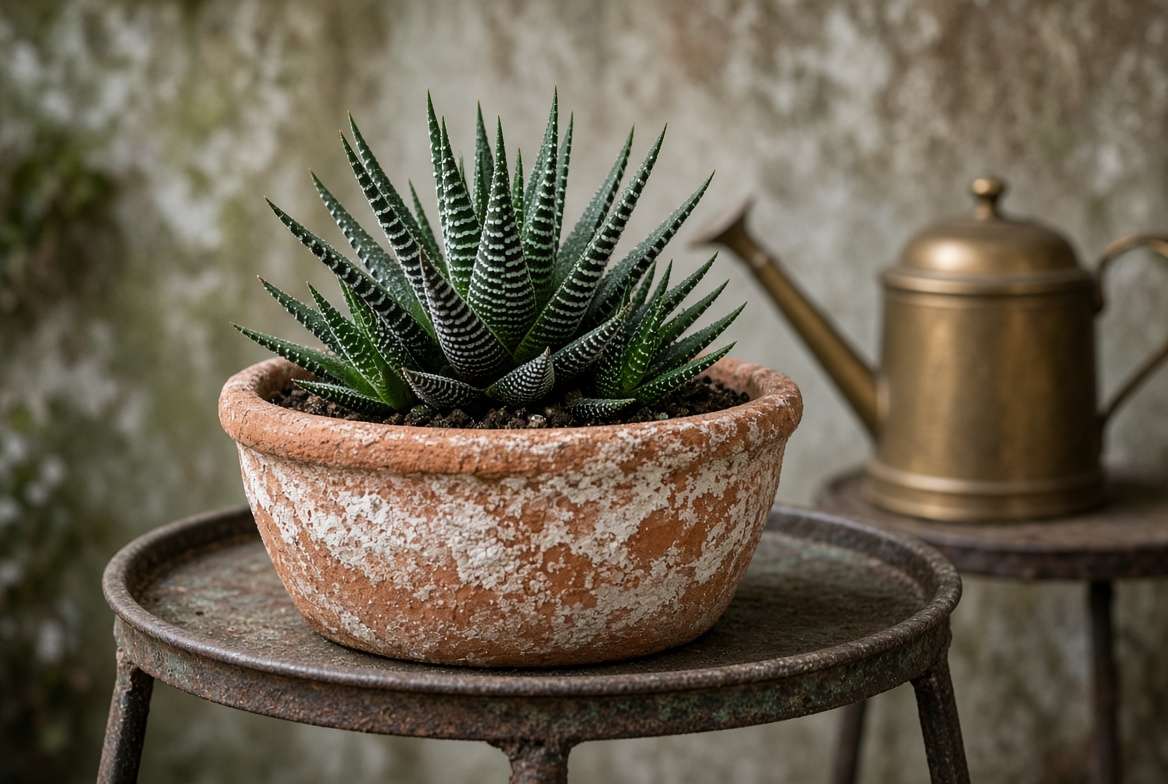
Haworthia (Zebra Plant) 🦓: These compact, architectural succulents possess thick, fleshy roots that hold onto moisture. Deep pots trap water against these root systems for far too long, leading to decay. Haworthias naturally prefer somewhat cramped, dry quarters, making a breathable clay dish their ideal home.
-
Hoyas (Wax Plants) 🕯️: Many indoor gardeners struggle with Hoyas because they treat them like standard terrestrial plants. As epiphytes, Hoyas grow on the bark of trees in the wild, exposed to constant breezes. Their small, shallow root systems demand immense airflow. Planting them in a low-profile, porous pot mimics their natural epiphytic environment and drastically reduces the risk of root suffocation.
-
Peperomia (Radiator Plants) 🍉: With their thick, semi-succulent leaves, Peperomias are highly drought-tolerant, but they feature incredibly delicate, hair-like root systems that rot easily. The breathability of terra cotta keeps their foliage plump and vibrant while ensuring the surrounding soil matrix remains perfectly aerated.
-
Indoor Bonsai (Jade, Ficus, or Portulacaria) 🌳: The ancient art of bonsai relies on precise root management. Cultivating a miniature tree requires restricting downward taproot growth to encourage a wide, fibrous root system and a thickened trunk. A shallow planter is absolutely mandatory for this process, and unglazed clay provides the necessary friction and breathability for optimal root ramification.

Pro Tips: Watering & Maintaining Your Terra Cotta 🚿
Transitioning to porous clay requires a slight adjustment in your care routine. Because the vessel actively pulls moisture from the soil, your watering dynamics will shift entirely.
Adjusting Your Watering Schedule A shallow terra cotta planter dries out significantly faster than a standard plastic or glazed pot. To adapt, master the “soak and dry” method. Drench the soil completely until water flows freely from the drainage hole, and then wait until the soil is fully dry before watering again. Utilize the “weight test”—lift the pot after watering to feel its heft, and water again only when the pot feels remarkably light.
Dealing with White Crust (Mineral Buildup) 🧂 Over time, you will likely notice a chalky white patina developing on the outside of your clay pots. This is known as efflorescence. As water evaporates through the breathable walls, it leaves behind the dissolved mineral salts from your tap water and liquid fertilizers. While some gardeners love this aged, weathered look, it is easy to remove. Simply empty the pot and soak it in a solution of one part white vinegar to four parts water for 30 minutes, then scrub gently with a stiff brush.
Pre-Soaking New Pots Before potting any plant in a brand-new clay vessel, submerge the empty pot in a bucket of water for at least 30 minutes. Bone-dry terra cotta is incredibly thirsty; if you bypass this step, the pot will instantly wick all the moisture away from your freshly watered soil, leaving the roots completely parched during their critical acclimation period.
Frequently Asked Questions (FAQs) ❓
Can I put a fern or Calathea in a shallow terra cotta planter? It is highly discouraged. Ferns, Calatheas, and Marantas require consistent, even moisture to maintain their delicate fronds. The aggressive wicking action of porous clay combined with a shallow depth will dry these moisture-loving plants out far too quickly, leading to crispy, brown edges.
Does a shallow clay pot still need a drainage hole? Absolutely. While the porosity of unglazed clay aids in evaporation, it is not a replacement for proper drainage. Water must still be able to escape the bottom of the pot to flush out accumulated fertilizer salts and prevent stagnant water from pooling at the root zone.
How often should I repot plants in shallow containers? Plants in shallow dishes often become root-bound faster than those in deep pots due to the limited horizontal space. Check the drainage hole annually; if thick roots are escaping, or if the soil dries out within a single day of watering, it is time to upgrade to a slightly wider (but still shallow) clay bowl.
Making the transition to breathable clay pots takes the guesswork out of indoor watering. By matching the right low-profile succulents, epiphytes, and arid-loving plants to this specific vessel, you create an indoor garden designed to survive neglect and thrive for years. What is the first plant you plan to transition into a shallow terra cotta setup?











