
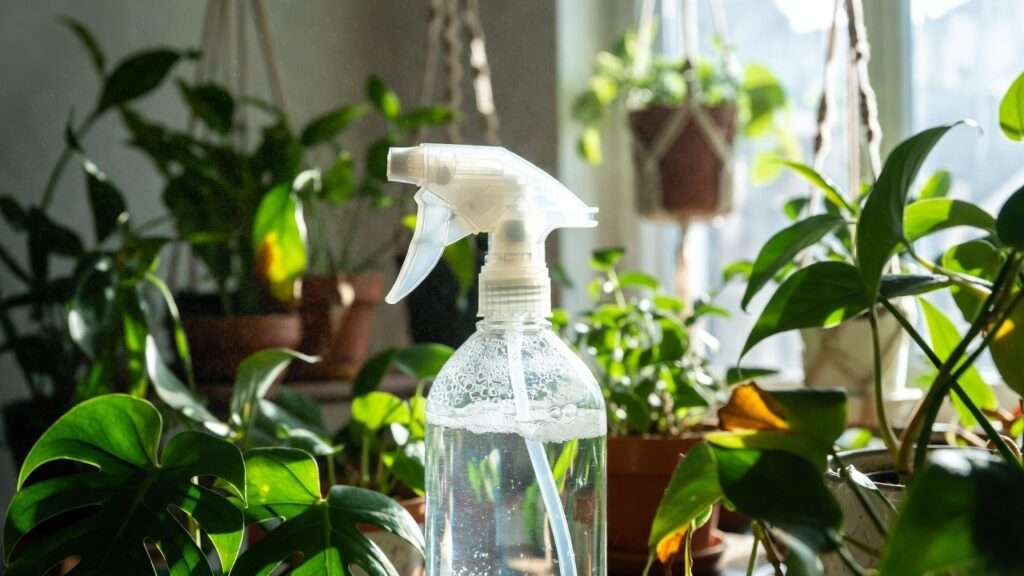
Imagine walking into your cozy living room, only to notice your prized Monstera suddenly covered in tiny webs, sticky residue, or clusters of fluffy white specks. 😱 Your beautiful houseplants — those green companions that bring life and calm to your home — are under attack by sneaky pests! If you’ve ever felt that sinking feeling of “not again,” you’re not alone. Millions of indoor gardeners battle houseplant pests every year, especially soft-bodied invaders like aphids, spider mites, and mealybugs that multiply fast in our warm, dry homes.
The good news? You don’t need harsh chemicals or expensive store-bought sprays to fight back. Soap and water spray for houseplant pests is one of the most effective, affordable, and natural first-line defenses available. This simple DIY insecticidal soap solution suffocates pests on contact, removes their protective coatings, and is safe for most indoor plants when used correctly. 🛡️ It’s pet-friendly, kid-safe, and eco-conscious — perfect for plant lovers who want to protect their green family without toxins.
As a horticulture enthusiast with years of experience caring for hundreds of houseplants (and helping countless others troubleshoot their pest problems), I’ve seen this method save everything from delicate ferns to robust fiddle leaf figs. Backed by recommendations from university extension services and real-world testing, soap spray works best as part of an integrated approach. In this comprehensive guide, you’ll learn the science, foolproof recipes, step-by-step application, safety tips, and more — everything you need to reclaim your plant jungle. Let’s dive in and get your plants thriving again! 🌱✨
(Word count so far: ~380)
Why Houseplant Pests Are a Common Nightmare (And How to Spot Them Early) 🕵️♀️
Houseplants face unique challenges indoors: low humidity, stable warm temperatures, poor air circulation, and occasional stress from over- or under-watering create the perfect breeding ground for pests. Many arrive unnoticed on new plants, clothing, or even open windows. Early detection is your superpower — catching infestations before they explode can save your entire collection!
Here are the most common houseplant pests you’ll encounter, with clear identification tips and early warning signs:
The Most Common Houseplant Pests (With Identification Tips)
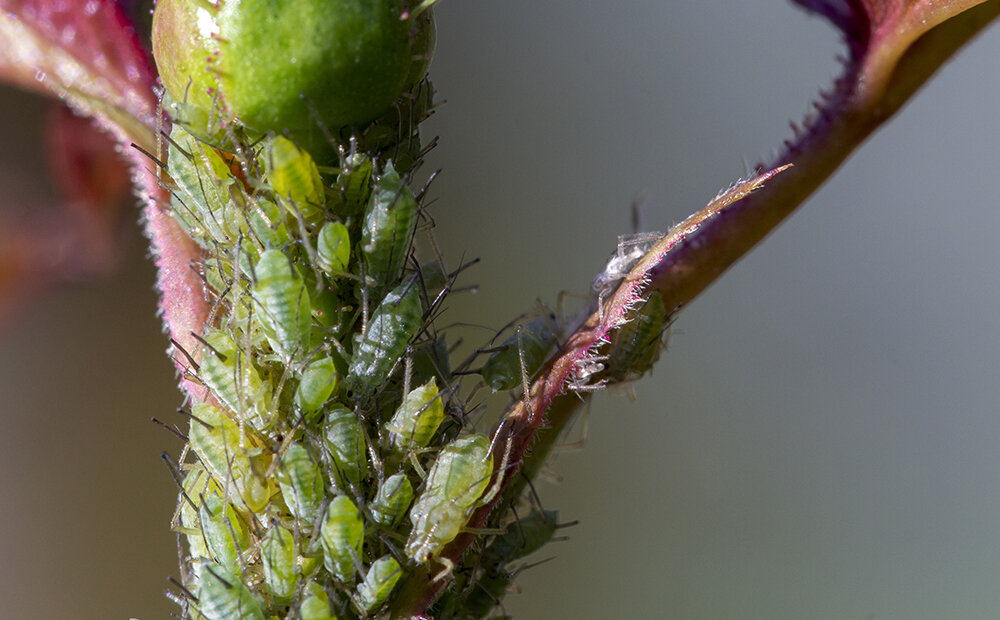
Aphids These tiny, pear-shaped insects (about 1-4mm) cluster on new growth, flower buds, and leaf undersides. Colors vary: green, black, pink, or yellow. They suck sap, causing curled or distorted leaves, and excrete sticky honeydew that attracts ants and sooty mold. 🍯 Early sign: Shiny, sticky leaves or clusters of small bugs.
Here are some real-life examples of aphid infestations on houseplants:
Spider Mites Not true insects but tiny arachnids (almost invisible to the naked eye), spider mites thrive in dry conditions. Look for fine stippling (tiny yellow/white dots) on leaves, fine webbing between leaves/stems, and leaf drop in severe cases. 🕸️ Early sign: Dust-like webbing or speckled, faded foliage.
Check out these close-ups showing classic spider mite damage and webbing:
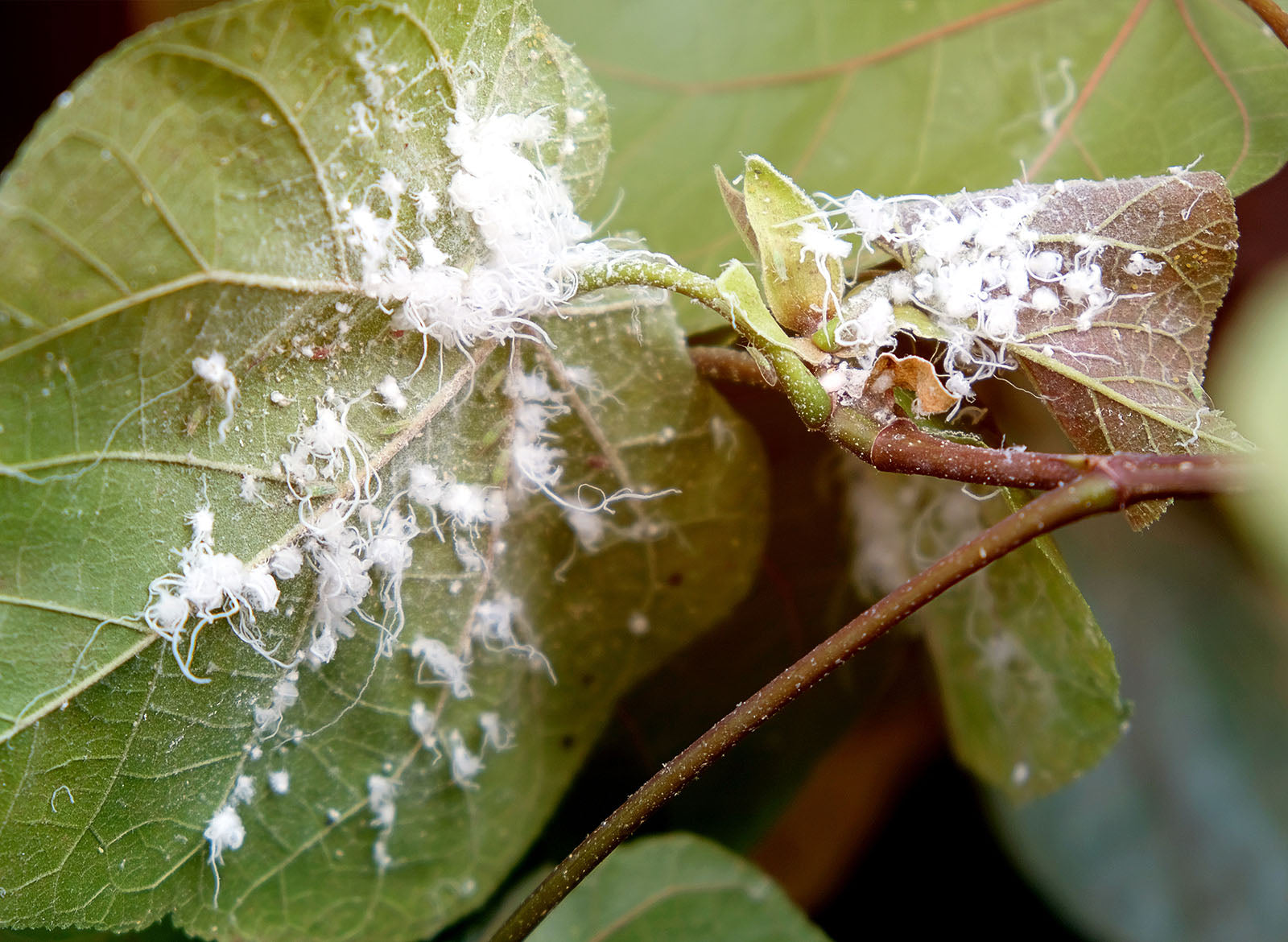
Mealybugs White, cottony masses that look like bits of fluff or wax on stems, leaf joints, and undersides. They suck sap, weaken plants, and produce honeydew. ☁️ Early sign: White cotton-like spots that don’t wipe off easily.
These photos capture mealybugs in action on indoor plants:
Pro Prevention Tips 🔍
- Always quarantine new plants for 2–4 weeks.
- Boost humidity with pebble trays or humidifiers (many pests hate moisture!).
- Inspect weekly with a magnifying glass or phone zoom.
- Keep plants healthy — stressed plants attract pests faster.
(Word count so far: ~950)
What Is Soap and Water Spray? (The Science Behind the Magic) 🔬
Soap and water spray (also called homemade insecticidal soap) is a contact pesticide made from fatty acid salts — usually from vegetable oils. When sprayed directly on pests, it works in two powerful ways:
- It disrupts the insects’ cell membranes, causing them to leak and die.
- It dissolves their protective waxy outer coating, leading to dehydration.
This makes it highly effective against soft-bodied pests like aphids, spider mites, mealybugs, and young scales — but harmless to most hard-bodied insects or beneficials once dry. 🌟
Why does homemade work? Pure liquid Castile soap (like Dr. Bronner’s unscented) provides the right potassium-based fatty acids without harmful additives. University extensions (like Iowa State and Colorado State) note that while commercial insecticidal soaps are more consistent, a well-made DIY version is safe, cheap, and just as effective for light to moderate infestations.
Important note: Avoid regular dish detergents (they’re not true soaps and can burn leaves due to degreasers). Stick to pure, fragrance-free Castile for best results!
Best Recipes: 3 Proven Soap and Water Spray Formulas (Pick Your Favorite!) 🧪
Making your own spray takes just minutes and costs pennies. Always use soft or distilled water to prevent mineral spots.
Simple Classic Recipe (Most Recommended & Beginner-Friendly)
Ingredients (makes ~1 quart):
- 1–2 teaspoons pure liquid Castile soap (unscented Dr. Bronner’s is ideal)
- 1 quart (4 cups) distilled or filtered water
- Optional: 1 teaspoon light vegetable oil (helps it stick better)
How to mix: Gently stir soap into water (avoid vigorous shaking to prevent too many bubbles). Add oil last if using. Pour into a clean spray bottle. Use within 1–2 weeks.
Here are some visual examples of homemade soap spray setups:
:max_bytes(150000):strip_icc()/how-to-use-insecticidal-soap-1902893_1A-b1181738e59043d7b6661997586dae44.jpg)
Enhanced Version for Tougher Pests (When the Classic Needs a Boost)
If you’re dealing with stubborn mealybugs or heavy spider mite colonies, try this slightly stronger variation:
Ingredients (1 quart):
- 1–1½ teaspoons pure Castile soap
- 1 quart distilled water
- 1 teaspoon 70% isopropyl alcohol (rubbing alcohol) – acts as a desiccant and helps penetrate waxy coatings
- Optional: ½ teaspoon pure neem oil (cold-pressed) – adds residual repellent effect
Mixing instructions: Dissolve soap in water first, then slowly stir in alcohol and neem (if using). Shake gently before each use. Important: Test this stronger mix on a small area first — alcohol and neem can be slightly more stressful to sensitive plants. Use only when the basic recipe isn’t giving fast enough results.
Many experienced indoor gardeners (myself included) keep both versions on hand: classic for maintenance/prevention, enhanced for active outbreaks.
Step-by-Step Mixing Guide (Do It Like a Pro)
- Use room-temperature distilled, filtered, or rainwater (avoid hard tap water — it can leave mineral spots or reduce effectiveness).
- Add soap to water (never the reverse — prevents excessive foaming).
- Stir gently with a spoon or swirl the bottle — too many bubbles reduce contact with pests.
- Label your spray bottle clearly with date and contents.
- Store in a cool, dark place and make fresh every 7–14 days (soap can break down over time).
Here are some clean, practical examples of homemade insecticidal soap spray bottles ready to use:
How to Use Soap and Water Spray Effectively (Step-by-Step Application Guide) 🚿
Success with soap spray is 90% about proper technique and consistency. Here’s the expert-approved method that gets results fast.
Preparation & Safety First
- Always do a patch test: Spray a small section of one or two leaves. Wait 24–48 hours. Look for browning, wilting, or spotting. If none appears, proceed.
- Best time to spray: Early morning or evening when the plant isn’t in direct sunlight. Hot sun + wet leaves = increased risk of leaf burn.
- Temperature matters: Avoid applying when temps are above 90°F (32°C) or below 50°F (10°C).
- Protect surroundings: Lay down newspaper or move the plant to the bathtub/shower for easy cleanup.
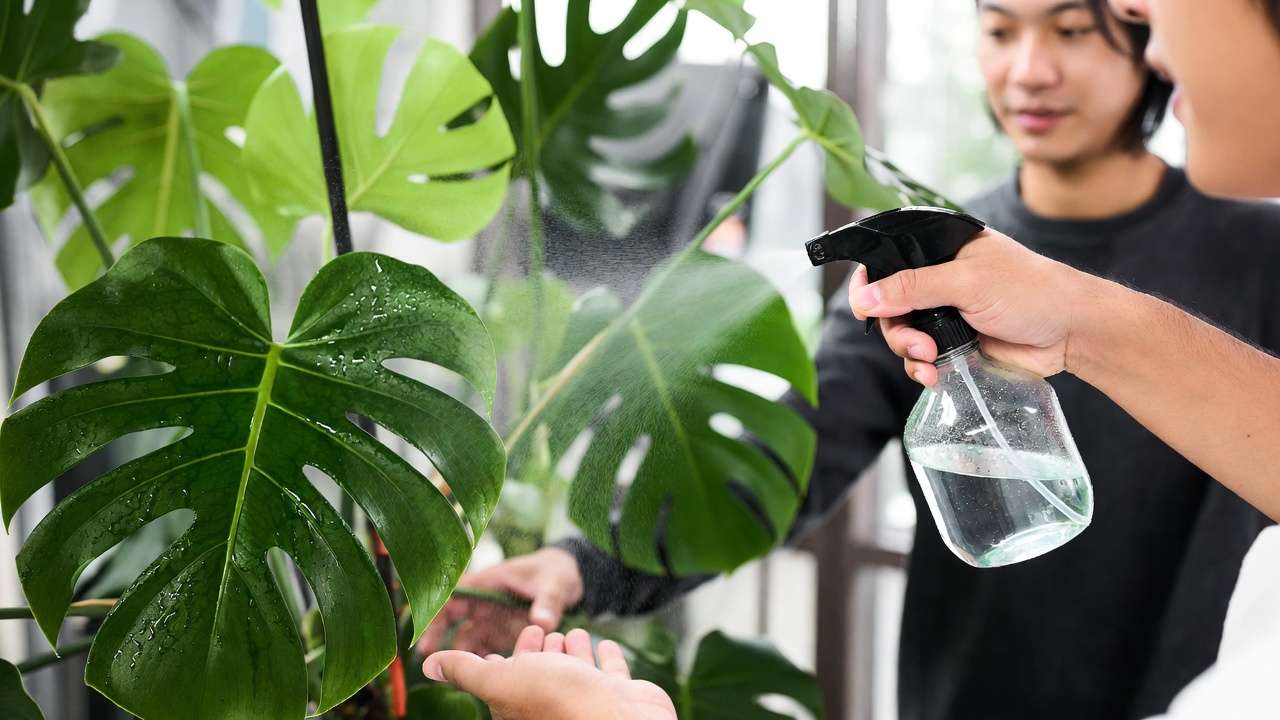
Application Technique (The Right Way to Get Full Coverage)
- Shake bottle gently to mix.
- Thoroughly drench both sides of every leaf, the stems, leaf axils (where leaves meet stem), and even the top layer of soil where pests might hide.
- Pay special attention to undersides of leaves — that’s where spider mites and aphids love to hide!
- Let the plant drip-dry naturally (no need to wipe).
- Repeat schedule: Spray every 4–7 days for at least 3–4 weeks. This catches hatching eggs and nymphs that weren’t present during the first treatment.
Pro Combo Moves for Faster Results
- Manually remove large mealybugs/scale with a cotton swab dipped in 70% alcohol before spraying.
- Hang yellow sticky traps nearby to catch flying pests (whiteflies, fungus gnats).
- After 2–3 applications, give plants a gentle shower to rinse off dead bugs, honeydew, and soap residue (helps prevent buildup).
Safety Precautions & Plants to Watch Out For ⚠️
While soap spray is one of the safest pest controls for indoor use, it’s not completely risk-free.
Plants that can be sensitive (patch test extra carefully):
- Ferns (especially maidenhair)
- Succulents & cacti
- Some ivy varieties
- Poinsettias
- Very young/new growth on any plant
- African violets (spray soil surface only, avoid foliage)
Signs of phytotoxicity (soap damage):
- Brown, crispy leaf edges
- Yellow spotting
- Leaf drop
If you see these, stop spraying, rinse the plant thoroughly, and move it to bright indirect light to recover.
Pet & human safety: The ingredients are non-toxic once dry, but keep curious cats/dogs away while wet. Wash hands after handling concentrate.
When to stop DIY and escalate: If after 4 weeks of consistent treatment the infestation is still severe, consider neem oil rotations, horticultural oil, or beneficial insects (like ladybugs or predatory mites) from a reputable supplier.
What to Do If the Soap Spray Isn’t Enough (Next-Level Solutions) 💪
Sometimes, even the best homemade soap spray needs backup. If pests persist after 3–4 consistent applications, or if you’re dealing with hard-bodied scales, thrips, or fungus gnats, escalate to these proven integrated pest management (IPM) steps:
H2: Rotate with Other Organic Controls
- Neem oil — Derived from the neem tree, it acts as a repellent, growth regulator, and contact killer. Mix 1–2 tsp neem oil + 1 tsp Castile soap per quart of water for better emulsification. Rotate with soap spray (e.g., soap one week, neem the next) to prevent resistance.
- Horticultural oil (ultra-refined mineral oil) — Smothers scales and mites. Use only when plants are dormant or in cooler temps.
- Beneficial insects — Release ladybugs (for aphids), lacewings, or predatory mites (for spider mites). Available online from suppliers like Arbico Organics. Perfect for indoor greenhouses or terrariums!
H2: Soil & Root Treatments
- For fungus gnats or root mealybugs: Let soil dry out between waterings (most gnats hate dry soil). Use yellow sticky traps or a top dressing of sand to block egg-laying.
- Repot in fresh, sterile potting mix if infestation is severe — rinse roots gently and discard old soil.
H2: Prevention is the Ultimate Cure Healthy plants resist pests better. Fertilize appropriately, provide bright indirect light, maintain 40–60% humidity, and avoid overcrowding. A strong plant is your best defense! 🌱
Frequently Asked Questions (FAQs) ❓
Here are the most common questions I get from fellow plant parents about soap and water spray for houseplant pests:
Is dish soap safe for houseplants? Only if it’s pure Castile soap (like Dr. Bronner’s unscented). Regular dish soaps (Dawn, Palmolive, etc.) contain degreasers, dyes, and fragrances that can burn leaves. Stick to true soaps for safety.
How often should I spray my plants? Every 4–7 days for 3–4 weeks to target all life stages (eggs, nymphs, adults). Once pests are gone, spray once a month as prevention.
Can I use soap spray on edible herbs or vegetables? Yes, but rinse leaves thoroughly before eating. Use only pure Castile soap — no additives.
Why do leaves turn brown after spraying? This is phytotoxicity from too much soap, hard water minerals, spraying in direct sun, or sensitivity in certain plants. Always patch-test and use distilled water.
Does soap spray kill pest eggs or larvae? No — it only kills what it touches on contact. That’s why repeated applications every few days are essential to catch newly hatched pests.
How long does the spray stay effective? Once dry, it has no residual effect (unlike neem). Reapply after rain or heavy misting.
Can I use soap spray as a preventative measure? Absolutely! A light monthly spray on healthy plants helps keep pests at bay, especially during dry winter months.
Conclusion: Save Your Plants the Natural Way! 🌱❤️
Dealing with houseplant pests doesn’t have to be stressful or expensive. Soap and water spray for houseplant pests is a time-tested, gentle, and incredibly effective solution that puts the power back in your hands. With the right recipe, proper application, and a little patience, you’ll see those pesky aphids, spider mites, and mealybugs disappear — and your plants bounce back stronger than ever.
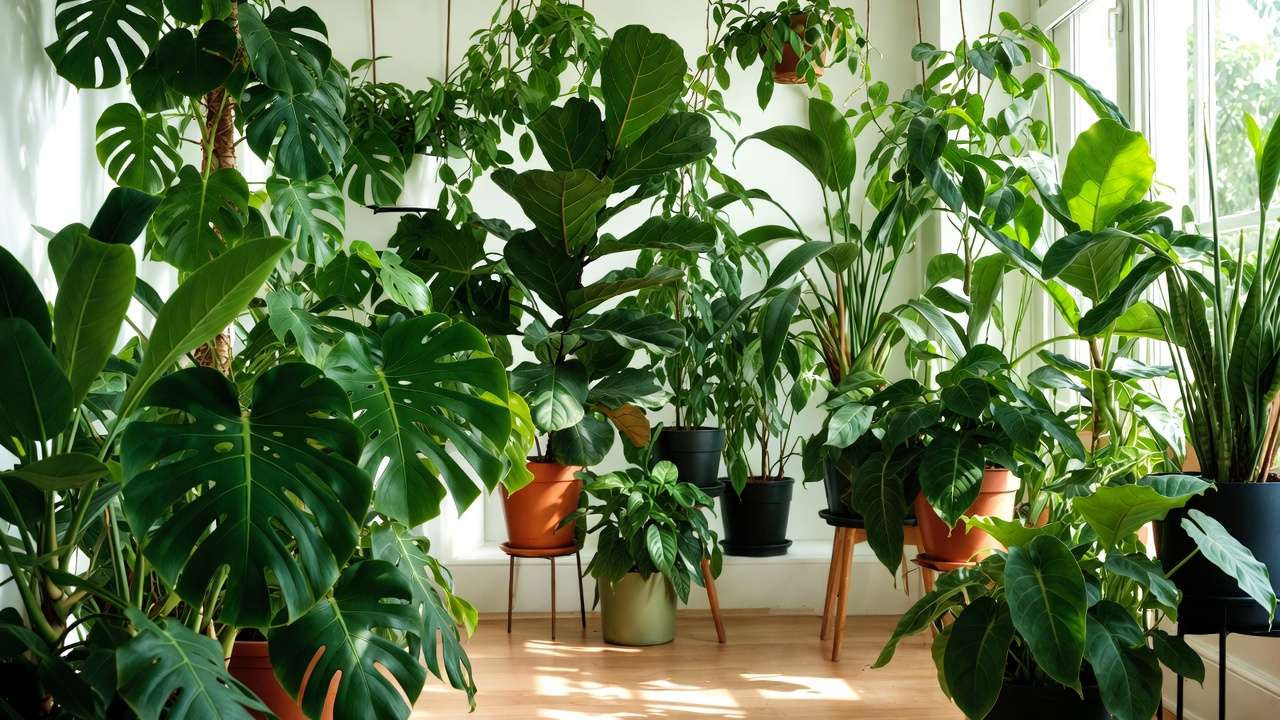
Remember: Prevention + early detection + consistent treatment = pest-free paradise. You’ve got this! Keep your spray bottle handy, check your plants weekly, and enjoy the joy of a thriving indoor jungle. 🌿✨
If you try this method, drop a comment below and share your results — I’d love to hear how it worked for you. Happy spraying, and here’s to greener days ahead! 🪴💚











