
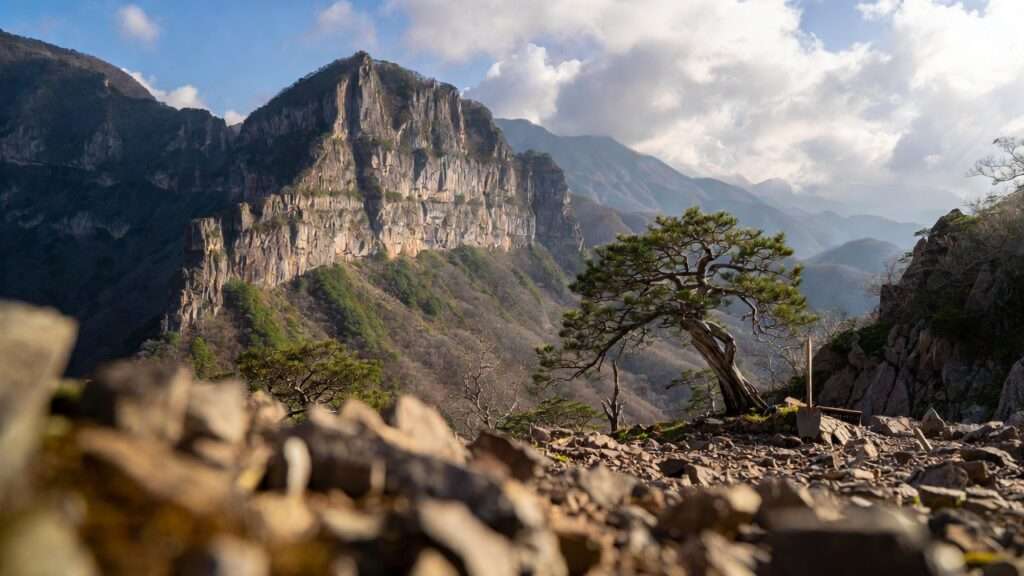
Imagine stumbling upon a rugged, twisted tree clinging to a rocky cliff, its thick trunk scarred by decades of wind and hardship, its surface roots dramatically flaring out like ancient fingers gripping the earth. This isn’t just any tree—it’s a potential masterpiece waiting to become your next bonsai. That’s the thrill of sourcing high-quality yamadori, the wild-collected material that gives bonsai enthusiasts the aged character, dramatic taper, and natural movement nursery-grown trees rarely achieve.
But here’s the reality: finding and successfully acquiring exceptional yamadori isn’t luck—it’s a skill built on knowledge, respect for nature, and careful technique. Poor choices lead to dead trees, wasted effort, and missed opportunities. In this in-depth guide, I’ll share expert strategies I’ve honed over years of collecting across various regions, helping you source truly outstanding wild material while prioritizing ethics, legality, and tree survival. Whether you’re a beginner dreaming of your first yamadori or a seasoned collector seeking rarer gems, you’ll walk away with actionable tips to elevate your bonsai journey. Let’s dive in! 🌲🔍
What Exactly Is Yamadori and Why Seek High-Quality Specimens? 🏔️
Yamadori (literally “mountain harvest” in Japanese) refers to trees collected from the wild for bonsai cultivation. These trees develop under natural stresses—poor soil, harsh weather, animal browsing—that create the desirable traits bonsai artists prize: thick trunks with excellent taper, textured bark, dramatic deadwood (jin and shari), and powerful nebari (surface root spread).
Unlike nursery stock, which grows quickly in fertile conditions, high-quality yamadori often carry decades or centuries of character in compact forms. The payoff? You skip years of trunk thickening and refinement, jumping straight to styling a near-finished bonsai.
However, not all wild trees qualify as high-quality yamadori. Many lack vigor, have weak roots, or poor structure. Sourcing exceptional ones solves a core problem for enthusiasts: obtaining material that can become show-quality bonsai faster and with more authenticity. Success rates improve dramatically with the right selection—experienced collectors report 70%+ survival when prioritizing quality over quantity. 🌟

(Example of a classic high-quality yamadori pine clinging to rocky terrain—note the dramatic trunk movement and exposed roots!)
Understanding the Key Characteristics of High-Quality Yamadori 🌟
Trunk & Structure Qualities to Hunt For
The trunk is the backbone of any bonsai. Look for:
- Strong taper (thicker at base, gradually narrowing)
- Natural movement or twists from wind exposure
- Deadwood potential—rough bark, scars, or hollows that can become artistic jin/shari
- Compact height-to-trunk ratio for easier styling
Surface Roots (Nebari) — What Makes or Breaks a Masterpiece
Exceptional nebari features wide, radial surface roots that spread evenly. Avoid trees with circling or one-sided roots; these rarely recover well. The best nebari develops in rocky, well-drained sites where roots seek stability.
Bark Texture and Age Indicators
Older bark—rough, plated, or fissured—signals maturity. Conifers often show beautiful flaking or stringy textures, while deciduous species reveal smooth, colorful underbark when refined.
Species-Specific Traits for Success
Different species excel as yamadori depending on region:
- North America: Rocky Mountain juniper, ponderosa pine, lodgepole pine, and Douglas fir thrive in harsh mountain conditions.
- Europe: Common juniper (Juniperus communis), Scots pine (Pinus sylvestris), European larch, and field maple offer superb deadwood and nebari.
- Asia: Japanese black pine, white pine, and various maples are legendary, though collection is heavily regulated.
For beginners, start with resilient species like juniper or pine—they forgive minor collection errors better than delicate maples.
Red Flags: Trees to Leave Behind 🚩
- Weak or sparse foliage indicating poor vigor
- Diseased bark, pests, or rot
- Overly large trees (harder to pot and recover)
- Minimal root mass or one-sided nebari Always prioritize health over “wow” factor— a vigorous smaller tree often outperforms a stunning but weak giant.

(A stunning cliff yamadori example—perfect nebari and movement in a compact package!)
Ethical & Legal Sourcing: The Foundation of Responsible Collecting ⚖️🌍
In 2025 and beyond, ethical sourcing is non-negotiable. Over-collection harms ecosystems, and illegal practices damage the bonsai community’s reputation.
Always:
- Obtain permits for public lands (e.g., national forests, BLM in the US—check local forestry services).
- Get landowner permission on private property.
- Follow Leave No Trace principles: minimize disturbance, fill holes, avoid rare/endangered species.
- Consider alternatives like “urban-dori” (rescued trees from gardens, construction sites) or nursery pre-bonsai.
Responsible collectors preserve habitats for future generations—true expertise includes stewardship. 🌱
Method 1: Collecting Your Own High-Quality Yamadori 🛠️🏞️
The most rewarding (and challenging) way to source exceptional yamadori is collecting it yourself. Nothing beats the satisfaction of unearthing a hidden gem in nature and nurturing it into a refined bonsai. However, success depends on preparation, timing, and technique—many collectors lose 50% or more of their first attempts due to avoidable errors.
Scouting & Locating Prime Spots
High-quality yamadori rarely grows in lush valleys; instead, seek stressed environments that force slow, compact growth and dramatic features:
- Rocky outcrops, cliff faces, and scree slopes
- Poor, well-drained soils (gravelly, sandy, or shallow)
- High-altitude or exposed ridges where wind and cold prune naturally
- Forest edges or disturbed areas (e.g., old logging sites with regrowth)
Use topographic maps, Google Earth, or local hiking apps to identify promising zones. Join regional bonsai clubs for shared intel—many groups organize legal group collects.
Best time to scout: Late fall through early spring when foliage is thin, making structure visible. Mark promising trees (with flagging tape) and return when collection conditions are ideal.
Tools & Gear Checklist
Equip yourself properly to maximize root preservation and minimize tree stress:
- Sturdy digging tools: mattock, root hook, hori-hori knife, pruning saw
- Root-pruning shears and concave cutters
- Sphagnum moss, plastic bags, and wet newspaper for root wrapping
- Backpack with water, first-aid kit, gloves, and sturdy boots
- Collection permit copy (always carry it!)
- Camera/phone for documentation and before-photos
Step-by-Step Collection Process
- Pre-collection prep — If possible, visit the site a year ahead and lightly fertilize/irrigate the tree to boost vigor.
- Timing is critical — Collect during early spring bud swell (just as buds begin to green) when roots are most active but foliage demand is low. Avoid summer heat or deep winter freezes.
- Dig carefully — Expose roots gradually, keeping as much fibrous root mass as possible. Cut large roots cleanly; aim for a root ball at least 1.5–2× the trunk diameter.
- Immediate field care — Wrap roots in damp sphagnum, bag them, and keep shaded/cool during transport.
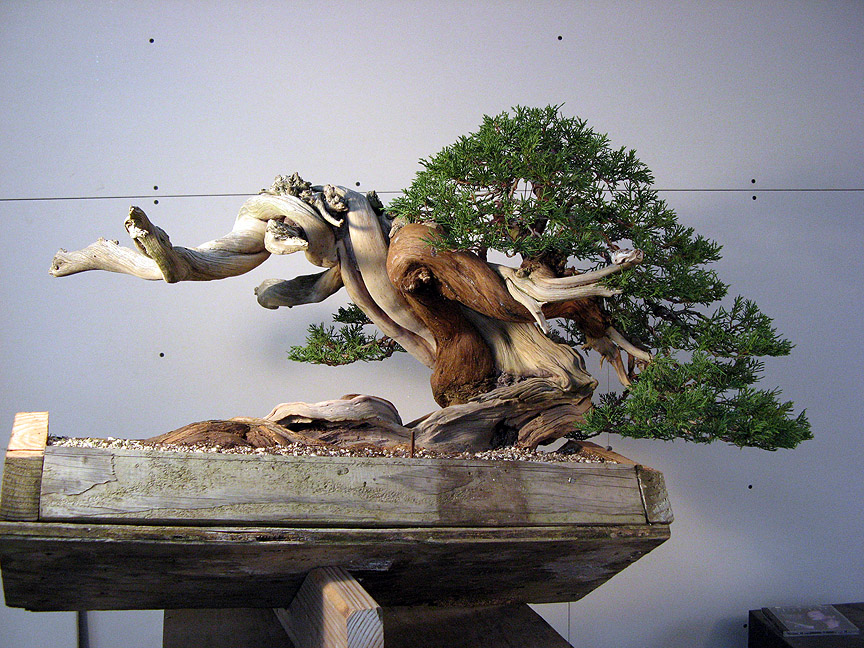
(A beautiful Rocky Mountain juniper yamadori post-collection—notice the preserved nebari and deadwood potential!)
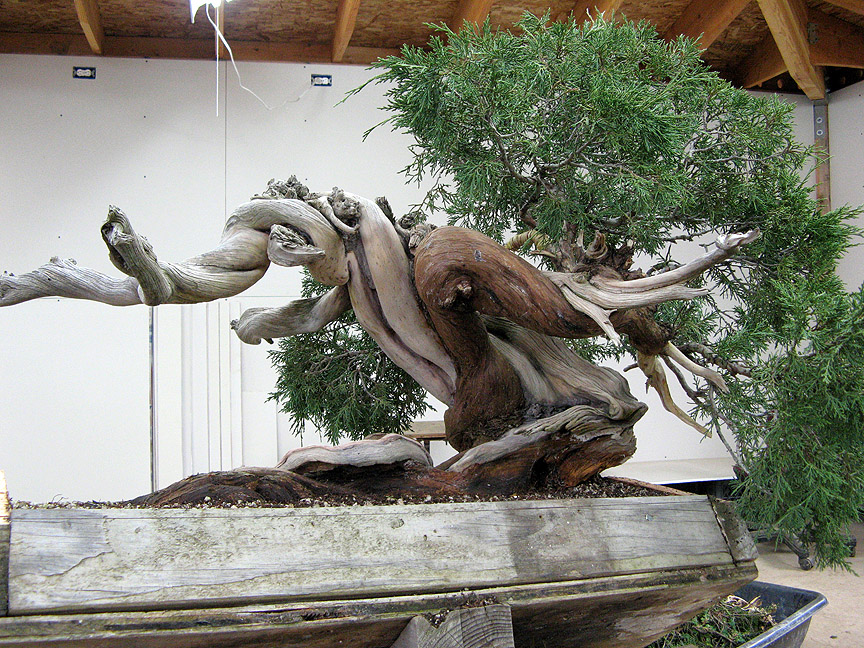
(Another view of the same tree midway through recovery—healthy new growth emerging!)
Aftercare Secrets for Yamadori Recovery
Recovery is where most collectors fail—treat the tree like a patient in ICU for the first 1–2 years.
- Soil mix: Use well-draining inorganic-heavy blend (e.g., akadama, pumice, lava rock) to encourage new feeder roots.
- Placement: Semi-shade, protected from wind and extreme temps. Use humidity trays or misting if needed.
- Watering: Keep evenly moist but never soggy—check daily.
- Fertilizing: Wait 4–6 weeks post-collection, then use diluted organic fertilizer.
- Timeline expectations: Year 1 = survival & root regrowth; Year 2 = first styling; Year 3+ = refinement.
Common mistake: Over-pruning foliage too soon—leave 70–80% of the canopy initially to support root recovery.
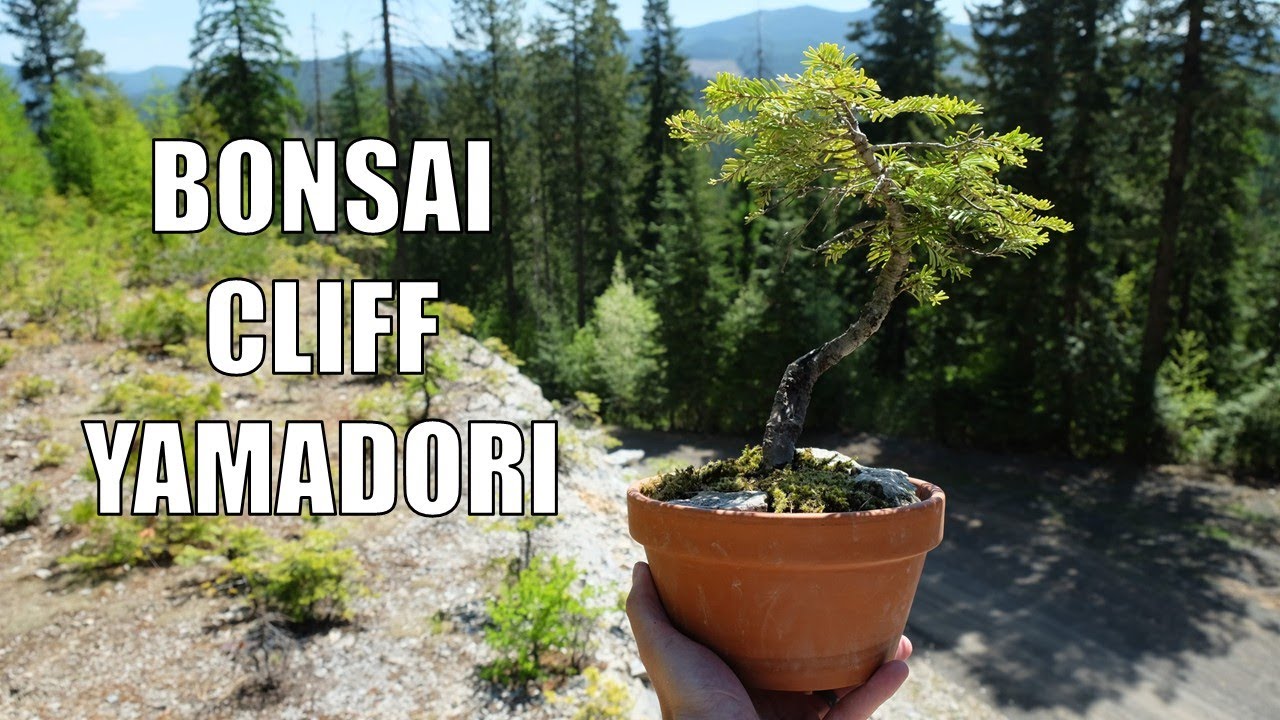
(Cliff-collected yamadori example—small but packed with character, ready for potting!)
Method 2: Buying High-Quality Yamadori from Reputable Sources 🛒
Not everyone can (or should) collect in the wild—buying established yamadori from ethical sources is often the smarter, faster path to exceptional material.
Evaluating Vendors & Sellers
Look for sellers with proven track records:
- Reputable bonsai nurseries (e.g., those specializing in collected material)
- Experienced collectors who sell through clubs, shows, or online platforms
- International options: European nurseries for Scots pine/juniper, North American specialists for Rocky Mountain species
Red flags: No collection history provided, suspiciously low prices, or trees shipped bare-root without aftercare guidance.
Spotting Quality in Pre-Collected Yamadori
Inspect (in person or via detailed photos):
- Healthy, fibrous roots with white tips
- Strong apical growth and no signs of dieback
- Properly established in training pots (not fresh collects)
- Honest pricing: High-quality yamadori often starts at $200–$1000+ depending on size/species/character

(Stunning yamadori maple example from a quality nursery—beautiful nebari and mature bark!)

(Collected juniper in training pot—healthy foliage and excellent deadwood features!)
Auction, Club, & Community Sources
Bonsai society auctions, regional shows, and trusted online forums/groups often yield gems. Build relationships—many pros sell directly to club members.
Advanced Tips from Experienced Collectors 🏆
After decades of collecting and mentoring others, here are some pro-level techniques that separate average finds from future show trees.
- Pre-collecting preparation (the “one-year head start”) Many serious collectors scout a promising tree, then return the following year after gentle root pruning and light fertilizing in place. This dramatically increases fibrous root density before the big move—survival rates can jump from ~50% to 85–90%.
- Regional variations & adaptations
- North America: Focus on high-elevation sites (Rockies, Sierras) for compact, wind-sculpted junipers and pines. Spring snowmelt timing is critical.
- Europe: Lowland heathlands and limestone outcrops yield superb common juniper and Scots pine. Autumn collection works well here due to milder winters.
- Asia (where permitted): Mountainous zones produce legendary white pines and maples—collection often requires special forestry permits and is tightly controlled.
- Boosting nebari & movement post-collection Once recovered (usually Year 2+), air-layering or approach-grafting can dramatically improve weak nebari. Tilt the tree in its training pot over time to enhance trunk movement. Many pros use slow, deliberate wiring to exaggerate natural twists without forcing them.
- Expert insight One veteran collector I know once said: “The best yamadori isn’t the biggest or most dramatic at collection—it’s the one with the strongest will to live.” Always trust vigor over initial appearance.
(Pro-level yamadori Scots pine in development—notice the enhanced nebari created through careful post-collection technique!)
(A beautifully recovered yamadori larch—strong apical growth and promising future deadwood!)
Common Mistakes to Avoid When Sourcing Yamadori ❌
Even experienced collectors slip up. Here are the pitfalls I see most often:
- Collecting endangered or protected species without permits
- Digging at the wrong time (summer or deep winter = near-certain failure)
- Taking too much root mass or leaving too little—balance is key
- Overlooking aftercare: Placing a fresh collect in full sun or forgetting to mist
- Impulse buys of “bargain” yamadori that are actually weak or freshly dug without proper establishment
- Over-collecting from one site—leave plenty for regeneration and future collectors
Avoid these, and your success rate will soar.
Case Studies: Real-World Examples of Exceptional Yamadori Journeys 📸
Case 1: The Cliffside Juniper Transformation A Rocky Mountain juniper collected from a Colorado outcrop in 2018. At collection: 18″ tall, dramatic deadwood, but sparse roots. After two years of careful aftercare and wiring, it became a compact, windswept masterpiece featured in a regional exhibit. Lesson: Patience and root-focused care turn good material into great bonsai.
Case 2: The Urban-Dori Maple Rescue A field maple rescued from a construction site in the UK. Minimal nebari initially, but vigorous regrowth allowed air-layering to create radial roots. Now in refinement phase with beautiful fall color. Lesson: Ethical rescues can yield high-quality material without wild impact.
Case 3: The Failed Pine (Learning Opportunity) A large ponderosa pine collected too late in spring—foliage demand outstripped root recovery. Died after six months despite intensive care. Lesson: Timing trumps everything.
These real stories show that sourcing high-quality yamadori is as much about the journey and learning as it is about the final tree.
FAQs: Your Top Questions Answered ❓
Is yamadori collecting legal where I live? It depends on your country/region. In the US, national forests and BLM land often allow collection with a free or low-cost permit. In Europe, many countries require forestry permission. Always check local regulations and never collect without authorization.
What’s the best time of year to source yamadori? Early spring during bud swell is ideal for most species (roots active, foliage demand low). Some regions allow late fall collection if winters are mild.
How much should I expect to pay for high-quality material? Established, pre-collected yamadori with good nebari and health typically ranges from $200–$2,000+ depending on species, size, and character. Fresh-collected raw material is cheaper but riskier.
Can beginners successfully collect yamadori? Yes—but start small, join a local club for mentorship, and prioritize aftercare over ambition. Many beginners succeed on their second or third attempt.
How long until a yamadori becomes a refined bonsai? Realistically 5–15 years depending on starting quality, species, and care. High-quality starting material shortens this significantly compared to seed-grown or nursery stock.
Conclusion: Start Your Yamadori Journey Today! 🚀
Sourcing high-quality yamadori is one of the most rewarding aspects of bonsai—it connects you directly to nature’s artistry while challenging you to become a better steward and cultivator. By focusing on ethical practices, precise timing, quality evaluation, and diligent aftercare, you’ll avoid heartbreak and build a collection of truly exceptional trees.
Whether you venture into the mountains with a mattock and permit, build relationships with trusted nurseries, or rescue urban survivors, the path is yours to explore. Grab your tools, do your research, respect the land—and happy hunting!
Your next masterpiece is waiting out there. 🌳💚











