
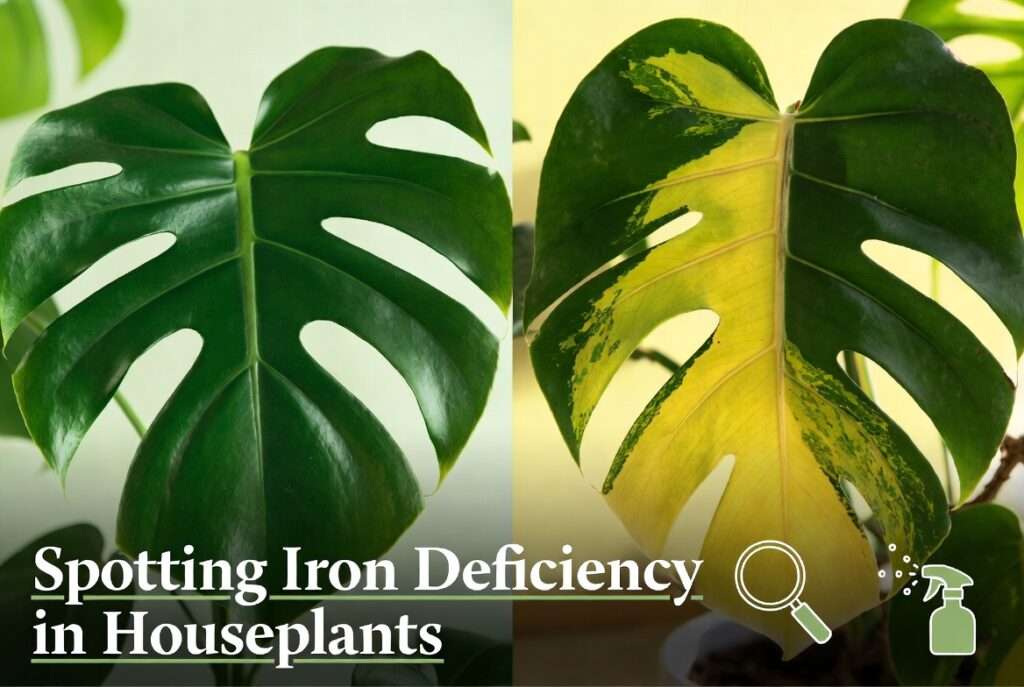
Your once-vibrant Monstera deliciosa or lush Fiddle Leaf Fig suddenly looks pale and sickly. The newest leaves are turning a bright, sickly yellow while the veins stay dark green, almost like a painted map. 😟 If this sounds familiar, you’re likely dealing with spotting iron deficiency in houseplants — one of the most common yet fixable issues indoor gardeners face.
Iron deficiency, also known as iron chlorosis, stops your plant from producing enough chlorophyll, the green pigment essential for photosynthesis. Without it, new growth suffers first because iron is an immobile nutrient — the plant can’t easily move it from older leaves to newer ones. The good news? With the right knowledge, you can spot the problem early, understand exactly why it’s happening, and bring your houseplant back to vibrant, healthy green in days to weeks. 🌱
In this comprehensive guide, you’ll discover clear visual symptoms, the real root causes (pun intended), how to tell it apart from similar issues like magnesium or nitrogen deficiency, fast-acting fixes including foliar sprays and soil treatments, and proven prevention strategies. Backed by horticultural best practices from university extensions and years of hands-on plant care experience, this article will help you confidently diagnose and treat iron deficiency so your indoor jungle thrives year-round. Let’s turn those yellow leaves lush and green again! 👇
What Is Iron Deficiency in Houseplants? 🌿
Iron is a micronutrient that plants need in tiny amounts, yet it’s absolutely critical. It plays a starring role in chlorophyll synthesis, enzyme activation, and energy transfer during photosynthesis. When iron is unavailable, leaves lose their rich green color — a condition called chlorosis.
Important note: Most potting mixes actually contain plenty of iron. The real issue is usually that the iron becomes “locked up” and unavailable for roots to absorb. This happens most often when soil pH rises too high (becomes alkaline), making iron insoluble.
For houseplants, iron deficiency is especially frustrating because symptoms appear dramatically on new growth, signaling that something in your care routine needs tweaking. Understanding this helps you act fast before stunted growth or leaf drop sets in. ✨
Key Symptoms of Iron Deficiency: How to Spot It Early 🌱
The hallmark symptom of spotting iron deficiency in houseplants is interveinal chlorosis on the youngest leaves. Here’s exactly what to look for:
- Early stage: New leaves appear slightly paler than usual, with a subtle yellowish tint.
- Moderate stage: The tissue between the veins turns bright yellow or lime-green, while the veins remain distinctly dark green. This creates a striking “web” or “map” pattern.
- Severe stage: Leaves may turn almost completely white or pale yellow, develop brown necrotic spots or crispy edges, become smaller than normal, and eventually drop. The plant may stop producing new growth or look generally weak and spindly. 😢
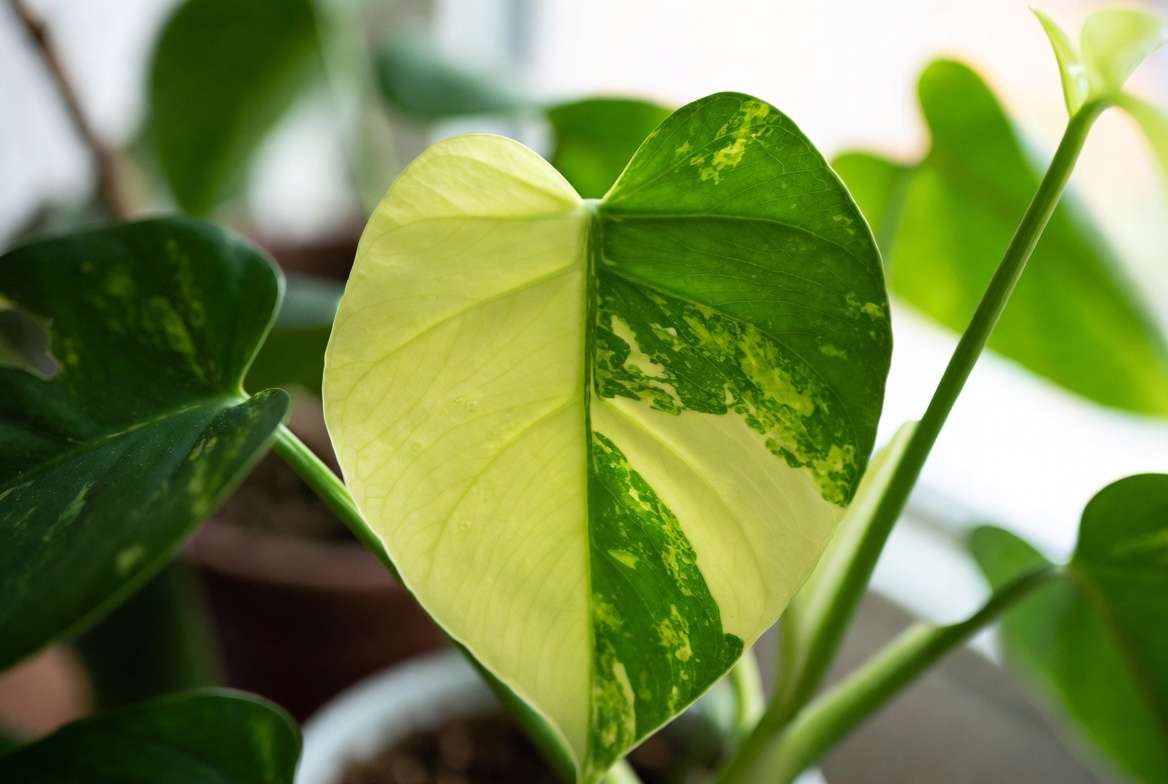
Key differentiator: Symptoms always show up first on new growth (top or newest leaves). Older leaves usually stay green because the plant prioritizes moving what little iron it has to fresh tissue.
Additional signs include reduced flowering in blooming plants, slower overall growth, and sometimes a general lack of vigor even if you’re watering and lighting correctly.
Pro Tip: Check your plants in bright, natural light or take a clear photo — the contrast between yellow tissue and green veins becomes obvious. Use your phone’s macro mode for close-ups of the veins. 🌿
Visual Identification Guide
Imagine (or insert) these images in your article:
- Healthy deep-green Monstera leaf vs. chlorotic new leaf with green veins.
- Progression series: mild → moderate → severe chlorosis on a Fiddle Leaf Fig.
- Close-up of interveinal pattern.
These visuals make diagnosis much easier for readers.
Common Houseplants Prone to Iron Deficiency 🪴
Not all houseplants are equally susceptible. Acid-loving or high-demand species struggle most when pH drifts upward:
- Monstera deliciosa and Philodendrons — fast growers that quickly show yellow new leaves.
- Fiddle Leaf Fig (Ficus lyrata) — very common complaint; new growth pales dramatically.
- Calathea, Alocasia, and other prayer plants — sensitive to pH shifts and humidity changes.
- Peace Lily (Spathiphyllum), Anthurium, and Hibiscus — flowering types that demand consistent iron availability.
- Indoor Citrus (lemon, lime) and Gardenia — classic chlorosis victims.
- Flowering houseplants like Petunias or Calibrachoa (if grown indoors) also suffer quickly.
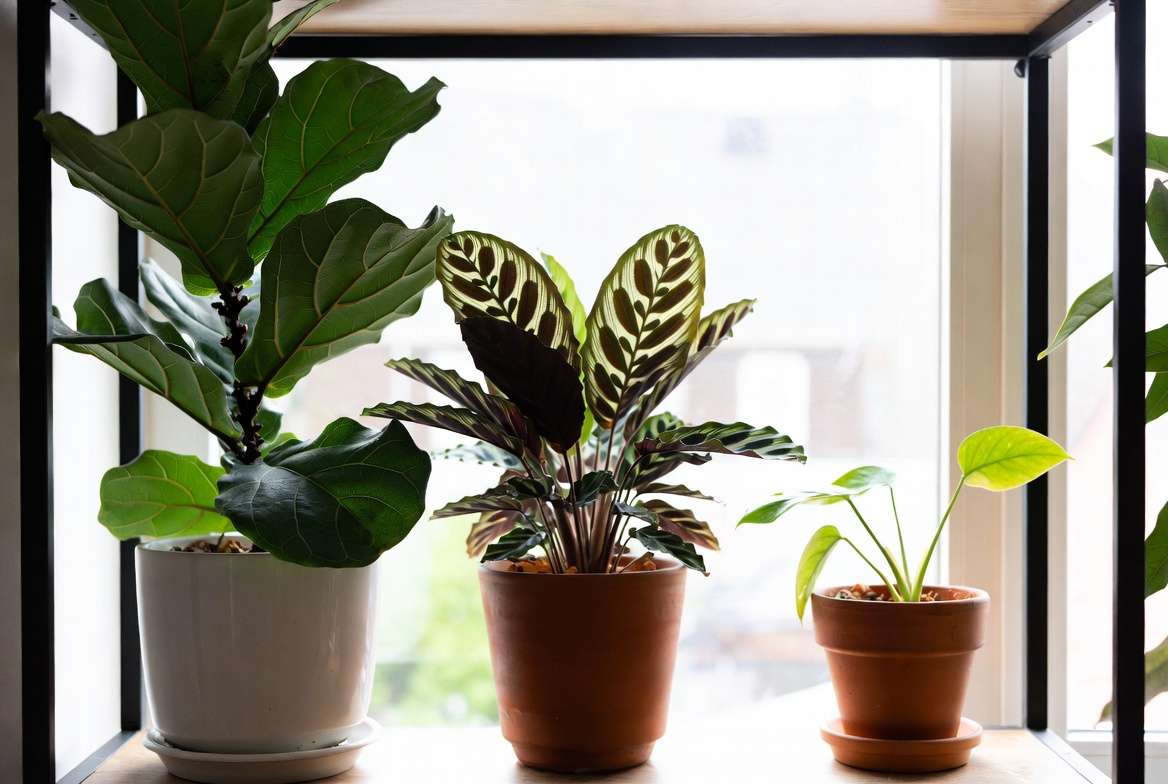
If you grow any of these beauties, regular monitoring is your best friend. 🌺
Causes of Iron Deficiency in Houseplants — The Real Culprits 🔍
Understanding why iron becomes unavailable is the key to permanent fixes. Here are the most common causes, ranked by frequency in indoor settings:
1. High Soil pH (Alkaline Conditions) — The #1 Culprit
Most houseplants prefer a slightly acidic pH of 5.5–6.5. When pH climbs above 7.0 (especially 7.5+), iron converts to an insoluble form that roots can’t absorb, even if plenty is present in the soil. Over time, regular tap water (often alkaline) and certain fertilizers push pH upward. University extensions consistently note this as the primary driver of iron chlorosis.
2. Poor Soil Drainage and Compaction
Heavy, waterlogged, or old compacted potting mix reduces root oxygenation. Unhealthy roots can’t take up nutrients efficiently, worsening any deficiency.
3. Nutrient Imbalances from Over-Fertilization
Excess phosphorus, calcium, or magnesium can “lock out” iron uptake. Many all-purpose fertilizers are high in these, creating hidden imbalances over months.
4. Root Problems
Root rot from overwatering, damage during repotting, or cold temperatures (which slow root activity) all limit iron absorption. Cool winter soils are a frequent trigger.
5. Other Contributing Factors
- Low light levels (reduces demand for chlorophyll but doesn’t fix underlying issues).
- Hard tap water high in bicarbonates (raises pH).
- Using non-chelated iron supplements in alkaline conditions (they simply don’t work).
Identifying your specific cause prevents the problem from returning. 🛡️
How to Diagnose Iron Deficiency Accurately 🔬
Don’t guess — confirm! Follow this step-by-step process:
- Observe symptom location: New leaves affected? Likely iron or manganese. Old leaves? Probably nitrogen or magnesium.
- Examine the pattern: Sharp green veins with yellow tissue between = classic iron chlorosis.
- Test soil pH: Use an affordable digital meter or test kit. Aim for 5.5–6.5 for most houseplants.
- Rule out other issues: Check for pests, over/underwatering, or insufficient light.
Differentiating from Similar Deficiencies (Comparison Table)
| Deficiency | Affected Leaves | Symptom Details | Veins | Other Clues |
|---|---|---|---|---|
| Iron | New/young | Yellow between veins, sharp contrast | Stay green | No brown specks usually |
| Magnesium | Old/lower | Yellow between veins, may have red tint | May yellow too | Common in older foliage |
| Nitrogen | Old/lower | Uniform yellowing, entire leaf pale | Pale too | Stunted growth, spindly stems |
| Manganese | New/young | Interveinal chlorosis + small brown specks or grey sheen | Often stay green but edges may differ | More necrotic spots |
This table is a game-changer for confident diagnosis. Tissue testing or lab analysis provides ultimate certainty but isn’t necessary for most home growers.
Home pH Testing Tip: For a quick check, mix soil with distilled water and use vinegar (fizzes = alkaline) or baking soda (fizzes = acidic). For precision, invest in a reliable meter.
Quick Fixes for Iron Deficiency in Houseplants — Fast Relief! ⚡
You can see improvement in as little as a few days with the right approach. Combine short-term and long-term solutions for best results.
Immediate Short-Term Solutions: Foliar Sprays
Foliar application delivers iron directly through leaves, bypassing soil pH issues for quick greening.
- Recommended Recipe: Dissolve 2 ounces (about 4 tablespoons) of 20% ferrous sulfate in 3 gallons of water. Add a couple drops of mild dish soap as a surfactant. Spray early morning or evening to avoid leaf burn. 🌿
- Chelated Iron Spray: Commercial liquid chelated iron (e.g., products containing Fe-EDDHA or EDTA) works even better and faster in many cases. Follow label rates — often 1–2 teaspoons per quart of water.
- Frequency: Repeat every 7–14 days until new growth is healthy. Results can appear in 24–72 hours for mild cases.
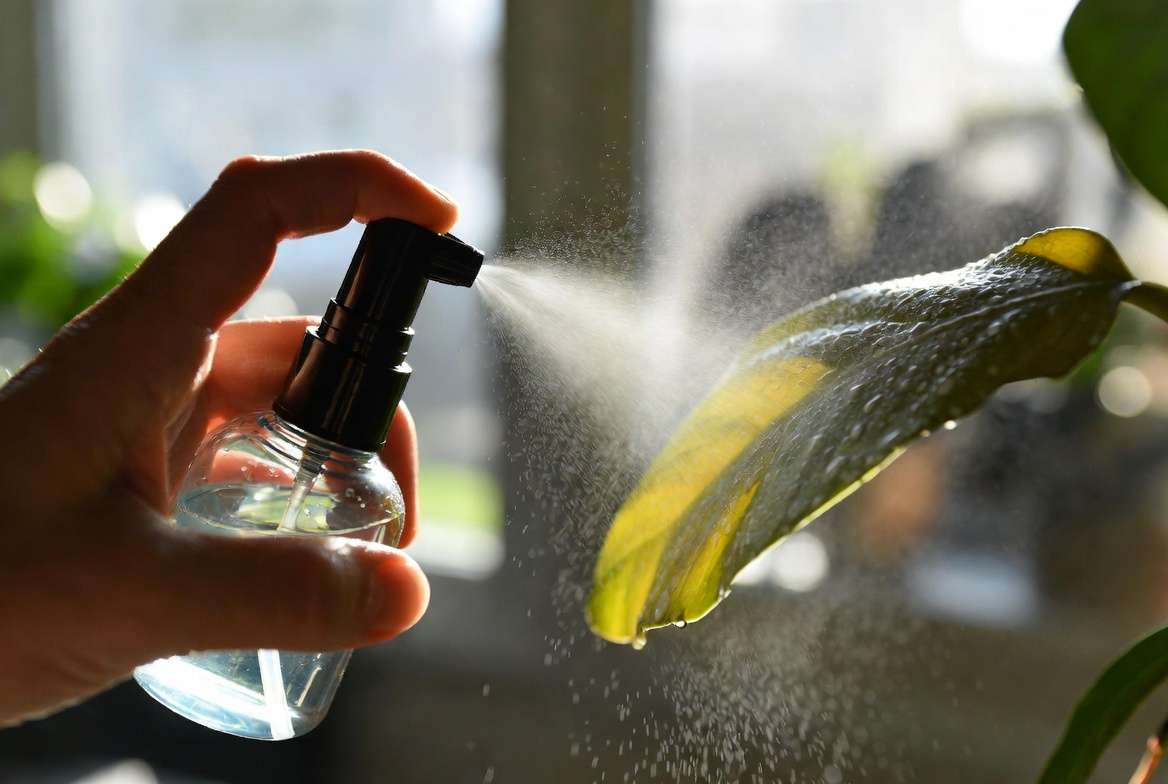
Safety Note: Test on one leaf first. Never spray in direct hot sun.
Long-Term Soil Treatments
- Chelated Iron Soil Drench: Use Fe-EDDHA (best for high pH) or Fe-DTPA. Apply around the root zone per package instructions. This form stays available across a wider pH range.
- Iron Sulfate: Effective in acidic to neutral soils but less so above pH 7.
- Acidifying Agents: Diluted white vinegar (1–2 tablespoons per gallon of water) as a monthly drench, or elemental sulfur mixed into soil for slower, longer-lasting pH reduction.
Repotting and Soil Amendment Strategies
Refresh with a well-draining, slightly acidic mix: add pine bark, peat moss, or perlite. For acid-loving plants, choose ericaceous potting mix. Repot only when necessary and gently tease out old soil.
Prevention: Keep Iron Deficiency Away for Good 🛡️
Prevention beats rescue every time:
- Monitor and maintain soil pH regularly (every 3–6 months).
- Use rainwater or distilled water when possible, or let tap water sit 24 hours.
- Fertilize with balanced, acidifying formulas designed for houseplants or citrus.
- Ensure excellent drainage — never let pots sit in saucers of water.
- Provide bright, indirect light to support healthy chlorophyll production.
- Mulch the soil surface with acidic materials like pine needles (for larger pots).
Expert insight: Small, consistent adjustments (like occasional pH checks) prevent big problems later. Your plants will reward you with lush, dark green foliage and vigorous growth! ✨
Step-by-Step Recovery Plan for Your Houseplant (7–14 Day Roadmap) 🌿
Follow this practical, expert-backed plan to rescue your chlorotic houseplant safely and effectively:
- Day 1 – Diagnose & Isolate Confirm iron deficiency using the symptom checklist and pH test above. Move the plant to bright, indirect light (avoid direct sun stress). Stop all fertilizer until new growth greens up.
- Day 1–2 – Quick Foliar Boost Apply a chelated iron foliar spray in the early evening. Mist both sides of the leaves thoroughly. This often brings visible greening within 48–72 hours. 😊
- Day 3 – Soil pH Correction If pH is above 6.8, water with a diluted acidifying solution (1 tablespoon white vinegar per gallon of distilled or rainwater). For stronger correction, apply a soil drench of chelated iron (Fe-EDDHA preferred).
- Day 4–7 – Support Root Health Check soil moisture — water only when the top 2 inches feel dry. Ensure excellent drainage. If the plant is root-bound or soil is compacted, plan a gentle repot into fresh, slightly acidic mix within the next 2 weeks.
- Week 2 – Monitor & Repeat New leaves should emerge greener. Repeat foliar spray once more if needed. Begin using an acidifying liquid fertilizer at half strength once the plant stabilizes.
- Ongoing (Weeks 3+) – Maintenance Mode Keep pH in the sweet spot (5.5–6.5). Fertilize every 4–6 weeks during growing season with a formula that includes chelated micronutrients. Celebrate those deep green new leaves! 🎉
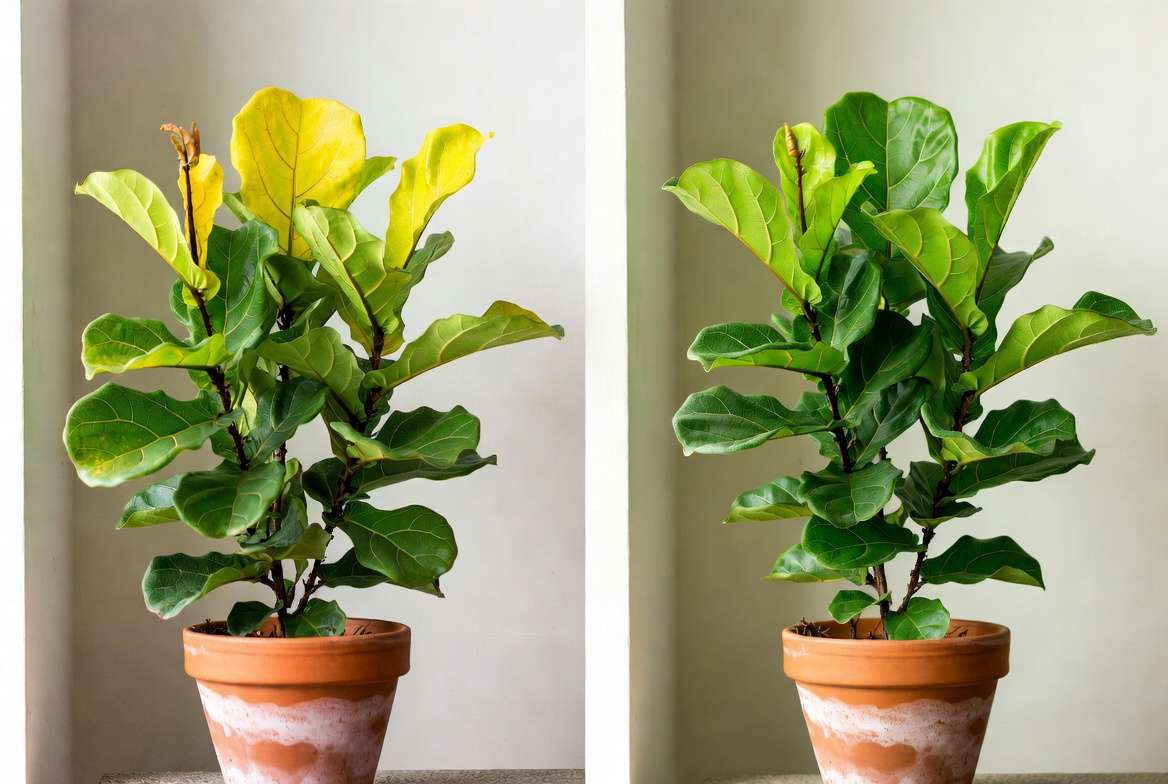
Expect full recovery in 2–6 weeks depending on severity. Severe cases with heavy leaf drop may take longer but usually bounce back beautifully with patience.
Common Mistakes to Avoid When Treating Iron Deficiency ⚠️
Even experienced plant parents make these errors — here’s how to dodge them:
- Applying regular iron sulfate in high-pH soil — It simply won’t dissolve and can even worsen salt buildup.
- Over-applying iron — Excess can cause toxicity, leading to bronzing or root damage. Always follow label rates.
- Ignoring the pH — Treating symptoms without fixing the underlying alkaline condition means the problem returns in weeks.
- Spraying in hot sun or on wet leaves — Causes leaf scorch or fungal issues.
- Using home remedies like rusty nails — They release iron far too slowly and unpredictably; modern chelated products are far safer and more effective.
- Repotting a stressed plant too aggressively — Wait until the plant shows signs of recovery before disturbing roots.
- Fertilizing heavily during winter — Cold soil slows uptake; less is more when light levels are low.
Avoiding these pitfalls saves time, money, and your beloved houseplants.
Real-Life Examples and Case Studies 🌱
Case 1: The Yellowing Fiddle Leaf Fig Sarah from Dhaka noticed her 4-foot Fiddle Leaf Fig developing pale new leaves with dark green veins. Soil pH tested at 7.4. After switching to rainwater, applying Fe-EDDHA soil drench, and two foliar sprays, new growth emerged deep green within 18 days. The plant has since doubled in size.
Case 2: Rescue of a Struggling Calathea A popular Instagram plant parent shared their Calathea orbifolia losing vibrancy. Root cause: old potting mix compacted and alkaline from hard tap water. Repotting into a peat-perlite-pine bark mix + monthly vinegar drenches restored the dramatic leaf patterns in under a month.
Case 3: Indoor Citrus Recovery A potted Meyer lemon showed severe interveinal chlorosis during winter. Cool temperatures slowed roots, combined with alkaline city water. Foliar chelated iron + warming the plant and using acidifying fertilizer brought bright green flush and even a few flowers by spring.
These real recoveries prove that consistent, targeted action works — even for tricky species.
Frequently Asked Questions (FAQs) ❓
Can iron deficiency kill my houseplant? Rarely on its own, but prolonged severe deficiency weakens the plant, making it vulnerable to pests, diseases, and eventual decline. Early intervention almost always saves it.
Is chelated iron better than regular iron sulfate? Yes — chelated forms (especially Fe-EDDHA) remain available across a wider pH range (up to 9.0), making them far more effective for most houseplants.
How often should I apply iron to houseplants? Foliar sprays every 10–14 days during active treatment, then switch to soil applications every 4–8 weeks for prevention, depending on your water and soil conditions.
Why do my plants keep getting iron deficiency every year? Most likely recurring high pH from alkaline tap water or fertilizer buildup. Regular pH monitoring and switching to rainwater or acidifying routines usually break the cycle.
Can I use rusty nails or banana peels as home remedies? Rusty nails release iron too slowly and inconsistently; banana peels are better for potassium. Stick with proven chelated iron products for reliable results.
What’s the best iron supplement for indoor plants in 2026? Look for liquid chelated iron with Fe-EDDHA or Fe-DTPA. Popular reliable options include brands like Southern Ag, Bonide, or houseplant-specific micronutrient mixes containing multiple chelated trace elements.
What’s the difference between iron and magnesium deficiency? Iron affects newest leaves with sharp green veins; magnesium usually hits older leaves and the veins themselves may yellow or show reddish tones.
Should I repot immediately when I see yellow leaves? Not right away. Treat the deficiency first so the plant is stronger before repotting stress.
Conclusion 🌿
Spotting iron deficiency in houseplants no longer needs to be a mystery or source of frustration. By recognizing the classic interveinal chlorosis on new growth, understanding that high soil pH is usually the real villain, and using targeted quick fixes like chelated iron foliar sprays combined with long-term pH management, you can restore your plants to their lush, vibrant best.
Remember: healthy houseplants start with healthy roots and the right soil chemistry. A little proactive care — regular pH checks, proper watering habits, and balanced micronutrient support — goes a long way toward preventing future problems.
Your Monstera, Fiddle Leaf Fig, Calathea, or indoor citrus will reward you with deep emerald leaves, vigorous new growth, and that satisfying “plant parent win” feeling. 🌱✨











