
Imagine this: You’ve just brought home a stunning young mango tree 🌳 or a vibrant hibiscus shrub, dreaming of lush shade, beautiful blooms, and perhaps even homegrown fruit in a few years. But within weeks, it’s struggling—wilting leaves in the heat, stunted growth, or worse. The culprit? Often, it’s not the plant itself… it’s timing.
Many gardeners and homeowners face this exact dilemma: spring vs. fall planting differences can make or break your tree’s long-term success. In temperate regions, experts frequently debate whether fall’s cooler conditions give roots a head start 🌿 or if spring’s awakening energy lets plants hit the ground running. In warmer subtropical and tropical areas like Dhaka, Bangladesh, the equation shifts dramatically—no true “fall dormancy,” but distinct seasonal windows tied to monsoon rains, heat waves, and cooler dry periods.
As a plant care specialist with years of experience guiding home gardeners, landscapers, and tree enthusiasts through regional challenges, I’ll break it down comprehensively. We’ll compare pros/cons, dive into physiology, share region-specific insights (including Bangladesh adaptations 🇧🇩), and give you a clear decision framework. By the end, you’ll know exactly which season is better for YOUR trees and shrubs—and how to plant for maximum survival and thriving growth. Let’s dig in! 🌟
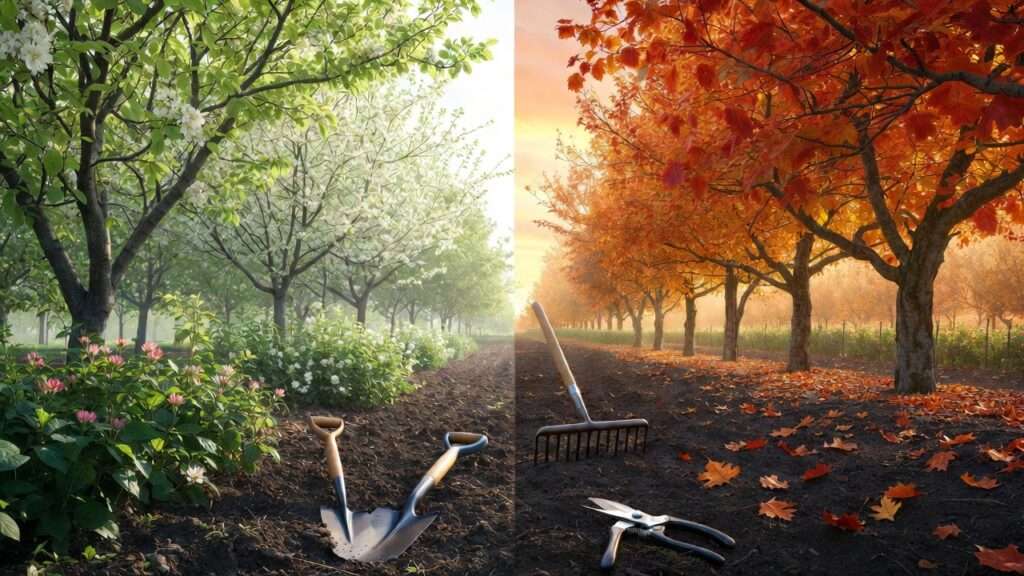
Understanding the Core Differences: Spring vs. Fall Planting 🌸🍂
What Actually Happens When You Plant in Spring vs. Fall?
At the heart of spring vs. fall planting differences is plant physiology. Trees and shrubs are living systems that prioritize energy allocation based on environmental cues.
In spring, plants emerge from dormancy (or near-dormancy in evergreens). Energy surges toward new shoots, leaves, and flowers—top growth explodes with longer daylight and warming temperatures. Soil warms gradually, supporting root activity, but the plant must balance building foliage while establishing roots in increasingly hot, drying conditions ahead. This can lead to higher transplant stress if summer heat arrives quickly.
In fall, cooler air temperatures reduce transpiration (water loss through leaves), while soil often remains warm from summer—ideal for root growth. Many deciduous trees slow or stop above-ground growth, directing energy underground. Roots expand actively without competing for resources with new leaves, creating a stronger foundation before winter (or dry seasons). This “head start” often means healthier, more drought-resistant plants by the following growing season.
Key takeaway: Fall favors root establishment first; spring emphasizes visible top growth sooner—but with more immediate stress risks.
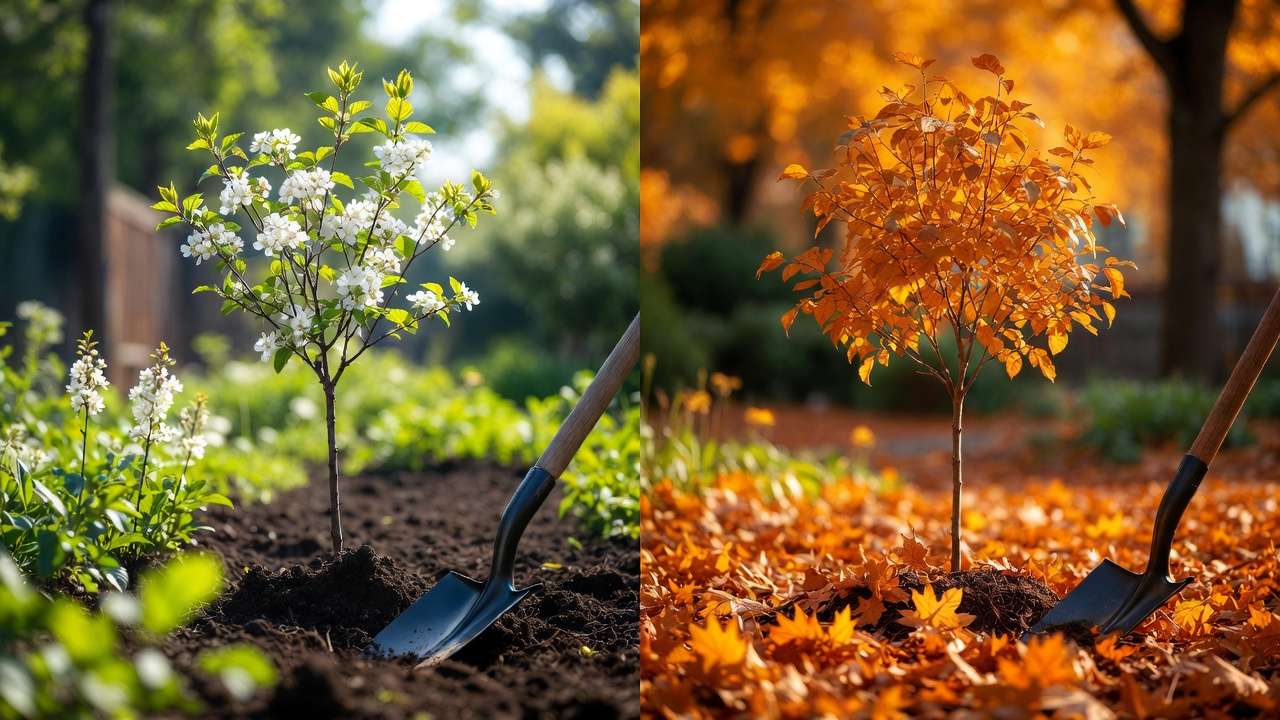
Key Environmental Factors That Tip the Scales 🔥💧🐛
- Temperature (air vs. soil): Soil temperature drives root growth best between 40–65°F (4–18°C). Fall often keeps soil warmer longer than air, boosting roots without heat stress. Spring starts cooler but ramps up fast.
- Rainfall and moisture patterns 💦: Fall/autumn rains (in temperate zones) or post-monsoon dry-but-cool periods reduce watering needs. Spring might bring wet soils but rising evaporation.
- Pest and disease pressure 🐛: Spring awakens insects and fungal issues alongside plants; fall sees declining activity.
- Transplant shock and recovery 😓: New plants lose roots during digging/moving. Fall’s lower stress lets them recover quietly; spring demands quick adaptation to heat/light.
These factors explain why university extension services (like those from UNH, Morton Arboretum, and others) often lean toward fall in moderate climates for better long-term success.
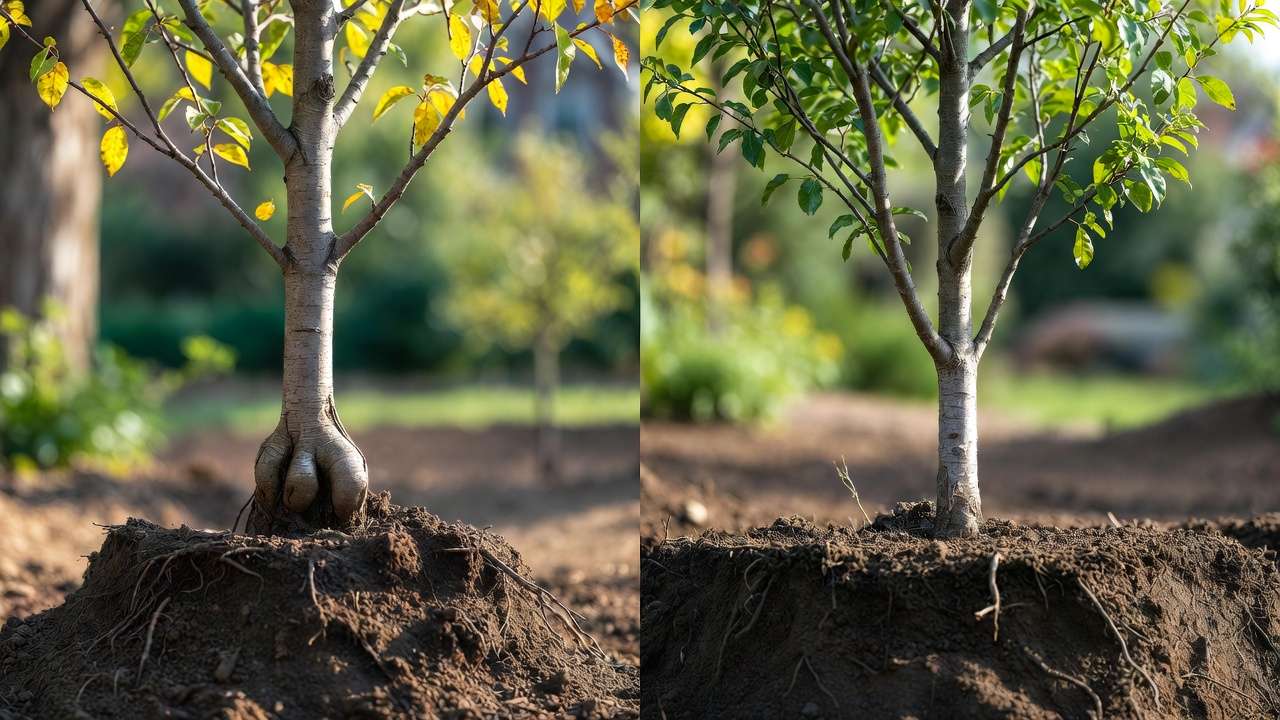
(Image: Side-by-side comparison of healthy fall-planted tree roots vs. stressed spring-planted one – strong fibrous roots spreading out vs. limited growth with some dieback)
Pros and Cons: A Side-by-Side Comparison 📊
Advantages of Spring Planting 🌷
- Immediate visible progress: Leaves and flowers appear quickly, giving instant gratification and easier monitoring for issues like poor drainage or pests.
- Full growing season ahead: Plants get months of daylight and warmth to build size before winter.
- Safer in harsh-winter zones: Avoids risk of early freezes damaging unestablished roots.
- Better for certain species: Some evergreens or heat-sensitive shrubs establish faster before summer.
When Spring Wins (Regional Examples) ❄️
- Cold temperate areas with late frosts or short fall windows (e.g., northern US states or high-altitude regions).
- Places with unpredictable autumn weather—early freezes or dry spells that limit root time.
Advantages of Fall Planting (Often the Expert Favorite) 🍁
- Superior root development: Warm soil + cool air = focused root growth, leading to stronger, more drought-tolerant plants by spring/summer.
- Reduced watering and stress: Lower transpiration means less frequent irrigation; plants enter dormancy calmly.
- Often better deals: Nurseries clear stock with discounts, and selection can be good late season.
- Less competition: Fewer pests, weeds, and maintenance demands in cooler weather.
When Fall Wins Big 🌟
- Temperate climates with reliable fall moisture and mild winters—roots grow for months before heat returns.
- Mild-winter subtropical zones: Extended root activity without freeze risk.
In many expert sources (Arbor Day Foundation, Oregon State Extension), fall planting gives trees an “extra growing season” underground, making them more resilient.
Special Considerations for Tropical and Subtropical Climates (Like Bangladesh) 🌴🇧🇩
The classic “fall is best” advice from temperate-zone sources (like US extension services) doesn’t always translate directly to warmer regions. In places like Dhaka, Bangladesh, you don’t get a true dormant winter—plants stay active year-round, and the six traditional seasons (Grisma/hot summer, Barsa/monsoon, Sharat/early autumn, Hemanta/late autumn, Sheet/winter, Basanta/spring) create unique planting windows.
Why the ‘Classic’ Advice Shifts in Warm Regions
- No prolonged dormancy → Fall planting doesn’t trigger the same “quiet root growth” as in cooler climates. Instead, the key is avoiding peak heat (Grisma, April–June) and heavy monsoon flooding/cyclone risks (Barsa, June–October).
- High humidity and rainfall favor fungal issues in wet seasons; dry, cooler periods reduce stress.
- Soil stays warm enough for roots almost year-round, but extreme heat stresses new transplants.
The sweet spots? Post-monsoon into cooler months (late autumn/early winter: November–February) for the longest low-stress establishment period, or very early spring (February–early March) before Grisma intensifies.

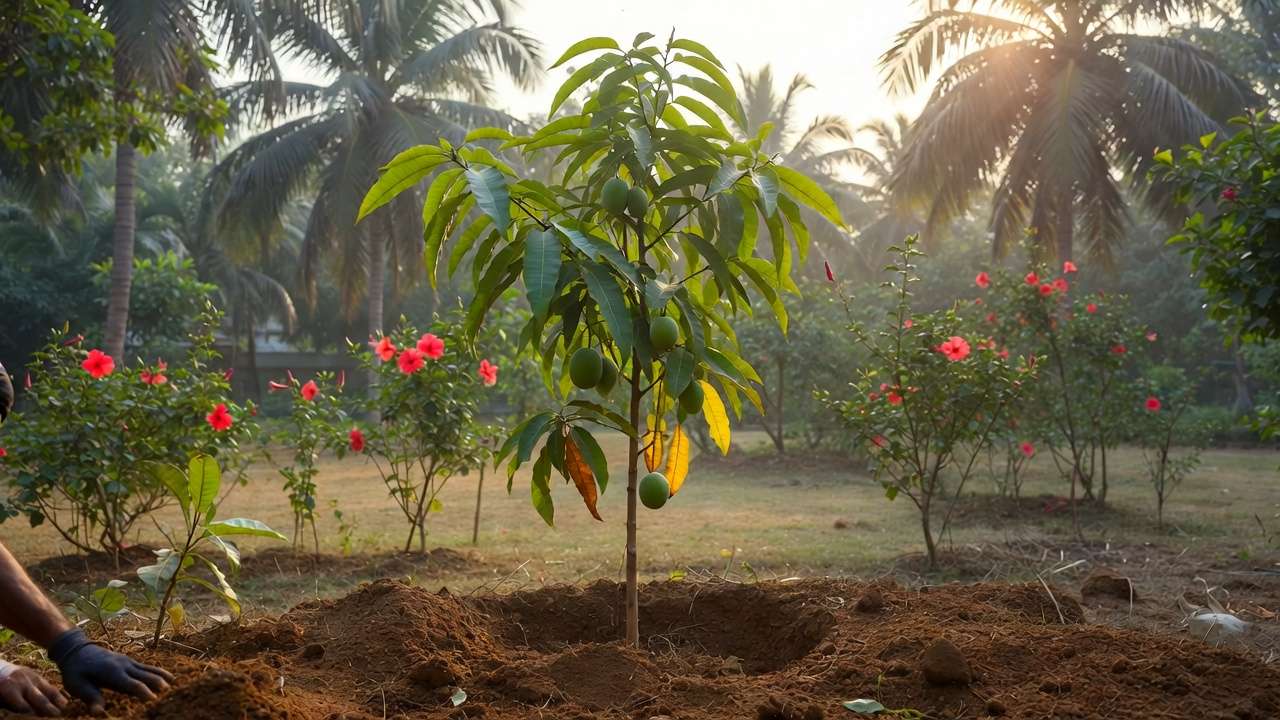
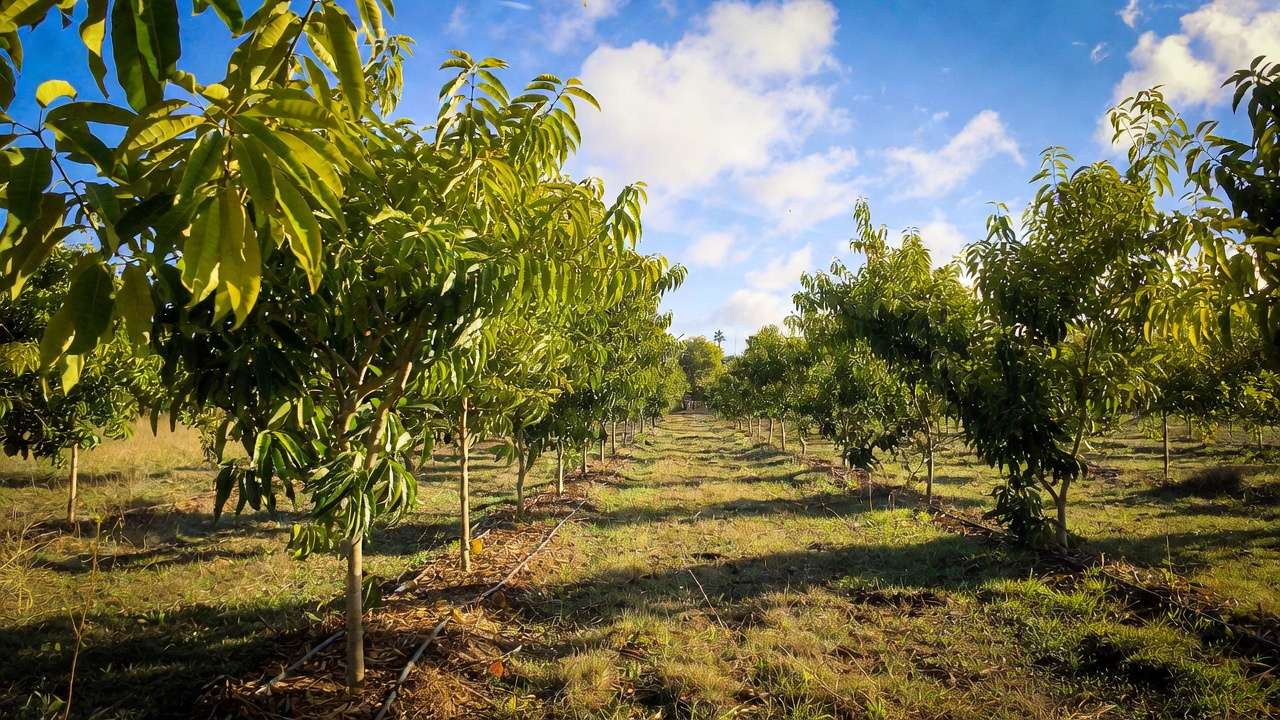
(These images show thriving mango trees in subtropical/tropical settings—notice the strong, established growth possible when timed right! 🌳)
Best Planting Windows in Bangladesh & Similar Climates 🗓️
- November–February (Hemanta/Sheet): Ideal “fall-like” window. Cooler temps (15–25°C), lower humidity, reduced rain → excellent root establishment with minimal watering. Plants build resilience before next hot season. Many local experts and nurseries recommend this for fruit trees.
- February–March (late Basanta/early Grisma): Second-best if you missed winter. Soil is warming, but heat isn’t extreme yet. Monitor closely for early drought.
- Avoid: April–June (peak Grisma heat + dry winds) and June–October (monsoon flooding, waterlogging, cyclones). Summer planting risks high failure rates.
Species-Specific Tips for Tropical Trees/Shrubs
- Mango (Aam): November–January best—roots establish deeply before Grisma heat; many successful Dhaka-area orchards plant then.
- Jackfruit, Neem, Jamun: Late autumn/early winter for best survival.
- Hibiscus, Bougainvillea, Jasmine shrubs: Can handle early spring (Feb–Mar) well, but fall timing still edges out for stronger roots.
- Pro tip: In clay-heavy Dhaka soils, amend with organic matter and ensure excellent drainage to prevent monsoon rot.
Step-by-Step Guide: How to Decide Which Season Is Best for YOU 🗓️
No one-size-fits-all answer—your local microclimate, soil, and tree type matter most. Use this decision framework:
Your Personalized Planting Season Decision Tree
- Do you have cold winters with freezes below 0°C? → Spring often safer (avoids unestablished roots freezing).
- Hot, dry summers ahead? → Fall usually wins (roots ready before heat stress).
- Tropical/subtropical like Bangladesh? → Prioritize November–February (cool/dry) or Feb–Mar.
- Soil stays wet/poor drainage? → Spring if wet springs, fall if autumn rains help settle soil.
- Planting evergreens? → Spring often preferred (they transpire year-round and need time before winter).
Quick Reference Table: Pros/Cons by Climate Zone
- Temperate cold (USDA 4–7): Fall > Spring (root head start before freeze).
- Temperate mild (USDA 8–9): Fall strongly preferred.
- Subtropical/Tropical (like BD): Late autumn/early winter > Early spring.
Best Practices for Success No Matter the Season 🌿
Timing is only half the battle. Even the perfect season won’t save a poorly planted tree. These proven techniques—drawn from arborist standards, university extension guidelines, and real-world tropical/subtropical experience—dramatically increase survival rates and long-term health.
Essential Planting Techniques to Boost Survival Rates
- Choose the Right Site 🗺️ Full sun for most fruit trees and flowering shrubs (6–8+ hours daily); well-drained soil is non-negotiable. In Dhaka’s often clay-heavy soils, test drainage by digging a 30 cm hole, filling it with water, and seeing how long it takes to drain (ideal: 1–4 hours).
- Dig the Hole Correctly ⛏️ 2–3 times wider than the root ball, but only as deep. Plant at the same depth it was growing in the nursery—never bury the root flare (where trunk widens at base).
- Handle Roots Gently For container plants: tease apart circling roots. For balled-and-burlapped: remove wire/burlap after positioning. Bare-root: soak roots 1–2 hours before planting.
- Backfill Smartly Use native soil (amend only lightly with compost—50/50 max). Firm soil gently to eliminate air pockets; avoid stomping hard.
- Water Deeply at Planting 💦 Create a small berm around the drip line to form a watering basin. Soak thoroughly (20–30 liters for small trees) right after planting.
- Mulch Like a Pro 🍂 Apply 7–10 cm (3–4 inches) of organic mulch (wood chips, dry leaves, coconut coir) in a wide ring—keep it 5–8 cm away from the trunk to prevent rot. Mulch conserves moisture, moderates soil temperature, and suppresses weeds. In Bangladesh’s hot months, this can cut watering needs by 30–50%.
- Stake Only When Necessary Use flexible ties and stakes only if the tree is tall/whippy and in a windy site. Remove after 1 year—over-staking weakens natural trunk strength.
Aftercare Differences: Spring vs. Fall
- Spring-planted trees/shrubs 🌸:
- Water consistently (deeply 2–3 times/week) through first summer.
- Watch for heat stress (wilting, leaf scorch) and provide temporary shade cloth if needed in Dhaka’s April–June heat.
- Fertilize lightly only after new growth appears (balanced slow-release, e.g., 10-10-10).
- Fall-planted trees/shrubs 🍁:
- Water less frequently—cooler weather means less evaporation.
- Minimal winter care in mild climates; in marginal frost zones, add extra mulch.
- No fertilizer until spring growth starts.
(Image suggestion placeholder – healthy mulched tree base showing proper distance from trunk)
Common Mistakes to Avoid (And How to Fix Them) 🚫
- Planting too deep → Leads to girdling roots and rot. Fix: Expose root flare at planting.
- Over-fertilizing at planting → Burns tender roots. Fix: Wait 4–6 weeks, then use half-strength.
- Watering too shallowly / too often → Encourages weak surface roots. Fix: Deep, infrequent soaks.
- Ignoring soil pH / drainage → Especially critical for mango, citrus in alkaline Dhaka soils. Fix: Test soil; add sulfur if pH >7.5.
- Planting during peak heat/monsoon → High mortality. Fix: Stick to recommended windows.
Real-World Examples and Expert Insights 📚
Case Studies from Gardeners and Arborists
- Dhaka rooftop garden success (2024–2025): A home gardener in Mirpur planted 3 mango saplings in December 2024 (post-monsoon cool period). All three survived the 2025 Grisma heat with minimal wilting and put on 60–80 cm of growth by monsoon—compared to a neighbor’s April-planted mango that struggled and needed heavy shading/watering. Key? Deep mulching + November–December timing.
- Temperate zone example (US Midwest): A community orchard compared 50 red maples: fall-planted (October) showed 92% survival and 30% more root mass by next spring vs. spring-planted (April) group at 78% survival. Roots had months to adapt before summer drought.
What Certified Arborists and Extension Services Say
- International Society of Arboriculture (ISA) and many state extensions (e.g., Oregon, Missouri, Penn State) state: “In most areas, fall is preferred for woody plants because it allows maximum root regeneration before summer stress.”
- Exceptions noted for evergreens (spring often better) and very cold/short-season regions.
- In subtropical South Asia (including ICAR and local agricultural universities), late autumn to early winter is repeatedly recommended for fruit and shade trees to build resilience before heat/monsoon.
Quick Tips & Checklists for Busy Gardeners ✅
10 Must-Know Planting Tips for Trees and Shrubs 🌟
- Always plant in the cool part of the day (early morning/evening) 🌅
- Water new plants every 5–7 days for first year (adjust for rain)
- Check for girdling roots before planting
- Use mycorrhizal inoculants for faster root establishment (especially in poor soils)
- Label your trees! (date + variety + season planted)
- Take “before” photos for progress tracking 📸
- Prune only dead/damaged branches at planting—save shaping for year 2
- Protect trunks from sunscald in first 1–2 years (whitewash or wrap in hot climates)
- Monitor for borers/beetles in spring—early detection saves trees
- Patience pays off—most trees take 2–3 years to really “take off”
Seasonal Planting Checklist (Print-Friendly)
- Test soil drainage & pH
- Choose healthy nursery stock (no circling roots)
- Prepare site & amendments
- Plant at correct depth
- Water deeply + mulch
- Record planting date & season
- Schedule first-year watering plan
Frequently Asked Questions (FAQs) ❓
Spring vs. Fall Planting – Your Top Questions Answered
Is fall always better? No—fall often gives superior root establishment in moderate and warm climates, but spring is safer in very cold zones or if fall weather is unpredictable/dry. In Bangladesh, late autumn/early winter usually wins.
Can I plant in summer? Risky and not recommended in most places—high heat + transplant shock = poor survival. Only attempt with container plants, heavy shading, and daily deep watering if you have no choice.
What about container vs. bare-root planting? Container plants are easier and more forgiving any season. Bare-root is cheaper and often available only in late winter/early spring—best planted immediately in spring or very early fall.
How late is too late in fall? In temperate zones: 6–8 weeks before first hard freeze. In Bangladesh: Aim to finish by mid-February so roots have time before Grisma heat.
Bangladesh-specific: Best time for fruit trees? November–January for mango, jackfruit, guava, litchi, citrus. February–early March as backup. Avoid monsoon and peak summer.
Conclusion: Plant Smarter, Not Harder 🌳💚
There is no universal “best” season—spring vs. fall planting differences depend on your climate, soil, tree species, and micro-conditions. But armed with this detailed comparison, physiology insights, regional adaptations (especially for subtropical Dhaka gardeners 🇧🇩), decision tools, and best practices, you can make an informed choice that sets your trees and shrubs up for decades of healthy, beautiful growth.
Assess your local weather patterns, check your soil, pick the right window, and plant with care. Your future shade, flowers, and fruit are worth the planning. 🌿
Now go make your landscape thrive—one smart planting at a time!











