
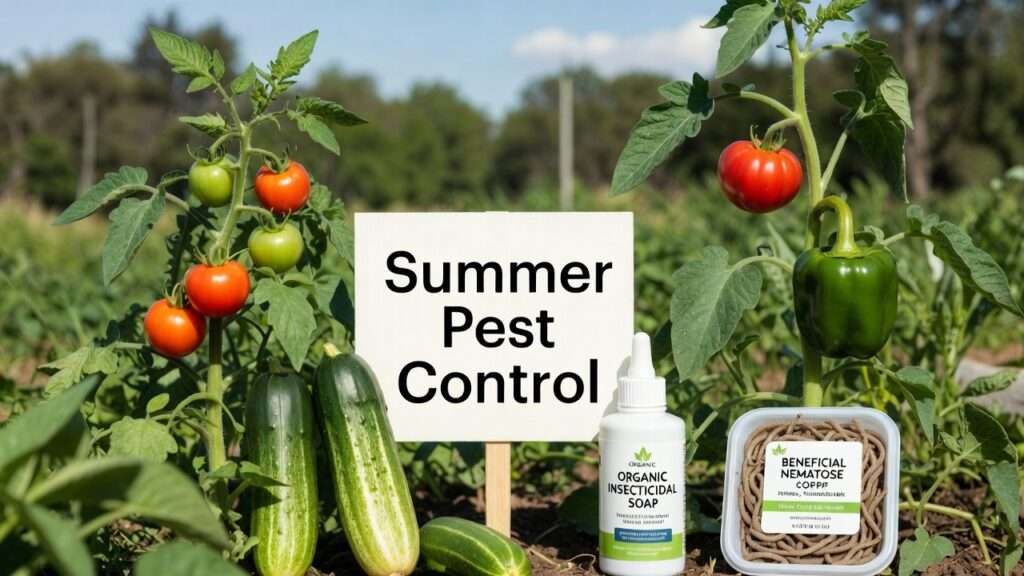
Picture this: It’s a warm summer morning in your vegetable garden. Your tomato plants are loaded with ripening fruit 🍅, zucchini blossoms are buzzing with promise, and beans are climbing happily up their trellises. You’ve poured love, water, and compost into every inch… only to discover overnight devastation — skeletonized leaves, curled tips dripping with sticky honeydew, or massive green caterpillars camouflaged perfectly against the stems 😩. Sound familiar?
Summer pest control for vegetable gardens becomes a top priority when heat and humidity turn your thriving plot into a pest paradise. High temperatures speed up pest reproduction, while lush growth and occasional drought stress make plants more vulnerable. The good news? You don’t need harsh chemicals to fight back. As a plant care specialist with over a decade of hands-on experience managing home vegetable gardens through scorching summers, I’ve refined an Integrated Pest Management (IPM) approach that prioritizes organic, eco-friendly strategies. These methods protect your harvest, safeguard pollinators like bees 🐝, keep your produce safe for your family, and build long-term garden resilience.
In this in-depth guide, we’ll cover everything from identifying the most destructive summer culprits to proactive prevention, physical barriers, biological allies, and targeted organic treatments. By the end, you’ll have a complete toolkit to enjoy cleaner, tastier veggies all season long 🌿.
:strip_icc()/close-up-hornworm-on-plant-0mKLecftaQfAg0lI5AGzmY-fcedf436f560494a8030f21d28a0d414.jpg)
Why Pests Explode in Summer Vegetable Gardens 🔥
Summer creates perfect storm conditions for pest outbreaks. Warm soil temperatures (often 75–90°F) accelerate egg hatching and larval development, while high humidity fosters fungal issues that weaken plants and attract sap-suckers. Overcrowded beds reduce airflow, trapping moisture and encouraging mites and fungi. Drought-stressed plants produce fewer defensive compounds, making them easy targets.
Many pests peak mid-to-late summer: tomato hornworms ravage in July–August, squash bugs multiply rapidly in heat, and spider mites thrive in dry, hot spells. Understanding these patterns lets you stay one step ahead with timely interventions.
Common Summer Pests in Vegetable Gardens: Identification Guide 🕵️♀️
Accurate ID is the foundation of effective control. Here are the usual suspects in summer vegetable gardens, with key signs and favorite hosts:
- Aphids 🐜 — Tiny (1–4 mm), pear-shaped insects in green, black, or pink clusters on new growth, stems, and leaf undersides. They suck sap, causing curled/distorted leaves, stunted growth, and sticky honeydew that attracts ants and sooty mold. Common on tomatoes, beans, peppers, and brassicas.
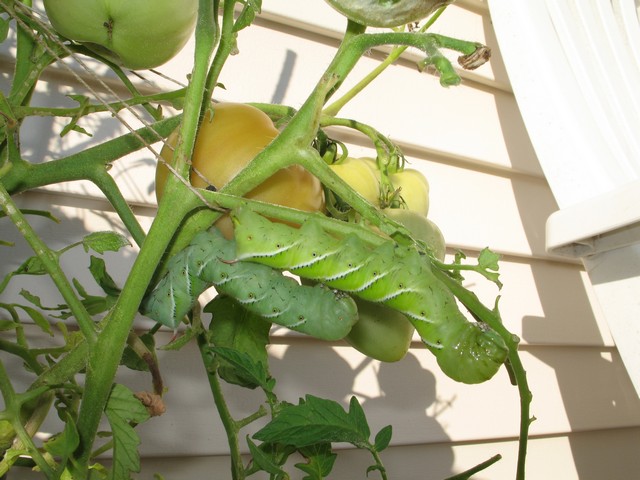
- Tomato Hornworms / Tobacco Hornworms 🐛 — Large (up to 4 inches) green caterpillars with white V-shaped markings (tomato) or diagonal stripes and red horn (tobacco). They defoliate tomatoes, peppers, and eggplants overnight, leaving black droppings (frass) as clues.
- Squash Bugs 🪲 — Flat, gray-brown shield-shaped adults (5/8 inch) with orange stripes on edges; nymphs gray-white. They suck sap from squash, pumpkins, and melons, causing wilted vines and transmitting diseases. Eggs in neat rows on leaf undersides.
:strip_icc()/BHG-How-to-Prevent-and-Get-Rid-of-Squash-Bugs-101269956-158195c32839429fb46cf2cb417ea9ce.jpg)
- Cucumber Beetles (Striped & Spotted) 🐞 — Yellow with black stripes or spots; they chew holes in leaves/flowers of cucumbers, squash, melons, and transmit bacterial wilt.
- Cabbage Worms / Loopers 🐛 — Velvety green caterpillars (from white butterflies) that chew irregular holes in brassica leaves (cabbage, broccoli, kale).
- Spider Mites 🔍 — Microscopic; look for fine webbing and stippled/yellow leaves on hot, dry days (beans, tomatoes, peppers).
- Flea Beetles 🦟 — Tiny, jumping black beetles creating “shotgun” holes in eggplant, potatoes, radishes.
- Whiteflies ☁️ — Tiny white moth-like insects fly up in clouds from leaf undersides; cause yellowing and sooty mold.
For quick comparison, imagine a visual chart: pest name | size/color | damage signs | host crops.
Prevention: Build a Pest-Resistant Garden Before Problems Start 🛡️
The best summer pest control starts long before bugs appear. Prevention through cultural practices forms the broad base of any successful organic IPM strategy. Healthy, vigorous plants naturally resist and recover from pest pressure better than stressed ones.
- Select Resistant Varieties — Many modern heirloom and hybrid seeds offer built-in defenses. For example, choose ‘Defiant’ or ‘Mountain Merit’ tomatoes (resistant to hornworms and diseases), ‘Marketmore 76’ cucumbers (tolerant to cucumber beetles), or ‘Royal Burgundy’ bush beans (less appealing to aphids). Check seed catalogs or local extension resources for region-specific recommendations.
- Build Healthy Soil & Balanced Nutrition 🌿 — Pests target weak plants first. Test your soil annually and amend with compost, aged manure, or worm castings to maintain fertility without excess nitrogen (which encourages soft, aphid-attracting growth). Use slow-release organic fertilizers and mulch with straw or shredded leaves to retain moisture and suppress weeds.
- Companion Planting for Natural Repellence 🌸 — Strategic plant pairings confuse, repel, or trap pests. Classic combos include:
- Marigolds (especially French marigolds) around tomatoes and peppers to deter nematodes and some beetles.
- Basil or garlic near tomatoes to repel hornworms and aphids.
- Nasturtiums as trap crops — aphids flock to them, sparing your veggies.
- Onions or chives with carrots to confuse carrot rust flies.

- Crop Rotation & Interplanting — Avoid planting the same family (e.g., nightshades like tomatoes/peppers) in the same spot year after year to break pest life cycles. Interplant fast-growers (radishes, lettuce) with slower ones to maximize space and disrupt pest patterns.
- Proper Spacing, Pruning & Airflow — Overcrowded plants create humid microclimates favoring mites and fungal issues. Prune lower leaves on tomatoes for better circulation and remove suckers to reduce hiding spots.
- Smart Mulching — Use reflective aluminum mulch early in the season to repel aphids and whiteflies by confusing their visual cues.
Implementing 3–4 of these habits dramatically reduces summer outbreaks in my own gardens and those of clients I’ve advised.
Physical & Cultural Controls: Non-Chemical First Line of Defense ✂️
When prevention needs backup, turn to mechanical methods — they’re immediate, zero-residue, and highly effective.
- Handpicking — My go-to for visible pests like hornworms and squash bugs. Walk the garden early morning or evening with a bucket of soapy water. Look for frass (black droppings) under leaves to spot hidden hornworms. Drop them in soapy water to drown humanely.

- Row Covers & Insect Netting 🕸️ — Lightweight floating row covers (Agribon or similar) block flying pests like cucumber beetles, cabbage moths, and squash bugs while allowing light, air, and water through. Install right after transplanting and secure edges. Remove for pollination on flowering crops like squash when needed.

- Strong Water Blasts 💦 — Blast aphids, mites, and whiteflies off plants with a hose (early morning so foliage dries quickly to avoid disease).
- Trap Crops — Plant sacrificial radishes for flea beetles or extra squash to draw squash bugs away from main crops.
These low-tech tactics often resolve 70–80% of issues without ever reaching for sprays.
Organic Treatment Options: When Prevention Isn’t Enough 🌿
For persistent problems, use approved organic products judiciously — always as a last resort after monitoring.
- Neem Oil — Derived from neem tree seeds, it disrupts feeding, growth, and reproduction. Effective against aphids, mites, whiteflies, and some beetles. Mix 1–2 tsp per quart water + a drop of dish soap (emulsifier); apply evenings to avoid leaf burn and pollinator exposure.
:max_bytes(150000):strip_icc()/GettyImages-2174339079-4b4b877dfb1f4c2bb4e14dc09d587ca0.jpg)
- Insecticidal Soap — Potassium salts of fatty acids suffocate soft-bodied pests on contact. Great for aphids and mites; reapply every 5–7 days as needed.
- Bacillus thuringiensis (Bt) — Bacterial toxin safe for humans/pets; targets caterpillars (hornworms, loopers, cabbage worms) specifically. Spray foliage where caterpillars feed; most effective on young larvae.
- Spinosad — Derived from soil bacteria; controls chewing insects. Use sparingly to protect beneficials.
- DIY Recipes — Garlic-pepper spray (blend garlic, hot peppers, water; strain and add soap) or neem + soap mixes for broad coverage.
Pro Tips: Always test on a small area first, apply in evenings, rotate products to prevent resistance, and respect pre-harvest intervals (e.g., neem often 0–1 day).
Attracting & Releasing Beneficial Insects: Nature’s Pest Control Team 🦋🐞
One of the most rewarding and sustainable aspects of organic summer pest control is turning your garden into a haven for natural predators. Beneficial insects can handle 50–90% of pest pressure once populations are established — far more consistently than any spray.
Top Beneficial Predators & Parasitoids to Encourage:
- Ladybugs (Lady Beetles) — Both adults and larvae devour aphids, mites, whiteflies, and small caterpillars at astonishing rates (one ladybug can eat 50+ aphids per day!).
- Green Lacewings — Larvae (often called “aphid lions”) are ferocious eaters of aphids, caterpillars, mites, and thrips.
- Hoverflies / Syrphid Flies — Larvae feed on aphids; adults pollinate.
- Parasitic Wasps (tiny, non-stinging) — Lay eggs inside caterpillars (hornworms, loopers), eventually killing the host.
- Predatory Bugs (minute pirate bugs, damsel bugs, big-eyed bugs) — Attack eggs and small soft-bodied pests.
- Ground Beetles & Spiders — Nighttime hunters of slugs, caterpillars, and squash bugs.
How to Attract & Support Them Naturally:
- Plant pollen- and nectar-rich flowers: dill, fennel, cilantro (let it bolt), yarrow, alyssum, cosmos, zinnias, sunflowers, and buckwheat.
- Provide water sources: shallow dishes with pebbles so insects can drink without drowning.
- Avoid broad-spectrum sprays — even organic ones — during peak beneficial activity (midday).
- Leave some “mess”: mulch piles, leaf litter, and uncut grass edges offer overwintering habitat.
Releasing Beneficials (When & How): If your garden lacks diversity or pests explode early, purchase live ladybugs, lacewings, or predatory mites from reputable suppliers (e.g., Arbico Organics, Nature’s Control). Release in evening, mist plants lightly first, and avoid hot direct sun. Repeat releases every 2–3 weeks if needed. In my experience, combining attraction planting with 1–2 strategic releases gives the best long-term results.
Monitoring & Early Intervention: Your Weekly Summer Routine 📅🔍
Prevention and beneficials work best when paired with consistent scouting — catching infestations at stage 1 instead of stage 10.
Weekly Summer Scouting Checklist:
- Walk the garden early morning or late evening (pests are less active).
- Flip leaves — most pests hide underneath.
- Look for early signs: curled tips (aphids), frass (caterpillars), wilting despite water (squash bugs), stippling/webbing (mites).
- Use a 10× hand lens for tiny pests like mites or thrips.
- Record findings in a simple notebook or phone app: date, crop, pest seen, severity (low/medium/high).
Action Thresholds (When to Intervene):
- Aphids: Treat if you see 10+ per leaf tip on >20% of plants.
- Hornworms: Handpick at first sight — one can defoliate a plant quickly.
- Squash bugs: Crush egg clusters immediately; treat adults if >2–3 per plant.
Early detection + quick physical removal often eliminates the need for any sprays.
Seasonal Summer Pest Calendar & Crop-Specific Tips 📆
Pest pressure shifts with the calendar. Tailor your strategy accordingly:
- Early Summer (June) — Flea beetles on brassicas/eggplant, aphids on new growth, cucumber beetles on transplants. Focus: row covers, reflective mulch, resistant varieties.
- Mid-Summer (July) — Peak hornworm and squash bug season. Scout tomatoes and squash daily; handpick relentlessly; release lacewings/ladybugs.
- Late Summer (August) — Spider mites explode in heat/drought, whiteflies on beans/tomatoes. Increase water blasts, horticultural oil, and predatory mite releases if available.
Crop-Specific Quick Tips:
- Tomatoes & Peppers 🍅 — Handpick hornworms; companion basil/marigolds; Bt for caterpillars.
- Squash & Cucumbers 🥒 — Row covers until flowering; trap crops; destroy squash bug eggs daily.
- Beans 🫘 — Blast aphids; encourage ladybugs; neem if needed.
- Brassicas 🥬 — Floating covers for cabbage worms; Bt sprays; interplant dill.
Troubleshooting Common Mistakes & FAQs ❓
Why do organic sprays sometimes fail? Poor coverage (undersides missed), spraying in full sun (leaf burn), applying too late (pests already mature), or resistance from overuse of one product. Solution: Rotate modes of action, spray thoroughly in evenings, and prioritize prevention.
Are these methods safe near harvest? Yes — most (Bt, handpicking, soaps, neem) have 0–1 day pre-harvest intervals. Always rinse produce well.
Can I mix organic products? Some yes (neem + soap is common), but test small areas and never mix Bt with oils/soaps (reduces efficacy).
What if beneficial insects disappear mid-summer? Heat, lack of food/pollen, or pesticide drift can drive them away. Re-attract with flowers and water; consider supplemental releases.
How do I handle secondary issues like sooty mold or wilt diseases? Control the sap-sucking pests (aphids, whiteflies) causing honeydew → sooty mold disappears. Bacterial wilt (from cucumber beetles) is best prevented with row covers and resistant varieties.
Conclusion: Enjoy Your Pest-Resilient Harvest All Summer Long 🎉🍅
Summer pest pressure is inevitable in vegetable gardens, but it doesn’t have to ruin your season. By following the full Integrated Pest Management pyramid — strong prevention and cultural practices at the base, physical/mechanical controls next, biological allies (beneficial insects) as the powerhouse, and targeted organic treatments only when truly necessary — you create a balanced, resilient ecosystem.
Start small: Pick 2–3 new strategies this week (maybe row covers + companion planting + daily scouting). Observe, adjust, and celebrate every hornworm-free tomato or aphid-free bean harvest. With patience and these proven organic methods, your garden will reward you with cleaner, more abundant, and tastier vegetables — and the deep satisfaction of growing in harmony with nature 🌿🐝.
Happy gardening — may your summer be filled with bumper crops and very few chewed leaves! 🌱











