
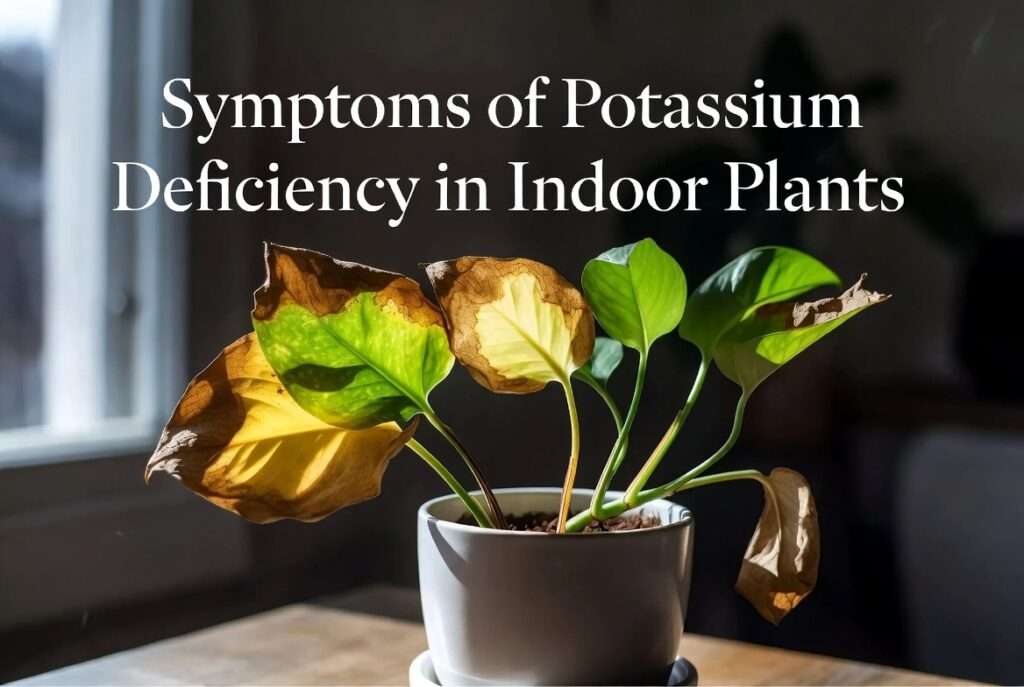
Your once-vibrant Monstera deliciosa or lush Peace Lily suddenly develops crispy brown edges and yellowing leaves that make you worry. Is it simple underwatering, sneaky pests, or a hidden nutrient problem robbing your plant of its glow? Many indoor plant lovers face this exact frustration — and symptoms of potassium deficiency in indoor plants are far more common than you might think. 🌱
Potassium (K) is one of the three essential macronutrients every houseplant needs for strong cell walls, efficient water regulation, disease resistance, and vibrant growth. In the confined world of pots and limited potting mix, potassium can deplete quickly through frequent watering and leaching, leaving your green friends struggling silently.
In this comprehensive guide, you’ll discover the exact symptoms of potassium deficiency in indoor plants, how to diagnose it accurately (without confusing it with other issues), the root causes specific to houseplants, and proven, fast-acting fixes that can bring your plants back to lush health — often within weeks. No more guesswork or trial-and-error that risks further damage. Whether you’re caring for a Fiddle Leaf Fig, Calathea, Pothos, or succulents, this expert-backed resource will help you restore balance and prevent future problems. Let’s dive in and save your indoor jungle! 💚
What Is Potassium and Why Do Indoor Plants Need It? 🧪
Potassium is a highly mobile macronutrient that plays critical roles inside every plant cell. It regulates osmosis (helping plants move water and nutrients efficiently), activates dozens of enzymes involved in photosynthesis and protein synthesis, controls stomatal opening and closing for proper gas exchange, and strengthens cell walls for better resistance to pests, diseases, and environmental stress.
In flowering or fruiting houseplants like African Violets or dwarf citrus, adequate potassium boosts bloom production and fruit quality. Healthy potassium levels also improve overall vigor, leading to stronger stems, deeper green foliage, and better tolerance to low humidity or temperature swings common indoors.
Indoor plants are especially vulnerable compared to outdoor garden plants. Potting mixes have finite nutrient reserves, and regular watering (especially with distilled or rainwater) leaches soluble potassium out of the root zone. Over time, without replenishment, deficiencies develop — often starting subtly before becoming obvious. Understanding this helps you catch issues early and maintain a thriving indoor garden year-round. 🌴
Common Symptoms of Potassium Deficiency in Indoor Plants 👀
Recognizing symptoms of potassium deficiency in indoor plants early can mean the difference between a quick recovery and a struggling or dying plant. Potassium is mobile, so the plant moves it from older leaves to support new growth — which is why symptoms almost always appear first on lower, mature foliage.
Early Warning Signs 🌱
- Older leaves lose their healthy glossy shine and appear dull or slightly darker green.
- Mild wilting or drooping during the day, even when the soil feels moist (plants struggle with water regulation).
- Slower-than-normal new leaf production or smaller new leaves.
Classic Visible Symptoms 🔥
These are the hallmark signs most indoor gardeners notice:
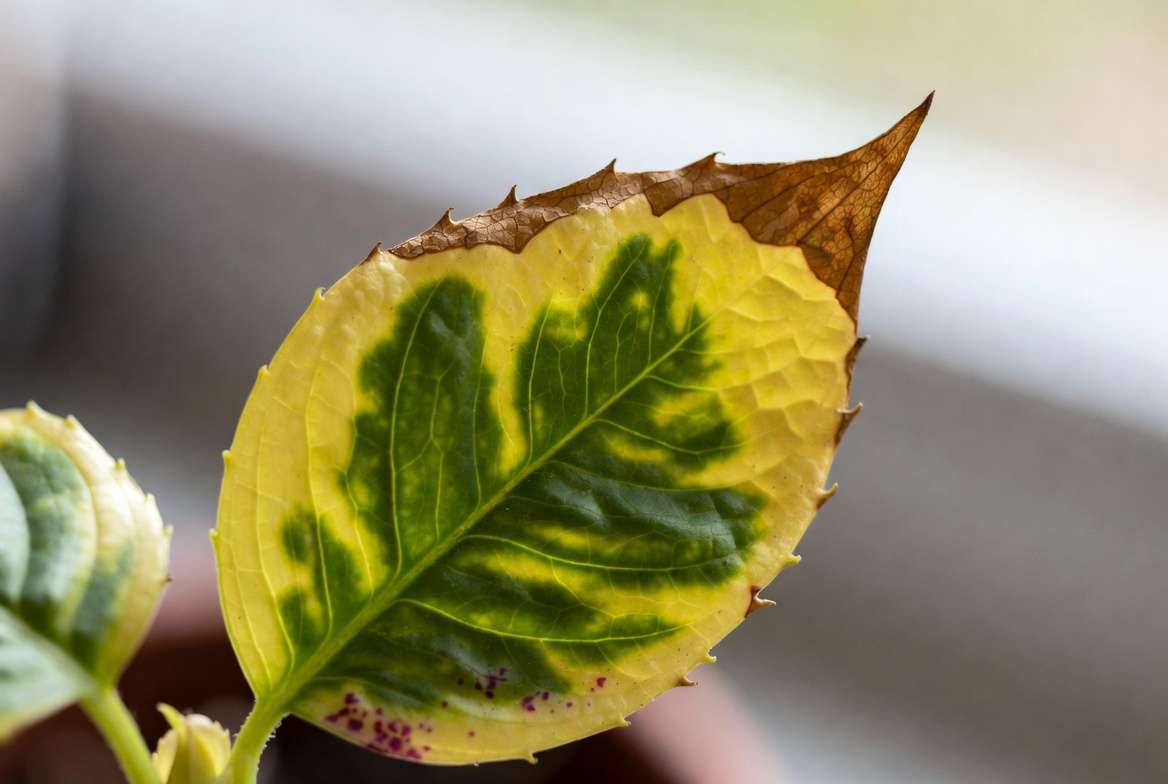
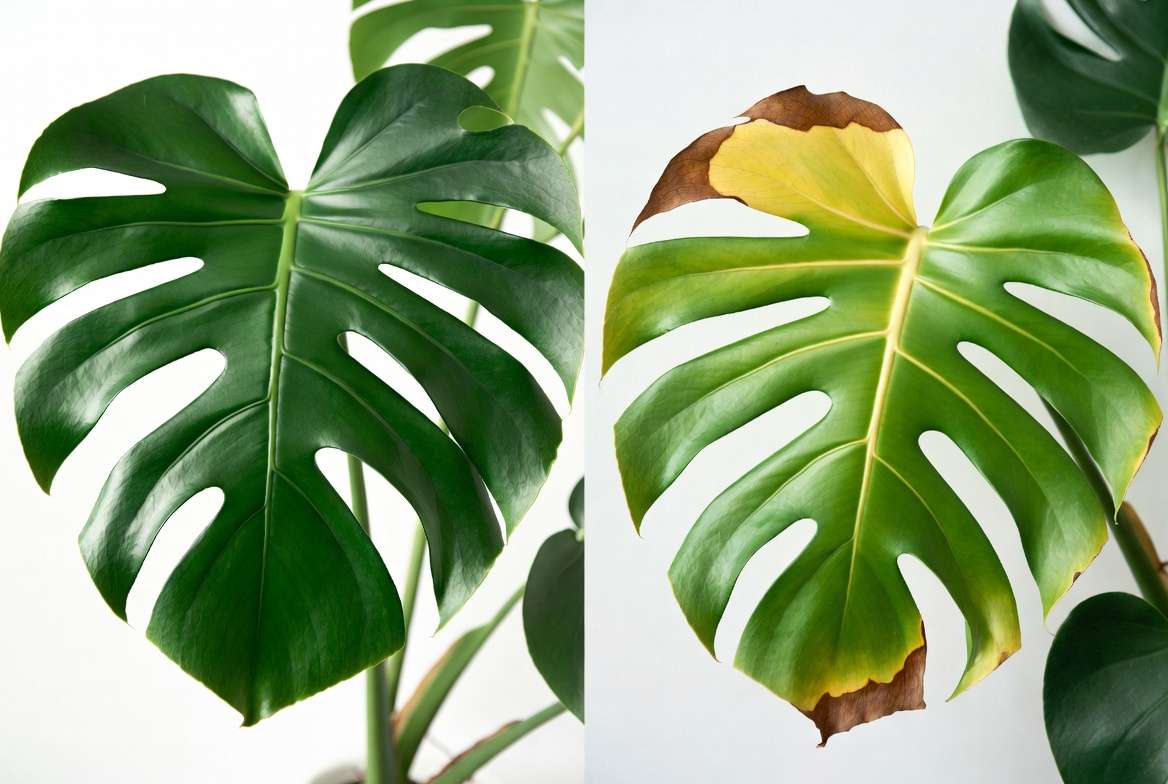
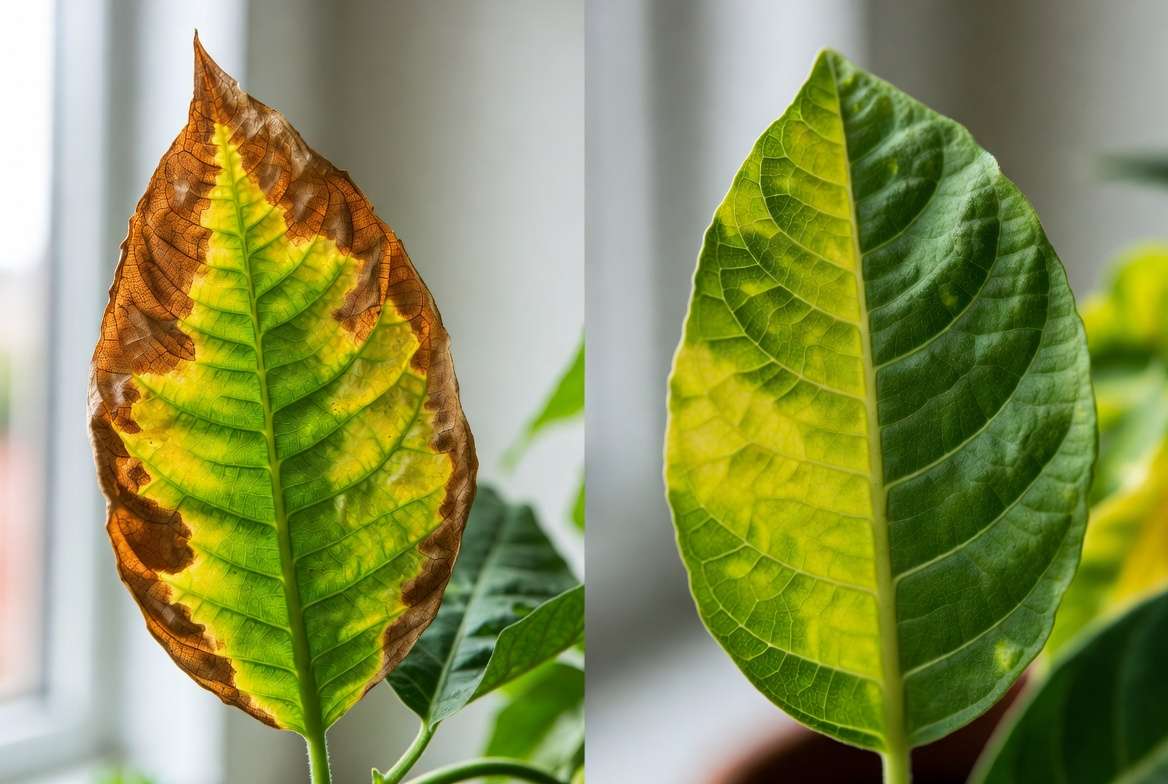
- Leaf margin and tip burn: Yellowing (chlorosis) begins at the edges and tips, then turns brown and crispy — looking almost “scorched.”
- Interveinal chlorosis: Yellowing spreads between the veins while the veins themselves often stay green longer.
- Necrotic spots or patches: Small brown dead areas develop, sometimes with purple or reddish undertones, especially on the undersides of leaves.
- Leaf curling or crinkling: Edges may curl inward or downward; leaves become brittle and feel papery.
- Reduced gloss and color changes: Leaves may take on a bronze or metallic sheen before browning.
Advanced/Severe Symptoms 😟
If left untreated:
- Premature leaf drop (older leaves yellow fully and fall).
- Stunted overall growth with short internodes (leaves bunched closely together).
- Weak, spindly stems that struggle to support the plant.
- Fewer or smaller flowers/fruit in blooming plants.
- Increased vulnerability to pests (like spider mites) and fungal issues due to weakened defenses.
Plant-Specific Examples:
- Monstera or Fiddle Leaf Fig: Brown crispy edges on lower leaves, yellowing between veins, and reduced fenestration (holes) in new growth.
- Calathea or Prayer Plants: Purple spotting on leaf undersides, curling, and dramatic drooping.
- Pothos or Philodendron: Yellow margins on older vines, leaf drop, and slower trailing growth.
- Peace Lily: Scorched leaf tips and edges with overall wilted appearance.
- Succulents and Cacti: Subtler signs like reddish-purple tinting and slowed growth; they’re more tolerant but still suffer in depleted soil.
- Ferns: Fronds develop brown tips and interveinal yellowing, looking dry despite humidity.
These symptoms often worsen in low-light conditions or during winter when plants are less active and fertilizer use drops.
(Visual tip: In the final published article, include labeled close-up photos of affected leaves for each symptom.)
How to Diagnose Potassium Deficiency Accurately (Don’t Guess!) 🔍
Accurate diagnosis prevents wasting time and money on the wrong treatment. Follow this step-by-step process:
- Observe leaf position: Symptoms on older/lower leaves point to mobile nutrients like potassium or nitrogen. New growth issues usually indicate immobile nutrients (e.g., calcium or iron).
- Check the pattern: Potassium typically causes edge/tip burn and interveinal yellowing. Compare carefully.
- Rule out environmental factors: Ensure you’re not dealing with underwatering, overwatering, low humidity, or cold drafts.
Comparison Table: Potassium Deficiency vs. Similar Issues
| Nutrient/Issue | Affected Leaves | Main Symptoms | Key Differentiator | Emoji |
|---|---|---|---|---|
| Potassium (K) | Older/lower | Brown crispy edges/tips, interveinal yellowing, purple spots | Edges burn first; veins stay green longer | 🔥 |
| Magnesium (Mg) | Older | Yellowing between veins (interveinal chlorosis), veins bright green | Classic “arrowhead” or marbled look | 🟡 |
| Nitrogen (N) | Older | Uniform pale yellowing, stunted growth | Whole leaf yellows evenly, no burn | 🍃 |
| Calcium (Ca) | New/young | Distorted new leaves, tip burn, blossom end rot (in fruiting plants) | Affects new growth first | 🆕 |
| Overwatering | Any | Yellowing + soft/rotting roots, mold | Wilting despite wet soil | 💧 |
| Pests (e.g., Spider Mites) | Any | Speckled yellowing, webbing, stippling | Tiny dots or webs visible | 🕷️ |
Perform a simple soil pH test (ideal range for most houseplants: 5.5–6.5) and consider a basic soil nutrient test kit or sending a sample to a local extension service for precise results. Leaf tissue analysis is the gold standard for serious cases but not always necessary for home growers.
Common misdiagnoses include confusing potassium issues with drought stress or wind scorch (rare indoors) or magnesium deficiency. Always cross-check with the table above.
What Causes Potassium Deficiency in Indoor Plants? ⚠️
Several factors unique to potted environments contribute:
- Depleted potting mix: Commercial mixes lose nutrients over 6–12 months of regular watering.
- Leaching from overwatering: Excess water flushes soluble potassium out the drainage holes.
- Imbalanced fertilizers: Many “all-purpose” or high-nitrogen (grow) formulas provide plenty of N but skimpy K.
- High soil pH: Potassium availability drops above pH 7.0.
- Root-bound plants or poor root health: Restricted roots can’t uptake nutrients efficiently.
- Competition from other nutrients: Excess calcium or magnesium can interfere with potassium uptake.
- Environmental stress: Low light, low humidity, or temperature fluctuations reduce the plant’s ability to use available potassium.
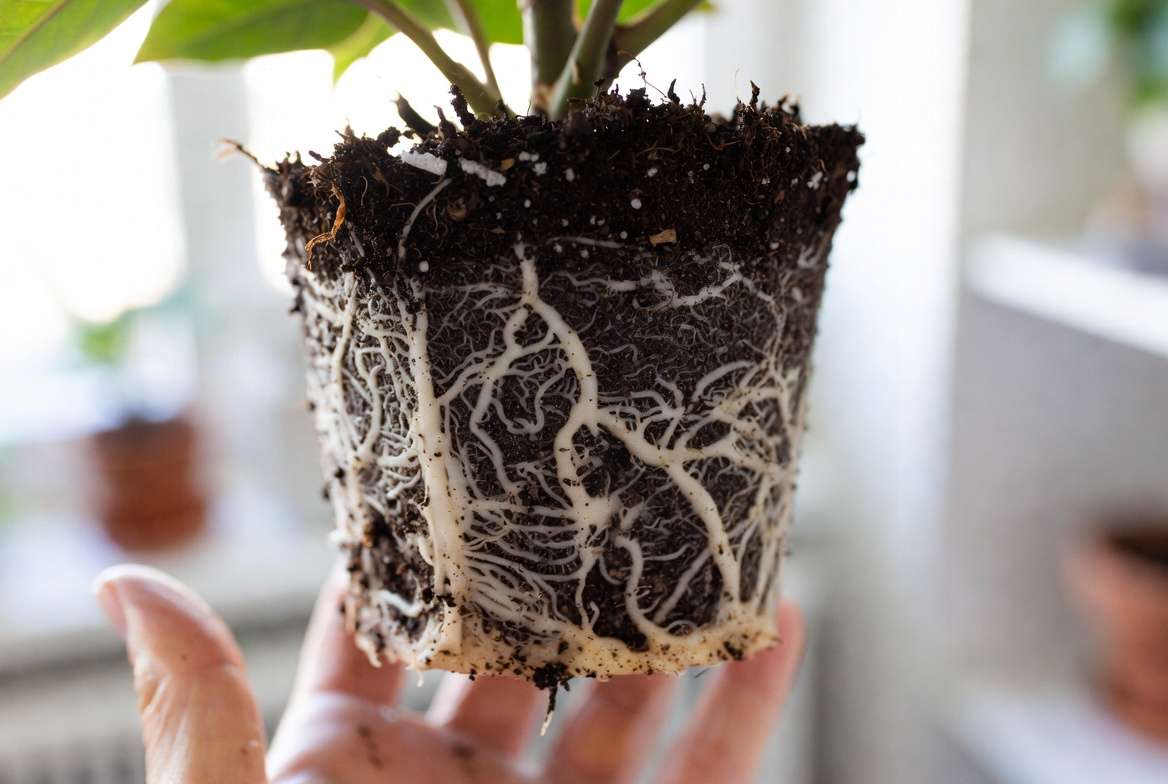
Small pots, terrariums, and plants watered with pure distilled water are at highest risk. Succulents and cacti in gritty mixes can also deplete faster than expected during active growth periods.
How to Fix Potassium Deficiency Fast – Step-by-Step Guide 🚀
Good news: Most cases are reversible if caught before severe damage. Here’s your fast-action plan.
Immediate Actions (First 24–48 Hours)
- Stop using high-nitrogen fertilizers immediately.
- Gently flush the soil with room-temperature water (run water through until it drains clear) if you suspect salt buildup from over-fertilizing.
- Remove any heavily damaged leaves only after they turn fully brown — the plant may still pull remaining potassium from them.
Best Ways to Replenish Potassium 🌟
Choose based on preference for organic vs. quick synthetic options.
Organic & Natural Fixes (Gentle and slow-release):
- Banana peel tea: Chop 2–3 ripe banana peels, soak in 1 quart of water for 3–7 days, then dilute and use as a soil drench. While direct potassium availability from soaking is limited until microbial breakdown occurs, it provides other beneficial compounds and is a fun, zero-waste start. For better results, bury chopped peels in the top soil layer or add to compost.
- Compost or worm castings: Top-dress with high-quality, potassium-rich compost.
- Seaweed/kelp extracts: Liquid kelp is excellent — rich in potassium plus trace minerals and growth hormones.
- Wood ash: Use sparingly (1–2 tablespoons per gallon of soil) only if soil pH is acidic; it raises pH quickly.
Targeted Fertilizers (Faster results):
- Potassium sulfate (0-0-50) or potassium nitrate — excellent for quick correction.
- Bloom/boost formulas with higher K (e.g., 10-10-20 or 5-10-15 ratios).
- Commercial houseplant options: Look for balanced liquids safe for indoors like those with seaweed or specialized potassium boosters.
Application Methods:
- Soil drench: Mix fertilizer per label instructions and water thoroughly.
- Foliar spray: Dilute liquid potassium and spray leaves (best in early morning or evening to avoid leaf burn). Use at half strength initially.
- Slow-release granules: Mix into topsoil for ongoing supply.
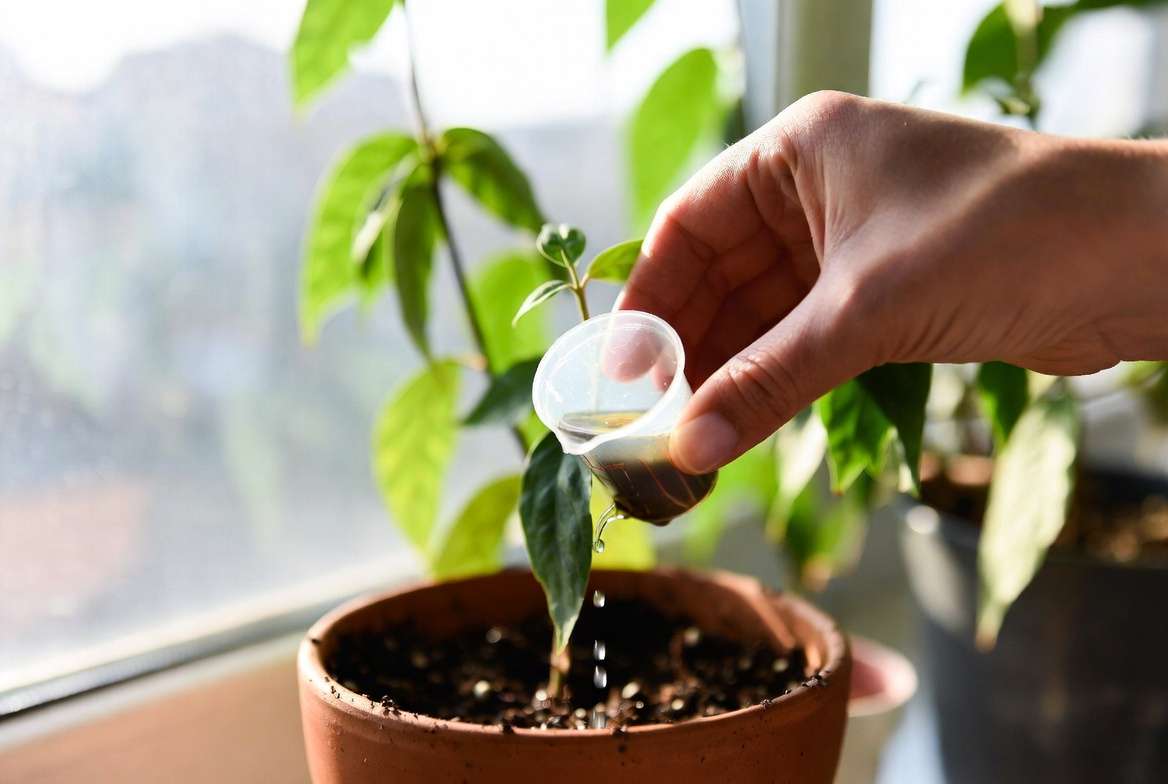
Dosage & Frequency:
- Start with half the recommended strength for houseplants to avoid salt buildup.
- Apply every 2–4 weeks during growing season (spring–fall); reduce in winter.
- Adjust for plant size: Small 4–6″ pots need less than large 10–12″ pots.
Timeline for Recovery:
- Week 1: Reduced wilting and slight color improvement.
- 2–4 weeks: New growth looks healthier; older leaves stabilize.
- 1–3 months: Full recovery with consistent care and balanced feeding.
Combine fixes with improved humidity (pebble trays or humidifiers), proper indirect light, and consistent (but not excessive) watering for the fastest turnaround. 💧
Pro Tip: Always water with room-temperature, non-chlorinated water and ensure excellent drainage to prevent root issues that block nutrient uptake.
Preventing Potassium Deficiency in the Future 🛡️
Prevention is easier (and cheaper) than cure. Build these habits:
- Use a balanced houseplant fertilizer with a good N-P-K ratio, switching to higher-K “bloom” formulas during flowering seasons.
- Repot annually or refresh topsoil every 6–12 months with fresh, nutrient-rich mix.
- Monitor soil pH and moisture regularly.
- Establish a seasonal feeding schedule: More frequent in spring/summer, lighter in fall/winter.
- Choose quality potting mixes amended with perlite or orchid bark for better aeration and retention balance.
- Incorporate slow-release organic amendments like compost or kelp meal during repotting.
Expert insight: “Potassium works best in harmony with magnesium and calcium — always aim for balanced nutrition rather than chasing single nutrients.”
Common Mistakes to Avoid When Treating Deficiency ❌
- Over-applying potassium → can lock out magnesium and cause new problems.
- Ignoring pH or root health → nutrients won’t be absorbed.
- Removing symptomatic leaves too soon → robs the plant of recyclable potassium.
- Using garden-grade fertilizers indoors → often too strong and can burn roots.
- Relying solely on banana peel water without additional sources → results may be too slow for severe cases.
Real-Life Case Studies & Reader Success Stories 🌟
Case 1: The Struggling Monstera A reader’s mature Monstera developed severe brown edges after a long winter with minimal feeding. After flushing, applying diluted potassium sulfate, and switching to a balanced fertilizer, new fenestrated leaves emerged healthy within 5 weeks. Older damaged leaves were trimmed gradually.
Case 2: Calathea Recovery Purple spotting and curling on a Calathea resolved after kelp extract foliar sprays and improved humidity. The plant produced vibrant new growth in under a month.
Case 3: Peace Lily Revival Crispy tips disappeared once leaching was corrected and a higher-K bloom fertilizer introduced every 3 weeks.
(Include before/after photos in your published article for maximum impact.)
Frequently Asked Questions (FAQs) ❓
Can potassium deficiency kill my indoor plant? Yes, if severe and untreated for months — it weakens the plant, leading to secondary issues like pests or rot. Early intervention usually saves it completely.
Is banana peel fertilizer enough on its own? It’s a helpful supplement but often too slow for noticeable deficiencies. Use it alongside other sources for best results.
How do I know if it’s deficiency or something else? Use the comparison table above and check soil moisture, light, and pests first. A soil test confirms nutrient levels.
What’s the best potassium source for succulents? Diluted kelp extract or low-dose potassium sulfate — succulents are sensitive to over-fertilizing, so go slow.
Can I use Epsom salt for potassium issues? No — Epsom salt provides magnesium and sulfur, not potassium. It can actually worsen imbalances if potassium is the main problem.
How often should I fertilize to prevent deficiency? Every 4–6 weeks during active growth with a balanced or bloom formula, adjusted for your specific plants and light conditions.
Liquid vs. granular — which is better indoors? Liquid for quick absorption and control; granular/slow-release for convenience and steady supply.
Conclusion: Bring Your Indoor Jungle Back to Vibrant Health 🌴
Symptoms of potassium deficiency in indoor plants don’t have to spell disaster for your beloved houseplants. By learning to spot the classic signs — from crispy brown edges to interveinal yellowing — diagnosing accurately, applying targeted fixes, and adopting preventive care, you can restore lush, healthy growth and enjoy a thriving indoor garden all year long.
Save this guide, check your plants today, and take action. Your Monstera, Calathea, or Peace Lily will thank you with vibrant new leaves and stronger resilience!
Have you spotted these symptoms in your collection? Share your plant photos or recovery stories in the comments — let’s help each other grow beautiful indoor jungles. 💚
For more expert plant care tips, explore our guides on indoor plant fertilization schedules, repotting houseplants correctly, and common houseplant problems solved.











