
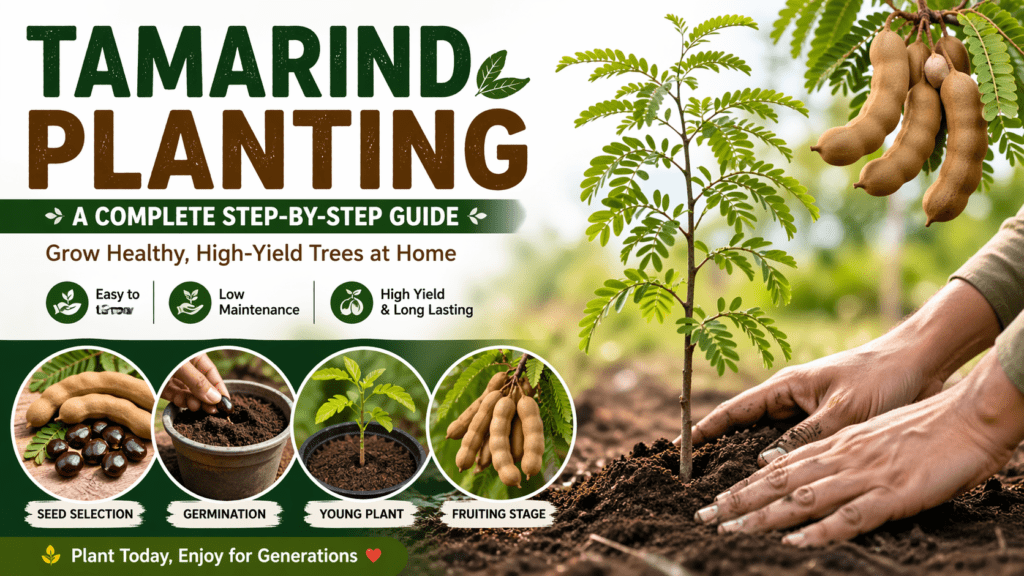
Imagine planting a single tree today that can provide shade, nutrition, and income for decades—maybe even generations. 🌳 That’s exactly what makes tamarind planting so special. Whether you’re a home gardener, small farmer, or plant enthusiast, tamarind is one of the most rewarding trees you can grow.
But here’s the reality: many beginners struggle with poor germination, slow growth, or trees that never fruit. The good news? With the right techniques and knowledge, tamarind is actually low-maintenance, resilient, and highly productive.
In this expert guide, you’ll learn everything—from selecting seeds to harvesting pods—so you can grow a healthy, high-yield tamarind tree right at home. 🌿
🌍 Understanding Tamarind Trees Before You Plant
🌳 What Is Tamarind and Why Grow It?

Tamarind (Tamarindus indica) is a long-living tropical tree known for its tangy fruit and wide canopy. Native to Africa but widely grown in South Asia, it thrives in warm climates and becomes a valuable addition to any landscape.
Why grow tamarind?
- 🍲 Culinary uses (chutneys, curries, drinks)
- 💊 Medicinal benefits (digestive aid, antioxidants)
- 🌳 Shade tree for gardens and farms
- 💰 Income potential from fruit sales
It’s a slow-growing but extremely durable tree, often living over 50–100 years.
☀️ Ideal Climate and Growing Conditions
Tamarind thrives in tropical and subtropical climates, making it perfect for regions like Bangladesh, India, and Southeast Asia.
Optimal conditions:
- 🌡️ Temperature: 25°C–35°C
- ☀️ Sunlight: Full sun (6–8 hours daily)
- 🌧️ Rainfall: Moderate (500–1500 mm annually)
- 💧 Drought tolerance: High once established
⚠️ Avoid frost-prone areas—young trees are sensitive to cold.
🧪 Choosing the Right Tamarind Variety
🌱 Popular Tamarind Varieties

Not all tamarind trees are the same! Choosing the right type can significantly impact taste and yield.
Main types:
- 🍬 Sweet tamarind – Less acidic, great for fresh eating
- 🍋 Sour tamarind – Common for cooking
👉 For beginners, grafted varieties are recommended—they fruit faster and are more reliable.
🛒 How to Select Healthy Seeds or Saplings
If using seeds:
- Choose fresh, dark brown seeds
- Avoid shriveled or damaged ones
If buying saplings:
- Look for vibrant green leaves 🌿
- Strong, disease-free stems
- Well-developed root system
💡 Expert tip: Grafted saplings can start fruiting in 3–5 years, while seed-grown trees may take 6–10 years.
🪴 Best Time for Tamarind Planting
Timing is crucial for successful tamarind planting 🌦️
Best planting seasons:
- 🌱 Early monsoon (ideal for natural watering)
- 🌸 Spring (good for controlled irrigation)
Avoid planting during:
- ❄️ Cold winter months
- 🔥 Extreme heatwaves
Proper timing ensures better root establishment and faster growth.
🌿 Preparing the Perfect Soil for Tamarind
🧱 Ideal Soil Type and pH Level

Tamarind trees are adaptable but perform best in well-draining soil.
Soil requirements:
- Type: Sandy loam or loamy soil
- pH: 5.5–7.5
- Drainage: Excellent (avoid waterlogging)
🌾 How to Improve Soil Quality
Before planting:
- Mix compost or aged manure 🐄
- Add sand for drainage
- Remove weeds and debris
💡 Healthy soil = stronger roots + higher yield.
🌱 Step-by-Step Tamarind Planting Process
🌰 Method 1: Growing Tamarind from Seeds

Step-by-step:
- Soak seeds in warm water for 24 hours 💧
- Remove outer shell (optional for faster germination)
- Plant seeds 1–2 cm deep in soil
- Water lightly and keep in a warm place
⏳ Germination time: 1–3 weeks
🌳 Method 2: Planting Tamarind Saplings

Steps:
- Dig a hole twice the size of the root ball
- Place sapling carefully without damaging roots
- Fill with soil and press gently
- Water thoroughly 💦
- Add mulch to retain moisture
💧 Watering and Irrigation Tips
Watering correctly is key to healthy growth 🌿
Guidelines:
- 🌱 Young trees: Water 2–3 times per week
- 🌳 Mature trees: Water occasionally (drought-tolerant)
⚠️ Avoid:
- Overwatering → root rot
- Standing water
💡 Reduce watering during rainy seasons.
☀️ Sunlight, Spacing, and Location Selection

Tamarind trees love sunlight 🌞
Best practices:
- Minimum 6–8 hours of direct sunlight
- Spacing: 8–10 meters between trees
- Avoid shaded or crowded areas
Proper spacing improves airflow, growth, and fruit production.
🌿 Fertilizing Tamarind Trees for Faster Growth
🧴 Best Fertilizers to Use
Use both organic and balanced fertilizers:
- Compost or cow dung manure 🐄
- NPK fertilizer (10-10-10 or similar)
📅 Fertilization Schedule
- 🌱 Young trees: Every 2–3 months
- 🌳 Mature trees: 2–3 times per year
💡 Apply fertilizer during the growing season for best results.
✂️ Pruning and Training for Strong Structure
Pruning helps maintain a healthy tree 🌳
When to prune:
- After harvest
- During dormant season
What to remove:
- Dead or diseased branches
- Weak or crossing limbs
🐛 Common Pests and Diseases (And How to Fix Them)
⚠️ Common Problems

- Aphids 🐛
- Scale insects
- Leaf spot diseases
🛡️ Prevention and Treatment
- Use neem oil 🌿
- Maintain proper spacing
- Remove infected leaves
⏳ How Long Does Tamarind Take to Grow and Produce Fruit?
- Seed-grown: 6–10 years
- Grafted: 3–5 years
Speed up growth by:
- Proper fertilization
- Adequate sunlight
- Regular care
🌾 Harvesting Tamarind: When and How

Signs of maturity:
- Brown, brittle pods
- Sticky pulp inside
Harvest tips:
- Pick manually or shake branches
- Store in dry conditions
💡 Expert Tips for Successful Tamarind Planting
- Choose grafted plants for faster results 🌟
- Avoid waterlogging at all costs
- Mulch regularly to retain moisture
- Be patient—tamarind rewards long-term care
🏡 Growing Tamarind in Pots (Urban Gardening Guide)

Yes, you can grow tamarind in containers!
Tips:
- Use large pots (at least 20–30 liters)
- Ensure drainage holes
- Prune regularly to control size
❓ Frequently Asked Questions (FAQs)
Q1: How often should I water tamarind plants?
👉 2–3 times weekly for young plants; less for mature trees.
Q2: Can tamarind grow in cold climates?
👉 No, it prefers warm regions.
Q3: Why is my tamarind tree not fruiting?
👉 Possible reasons: lack of sunlight, poor soil, or immature tree.
Q4: Can I grow tamarind indoors?
👉 Only temporarily—eventually it needs outdoor space.
📌 Conclusion: Start Your Tamarind Planting Journey Today 🌱
Tamarind planting isn’t just about growing a tree—it’s about creating a long-term source of food, shade, and sustainability. With the right care, your tree can thrive for decades and reward you with abundant harvests.
Start today, stay consistent, and enjoy the journey of growing your very own tamarind tree 🌳✨











