
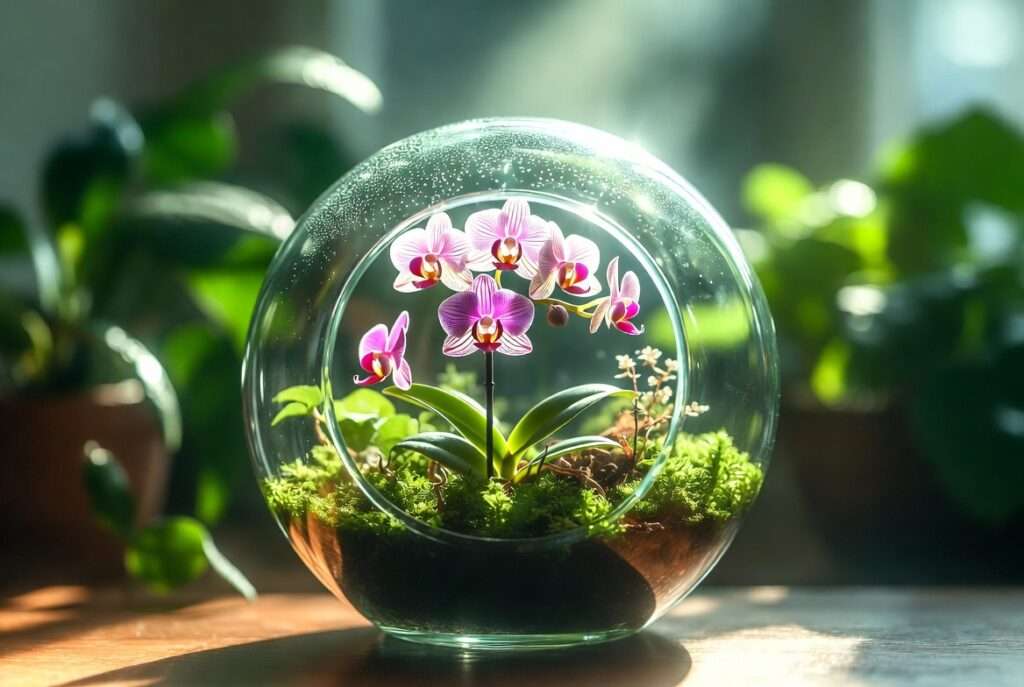
Imagine opening your eyes every morning to a delicate, jewel-like orchid blooming inside a glowing glass world on your windowsill — a tiny, self-sustaining rainforest that brings the magic of the tropics straight into your home. 🌸 For many plant lovers, growing orchids can feel intimidating due to their reputation for being finicky about humidity. But terrarium plants orchids change everything. These miniature beauties thrive in enclosed environments where humidity stays consistently high, creating a low-maintenance yet breathtaking display.
As a passionate orchid enthusiast and plant care writer with years of hands-on experience cultivating everything from common houseplants to rare cloud forest species, I’ve helped hundreds of readers transform struggling orchids into thriving mini ecosystems. In this comprehensive guide, you’ll discover the best orchid varieties for terrariums, a complete step-by-step setup process, expert care routines, troubleshooting tips, and advanced techniques that go far beyond basic listicles. Whether you’re a beginner dreaming of your first orchidarium or an experienced grower looking to level up, this guide will equip you with everything needed for long-term success.
Why This Matters: Traditional indoor air is often too dry (30-50% humidity) for most orchids, which crave 70-100% in their native habitats. A well-designed terrarium solves this problem beautifully while adding artistic beauty and even air-purifying benefits to your space. Let’s dive in! 🪴
Why Orchids Thrive in Terrariums (Benefits & Science) 🌱💧
Orchids are epiphytic or terrestrial plants native to humid, tropical, and subtropical environments. Many miniature species evolved in cloud forests where constant moisture and filtered light are the norm. A terrarium — or more specifically, an orchidarium — recreates these conditions perfectly.
Key Benefits Include:
- Consistent High Humidity: Closed or semi-closed systems maintain 80-100% relative humidity, ideal for moisture-loving species like Masdevallia and Lepanthes.
- Stable Temperatures: Glass walls buffer fluctuations, providing the steady warmth and nighttime drops many orchids need for blooming.
- Reduced Pest Pressure: Enclosed spaces limit access for common invaders while allowing easy monitoring.
- Space Efficiency: Perfect for apartments, desks, or small homes — a complete ecosystem in just a few square inches.
- Therapeutic Value: Watching miniature orchids bloom in a personal glass garden is incredibly rewarding and stress-relieving. Many growers report improved mental wellness from this hobby.
From a scientific perspective, the enclosed environment creates a mini water cycle: plants transpire, moisture condenses on walls, and drips back down. This self-regulating system reduces watering frequency dramatically once balanced. Adding companion plants like ferns or moss further enhances biodiversity and natural pest control.
Best Terrarium Plants Orchids – Top Varieties for Success 🌟
Choosing the right varieties is the foundation of success. Focus on miniature orchids that naturally stay compact and love high humidity. Here are the standouts:
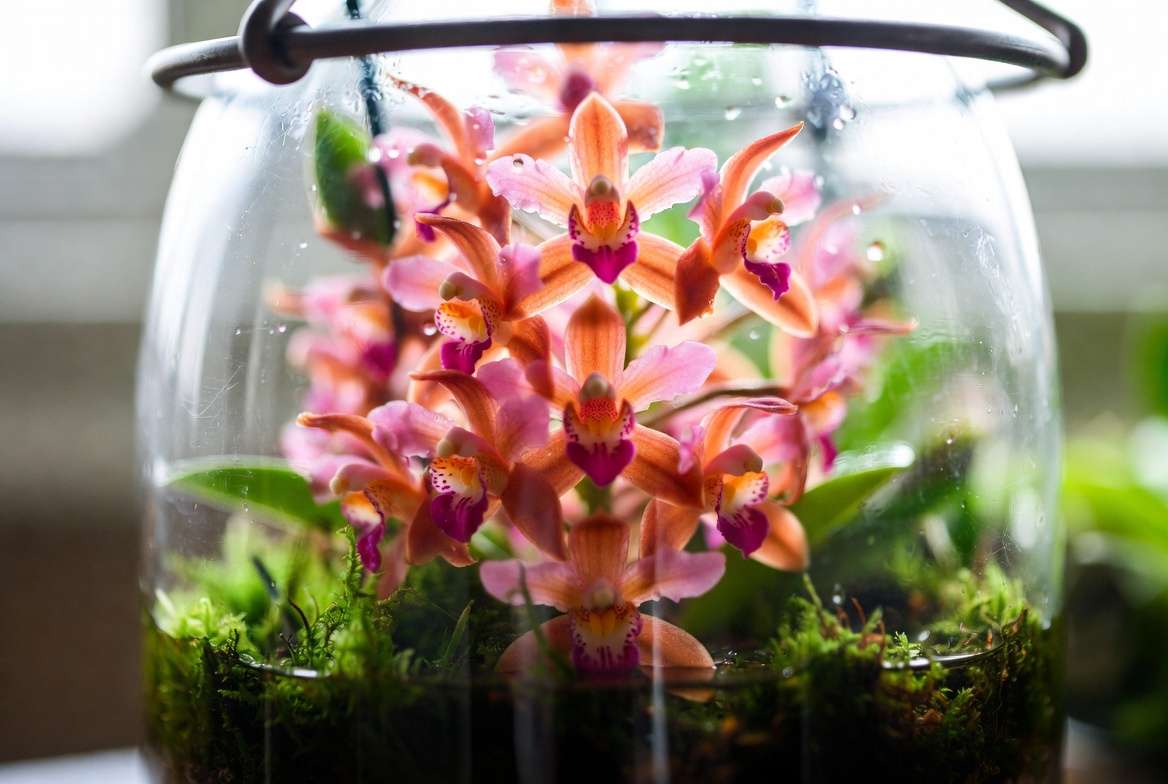
Moisture-Loving Miniature Orchids (High-Humidity Champions) 💦
Masdevallia These dramatic, often triangular-flowered orchids are terrarium superstars. They demand 80-100% humidity and bright indirect light but dislike heat. Popular species include Masdevallia erinacea (fragrant and fuzzy) and Masdevallia coccinea. They bloom frequently with proper care and add vibrant pops of color.
Dracula (Monkey Orchids) Named for their dragon-like or monkey-faced blooms, these shade-loving gems thrive in cool-to-intermediate conditions. Dracula lotax and similar species produce whimsical flowers that seem to peer out from the foliage. Excellent for deeper terrariums.
Lepanthes Ultra-tiny with intricate, fan-like leaves and delicate blooms. Species like Lepanthes telipogoniflora are perfect for small terrariums. They appreciate excellent airflow even in high humidity.
Platystele & Restrepia Delicate Pleurothallid allies with charming small flowers. They’re forgiving for beginners once the environment is stable.
Other Excellent Choices ✨
- Tolumnia (Dancing Lady Orchids): Frequent bloomers with elegant spikes; more tolerant of slight drying.
- Aerangis & Angraecum: Star-shaped white flowers with long spurs; fragrant at night.
- Bulbophyllum: Compact, often fragrant species that add texture.
- Jewel Orchids (Ludisia, Macodes, Anoectochilus): These terrestrial beauties shine with velvety, iridescent leaves even when not blooming. They’re among the easiest for closed terrariums and pair wonderfully with true epiphytic orchids.
Quick Comparison Table (for easy decision-making):
| Variety | Mature Size | Humidity Preference | Light Needs | Bloom Frequency | Difficulty Level | Best Terrarium Type |
|---|---|---|---|---|---|---|
| Masdevallia | 4-8″ | 80-100% | Bright indirect | Frequent | Intermediate | Closed/Semi-closed |
| Dracula | 6-10″ | 80-95% | Medium-low | Seasonal | Intermediate | Closed |
| Lepanthes | 2-4″ | 85-100% | Low-medium | Occasional | Advanced | Small closed |
| Jewel Orchids | 4-8″ | 70-90% | Low-medium | Rare (foliage) | Beginner | Closed |
| Tolumnia | 4-6″ | 70-85% | Bright | Very frequent | Beginner | Open/Semi |
What to Avoid: Large Cattleyas, standard Phalaenopsis (unless mini varieties in open setups), or high-light sun lovers. These can quickly outgrow or overheat in enclosed spaces.
[Image Suggestion: Close-up photo of a blooming Masdevallia in a glass terrarium with dew drops – Alt text: “Vibrant Masdevallia orchid thriving in a terrarium ecosystem”]
Setting Up Your Orchid Terrarium – Step-by-Step Guide 🛠️🌿
Success starts with proper construction. Here’s my proven method refined over years of trial and error.
Choosing the Right Container
- Closed Terrariums: Best for ultra-high humidity lovers like Masdevallia.
- Semi-Open or Orchidariums: With vents or removable lids for better airflow.
- Materials: Clear glass or acrylic for maximum light transmission. Avoid plastic that yellows quickly. Size: Start small (2-5 gallons) for beginners.
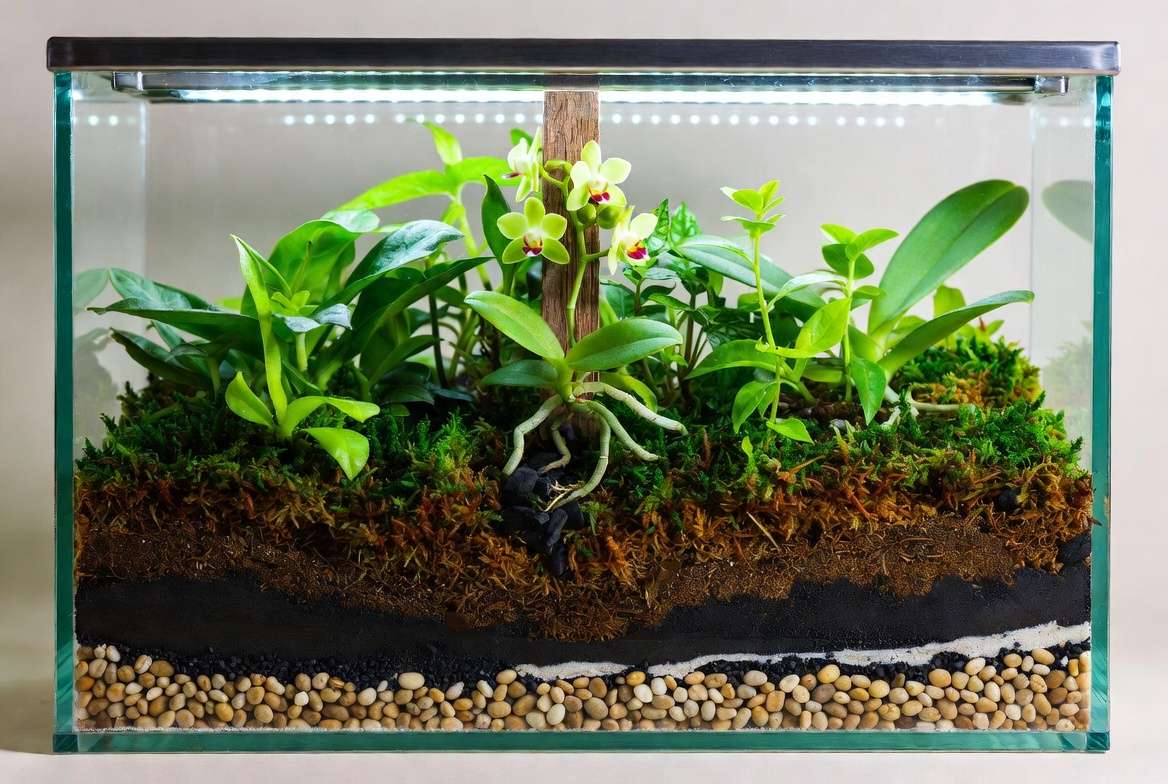
Essential Layers & Substrate
- Drainage Base: 1-2 inches of clay pebbles, LECA, or river rocks.
- Charcoal Layer: Activated charcoal to keep water fresh and prevent odors.
- Substrate: Sphagnum moss (live or dried) mixed with fine bark, perlite, or ABG (Atlanta Botanical Garden) mix for terrestrials. Epiphytes can be mounted on branches or cork.
- Companion Plants: Add humidity-loving mosses, miniature ferns, Fittonia (nerve plants), or small Begonias for a lush, balanced ecosystem.
Planting Techniques
- Sterilize everything to prevent mold.
- Position orchids for airflow around roots — avoid burying crowns.
- Mist thoroughly after planting and monitor for the first 2-4 weeks.
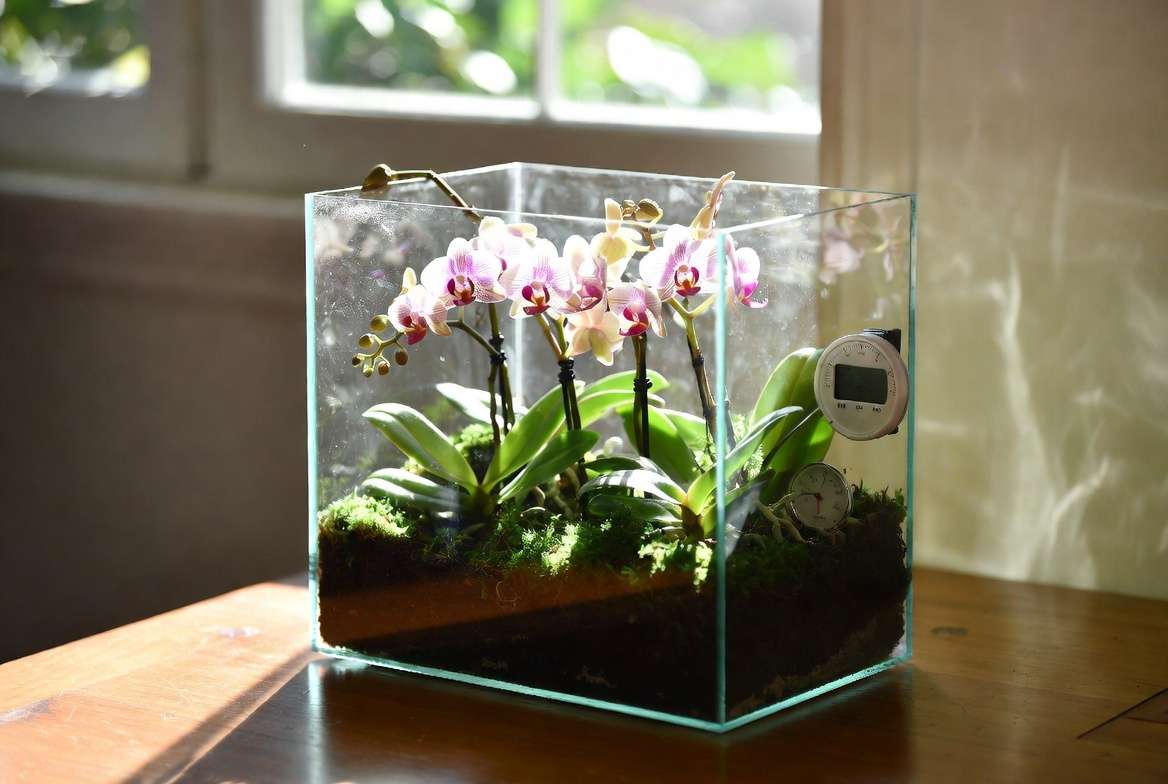
Pro Tip: Include a small digital hygrometer/thermometer inside for real-time data. 🌡️
Expert Care Guide for Thriving Terrarium Orchids 🌡️💧🌸
Caring for terrarium plants orchids is rewarding once you understand their specific needs. The enclosed environment simplifies many aspects but requires attention to balance.
Light Requirements
Most miniature orchids suitable for terrariums prefer bright indirect light or medium-low light (1,000–4,000 foot-candles). Direct sunlight can scorch leaves or overheat the glass.
- Place near an east or north-facing window.
- Supplement with full-spectrum LED grow lights (especially in winter) set on a 12–14 hour timer.
- Jewel orchids tolerate lower light beautifully, making them ideal for darker corners.
Pro Insight: Rotate your terrarium weekly for even growth. Leaves turning reddish or burning indicates too much light; leggy, dark green growth signals insufficient light.
Humidity, Temperature & Airflow
- Humidity: 80–100% for Masdevallia, Dracula, and Lepanthes; 70–90% for Jewel Orchids and Tolumnia.
- Temperature: Daytime 70–78°F (21–26°C), nighttime drop of 8–12°F (5–8°C) to trigger blooming.
- Airflow: Even in closed systems, gentle circulation prevents stagnation. Crack the lid occasionally or use a tiny USB fan on low.
The mini water cycle in a well-balanced terrarium maintains humidity naturally, but monitor with a hygrometer. Condensation is normal — excessive fogging means too much moisture or poor ventilation.
Watering & Feeding
Watering is less frequent than open pots because moisture recycles.
- Water when the top moss layer begins to dry or every 7–14 days.
- Use room-temperature distilled, rainwater, or reverse-osmosis water to avoid mineral buildup.
- Fertilize weakly-weekly (¼ strength balanced orchid fertilizer) during active growth. Flush the substrate monthly to prevent salt accumulation.
Expert Tip: Many growers use a turkey baster for precise watering without disturbing the setup. ✨
Maintenance Routine
- Wipe glass walls gently with a microfiber cloth to maintain visibility and light penetration.
- Prune spent flowers and yellowing leaves with sterilized scissors.
- Check for balance every month — remove decaying material promptly.
Common Problems & Troubleshooting Solutions 🔧🛠️
Even experienced growers face challenges. Here’s how to diagnose and fix the most common issues with terrarium orchids:
Root Rot & Overwatering
- Symptoms: Black/soft roots, yellowing leaves.
- Fix: Improve drainage, reduce watering, add more charcoal or perlite. In severe cases, repot in fresh moss and increase airflow.
Mold or Fungus Gnats
- Common in high-humidity setups.
- Solution: Introduce springtails (beneficial micro-arthropods) for bioactive control. Use hydrogen peroxide drench or improve ventilation.
No Blooms
- Often due to insufficient temperature drop or light.
- Solution: Ensure consistent day/night differentials and provide the right light spectrum.
Pests (Mealybugs, Scale, Thrips)
- Enclosed spaces make early detection easy. Treat with neem oil, insecticidal soap, or isopropyl alcohol wipes. Isolate affected plants.
Yellow Leaves or Leaf Drop
- Could be natural shedding, sudden environmental change, or nutrient deficiency.
- Adjust one factor at a time and observe for 1–2 weeks.
Recovery Success Story: One reader’s Masdevallia stopped blooming for 8 months. After adding a small fan and consistent nighttime cooling, it produced three flowers in the next cycle. Patience and observation are key.
[Image Suggestion: Before-and-after photo of a recovering orchid terrarium – Alt text: “Healthy vs struggling terrarium orchid recovery example”]
Advanced Tips for Long-Term Success & Beautiful Displays ✨🪴
Take your orchid terrariums to the next level:
- Bioactive Ecosystems: Add dwarf isopods and springtails. They break down organic matter and control pests naturally.
- Themed Designs: Create a “Cloud Forest” terrarium with moss-covered branches, miniature orchids, and tiny ferns. Or design a fairy garden with decorative elements.
- Propagation Inside the Terrarium: Many Pleurothallids (like Lepanthes) can be divided carefully. Keiki paste works well on Tolumnia and Phalaenopsis minis.
- Smart Monitoring: Use Bluetooth hygrometers connected to apps for alerts. Automate lighting with smart plugs.
- Scaling Up: Once comfortable, try larger Wardian cases or multiple coordinated terrariums for a stunning indoor orchid display.
Seasonal Adjustments: In summer, provide extra shading and ventilation. In winter, boost humidity and light hours.
Companion Plants & Ecosystem Design Ideas 🌿🧚
Pairing orchids with compatible plants creates balanced, self-sustaining mini worlds:
- Mosses (Sheet moss, Java moss) – Maintain humidity and aesthetics.
- Miniature Ferns (Button fern, maidenhair) – Add feathery texture.
- Fittonia (Nerve Plant) – Colorful leaves and humidity indicator.
- Small Begonias or Selaginella – For variety without competition.
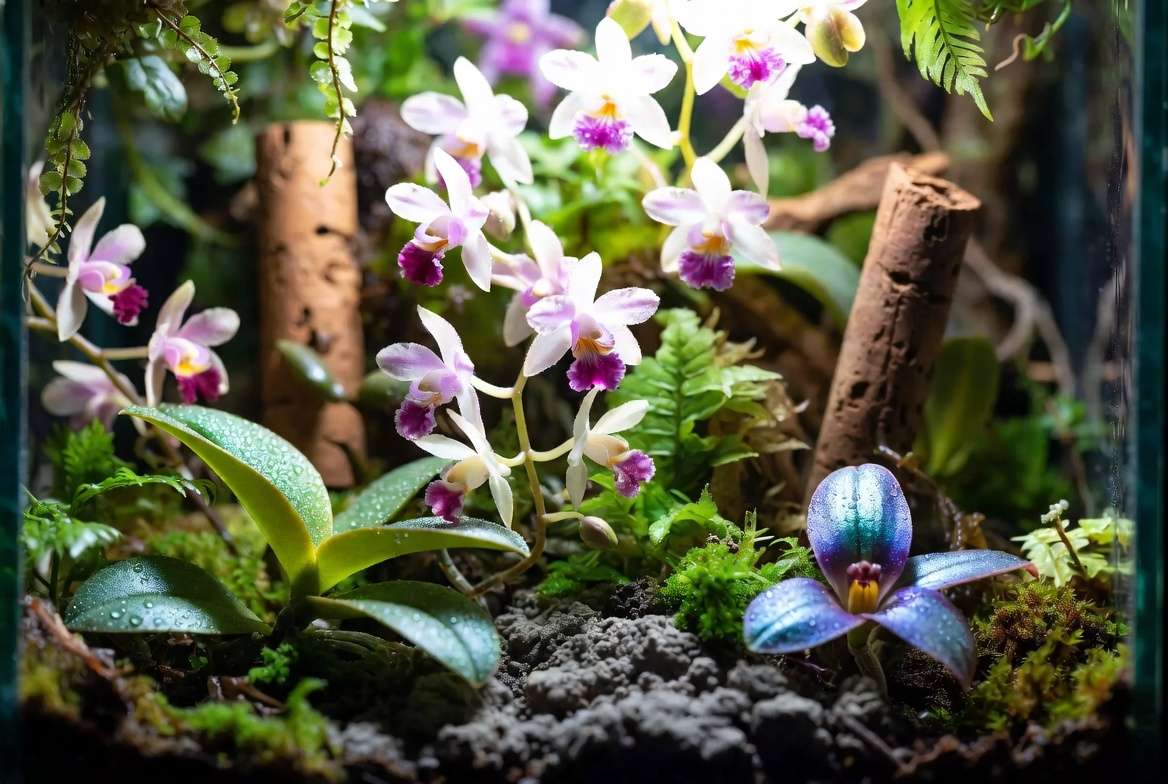
Design Principles:
- Layer heights: Tall background plants, mid-level orchids, ground-cover moss.
- Use cork bark, driftwood, or stones for natural hardscaping.
- Leave space for airflow and future growth.
[Image Suggestion: Lush multi-plant orchid terrarium with jewel orchids and moss – Alt text: “Beautiful orchid terrarium with companion plants”]
Frequently Asked Questions (FAQs) ❓
Can regular Phalaenopsis orchids grow in terrariums? Mini Phals can work in open or semi-open setups, but standard large ones usually outgrow them quickly.
How often do I need to open a closed terrarium? Every 1–3 weeks for fresh air, or as needed when excessive condensation builds up.
What are the best orchids for beginners in terrariums? Jewel Orchids (Ludisia discolor) and Tolumnia are most forgiving.
Do terrarium orchids need fertilizer? Yes, but at reduced strength. Over-fertilizing is a common mistake.
Can I use artificial lights exclusively? Absolutely — many successful growers rely entirely on quality LED grow lights.
How long do terrarium orchids live? With proper care, many species thrive for 5–10+ years or longer.
Is mold always bad? Some surface mold on moss is manageable; aggressive fuzzy mold needs immediate attention.
Conclusion 🌺🪴
Creating a successful orchid terrarium transforms the challenge of growing delicate terrarium plants orchids into a joyful, low-maintenance hobby. By choosing the right miniature varieties like Masdevallia, Dracula, or Jewel Orchids, setting up proper layers, and maintaining balanced humidity, light, and airflow, you can enjoy stunning blooms and lush greenery year-round in a tiny glass ecosystem.
The key is patience and observation — your terrarium will teach you as much as this guide. Start small, learn from each setup, and soon you’ll have a collection of thriving miniature rainforests brightening your home.
Ready to begin your orchidarium journey? Share your terrarium photos in the comments or on social media — I love seeing readers’ creations! For more expert plant care guides, explore our articles on miniature houseplants, bioactive setups, and advanced orchid care.
Happy growing! 🌿✨ May your orchids bloom abundantly.











