
Every space-constrained gardener knows the heartbreak of watching a sprawling cucumber vine choke out delicate herbs on a tiny patio. But a limited footprint absolutely does not mean a limited harvest.
If you are working with a balcony, a compact raised bed, or a narrow side yard, mastering tips for staking vining vegetables in small areas is the foundational game-changer you need. Proper vertical supports not only drastically boost your yield per square foot, but they also transform a chaotic, sprawling tangle into a structured, highly photogenic focal point—perfect for capturing and sharing beautiful garden progress shots. 📸
🪴 The Blueprint for Vertical Success
Drawing from extensive field-testing in tight urban environments, elevating your plants is about more than just saving space. Lifting foliage off the ground drastically improves airflow, minimizes devastating soil-borne fungal diseases, and makes harvesting significantly easier.
To achieve a skyscraper-level garden, you need to match the right support system to the right plant weight and growth habit.
🏗️ Top Space-Saving Support Systems
Here are the most efficient structures for maximizing a small footprint:
-
The Classic Bamboo Teepee: Ideal for lightweight, aggressive climbers like pole beans and sweet peas. Lash three to five poles securely at the top to create a wind-resistant, highly stable structure.
-
A-Frame Trellises: The ultimate solution for heavier producers like cucumbers or small melons. The angled design maximizes vertical efficiency while simultaneously creating a cool, shaded microclimate underneath—perfect for tucking in a quick crop of lettuce or spinach. 🥬
-
The Single-Stake Method: The non-negotiable standard for indeterminate tomatoes. Drive a thick, rigid stake deep into the earth at planting time to prevent severing established roots later in the season. 🍅
Once your structures are placed, the true expertise shifts to maintaining the intensive soil health required to support these heavy, upward-reaching canopies.
🕸️ Advanced Support: The Florida Weave Technique
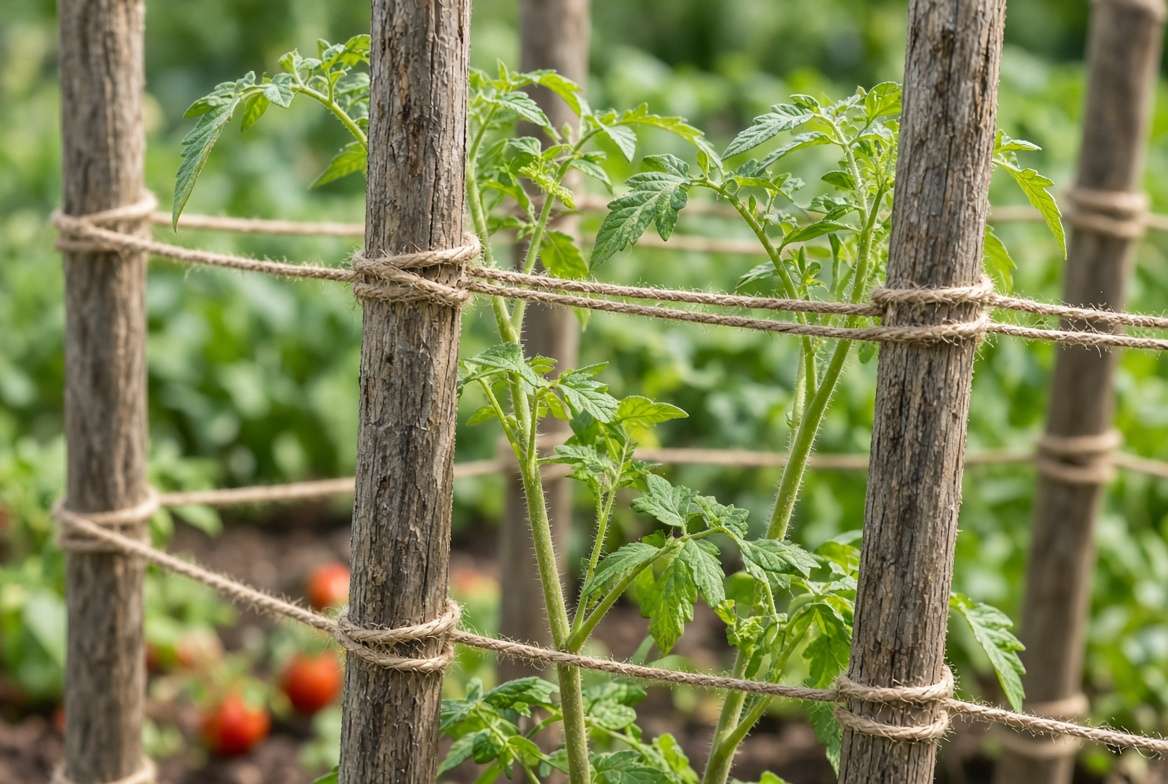
Before diving into plant training, there is one more essential structure to highlight for those utilizing narrow raised beds: the Florida Weave. This advanced, space-saving method is a favorite among market farmers and experienced urban gardeners.
Instead of staking every single plant, you drive robust posts at the ends of your row (and every few feet between plants). As the vining vegetables grow, you weave sturdy garden twine in a figure-eight pattern back and forth between the posts, sandwiching the stems tightly between the lines. It is incredibly efficient for growing multiple indeterminate tomatoes or heavy pepper plants in a tight line, utilizing minimal materials while providing maximum stability against high winds. 🌪️
✂️ Expert Execution: Plant Training & Pruning
Securing your trellis is only step one. The true secret to vertical gardening lies in how you manage the plant’s growth. Left to their own devices, vining crops will revert to a sprawling habit, defeating the purpose of your carefully placed stakes.
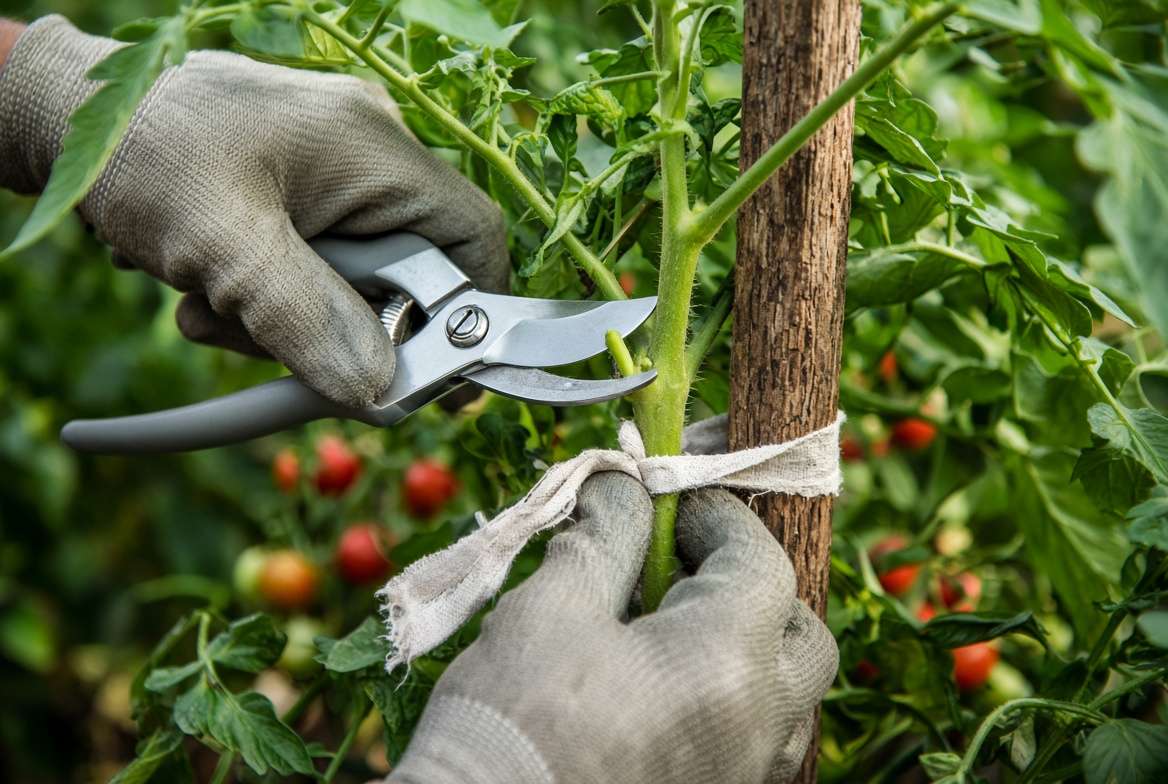
Pruning for Upward Growth To keep your plants moving skyward, you must practice aggressive, strategic pruning. For indeterminate tomatoes, this means aggressively pinching off “suckers”—the small diagonal shoots that emerge in the crotch joint between the main stem and a sun leaf. Removing these redirects the plant’s energy away from bushy foliage and channels it directly into upward vine extension and fruit production. A cleanly pruned, single-stem plant not only produces larger fruit but also creates a striking, organized visual that is highly photogenic for garden media content, vibrant blog photos, or clickable graphics. ✨
Safe Tying Techniques As your plants scale their supports, they will need regular assistance. Securing stems properly requires the right materials to avoid girdling (strangling) the plant as it thickens.
-
Do use: Soft jute twine, upcycled cotton fabric strips, or specialized flexible tomato clips. 🧶
-
Do not use: Wire, zip ties, or thin fishing line, which can easily slice through tender stems on a windy day. Always tie a loose figure-eight knot. Loop the twine around the stake tightly, but cross it over to cradle the plant stem loosely, allowing plenty of room for future growth.
🪱 Root-Zone Nutrition & Soil Health Management
When you are staking vining vegetables in small areas, you are inherently practicing high-density planting. Because you are forcing massive upward growth from a very restricted root footprint, superior soil health management is absolutely critical. Vertical plants will rapidly deplete the nutrients in a container or a small raised bed.
To maintain the vigor required to push water and nutrients several feet into the air, focus on the soil biology:
-
Side-Dressing: Apply a rich layer of organic compost around the base of your plants every three to four weeks during peak growing season.
-
Mycorrhizal Fungi: Inoculate your planting holes with beneficial fungi to expand the root system’s ability to uptake water and phosphorus in cramped quarters. 🍄
-
Consistent Moisture: A towering trellis of cucumber leaves transpires a massive amount of water. Implement a thick layer of organic mulch (like straw or shredded leaves) over the soil surface to lock in moisture and regulate root temperatures on scorching summer afternoons. 💧
When the soil web is thriving, your staked plants will possess the resilience to fight off pests and produce a heavy, continuous harvest right up until the first frost.
🛡️ Troubleshooting Common Vertical Gardening Challenges
Even with perfect planning, a dynamic, living garden will inevitably throw curveballs. When you are pushing the limits of your growing space, recognizing and correcting issues early is a true hallmark of gardening expertise. Here is how to handle the most common vertical growing hurdles.
1. The Vine Slips Down the Stake Smooth materials like PVC or polished metal can cause vines to slide down under the weight of heavy fruit.
-
The Fix: Always tie your anchor knot tightly to the stake itself before looping around the plant. If slippage continues, wrap a layer of rough jute twine tightly around the smooth stake to create friction, or transition to naturally textured supports like rough-sawn cedar or natural bamboo. 🎋
2. The Plant Outgrows Its Support Indeterminate tomatoes and aggressive vining cucumbers can easily surpass a six-foot stake by late summer, leaving the top growth to flop over, snap, and invite disease.
-
The Fix: Practice “topping.” About four weeks before your first expected autumn frost, take sharp pruning shears and confidently cut the top growing tip (the apical meristem) off the plant. This forces the plant to stop producing new foliage and redirect all remaining energy into ripening the existing fruit. Keeping your vertical growth contained not only yields sweeter, plumper produce, but it also guarantees your garden looks pristine—providing a perfectly structured backdrop for snapping eye-catching Pinterest pins or framing up your next YouTube thumbnail. 📸
3. Heavy Fruit Threatens to Break the Vine While cherry tomatoes and small cucumbers support themselves effortlessly, heavier crops like cantaloupes, butternut squash, or massive heirloom beefsteak tomatoes can easily snap a delicate vine if left unsupported.
-
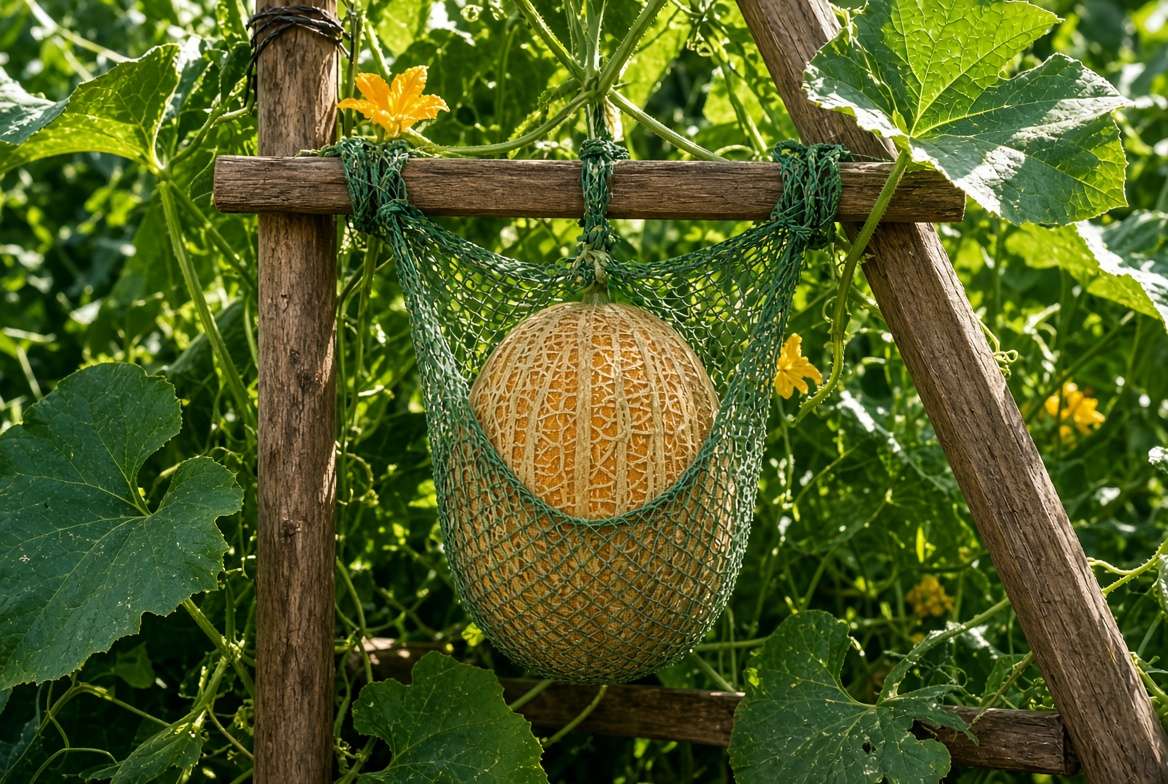
The Fix: Create “fruit hammocks.” Use old pantyhose, mesh onion bags, or specialized garden netting to create a supportive sling under the heavy fruit. Tie the hammock directly to your sturdy trellis structure (not the plant stem) to bear the weight as the fruit matures. 🍈
❓ Frequently Asked Questions (FAQs)
To ensure your small-space garden thrives, here are expert answers to the most common questions regarding vertical crop management.
How tall should my stakes be for a balcony garden? For most balconies and small patios, aim for stakes that are 5 to 6 feet tall above the soil line. Keep in mind that you need an additional 12 to 18 inches driven deep into the container or raised bed for proper stability. Always consider your balcony’s overhead clearance and wind exposure when determining maximum height. 🌬️
Can I use chicken wire to support vining vegetables? While chicken wire is widely available and cheap, it is generally not recommended for fleshy vining vegetables. The holes are too small for large hands to reach through during harvest, and vines tend to weave tightly through the thin wire, making end-of-season cleanup a nightmare. Instead, opt for heavy-duty livestock panels (cattle panels) or nylon trellis netting with wide, 4-inch to 6-inch grids. 🐄
Which direction should my trellis face in a small space? Sunlight mapping is critical in a tight footprint. Whenever possible, orient your trellises and stakes in a North-to-South alignment. As the sun moves from east to west throughout the day, this orientation ensures that the climbing plants receive even sunlight without casting a massive, permanent shadow over the rest of your small garden bed. ☀️
Do I need to stake determinate tomatoes? Determinate (bush-variety) tomatoes max out at a specific height (usually 3 to 4 feet) and produce all their fruit at once. While they don’t require 6-foot single-stakes, they absolutely still need support in a small garden to keep the heavy fruit off the soil. A standard, sturdy wire tomato cage or a short stake is perfect for keeping bush varieties compact and upright. 🍅
🌟 Final Thoughts: Reaching New Heights
Transforming a cramped patio or a tiny suburban side-yard into a wildly productive urban homestead is entirely within your reach. By implementing these tips for staking vining vegetables in small areas, you are doing much more than just saving square footage. You are actively investing in better airflow, healthier soil, fewer pests, and ultimately, a dramatically larger harvest.
Whether you choose a rustic bamboo teepee, an efficient A-frame, or the professional Florida Weave, the golden rule remains the same: train them early, prune them consistently, and nourish the soil that supports them. Happy growing! 🌱











