
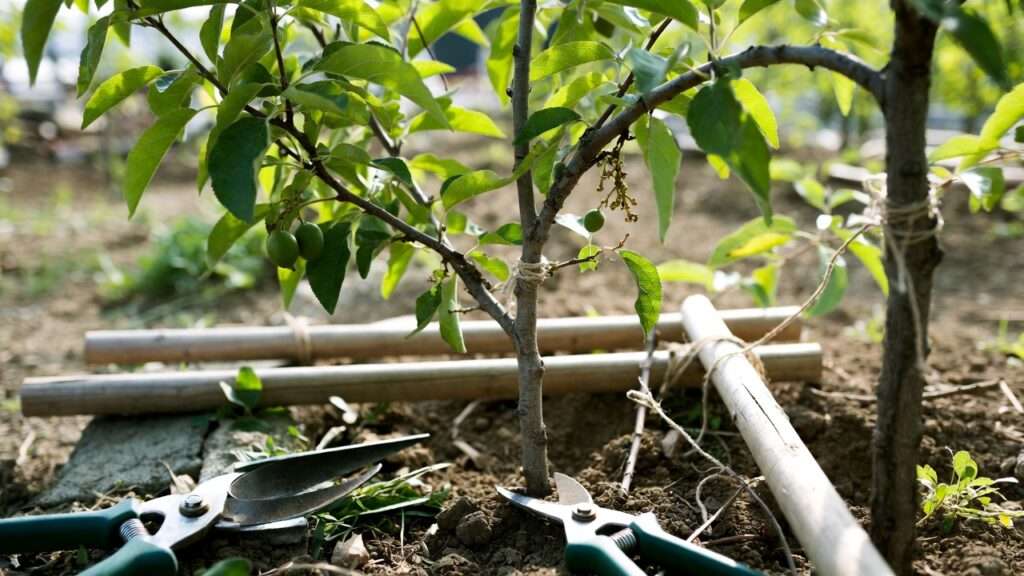
Picture this: You’ve just planted a promising young fruit tree in your backyard — a vibrant apple, peach, or pear full of potential. A few years later, instead of heavy branches laden with juicy fruit, you’re dealing with a lopsided, weak tree that snaps under snow or its own crop, produces tiny harvests, and seems prone to disease. 😩 This heartbreaking scenario is all too common for home gardeners who plant fruit trees but skip (or misunderstand) one crucial step: training young fruit tree branches.
Training young fruit tree branches isn’t just optional fancy gardening — it’s the foundation for a strong, balanced, long-lived tree that rewards you with earlier fruiting, higher-quality yields, easier picking, and far less heartbreak from broken limbs or poor production. Proper branch training directs growth into a sturdy scaffold structure, improves light penetration and airflow, encourages fruit bud formation, and prevents weak narrow crotches that split under load.
In this in-depth guide, we’ll walk you through proven, university-extension-supported techniques to shape your young trees from planting day through their first 4–5 critical years. Whether you’re growing apples, peaches, pears, plums, or cherries, these methods — drawn from decades of horticultural research and real backyard success stories — will help you build stronger trees and enjoy bigger, better harvests for decades. 🌟 Let’s turn that fragile sapling into a productive powerhouse!
Why Training Young Fruit Tree Branches Matters 📊
The way branches grow on a young fruit tree directly influences its entire future. Trees follow natural growth patterns governed by hormones like auxin (apical dominance), which pushes vigorous upright growth at the expense of lower branches and fruiting wood. Without intervention:
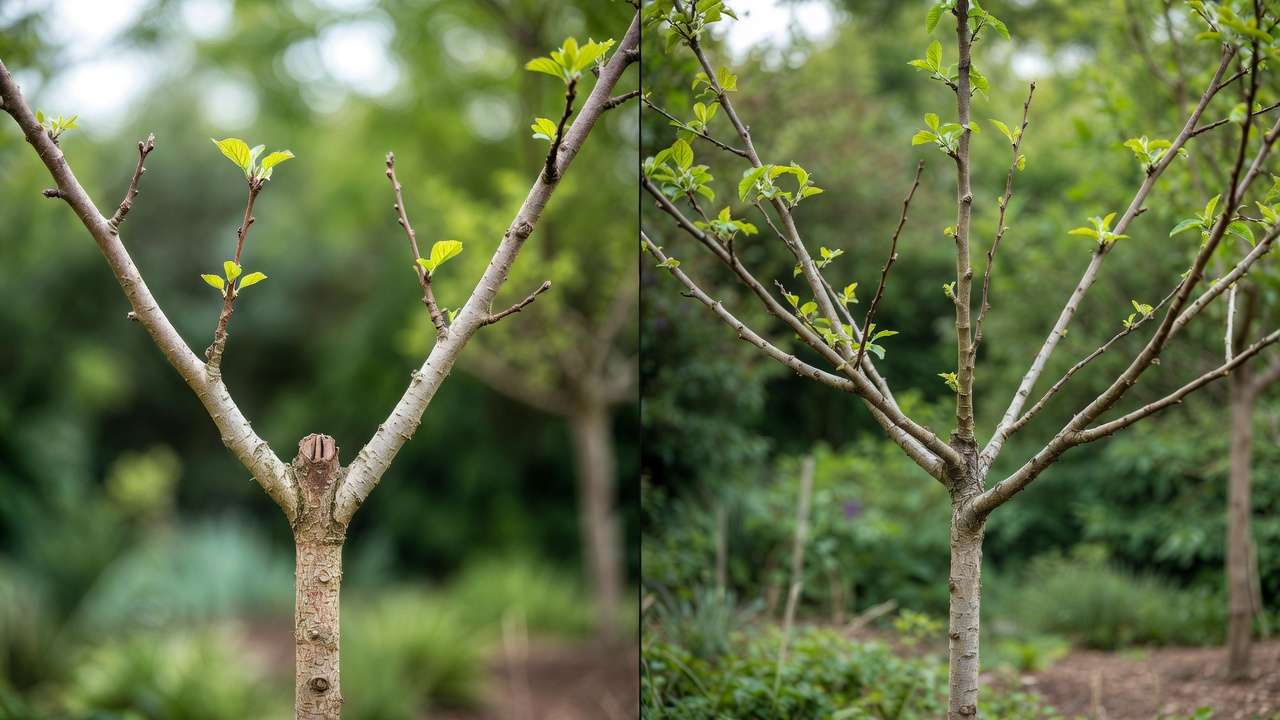
- Narrow V-shaped crotch angles (<45°) create weak unions prone to splitting under fruit weight, ice, or wind.
- Vertical branches shade the interior, leading to weak lower limbs, poor fruit color, and reduced overall yield.
- Excessive upright growth delays fruiting (sometimes by 3–5 years) and creates tall, narrow trees that are hard to manage.
- Poor structure invites pests, diseases (like fire blight in apples/pears or brown rot in stone fruits), and uneven ripening.
Benefits of proper training (backed by extension services like Oregon State, Penn State, and UC Davis):
- Stronger scaffold branches with 45–60° crotch angles that support heavy crops without breaking.
- Balanced canopy for maximum sunlight exposure → better fruit size, color, flavor, and earlier bearing (often 1–2 years sooner).
- Improved air circulation → lower disease pressure and easier spraying/pruning.
- Easier long-term maintenance and harvesting (no 20-foot ladders needed!).
- Longer productive tree life — well-trained trees often bear abundantly for 20–40+ years.
Quick fact: Ideal branch angles of 45–60° from vertical promote earlier flower bud formation because horizontal growth reduces vegetative vigor and shifts energy toward reproductive buds. 🌸
When to Start Training Young Fruit Trees ⏰
The golden window is from planting through the first 4–5 years — this is when the tree is most responsive and mistakes are easiest to correct. After year 5, major structural changes become harder and more stressful.
Seasonal timing:
- Dormant season (late winter/early spring, before bud break) ❄️ — Ideal for major structural pruning, selecting scaffolds, and heading cuts. In Dhaka’s climate (mild winters), aim for December–February.
- Summer (active growth, June–August) 🌞 — Perfect for light corrective work: pinching tips, bending young shoots, removing water sprouts, and spreading branches while they’re flexible.
Watch for signs your tree needs attention: vigorous upright shoots >12 inches, narrow angles forming, competing leaders, or uneven branch distribution.
Start early — even at planting — and be consistent. A little work each season compounds into a dramatically better tree!
Choosing the Right Training System for Your Fruit Trees 🛠️
Different fruit types respond best to specific forms. Choose based on species, vigor, space, and goals.
Central Leader / Modified Central Leader (Christmas-tree shape):
- Best for: Apples, pears, sweet cherries, some plums.
- Pros: Strong trunk support, good for high-density or windy areas, excellent light to lower branches if tiers are spaced.
- Cons: Can get tall; requires ongoing leader management.
Open Center / Vase Shape (bowl shape):
- Best for: Peaches, nectarines, apricots, plums, sour cherries.
- Pros: Maximum light and air penetration (crucial for stone fruits prone to disease), keeps tree shorter and easier to reach.
- Cons: Slightly weaker structure; needs careful scaffold selection.
Quick decision guide:
- Apples & pears → Modified central leader (or central leader for vigorous varieties).
- Peaches, nectarines, apricots → Open center.
- Plums & cherries → Either (modified central for plums, open for peaches-like stone fruits).
- Small spaces → Consider espalier or cordon (advanced, but space-saving for apples/pears).
Pick one system and stick to it — consistency creates the strongest tree.
Step-by-Step Guide: How to Select and Develop Scaffold Branches 🌿
At planting:
- For unbranched whips: Head (cut back) to 24–36 inches above ground to encourage branching.
- For feathered trees: Select 3–5 wide-angled laterals (45–60°), spaced evenly around trunk, starting 18–24 inches up. Remove others.
- Remove any branches <15–18 inches from ground.
Year 1–2 (establishing primary scaffolds):
- Choose 3–5 strong laterals with good angles and spacing (6–10 inches vertical separation, spiral arrangement).
- Head scaffolds lightly (1/3–1/2) to encourage side branching.
- Eliminate competing leaders, narrow crotches, and inward/downward shoots.
Year 3–5 (building secondary branches and tiers):
- Add a second tier of scaffolds 18–24 inches above the first.
- Maintain dominance of chosen branches; thin crowded areas.
- Aim for balanced growth — no single branch >50% of trunk diameter.
Ideal scaffold traits: Wide crotch angles, outward orientation, even distribution, no bark inclusions.
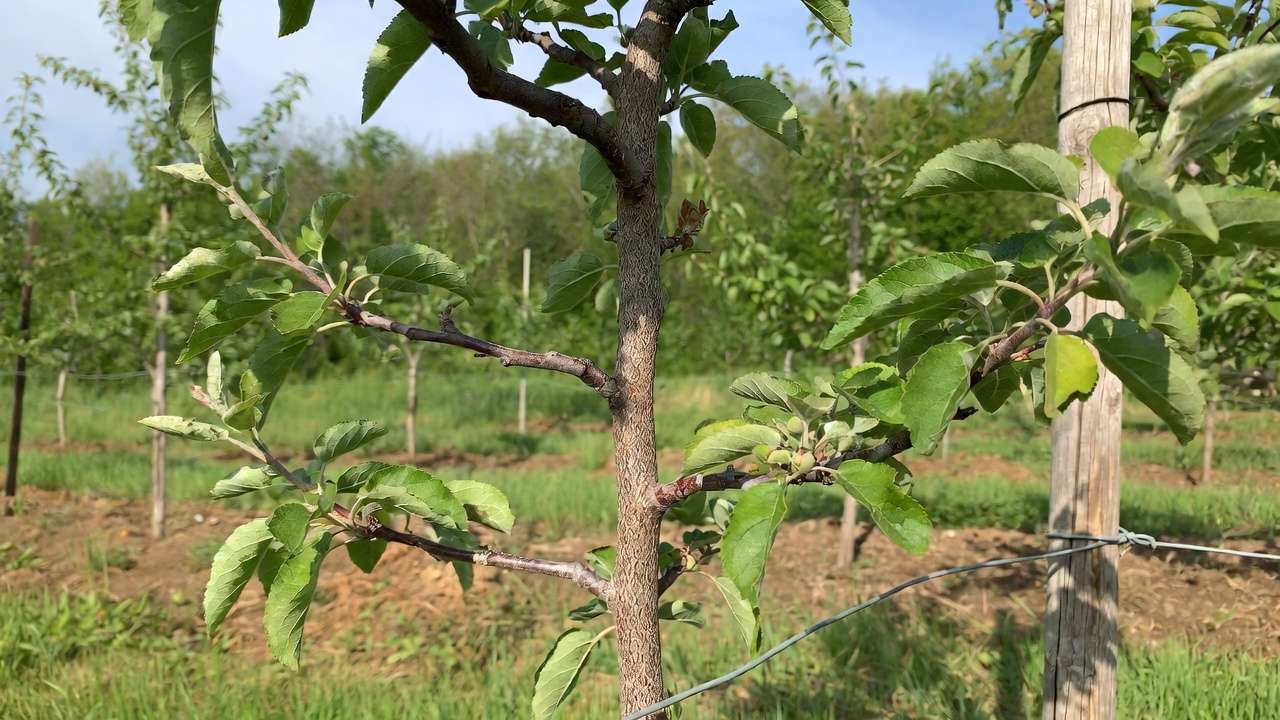
Essential Techniques for Training Young Fruit Tree Branches (Core How-To) 🔧
Pruning Methods to Direct Growth ✂️
- Heading cuts: Shorten branch tips to stimulate branching below the cut (use on young scaffolds).
- Thinning cuts: Remove entire branches at their origin — best for opening canopy and removing problem limbs.
- Summer pinching/tipping: Pinch growing tips when 3–6 inches long to slow vertical growth and force laterals.
Notching: Make a small cut above a dormant bud to force branching exactly where needed.
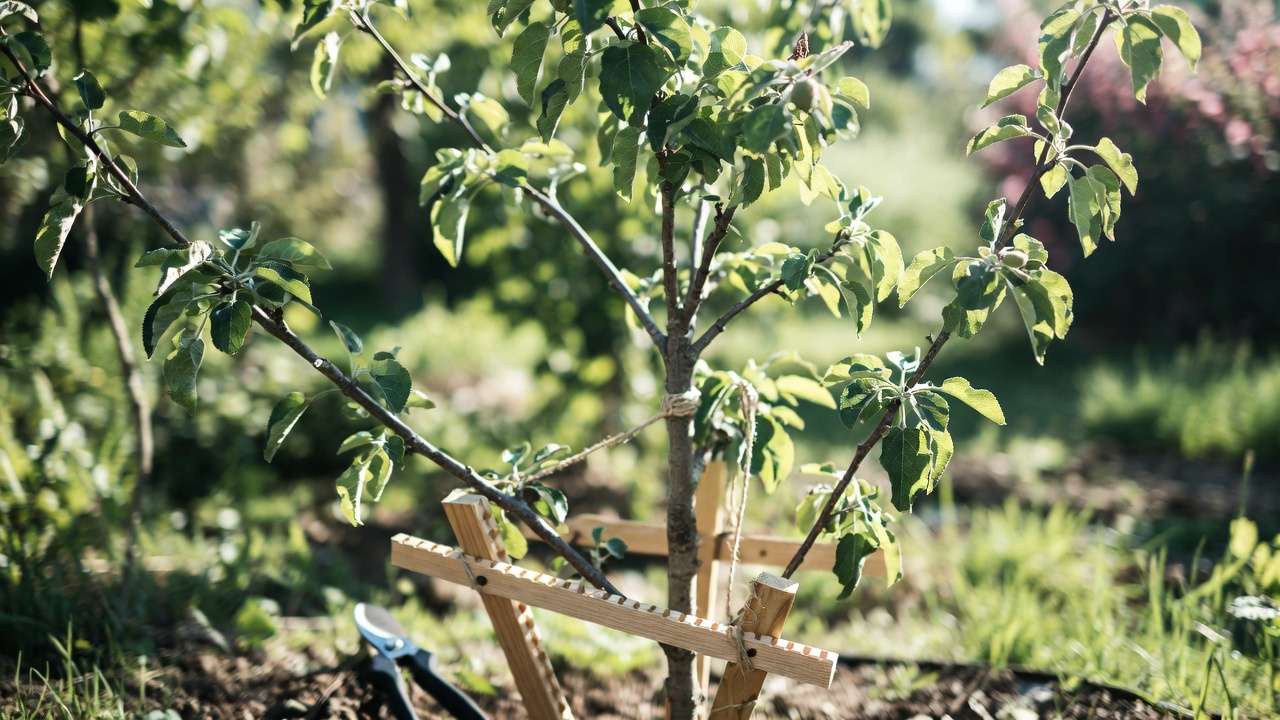
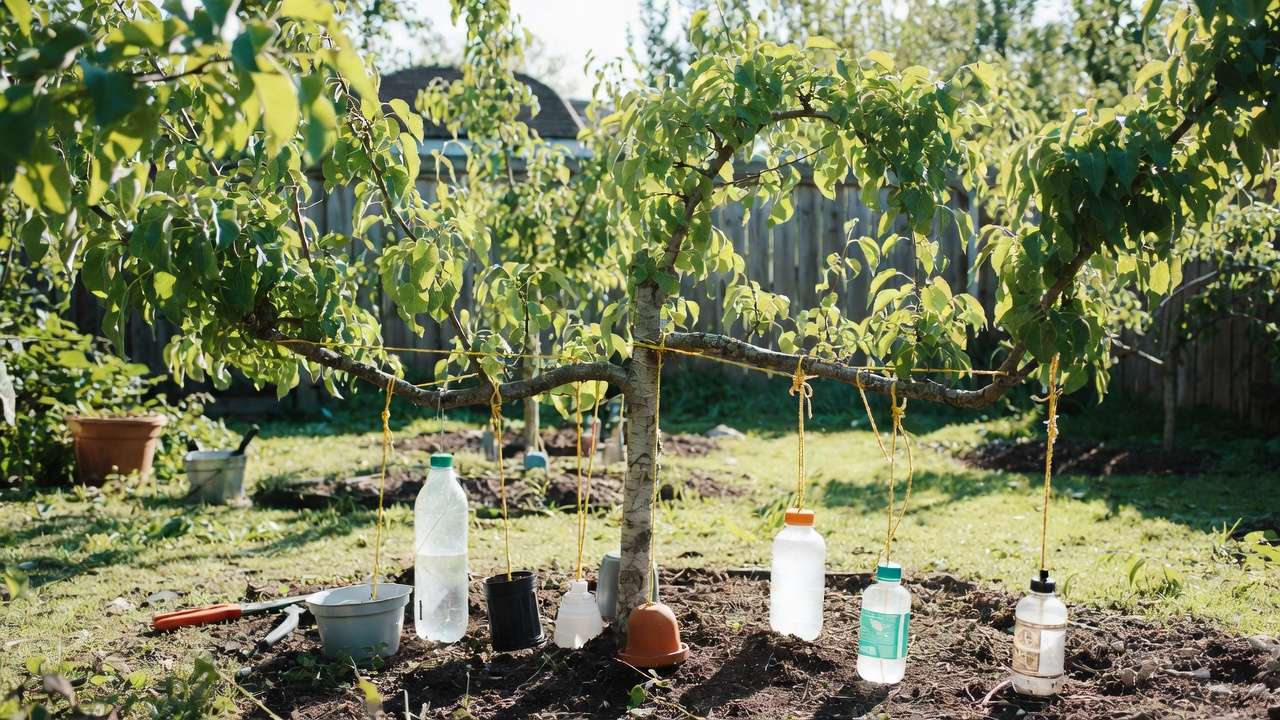
Bending & Spreading Branches (Non-Cutting Power Tools!) 🪢
Bending is often more effective than pruning alone — it slows vegetative growth and promotes fruit buds faster.
- Why it works: Horizontal branches produce more fruiting spurs due to reduced auxin flow.
- Tools: Clothespins (for tiny shoots), weights (water bottles, rocks in bags), soft twine/ties, notched wooden/metal spreaders, apple bands (stretchy UV-resistant bands — highly recommended!).
- How to bend:
- Wait until shoots are 8–12 inches long and flexible (summer).
- Gently pull branch down to 45–60° (or slightly below horizontal for precocious types).
- Secure with tie to stake/trunk or spreader in crotch.
- Check monthly; adjust as needed until branch stiffens (usually 1 season).
- Pro tip: Start low and gradual — force too hard and branches snap!
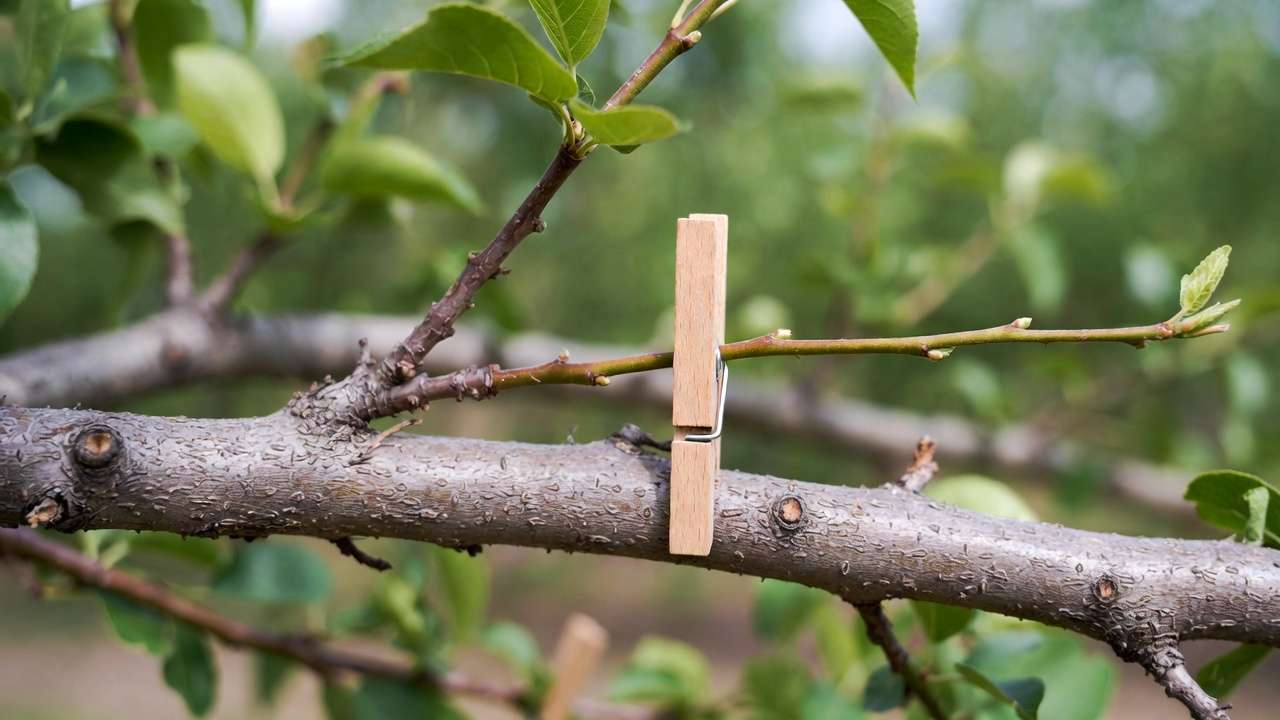
Advanced Tricks for Faster Results 🌟
- Combine bending + light summer pruning.
- Use temporary weights for persistent spreading.
- Tie to lower branches or stakes for multi-directional control.
Common Mistakes to Avoid When Training Young Branches 🚫
- Leaving narrow crotches (weak unions → breakage).
- Over-pruning young trees (reduces leaf area → stunts roots).
- Skipping summer training (misses flexible window).
- Allowing codominant leaders (competing tops → splits).
- Using wire/rough ties that girdle bark.
Fruit-Specific Training Tips (Tailored Advice) 🍑🍐
- Apples & pears: Modified central leader; use apple bands for spreading; focus on 60° angles.
- Peaches, nectarines, apricots: Aggressive open-center; remove center early; spread scaffolds wide.
- Plums & cherries: Balance between systems; cherries often modified central for strength.
Fruit-Specific Training Tips (Tailored Advice) 🍑🍐
Different fruit species have unique growth habits, so tailor your training approach for best results:
- Apples & pears 🍏🍐: These pome fruits thrive with a modified central leader system. Keep a single dominant trunk (central leader) and develop 3–5 well-spaced scaffold branches in tiers. Aim for crotch angles of 45–60° (ideally around 60° for strong unions and balanced fruiting). Use apple bands or spreaders early — many extension services note that spreading branches to near-horizontal encourages earlier fruiting (often by year 3–4 instead of 5+). Avoid narrow crotches, as they’re prone to splitting under heavy apple loads.
- Peaches, nectarines, apricots 🍑: Stone fruits demand an open-center (vase) shape for maximum light and air circulation — crucial to prevent brown rot and other fungal issues common in humid climates like Dhaka. Remove the central leader early (at planting or year 1) and select 3–4 strong scaffolds starting 18–24 inches up. Spread them wide (50–60° from vertical or more) using weights or ties. These trees fruit on 1-year-old wood, so aggressive summer pinching keeps growth in check and promotes renewal.
- Plums & cherries 🍒: European plums and sweet cherries often do well with modified central leader for added trunk strength (especially in windy areas). Japanese plums and sour cherries lean toward open center. Focus on wide angles and even spacing — cherries are particularly sensitive to narrow crotches leading to bacterial canker.
For figs or persimmons (common in tropical/subtropical zones), open center or modified vase works great due to their vigorous, spreading nature.
Tools & Materials You’ll Need (Practical Checklist) 🧰
Gather these before starting — sharp, clean tools prevent disease spread:
- Pruning tools: High-quality bypass pruners (for branches up to ¾ inch), loppers (up to 1½ inches), curved pruning saw (for larger limbs).
- Spreading aids: Clothespins (great for tiny new shoots), wooden/metal notched spreaders, soft twine or stretchy apple bands (UV-resistant and won’t girdle bark), small weights (filled water bottles or sandbags).
- Other helpers: Sturdy stakes (for tying down or supporting), gloves, safety glasses.
- Disinfectant: 10% bleach solution or rubbing alcohol to clean tools between cuts/trees.
Pro tip: Invest in quality — dull blades tear tissue and invite pathogens. 🌿
Maintenance After Initial Training (Years 5+) 🔄
Once the basic scaffold is set (usually by year 4–5), shift to annual maintenance pruning:
- Thin overcrowded areas to maintain light/airflow.
- Renew fruiting wood: For apples/pears, head back older spurs lightly; for peaches, remove 40–50% of last year’s growth to stimulate new bearing wood.
- Correct lingering issues: Remove any narrow crotches or competing leaders that snuck through.
- Summer prune lightly if vigor is excessive (removes water sprouts, opens canopy).
Well-trained trees need far less drastic work later — focus on balance rather than heavy restructuring.
Troubleshooting Common Problems 🌧️
Even experts hit snags — here’s how to fix them:
- Branches too vertical/upright → Bend/spread immediately in summer while flexible. Use spreaders or weights to force 45–60° angles.
- Tree growing too tall/narrow → Summer-head vigorous shoots; encourage lower branches with notching above buds.
- Weak crotch angles forming → Early intervention: spread or remove narrow branches; brace large weak unions if needed (rare in home settings).
- Slow/no branching → Use heading cuts, notching, or light root pruning to redirect energy.
- One side dominates → Tie down vigorous side or head back to balance; remove excess on strong side.
Consistency in the first few years prevents most issues!
Expert Insights & Pro Tips from Seasoned Growers 👨🌾
From university extension resources (Oregon State, Penn State, UC Davis, etc.) and experienced orchardists:
- “Bending branches in year 2 often leads to meaningful harvests by year 4 — much faster than pruning alone.” (Paraphrased from OSU Extension)
- Wide angles (45–60°) reduce alternate bearing (heavy/light years) by balancing vegetative vs. reproductive growth.
- In humid regions like Bangladesh, prioritize open-center for stone fruits to cut disease risk dramatically.
- Don’t fear light summer work — it’s gentler on the tree than heavy dormant cuts and shapes growth precisely.
Many backyard growers report doubling yields after consistent training — patience pays off hugely! ✨
Frequently Asked Questions (FAQs) ❓
When is the best time to bend branches? Summer, when shoots are 8–12 inches long and flexible (June–August in most climates).
Can I train an older neglected tree? Yes, but it’s slower and more stressful. Start by selecting the best existing scaffolds, remove competing leaders, and spread/bend over 2–3 years.
Do all fruit trees need training? Most do for optimal health/yields, especially apples, peaches, pears. Figs and some citrus need less.
Is it too late if my tree is already 3 years old? Not at all! Years 1–5 are critical — start now and correct as much as possible.
How low should I bend branches? 45–60° from vertical is ideal; slightly below horizontal speeds fruiting but risks weaker support if overdone.
Will training delay fruiting? No — proper training actually accelerates it by 1–3 years compared to untrained trees!
What if my tree has narrow V-crotches already? Spread them gently if young; remove if severe (better to lose one branch than risk major split later).
Do I need special tools? Basic pruners + clothespins/weights work wonders for most home setups.
Conclusion: Start Training Today for a Lifetime of Abundant Harvests 🎉
Training young fruit tree branches is one of the highest-ROI tasks in home gardening. By establishing strong scaffold structure, wide crotch angles, balanced canopies, and proper light/airflow early on, you set your tree up for decades of healthy, heavy, high-quality fruit production.
Don’t let your young tree become another statistic of weak limbs, low yields, or early decline. Grab your pruners (and some clothespins!) this season and give your tree the strong foundation it deserves. 🌟 Your future self — and your taste buds — will thank you!
Have you started training your trees yet? Share your progress, before/after photos, or questions in the comments below — I’d love to help you troubleshoot or celebrate your successes! 🍏🍑











