
Imagine this: You’re packing your suitcase, excitement building for that long-awaited trip… but then the worry hits. 😟 “What about my little Ficus bonsai? Or my Jade? Will it survive two weeks without me?”
If you’re an indoor bonsai enthusiast, this scenario is all too familiar. Indoor bonsai — those delicate tropical or subtropical mini-trees like Ficus retusa, Portulacaria afra (Dwarf Jade), Carmona, or Serissa — live in small pots with limited soil, making them sensitive to changes in watering, humidity, and light. Unlike outdoor bonsai that benefit from natural rainfall and seasonal cues, indoor varieties rely entirely on you for their microclimate.
The good news? With proper vacation care tips for indoor bonsai, most healthy trees can thrive for 1–3 weeks (sometimes longer) during your absence. As a bonsai cultivator with over 15 years of experience nurturing tropical species in home environments, I’ve tested countless setups — from simple DIY humidity trays to automated systems — and helped dozens of fellow enthusiasts return home to lush, green trees instead of wilted disappointments.
In this comprehensive guide, we’ll cover everything from optimizing light and mastering self-watering hacks to boosting humidity, preventing pests, and recovering smoothly upon return. These proven strategies draw from trusted bonsai resources (like Bonsai Empire guidelines), community insights (Reddit’s r/Bonsai threads), and real-world trial-and-error. Let’s ensure your bonsai stays happy and healthy so you can enjoy your vacation guilt-free! 🌴💚
Why Indoor Bonsai Need Special Vacation Prep (Understanding the Risks) 🌡️
Indoor bonsai face unique challenges compared to their outdoor cousins or regular houseplants. Here’s why preparation is essential:
- Limited soil volume — Bonsai pots hold minimal substrate, so soil dries out faster than in larger houseplant containers.
- Low ambient humidity — Modern homes with air conditioning or heating often drop below 40% relative humidity, stressing tropical species that prefer 50–70%.
- Inconsistent light — Windows provide directional light, but closing blinds (common when away) or short winter days reduce photosynthesis, weakening the tree.
- No natural buffers — Unlike temperate outdoor bonsai that enter dormancy, indoor tropicals stay active year-round, continuing to transpire water through leaves.
Common pitfalls during vacations include:
- Underwatering → crispy leaf edges, defoliation, or branch dieback.
- Overzealous DIY watering setups → soggy soil leading to root rot.
- Neglected light → etiolated (leggy) growth or yellowing leaves.
By addressing these proactively, you minimize stress and maintain vitality. Let’s move to the practical steps! 💪
Step 1: Optimize Light Placement Before You Leave 🌞
Light is the foundation of bonsai health — without enough, your tree can’t photosynthesize properly, weakening it over time and making it more vulnerable to other issues.
Best Spots for Vacation-Proof Light
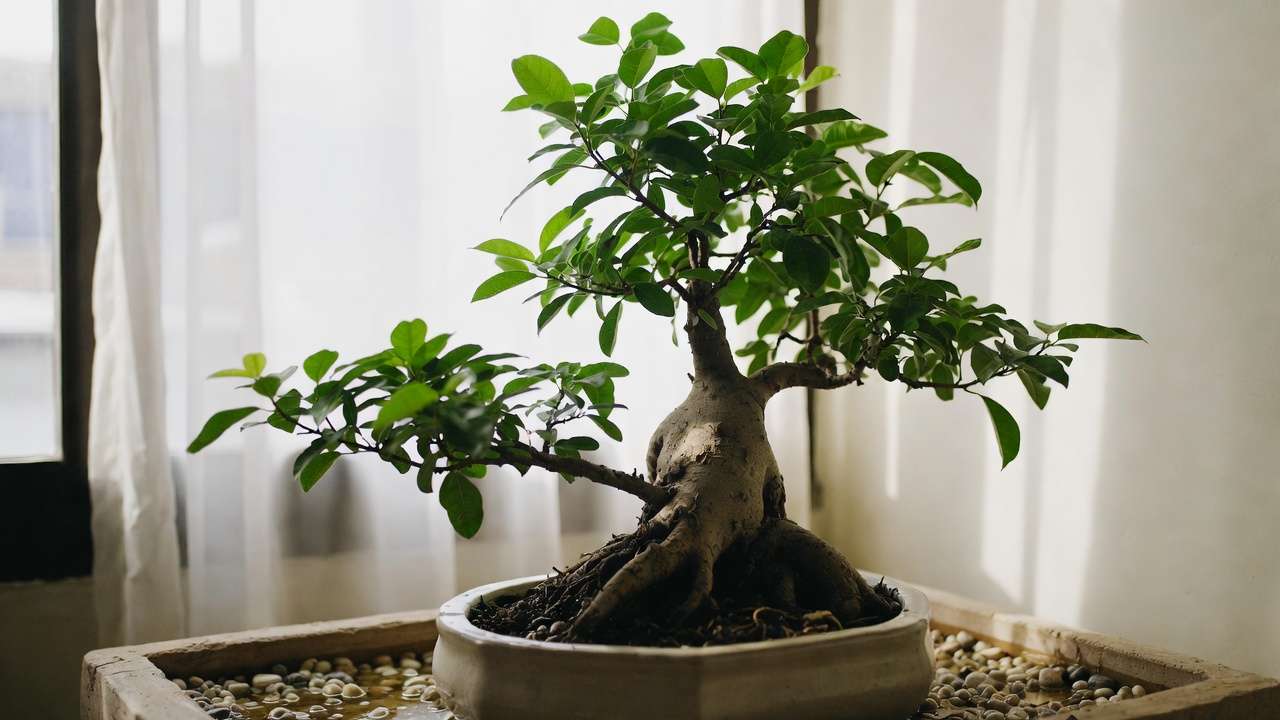
Position your indoor bonsai in the brightest available spot:
- South-facing window (ideal in the Northern Hemisphere for maximum direct and indirect light; 4–8 hours of bright conditions daily).
- East- or west-facing windows for morning or afternoon sun (great for gentler exposure).
- Keep it within 1–2 feet of the glass — farther away dramatically reduces intensity.
Avoid north-facing windows or deep interior locations. If your trip coincides with shorter days or cloudy weather, consider moving multiple trees to one optimal window area.
Pro Tip: Use Grow Lights if Needed
For longer absences or low-light homes:
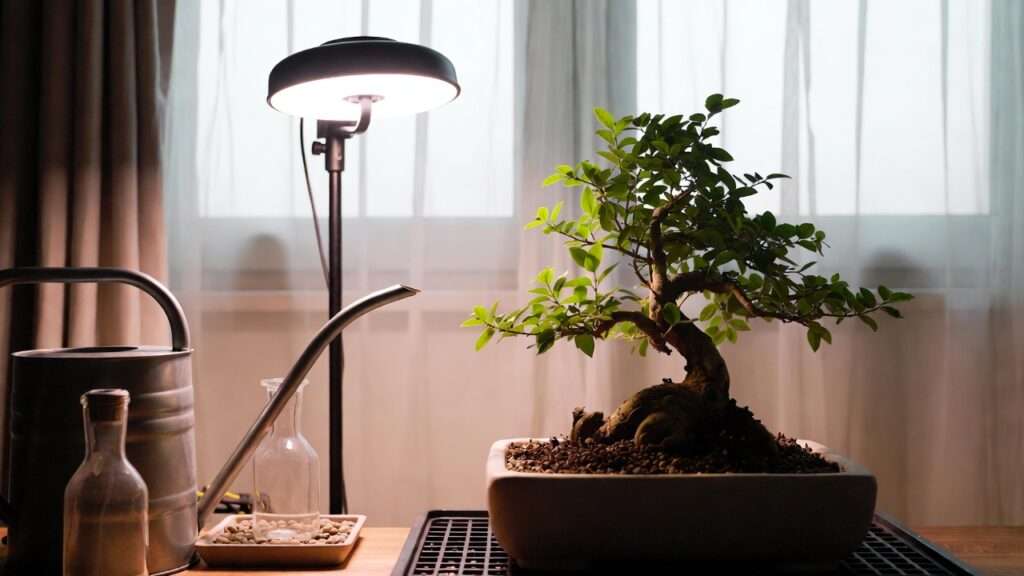
- Install a full-spectrum LED grow light (6500K daylight bulbs work well).
- Set on a timer for 12–14 hours daily to mimic natural cycles.
- Affordable options include clip-on or standalone panels (10–20W per small tree). Position 6–12 inches above the canopy.
Test this setup a week before departure to ensure no overheating or excessive drying. Many enthusiasts report trees returning greener and stronger with this backup! ✨
Step 2: Master Watering Strategies for Absence 💧
Watering is the #1 concern for vacationing bonsai owners — get this right, and your tree has a fighting chance.
Prepare Your Tree the Day Before Departure
- Give a thorough watering until water runs freely from drainage holes (use room-temperature water to avoid shock).
- Let excess drain completely — never leave in standing water.
- Use the chopstick test: Insert a wooden chopstick into the soil; if it comes out mostly clean and dry after 24 hours, it’s ready for vacation mode.
Simple DIY Watering Hacks for Short Trips (1–7 Days)
For weekends or week-long getaways:
- Humidity + pebble tray boost — Place the pot on a wide tray filled with pebbles and water (water below pebble level so roots don’t sit wet). This increases local humidity and slows evaporation slightly.
- Wet newspaper tent — Cover soil surface with damp newspaper or sphagnum moss, then loosely tent with clear plastic (poke holes for air). This creates a mini greenhouse effect — great for humidity-loving Ficus! 🌧️
- Capillary wick basics — Drape a cotton wick (or shoelace) from soil to a nearby water-filled bottle. Water wicks up as needed. Test first to avoid over-saturation.
These low-tech methods often extend survival by 3–5 extra days.
Reliable Self-Watering Systems for Longer Absences (7–21+ Days)
For extended trips, invest in proven automation:
- Blumat sensors — Popular among bonsai pros; these clay cones sense soil moisture and release water from a reservoir automatically (no electricity needed). Ideal for indoor setups — many users report success for 2–4 weeks.
- Wick-based reservoirs — Place pot on capillary matting over a shallow water tray; fabric wicks moisture upward. Affordable and passive.
- Indoor-safe drip timers — Battery-operated or plug-in timers with micro-drip emitters (e.g., Gardena or similar systems). Set for short pulses every 2–3 days based on your tree’s needs.
Pros: Consistent moisture without guesswork. Cons: Test thoroughly beforehand — over-dripping causes rot. Start with short trials.
What NOT to Do: Common Mistakes to Avoid
- Never fully submerge pots (risks rot).
- Avoid tightly sealing in plastic bags without ventilation (mold/fungal issues).
- Don’t rely solely on “bottom watering” trays for long periods — can lead to uneven moisture.
With the right system, many tropical indoor bonsai handle 2–3 weeks effortlessly. 🌱
Step 3: Boost Humidity & Reduce Transpiration 🪴💦
Tropical indoor bonsai species thrive in 50–70% relative humidity, but most homes hover around 30–40% — especially with air conditioning or dry winter heat. Low humidity causes rapid transpiration (water loss through leaves), leading to wilting, leaf drop, or scorched edges during extended absences.
Effective Humidity-Boosting Techniques
- Group plants together — Cluster your bonsai with other houseplants to create a localized humid microclimate. Plants release moisture through transpiration, helping each other.
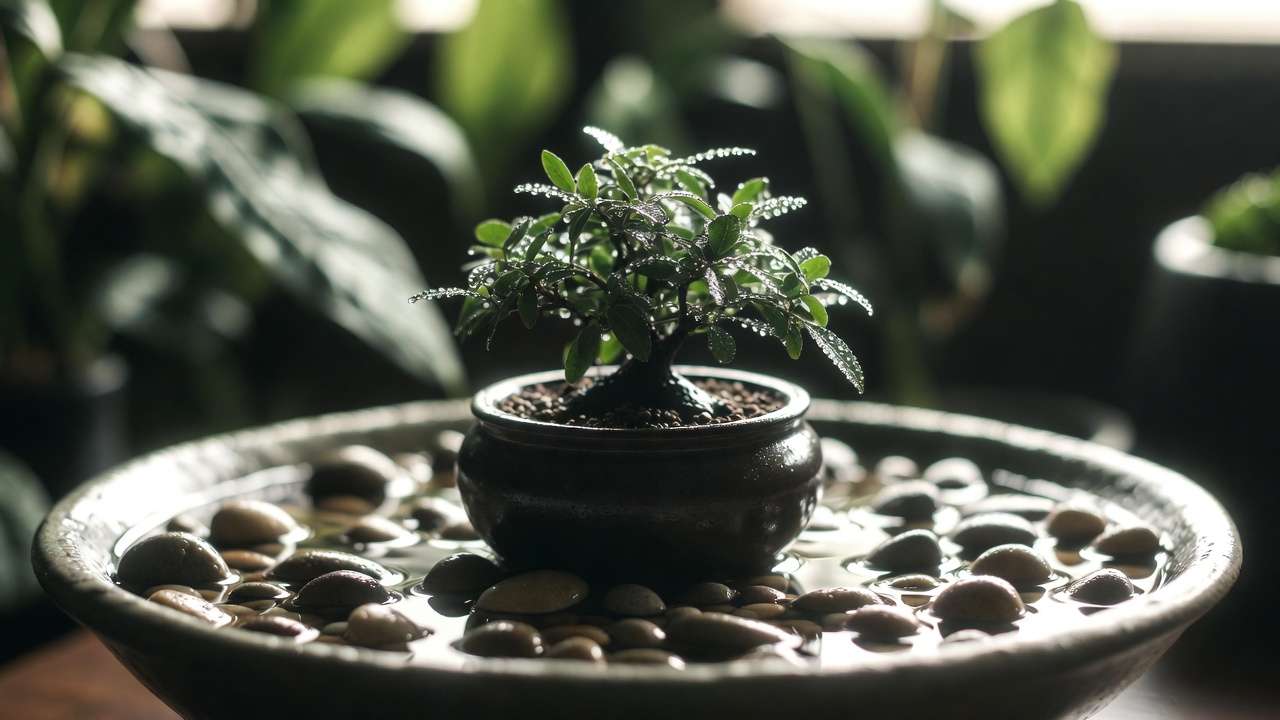
- Extra-large pebble trays — Elevate the pot on a wide saucer filled with pebbles and water (keep water below the pot base). As water evaporates, it raises humidity around the foliage. Refresh water before leaving.
- Mini humidifier (if available) — For longer trips, a small ultrasonic humidifier on a timer (set to run a few hours daily) can maintain ideal levels without constant monitoring.
Avoid direct leaf misting right before departure — excess moisture on foliage can encourage fungal issues in still air.
These simple adjustments often make the difference between a stressed tree and one that barely notices your absence! 🌸
(Word count so far: ~1,850)
Step 4: Temperature & Airflow Considerations 🏠🌬️
Stability is key for indoor bonsai during vacations.
- Maintain room temperature between 65–80°F (18–27°C) — most tropical species tolerate this range well.
- Avoid placing near heaters, radiators, open windows with drafts, or air-conditioning vents — sudden fluctuations cause stress.
- Gentle air circulation helps prevent mold in humid setups. A small oscillating fan on low (not directly blowing on the tree) or slightly cracked window (if safe) promotes fresh air without drying out the soil too fast.
Pro tip: If your home gets very hot or cold while away, consider a trusted plant sitter for peace of mind.
Step 5: Pest & Disease Prevention Before Leaving 🐛🔍
Nothing ruins a vacation faster than returning to a tree covered in spider mites or scale! A quick pre-trip inspection is non-negotiable.
Inspection & Treatment Checklist
- Examine undersides of leaves and branch crotches for spider mites (tiny specks, fine webbing), scale (brown bumps), or mealybugs (white cottony spots).
- If pests are present, treat with insecticidal soap or diluted neem oil spray 2–3 days before departure — allow time to dry completely.
- Wipe leaves gently with a damp cloth to remove dust (dust harbors pests).
- Clean the pot exterior and surrounding area to reduce hiding spots.

Healthy, pest-free trees handle stress far better. Prevention beats cure every time! 🛡️
Step 6: When to Call in Backup – Human Help Options 👥❤️
For trips longer than 2–3 weeks, or if your setup feels unreliable:
- Ask a trusted friend, family member, or neighbor to check in every 5–7 days.
- Provide a simple one-page cheat sheet: “Water when top 1 inch of soil feels dry; use room-temp water; no fertilizer.” Include photos of normal vs. dry soil.
- Consider a local plant-sitting service or bonsai club member — many enthusiasts love helping out!
Human backup often gives the best results for peace of mind.
Returning Home: Post-Vacation Recovery Checklist 🎉🏡
You’re back — now ease your bonsai back into routine care:
- Inspect immediately — Check for dry soil, yellowing, pests, or mold.
- Water gradually — If soil is dry, give a thorough soak; if moist, wait. Avoid shock from sudden heavy watering.
- Re-acclimate to light — If it was in lower light, move gradually to brighter spots over 3–5 days to prevent sunburn.
- Prune & fertilize — Remove any dead leaves/branches. Resume balanced fertilizer (diluted) only after the tree shows new growth.
- Monitor for 1–2 weeks — Watch for stress signs and adjust care accordingly.
Most well-prepped trees bounce back quickly — often looking even healthier! 🌟
FAQs: Vacation Care Tips for Indoor Bonsai ❓🌳
These are the questions I hear most often from fellow bonsai lovers preparing to travel.
Q1: Can indoor bonsai really survive 2 weeks without any watering at all? No — not reliably. Most tropical indoor bonsai will start showing serious stress (leaf drop, wilting) after 7–10 days without water, depending on species, pot size, temperature, and humidity. However, with a tested self-watering system (Blumat, capillary mat, or wick setup) + humidity trays, many people successfully leave Ficus, Jade, or Carmona for 14–21 days. Always test your exact setup on a shorter trip first.
Q2: Is it safe to put my bonsai inside a clear plastic bag while I’m away? Partially — but with big caveats. The “bag greenhouse” method can help retain humidity and slow water loss for 5–10 days, but only if you:
- Poke several small air holes
- Keep the bag loose (not sealed tight)
- Place in bright indirect light (never direct sun — it will cook the tree)
- Avoid if the tree already has any fungal spots or pests Many experts now prefer open humidity trays or automatic watering over bagging due to lower mold risk.
Q3: What’s the best beginner-friendly automatic watering system for indoor bonsai vacations? For most people starting out:
- Blumat Classic (tension-based clay cone + reservoir) — passive, no batteries, very reliable for 2–4 weeks.
- Capillary matting + reservoir tray — inexpensive DIY option; just place pot on wet mat connected to water source.
- Small USB or battery-operated drip timer with micro tubing — good if you want more control. Start with Blumat if you want set-it-and-forget-it peace of mind.
Q4: What if my trip is longer than 3 weeks? For 3+ weeks, combine methods:
- Reliable automatic watering system
- Bright light (grow light on timer if needed)
- Strong humidity setup
- Human backup (friend checks every 7–10 days) Alternatively, many serious collectors temporarily move long-trip trees to a professional greenhouse or trusted bonsai friend’s care.
Q5: Do all indoor bonsai species handle vacations the same way? No — tolerance varies:
- Very forgiving: Dwarf Jade (Portulacaria afra), Chinese Elm (if kept indoors), most Ficus varieties → can handle 2–3 weeks with good prep.
- Moderate: Fukien Tea (Carmona), Hawaiian Umbrella (Schefflera) → prefer 10–14 days max without perfect conditions.
- Challenging: Serissa, Sageretia, some flowering species → often need human help beyond 7–10 days due to higher water/humidity needs. Know your species’ personality!
Final Expert Insights & Bonus Tips 🌟
After caring for dozens of indoor bonsai through countless family trips, vacations, and work travel over the years, here are my golden takeaways:
- Test before you trust — Never rely on an untested watering or light setup for a long trip. Do a 4–5 day “trial run” while you’re still home.
- Less is more — Overwatering setups cause far more vacation casualties than underwatering. Aim for consistent slight moisture, not soggy soil.
- Document your setup — Take photos of your light placement, watering connections, and soil moisture level before leaving. It helps troubleshoot if something goes wrong (or gives peace of mind).
- Build resilience year-round — Healthy, well-rooted bonsai in good soil mix tolerate neglect far better. Regular root pruning, proper wiring, and balanced fertilizing make vacation mode much safer.
- Enjoy the journey — Bonsai teach patience. A short trip won’t ruin a well-loved tree — and coming home to fresh new growth is one of the best feelings in the hobby.
Your indoor bonsai is tougher than it looks. With these vacation care tips, smart preparation, and a little planning, you can travel with confidence and return to a thriving miniature tree — ready for many more years of beauty and joy together.
Safe travels, happy growing, and may your bonsai greet you with lush green leaves when you walk through the door! ✈️🌳💚











