
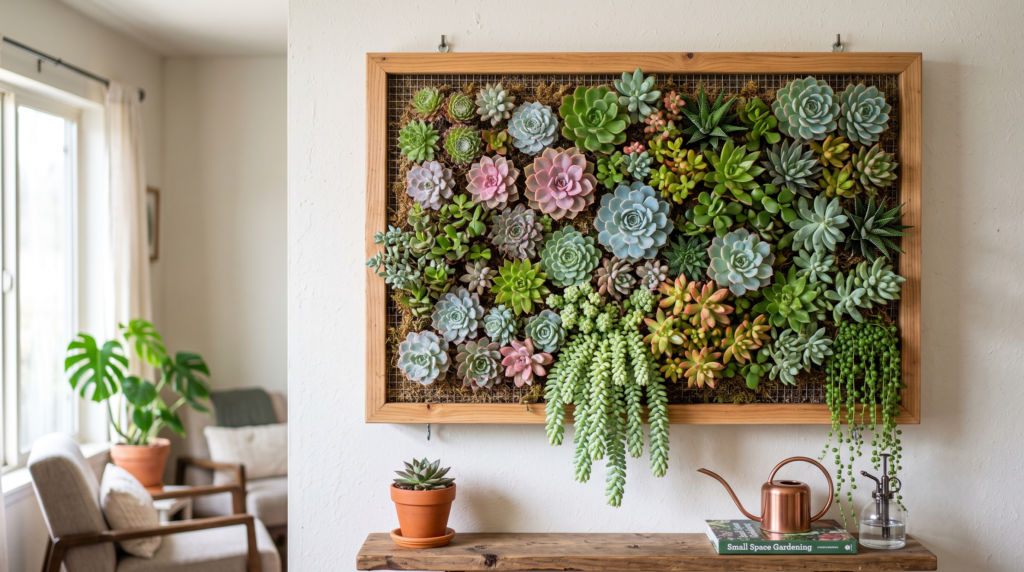
We have all been there: you are a dedicated plant lover living in a cramped apartment, a townhome with a tiny balcony, or a house where every sunlit windowsill is already occupied. You desperately want to cultivate a lush, green sanctuary, but you simply have no floor or shelf space left to spare. If you find yourself staring longingly at bare walls wishing they could sprout foliage, there is a brilliant, space-saving solution. Building vertical succulent gardens for small spaces is the ultimate, high-impact, low-maintenance way to bring nature indoors without sacrificing a single square inch of your valuable floor plan.
As a seasoned plant care specialist who has spent years experimenting with living walls, propagating resilient succulents, and perfecting soil health to prevent root rot, I can confidently tell you that vertical gardening is entirely within your reach. In this comprehensive guide, we will walk through exactly how to select the right frames, mix the perfect lightweight substrate, choose the most durable succulents, and maintain your living artwork for years to come. Grab your gardening gloves—it’s time to start growing up! 🧗♀️🌿
Why Vertical Gardens Are the Ultimate Space-Saving Hack 🌟
When horizontal real estate is nonexistent, looking up is your best strategy. Vertical gardens—often called “living walls” or “green walls”—are more than just a passing Pinterest trend; they are functional, space-optimizing masterpieces.
First and foremost, they transform bare, boring drywall or plain patio fences into dynamic, living art pieces. Instead of hanging a static painting, you are cultivating a constantly evolving ecosystem. Second, elevating your plants keeps them safely out of reach of curious pets and toddlers who might mistake your prized Echeveria for a snack.
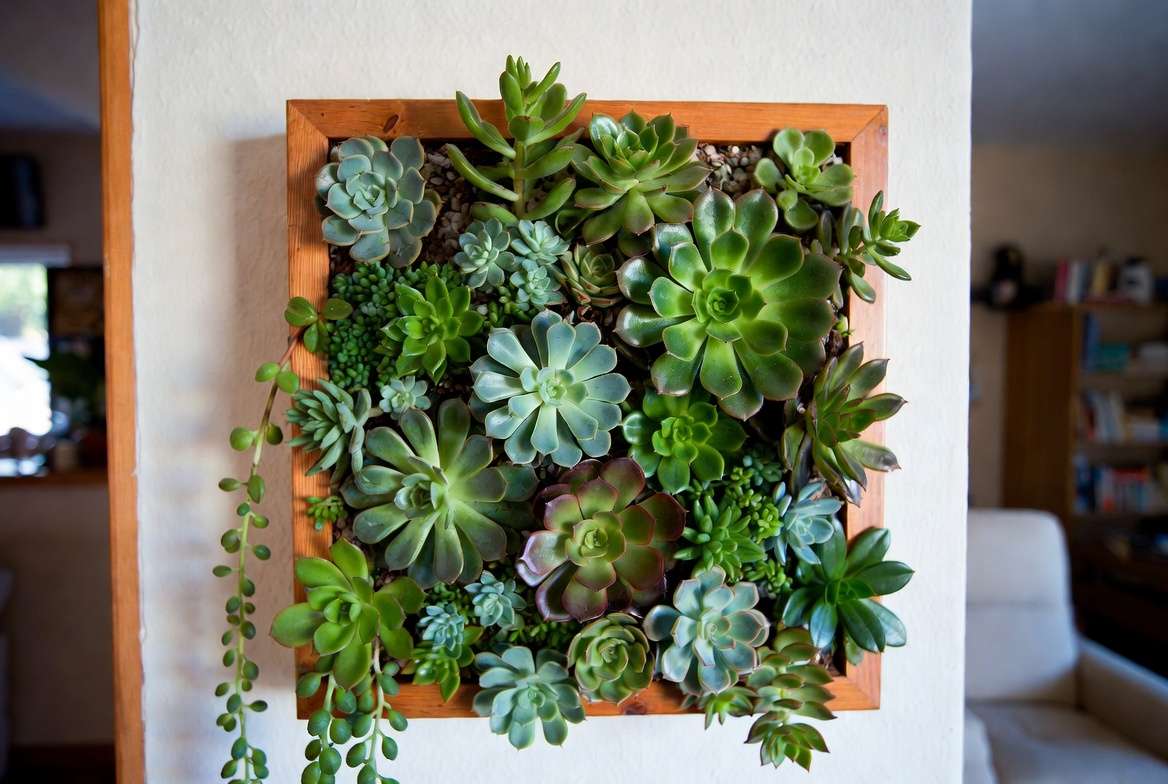
Furthermore, growing vertically allows you to capitalize on natural light corridors. Often, the brightest spots in a small apartment are higher up near tall windows, where floor planters simply cannot reach. By mounting a succulent frame exactly where the light hits, you optimize photosynthesis and ensure your plants thrive, all while purifying your indoor air.
Choosing the Perfect Environment: Light and Airflow ☀️
Before you hammer a single nail into your wall, you must evaluate the environment. Succulents are incredibly resilient, but they have two non-negotiable demands: adequate light and excellent airflow.
Mastering Light Exposure
Succulents require bright, indirect light to maintain their compact, rosette shapes and vibrant stress colors. Assess your wall space carefully. A south or east-facing wall near a large window is usually ideal. However, beware of the magnifying effect of window glass; while they need bright light, scorching direct afternoon sun can severely sunburn delicate leaves.
If your small space feels more like a cozy cave, do not despair. You can easily integrate sleek, wall-mounted LED full-spectrum grow lights above your vertical planter. Modern grow lights can mimic natural daylight, ensuring your succulents don’t stretch or become “leggy” (a process called etiolation) in search of the sun.
The Importance of Ambient Airflow
In a traditional pot, a succulent enjoys 360 degrees of air circulation. Packed tightly into a vertical frame against a wall, airflow is heavily restricted. Without good ventilation, moisture gets trapped, creating a breeding ground for fungal diseases and powdery mildew. Choose a location with natural ambient airflow, such as a hallway or near a frequently opened window, or supplement with a small, quiet oscillating fan to keep the air moving over the leaves. 🌬️
Selecting the Best Succulents for Vertical Growth 🌿
Not all succulents are created equal when it comes to defying gravity. You need a mix of structural “anchors” and cascading “spillers” to create a lush, textured tapestry that conceals the frame beneath.
Top Trailing Succulents for Dramatic Cascades
Trailing succulents add a sense of movement and romance to your living wall, breaking up the rigid lines of the frame.
-
String of Pearls (Senecio rowleyanus): With its bead-like foliage, it is perfect for adding length and delicate texture to the bottom edge of your frame.
-
Burro’s Tail (Sedum morganianum): This classic produces chunky, pale-green waterfalls. Be incredibly gentle when handling it, as the plump leaves detach easily.
-
String of Hearts (Ceropegia woodii): Though technically a semi-succulent vine, its fast-growing, visually striking, heart-shaped leaves add an elegant drape to any arrangement.
Best Rosette Succulents for Structural Anchoring
Rosette types form the “meat” of your vertical garden, creating dense, colorful patterns.
-
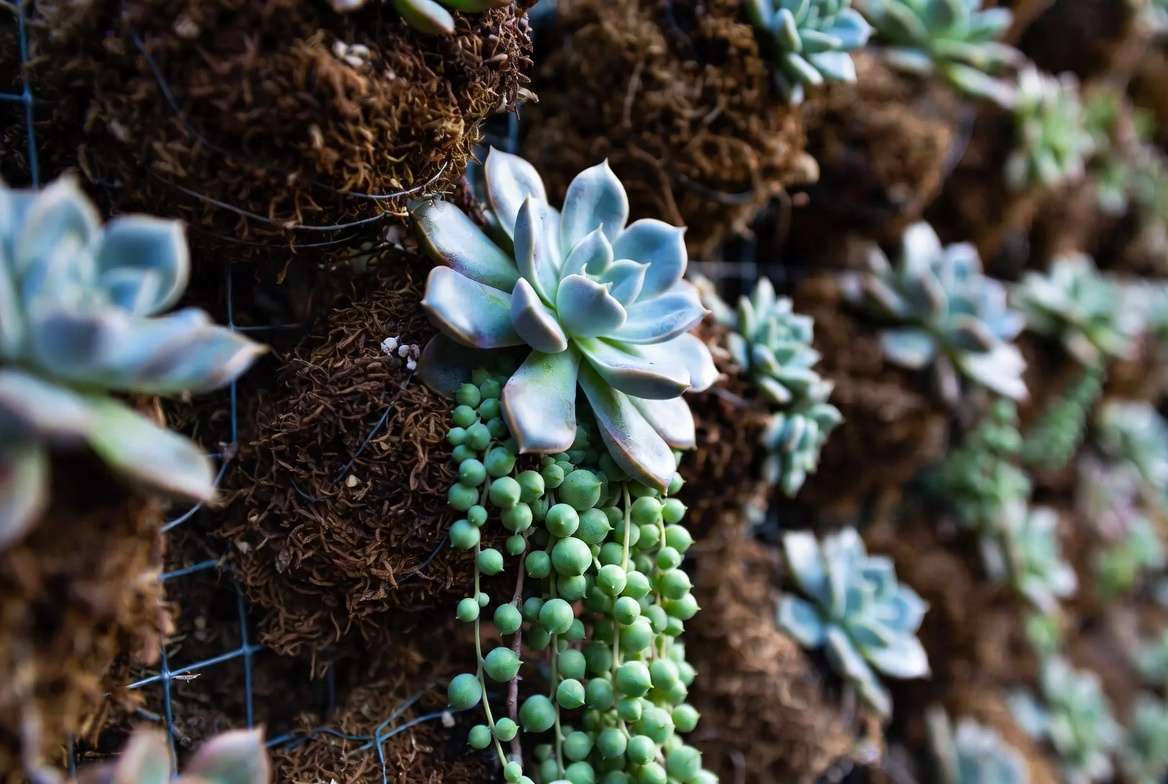
Echeveria: The quintessential succulent. Available in stunning pastel pinks, deep purples, and frosty blues, they serve as striking centerpieces that stay relatively compact.
-
Sempervivum (Hens and Chicks): Extremely hardy and prolific, these tightly packed rosettes are fantastic for filling awkward gaps and surviving cooler drafts.
-
Haworthia: With their architectural, white-striped leaves, they are excellent additions for indoor setups that might receive slightly lower light than Echeveria demands.
Frames, Planters, and Essential Supplies 🛠️
The foundation of your vertical succulent garden is the planter itself. Because soil and water are heavy, choosing the right structure is critical for both the health of the plants and the safety of your walls.
-
Shadow Box Frames: This is the gold standard for creating tightly packed succulent tapestries. These sturdy wooden or metal boxes feature a wire-mesh front (like chicken wire) that holds the plants and soil securely in place while allowing them to grow outward.
-
Felt Pocket Planters: A lightweight, highly breathable, and budget-friendly option, especially popular among renters. The felt naturally wicks moisture, promoting healthy root aeration, though they do require more frequent watering as they dry out faster.
-
Upcycled Pallets and DIY Trellises: For a rustic outdoor balcony vibe, repurposed wooden pallets lined with landscaping fabric make phenomenal, large-scale vertical gardens.
-
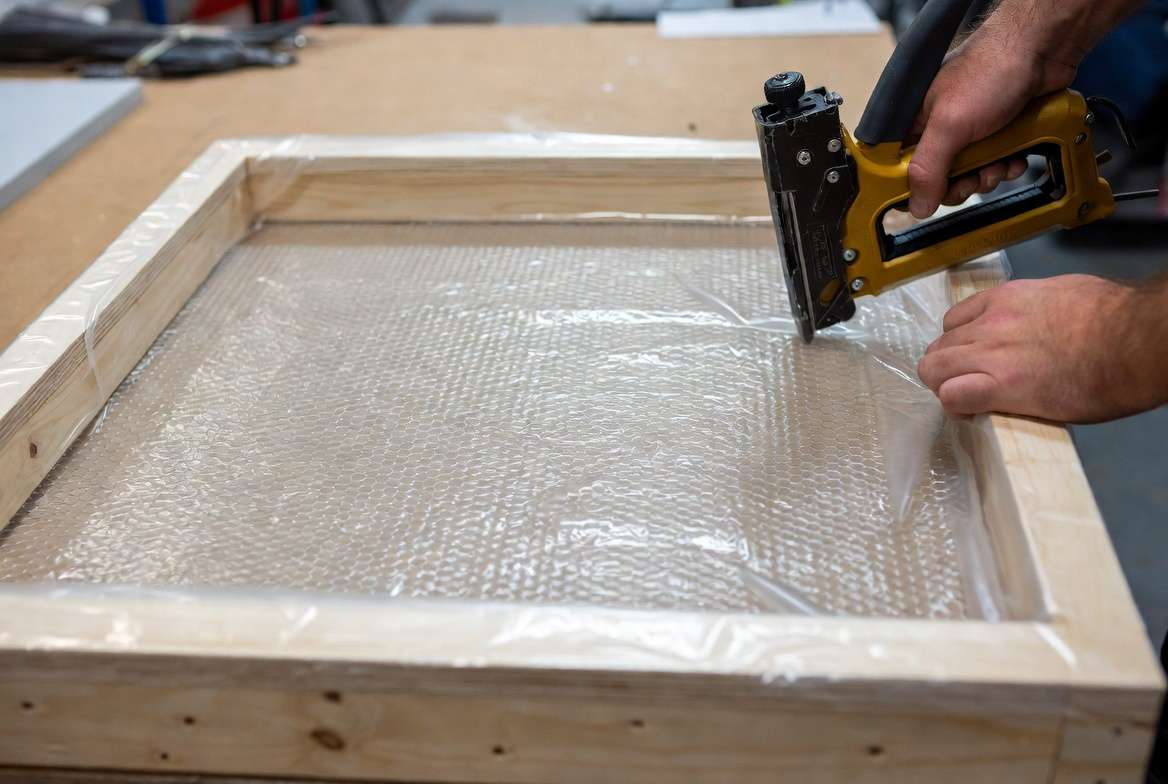
Moisture Barriers: Crucial Step! Never hang a wooden or felt planter directly against interior drywall without protection. Always staple a layer of thick, waterproof plastic sheeting to the back of your frame to prevent moisture damage and mold growth on your home’s walls. 🛑
Mastering Soil Health for Vertical Planters 🪱
If there is one secret to a thriving living wall, it is understanding soil health. Standard indoor potting soil is a death sentence for vertical succulent roots. It is too heavy, retains too much water, and lacks the necessary oxygen pockets, leading inevitably to root rot.
Aeration and Drainage are Non-Negotiable
In a vertical setup, water naturally pools at the bottom of the frame due to gravity. The upper plants dry out quickly, while the lower plants drown. To combat this, your substrate must offer exceptional drainage and aeration. Succulent roots need to “breathe” just as much as they need to drink.
The Ultimate Vertical Soil Recipe
You need a custom, lightweight, well-draining mix that provides structural support without compaction. Here is the expert mix:
-
60% Coarse Inorganic Material: Pumice, perlite, or calcined clay. This creates large air pockets and ensures water flows straight through.
-
30% Coconut Coir: A sustainable alternative to peat moss, coir holds just enough moisture to hydrate the roots without turning sludgy.
-
10% High-Quality Organic Compost or Worm Castings: To provide a slow, steady release of nutrients, promoting long-term soil health.
Sphagnum Moss Magic
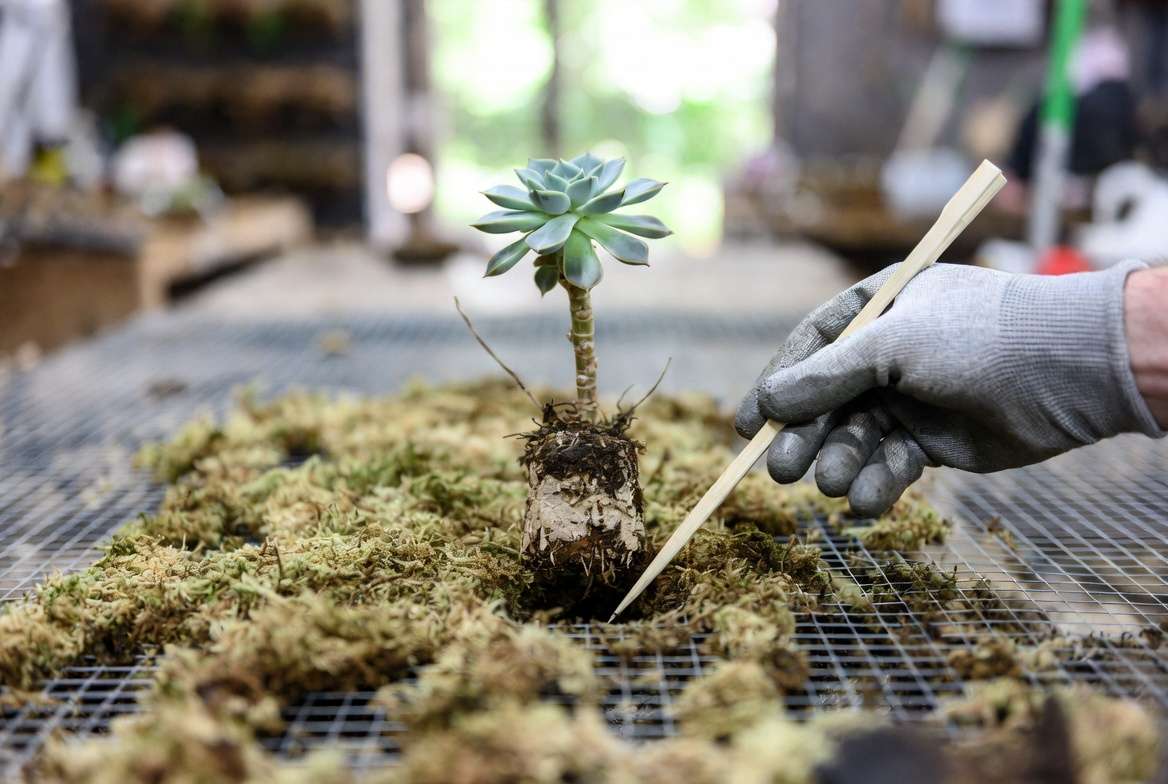
To prevent this loose, airy soil from spilling out of the wire mesh, you will utilize long-fibered sphagnum moss. Soaking high-quality sphagnum moss and using it to line the inside of the wire mesh creates a breathable “net.” It acts as a perfect anchor for delicate roots and holds the optimal amount of ambient moisture, keeping the environment humid enough for root establishment without rotting the stems.
Step-by-Step Guide: Assembling Your Living Wall 👷♀️
Building the garden is where the magic happens. Set aside an afternoon, lay out some newspaper, and let’s get planting.
Step 1: Preparing the Frame After ensuring your moisture barrier is securely attached to the back, pack the frame tightly with your custom succulent soil mix. Top the soil with a thick layer of dampened sphagnum moss. Finally, secure your wire mesh over the top of the frame. The moss should sit just beneath the mesh.
Step 2: Designing the Layout Before planting, arrange your succulents in their nursery pots on the floor next to the frame. Use the “Thriller, Filler, Spiller” method: place your large, colorful Echeveria (Thrillers) slightly off-center, surround them with smaller Sempervivum (Fillers), and plan for your String of Pearls (Spillers) to cascade from the bottom edges.
Step 3: Planting and Pinning Using a chopstick or a pencil, poke a hole through the wire mesh and the sphagnum moss into the soil. Gently remove the succulent from its pot, massage the root ball to remove excess nursery dirt, and carefully insert the roots into the hole. Press the moss firmly around the stem to secure it. If a top-heavy rosette feels wobbly, use U-shaped floral pins to tack the stem gently to the moss until it roots.
Step 4: The Rooting Period (The Most Crucial Step!) Do not hang your frame immediately! This is the most common mistake beginners make. You must leave the newly planted frame lying flat in a bright, warm location for 4 to 8 weeks. This flat rooting period allows the succulents to establish their root systems deeply into the soil. If you hang it too early, gravity will simply pull the plants right out of the mesh. Once you can gently tug on a succulent and feel resistance, your living wall is ready to be hung. 🖼️
Watering and Long-Term Maintenance Masterclass 💧
Watering a vertical garden requires a slightly different approach than your standard windowsill pots.
The Take-Down Method
For the most even hydration, especially for shadow box frames, take the frame off the wall and lay it flat on the ground or in a bathtub every 2 to 3 weeks (depending on your indoor humidity). Water the frame thoroughly until it drains, let it sit flat for an hour so the moss can absorb the moisture, and then hang it back up. This guarantees that the top plants get just as much water as the bottom plants.
The Spray & Drip Method
If your frame is too heavy to move, you can water it on the wall. Use a narrow-spout watering can or a specialized pump mister. Start from the very top and slowly trickle water in, letting gravity pull it down through the frame. Be sure to place a drip tray or a towel on the floor beneath the frame to catch the inevitable runoff.
Pruning and Propagation
Over time, some succulents may grow leggy or outgrow their space. Don’t be afraid to prune! Snip off overgrown rosettes and simply stick the cut stems back into any empty gaps in the moss—they will readily root and create an even denser arrangement. You can also harvest healthy leaves from your wall to propagate new babies in a separate tray.
Capturing and Sharing Your Garden’s Best Angles 📸
Once your lush vertical succulent garden is established, it will undoubtedly become the focal point of your home—and fantastic material for digital content!
If you publish plant care content, creating visual assets is key. To design click-worthy YouTube thumbnails, set up a wide-angle, time-lapse camera while you assemble and mount the frame. An action shot of you pinning a massive Echeveria into the moss makes for an incredibly engaging video cover.
For Pinterest pins, focus on the details. Wait for natural, soft morning light to hit your wall; this illuminates the vibrant stress colors of the succulents without casting harsh shadows. Frame tight, close-up macro shots of the contrasting textures—like the smooth, chalky leaves of an Echeveria nestled next to the trailing tendrils of a String of Hearts. Add a clean, bold text overlay to your pin (e.g., “DIY Vertical Garden Hacks!”), and watch the organic traffic flow to your blog. 📌
Troubleshooting Common Vertical Garden Problems 🚑
Even with the best preparation, living walls can occasionally run into hiccups. Here is how to play plant doctor:
-
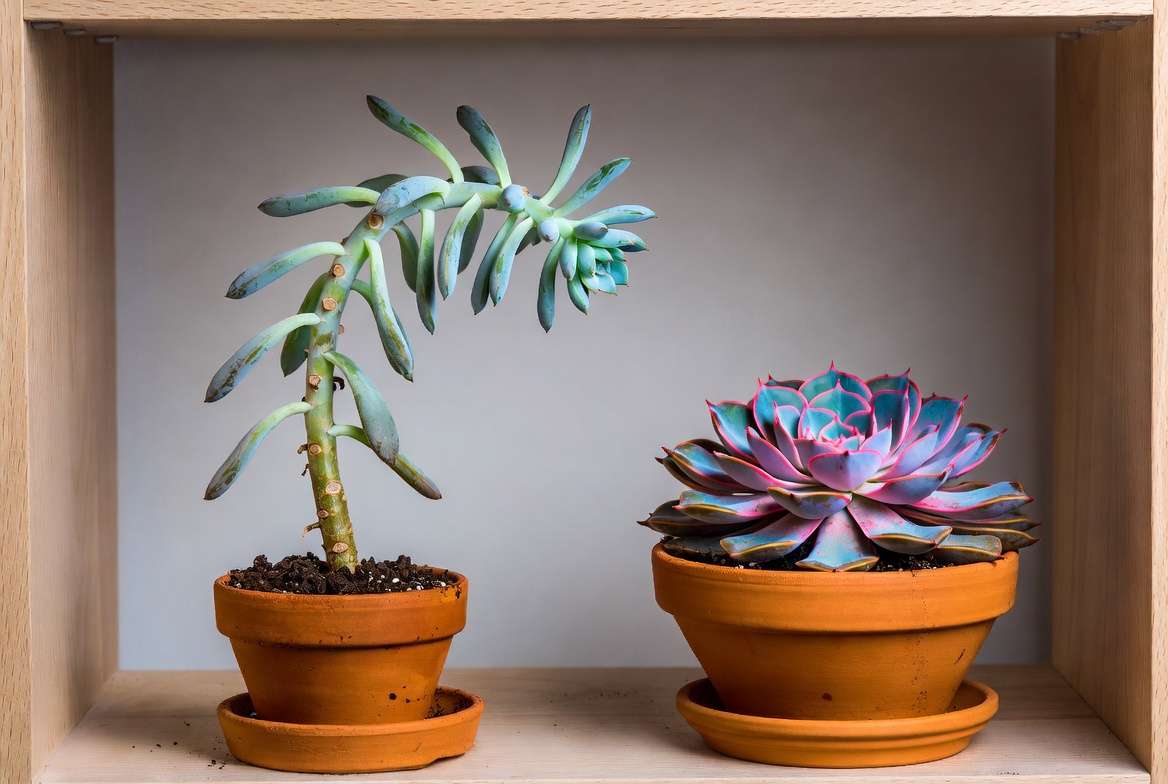
Etiolation (Stretching): If your compact rosettes begin stretching outward with wide gaps between the leaves, they are starving for light. You will need to prune the stretched tops, let the stems callous, and replant them. To prevent it from happening again, move the frame closer to a window or install a dedicated LED grow light.
-
Squishy, Translucent Leaves: This is the universal sign of overwatering and impending root rot. If you see yellowing, mushy leaves, particularly at the bottom of the frame, stop watering immediately. Increase airflow with a fan to help the substrate dry out faster.
-
Pest Control: The tight crevices of a vertical garden are a cozy hiding spot for mealybugs (which look like tiny bits of white cotton). Inspect your wall bi-weekly. If you spot them, treat the area immediately by dabbing the bugs with a Q-tip dipped in 70% isopropyl alcohol, or lightly mist the affected area with an organic neem oil solution in the evening. 🐛
Frequently Asked Questions (FAQs) ❓
How heavy does a vertical succulent garden get? A fully saturated 24×24 inch wooden frame packed with soil, plants, and water can easily weigh 20 to 30 pounds. Always use heavy-duty drywall anchors or mount your hooks directly into wooden wall studs.
How often should I water my indoor living wall? Succulents prefer the “soak and dry” method. Typically, watering every 14 to 21 days is sufficient indoors. Always check the soil near the bottom of the frame; if it still feels damp to the touch, wait another week.
Do I need to fertilize succulents growing on a wall? Yes, but sparingly! Because they are tightly packed in a small amount of soil, nutrients deplete quickly. Use a liquid succulent fertilizer diluted to half-strength just once a month during the active spring and summer growing seasons.
Can I put a vertical succulent garden in my bathroom? Usually, no. Bathrooms generally lack adequate natural light and possess high humidity levels. Succulents prefer dry air; high humidity makes them highly susceptible to fungal rot.
Conclusion: Elevate Your Space ✨
Building a vertical succulent garden is an incredibly rewarding project that merges botanical science with interior design. By understanding the fundamentals of light, securing the right hardware, and prioritizing soil health, you can conquer the small-space gardener’s dilemma once and for all. You do not need sprawling acreage or a greenhouse to cultivate a stunning collection of plants.
Start small. Mix up a batch of airy, well-draining soil, find a sunny patch of empty wall space, and build your very first miniature living frame today. Your walls—and your well-being—will thank you for it! Happy planting! 💚🌵











