
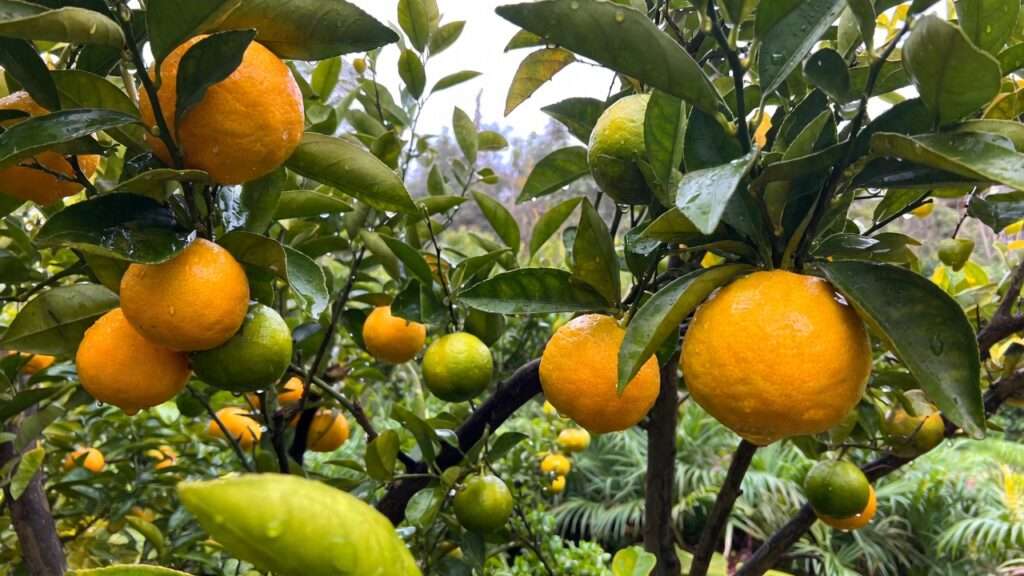
Nothing’s more heartbreaking than watching your beautiful citrus tree drop leaves, produce tiny bland fruit, or struggle with yellowing foliage — often because of one sneaky culprit: improper watering. Citrus trees, like lemons, oranges, limes, and grapefruits, are subtropical gems that thrive with the right balance of moisture. Too little, and they stress with curled “taco” leaves and reduced yields; too much, and root rot sets in, leading to wilting despite soggy soil.
The good news? Mastering water requirements for citrus trees is straightforward once you understand how much and how often to water. This comprehensive guide draws from trusted sources like UC IPM, University of Arizona Cooperative Extension, and UF/IFAS to deliver expert, evidence-based advice. Whether you’re growing in pots on a balcony, in-ground in a backyard, or managing a small grove, you’ll learn seasonal schedules, precise amounts, diagnostic tips, and pro techniques to ensure lush green growth, juicy fruit, and resilient trees. Let’s dive in and turn your citrus care game around! 💚
(Word count so far: ~320)
Why Proper Watering Is Critical for Citrus Tree Health 💧
Water is the lifeblood of any plant, but for citrus, it’s especially vital. It drives nutrient uptake through the roots, supports photosynthesis for vibrant leaves, and swells fruit cells for that juicy burst we all love. Citrus trees have shallow feeder roots (mostly in the top 2–3 feet of soil) that spread wide under the canopy, making them efficient at absorbing water — but also sensitive to extremes.
Improper watering is one of the top causes of citrus decline worldwide. Overwatering leads to oxygen-deprived roots, inviting devastating diseases like Phytophthora root rot or foot rot, which can kill trees if unchecked. Underwatering stresses trees, causing flower/fruit drop, smaller yields, and bitter fruit. In hot, dry climates (common for many citrus growers), evapotranspiration rates skyrocket, demanding more frequent deep soaks.
Citrus prefer consistent, deep moisture without “wet feet” — they evolved in regions with seasonal dry spells, so they tolerate brief dry periods better than constant sogginess. Getting this right promotes strong root systems, better disease resistance, and maximum fruit production. 🌱
Factors That Influence Water Requirements for Citrus Trees ⚙️
No one-size-fits-all schedule exists — water needs vary based on several key factors.
Tree Age and Size
Young, newly planted citrus (first 1–2 years) have limited root systems and need more frequent watering to establish. Water 2–3 times per week initially, tapering as roots expand. Mature trees (3+ years, canopy 10+ ft wide) handle deeper, less frequent irrigation — their established roots reach farther for moisture.
Growing Location — In-Ground vs. Potted/Container
In-ground trees benefit from slower drainage and natural soil buffering, often needing water every 7–14 days in summer. Potted citrus dry out faster due to limited soil volume and higher evaporation — check daily in heat, watering when top 1–2 inches dry. Containers require excellent drainage holes to prevent root rot.
Soil Type and Drainage
Sandy soils drain quickly, needing more frequent applications; clay/loam holds moisture longer but risks waterlogging if poorly drained. Always amend heavy soils with organic matter for better aeration. Test drainage: Dig a hole, fill with water — it should drain in 1–4 hours.
Climate and Microclimate
Hot, arid areas (e.g., desert Southwest) demand more water; humid subtropical zones get natural rainfall supplements. Windy spots or full-sun locations increase evaporation.
Season and Weather
Citrus are evergreen but slow growth in cooler months. Hot summers spike demand; winter dormancy reduces it dramatically. Rain, heat waves, or humidity all adjust the schedule.
Seasonal Watering Guide: How Often and How Much by Time of Year 📅
Tailor your routine to seasons for optimal health.
Spring (Active Growth Phase) 🌸
As temperatures rise and new growth/flush appears, increase frequency. Water every 7–10 days (adjust for rain). Aim for deep soaks wetting soil 2–3 feet deep to encourage root expansion.
Summer (Peak Demand) 🔥
Highest evapotranspiration — mature trees often need 4–6 inches of water per month (UC IPM guideline). In hot climates, irrigate every 5–10 days. Young trees: more often. Example: In extreme heat, a large tree might use 45–135 gallons/day via drip, per Arizona Extension data.
Fall (Transition Period) 🍂
Cooler weather slows growth — reduce to every 10–14 days. Monitor for early dry spells.
Winter (Dormant/Low Use) ❄️
Minimal needs — every 2–4 weeks (or less with rain). In mild winters, some areas skip supplemental watering if soil stays moist.
Here’s a quick reference table (adapt to your local conditions):
| Season | Mature In-Ground | Young/Planted | Potted/Container | Approx. Monthly Total (Mature) |
|---|---|---|---|---|
| Spring | Every 7–10 days | 2–3x/week | Check daily | 3–5 inches |
| Summer | Every 5–10 days | Every 3–7 days | Every 1–3 days | 4–6 inches |
| Fall | Every 10–14 days | Every 7–10 days | Every 3–7 days | 2–4 inches |
| Winter | Every 2–4 weeks | Every 10–21 days | Every 7–14 days | 1–3 inches |
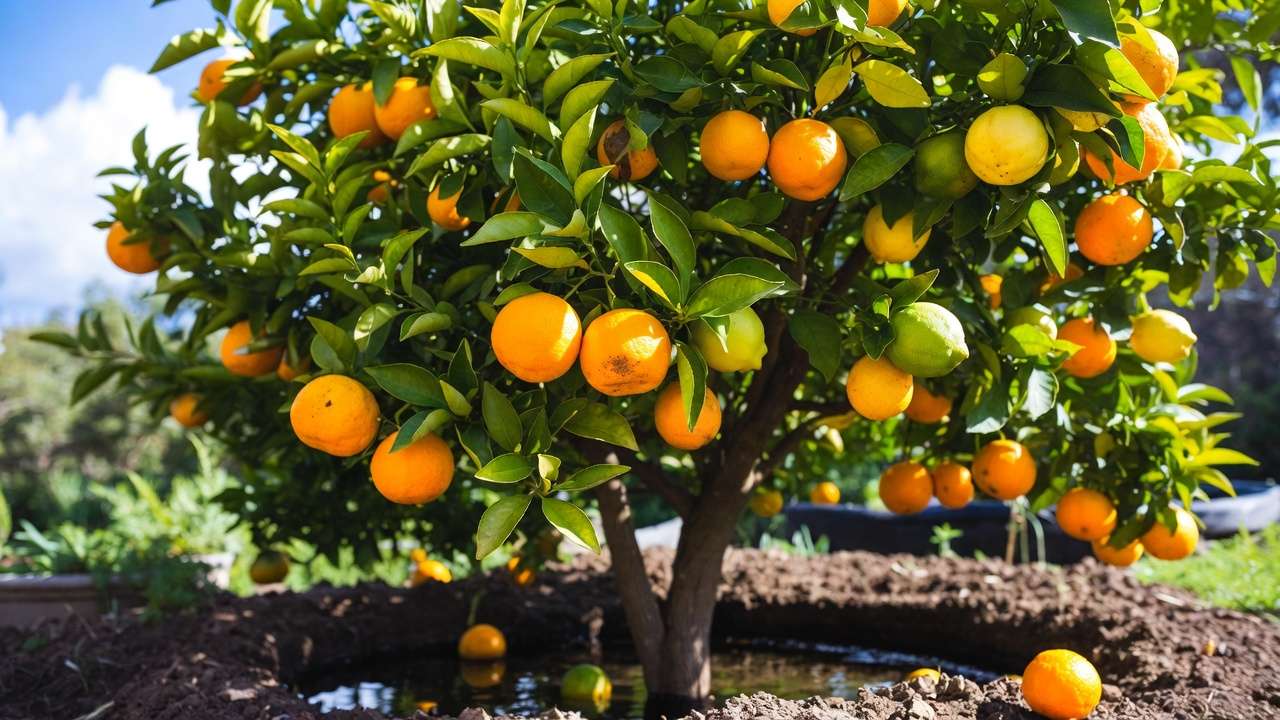
Always check soil moisture before watering — don’t rely on calendar alone!
How Much Water Do Citrus Trees Actually Need? (Quantities & Measurements) 📏
The golden rule for most mature, in-ground citrus trees in warm climates is 4–6 inches of water per month during the growing season (spring through fall), according to guidelines from the University of California Integrated Pest Management (UC IPM) and Arizona Cooperative Extension. This translates to roughly 1–1.5 inches per week when no rain falls — but always verify with actual soil moisture rather than sticking rigidly to numbers.
Breaking it down by tree stage and setup:
- Young trees (1–3 years old, canopy <6–8 ft): 5–15 gallons per watering session, applied 2–3 times per week in summer (less in cooler months). Goal: Keep the root ball consistently moist but not saturated while roots establish.
- Mature trees (canopy 10–20+ ft wide): 20–60+ gallons per deep watering, depending on size, heat, and soil. A rule of thumb from Florida IFAS Extension: Provide enough to wet the soil to at least 2–3 feet deep under the drip line (outer edge of canopy).
- Potted citrus: 1–3 gallons for small pots (5–10 gallon size), up to 5–10+ gallons for large tubs (20–50 gallon). Water until it runs freely from drainage holes, then stop.
How to measure accurately (skip guesswork!):
- Finger or screwdriver test — Push your finger or a long screwdriver 4–6 inches into the soil near the drip line. If it feels dry at that depth, water. If moist, wait.
- Soil moisture meter — Inexpensive digital probes give a reading (aim for 40–60% moisture in the root zone for most citrus).
- Lift test for pots — A dry pot feels surprisingly light; water when it’s noticeably lighter than when saturated.
- Rain gauge or tuna can method — Place a shallow container under your sprinkler/drip line to measure actual inches applied.
Pro tip: Citrus roots are mostly in the top 18–36 inches, so focus irrigation there. Deep, infrequent watering encourages drought-tolerant roots; frequent shallow watering creates weak, surface-level roots prone to heat and drought stress. 🌱
Best Watering Techniques and Best Practices 🌱
Getting the technique right is just as important as the amount and frequency.
Deep vs. Shallow Watering — Why Deep Wins
Shallow daily watering keeps only the top few inches moist, forcing roots upward where they’re vulnerable to drying out and heat. Deep watering (wetting 2–3+ feet) promotes a robust, wide-spreading root system that accesses deeper soil moisture during dry spells. Research from UC Riverside shows deep-irrigated citrus trees have 30–50% better drought tolerance and higher fruit yields.
Methods: Hose, Drip Irrigation, Soaker Hoses
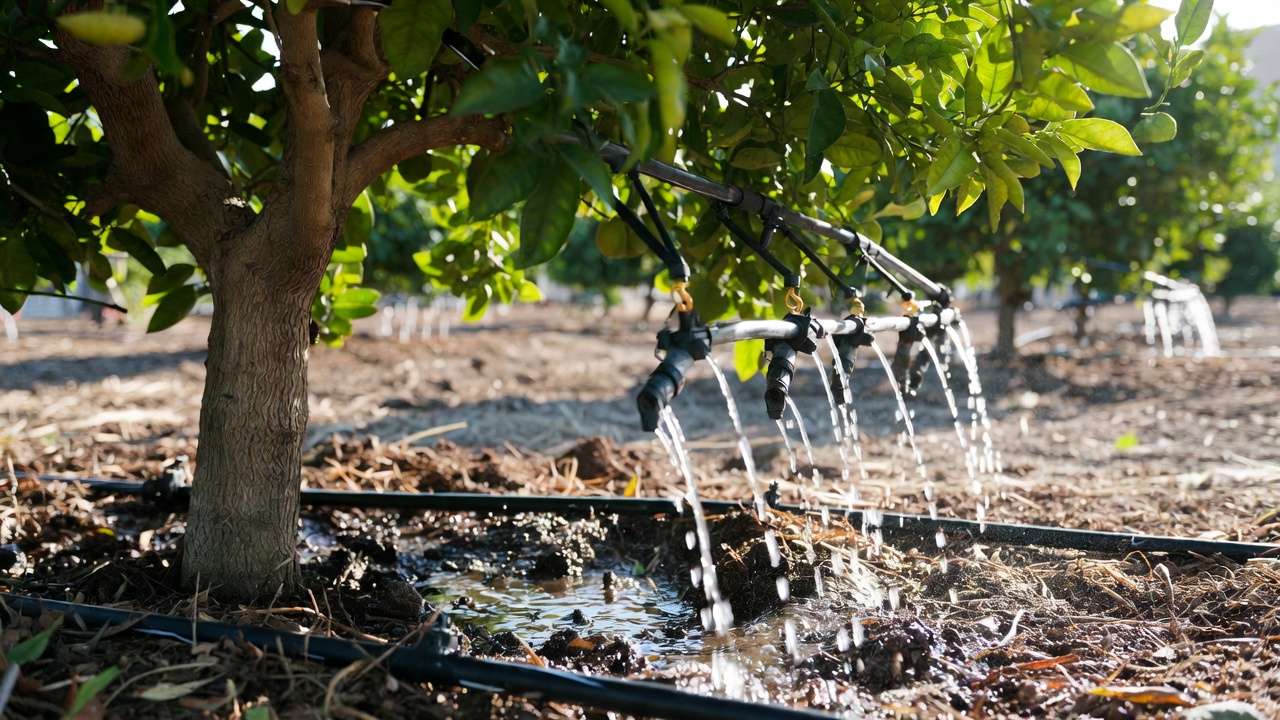
- Drip irrigation — The gold standard for citrus. Place emitters every 18–24 inches under the canopy; run 2–4 hours per session (adjust based on flow rate). Low evaporation, precise delivery.
- Soaker hoses — Good budget option; lay in a spiral under mulch.
- Hand watering with hose — Use a bubbler or slow-flow nozzle to avoid runoff. Build a 4–6 inch high soil berm (watering basin) around the drip line to hold water and direct it downward.
- Sprinklers — Least efficient (high evaporation, wet foliage invites fungal issues); use only if no better option.
Always water early morning so foliage dries quickly, reducing disease risk.
Mulching to Retain Moisture
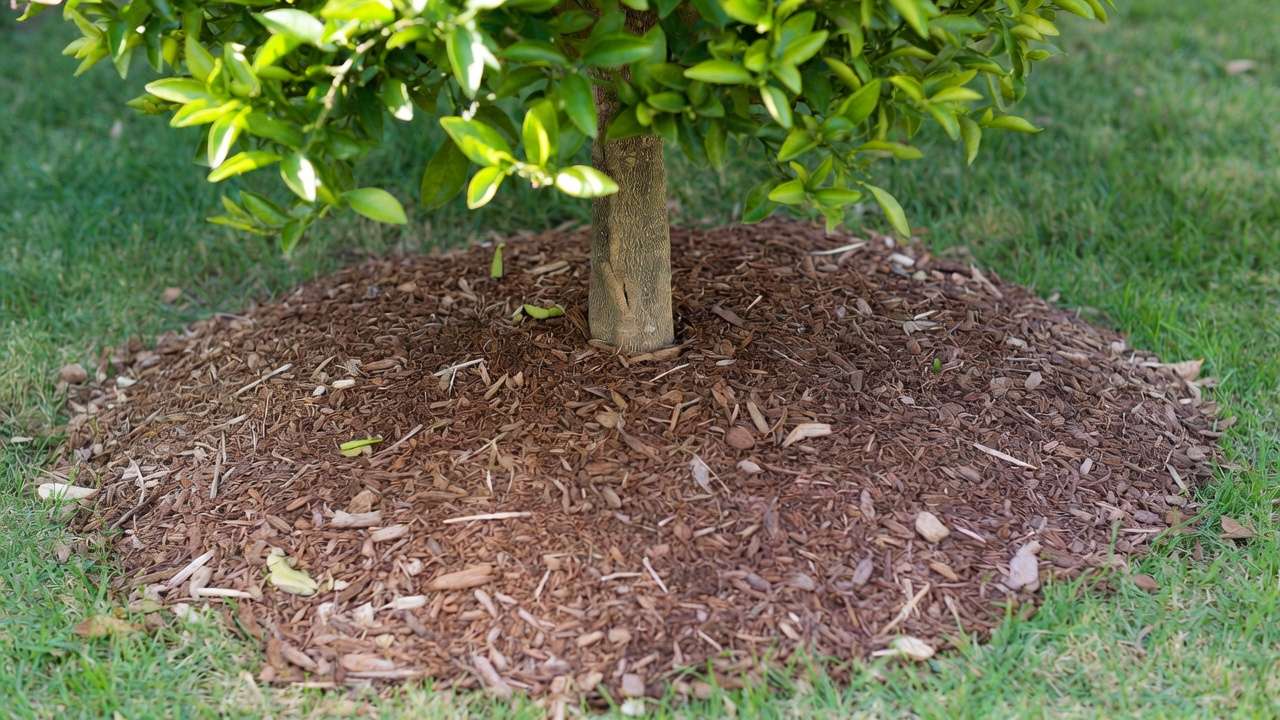
Apply 2–4 inches of organic mulch (wood chips, bark, straw) in a 3–6 ft diameter around the tree, keeping it 4–6 inches away from the trunk to prevent rot. Mulch reduces evaporation by up to 70%, moderates soil temperature, and suppresses weeds. Replenish annually. 🍂
Water Quality Considerations
Citrus are moderately sensitive to salts and high pH. Use rainwater, filtered, or low-EC tap water when possible. If using municipal water, let it sit 24 hours to off-gas chlorine. In hard-water areas, monitor for leaf tip burn (white/yellow edges) — a sign of salt buildup; flush soil periodically with heavy watering.
Signs Your Citrus Tree Needs More (or Less) Water 🚨
One of the biggest advantages of becoming a savvy citrus grower is learning to “read” your tree’s leaves and overall appearance — it tells you exactly what’s wrong faster than any calendar or meter. Here are the most reliable visual and tactile clues, backed by observations from university extension services and experienced growers.
Underwatering Symptoms
- Leaf curl (“taco” or “boat” shape) — Leaves fold upward along the midrib to reduce surface area and transpiration. This is one of the earliest and most distinctive signs in citrus.
- Wilting or drooping leaves — Especially noticeable in midday heat; leaves may perk up slightly at night.
- Dry, crispy leaf edges or tips — Browning starts at the margins.
- Premature leaf drop — Older leaves fall first, often after a period of stress.
- Small, sparse new growth — Shoots are short and weak; fruit set is poor, and existing fruit may be small, thick-skinned, or drop.
- Soil feels bone-dry deep into the root zone (beyond 4–6 inches).
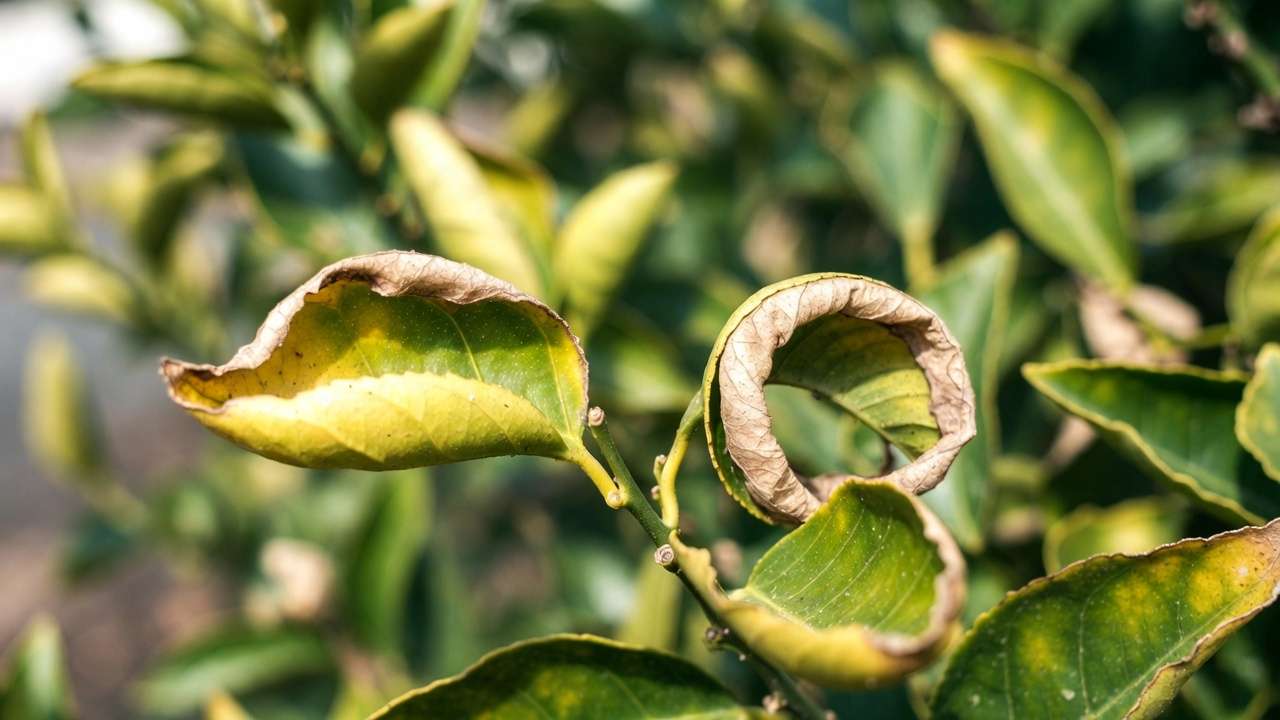
Fix: Water deeply immediately (slowly to avoid runoff), then maintain consistent moisture until recovery. Most trees bounce back quickly if caught early.
Overwatering Symptoms
- Yellowing leaves — Usually starting with older, lower leaves; uniform chlorosis (not vein-specific like nutrient issues).
- Wilting despite wet soil — Roots can’t uptake water due to lack of oxygen — classic root rot sign.
- Soggy, smelly soil — May have a sour or rotten odor; standing water after watering.
- Leaf drop (both old and new) — Often sudden and heavy.
- Soft, mushy roots (if you carefully dig) — Healthy roots are firm and white; rotted ones are brown/black and disintegrate.
- Fungal issues — Mushrooms, algae, or white mold on soil surface; increased pest attraction (fungus gnats).
Fix: Stop watering immediately. Improve drainage (add sand/perlite if potted; aerate soil if in-ground). In severe cases, gently remove tree, prune rotted roots, and repot in fresh, well-draining mix. Prevention is far easier than cure — always let the top few inches dry slightly between waterings.
Quick diagnostic flowchart:
- Check soil moisture at 4–6 inches deep.
- Dry → underwatering.
- Wet/soggy → overwatering or poor drainage.
- Observe leaf color/pattern and overall vigor.
- Adjust and monitor for 7–10 days.
Special Cases: Watering Potted Citrus, Indoor Trees, and Young Transplants 🪴
Container-grown citrus behave differently due to faster drying and restricted root space.
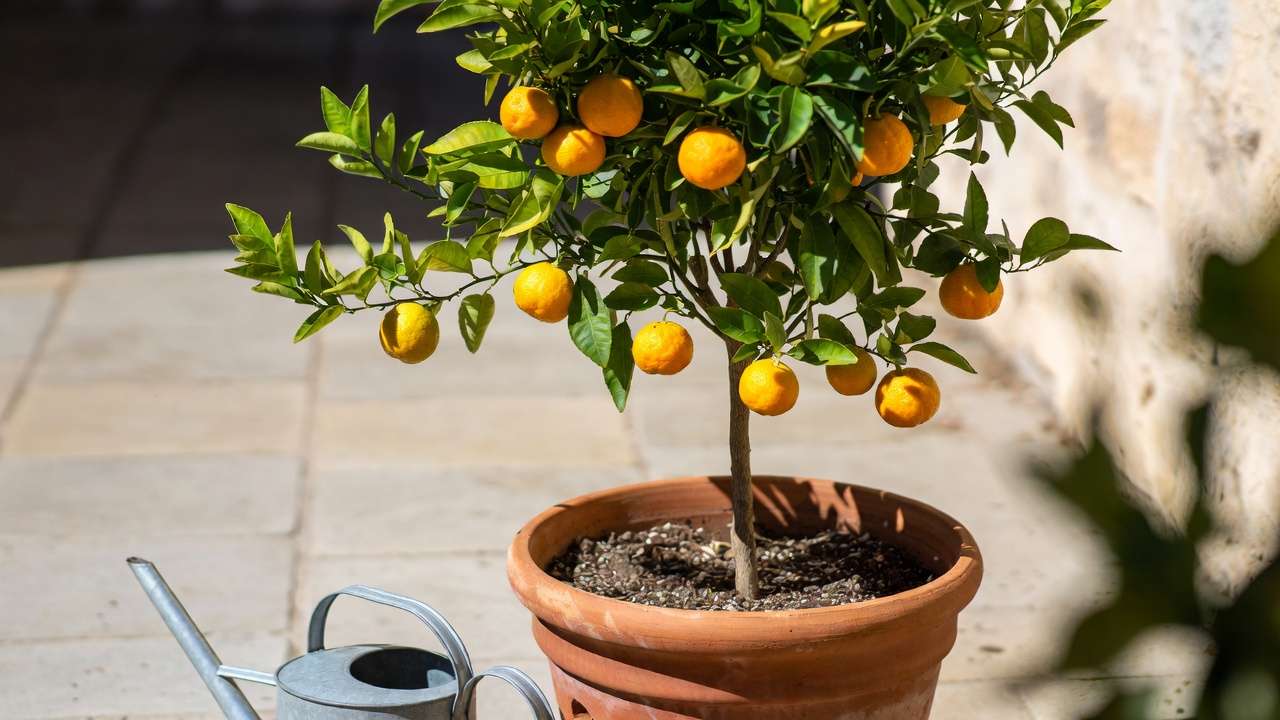
- Potted citrus outdoors — Evaporation is 2–3× faster than in-ground. Check daily in summer (lift pot or finger test). Water thoroughly until it drains out the bottom, then empty saucer to avoid standing water. In hot, windy conditions, twice-daily checks may be needed for small pots.
- Indoor citrus (e.g., Meyer lemon, calamondin) — Lower light and humidity slow transpiration. Water every 7–14 days (more often under grow lights or dry indoor air). Use room-temperature water; mist leaves occasionally for humidity. Avoid cold drafts or heat vents.
- Newly planted/transplanted trees — Roots are damaged and limited. Water every 2–3 days for the first 2 weeks (deeply but gently), then gradually stretch to normal schedule over 6–8 weeks. Stake if needed to reduce wind stress on recovering roots.
Common Watering Mistakes and How to Avoid Them ❌
Even experienced gardeners slip up — here are the top pitfalls and fixes:
- Watering too frequently but shallowly → Creates weak roots. Solution: Always water deeply.
- Ignoring rainfall → Overwatering after storms. Solution: Use rain gauge; skip irrigation if >0.5 inches recently.
- Watering at the trunk only → Misses feeder roots. Solution: Irrigate entire drip line area.
- Poor drainage in pots → Root rot city. Solution: Use pots with multiple holes; elevate on feet.
- Using cold water in winter → Root shock. Solution: Room-temp or sun-warmed water.
- Mulch piled against trunk → Rot and pests. Solution: Keep 4–6 inch gap.
- No seasonal adjustment → Summer neglect or winter overwatering. Solution: Follow the seasonal guide above.
- Relying on “looks dry on top” alone → Deeper soil may still be wet. Solution: Always probe deeper.
Expert Tips for Maximum Growth and Fruit Production 🌟
- Pair proper watering with balanced fertilization (e.g., citrus-specific slow-release in spring) — water activates nutrients.
- Prune lightly after risk of frost to improve air circulation and reduce water demand.
- In arid climates, consider micro-sprinklers under canopy for humidity boost without wetting leaves excessively.
- For heavy clay soils: Raised beds or French drains prevent chronic over-saturation.
- Track your tree’s response — keep a simple journal (dates watered, amount, weather, leaf condition) for the first year to personalize your schedule.
Bonus checklist (save/print this!):
- ☑ Soil probe/finger test before watering
- ☑ Deep soak to 2–3 ft
- ☑ Mulch refreshed
- ☑ Drainage checked
- ☑ Seasonal shift noted
- ☑ Leaves/symptoms monitored weekly
Frequently Asked Questions (FAQs) ❓
Here are the most common questions citrus growers ask about watering — answered with practical, research-backed clarity.
1. How often should I water citrus trees in a hot, dry climate like the desert or summer in South Asia? In peak summer heat (90°F+/32°C+ with low humidity), mature in-ground trees typically need deep watering every 5–7 days, providing 4–6 inches total per month. Potted trees may need every 2–4 days. Always check soil moisture first — the finger test or a moisture meter is more reliable than the calendar.
2. My citrus leaves are yellowing. Is it overwatering or underwatering? Yellowing from the lower/older leaves + soggy soil = overwatering/root rot. Yellowing + dry soil, leaf curl, and wilting = underwatering. Probe the soil 4–6 inches deep: wet and smelly points to too much water; bone-dry points to too little. Improve drainage immediately if overwatering is suspected.
3. Can I use tap water for my citrus trees? Yes, in most cases. However, if your water is very hard (high calcium/magnesium) or has high chlorine, let it sit in an open container for 24 hours before use. Rainwater is ideal when available. Avoid softened water (high sodium).
4. How much water does a Meyer lemon tree in a pot need? Meyer lemons are somewhat more cold-tolerant but have similar water needs to other citrus. For a 10–20 gallon pot, water thoroughly (until it drains out the bottom) every 3–7 days in summer, every 7–14 days in cooler months. Never let the pot sit in standing water.
5. Is it better to water in the morning or evening? Morning is best. Watering early allows foliage to dry during the day (reducing fungal risk) and gives roots time to absorb moisture before the hottest part of the day. Avoid evening watering in humid climates to prevent prolonged leaf wetness.
6. My citrus tree is dropping fruit. Could watering be the cause? Yes — both too much and too little water can cause fruit drop. Underwatering stresses the tree, triggering it to conserve resources by dropping fruit. Overwatering damages roots, reducing water and nutrient uptake, which also leads to drop. Stabilize soil moisture and check for other stressors (nutrient deficiency, extreme temperatures).
7. Do citrus trees need less water in winter even in mild climates? Yes. Even in frost-free regions, citrus slow growth significantly in winter. Reduce watering to every 2–4 weeks (or less if natural rainfall keeps soil moist). Overwatering in winter is a very common cause of root rot in mild-winter areas.
8. How do I know if my soil drains well enough for citrus? Dig a 12-inch deep hole near the drip line, fill it with water, and observe. It should drain completely within 1–4 hours. If it takes longer than 6–8 hours, improve drainage before planting or consider raised beds/containers.
9. Can I use a sprinkler system for citrus trees? It’s not ideal. Sprinklers wet foliage (increasing disease risk) and lose a lot to evaporation. Drip irrigation or soaker hoses are far more efficient and healthier for citrus.
10. What’s the best mulch for helping with water retention? Organic mulches like wood chips, shredded bark, pine needles, or composted leaves work best. Apply 2–4 inches thick, keeping it several inches away from the trunk. This can reduce watering needs by 25–70% depending on climate.
Conclusion 🎉🍋
Congratulations — you now have the complete roadmap to mastering water requirements for citrus trees! The key takeaway is simple yet powerful: consistent, deep, thoughtful watering tailored to season, tree age, soil, climate, and container type is the single biggest factor in growing healthy, productive citrus at home.
Citrus are remarkably resilient when their basic needs are met. By learning to read your tree’s leaves, probing the soil properly, adjusting seasonally, and using smart techniques like drip irrigation and mulch, you’ll prevent most common problems — leaf curl, yellowing, fruit drop, and root rot — before they become serious.
Start this week:
- Check your current soil moisture at multiple depths
- Adjust your schedule based on the seasonal guide
- Add or refresh mulch if needed
- Observe your tree’s response over the next 10–14 days
With these practices in place, you’re not just keeping a tree alive — you’re setting it up to thrive, bloom abundantly, and reward you with basketfuls of sweet, juicy fruit year after year. 🌟
Happy watering, and enjoy every beautiful, fragrant blossom and perfect citrus harvest that follows! 🍊💚











