
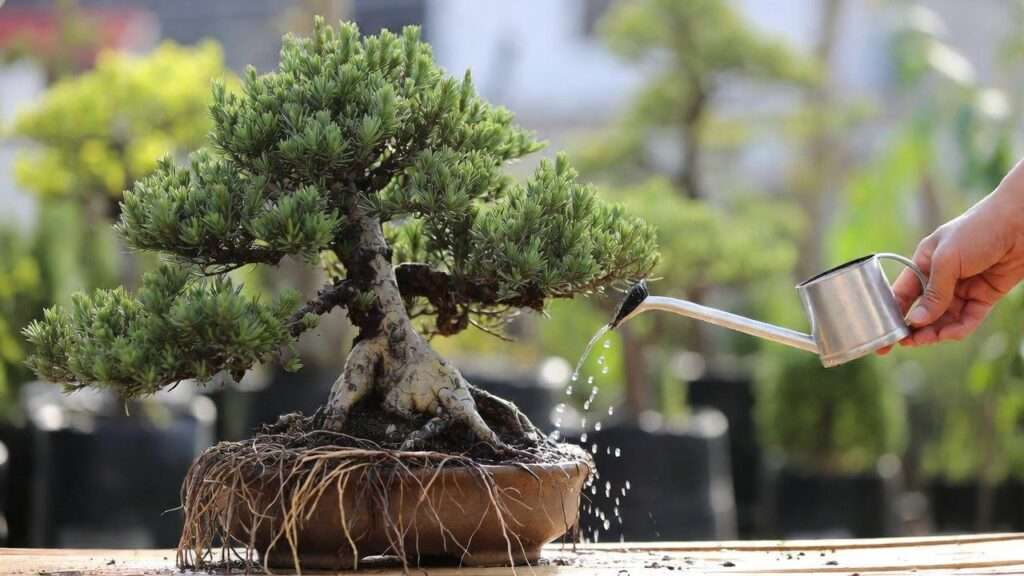
Imagine this: Your beautiful outdoor bonsai, carefully shaped over months or years, suddenly shows wilting leaves or yellowing tips despite your best efforts. 😔 You’ve read the basics, but watering still feels like a guessing game — too much leads to root rot, too little dries out the delicate roots in a flash. As someone who’s nurtured dozens of outdoor bonsai collections through scorching summers and chilly winters, I can tell you: improper watering is the #1 reason most outdoor bonsai struggle or fail.
Watering frequency for outdoor bonsai isn’t about a fixed schedule like “every morning at 7 AM.” Outdoor trees face sun, wind, rain, and temperature swings that make indoor rules useless. Instead, it’s about daily observation and understanding the factors that change needs overnight. In this ultimate guide, you’ll get the expert system to check moisture accurately, species-specific insights, seasonal breakdowns, pro techniques, and fixes for common pitfalls — so your trees stay vibrant and healthy year-round. Let’s dive in and turn watering from a chore into second nature! 🌳✨

Why Outdoor Bonsai Watering Is Different (And Trickier) Than Indoor 🌤️
Outdoor bonsai live in the real world — exposed to direct sunlight, drying winds, sudden rain showers, and daily temperature fluctuations. This exposure causes soil to dry much faster than in controlled indoor settings. While an indoor bonsai might need water every 3–7 days, outdoor ones often require daily (or even twice-daily) attention during peak growing season.
Key differences include:
- Evaporation rate — Full sun and wind can dry shallow bonsai pots in hours.
- Rain unpredictability — Heavy downpours can oversaturate, while dry spells demand extra vigilance.
- Seasonal extremes — In hot, arid climates (or Dhaka’s humid summers!), evaporation skyrockets.
From my experience and consensus across bonsai experts (like Bonsai Empire and professional growers), over 80% of beginner failures tie back to watering errors. The good news? Mastering observation beats any rigid routine. 🚫⏰
The Golden Rule: Never Water on a Fixed Schedule ⏰🚫
This is the most important lesson: Water only when the tree needs it, not because the calendar says so.
Fixed schedules fail because conditions shift — a windy afternoon or heatwave can double drying speed. Watering too soon causes root rot (poor oxygen for roots), while delaying too long stresses the tree, leading to leaf drop or dieback.
Build intuition over time: After weeks of checking, you’ll sense when your collection is thirsty just by glancing at pot weight or soil color. Until then, rely on daily checks — it’s the foundation of healthy outdoor bonsai care.
How to Tell When Your Outdoor Bonsai Needs Water (Daily Check Methods) 🔍💧
Check every tree daily, ideally morning and late afternoon in summer. Here are reliable methods:
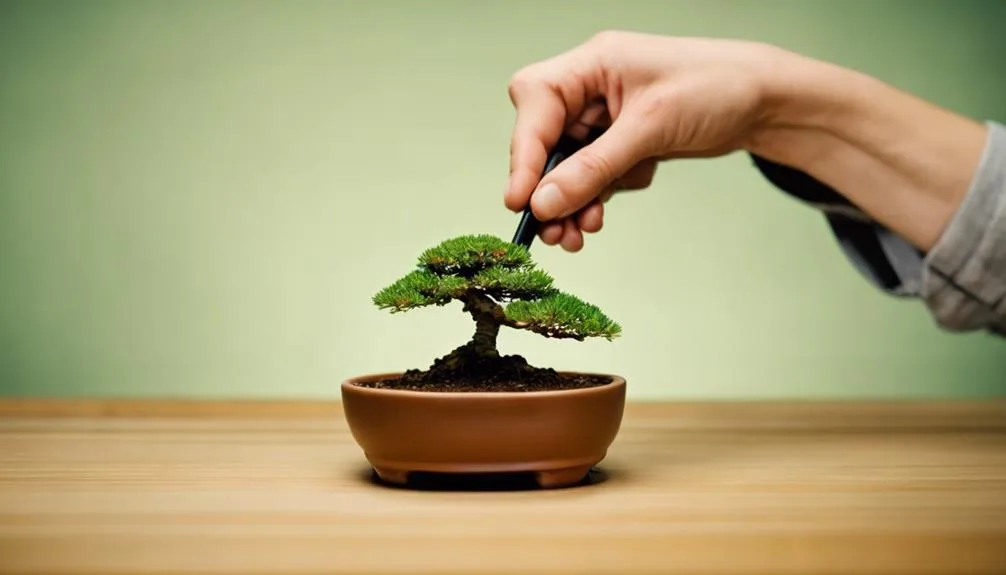
1. Finger / Chopstick Test (Most Recommended) Insert your finger or a wooden chopstick 1–2 cm into the soil. If it feels dry or comes out clean/dry, water. Moist and cool? Wait. This checks beyond surface level where roots live.
2. Weight Lift Test Lift the pot — a thirsty bonsai feels noticeably lighter than a watered one. With practice, this becomes quick for collections.
3. Visual & Sound Cues
- Soil color: Dark when wet, light/pale when dry.
- Cracking or pulling away from pot edges.
- Tap the pot: Hollow ring = dry; dull thud = moist.
4. Moisture Meter (For Beginners) Useful tool, but not foolproof — calibrate it and use alongside finger test. Avoid cheap ones that give false readings.
Pro tip: In hot weather, check twice daily. Early detection prevents stress! 🌅
Key Factors That Determine Watering Frequency for Outdoor Bonsai ⚖️
No two bonsai are identical. These variables dictate needs:
Tree Species & Water Needs
- Conifers (Juniper, Pine, Spruce) 🌲 — Prefer slight dry-out between waterings; drought-tolerant once established. Juniper might skip a day in mild weather.
- Deciduous (Japanese Maple, Elm, Beech) 🍁 — Crave consistent moisture during active growth; daily in summer heat.
- Tropical/Subtropical (Ficus, Jade, Carmona) — Higher frequency in warmth; Ficus often needs soaking if dry.
Example: A Trident Maple in full sun might need water daily in 35°C heat, while a Juniper lasts 2–3 days.
Season & Climate Breakdown
- Spring 🌸 — Growth ramps up; increase frequency as buds swell and temps rise.
- Summer 🔥 — Peak demand! Daily or twice-daily in hot, windy conditions — evaporation is intense.
- Fall 🍂 — Taper off as growth slows and cooler weather arrives.
- Winter ❄️ — Minimal (every 1–3 weeks); roots are dormant, but avoid complete dry-out. Protect from freeze-dry winds.
In humid subtropical areas like Dhaka, summer humidity helps retain moisture slightly, but intense sun still demands frequent checks.
Pot Size, Soil Mix & Placement
- Small/shallow pots dry fastest — monitor closely.
- Inorganic mixes (akadama, pumice, lava rock) drain quickly → more frequent watering. Organic-heavy soils hold moisture longer.
- Full sun vs. partial shade; windy spots vs. sheltered → multipliers for frequency.
Step-by-Step: The Proper Way to Water Outdoor Bonsai 💦
- Check first — Use methods above.
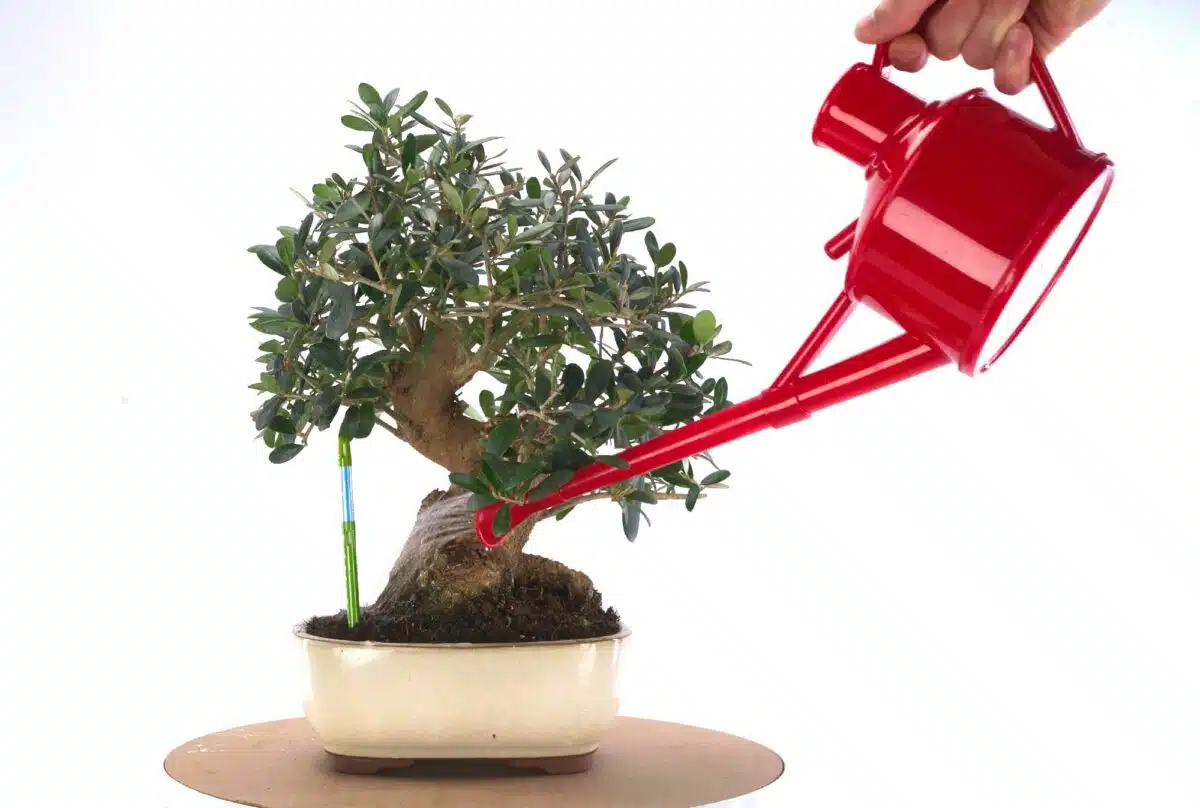
- Water thoroughly — Use a watering can with fine rose or hose nozzle. Soak until water flows freely from drainage holes (full saturation).
- Best times — Early morning (roots absorb before heat) or evening (less evaporation). Avoid midday to prevent leaf scorch.
- Techniques — Overhead for even coverage; immersion for very dry pots (submerge 5–10 min).
- What NOT to do — Light sprinkling wets only surface → shallow roots and instability.
Bonus: Collect rainwater — it’s soft, pH-balanced, and mineral-rich. Great for acid-loving species like azaleas! ☔
Seasonal Watering Guide & Quick-Reference Charts 📊🌸
To make watering frequency for outdoor bonsai practical, here’s a season-by-season breakdown tailored for temperate to subtropical climates (like much of Dhaka’s humid, hot summers and mild winters). Adjust based on your exact microclimate — more sun/wind means more frequent watering.
Spring (March–May) 🌷
- Growth accelerates as temperatures rise and buds swell.
- Frequency: Every 1–2 days for most species; check daily.
- Tip: Start increasing from winter lows — never let soil stay soggy from spring rains.
Summer (June–August) 🔥
- Highest demand period! Intense heat, sun, and humidity in places like Bangladesh accelerate evaporation.
- Frequency: Daily for deciduous/tropicals; every 1–2 days for conifers. Twice-daily (morning + evening) during 35°C+ heatwaves or strong winds.
- Pro adjustment: Cluster pots together or use shade cloth in peak afternoon sun to reduce drying.
Fall (September–November) 🍁
- Growth slows; cooler nights help retain moisture.
- Frequency: Every 2–4 days; taper as leaves change color (deciduous species).
- Watch for early dry spells after monsoon — soil can still dry fast.
Winter (December–February) ❄️
- Dormancy for temperate species; minimal water needs.
- Frequency: Every 7–21 days; only when top 2–3 cm of soil is dry. Never water frozen pots.
- Key: Shelter from desiccating winds; group pots or bury in soil for insulation.
Here’s a simple reference table you can screenshot or print:
| Season | Deciduous (e.g., Maple, Elm) | Conifers (e.g., Juniper, Pine) | Tropicals (e.g., Ficus) | Notes for Dhaka/Subtropical |
|---|---|---|---|---|
| Spring | Every 1–2 days | Every 2–3 days | Every 1–2 days | Increase with rising heat |
| Summer | Daily or twice-daily | Every 1–2 days | Daily | Heatwaves = morning + evening |
| Fall | Every 2–4 days | Every 3–5 days | Every 2–3 days | Taper after rains |
| Winter | Every 10–14 days | Every 14–21 days | Every 5–10 days | Protect from cold winds |
(Adapt for your collection — always verify with finger test!)
Common Watering Mistakes & How to Fix Them ❌→✅
Even experienced growers slip up. Here are the top pitfalls and real fixes:
- Overwatering → Root Rot Symptoms: Yellowing/wilting leaves (even when soil is wet), mushy trunk base, black/brown soggy roots when inspected. Fix: Stop watering; repot urgently into fresh, well-draining mix. Trim rotten roots, treat with fungicide if needed, and place in shade. Recovery can take weeks—patience is key! Prevention: Always check soil before watering.

- Underwatering / Drought Stress Symptoms: Crispy leaf edges, leaf curl/drop, lightweight pot, soil pulling from edges. Fix: Soak thoroughly (immersion if severe), then resume normal checks. Mist foliage temporarily for humidity boost. Most recover if caught early.
- Inconsistent or Shallow Watering Light sprinkles wet only the top → weak, surface roots. Fix: Always water to runoff; build deep root systems.
- Ignoring Microclimates Balcony vs. ground, sun vs. shade spots dry at different rates. Fix: Group similar-needs trees; label pots with last watered date until intuition kicks in.
Expert Tips & Advanced Techniques from Bonsai Pros 🌟
After years working with outdoor collections:
- Double Watering in Extreme Heat — Morning soak + light evening refresh prevents midday wilt.
- Top-Dressing for Moisture Retention — Add 1–2 cm sphagnum moss or fine bark mulch on soil surface.
- Automated Drip Systems — For larger collections: Use timers + drip emitters (low-flow) connected to rainwater barrels. Great for vacations!
- Grouping & Microclimate Management — Cluster pots to create humidity pockets; add shade nets or windbreaks in exposed areas.
- Rainwater Harvesting — In monsoon-heavy regions like yours, collect in barrels — ideal for avoiding tap water chlorine buildup over time.
One game-changer from pros: Water at dusk in summer — cooler temps mean less immediate evaporation and better root uptake overnight.
Bonus: Integrating Watering with Full Outdoor Bonsai Care Routine 🔄
Watering doesn’t exist in isolation:
- Fertilizing — Never feed dry roots; water first, fertilize next day. Liquid feeds every 1–2 weeks in growing season.
- Repotting — Fresh soil changes water needs (new inorganic mix = more frequent initially).
- Winter Protection — Move to sheltered spot; use anti-desiccant sprays on foliage for evergreens.
- Essential Tools — Fine-rose watering can, chopsticks for testing, moisture meter (backup), rain barrel.
Master these connections, and your bonsai will respond with vigorous growth and stunning seasonal color.
Frequently Asked Questions (FAQ) ❓
How often should I water outdoor bonsai in summer? Daily to twice-daily in hot, sunny conditions — check soil twice a day and water thoroughly when the top 1–2 cm is dry.
Can rain replace manual watering? Sometimes, but not reliably. Heavy rain can oversaturate; light showers may not penetrate. Always check soil after rain.
What if my bonsai is wilting even after watering? Could be root rot (overwatering history) or severe underwatering damage. Inspect roots; repot if needed.
Do different bonsai species have vastly different needs? Yes — conifers tolerate drier soil; deciduous and tropicals prefer consistent moisture.
How does pot material affect watering frequency? Unglazed clay pots dry fastest (breathable); plastic/glazed hold moisture longer.
Is it better to water in the morning or evening? Morning is ideal (roots absorb before heat); evening works well in extreme heat to reduce loss.
What’s the best water for bonsai? Rainwater or dechlorinated tap water (let sit 24 hours). Avoid hard, salty water long-term.
Conclusion: Master Watering = Master Bonsai Success 🎯
Watering frequency for outdoor bonsai comes down to one core habit: observe daily, water thoroughly when needed, and adjust to your tree’s signals and environment. Ditch the rigid schedule, embrace the finger test, and watch your collection transform from surviving to thriving — lush foliage, strong branches, and that satisfying “bonsai glow.” 🌳💚
With practice, watering becomes intuitive, almost meditative. Your trees will reward you with health, beauty, and years of joy. Share your own outdoor bonsai watering routine or struggles in the comments below — I’d love to help troubleshoot! Subscribe for more expert tree care guides tailored to real growers like you.
Happy watering, and may your bonsai flourish! ✨🌿











