
Imagine stepping into your backyard for a peaceful morning coffee, only to feel exposed by nosy neighbors, street noise, or an unsightly view next door. 😩 In today’s world of rising water costs, frequent droughts, and stricter conservation rules, creating lush privacy screening without guzzling water feels impossible. But what if you could have dense, beautiful hedges that provide year-round seclusion, thrive on minimal irrigation, and actually enhance your landscape’s beauty?
Waterwise hedges for privacy are the game-changer you’ve been searching for — drought-tolerant plants that deliver effective screening while slashing your water bill and supporting sustainable gardening. As a horticulturist with over 15 years specializing in xeriscape and low-maintenance landscapes, I’ve helped countless homeowners transform exposed yards into private retreats using these resilient options. 🌱💧
In this ultimate guide, we’ll explore the best waterwise hedges for reliable privacy, share expert planting and care secrets, design inspiration, and practical tips to avoid common pitfalls. Whether you’re in a dry climate or just want eco-friendly yard solutions, you’ll find everything needed to create stunning, low-water privacy that lasts. Let’s turn your outdoor space into a serene oasis! 🌟
Why Choose Waterwise Hedges for Privacy? The Real Benefits 🌍
Traditional hedges like boxwood or privet often demand constant watering, frequent pruning, and can struggle in heatwaves — leading to high bills and frustration. Waterwise alternatives flip the script with smart adaptations like deep root systems, waxy leaves, and efficient water use.
Here are the standout advantages:
- Water conservation — Once established (usually 1–2 years), these hedges need deep, infrequent watering, often surviving on rainfall alone in many regions. This is huge for drought-prone areas and helps combat water scarcity. 💚
- Low maintenance — Minimal pruning compared to thirsty varieties, fewer fertilizers, and natural pest resistance mean more time enjoying your yard, less time working in it. ⏳
- Year-round privacy — Many are evergreen, providing consistent screening through all seasons, unlike deciduous options that leave you exposed in winter. 🌲
- Extra perks — Attract pollinators and birds, reduce noise, act as windbreaks, improve air quality, and boost property value with curb appeal. Some even offer edible fruits or fragrant blooms! 🐝🐦
- Cost savings long-term — Lower water usage + durability = fewer replacements and bills. Studies from extension services show xeriscape designs can cut outdoor water use by 50–75%. 📊
Switching to drought-tolerant privacy hedges isn’t just practical — it’s a smart, eco-friendly investment for modern living.
Understanding Waterwise (Drought-Tolerant) Plants: Key Traits to Look For 🔍
Not all “low-water” plants are truly waterwise. Look for these characteristics:
- Deep, extensive roots — Access moisture far below the surface.
- Thick, waxy, or small leaves — Reduce evaporation (think succulents or Mediterranean natives). 🌵
- Native or adapted origins — From arid/semi-arid regions, they handle heat, poor soil, and dry spells naturally.
- USDA hardiness zones — Match your local climate (e.g., Zones 7–10 for many options here). Check for cold, heat, or coastal tolerance. 🗺️
For privacy:
- Evergreen varieties ensure no bare seasons.
- Semi-evergreen or deciduous work in milder winters if density is key. ❄️🌸
- Growth rates — Fast-growers (2–4 ft/year) give quicker screening; moderate ones (1–2 ft/year) need patience but often denser. ⏱️
Pro tip: Always verify local adaptability — what thrives in California may need tweaks in humid zones.
Top 10+ Best Waterwise Hedges for Privacy (Detailed Recommendations) 🏆
Here are my top picks, proven in real landscapes for drought tolerance, density, and beauty. Each includes mature size, growth rate, sun needs, features, pros/cons, and water use once established.
Carolina Cherry Laurel (Prunus caroliniana) 🌟
-
- Mature: 15–30 ft tall, 10–20 ft wide
- Growth: Fast (2–3 ft/year)
- Sun: Full to part sun
- Features: Glossy evergreen leaves, fragrant white spring flowers, black berries (birds love them).
- Pros: Dense screening, heat/drought tolerant once established, adaptable soils.
- Cons: Toxic berries if ingested; moderate pruning needed.
- Best for: Tall privacy walls, windbreaks. Water: Low-moderate.
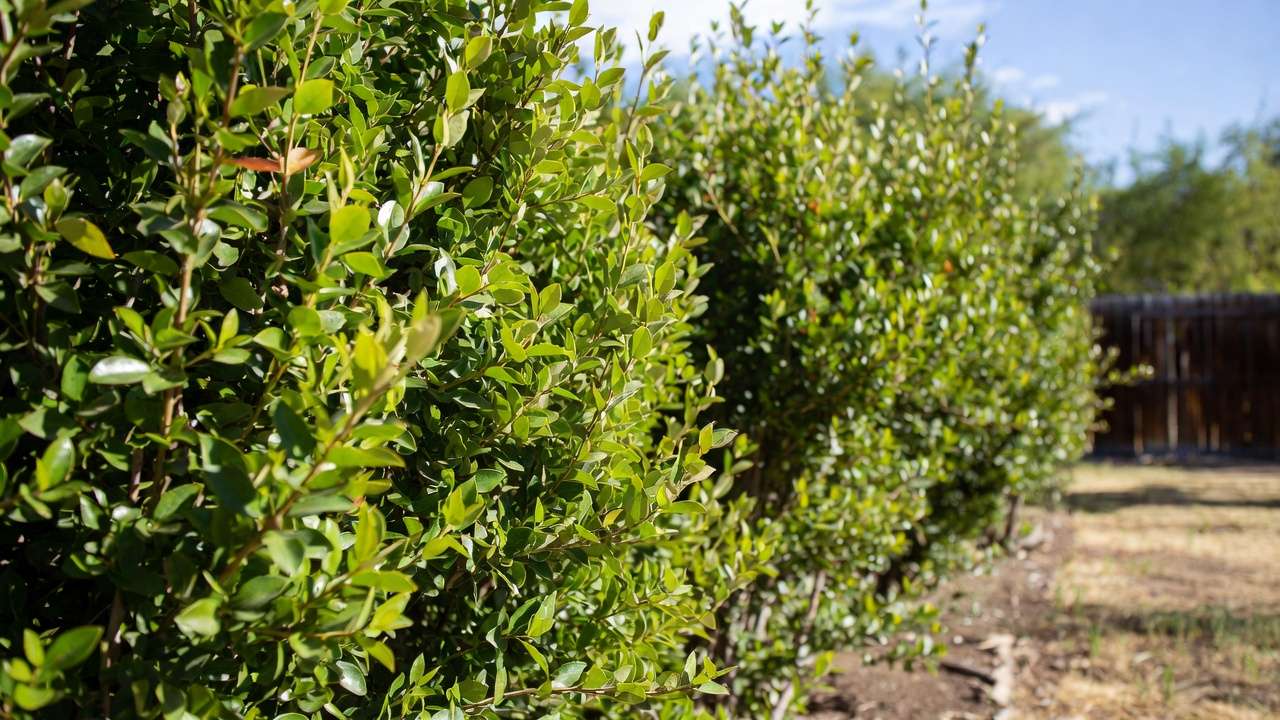
Texas Privet (Ligustrum japonicum ‘Texanum’) 🛡️
-
- Mature: 8–12 ft tall, 6–10 ft wide
- Growth: Moderate-fast
- Sun: Full sun
- Features: Thick, dark green foliage, compact habit.
- Pros: Excellent density, easy to shear, very drought hardy.
- Cons: Can be invasive in some areas — check locally.
- Best for: Formal hedges, medium-height screening. Water: Very low.
Toyon (Heteromeles arbutifolia) 🐦
-
- Mature: 6–15 ft tall, 4–10 ft wide
- Growth: Moderate
- Sun: Full to part sun
- Features: Native evergreen, white flowers, red berries.
- Pros: Wildlife magnet, fire-resistant, tough native.
- Cons: Slower to establish.
- Best for: Natural, eco-friendly screens. Water: Very low.
Grevillea (various cultivars, e.g., ‘Canberra’ or ‘Moonlight’) 🐝
-
- Mature: 6–15 ft tall/wide
- Growth: Moderate-fast
- Sun: Full sun
- Features: Needle-like foliage, vibrant spider-like flowers year-round.
- Pros: Pollinator favorite, striking color, extremely drought-tolerant.
- Cons: Some prickly; protect from hard frost.
- Best for: Flowering privacy with flair. Water: Very low.
Pineapple Guava (Feijoa sellowiana) 🍍
-
- Mature: 8–15 ft tall/wide
- Growth: Moderate
- Sun: Full sun
- Features: Silvery leaves, edible tropical fruit, red/pink flowers.
- Pros: Multi-season interest, fruit bonus, salt-tolerant.
- Cons: Fruit drop can be messy.
- Best for: Edible hedges, informal screens. Water: Low.
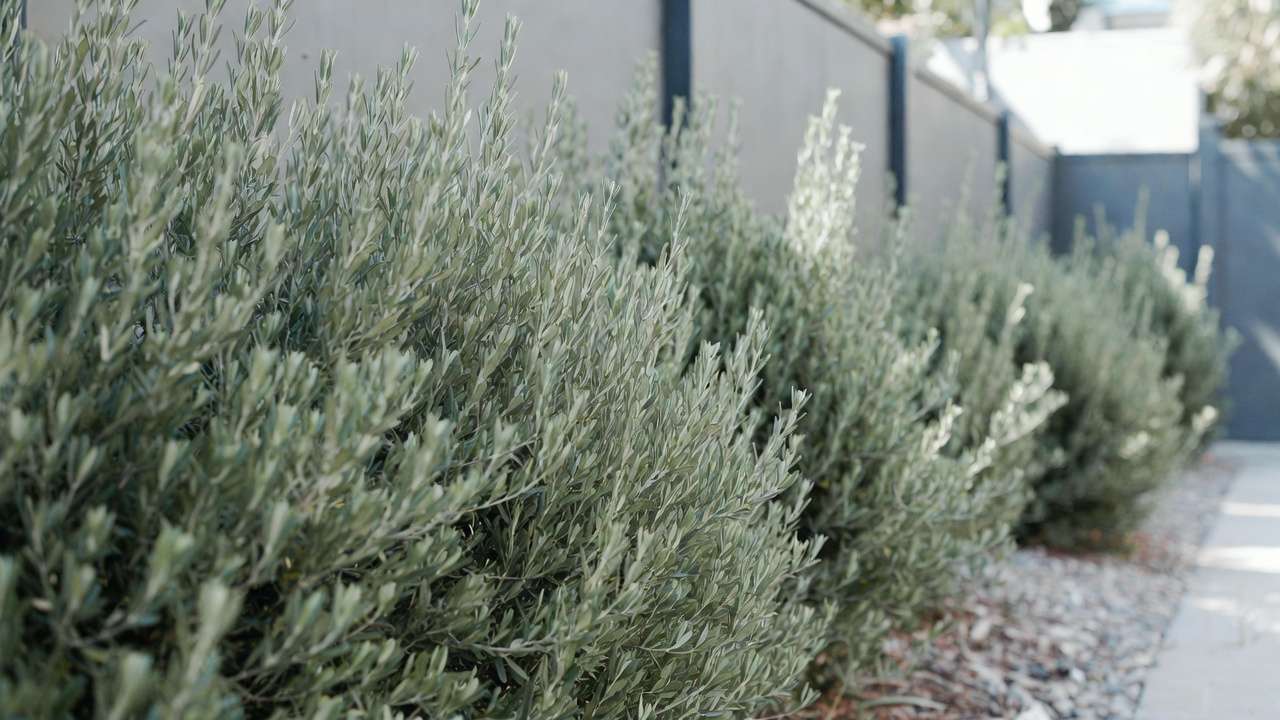
Little Ollie Dwarf Olive (Olea europaea ‘Little Ollie’) 🫒
-
- Mature: 4–6 ft tall/wide
- Growth: Moderate
- Sun: Full sun
- Features: Non-fruiting, compact evergreen olive foliage.
- Pros: Ultra-low maintenance, drought-proof, clean look.
- Cons: Slower for tall privacy.
- Best for: Small yards, borders. Water: Very low.
Upright Rosemary (‘Tuscan Blue’ or similar) 🌿
-
- Mature: 4–6 ft tall, 3–5 ft wide
- Growth: Moderate
- Sun: Full sun
- Features: Fragrant needles, blue flowers, culinary use.
- Pros: Aromatic, bee-friendly, super drought-tolerant.
- Cons: Not as dense for full block-out.
- Best for: Sensory hedges, low-medium height. Water: Very low.
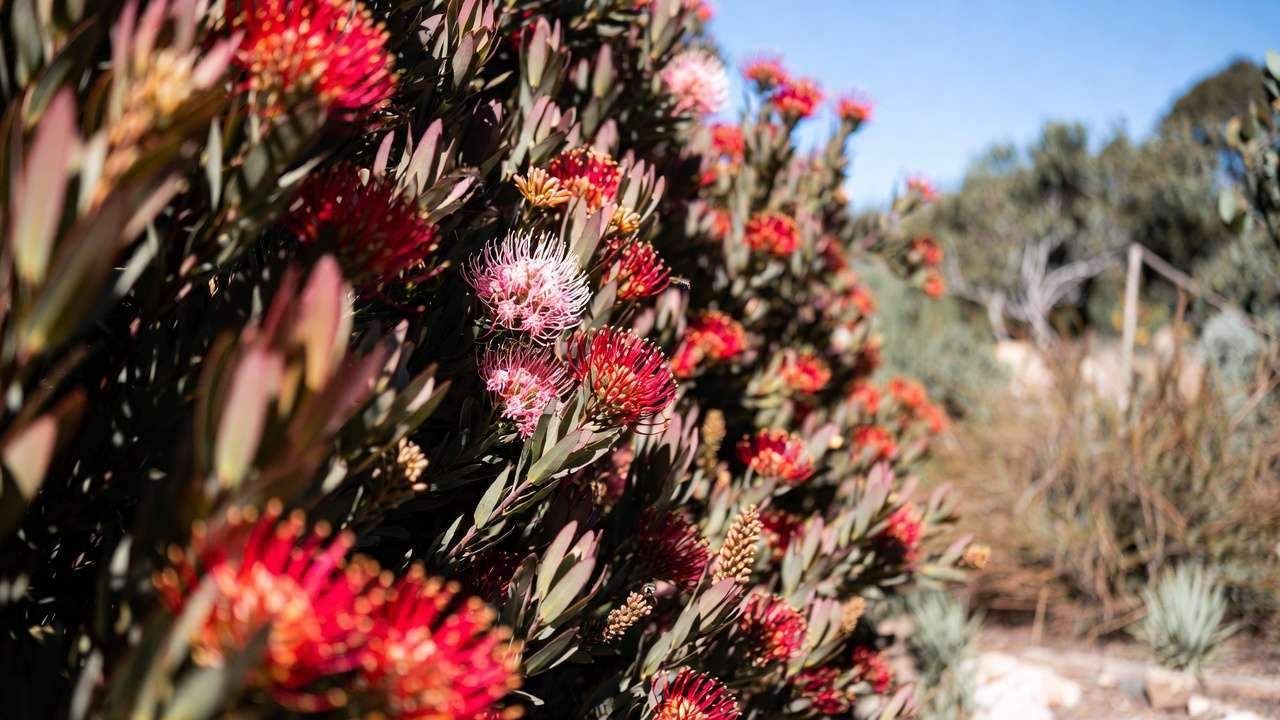
Leucadendron ‘Safari Sunset’ 🔥
-
- Mature: 8–12 ft tall/wide
- Growth: Moderate-fast
- Sun: Full sun
- Features: Colorful bracts (red/pink), dramatic foliage.
- Pros: Show-stopping color, tough in dry heat.
- Cons: Needs good drainage.
- Best for: Bold, modern privacy. Water: Low.
Yew Plum Pine (Podocarpus macrophyllus) 🌲
-
- Mature: 20–40 ft tall (prunable)
- Growth: Moderate
- Sun: Full to part sun
- Features: Fine-textured evergreen, upright form.
- Pros: Very drought-tolerant once established, versatile.
- Cons: Slower initial growth.
- Best for: Tall, formal screens. Water: Low.
Coyote Brush (Baccharis pilularis) 🏜️
-
- Mature: 4–10 ft tall/wide
- Growth: Fast
- Sun: Full sun
- Features: Native, dense gray-green foliage.
- Pros: Extremely tough, erosion control bonus.
- Cons: Less “polished” look.
- Best for: Informal, rugged privacy. Water: Very low.
Bonus: Wax Myrtle, various Junipers, or Distylium for extra resilient choices! 🌈
How to Choose the Right Waterwise Hedge for Your Yard 🧐 Selecting the perfect hedge starts with honest assessment of your site — this ensures success and avoids costly mistakes.
- Space & scale — Measure the area: Need tall screening (10–30 ft)? Go for Carolina Cherry Laurel or Yew Plum Pine. Medium (6–12 ft)? Texas Privet, Pineapple Guava, or Leucadendron shine. Compact spaces? Little Ollie or upright Rosemary fit beautifully. 📏
- Sun exposure — Most waterwise hedges love full sun (6+ hours), but options like Carolina Cherry Laurel handle part shade well. Avoid deep shade unless specified. ☀️
- Soil type & drainage — These plants prefer well-drained soil; amend heavy clay with compost or grit. Test pH if possible — many tolerate neutral to slightly alkaline. 🧪
- Privacy intensity — Dense block-out? Choose evergreens like Texas Privet or Little Ollie. Softer, natural look? Toyon or Coyote Brush. 👀
- Aesthetic preferences — Want fragrance? Rosemary or Grevillea. Color pops? Leucadendron ‘Safari Sunset’. Edibles? Pineapple Guava. Wildlife draw? Toyon or Grevillea. 🎨
- Regional factors — In warm, dry climates (like many parts of the US Southwest or similar zones), prioritize heat/drought champs. Coastal? Check salt tolerance (e.g., Pineapple Guava excels). Cold snaps? Verify USDA zone hardiness. 🏠
Expert insight: For resilience against pests, disease, or extreme weather, mix 2–3 compatible varieties — it creates visual interest and hedges your bets (pun intended!). 🌿🔄
Step-by-Step Planting Guide for Success 🌱
Proper planting is 80% of the battle for waterwise success — get this right, and your hedge will establish faster with less water long-term.
- Best planting time — Fall or early spring when soil is warm but air cooler (reduces transplant shock). Avoid peak summer heat. 📅
- Site prep — Test soil drainage (dig a hole, fill with water — should drain in 1–2 hours). Amend poor soil with 2–4 inches compost; avoid high-nitrogen fertilizers. Clear weeds and mulch area.
- Spacing for density —
- Tall hedges (e.g., Carolina Cherry Laurel): 4–6 ft apart
- Medium (Texas Privet, Leucadendron): 3–5 ft
- Dwarf/compact (Little Ollie, Rosemary): 2–3 ft Use this rule: Closer for quicker fill-in, wider for healthier air circulation. 📐
- Planting technique — Dig hole 2× wider than root ball, same depth. Loosen roots gently. Place so top of root ball is level with soil. Backfill, firm soil, water deeply to settle.
- Mulching magic — Apply 2–4 inches organic (bark, wood chips) or inorganic (gravel) mulch around base (keep off stems). Retains moisture, suppresses weeds, moderates soil temp. 🌾
Water thoroughly after planting — then taper to establishment schedule.

Essential Care Tips for Long-Term Thriving & Water Savings 🌟
Waterwise doesn’t mean “no water” — smart management is key.
- Establishment watering (Years 1–2) — Deep soak 1–2×/week (depending on rain/heat), aiming for 1–2 inches penetration. Use soaker hose or drip for efficiency. Gradually reduce. 📅
- Mature phase — Deep, infrequent watering (every 2–4 weeks in dry seasons) encourages deep roots. Watch for wilting leaves as drought stress signal — but many survive extended dry spells. 💧
- Pruning — Shear lightly after flowering (for bloomers) or late winter for shape/density. Avoid heavy cuts in heat. Promotes bushiness without stress. ✂️
- Fertilizing — Minimal! Use slow-release organic in spring if growth lags — over-fertilizing causes weak, thirsty growth. 🥬
- Pests & diseases — These picks are naturally resistant. Monitor for scale/aphids (hose off or use neem). Fungal issues rare with good drainage/airflow. 🛡️
- Seasonal checklist — Spring: Prune/fertilize lightly. Summer: Deep water during extremes. Fall: Mulch refresh. Winter: Minimal care. 🌦️
Follow this, and your hedge will thrive with 50–75% less water than traditional ones!
Design Ideas & Creative Uses for Waterwise Privacy Hedges 🏡
Elevate functionality with style:
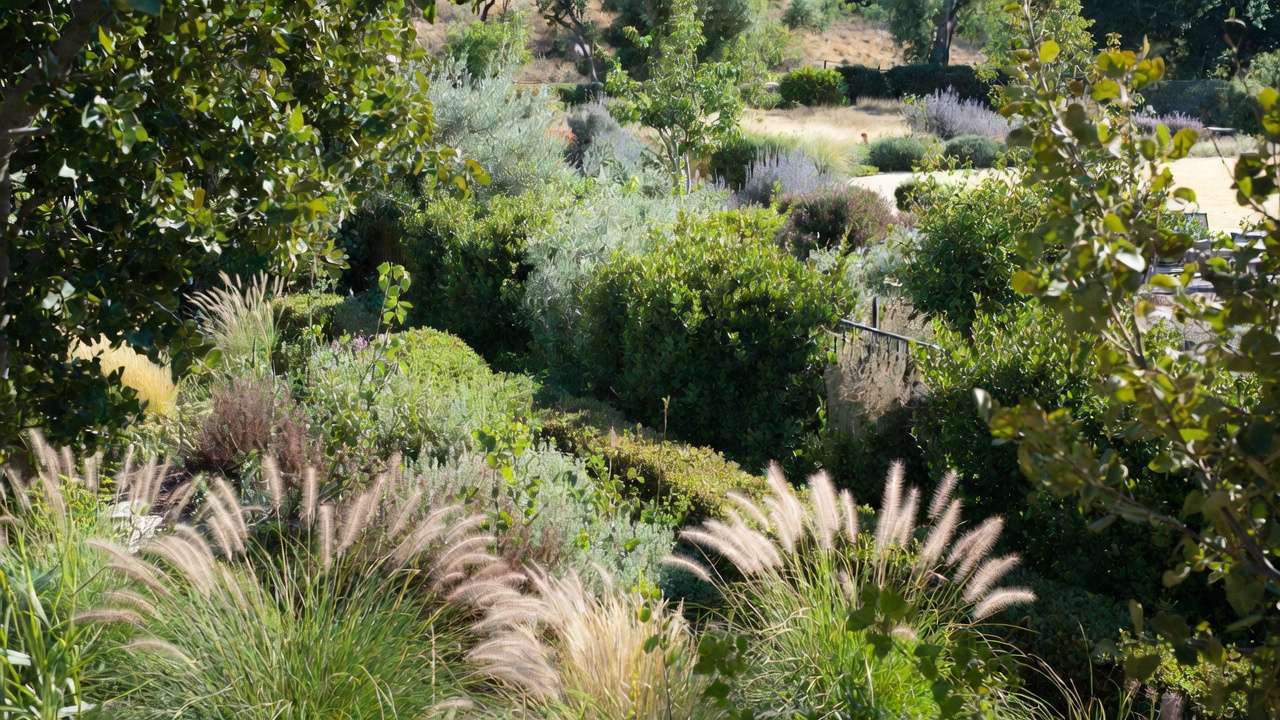
- Layered beauty — Plant taller hedges behind lower perennials/ornamental grasses for depth and texture. 🌸
- Formal vs. informal — Sheared Texas Privet for neat lines; natural Toyon or Grevillea for relaxed vibe. ✂️ vs. 🌿
- Hardscape integration — Along fences, pool edges, or patios — Little Ollie pairs perfectly with modern stone. 🏊♂️
- Wildlife haven — Toyon berries + Grevillea flowers attract birds/bees — bonus ecosystem service! 🐦🐝
- Small yards — Dwarf options like Rosemary or Little Ollie for urban balconies/patios (even in pots with excellent drainage). 🏙️🪴
- Inspiration — Picture a vibrant ‘Safari Sunset’ Leucadendron hedge glowing red against blue sky, or a fragrant Rosemary wall buzzing with bees — instant oasis! ✨
Common Mistakes to Avoid When Planting Waterwise Hedges ⚠️
- Overwatering post-establishment — Leads to root rot and weak plants.
- Too-tight spacing — Causes competition, disease, uneven growth.
- Skipping soil prep — Poor drainage kills more than drought.
- Wrong variety for zone/microclimate — Research prevents failure.
- Ignoring establishment phase — Skimp here, and maturity suffers. ❌
FAQs: Your Waterwise Privacy Hedge Questions Answered ❓
- How long until full privacy? Fast-growers like Carolina Cherry Laurel or Texas Privet: 2–4 years for dense screening. Moderate: 4–7 years. Patience + proper care speeds it! ⏳
- Deer-resistant? Many (Rosemary, Little Ollie, Grevillea) are — deer avoid aromatic/prickly types. Toyon less so. 🦌
- Potted for balconies? Yes! Compact ones like Rosemary or Little Ollie thrive in large containers with drainage + occasional deep soaks. 🪴
- Most low-maintenance? Little Ollie Dwarf Olive or upright Rosemary — minimal pruning, ultra-drought hardy. 😌
- Vs. artificial screens? Natural hedges add oxygen, wildlife value, beauty, and appreciate over time — artificial can’t match! 🤔
Final Thoughts & Expert Recommendations 🌿
Waterwise hedges for privacy represent the future of smart, sustainable landscaping — beautiful, functional, and kind to the planet. My top performers? Carolina Cherry Laurel for fast, reliable density; Little Ollie for effortless elegance; Toyon for native eco-benefits.
Assess your yard today, choose adapted varieties, plant thoughtfully, and care minimally — soon you’ll enjoy a stunning, low-water private retreat that saves money and supports nature. Your oasis awaits! 🌟
As a horticulturist passionate about sustainable plant care (with years helping gardeners in challenging climates), I stand by these recommendations for real-world results. Happy planting! 💚











