
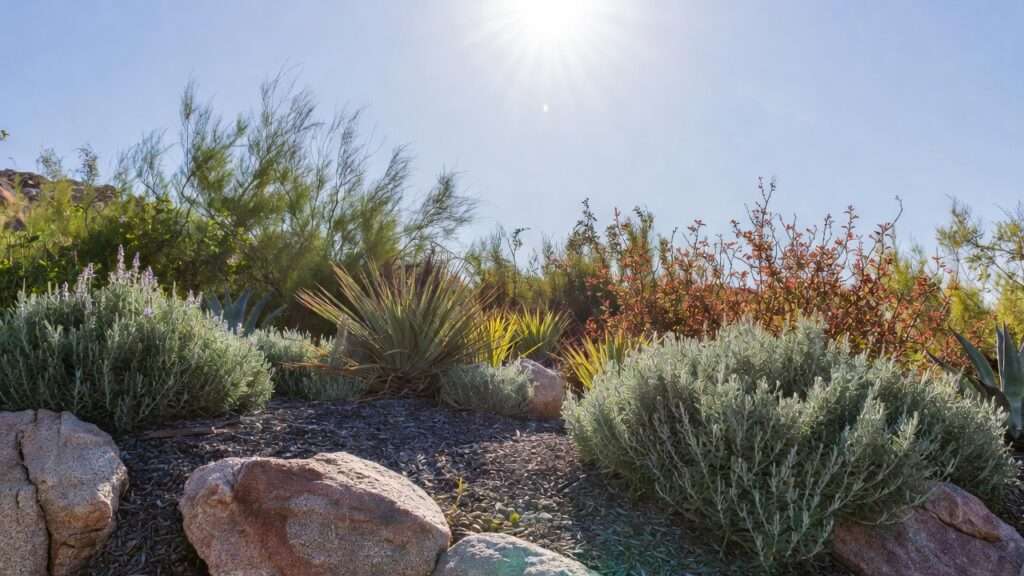
Imagine slashing your outdoor water bill by up to 50–70% while transforming your yard into a vibrant, colorful oasis that not only survives but thrives under the relentless Southwest sun. In regions plagued by prolonged droughts, strict water restrictions, and soaring temperatures—like Arizona, New Mexico, southern California, Nevada, Utah, and west Texas—traditional thirsty lawns and exotic plants are becoming unsustainable luxuries. That’s where waterwise plants for the Southwest come in as game-changers.
These drought-tolerant beauties, many of them native or well-adapted to arid conditions, require minimal irrigation once established, support local pollinators 🐝🦋, prevent soil erosion, and create stunning, low-maintenance landscapes. Drawing from decades of regional horticulture expertise, university extension recommendations (such as those from the University of Arizona, New Mexico State University, and similar sources), and proven xeriscape principles, this in-depth guide delivers the most comprehensive roundup of top-performing waterwise plants. You’ll discover exactly which trees, succulents, perennials, shrubs, and grasses excel in our harsh desert climates, plus expert planting tips, design ideas, and troubleshooting advice to help you build a resilient, beautiful yard that saves water, time, and money. Let’s dive in and turn your landscape into a true desert masterpiece! 🌿
Understanding the Southwest Climate & Why Waterwise Gardening Matters 🔥🏜️
The Southwest’s arid climate is defined by USDA hardiness zones 7–10, with annual rainfall often below 10–15 inches in many areas, intense full-sun exposure, high evaporation rates, alkaline soils, and dramatic temperature swings—from scorching 110°F+ summers to occasional freezing winters in higher elevations.
These conditions create real challenges for gardeners: frequent droughts trigger mandatory water restrictions, high utility costs from over-irrigated landscapes, and soil issues like poor drainage leading to root rot in non-adapted plants. Traditional turfgrass alone can consume 50–70% of household water in desert regions, contributing to aquifer depletion and environmental strain.
Switching to waterwise gardening flips the script. Xeriscaping—using drought-tolerant plants grouped by water needs—can reduce outdoor water use by 50–75%, according to water conservation studies and regional utilities. Benefits extend far beyond savings:
- Lower maintenance — Fewer mowings, less pruning, and natural pest resistance.
- Wildlife support — Nectar-rich blooms attract hummingbirds 🐦, butterflies 🦋, bees, and birds.
- Soil health & erosion control — Deep-rooted natives stabilize soil and improve water infiltration.
- Eco-friendly beauty — Landscapes that echo the natural desert beauty while reducing your carbon footprint.
By prioritizing natives and adapted species, you’re not just gardening—you’re contributing to sustainable water conservation in one of the most water-stressed regions in the U.S.
What Makes a Plant Truly “Waterwise”? Key Characteristics to Look For
“Waterwise” (or drought-tolerant/xeric) plants are those that survive and perform beautifully with little to no supplemental water after an establishment period (typically 1–2 years). True xeric plants go beyond mere survival—they look lush and bloom profusely on minimal inputs.
Key adaptations include:
- Deep or extensive root systems — Access groundwater far below the surface.
- Succulent leaves/stems — Store water efficiently (e.g., agaves, cacti).
- Silver-gray or waxy foliage — Reflects sunlight and reduces transpiration.
- Reduced leaf surface — Minimizes water loss.
- Seasonal dormancy — Many go semi-dormant in extreme heat or cold.
Prioritize native Southwest species (e.g., from the Sonoran, Chihuahuan, or Mojave Deserts) for best ecological fit—they co-evolved with local conditions, support native insects and wildlife, and require the least intervention. Adapted non-natives (e.g., from Mediterranean climates) also excel if they match our heat, sun, and soil.
Always check USDA zones, mature size, and water needs (often rated as Very Low, Low, or Moderate) from reliable sources like local extension services or the Arizona Department of Water Resources low-water plant lists.
Top Waterwise Plant Categories for the Southwest (with Examples) 🌺🌳
Here are curated, expert-recommended picks that consistently rank high in regional trials for beauty, toughness, and minimal water use.
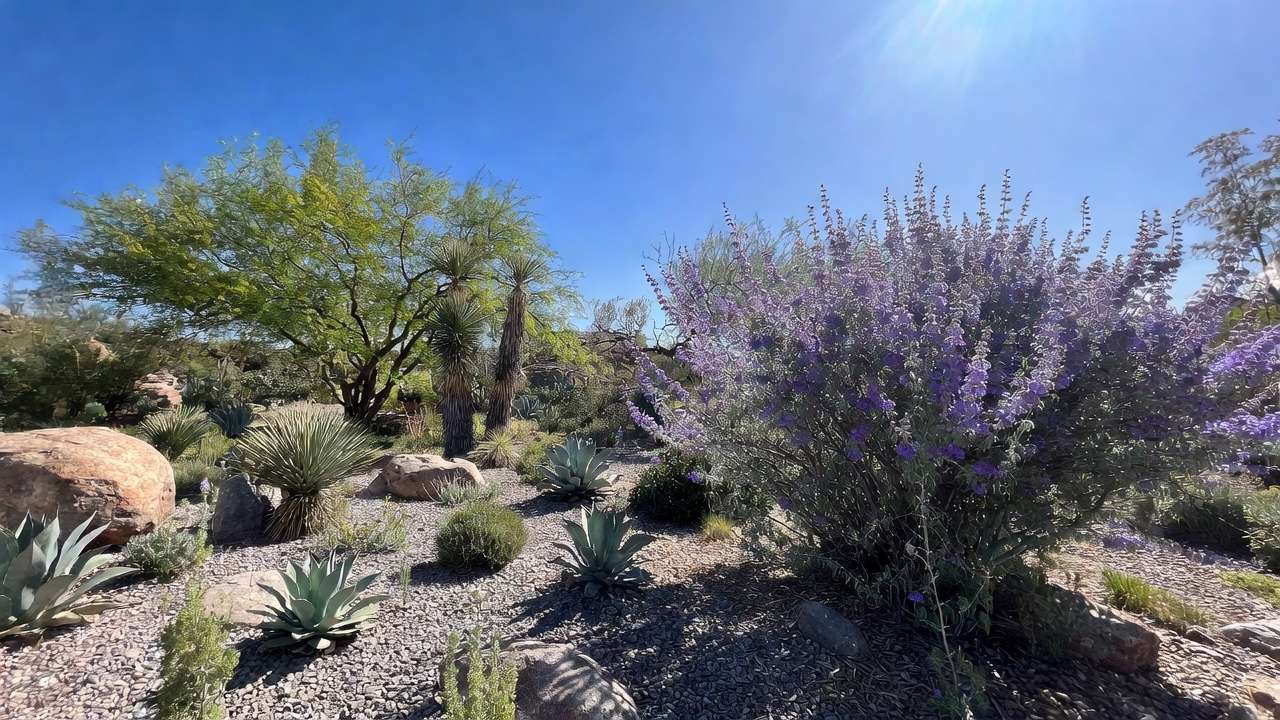
1. Iconic Trees & Large Shrubs (Shade & Structure Providers) 🌳
Trees provide essential shade in our intense sun, reducing cooling costs and creating microclimates.
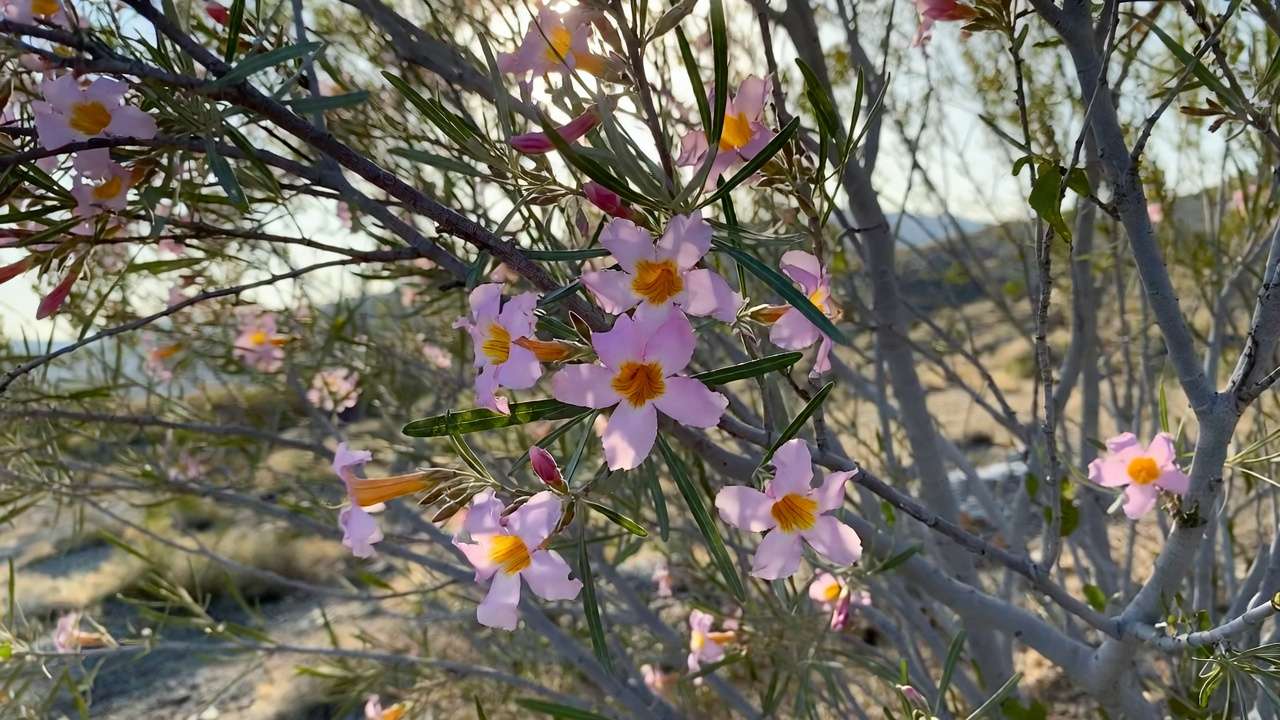
- Desert Willow (Chilopsis linearis) — Fast-growing native with willow-like leaves and trumpet-shaped pink/purple flowers that bloom summer-long. Hummingbird magnet 🐦. Grows 15–30 ft tall; very low water once established.
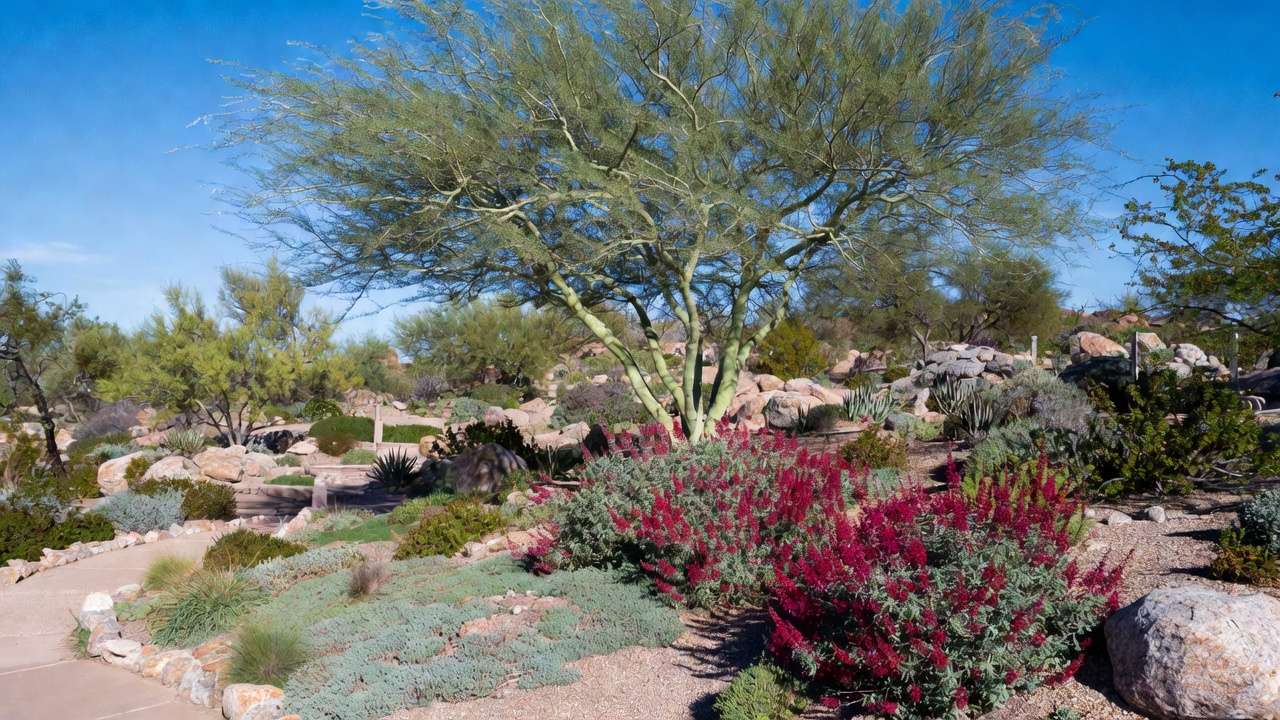
- Palo Verde (Parkinsonia spp., e.g., Desert Museum hybrid) — Arizona’s state tree! Green bark photosynthesizes, bright yellow spring blooms. Fast shade (20–30 ft), extremely drought-hardy.
- Mesquite (Prosopis spp., e.g., Honey or Chilean) — Nitrogen-fixing, edible pods, thorny protection. Provides dappled shade; varieties like velvet mesquite thrive on rainfall alone.
- Texas Olive / Anacahuita (Cordia boissieri) — Fragrant white flowers, evergreen in mild areas. Grows 15–20 ft; stunning focal point.
- Ocotillo (Fouquieria splendens) — Dramatic, spiny stems with fiery red blooms after rain. Iconic desert silhouette; needs zero supplemental water in most areas.
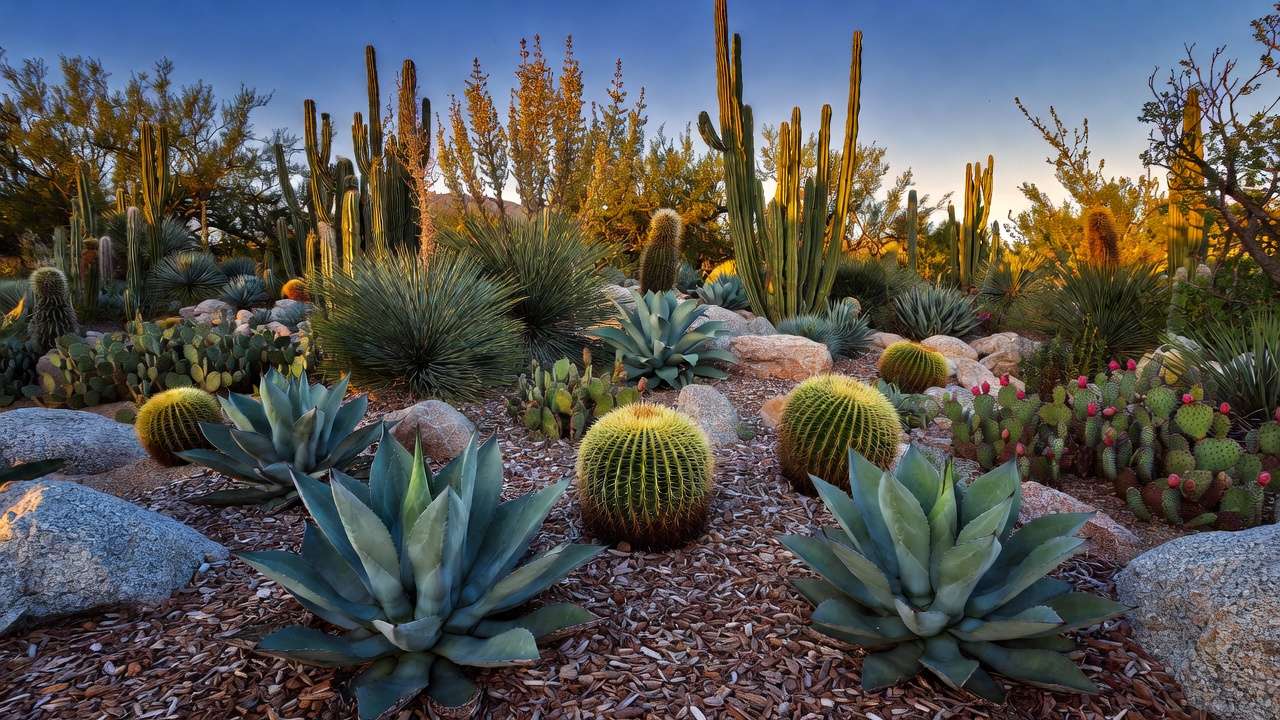
2. Stunning Succulents & Cacti (Architectural Stars) 🪴
These bold forms add texture and sculpture with almost zero care.
- Agave (various spp., e.g., Parry’s Agave, Queen Victoria) — Rosette shapes in blue-green tones; some bloom once then produce pups. Extremely low water; deer-resistant.
- Yucca (e.g., Soaptree Yucca, Red Yucca/Hesperaloe parviflora) — Tall flower spikes (white or coral-red); evergreen foliage. Hummingbird favorite; thrives in poor soil.
- Barrel Cactus & Prickly Pear (Opuntia spp.) — Colorful pads, edible fruit on prickly pear. Architectural interest; ultra-drought-tolerant.
- Aloe — Spiky leaves, orange/red blooms; great for accents or containers.
3. Flowering Perennials & Shrubs (Color All Year) 🌸
These deliver pops of color without constant watering.
- Texas Sage / Cenizo (Leucophyllum frutescens) — Silvery leaves burst into purple after rain. Compact varieties available; blooms reliably.
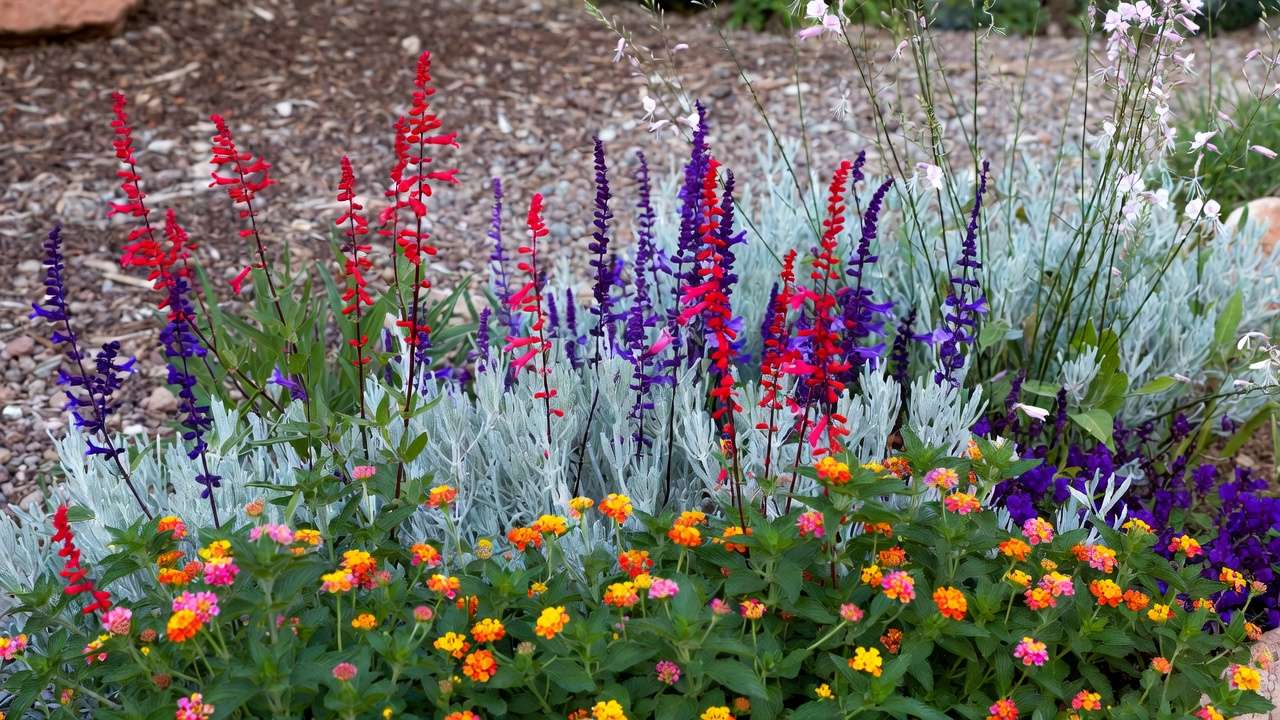
- Salvias (e.g., Autumn Sage, Mexican Bush Sage) — Tubular reds, purples; nonstop blooms attract hummingbirds 🐦.
- Penstemon (e.g., Firecracker, Eaton’s) — Spikes of red/pink tubes; native favorites.
- Lantana — Multicolor clusters; trailing types as groundcover.
- Gaura, Blackfoot Daisy, Angelita Daisy — Delicate whites/pinks; long-blooming and tough.
4. Groundcovers & Grasses (Weed Suppressors & Texture) 🌾
Replace lawns with these low-growers.
- Buffalograss — Native, low-mow turf alternative.
- Creeping Lantana or Damianita — Flowering mats suppress weeds.
- Deergrass, Mexican Feathergrass — Airy plumes add movement.
5. Herbs & Fragrant Options (Bonus Sensory Appeal) 🌿
- Lavender, Rosemary, Russian Sage — Aromatic, pollinator magnets; silver foliage reflects heat.
Expert Planting & Care Tips for Success in the Southwest 🌱
Getting waterwise plants established is the single most important step toward long-term success. Once rooted deeply, most of these selections need little to no supplemental water in typical Southwest conditions. Here’s a step-by-step expert approach based on decades of regional trial-and-error and extension service best practices.
Soil Preparation – The Foundation of Success
Most Southwest soils are alkaline (pH 7.5–8.5), low in organic matter, and drain poorly when compacted.
- Test your soil pH and texture (simple kits from garden centers work well).
- Amend planting holes with 20–30% compost or well-rotted manure to improve structure and water retention—but don’t overdo it; too much organic matter can hold excess moisture and cause rot in xeric plants.
- For heavy clay soils common in parts of New Mexico and west Texas, add coarse sand or decomposed granite to enhance drainage.
- Raised beds or berms (8–12 inches high) are excellent for succulents and cacti.
Planting Techniques That Build Deep Roots
- Best time to plant: Fall (September–November) or early spring (February–April) when soil is cooler and evaporation is lower. Avoid peak summer heat.
- Dig holes 2–3 times wider than the root ball but no deeper—plant at the same depth as the nursery container to prevent stem rot.
- Gently tease apart circling roots on pot-bound plants.
- Backfill with native soil (minimal amendment); create a shallow watering basin (berm) around the plant to direct water to the root zone.
- Water deeply at planting: soak the entire root zone until saturated, then let the top 2–4 inches dry before the next watering.
Irrigation Strategy – Deep, Infrequent, Then Minimal
- Establishment phase (first 1–2 years): Water deeply every 7–14 days in summer (less in cooler months), allowing soil to dry between sessions. This trains roots to grow downward.
- Use drip irrigation, soaker hoses, or bubblers placed at the drip line—never overhead sprinklers (promotes fungal issues and wastes water).
- After year 2: Most natives/adapted plants need only occasional deep soaks during extended dry spells (e.g., 1–2 times per month in summer if no rain). Many thrive on rainfall alone.
- Smart controllers with soil moisture sensors can automate and optimize this process.
Mulching – Your Water-Saving Secret Weapon
- Apply 2–4 inches of mulch around (but not touching) the base of plants.
- Inorganic mulches (crushed gravel, decomposed granite, river rock) are ideal in the Southwest—they don’t decompose, reflect heat, and prevent weed growth while allowing water to penetrate.
- Organic mulches (bark, wood chips) work well for perennials and shrubs but break down faster in heat.
- Mulch conserves soil moisture, moderates temperature, and reduces evaporation by up to 70%.
Ongoing Maintenance – Keep It Simple
- Pruning: Light shaping in late winter/early spring. Remove dead/damaged growth. Many waterwise plants (e.g., salvias, penstemons) benefit from cutting back by 1/3 after bloom to encourage bushiness.
- Fertilizing: Minimal! Over-fertilizing causes leggy growth and weak drought tolerance. Use a low-nitrogen, slow-release fertilizer once in spring if needed.
- Pest & Disease Management: Arid conditions reduce fungal problems. Watch for aphids on new growth (blast off with water) or scale on succulents (treat with horticultural oil).
- Winter Care: Most listed plants are hardy to zone 7–8. Protect marginal selections (e.g., some salvias) with frost cloth during rare hard freezes.
Designing a Beautiful Waterwise Landscape 🌼
A successful waterwise garden isn’t just about plant choice—it’s about thoughtful design that maximizes beauty while minimizing water and effort.
Core Xeriscape Principles
- Plan & Zone — Group plants by water needs (hydrozoning): very low, low, moderate.
- Use Hardscaping — Patios, pathways, boulders, gravel fields, and walls reduce planted area and add structure.
- Create Focal Points — Bold agaves, sculptural yuccas, or flowering Texas sage as centerpieces.
- Layer for Interest — Tall trees/shrubs in back, mid-height perennials in middle, low groundcovers in front.
- Add Movement & Texture — Grasses and airy gaura sway in the breeze; contrasting leaf shapes (spiky vs. rounded) keep eyes engaged.
Sample Layout Ideas
- Front Yard Makeover: Replace lawn with decomposed granite paths, clusters of Desert Museum palo verde for shade, underplanted with blackfoot daisy, autumn sage, and creeping lantana. Add boulder accents and gravel mulch.
- Pollinator Paradise: Sunny border with penstemon, salvia, lantana, and gaura surrounding a small water feature or birdbath (drip-irrigated). Hummingbirds and butterflies will flock! 🐦🦋
- Patio Oasis: Container grouping of agave, aloe, yucca, and rosemary on a sunny deck; use terracotta pots with excellent drainage.
Combine warm desert tones (silvers, blues, greens) with flower pops (yellows, reds, purples) for year-round appeal without constant blooms.
Common Mistakes to Avoid & Troubleshooting 🌞
Even experienced gardeners slip up—here are the top pitfalls and fixes:
- Overwatering after establishment → Leads to root rot, especially in succulents and agaves. Solution: Trust the plant; let it show stress before watering.
- Planting in shade vs. full sun mismatches → Many (e.g., Texas sage) sulk in shade. Always match light requirements.
- Skipping the establishment period → New plants die quickly without consistent deep watering for the first year.
- Poor drainage → Causes crown rot. Elevate planting areas or amend soil.
- Cold damage in higher elevations → Wrap tender perennials or choose hardier varieties (e.g., Parry’s agave over softer tropicals).
- Leggy or sparse growth → Usually from too much water/nitrogen or insufficient sun. Cut back hard and reduce inputs.
FAQs About Waterwise Plants for the Southwest ❓
How much water do these plants really need once established? Most true xeric natives need only occasional deep watering during extreme drought—many survive on rainfall alone after year 2.
Are they pet-safe and kid-friendly? Most are non-toxic (e.g., salvias, penstemons, gaura), but watch for spines on cacti, agaves, and yuccas. Place them thoughtfully.
Best waterwise plants for containers or patios? Agave, yucca, aloe, rosemary, lantana, and compact salvias excel in pots with excellent drainage.
Where can I buy native waterwise plants in the Southwest? Local native plant nurseries, botanical garden sales, university extension plant sales, or reputable growers like High Country Gardens, Desert Botanical Garden plant sales (AZ), or Plants for the Southwest (NM).
How do they handle occasional cold snaps in higher elevations? Most listed are hardy to 0–10°F. Protect marginal plants with mulch or frost cloth during rare freezes.
Final Thoughts & Call to Action 🌟
Switching to waterwise plants for the Southwest isn’t just smart gardening—it’s a resilient, beautiful way to live in harmony with our arid environment. You’ll enjoy lower water bills, less weekend weeding, thriving pollinators, and a yard that celebrates desert beauty instead of fighting it.
Start small: Pick one or two favorites from this list (perhaps a Desert Willow and some salvias), plant them properly, and watch your landscape transform. The rewards are worth every drop saved.
What’s your favorite drought-tolerant plant for the Southwest? Drop it in the comments below—I’d love to hear your successes and tips! 💬🌵











