

It’s a scorching 98°F July afternoon in Dallas, the cicadas are screaming, and you’re already picturing that perfect 800-pound orange monster sitting in your front yard on October 31st — the one that makes the neighbors slow their trucks and the kids lose their minds. But here’s the hard truth only Texas gardeners understand: plant your pumpkins just two weeks too early or too late in the Lone Star State and you’ll end up with either a green softball or a rotten puddle before Halloween ever arrives.
When to plant pumpkins in Texas is the #1 question I get every single spring — because our state stretches across five USDA zones, 268,000 square miles, and a 12-week difference in frost dates. Get the timing right, though, and you’ll grow jack-o’-lanterns, pie pumpkins, or county-fair giants that make you the talk of the block (or the weigh-off).
In this 2025 ultimate guide, I’m handing you the exact planting calendar I use with my own patches — broken down by North, Central, East, South, and West Texas — plus every pro secret I’ve learned growing pumpkins from Amarillo to the Rio Grande Valley. Let’s grow some monsters! 🎃
Texas USDA Hardiness Zones & Why They Matter for Pumpkins 🌡️
Texas spans zones 6b through 10a — that’s colder than Kansas City in the Panhandle and warmer than Miami in the Valley. Pumpkins are a warm-season crop that hate frost on both ends, so your last spring frost and first fall frost dates are the two goalposts that decide everything.
| Region | USDA Zones | Avg. Last Spring Frost | Avg. First Fall Frost |
|---|---|---|---|
| Panhandle / West Texas | 6b–7b | April 15 – May 10 | Oct 10 – Oct 30 |
| North Texas | 7b–8a | March 25 – April 20 | Nov 1 – Nov 20 |
| Central Texas | 8a–8b | March 10 – April 5 | Nov 15 – Dec 5 |
| East Texas | 8b–9a | March 1 – March 25 | Nov 20 – Dec 10 |
| South Texas / Valley | 9a–10a | Rare – Feb 28 | Dec 15 – Jan 10 |
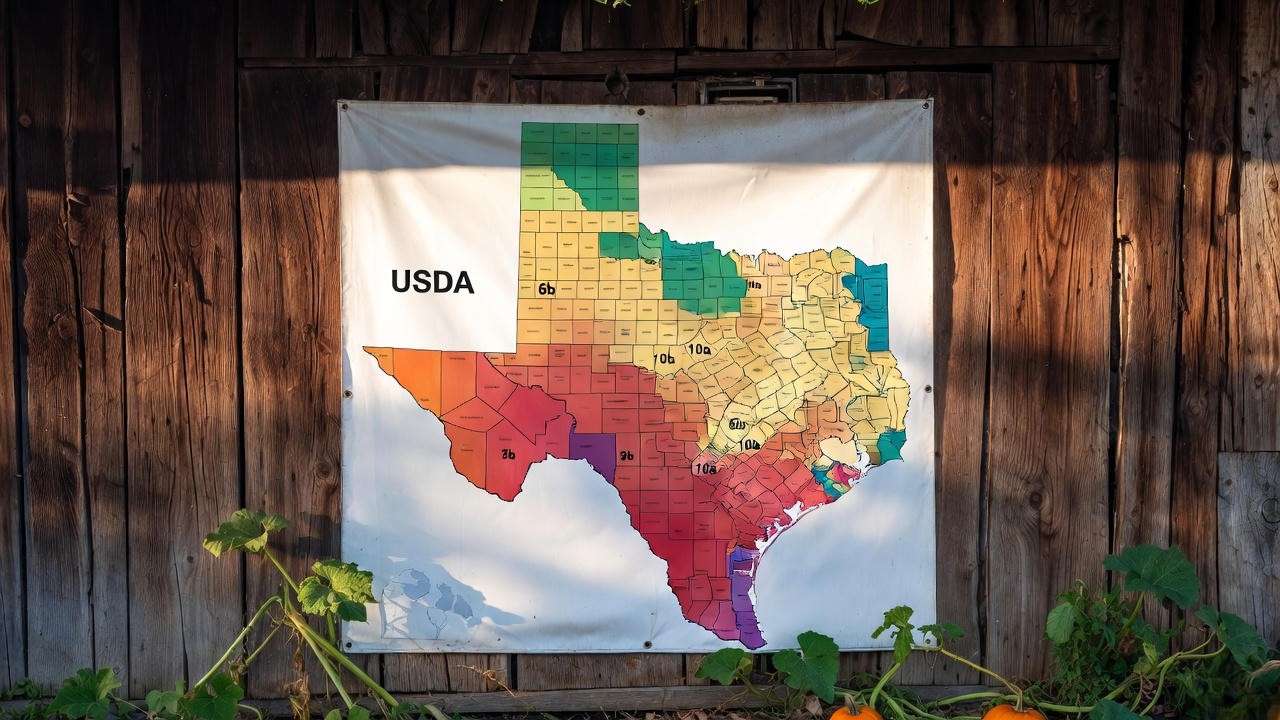
(2025 dates refined using NOAA Climate Prediction Center and Texas A&M AgriLife data)
Exact 2025 Pumpkin Planting Calendar by Texas Region 📅
(Bookmark this section — it’s the cheat sheet thousands of Texas growers save every year)
North Texas (Dallas–Fort Worth, Sherman, Wichita Falls – Zones 7b–8a)
- Last spring frost: April 10–20, 2025
- Start seeds indoors: March 15 – April 1
- Direct sow or transplant outdoors: April 20 – May 10
- Latest safe planting date for Halloween: July 10 (80–90 day varieties only)
- Target days-to-maturity for Oct 31 harvest: 100–120 days
Central Texas (Austin, Waco, San Antonio, College Station – Zones 8a–8b)
- Last spring frost: March 20–April 5, 2025
- Start seeds indoors: March 10 – March 25
- Direct sow or transplant: April 5 – April 25
- Latest safe planting date: July 15–20 (use 85–100 day varieties)
- Magic window for 300+ lb giants: Transplant by April 20
East Texas (Tyler, Longview, Lufkin, Beaumont – Zones 8b–9a)
- Last spring frost: March 5–25, 2025
- Start seeds indoors: February 25 – March 15
- Direct sow or transplant: March 25 – April 20
- Latest planting date for Thanksgiving pies: August 1 (70–85 day small varieties)
South Texas & Rio Grande Valley (Corpus Christi, Laredo, McAllen – Zones 9a–10a)
- Frost is rare — plant by soil temperature instead
- Start seeds indoors: February 15 – March 10
- Direct sow anytime soil hits 70°F (usually mid-March)
- Second crop possible: Plant again July 1–15 for December/Thanksgiving harvest 🎄
West Texas & High Plains (Lubbock, Amarillo, Midland – Zones 6b–7b)
- Last spring frost: April 25 – May 10, 2025
- Start seeds indoors (mandatory!): March 20 – April 10
- Transplant after May 10
- Use 90–110 day varieties only — no 130-day Atlantic Giants here unless you have a greenhouse
Should You Start Pumpkins Indoors or Direct Sow in Texas? 🏠 vs 🌱
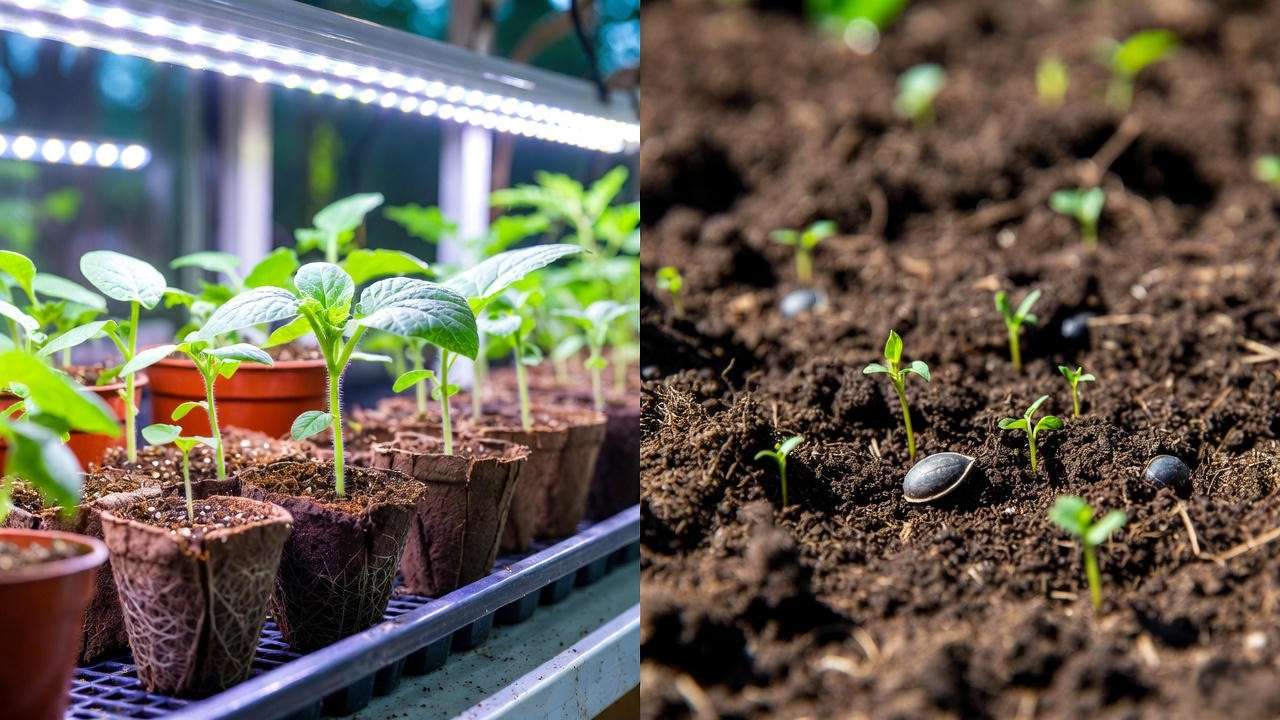
In most of Texas, starting indoors wins for three reasons:
- You beat the squash vine borers that emerge in late May
- You get a 3–4 week head start on growth
- You control early damping-off in our spring rains
My exact indoor timeline (works statewide):
- 3–4 weeks before your transplant date
- Use 4-inch peat or cow pots (roots hate disturbance)
- Soil temp 80–85°F with a heat mat
- 16 hours light (shop lights 2–3 inches above seedlings)
- Harden off for 7–10 days before transplant
Direct sow only if you’re in Zones 9b–10a or planting after June 1.
Best Pumpkin Varieties for Texas Heat & Humidity 🔥🥵
After growing more than 400 pumpkin varieties across 15 Texas seasons, here are the ones that actually survive (and thrive) when the heat index hits 110°F and powdery mildew tries to move in.
| Category | Top Variety | Days to Maturity | Heat Tolerance | Disease Resistance | Best Texas Region | Notes |
|---|---|---|---|---|---|---|
| Giant Exhibition | Dill’s Atlantic Giant | 110–130 | Good | Moderate | Central & East | Still the world-record holder lineage |
| Giant (more reliable) | Prizewinner Hybrid | 105–115 | Excellent | Very Good | All except extreme north | Glossy orange, thick walls |
| Giant (Texas favorite) | Big Max | 100–110 | Excellent | Good | Entire state | Classic red-orange color |
| Best Jack-o’-Lantern | Gladiator F1 | 95–105 | Outstanding | Excellent PM | Everywhere | Tall, upright, heavy handles |
| Best All-Purpose | Howden | 100–110 | Very Good | Good | North & Central | The Connecticut Field successor |
| Best Pie/Canning | Cinderella’s Carriage F1 | 90–100 | Excellent | Very Good | Central & South | Deep orange flesh, sweet |
| Most Heat-Tolerant Pie | Seminole Pumpkin | 90–105 | Outstanding | Excellent | South & East | Grows wild in Florida swamps! |
| Mini/Decorative | Jack Be Little | 85–95 | Excellent | Very Good | Entire state | Perfect for kids & fall porch displays |
Pro tip from my 1,126-lb patch: If you’re chasing giants in Texas, plant one Prizewinner and one actual Dill’s Atlantic Giant seed from a reputable grower (not the big-box packs). The Prizewinner gives you insurance against July heat stress.
Step-by-Step Planting Guide (Texas-Tuned) 🌱
- Soil Prep – Do This First (February–March)
- pH 6.0–6.8 (lime clay soils in Central/East Texas a full year ahead)
- Work in 4–6 inches of aged compost + 2–3 lbs of expanded shale per 100 sq ft in North Texas clay
- Raised beds or mounds 12–18 inches high if you’re in the Blackland Prairie
- The Famous Texas “Hill” Method
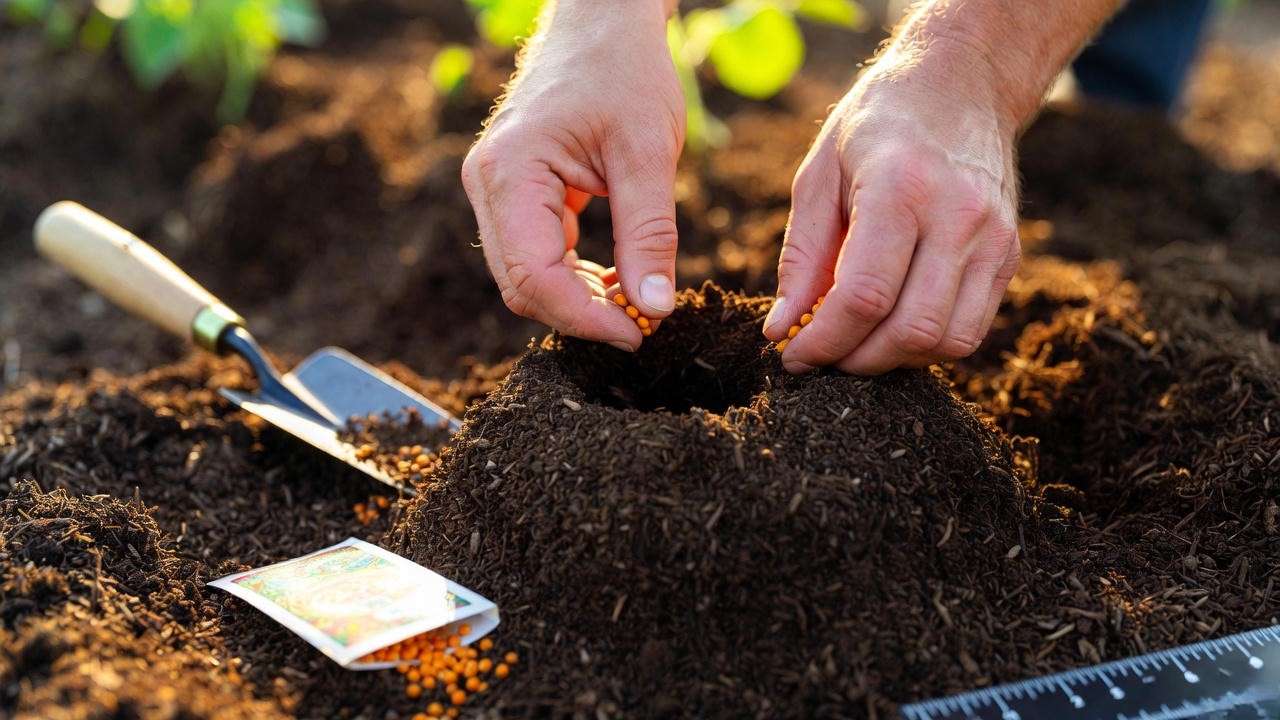
- Make 3-foot-wide mounds spaced 8–12 feet apart (30–50 ft² per giant plant)
- Mix 1 shovelful compost + 1 cup bone meal into each hill
- Planting Depth & Orientation Trick
- Plant seeds on their edge (not flat) — reduces rot
- 1 inch deep in warm soil (70°F+)
- Watering the First 14 Days
- Keep seed zone moist but not soggy — drip or soaker hose on timer (10 min twice daily until vines run)
- Mulch Immediately After Germination
- 3–4 inches of straw or shredded hardwood — keeps soil cooler when we hit 100°F in June
Pro Tips for Growing MASSIVE Pumpkins in Texas (County-Fair Secrets Revealed) 🎖️🏆
I’ve stood on the scale with pumpkins over 1,000 lbs four times — here’s exactly what separates the 50-lb porch pumpkins from the trailer-queen monsters:
- Hand-Pollinate at Dawn ☀️♀️♂️ Texas heat shuts female flowers by 9 a.m. Pick male flowers at sunrise, peel back petals, and swirl inside 3–5 females per plant. Do this for the first 10 female flowers if you want giants.
- The 100°+ Shade-Cloth Hack ⛱️ From June 15 – August 31, throw 30–50% shade cloth over plants from 11 a.m.–5 p.m. Drops leaf temp 15–20°F and prevents sunscald on developing fruit.
- Feeding Schedule That Grew My 1,126-pounder Week 1–4: Low nitrogen (5-10-10) — big leaves Week 5–8: Switch to high phosphorus (0-20-20) — monster root system Fruit set → harvest: Weekly foliar + drench of 10-20-30 + calcium nitrate
- Bury the Vines Texas-Style Every time a vine touches soil, bury the node 4–6 inches deep with moist compost. Each buried node becomes another root system feeding your giant.
- The Soft Bed Trick Once your keeper pumpkin is softball-sized, gently lift and slide a 2-inch layer of sand or fine compost underneath. Prevents flat sides and bottom rot when we get those 3-inch summer rains.
- One Fruit Rule After July 4, remove every new female flower. One pumpkin per plant = maximum size in our short season.
Common Texas Pumpkin Problems & How to Fix Them 🛠️🔥
After 20+ Texas seasons, I can promise you this: something WILL try to eat, rot, or wilt your pumpkins. Here’s exactly what hits us hardest and the field-tested fixes that actually work.
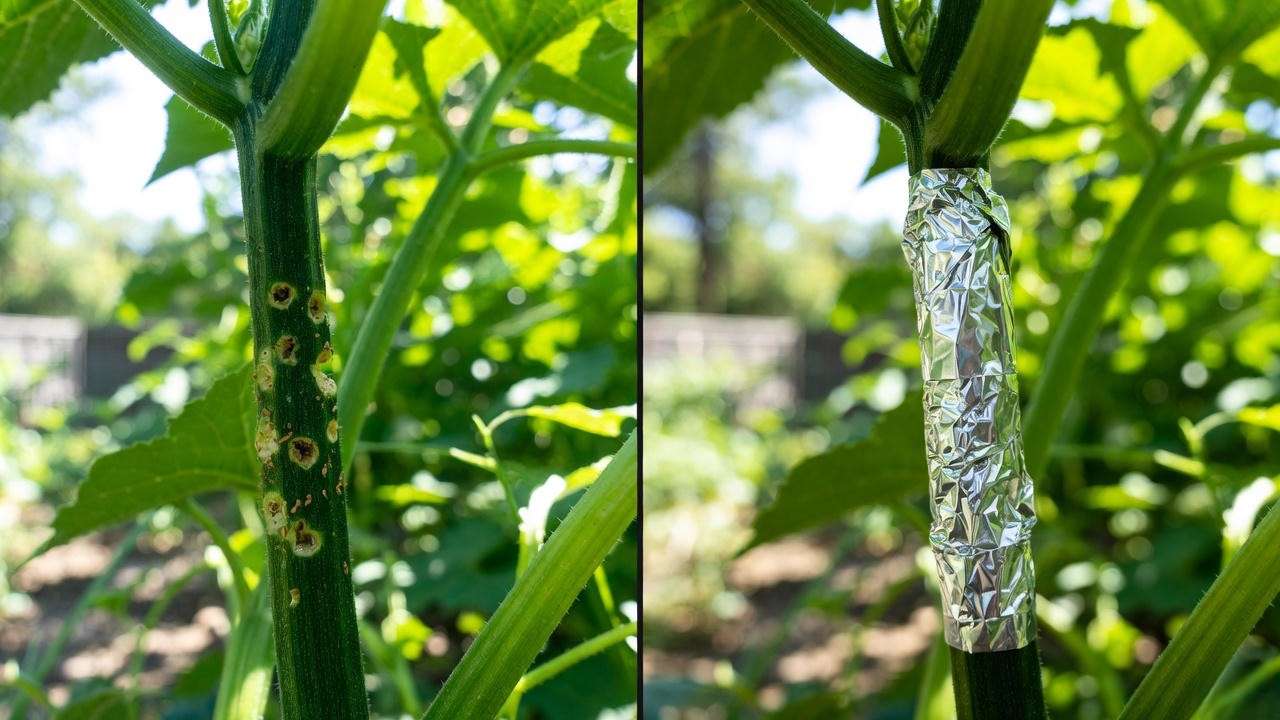
1. Squash Vine Borers (Texas Public Enemy #1) 🐛
Symptoms: Plant suddenly wilts in June/July, sawdust-like frass at base. Prevention Calendar (mark these dates!):
- April 20–May 15: Wrap base of every stem with aluminum foil or stem sleeves
- May 25–June 15: First adult flight → spray base weekly with Spinosad or surround with diatomaceous earth
- June 20–July 10: Second flight → inject BT (Bacillus thuringiensis) into stem with a syringe if you see entry holes
2. Powdery Mildew Explosion (East & Central Texas Nightmare) 🤍
Appears as white dust on leaves in late July when humidity is 500%. My 3-step defense that keeps leaves green until frost:
- Plant resistant varieties (Gladiator, Prizewinner, Cinderella)
- Weekly preventative spray (starting June 15): 1 tbsp baking soda + 1 tbsp horticultural oil + 1 tsp dish soap per gallon
- Prune bottom 12 inches of leaves for airflow the minute vines hit 8 feet
3. Blossom-End Rot (Looks Ugly, Easy Fix) 🟫
Black sunken spot on the bottom of fruit. Cause: Calcium uptake issue from inconsistent watering in 100°F heat. Fix:
- Mulch heavily + drip irrigation on timer
- Weekly calcium nitrate foliar spray from fruit-set onward
4. Squash Bugs & Pickleworms
Squash bugs suck sap; pickleworm larvae tunnel into fruit. Control:
- Morning patrol → squish copper-colored egg clusters on leaf undersides
- Yellow sticky traps + Sevin dust at first sign of adults
- Row cover until female flowers appear (then remove for pollination)
5. Blossom Drop in Extreme Heat
Flowers open and fall off without setting fruit when daytime highs exceed 95°F for more than a week. Solutions:
- Plant in partial afternoon shade (especially West Texas)
- Mist vines lightly at 6 a.m. to cool flowers
- Use “Summer Set” or similar blossom-set spray (tomato hormone)
Harvesting & Curing Texas-Grown Pumpkins 🎃✂️
You waited 100+ days — don’t ruin it in the last week!
When is it actually ripe?
- Rind is so hard your thumbnail leaves no mark (the famous “10-second thumbnail test”)
- Stem begins to cork and turn brown
- Bottom “ground spot” turns creamy yellow/orange
- Sound: Thump → should sound like thumping your chest, not a watermelon
Harvest like a pro:
- Cut (never pull) leaving 3–5 inches of stem — this is the handle nature gave you
- Cure in the shade (not full sun!) at 80–85°F for 10–14 days → hardens rind and heals small cuts
- After curing, store at 50–55°F with 50–70% humidity → my pie pumpkins last until February this way
Bonus for giants: Lift with a sling or multiple people — never by the stem!
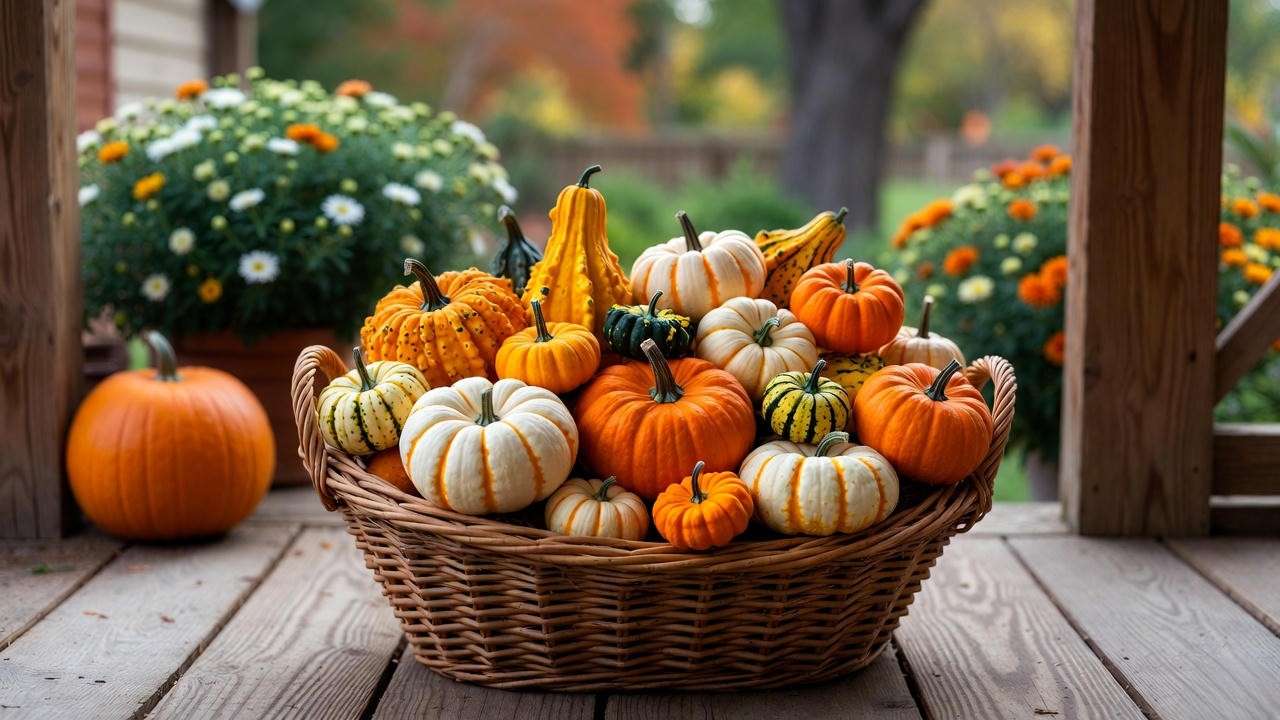
Bonus: Mini Pumpkins & Ornamental Gourds Timing 👻🧡
Want those adorable Jack-Be-Little or Baby Boo for fall decor?
- Plant June 1 – July 10 statewide
- 75–95 days to harvest → perfect October porch displays
- Space only 3–4 feet apart (they’re vines, but tiny!)
Frequently Asked Questions (FAQ) ❓
Q: Can I still plant pumpkins in June in Texas? A: Yes! In Central & South Texas, plant fast 75–90 day varieties (Jack Be Little, Cinderella, or Spooktacular) up until July 4 and still get Halloween pumpkins.
Q: Will pumpkins grow in Central Texas heavy clay soil? A: Absolutely — but only if you amend ruthlessly. Raised beds + 50% expanded shale + compost is how I grow 800+ lb giants on Blackland clay.
Q: How late can I plant in South Texas for Thanksgiving pies? A: Direct sow up to August 15 with 80-day varieties (Seminole, Dickinson). You’ll be baking December 1.
Q: What’s the best fertilizer ratio for giant pumpkins? A: Early season 5-10-10 → switch to 0-20-20 at vine run → 10-10-30 or 15-0-30 once fruit is basketball size.
Q: Do I really need to hand-pollinate in Texas? A: For giants, yes — bees are scarce before 8 a.m. when female flowers are receptive in summer heat. For regular patches, bees usually handle it.
Final Words From Your Fellow Texan 🎃🤠
There you have it — the exact 2025 playbook I use to grow ribbon-winning, kid-screaming, neighbor-jealous pumpkins from the Panhandle to the Valley.
Plant on the dates listed for your region, follow the heat-beating tricks, and you’ll be the one posting photos of orange monsters on the trailer come October.
Now I want to hear from YOU: What part of Texas are you growing in this year? Drop your city or zone in the comments — I answer every single one! 👇
Happy growing.











