
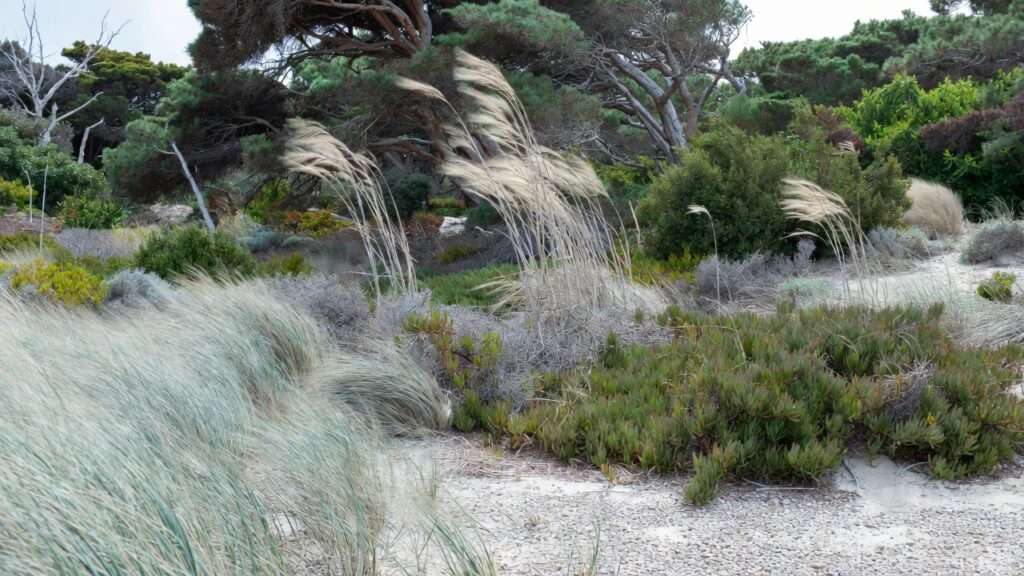
Imagine standing on your seaside deck, listening to the waves crash while relentless coastal winds whip through your garden, drying out leaves and snapping delicate stems 😩. For many gardeners in dry coastal zones, this scene is all too familiar. Sandy soils drain quickly, salt spray scorches foliage, intense sun bakes everything, and strong gusts can exceed 50 mph—making ordinary plants wilt or fail entirely. But here’s the good news: there are tough, beautiful wind-resistant plants for dry coastal areas that not only survive these harsh conditions but actually thrive, creating low-maintenance, resilient landscapes full of texture, color, and wildlife appeal 🐝.
As a horticulturist with over 15 years specializing in coastal and drought-tolerant gardening, I’ve helped countless homeowners transform exposed seaside plots into stunning, functional gardens. These plants succeed because they’ve evolved clever adaptations: flexible stems that bend instead of break, thick waxy cuticles to lock in moisture, silvery or hairy leaves to reflect sun and repel salt, deep roots for stability and water access, and sometimes even salt-excreting glands 🌬️. In this comprehensive guide, we’ll explore the best wind-resistant plants for dry coastal areas—from frontline grasses to anchoring trees—along with practical planting tips, design ideas, and maintenance secrets to help you build a garden that stands strong against the elements.
Whether you’re dealing with frontline exposure (direct salt spray) or second-line protection (some shelter), these selections prioritize drought tolerance, salt resistance, wind flexibility, and low upkeep. Let’s turn your challenging coastal spot into a thriving oasis!
Understanding Dry Coastal Conditions: Why Most Plants Fail 🌊
Dry coastal environments present a brutal triple threat:
- High winds desiccate foliage by increasing transpiration rates—plants lose water faster than roots can replace it.
- Drought and sandy soils offer poor water and nutrient retention; rainfall often runs off quickly.
- Salt spray accumulates on leaves, burning tissues and disrupting photosynthesis, while salty soil inhibits root function.
Coastal winds can deposit up to 100 lbs of salt per acre annually in exposed areas, and sandy soils hold less than 10% of the water clay soils do. Most garden plants succumb because they lack specialized traits like reduced leaf surface area, succulence, or wind-swaying flexibility.
Winning plants counter these challenges with:
- Small, thick, or needle-like leaves to minimize water loss
- Silvery pubescence (hairy coating) for salt deflection and sun reflection
- Deep taproots or fibrous systems for anchoring and drought access
- Flexible, wiry stems that dance with gusts rather than snap
Quick Reference Table: Key Challenges vs. Winning Traits
| Challenge | Winning Plant Traits | Benefit |
|---|---|---|
| Strong winds | Flexible stems, narrow leaves | Reduces breakage, less wind resistance |
| Drought/sandy soil | Deep roots, succulence, low water need | Sustains through dry spells |
| Salt spray & soil | Salt-excreting glands, waxy cuticles | Prevents toxicity, repels buildup |
| Intense sun/heat | Silvery foliage, compact growth | Reflects heat, lowers temperature |
Understanding these adaptations helps you select plants that truly belong in your space.
How to Choose & Use Wind-Resistant Plants in Dry Coastal Gardens 🏖️
Success starts with smart planning:
- Assess your exposure: Frontline (direct ocean spray)? Prioritize ultra-tough natives like marram grass or saltbush. Second-line (some building/fence shelter)? You gain more flowering options.
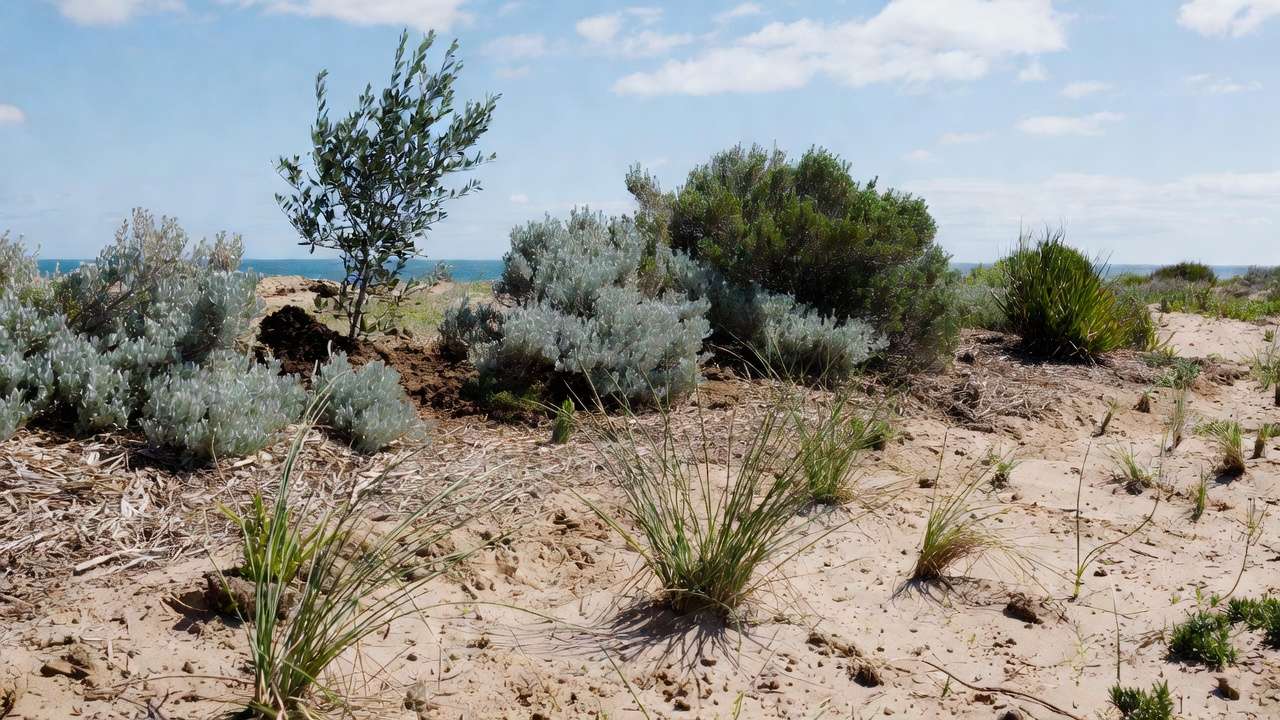
- Layer for protection: Create a multi-tier windbreak—tall trees first, mid-level shrubs next, low grasses/groundcovers last. This reduces wind speed by up to 50% behind the barrier.
- Prep sandy soil wisely: Add minimal organic matter (compost sparingly to avoid nutrient overload), incorporate grit for drainage, and top with 2–3 inches of coarse mulch (gravel or bark) to retain moisture and suppress weeds.
- Water strategically during establishment: Deep, infrequent watering for the first 1–2 years builds deep roots. Once established, most of these plants need little to no supplemental water.
- Design ideas: Embrace naturalistic dune styles with waving grasses, Mediterranean-inspired rock gardens with silvery shrubs, or pollinator-friendly borders mixing blooms and textures.
Pro tip: Always choose locally adapted or native plants when possible—they’re pre-tuned to your region’s microclimate and support local ecosystems 🌍.
Top Wind-Resistant Grasses & Grass-Like Plants 🌾
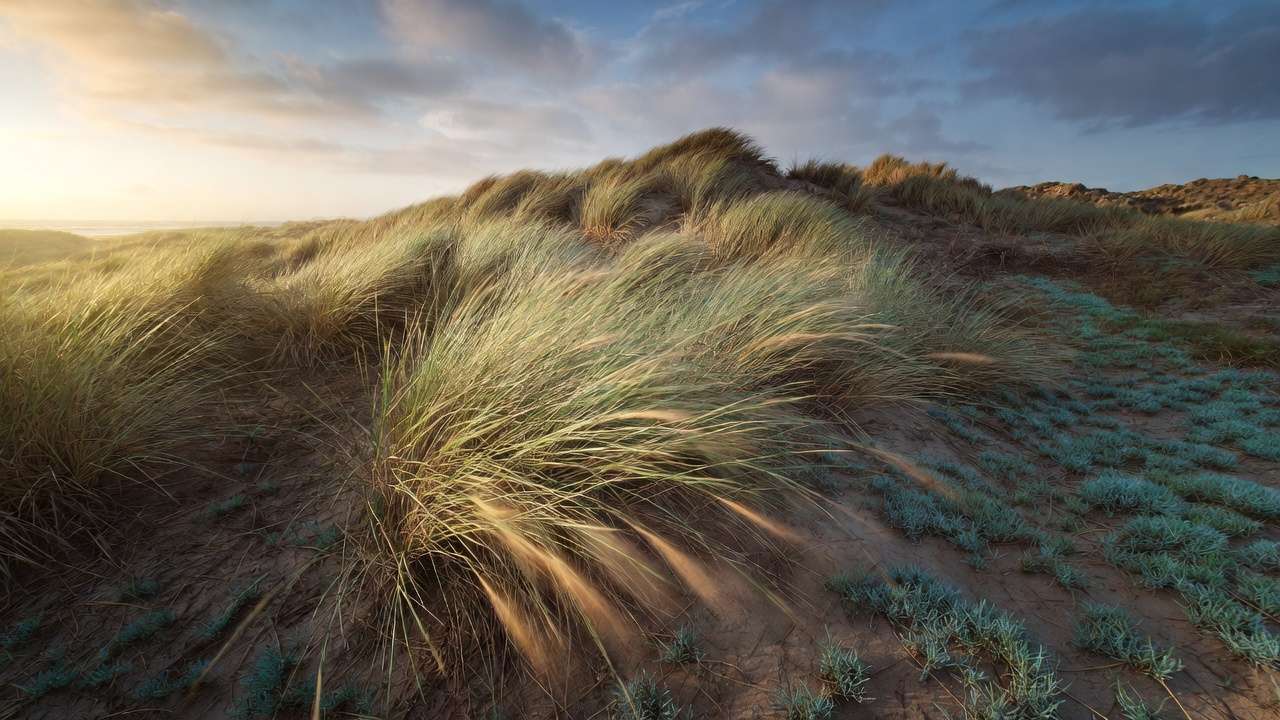
Grasses are coastal MVPs: their fine, flexible blades bend gracefully in wind, they stabilize dunes against erosion, and they demand almost no water once rooted.
- Ammophila arenaria (Marram Grass) The ultimate dune stabilizer. Deep rhizomes bind sand, narrow rolled leaves reduce water loss, and it handles extreme salt and wind like a champ. Plant in masses for erosion control. Height: 2–4 ft. Salt tolerance: ⭐⭐⭐⭐⭐
- Poa labillardierei (Coastal Tussock Grass) A tough Australian native with blue-green tufts that sway beautifully. Excellent for accents or low windbreaks. Drought-proof and low-maintenance. Height: 1–3 ft.
- Lomandra longifolia ‘Nyalla’ or ‘Frosty Top’ Strappy, evergreen foliage with arching habit. Extremely wind- and drought-tolerant, plus great texture year-round. Perfect for borders. Height: 2–3 ft.
- Festuca glauca (Blue Fescue) Compact blue mounds add cool color contrast. Loves full sun, dry soil, and shrugs off salt spray. Great for edging paths. Height: 8–12 in.
These grasses create that classic windswept coastal look while protecting soil and providing habitat.
Best Wind-Resistant Shrubs for Structure & Color 🌺
Shrubs form the garden’s backbone—offering privacy, wind buffering, and seasonal interest.
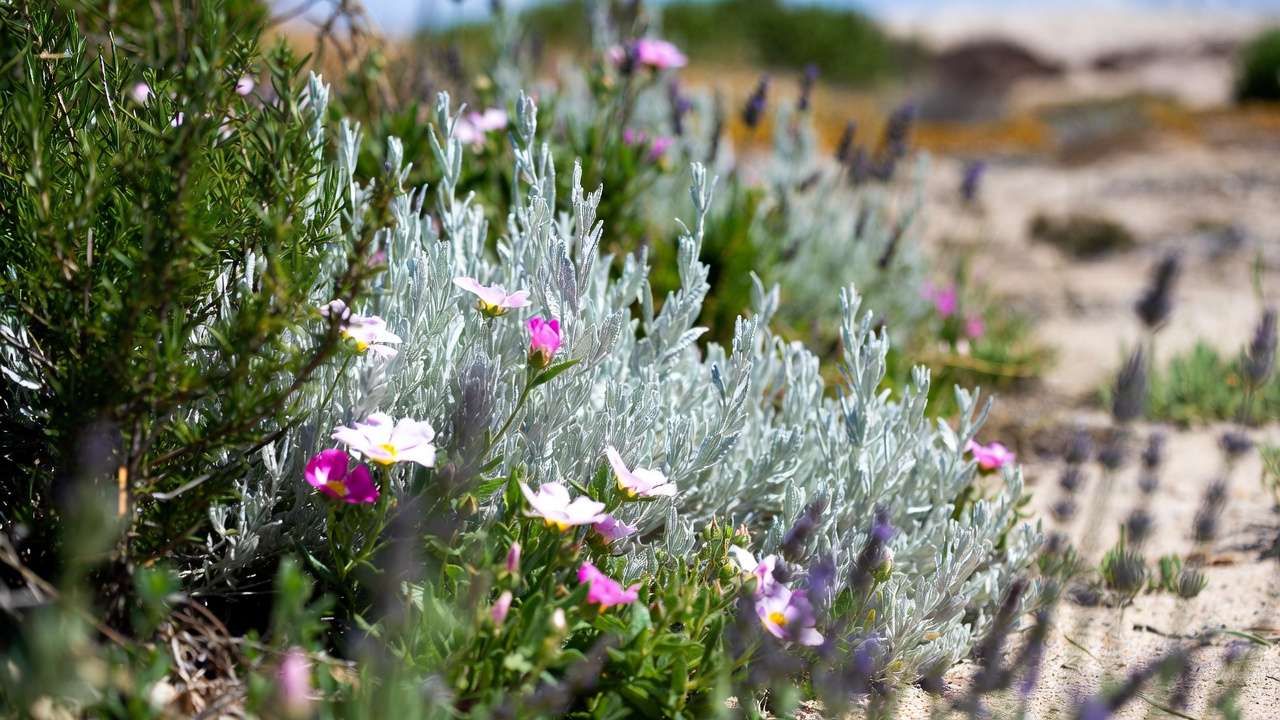
- Cistus spp. (Rockrose) – Try ‘Little Miss Sunshine’ Mediterranean superstar: crinkly leaves, abundant papery flowers (pink/white/yellow), blooms spring–summer. Thrives in poor, dry soil; highly drought-, heat-, and wind-tolerant. Height: 2–4 ft. Salt: ⭐⭐⭐⭐
- Atriplex cinerea (Coastal Saltbush) Silvery-gray foliage shines in sun, excellent salt tolerance (even excretes it!). Provides muted, desert-like texture and wind protection. Height: 3–6 ft.
- Elaeagnus x ebbingei Fast-growing evergreen with silvery undersides, tiny fragrant flowers, and edible berries. Superb windbreak shrub; handles salt and drought superbly. Height: 6–10 ft.
- Rosmarinus officinalis (Rosemary) Aromatic, edible herb with blue blooms. Needle-like leaves resist wind desiccation; perfect for low hedges. Height: 2–5 ft.
- Lavandula spp. (Lavender) – English or Lavandin types Fragrant purple spikes attract pollinators. Loves dry, well-drained spots; wind-tough once established. Height: 1–3 ft.
These add year-round structure and pops of color without constant care.
Top Trees for Long-Term Coastal Resilience 🌳
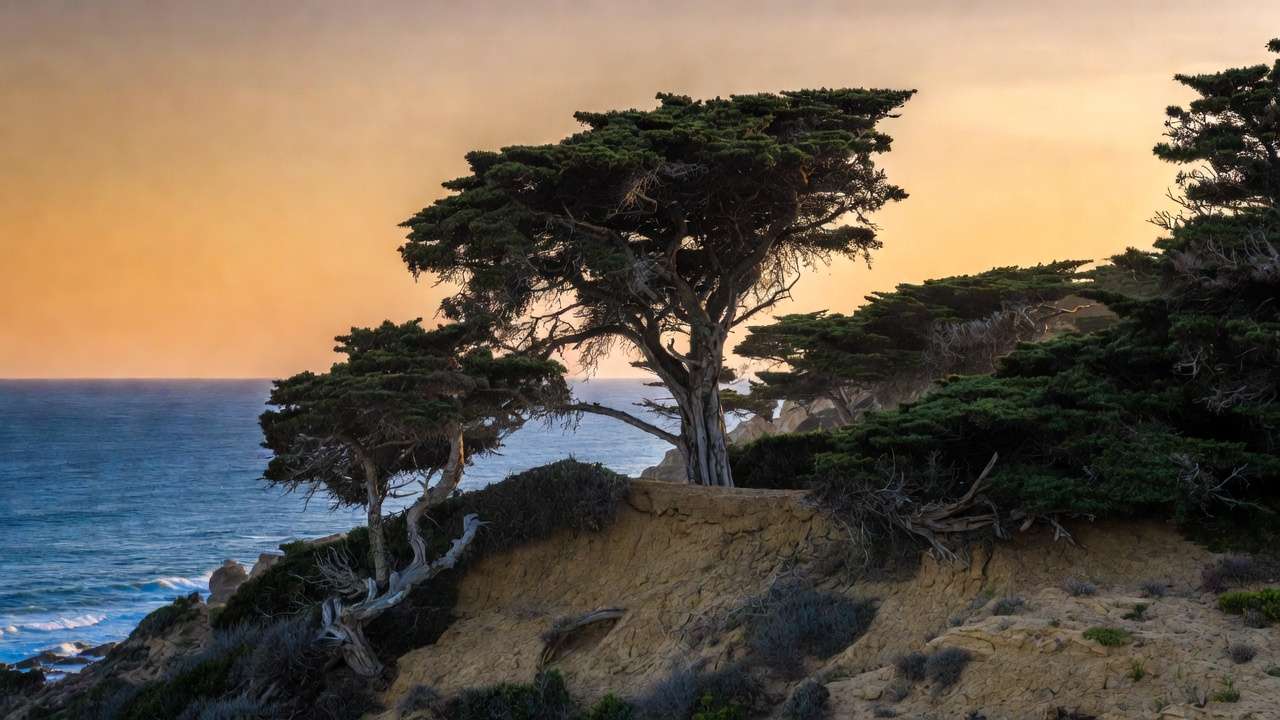
While trees take longer to establish, they provide the ultimate wind protection, privacy screening, and vertical structure in larger coastal gardens. These selections are proven performers in dry, windy, salty conditions—often developing naturally sculpted, leaning forms from prevailing winds (a beautiful, signature coastal look).
- Quercus ilex (Holm Oak / Evergreen Oak) The Mediterranean classic for coastal resilience. Thick, leathery, dark-green leaves resist desiccation and salt spray exceptionally well. Slow to moderate growth, but once established, it becomes a sturdy, wind-defying anchor tree. Excellent for second-line planting where it can eventually reach 30–50 ft. Salt tolerance: ⭐⭐⭐⭐⭐. Bonus: supports birds and wildlife.
- Pinus spp. (e.g., Pinus pinea – Stone Pine or Pinus nigra – Austrian Pine) Pines are coastal icons—flexible needles and resinous bark shrug off salt and wind. Pinus pinea develops that picturesque umbrella canopy over time, perfect for framing ocean views. Plant young specimens in groups for mutual wind protection during establishment. Height: 20–60 ft depending on species. Very drought-tolerant once rooted.
- Olea europaea (Olive Tree) A symbol of dry, sunny resilience. Silvery, narrow leaves minimize water loss; deep roots seek moisture far below the surface. Thrives in poor, well-drained soils and handles salt spray admirably. Can be kept smaller through pruning or allowed to grow into small trees (15–30 ft). Ancient cultivars often survive centuries in harsh coastal climates. Edible fruit is a lovely bonus in milder zones.
- Griselinia littoralis (New Zealand Broadleaf) Glossy, apple-green evergreen leaves give a lush look despite tough conditions. Extremely salt- and wind-tolerant—often used as a coastal hedge or small tree. Fast-growing when young, then steady. Height: 10–20 ft if unpruned. One of the few trees that can handle near-frontline exposure.
Planting tip for trees in windy sites: Stake only if absolutely necessary (and remove after 1 year to encourage trunk strength). Plant slightly deeper than nursery level to counter wind rock, and always water deeply during the first two summers.
These trees create microclimates, reducing wind speed and evaporation for underplantings—making your entire garden more successful over time.
Groundcovers & Perennials That Hug the Ground 🪴
Low-growing plants stabilize sandy soil, prevent erosion, soften hard edges, and fill gaps between taller wind-resistant species.
- Armeria maritima (Sea Thrift / Sea Pink) Iconic tufted perennial with grassy foliage and globe-shaped pink, white, or red flower heads in spring–early summer. Extremely tough—grows wild on sea cliffs. Perfect for edging paths or rock gardens. Height: 6–12 in. Salt: ⭐⭐⭐⭐⭐
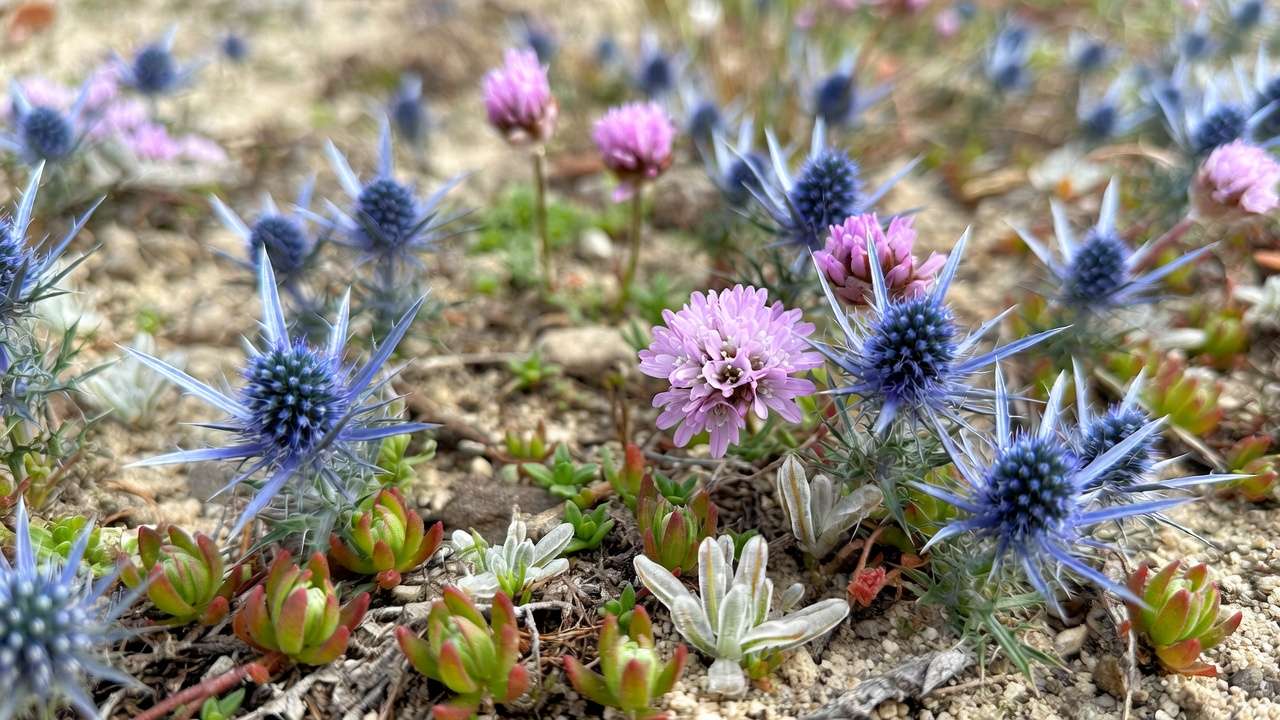
- Eryngium maritimum (Sea Holly) Striking metallic-blue spiky bracts and thistle-like flowers. Waxy, prickly leaves deter herbivores and resist wind burn. Loves full sun and poor soil. Adds dramatic texture. Height: 1–2 ft.
- Sedum spp. & other succulents (e.g., Sedum ‘Angelina’, Senecio mandraliscae – Blue Chalk Sticks) Fleshy leaves store water, making them nearly bulletproof in dry coastal spots. Low, spreading forms create carpets that suppress weeds and hold sand. Many turn beautiful colors in sun/heat. Height: 3–12 in. Great for modern, low-water designs.
- Carpobrotus edulis (Hottentot Fig / Ice Plant) – Use with caution Fast-spreading succulent with vibrant pink-magenta daisy flowers. Excellent erosion control on dunes… but can become invasive in some regions. Check local regulations before planting; native alternatives are often better long-term choices.
These low-growers create a living mulch that locks moisture in and reduces sand blow.
Planting & Maintenance Guide: Step-by-Step Success 🌱
- Best planting time: Early autumn or late winter/early spring—avoid peak summer heat and winter storms.
- Site prep: Dig wide (not deep) holes, mix in 20–30% grit or coarse sand if soil is very heavy. Avoid rich compost in very sandy sites.
- Planting technique: Position plants slightly higher than soil level (sand will settle). Backfill firmly, water thoroughly, then apply 2–3 inches of gravel, shell, or bark mulch.
- Establishment watering: Deep soak every 5–7 days for first summer (less in rainy seasons). Taper off in year 2—most become fully drought-tolerant.
- Fertilizing: Minimal! Use slow-release, low-nitrogen formula once in spring only if growth seems weak.
- Pruning: Light shaping in late winter/early spring. Remove wind-damaged tips. Many coastal plants look best when allowed to develop natural, windswept forms.
- Pests & diseases: Rarely an issue—good airflow and tough foliage keep problems at bay.
Follow these steps and your plants will root deeply and thrive with almost no ongoing care.
Common Mistakes to Avoid in Dry Coastal Planting ⚠️
- Overwatering after establishment → causes root rot in sandy soils.
- Choosing thirsty ornamentals (hostas, hydrangeas, etc.) → instant failure.
- Planting without a layered windbreak → young plants get shredded.
- Skipping mulch → rapid moisture loss and weed invasion.
- Ignoring local native options → missing out on best-adapted performers and ecological benefits.
Avoid these pitfalls and your success rate soars.
FAQs: Your Top Questions Answered ❓
Q: What plants handle extreme frontline salt spray best? A: Marram grass, sea thrift, coastal saltbush, Griselinia, and holm oak lead the pack.
Q: Are these plants deer-resistant? A: Many are (rosemary, lavender, rockrose, sea holly, most grasses)—their tough, aromatic, or prickly foliage deters browsing.
Q: How long until they look established? A: Grasses and groundcovers: 1 season. Shrubs: 2–3 years. Trees: 4–7 years for real impact.
Q: Should I stick to natives only? A: Natives (marram, sea pink, saltbush) are ideal for ecology and lowest maintenance, but well-adapted non-natives (lavender, rosemary, olive) perform excellently and add variety—use a balanced mix.
Q: Can I create privacy in very windy spots? A: Yes—start with Elaeagnus or Griselinia hedges, backed by taller pines or oaks over time.
Q: Will these plants survive cold coastal winters? A: Most listed are hardy to USDA zones 7–10; check specific cultivar hardiness for your exact location.
Conclusion: Build Your Dream Resilient Coastal Garden Today 🌊
Creating a garden in dry coastal areas isn’t about fighting nature—it’s about partnering with it. By choosing these wind-resistant plants for dry coastal areas, you’ll enjoy a beautiful, low-maintenance landscape that celebrates the wild beauty of the seaside: swaying grasses, silvery foliage catching the light, fragrant blooms, and sturdy evergreens standing strong against the wind.
Start small: pick 3–5 plants suited to your exact exposure, observe how wind moves across your site, and build your layers over time. Soon you’ll have a garden that doesn’t just survive—it thrives, supports pollinators, prevents erosion, and gives you endless enjoyment.
Have you tried any of these tough coastal beauties? Share your experiences in the comments—I’d love to hear what works in your region! Happy planting! 🌱✨











