
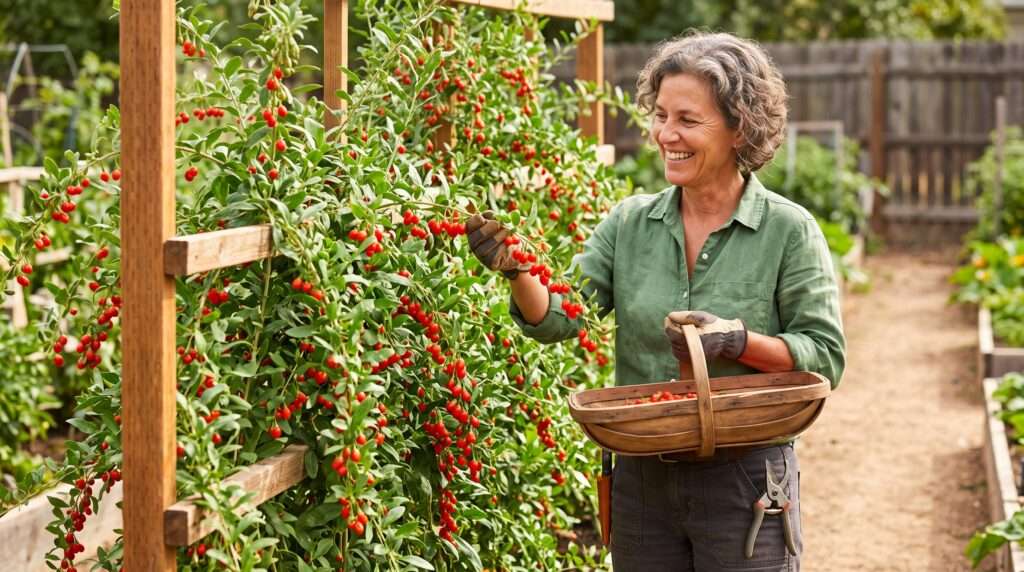
Imagine stepping out into your backyard on a crisp late-summer morning and harvesting handfuls of vibrant, nutrient-packed, ruby-red berries straight off the branch. For many gardeners, growing their own superfoods feels like a distant dream, but cultivating wolfberry plants (widely known as Goji berries) makes this dream entirely achievable.
However, many enthusiastic home gardeners plant these resilient shrubs expecting a massive yield, only to be met with wild, leggy, overgrown vines that produce absolutely zero fruit. As someone who has spent years propagating fruiting shrubs and consulting on organic orchard care, I see this heartbreak all the time. The good news? It is entirely preventable.
I’ve cracked the code to making these incredibly hardy plants highly productive. In this comprehensive guide, you will learn the exact secrets to cultivating a thriving shrub: from mixing the perfect well-draining soil and mastering the crucial “umbrella” pruning technique, to implementing organic pest control. If you’re ready to transform that tangled vine into a heavy-bearing centerpiece of your garden, let’s dig in! 🧑🌾✨
📖 Chapter 1: Getting to Know Wolfberry Plants (Goji Berries) 🫐
Before you put your hands in the dirt, it is crucial to understand the plant you are working with. Getting familiar with the botanical traits of the wolfberry is the first step toward a bountiful harvest.
H3: Wolfberry vs. Goji Berry: Is There a Difference? 🧐
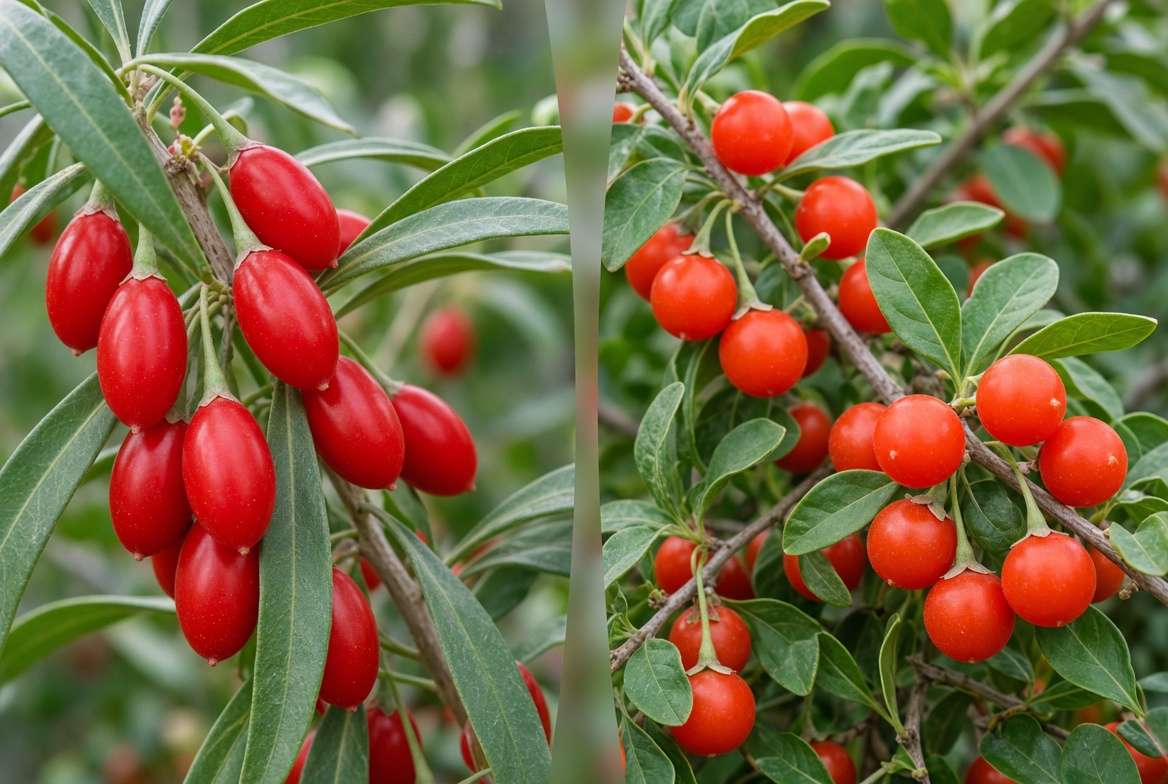
You will often see the terms “Goji berry” and “wolfberry” used interchangeably at nurseries and in seed catalogs, and for the most part, that is completely accurate. However, from a strict botanical standpoint, there are two primary species cultivated for their fruit:
-
Lycium barbarum: This is the most common variety grown commercially and sold as the traditional “Goji berry.” It boasts slightly larger, sweeter fruits.
-
Lycium chinense: Commonly referred to as the Chinese wolfberry, this variety is slightly more compact and is often grown as much for its nutritious, edible leaves as for its fruit.
Both belong to the exact same genus and require the exact same care regimen. For this guide, we will treat them as one and the same!
H3: Why Every Gardener Should Grow Wolfberries 🌱
If you are on the fence about dedicating garden space to these shrubs, here is why they belong in your yard:
-
Extreme Hardiness: Unlike finicky fruit trees, wolfberries are incredibly resilient. They can survive freezing winters in USDA Hardiness Zone 3 and thrive in the blistering heat of Zone 10. Once established, they are notoriously tough.
-
Nutritional Powerhouse: Packed with antioxidants, Vitamin A, Vitamin C, and essential amino acids, these berries are a true superfood. Growing them at home saves you a fortune compared to buying dried Goji berries at the health food store.
-
Drought Tolerance: Mature shrubs require very little supplemental water, making them perfect for eco-friendly, low-water (xeriscape) gardening.
💡 Expert Tip: Wolfberry plants belong to the nightshade family (Solanaceae), making them botanical cousins to tomatoes, peppers, and eggplants. Keep this in mind for crop rotation; avoid planting them exactly where you just grew tomatoes to prevent shared soil-borne diseases! 🍅
☀️ Chapter 2: The Perfect Location: Sunlight, Climate, and Soil Prep
The biggest mistake you can make with a wolfberry is planting it in the wrong microclimate in your yard. Set them up for success from day one with these foundational steps.
H3: Finding the Sweet Spot for Sunlight 🌞
Wolfberries are sun-worshippers. To trigger the flowering hormones that eventually turn into a massive harvest, they need full sun—meaning a minimum of 6 to 8 hours of direct, unobstructed sunlight every single day.
If you plant them in partial shade, the plant will survive, but it will prioritize foliar growth (leaves and long vines) as it stretches desperately toward the light, rather than producing fruit blossoms. Always choose south-facing or west-facing spots in your garden for optimal exposure.
H3: Soil Requirements: Drainage is Everything 🪨
In my years of orchard consulting, the number one cause of wolfberry mortality I encounter is root rot caused by wet, heavy soil. These plants despise “wet feet.”
While they can adapt to relatively poor, rocky soils, they will suffocate in heavy, compacted clay that holds standing water.
-
The Perfect Soil Mix: If you have heavy clay, amend your planting site heavily with coarse sand, perlite, and well-aged compost.
-
The pH Sweet Spot: Unlike blueberries, which demand acidic soil, wolfberries prefer neutral to slightly alkaline soil with a pH ranging from 6.5 to 7.5. If your soil is highly acidic, a light dusting of agricultural lime can help bring the pH up to their preferred level.
H3: Can You Grow Wolfberry Plants in Containers? 🪴
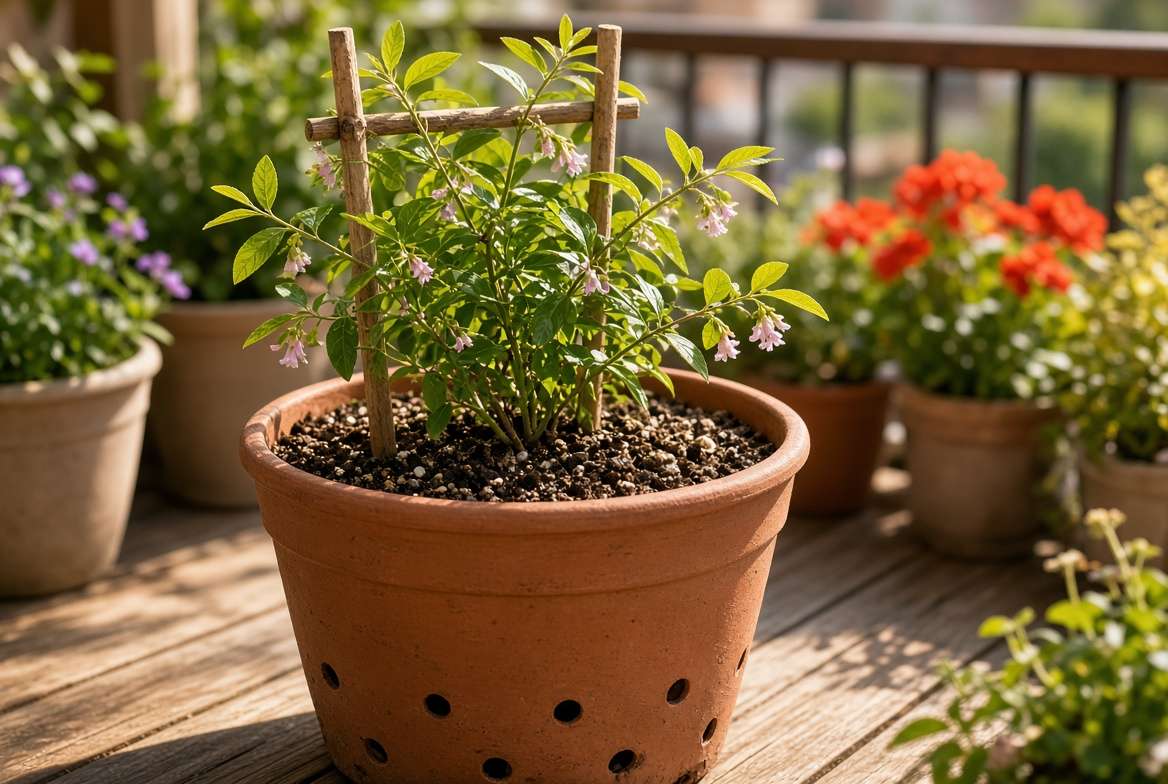
Absolutely! If you have terrible native soil or live in an apartment with a sunny balcony, container growing is a fantastic option. To ensure success:
-
Use a large container (minimum 15-gallon capacity) to accommodate their deep taproots.
-
Ensure the pot has multiple, large drainage holes.
-
Use a premium, fast-draining potting mix blended with 30% perlite or pumice.
-
Note: Container-grown plants will need more frequent watering and fertilizing than those planted in the ground, as nutrients leach out of the pot faster.
🧑🌾 Chapter 3: How to Plant Your Wolfberry for Long-Term Success
You’ve found the perfect sunny spot and prepped your well-draining soil. Now, it’s time to get your plant into the earth.
H3: Bare Root vs. Potted vs. Seeds 🌱
-
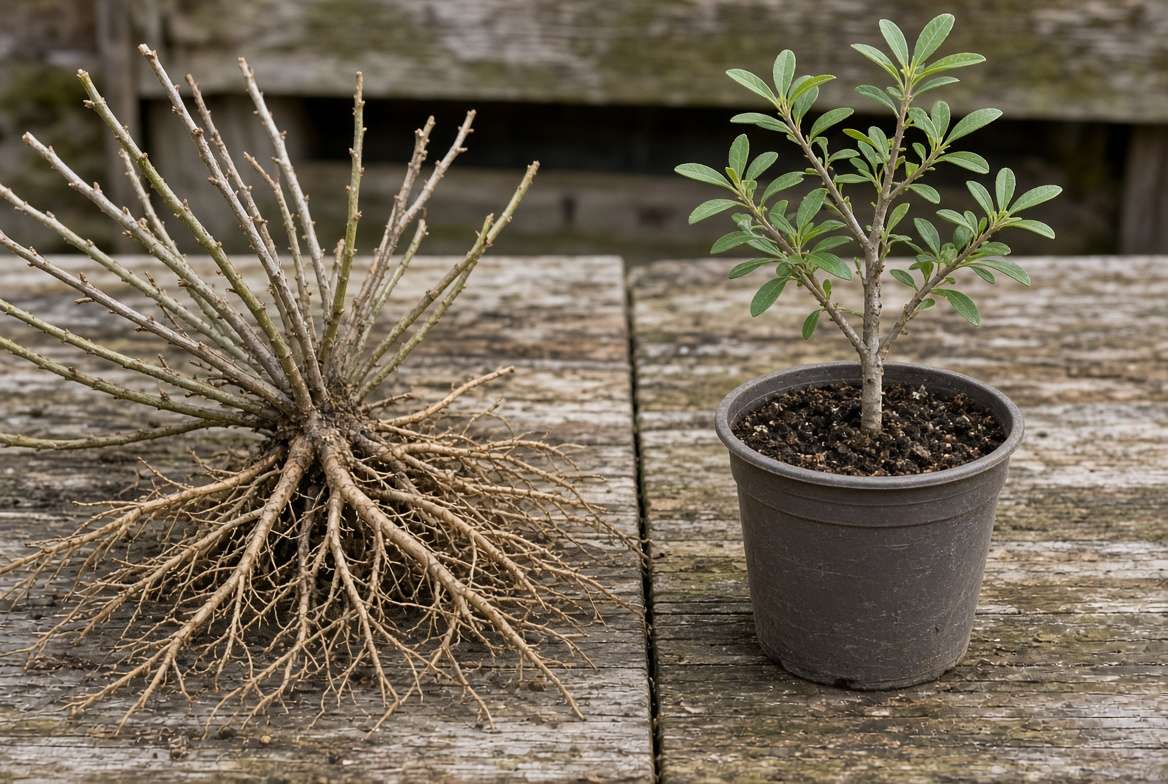
Seeds: While rewarding, growing from seed requires immense patience. It can take 3 to 5 years before a seed-grown plant produces a meaningful harvest.
-
Bare-Root: Purchased during dormancy (late winter/early spring), these are economical and establish quickly.
-
Potted Transplants: The easiest and most common route. You can plant these in spring or early autumn, and they often fruit within their first or second year.
H3: Step-by-Step Planting Guide 🛠️
To give your transplant the best start, follow these precise steps:
-
Dig the Hole: Dig a hole twice as wide as the root ball, but exactly the same depth.
-
Inspect the Roots: Gently tease the roots apart with your fingers. If the plant is root-bound (roots circling the pot), score the sides with a sterilized knife. This prevents “girdling,” where the roots eventually choke the trunk as they grow.
-
Position and Backfill: Place the plant in the hole. Crucial rule: Never bury the crown (the point where the stem meets the roots). It should sit exactly at soil level. Backfill with your amended soil and tamp it down gently to remove air pockets.
-
The First Drink: Water deeply and slowly right after planting to settle the soil around the roots.
H3: Spacing and Trellising 🪵
Airflow is your best defense against fungal diseases. Space your plants at least 5 to 6 feet apart to ensure good air circulation once they reach their mature width.
Because wolfberries naturally want to sprawl like a vine, trellising is highly recommended. Installing a simple T-post and wire trellis system (similar to what you would use for raspberries or blackberries) at the time of planting prevents root disturbance later on. Tying the main canes to a trellis keeps the fruit off the damp ground, making harvesting easier and drastically reducing pest pressure.
💧 Chapter 4: Core Maintenance: Watering and Feeding
Once your wolfberry plant is safely in the ground, proper hydration and nutrition will dictate how fast it grows and how abundantly it fruits. The trick here is learning how to balance care without “spoiling” the plant.
H3: The “Soak and Dry” Watering Method 🌧️
Wolfberries are incredibly drought-tolerant once established, but during their first year of life, they need consistent moisture to develop a deep, robust root system.
-
The First Year (Establishment Phase): Water deeply once a week. Allow the top two inches of soil to dry out completely between waterings.
-
Mature Plants (Year 2 and Beyond): Shift to the “Soak and Dry” method. Water only when the top 3-4 inches of soil are bone dry. When you do water, soak the base of the plant deeply for several minutes to encourage the roots to reach downward. Frequent, shallow watering encourages weak surface roots.
H3: Fertilizing for Fruit, Not Just Foliage 🍂
This is where many well-meaning gardeners accidentally ruin their harvest. When you feed a fruiting shrub high-nitrogen fertilizer (like standard lawn food or fresh manure), the plant puts all its energy into growing massive, beautiful green leaves—and completely forgets to produce flowers or fruit.
-
What to use: Look for organic fertilizers with higher phosphorus and potassium ratios (the second and third numbers in the N-P-K ratio).
-
When to feed: Apply a slow-release organic fertilizer, like bone meal, kelp meal, or a specialized berry-tone mix, in early spring right as the first green buds begin to swell. A light top-dressing of well-aged compost around the base (keeping it a few inches away from the trunk to prevent rot) is usually all a mature wolfberry needs for the entire year.
✂️ Chapter 5: The Masterclass: Pruning Wolfberries for a Massive Harvest
If you take only one piece of advice from this entire guide, let it be this chapter. Proper pruning is the single most important factor in achieving a massive harvest.
H3: Why Unpruned Wolfberries Won’t Produce 🛑
Left to its own devices, a wolfberry plant will rapidly shoot up long, thorny, leggy vines that tangle together and choke out the center of the plant. This dense mess prevents sunlight from penetrating the canopy and severely limits airflow. More importantly, wolfberries only fruit on new wood (growth from the current season). If you leave all the old wood intact, you will get a giant bush with almost no berries.
H3: The “Umbrella” Pruning Technique ☂️
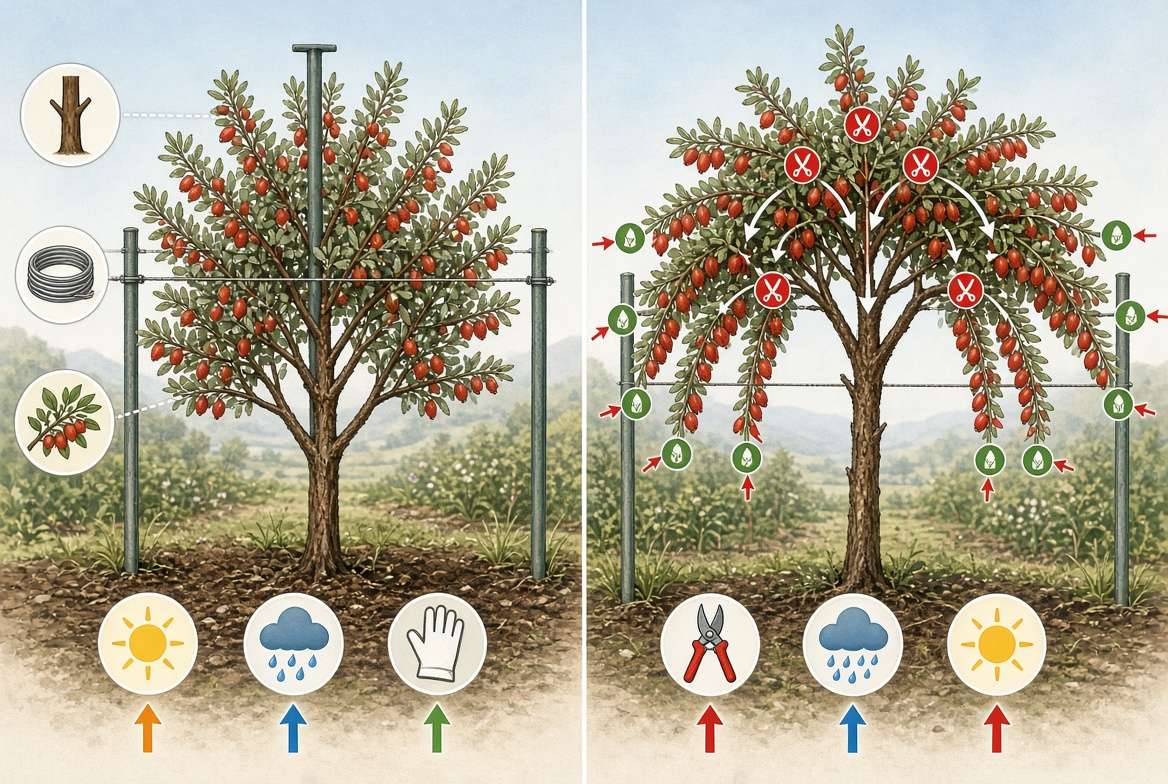
To maximize yields, we want to train the shrub to look like a small, weeping tree or an open umbrella.
-
Establish a Central Leader: In the plant’s first year, identify the thickest, straightest stem and tie it to a sturdy stake. This will become your “trunk.” Prune away all other stems growing from the base.
-
Determine the Height: Once your main trunk reaches about 3 to 4 feet tall, snip the very top off. This forces the plant to stop growing upward and start pushing out lateral (horizontal) branches.
-
Create the Canopy: As these lateral branches grow, they will naturally begin to weep and cascade downward. This “umbrella” shape maximizes sunlight exposure to every single branch, triggering massive flower production.
H3: When to Prune (Summer vs. Winter Maintenance) ❄️
Pruning is a two-season job:
-
Late Winter (Dormant Pruning): This is the hard prune. Before the plant wakes up in early spring, aggressively remove any dead, diseased, or crossing branches. Thin out the center of the canopy so sunlight can reach the interior. Cut back last year’s lateral branches to about 12-15 inches long to encourage fresh, fruiting wood to sprout.
-
Summer Maintenance: Throughout the growing season, if any errant vines shoot straight up through the canopy (often called “watersprouts”), trim them off immediately so the plant redirects that energy into the developing fruit.
💡 Expert Insight Box: 🔬 “Don’t be afraid to be aggressive. You can safely remove up to 40% of a mature wolfberry’s canopy during the winter dormant prune. The more old wood you remove, the more vigorous the new, fruit-bearing growth will be!”
🐛 Chapter 6: Defending Your Crop: Pest and Disease Management
Wolfberries are tough, but they aren’t invincible. Keeping a watchful eye will ensure you get to eat the berries, rather than the local bugs and birds.
H3: Common Pests (And Organic Solutions) 🐞
-
Aphids and Spider Mites: These tiny sap-suckers love the tender new growth of wolfberries. If you see curling leaves or fine webbing, spray the foliage thoroughly with cold-pressed neem oil or a gentle insecticidal soap. Always spray in the early evening to avoid burning the leaves in the hot sun.
-
Birds: The ultimate Goji thief. Birds have an uncanny ability to know exactly when your berries are perfectly ripe. The only foolproof solution is to drape bird netting over your shrubs as soon as the green berries begin to blush red.
H3: Preventing Fungal Diseases 🍄
Because they are nightshades, wolfberries are susceptible to early blight and powdery mildew, especially in humid climates.
-
The Cure is Prevention: Fungal spores thrive on wet leaves and stagnant air. Always water your plants at the base (using drip irrigation or a soaker hose) rather than overhead sprinklers. Furthermore, stick to your aggressive winter pruning schedule to ensure the wind can easily blow through the canopy and dry the leaves after a rainstorm.
🧺 Chapter 7: Harvesting and Preserving the Bounty
Your soil was perfect, your pruning was master-level, and now, late summer has arrived. The branches are dripping with fruit. Here is how to handle your harvest.
H3: How to Know When Wolfberries are Ripe ❤️
Wolfberries are ready to harvest when they turn a deep, vibrant, glossy red and feel slightly soft (yielding gently to light pressure).
-
Warning: The berries will oxidize and turn black quickly if they are bruised. Do not squeeze them! Harvest by gently twisting them off the stem by hand, or by laying a clean tarp beneath the plant and gently shaking the branches until the ripe berries fall off.
H3: Storing and Drying Your Harvest ☀️
Fresh wolfberries are delicate and will only last a few days in the refrigerator. To preserve your massive harvest for year-round smoothies, teas, and oatmeal, drying is the way to go.
-
Food Dehydrator: Place the berries in a single layer on dehydrator trays. Run at 115°F (46°C) for 12-24 hours until they are leathery and chewy, similar to a raisin.
-
Sun Drying: If you live in a hot, dry climate, you can naturally sun-dry them on mesh screens for several days (just be sure to bring them inside at night to avoid morning dew).

❓ Chapter 8: Frequently Asked Questions (FAQs)
(Q) How long does it take for wolfberry plants to produce fruit? If you plant a potted, 1-year-old transplant, you can usually expect a light harvest by its second summer in the ground, and a massive harvest by year three. Seed-grown plants can take up to 4 or 5 years.
(Q) Are wolfberry leaves edible? Yes! The tender young leaves of the wolfberry plant are highly nutritious and are frequently used in traditional Asian cuisines, often sautéed in stir-fries or steeped to make a nutrient-dense tea.
(Q) Can wolfberry plants survive freezing temperatures? Absolutely. Mature plants are incredibly frost-tolerant and can survive winter temperatures dipping down to -15°F (Zone 3). They will drop their leaves and go completely dormant, then spring back to life as the soil warms.
(Q) Why are the flowers on my wolfberry plant falling off? Blossom drop is usually caused by three things: extreme heat waves, a lack of pollinators (bees), or too much nitrogen in the soil. Ensure you aren’t over-fertilizing and consider planting pollinator-friendly flowers nearby to attract bees.
✨ Conclusion: Ready to Grow Your Own Superfoods?
Growing thriving wolfberry plants doesn’t require a degree in horticulture—it just requires an understanding of what the plant naturally wants to do, and gently guiding it in the right direction. By providing ample sunlight, ensuring your soil drains freely, and committing to the “umbrella” pruning method, you will transform these resilient shrubs into heavy-producing superstars of your garden.
The initial effort of setting up the right environment and trellis system pays off exponentially when you are harvesting bowls of fresh, organic superfoods right from your own backyard.
Now it’s your turn! What variety of wolfberry are you planning to plant this season, or are you trying to rescue an overgrown shrub currently in your yard? Let me know in the comments below, and don’t forget to subscribe to our newsletter for a free seasonal berry-pruning calendar! 🍒🌿











