
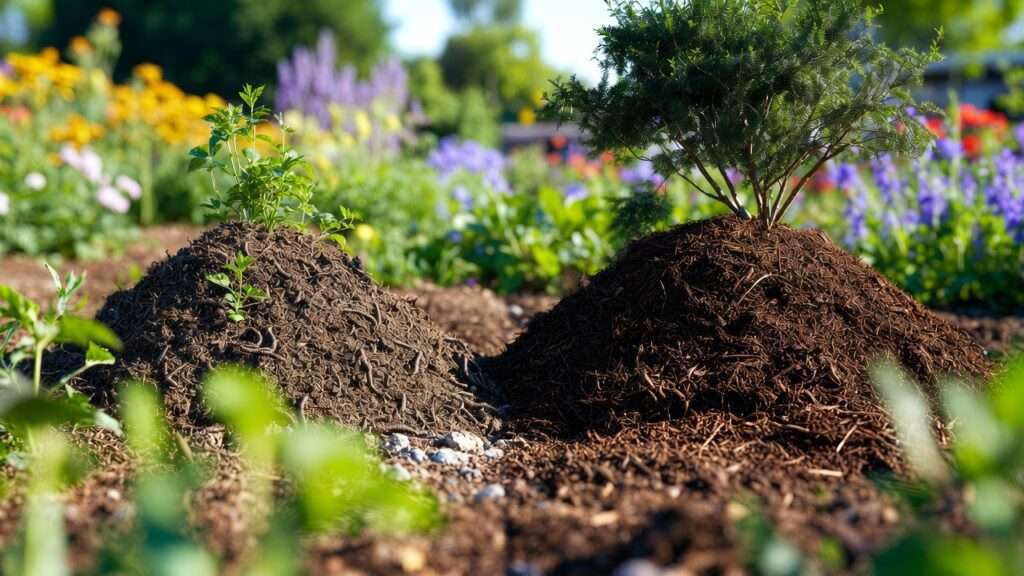
Have you ever poured love, water, and care into your garden only to see your plants looking lackluster or your young trees struggling to establish strong roots? The culprit is often hidden right beneath the surface: poor soil quality. If you’re tired of underwhelming growth, weak root systems, or disappointing yields, it’s time to supercharge your soil with the right organic amendment.
Enter the age-old debate: worm castings vs. compost. Both are powerhouse organic materials that boost soil health, deliver nutrients, and support thriving plants and trees — but they aren’t the same. Worm castings (also known as vermicast or vermicompost) offer immediate, microbe-packed nutrition, while traditional compost excels at building long-term soil structure.
In this comprehensive guide, we’ll dive deep into the differences, backed by insights from university extension services (like Cornell, Ohio State, and NC State), scientific studies, and real-world gardening expertise. You’ll learn exactly when to choose one over the other — or how to combine them for unbeatable results — so you can grow healthier houseplants, more productive vegetables, stronger perennials, and resilient fruit trees. Let’s uncover which one (or both!) will transform your garden! 🪴✨
What Are Worm Castings? (And How They’re Made) 🐛
Worm castings are the nutrient-dense end product of vermicomposting — essentially, the “poop” left behind after red wiggler worms (Eisenia fetida) digest organic matter like kitchen scraps, coffee grounds, and shredded paper.
Unlike regular composting, this process happens in the worm’s gut, where specialized enzymes and beneficial microbes break down materials into a fine, dark, crumbly substance. The result? A super-concentrated amendment loaded with immediately available nutrients, humic acids, and a massive diversity of beneficial bacteria and fungi.
Key characteristics include:
- High plant-available N-P-K — often around 1-2% nitrogen, 1-2% phosphorus, and 1-2% potassium, but in water-soluble forms plants can absorb right away 🌿
- Enzymes, plant growth hormones, and probiotics from the worm’s digestive tract
- Neutral pH (around 7) and low risk of burning roots — safe even for delicate seedlings!
- High cation exchange capacity (CEC) — helps soil hold onto nutrients and moisture better
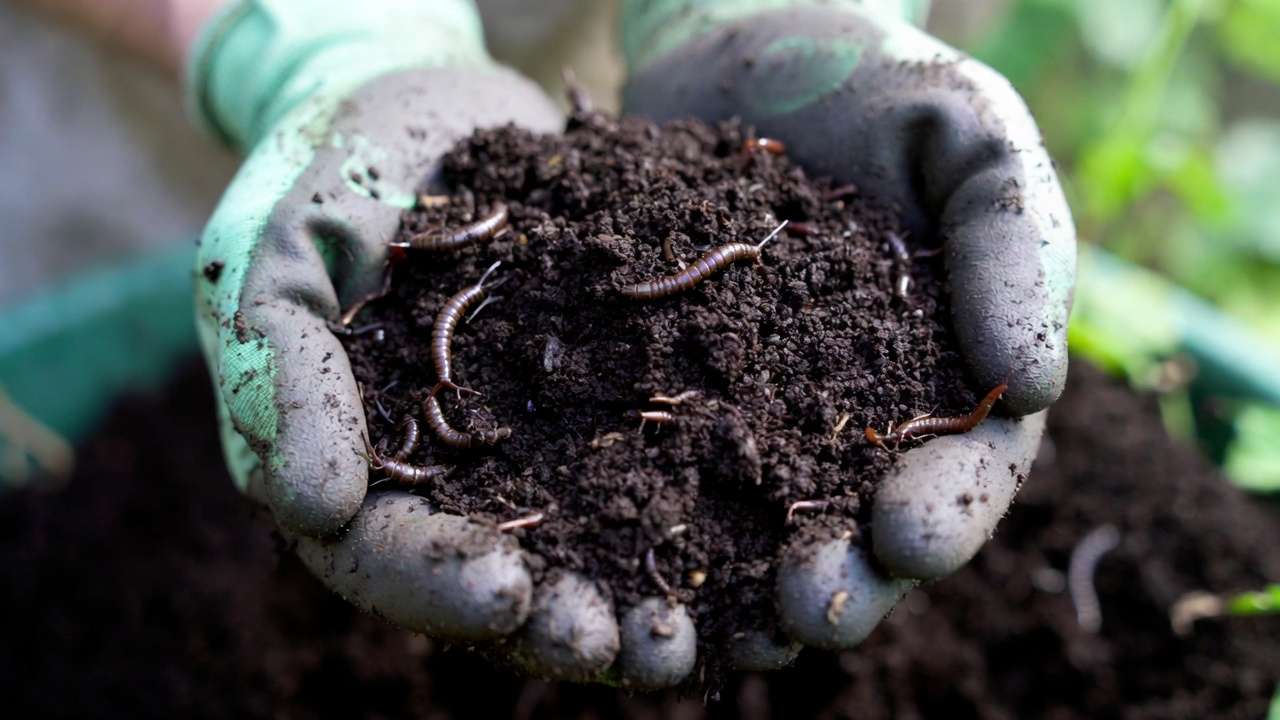
Studies from places like Ohio State University show worm castings can enhance seed germination, boost plant growth by up to 25-50% in some cases, and suppress certain soil-borne diseases. They’re a true “living fertilizer”!
What Is Compost? (Traditional vs. Hot Composting) 🍂
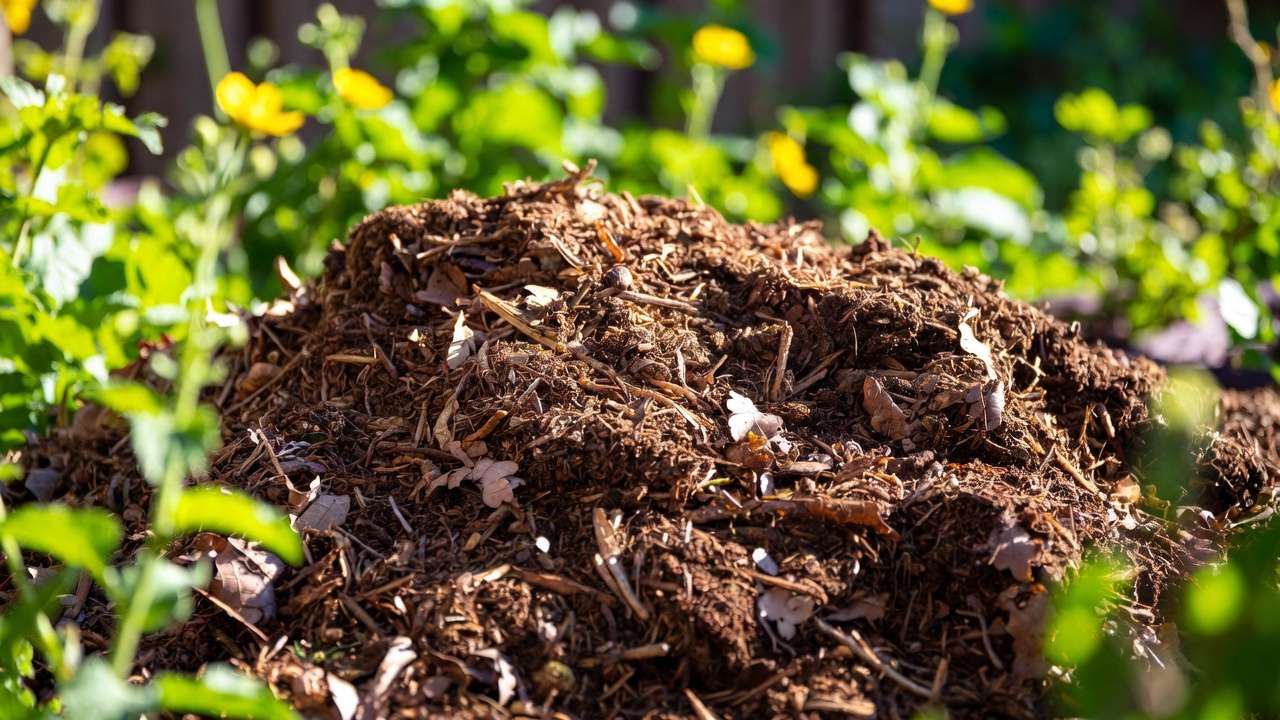
Compost is the decomposed result of organic matter — think yard waste, leaves, kitchen scraps, and manure — broken down by heat-loving microbes, fungi, and bacteria over weeks or months. Hot composting speeds things up with high temperatures (130-160°F) that kill pathogens and weed seeds, while cold composting is slower but still effective.
The final product is a dark, earthy material rich in organic matter that dramatically improves soil texture.
Key perks:
- Builds long-term soil organic matter and carbon storage
- Enhances water retention, aeration, and drainage in clay or sandy soils
- Attracts earthworms and supports diverse soil life over time
- Often inexpensive or free if you DIY with yard waste
University extensions like those from Oregon State and Maryland emphasize compost’s role in sustainable soil building, erosion control, and nutrient cycling for large-scale gardens or orchards.
Key Differences: Worm Castings vs. Compost (Side-by-Side Comparison) ⚖️
To make your decision easier, here’s a detailed comparison based on research and extension guidelines:
| Aspect | Worm Castings | Compost | Winner? |
|---|---|---|---|
| Nutrient Availability | Immediate, highly soluble & plant-ready | Slower release as microbes break it down | Castings 🌟 |
| Microbial Diversity | Extremely high (10-20x more activity than soil) | Good, but depends on composting method | Castings 🦠 |
| Soil Structure Impact | Moderate; improves aggregation & CEC | Superior for bulk addition & long-term tilth | Compost 🏗️ |
| pH & Salt Content | Neutral pH; some soluble salts (use sparingly in pots) | Variable; can be slightly acidic if immature | Tie ⚖️ |
| Cost & Availability | More expensive; produced in smaller batches | Cheaper & easier to make in bulk | Compost 💰 |
| Application Rate | 5-25% of soil mix (sparingly) | Generous: 1-4 inches as mulch/mix | Castings (precision) |
| Best For | Quick boosts, containers, seedlings, veggies | Large beds, trees, soil rebuilding | Depends on need! |
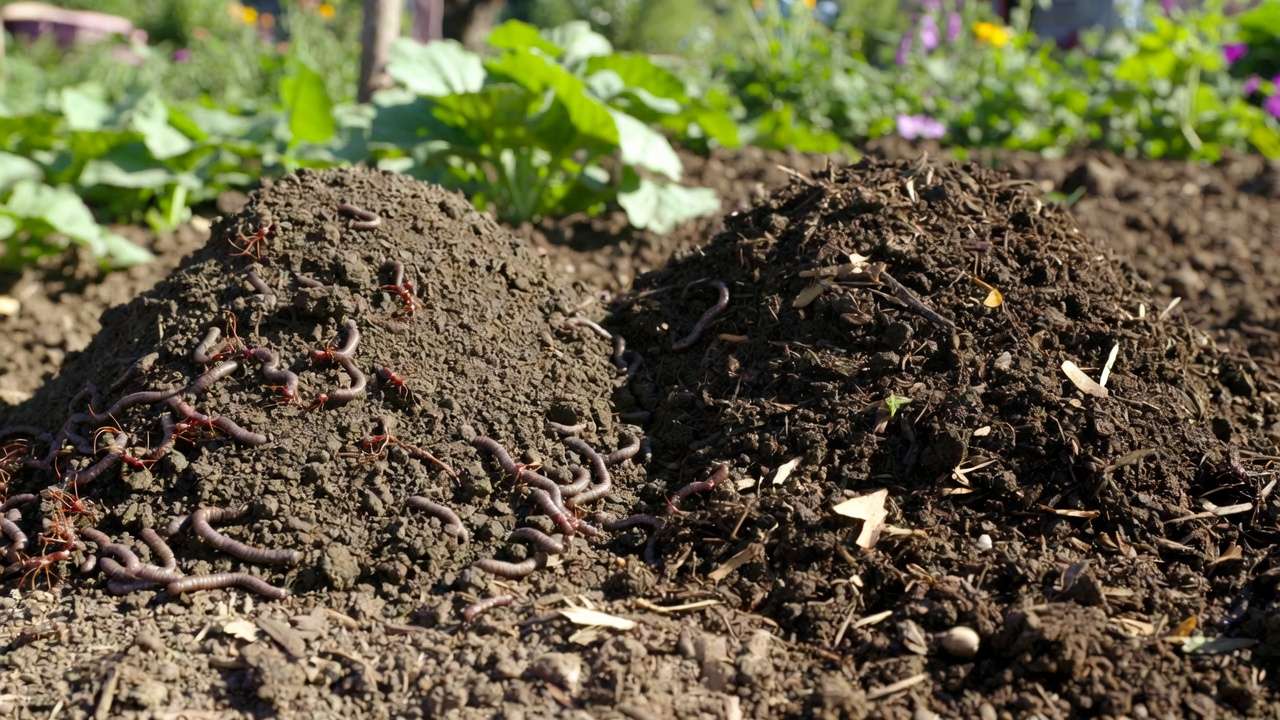
From sources like NC State and scientific reviews, worm castings often edge out in microbial power and immediate benefits, while compost wins for volume and structure.
Benefits of Worm Castings for Plants and Trees ✨
Worm castings are like a premium vitamin shot for your garden:
- Boost root development — Studies show enhanced root growth and up to 25% larger plants
- Increase drought & disease resistance — Beneficial microbes outcompete pathogens; great for fruit trees against root rots
- Improve nutrient uptake — Humic acids and enzymes make locked-up minerals available
- Enhance yields — Vegetables, flowers, and fruit trees produce bigger, tastier harvests
- Support young trees — Ideal for establishing strong roots in planting holes without burn risk 🌳
Extension services note castings’ high microbial activity (often 10-20 times higher) helps suppress pests like aphids and nematodes naturally.
Benefits of Compost for Plants and Trees 🛡️
Compost acts as the foundation for resilient soil:
- Long-term fertility — Builds humus that sequesters carbon and retains moisture
- Better aeration & drainage — Prevents compaction around tree roots
- Erosion control — Perfect mulching for orchards and landscapes
- Attracts native earthworms — Creates a thriving underground ecosystem
- Sustainable for large areas — Amend tree drip lines or veggie beds generously
It’s the go-to for no-till gardening and supporting perennial fruit trees over years.
When to Choose Worm Castings Over Compost (And Vice Versa) 🔍
The real magic happens when you match the amendment to your specific gardening situation. Here’s a clear, practical decision guide based on common scenarios gardeners and tree caretakers face every day:
Choose worm castings when you need:
- Fast, noticeable results in the short term 🌿
- Nutrient boosts for container plants, houseplants, seedlings, or young transplants
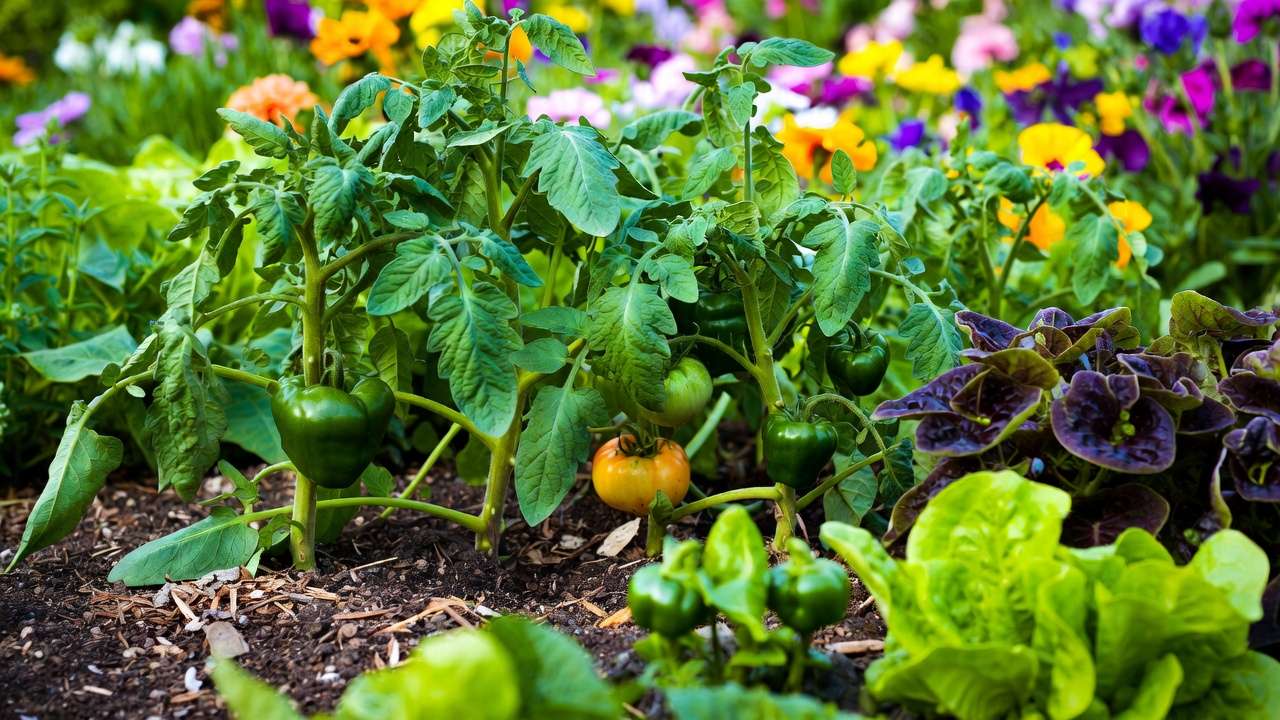
- Safe, burn-free feeding for delicate vegetables (tomatoes, peppers, lettuce) or herbs
- Disease suppression or pest resistance in high-value crops
- Limited space or indoor gardening (vermicompost bins are compact and low-odor)
- Premium results for potted fruit trees, bonsai, or ornamentals
Real-world example: Many urban gardeners and balcony growers report dramatically healthier basil, chili plants, and even citrus in pots after switching to a 15–20% worm casting mix in their potting soil.
Choose compost when you need:
- Bulk soil improvement for new garden beds or large planting areas
- Long-term structure and water-holding capacity in heavy clay or fast-draining sandy soils
- Cost-effective mulching around established fruit trees, shade trees, or perennials
- Foundation building for no-dig/no-till methods (popularized by gardeners like Charles Dowding)
- Sustainable, large-scale soil regeneration for orchards, food forests, or landscapes 🌳
Real-world example: Homeowners planting new apple, mango, or avocado trees in Barisal’s often clay-heavy or flood-prone soils benefit most from generous compost amendments in the planting hole and as annual mulch under the drip line.
The ultimate power move: Use both together! The most experienced organic gardeners rarely choose one exclusively. A winning strategy is:
- Use compost as your primary bulk amendment (50–70% of your mix or mulch layer)
- Add worm castings as the “probiotic booster” (10–25% of total organic matter)
This combination gives you the best of both worlds: long-term structure + immediate microbial and nutrient power. University trials (e.g., from Cornell and Washington State) frequently show superior plant growth, higher yields, and better disease resistance when vermicompost is blended into finished compost.
How to Use Worm Castings Effectively (Pro Application Tips) 🪱
Getting the most out of worm castings is all about precision — they’re potent!
- Seed starting & potting mix — Blend 10–20% worm castings into your seed-starting or potting soil. This dramatically improves germination rates and early vigor.
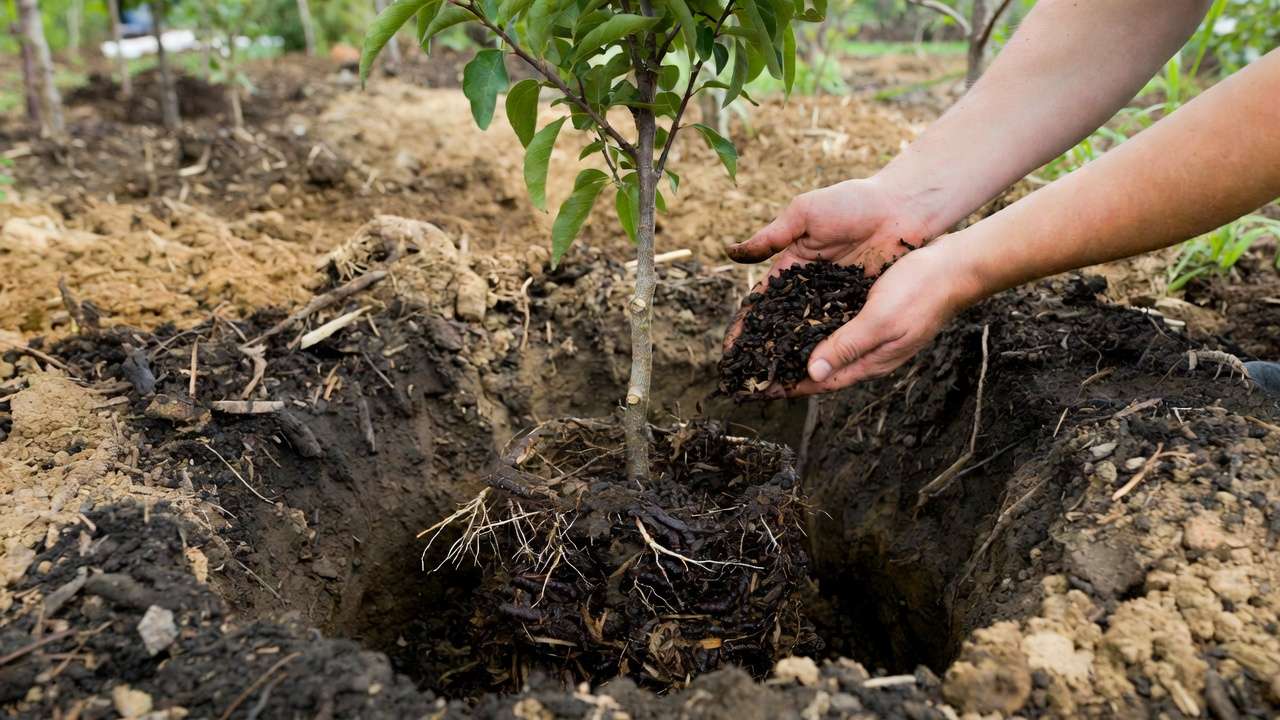
- Transplanting seedlings or young trees — Add 1–2 handfuls (about 1 cup) to the planting hole, mixed with native soil.
- Top-dressing established plants — Sprinkle ¼–½ inch layer around the base of veggies, flowers, or trees (stay 2–3 inches away from stems/trunks to prevent rot). Water in well.
- Worm casting tea — Steep 1 part castings in 10 parts water for 24–48 hours (stir occasionally). Strain and use as a foliar spray or soil drench every 2–4 weeks during active growth. ☕🌱
- For fruit trees & perennials — Apply 1–2 kg per mature tree annually in early spring, spread under the canopy and lightly worked into the topsoil.
Pro tip: Always use well-finished, aged castings. Fresh ones can be too “hot” in nitrogen for some sensitive plants.
How to Use Compost Effectively (Best Practices) 🍂
Compost is forgiving and versatile — perfect for bigger jobs.
- New garden beds — Spread 2–4 inches (5–10 cm) over the surface and dig or fork it in. Let it settle 2–4 weeks before planting.
- Tree planting — Mix 30–50% mature compost into backfill soil when planting new fruit or shade trees.
- Annual top-dressing — Apply 1–3 inches around established trees, shrubs, and perennials each spring or fall as mulch.
- Vegetable side-dressing — Sprinkle a handful around plants mid-season and water in for a nutrient refresh.
- Lawn & landscape renovation — Spread thinly (½–1 inch) over lawns or bare areas in spring to encourage earthworm activity and thicken turf.
Pro tip: If your compost still smells strongly of ammonia, it’s not fully mature — wait another 1–2 months to avoid burning tender roots.
Can You Make Your Own? DIY Tips for Both 🛠️
Making your own compost
- Hot method: Layer greens (kitchen scraps, grass clippings) and browns (leaves, cardboard) in a 1:2–1:3 ratio. Turn weekly, keep moist like a wrung-out sponge. Ready in 2–6 months.
- Cold method: Just pile it up and wait 6–12 months — slower but zero effort.
Making your own worm castings
- Start with a 20–60 liter plastic bin or commercial worm bin.
- Add moist shredded newspaper/cardboard as bedding + red wigglers (start with 500–1000 worms).
- Feed small amounts of kitchen scraps 2–3 times per week.
- Harvest castings every 3–6 months once the material looks like rich coffee grounds.
- Bonus: Worm tea is a free byproduct!
In warm, humid climates like Bangladesh, vermicomposting works beautifully indoors or in shaded spots year-round.
Common Mistakes to Avoid (Save Your Plants Heartache!) 🚫
- Using fresh/hot compost → Can burn roots and introduce pathogens. Always let it finish (earthy smell, no heat).
- Over-applying worm castings in containers → High salts can build up; flush pots occasionally.
- Relying on one amendment forever → Soil needs variety for balanced biology. Rotate or combine!
- Ignoring moisture → Both need consistent moisture to activate microbes.
- Buying low-quality bagged products → Look for OMRI-listed or local tested sources for best results.
FAQs: Worm Castings vs. Compost (Reader Questions Answered) ❓
Q: Are worm castings just expensive compost? A: No — they’re a biologically superior, more concentrated product with higher immediate nutrient availability and microbial counts.
Q: Which is better for fruit trees like mango or guava? A: Compost for structure and mulch + worm castings blended in for faster nutrient uptake and disease resistance.
Q: Can I use too much worm castings? A: Yes — stick to 5–25% in mixes. Excess can cause nutrient imbalances or salt stress in pots.
Q: Where can I buy good quality ones in Bangladesh? A: Local nurseries, agricultural co-ops, or trusted online sellers often carry vermicompost. Making your own is usually the freshest and most cost-effective option.
Q: Do worm castings expire? A: They keep for 1–2 years if stored dry and cool, but the microbial activity is highest when fresh.
Final Verdict: Which Should You Choose? 🌟
There is no universal “winner” — it depends entirely on your goals, garden size, and timeline.
- Want quick, visible improvements in pots, seedlings, veggies, or young trees? Worm castings deliver faster, more dramatic results.
- Focused on building resilient, long-term soil for large beds, orchards, or established trees? Compost is unbeatable for volume and sustainability.
- Ready for the absolute best outcome? Combine both — use compost as your foundation and worm castings as the turbo booster.
Most expert gardeners and extension services agree: the healthiest, most productive gardens thrive on diversity. A living soil full of microbes, organic matter, and balanced nutrients is the real secret to strong roots, lush foliage, abundant harvests, and beautiful trees.
Ready to upgrade your soil game? Grab some castings, start a compost pile (or both!), and watch your plants and trees thank you with explosive growth.
What’s your current go-to soil amendment — worm castings, compost, or the powerful combo? Drop a comment below and let’s keep the conversation growing! 🌿✨











