
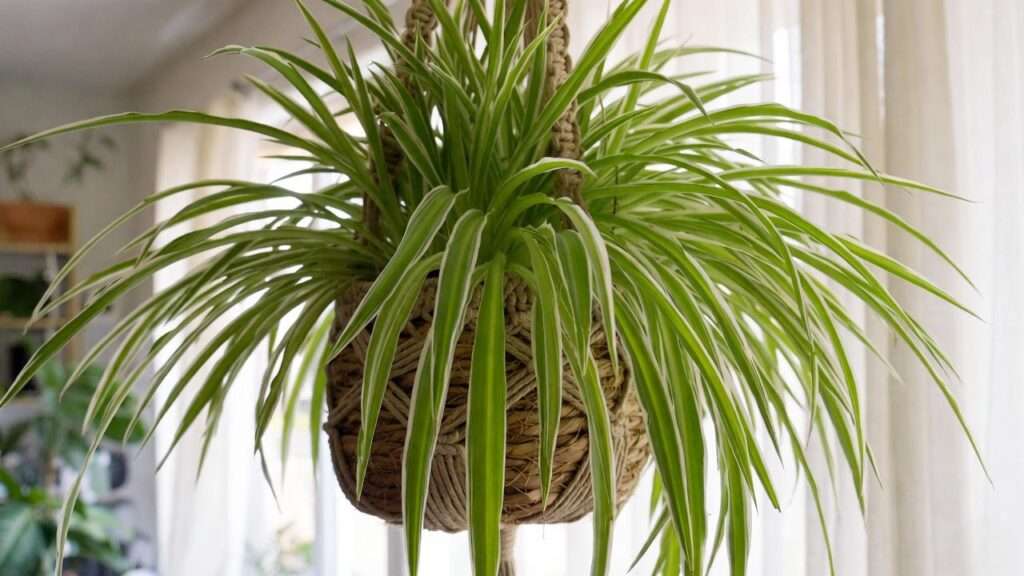
Imagine long, graceful arching leaves cascading like a living green waterfall from a hanging basket, effortlessly purifying the air in your home while adding a touch of elegant, boho charm to any room. 🏡✨ That’s the magic of a well-grown spider plant hanging basket – one of the most forgiving, rewarding, and visually stunning houseplants you can own.
If you’ve ever admired those lush, trailing spider plants (Chlorophytum comosum) in friends’ homes or on social media but struggled to achieve the same vibrant, overflowing growth in your own space – with issues like brown tips, sparse foliage, or no baby spiderettes – you’re not alone. Many plant enthusiasts search for reliable guidance on creating a thriving spider plant hanging basket, and that’s exactly what this in-depth guide delivers.
Written by a certified horticulturist with over 15 years of hands-on experience growing thousands of indoor plants, including specializing in trailing varieties like spider plants, pothos, and philodendrons. I’ve propagated hundreds of spiderettes, rescued neglected plants, and helped countless readers transform their homes into green oases. This comprehensive resource draws from proven techniques, backed by botanical science and real-world results.
In this ultimate guide, we’ll cover everything from selection and setup to daily care, propagation, troubleshooting, and advanced styling tips – all tailored to help you achieve that envy-worthy cascading display. Whether you’re a beginner or seasoned plant parent, these expert insights will empower you to grow a healthy, lush spider plant hanging basket that thrives for years. Let’s dive in! 🌱
Why Choose a Spider Plant for Hanging Baskets? 🌱
Spider plants, scientifically known as Chlorophytum comosum, are native to coastal regions of South Africa, where they grow as evergreen perennials in dappled shade. Discovered in the 19th century, they’ve become one of the world’s most popular houseplants – and for good reason, especially in hanging baskets.
The Unique Appeal of Chlorophytum comosum
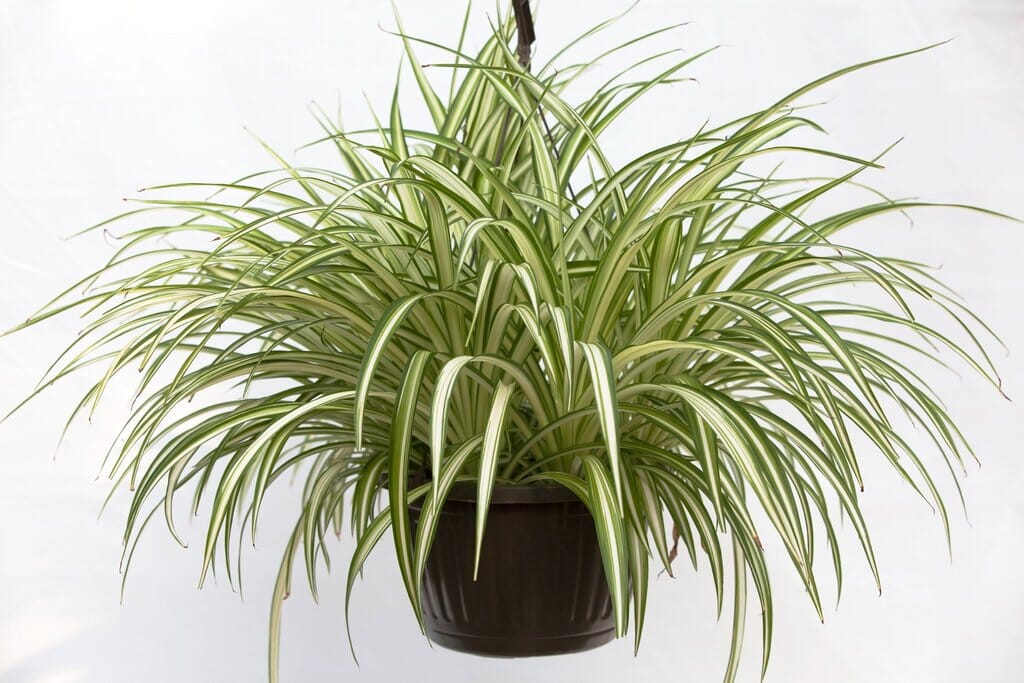
What makes spider plants ideal for hanging displays is their natural growth habit: a central rosette of long, narrow leaves (up to 18-24 inches) that arch gracefully downward, creating a fountain-like cascade. As the plant matures, it produces long stems bearing tiny white flowers, followed by adorable baby plantlets called “spiderettes” or “pups” that dangle like little spiders on a web – hence the common name. 🕷️🌿
This trailing form not only looks stunning suspended from ceilings or shelves but also maximizes space in small apartments or offices.
Top Benefits of Spider Plants in Hanging Displays
- NASA-Approved Air Purification 🌬️: Famous from the 1989 NASA Clean Air Study, spider plants excel at removing toxins like formaldehyde, xylene, and carbon monoxide from indoor air – perfect for improving home air quality.
- Pet-Safe and Family-Friendly 🐱🐶: Unlike many houseplants, spider plants are non-toxic to cats, dogs, and children (ASPCA-listed as safe). Note: Cats may nibble due to the appealing texture, but it won’t harm them.
- Aesthetic Versatility: Fits seamlessly into modern, minimalist, boho, or tropical interiors. The cascading foliage softens hard edges and adds movement.
- Low-Cost, High-Impact: Easy to propagate (more on that later), meaning one mature plant can yield dozens of free babies for gifting or expanding your collection.
Compared to other trailing plants like English ivy or string of pearls, spider plants are far more forgiving and faster-growing, making them a top choice for hanging baskets.
Choosing the Perfect Spider Plant Hanging Basket Setup 🛍️
Success starts with the right plant and container.
Selecting a Healthy Spider Plant
There are several varieties, but the two main types are:
- Variegated Spider Plants: Classic cream-and-green striped leaves (most common). They add bright contrast but need slightly more light to maintain variegation.
- Solid Green Spider Plants: All-green foliage. These are more tolerant of lower light and often grow faster, ideal for shadier spots.
When shopping (nursery or online), look for:
- Firm, glossy leaves without brown tips or yellowing.
- No signs of pests (check undersides).
- A full rosette with emerging spiderettes for instant trailing appeal.
Start with a mature plant for quicker cascading, or propagate spiderettes for a budget-friendly option.
Best Hanging Baskets and Containers
The basket choice impacts drainage, aesthetics, and health:
- Materials: Macramé or rope for boho vibe, plastic or self-watering for practicality, coconut coir liners for natural look, ceramic for elegance.

- Size: Begin with 8-12 inches in diameter. Larger baskets (14+) allow more root space for bigger cascades.
- Drainage Essential: Always choose baskets with holes; add a saucer or liner to catch drips.
Ideal Hanging Locations
- Light by Room: East or west-facing windows for bright indirect light (best). North for lower light (solid green varieties thrive). Avoid direct south sun to prevent scorch.
:max_bytes(150000):strip_icc()/spider-plants-chlorophytum-definition-1902773-01b-5459c1c4c717495c981f8b471c40fc1d.jpg)
- Height and Safety: Hang 5-7 feet high for full cascade. Use sturdy ceiling hooks rated for weight. Keep away from curious pets or kids.
Living rooms, bedrooms, kitchens, and even humid bathrooms make great spots – spider plants love the steam!
Essential Care Requirements for Thriving Growth ☀️💧
Mastering the basics of light, water, soil, temperature, humidity, and nutrition is the foundation for a lush, cascading spider plant hanging basket. These elements work together to promote vigorous growth and those signature long trails.

Light: Finding the Sweet Spot
Spider plants thrive in bright, indirect light – think near an east-facing window or a few feet back from a west or south one. This mimics their natural understory habitat and encourages compact, full growth with vibrant leaves.
- Too much direct sun → Scorched, bleached leaves.
- Too little light → Leggy, pale growth with fewer spiderettes.
In my experience, rotating the hanging basket quarterly ensures even exposure and symmetrical cascading. For low-light homes, solid green varieties perform better, while variegated ones may lose stripes without enough brightness.
If natural light is insufficient (common in winter), supplement with a full-spectrum LED grow light for 12-14 hours daily. I’ve seen dramatic improvements in client plants under affordable 20W grow bulbs positioned 12-18 inches above.
Watering Like a Pro
One of the most common mistakes with spider plant hanging baskets is inconsistent watering. These plants prefer to dry out slightly between waterings – a strategy that prevents root rot while encouraging strong roots.
- How often: Water thoroughly when the top 2-3 inches of soil feel dry (finger test). In hanging baskets, this might be every 7-10 days in summer, less in winter.
- Best practices: Use room-temperature water; cold shocks roots. Let excess drain fully to avoid soggy saucers.

Hanging basket tip: Take it down to water in the sink or shower for even saturation, then hang back once drained. Avoid the “ice cube method” – it can cause uneven watering and temperature stress.
- Overwatering signs: Yellowing leaves, mushy roots, fungus gnats.
- Underwatering signs: Drooping, crispy brown tips (more on this later).
Tap water is usually fine, but if yours is heavily fluoridated or chlorinated, let it sit overnight or use filtered/rainwater for optimal health.
Soil and Potting Mix
Spider plants need well-draining soil to mimic their epiphytic tendencies. Standard houseplant mix works, but a custom blend yields superior results.
Recommended DIY mix (my go-to for hundreds of plants):
- 50% peat-free potting soil or coco coir
- 30% perlite or pumice for aeration
- 20% orchid bark or compost for nutrients and drainage
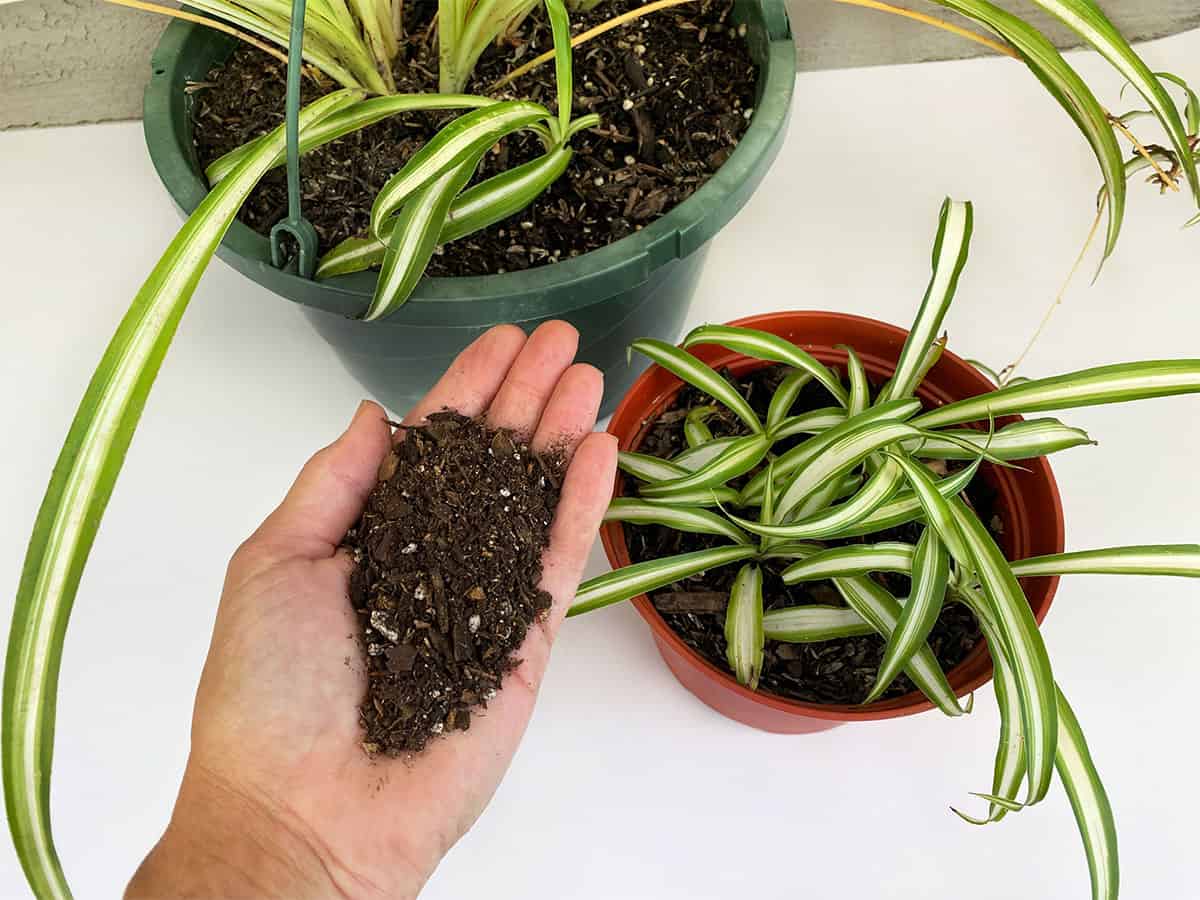
Repot every 1-2 years in spring when roots fill the basket or emerge from drainage holes. Choose a basket just 2 inches larger to encourage flowering and spiderette production.
Temperature and Humidity
- Ideal temperature: 65-80°F (18-27°C) daytime; no lower than 55°F (13°C) at night.
- Humidity: 40-60% is perfect. Dry indoor air (common in winter heating) causes brown tips.
Natural boosts:
- Group with other plants
- Place near bathrooms or kitchens
- Use pebble trays filled with water (keep pot above water line)
:max_bytes(150000):strip_icc()/SPR-how-to-make-a-pebble-tray-7371481-Hero-C-5d303cbb85744594b59e9839a63d5abd.jpg)
Misting is temporarily helpful but pebble trays or humidifiers provide consistent results.
Fertilizing for Lush Growth
Feed during active growth (spring through summer) for maximum cascading.
- Best options: Balanced liquid fertilizer (10-10-10 or 20-20-20) diluted to half strength.
- Schedule: Every 4-6 weeks. Slow-release granules work well for hanging baskets.
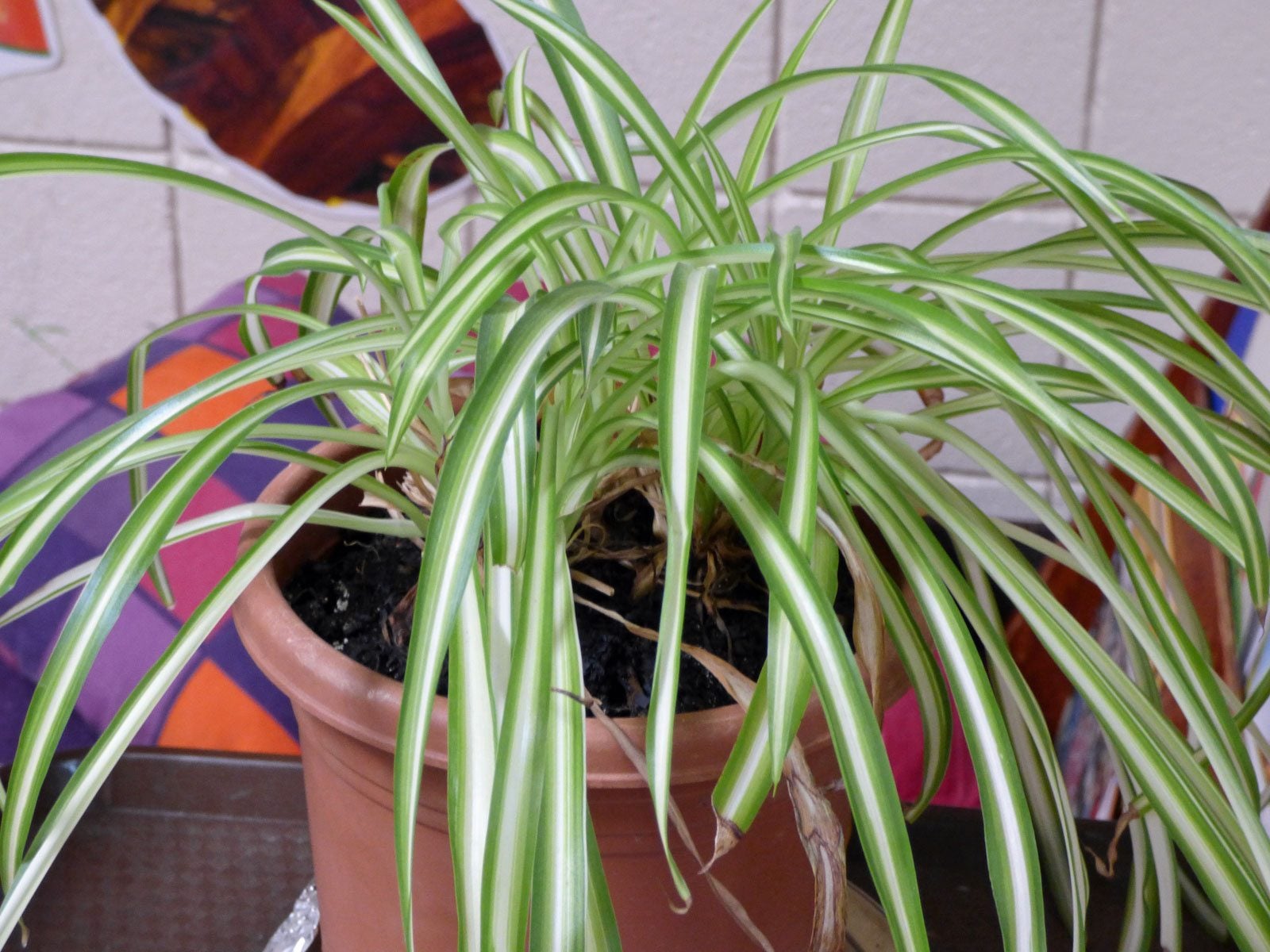
Stop fertilizing in fall/winter. Over-fertilizing causes salt buildup and brown tips – flush soil thoroughly if this happens.
Nutrient deficiency signs: Pale leaves, slow growth, no babies.
Achieving That Stunning Cascading Look ✂️🌿
Now that care basics are covered, let’s focus on grooming and propagation for maximum visual impact.
Pruning and Grooming Tips
Regular maintenance keeps your spider plant hanging basket looking fresh and encourages bushier growth.
- Brown tips: Snip just above the brown area with clean scissors at an angle to mimic natural leaf shape. Common causes include low humidity, fluoride in water, or inconsistent watering – address the root issue for prevention.

- Encouraging fuller trails: Trim back longer leaves occasionally to promote side shoots.
- Spiderettes: Leave for decoration or remove for energy redirection to foliage.
Propagation Made Easy (Free New Plants!) 👶
One of the joys of spider plants is how effortlessly they multiply – perfect for filling more hanging baskets!
Step-by-step water propagation (my preferred method for beginners):
- Select healthy spiderettes with at least 2-3 small leaves and aerial roots.
- Cut the stem close to the mother plant.
- Place in a jar of room-temperature water, changing weekly.
- Roots appear in 1-2 weeks; pot when 2-3 inches long.
:max_bytes(150000):strip_icc()/spider-plant-propagation-5087087-04-3e507974c105484b884e196aea4d83fd.jpg)
Soil propagation: Pin spiderette directly into moist soil while still attached to mother (faster establishment).
Mature plants produce babies when slightly root-bound and happy – consistent care is key.
Common Problems and Expert Troubleshooting 🔍
Even the most resilient spider plants can face challenges, especially in hanging baskets where issues like dry air or drainage can be amplified. Here’s how to identify and fix the most frequent problems based on years of diagnosing thousands of plants.
Brown Tips and Leaf Issues
Brown tips are the #1 complaint I hear from spider plant owners – and they’re almost always preventable.
Common causes:
- Low humidity (especially in heated winters)
- Fluoride or chlorine in tap water
- Inconsistent watering (dry spells followed by overwatering)
- Salt buildup from fertilizers
Permanent fixes:
- Switch to filtered, distilled, or rainwater.
- Increase humidity with pebble trays or a humidifier.
- Water consistently using the dry-out method.
- Flush the soil every few months by running water through for 5 minutes.
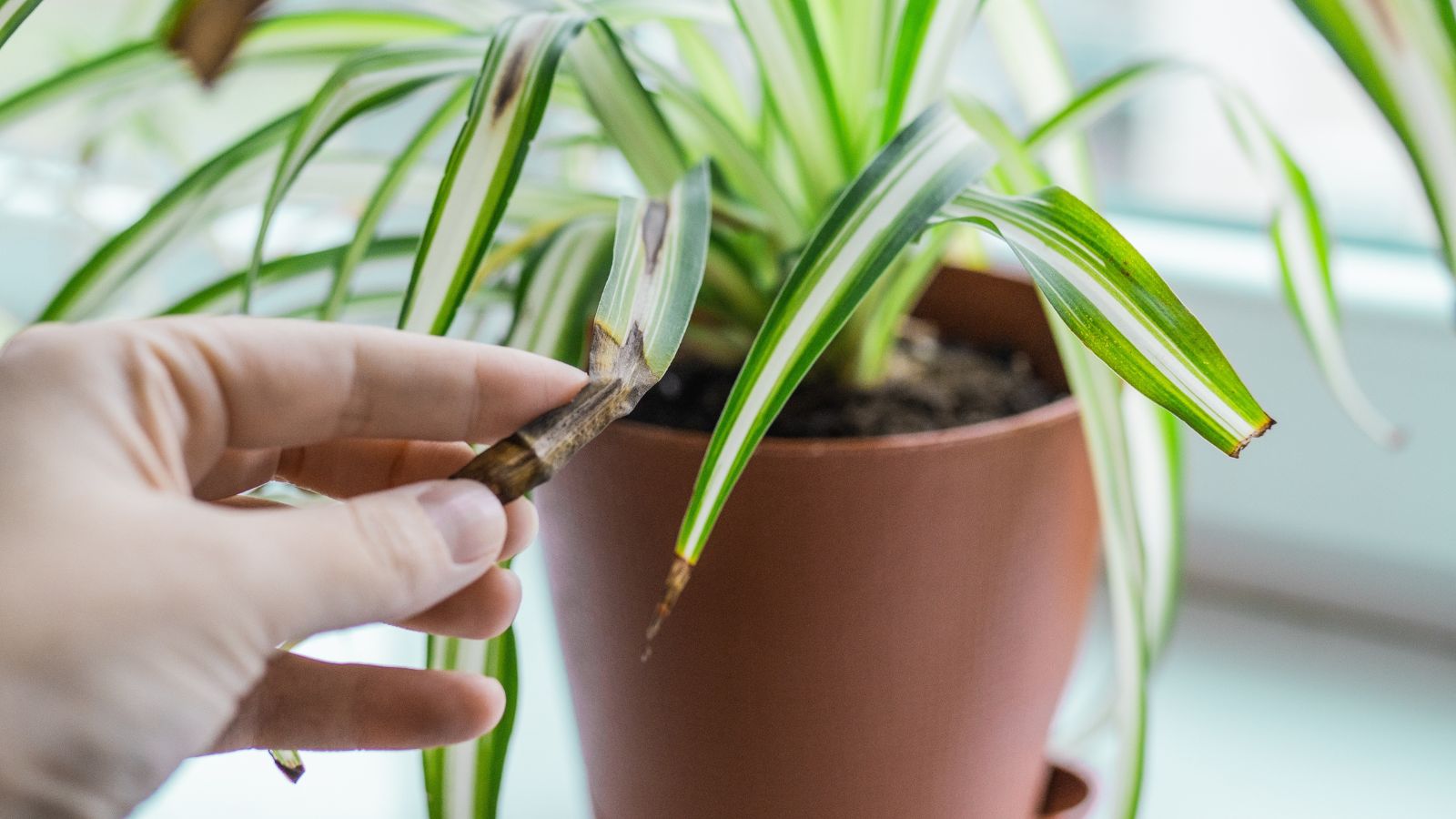
Trim affected tips as described earlier, and new growth will emerge clean and green.
Leggy or Sparse Growth
If your spider plant looks stretched with long, thin leaves and wide spacing, it’s likely reaching for more light.
Solutions:
- Move closer to a bright window or add grow lights.
- Prune back leggy sections by half to encourage bushier regrowth from the base.
- Ensure adequate fertilization during growing season – hungry plants grow weakly.
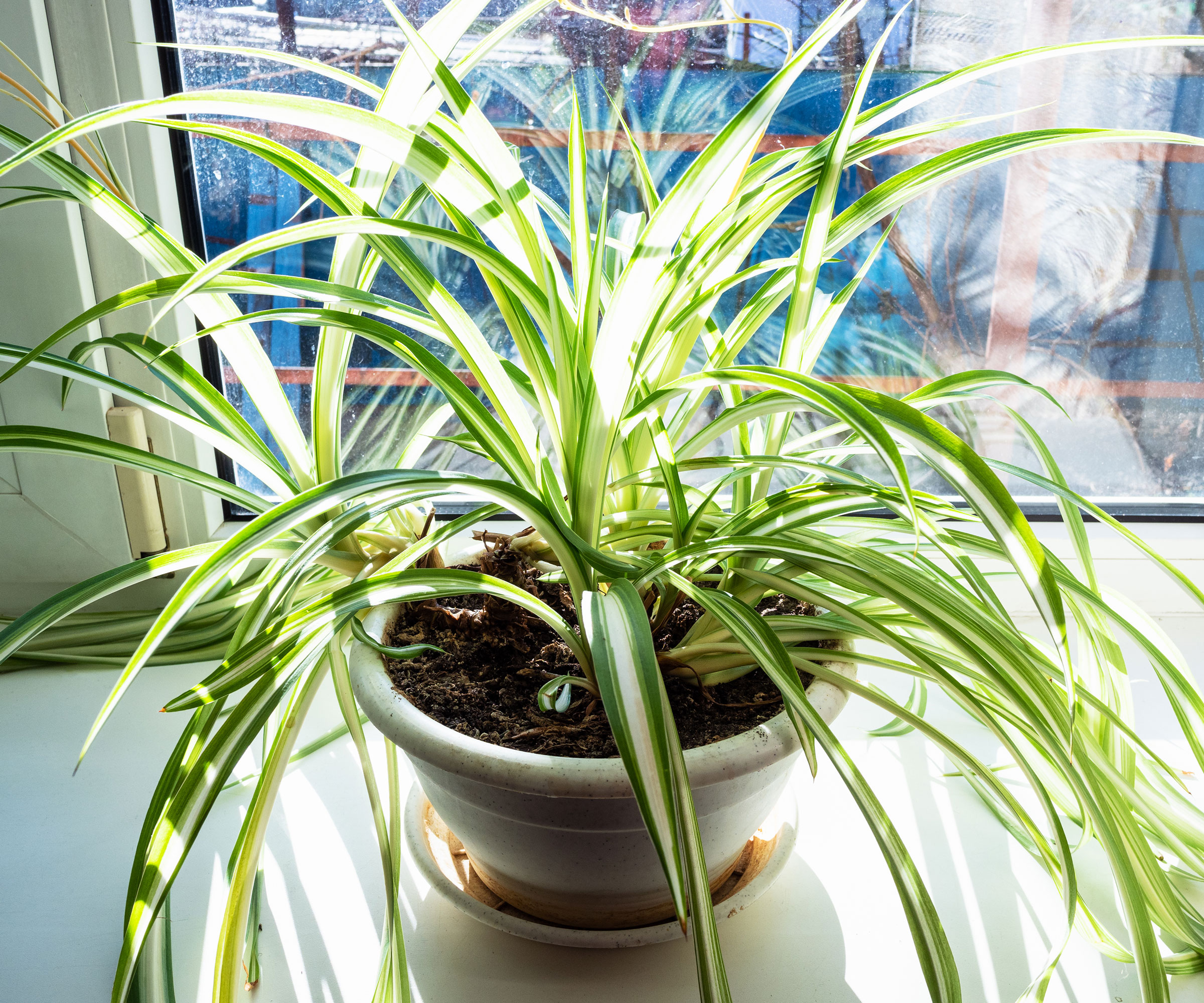
Pro tip: Multiple spiderettes potted together create instant fullness.
Pests (Spider Mites, Mealybugs, etc.)
Hanging baskets can sometimes harbor pests, especially in dry conditions.
- Spider mites: Tiny dots with fine webbing, stippled leaves. Thrive in low humidity.
- Mealybugs: White cottony masses in leaf axils.
- Scale or aphids: Less common but possible.
Organic controls I recommend:
- Isolate the plant immediately.
- Rinse leaves thoroughly in the shower.
- Wipe with neem oil solution (1 tsp neem + 1/2 tsp dish soap per quart water) weekly.
- Introduce beneficial insects like ladybugs indoors if infestation is severe.

Prevention: Maintain good airflow and humidity; inspect new plants carefully.
Yellow Leaves, Root Rot, and Other Red Flags
Yellowing can signal overwatering, poor drainage, or aging leaves (natural at base).
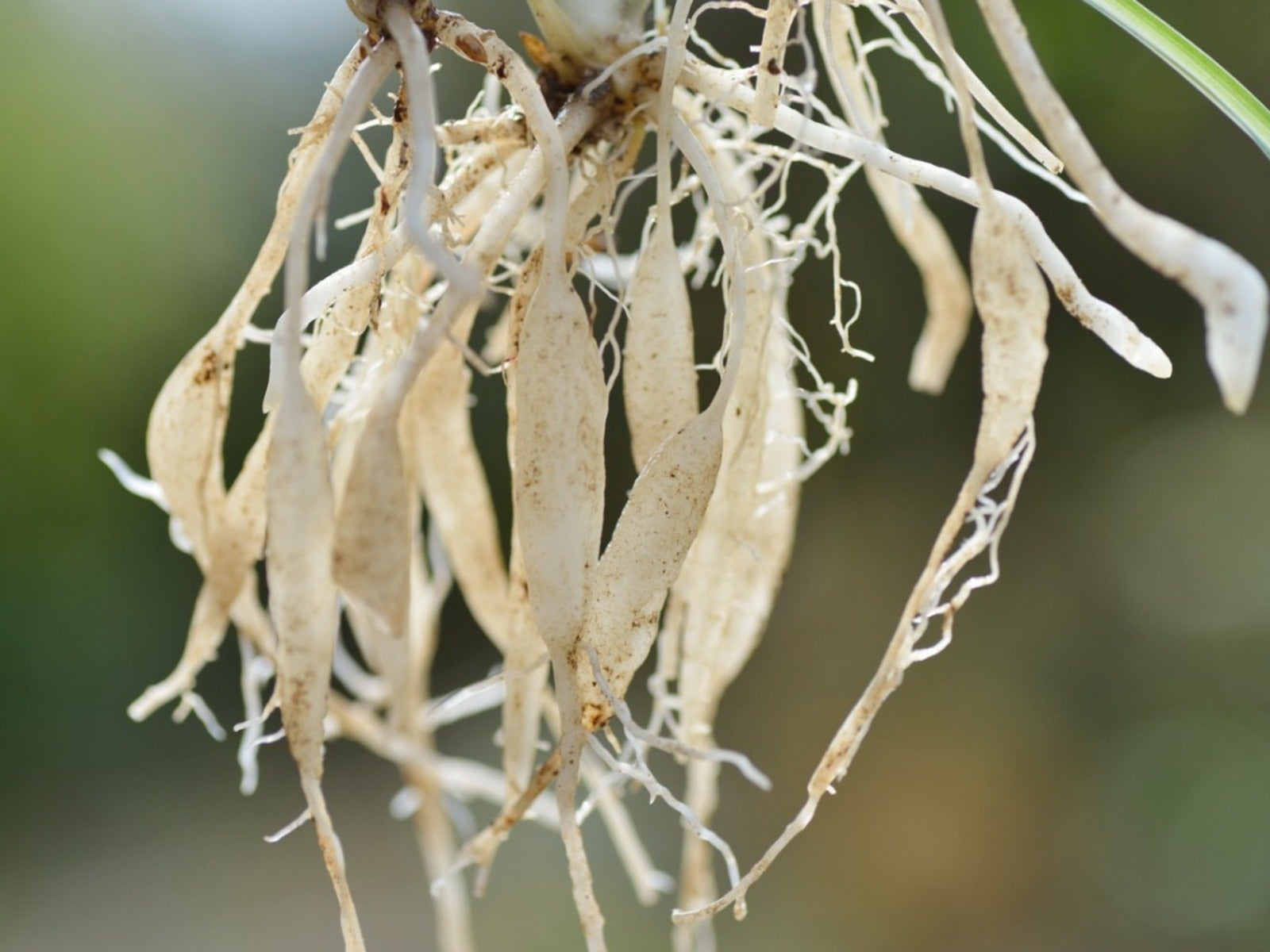
Root rot (mushy, black roots with foul smell) is serious but recoverable:
- Remove from basket.
- Trim rotten roots with sterilized scissors.
- Repot in fresh, well-draining mix.
- Water sparingly until new growth appears.
Advanced Tips for Show-Stopping Displays 🌟
Take your spider plant hanging basket from great to breathtaking with these pro-level ideas.
- Styling ideas: Pair macramé hangers with boho decor for texture. Use varying heights for visual interest. Mix variegated and solid green for contrast.
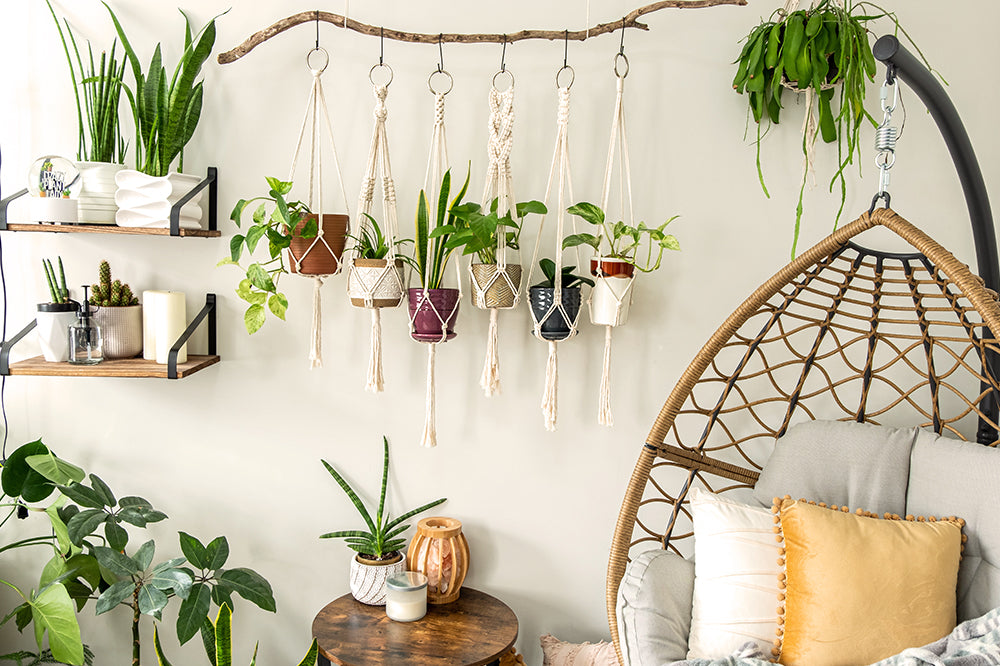
- Companion planting: Combine with trailing pothos, English ivy, or heartleaf philodendron in larger baskets for a lush mixed display.
- Seasonal care calendar:
- Spring/Summer: Active growth – fertilize, propagate, enjoy maximum cascading.
- Fall/Winter: Reduce watering/fertilizing; provide supplemental light if days are short.
- Expert insight: Light direction dramatically affects symmetry. Rotate your basket 90 degrees every 2 weeks for even, balanced trails.
With proper care, spider plants routinely live 10-20 years, getting more spectacular with age.
Frequently Asked Questions (FAQ) ❓
How fast does a spider plant grow in a hanging basket? Under ideal conditions, expect 12-18 inches of new growth per year, with spiderettes appearing within 1-2 years of maturity.
Can spider plants live outside in summer? Yes! In zones 9-11 they’re perennial outdoors. Elsewhere, move them out after last frost (filtered shade only) and bring indoors before fall.
Why is my spider plant not producing babies? Usually due to insufficient light, over-fertilization, or being too young/root-bound. Increase bright indirect light and slightly restrict roots.
Are spider plants safe for pets if they chew the leaves? Completely non-toxic, but excessive nibbling (especially by cats) can cause mild stomach upset from the fiber. Hang high if needed.
How often should I rotate my hanging spider plant? Every 1-2 weeks for even growth and symmetrical cascading.
Best hanging basket for bathrooms (high humidity)? Coconut coir or macramé – they handle moisture well and prevent brown tips naturally.
Conclusion 🌱
You’ve now got every tool needed to grow a truly thriving spider plant hanging basket – from selecting the perfect setup to mastering care, propagation, troubleshooting, and stunning displays. Follow these proven steps, and your Chlorophytum comosum will reward you with lush, cascading foliage, cleaner air, and endless free babies for years to come. 🪴❤️
Your home will thank you – and so will every visitor who can’t stop admiring that gorgeous green waterfall!
Ready to start or level up your spider plant game? Share your progress photos in the comments, subscribe for more expert plant care guides, or grab my free printable spider plant care checklist (link in bio).
Happy growing! ✨











