
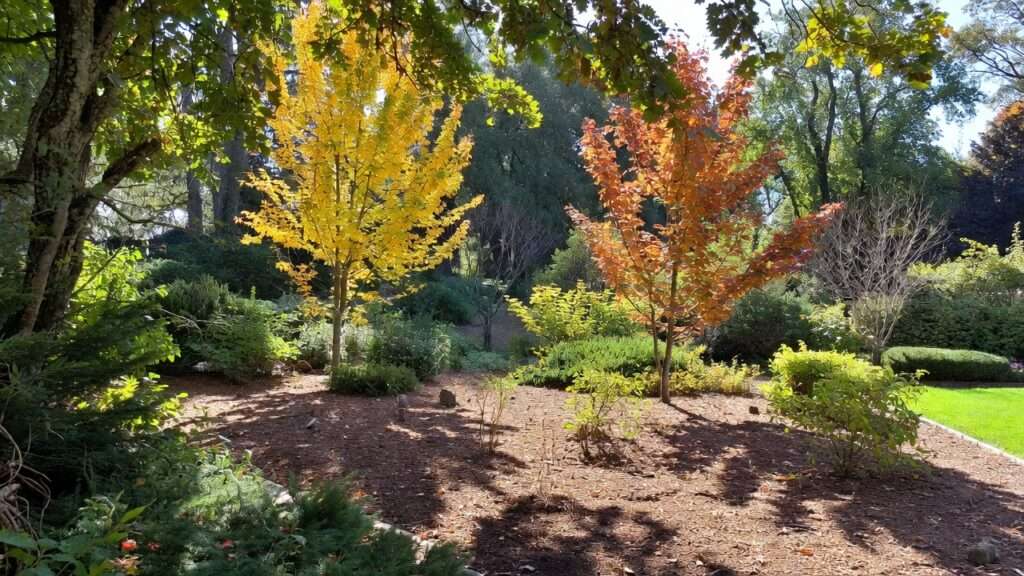
Ever wondered why some neighborhood trees stand tall and vibrant through scorching summers, colorful falls, freezing winters, and bursting springs, while others show signs of stress like wilting leaves, slow growth, or pest vulnerability? The often-overlooked secret is mulch application for seasonal tree health — a simple, nature-inspired practice that protects roots, conserves moisture, and nourishes soil year-round. 🌱
In this in-depth guide, we’ll explore exactly how to time your mulching efforts with the seasons, choose the best materials, apply it correctly, and avoid deadly mistakes. Whether you’re caring for young saplings, mature shade trees, or fruit-bearing varieties in your yard, mastering seasonal mulching can lead to healthier, more resilient trees that require less water, resist diseases better, and grow faster. Backed by arborist recommendations and extension services, these strategies mimic natural forest floors to give your trees the edge they need. Let’s unlock stronger trees — starting today! 💚
Why Mulch Matters: Key Benefits for Tree Health 🍂
Mulch isn’t just decorative; it’s a powerhouse for tree vitality. Here’s why proper mulching transforms tree care:
- Reduces Soil Moisture Loss — A well-applied layer cuts evaporation dramatically (often by 30-50% in summer heat), meaning fewer watering sessions during dry spells.
- Insulates Roots Seasonally — Keeps soil cooler in blazing summers and buffers against freeze-thaw cycles in winter, preventing root damage.
- Suppresses Weeds — Blocks sunlight to starve competing plants, reducing nutrient and water theft from your trees.
- Improves Soil Structure Over Time — Organic mulches decompose slowly, feeding beneficial microbes, adding nutrients, and enhancing aeration and drainage.
- Prevents Mechanical Damage — Acts as a barrier against lawnmowers, string trimmers, and foot traffic that can wound bark or compact soil.
- Promotes Faster, Healthier Growth — Research from arborist organizations shows properly mulched trees (especially young ones) can grow up to twice as fast, with stronger root systems for long-term stability. 🌟
These advantages amplify when mulching aligns with seasonal changes — turning a basic task into a year-round health booster for drought resistance, pest deterrence, and overall longevity.
Understanding Seasonal Tree Needs and Mulch’s Role
Trees cycle through distinct phases: explosive spring growth, peak summer activity, fall nutrient storage, and winter dormancy. Each season brings unique stresses — heat and drought, cold snaps, or wet freezes — and strategic mulching addresses them directly. By refreshing or adjusting mulch at key times, you regulate soil temperature, retain moisture precisely when needed, and support root health without interfering with natural processes like soil warming in spring or insulation in winter.
Best Timing for Mulch Application by Season
Timing is everything in mulch application for seasonal tree health. Apply too early or late, and you risk issues like delayed warming or poor protection.
Spring Mulching: Kickstart the Growing Season 🌷
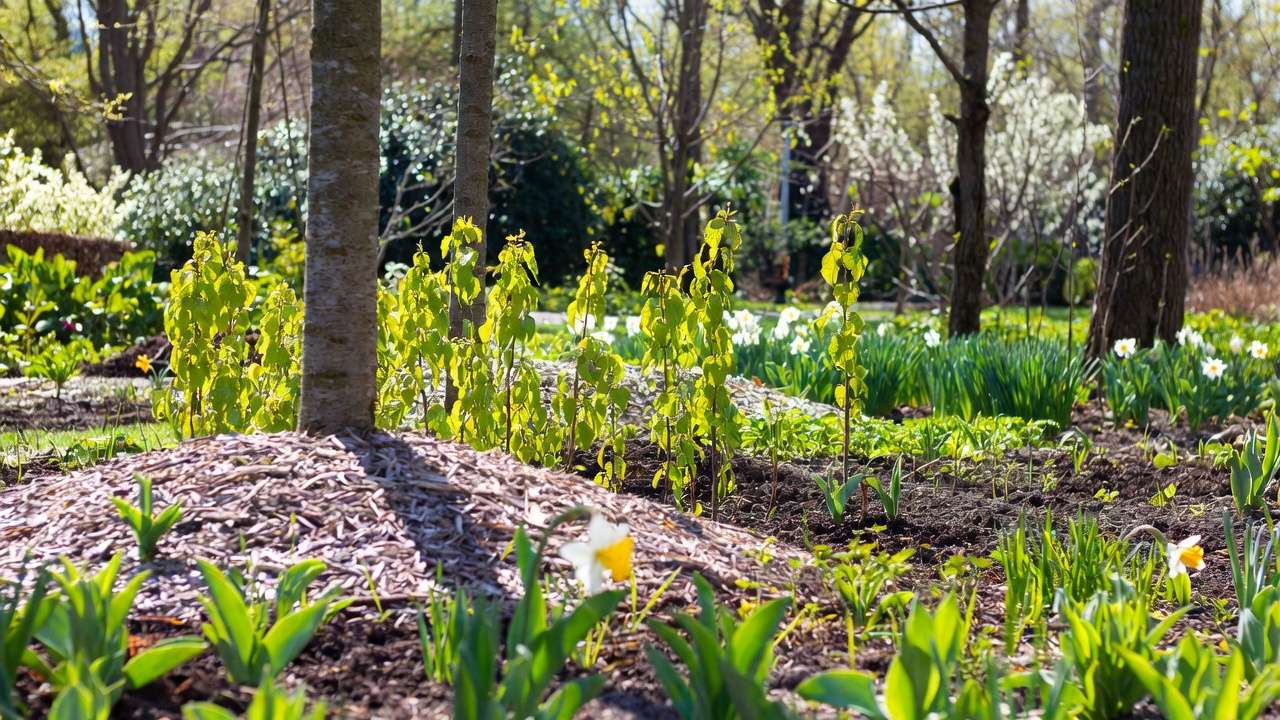
- Ideal Window — Mid-to-late spring (typically April-May in temperate zones), after the last frost and once soil warms enough for active root growth. Wait until spring bulbs emerge and soil isn’t soggy.
- Why Spring? This prepares trees for summer by locking in moisture from spring rains, suppressing early weeds, and moderating temperature as heat builds. Refresh thin winter layers to 2-4 inches.
- Pro Tips — Avoid mulching cold, wet soil (it traps chill and delays warmup). Fluff existing mulch first for better airflow. In cooler climates, delay slightly to prevent excess moisture buildup.
Summer Mulching: Combat Heat and Drought ☀️
- When to Apply/Refresh — Early summer for initial setup if needed; spot-refresh mid-season during dry spells when mulch thins.
- Benefits — Essential for moisture retention in high-evaporation periods — trees stay hydrated longer without constant watering. It also cools roots during intense sun.
- Caution — Don’t pile fresh thick layers on hot soil; focus on maintaining depth. Monitor for compaction and fluff as needed. In extreme heat, a light top-up preserves benefits without smothering.
Fall Mulching: Prepare for Winter Protection 🍁
- Ideal Timing — Early to mid-fall (late September-October), after leaf drop but before hard freezes. Apply after the first light frost for optimal insulation.
- Why Fall? Insulates roots against winter cold swings, conserves moisture during dry periods, and prevents soil heaving from freeze-thaw. It also protects against erosion.
- Pro Tip — Remove matted leaves if they block airflow, then add a protective 2-4 inch layer. This sets trees up for strong spring regrowth.

Winter Mulching: Extra Protection in Harsh Climates ❄️
- When — Late fall into early winter, after ground slightly freezes, or as needed for new/vulnerable trees.
- Focus — Add insulating materials like straw or extra leaves for young or tender species. In mild areas, maintain existing mulch rather than adding heavily.
- Note — Not always required in warmer zones — check for depletion from wind or erosion. Avoid walking on frozen mulch to prevent compaction.
Choosing the Right Mulch Types for Trees
The best mulch supports long-term health without drawbacks.
- Organic Options (Top Choice for Trees) 🌿
- Shredded hardwood bark or wood chips — decompose steadily, enrich soil, retain moisture well.
- Pine needles — great for acid-loving trees like pines or oaks.
- Composted leaf mold or blends — nutrient-rich and fine-textured. These break down to feed soil biology, turning mulch into slow-release fertilizer.
- Inorganic Options (Use Sparingly) — Gravel, stone, or rubber — durable and low-maintenance but don’t improve soil, can heat up excessively, and alter pH. Best for paths or drought-tolerant setups, not primary tree mulching.
- What to Avoid — Fresh grass clippings (can mat and heat up), dyed mulches (potential chemicals), or weed-seed-laden materials.
Expert Insight: Organic mulches outperform inorganics for trees because they enhance soil health naturally — a key to resilient, disease-resistant growth! 🪴
Step-by-Step Proper Mulch Application Techniques
Follow these steps for maximum benefit and zero harm:
- Prepare the Area — Clear weeds, grass, and debris. Gently expose the root flare (where trunk widens at base) — never bury it.
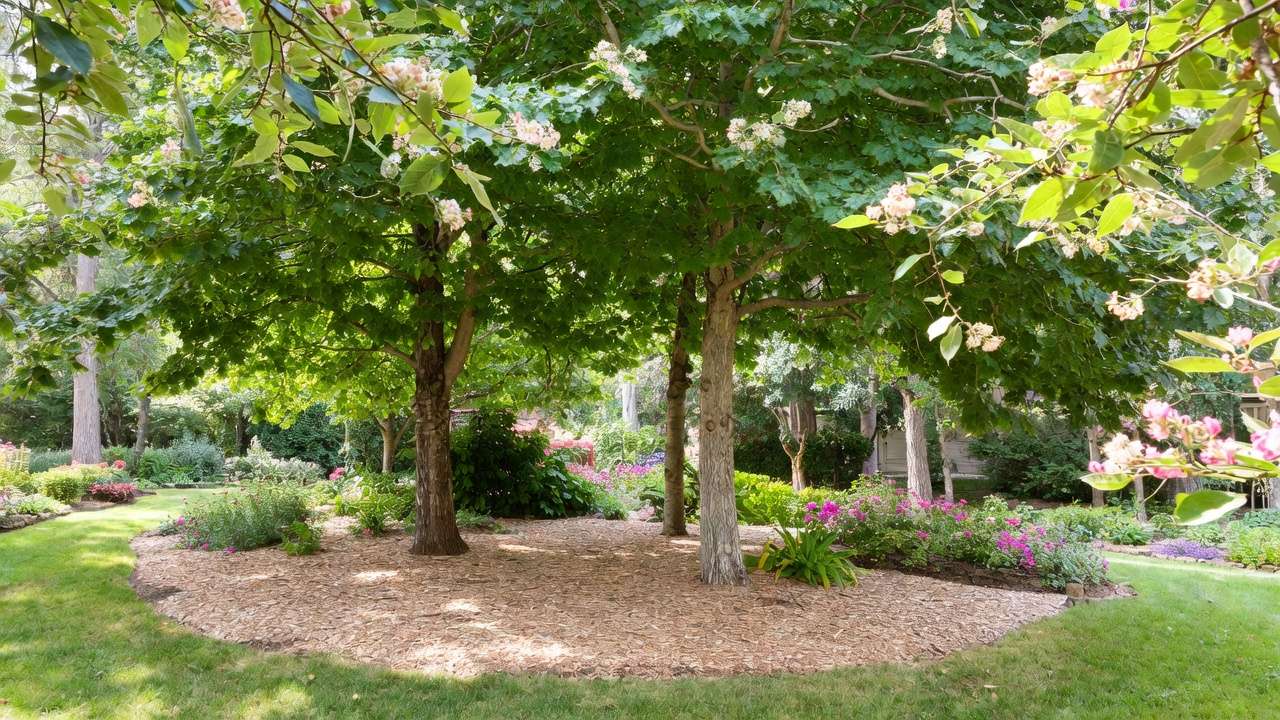
- Create the Mulch Ring — Extend to the drip line (canopy edge) or at least 3-6 feet for young trees; larger is better.
- Apply the Right Depth — 2-4 inches (1-2 for fine mulches, up to 4 for coarse). Thinner near trunk, thicker outward.
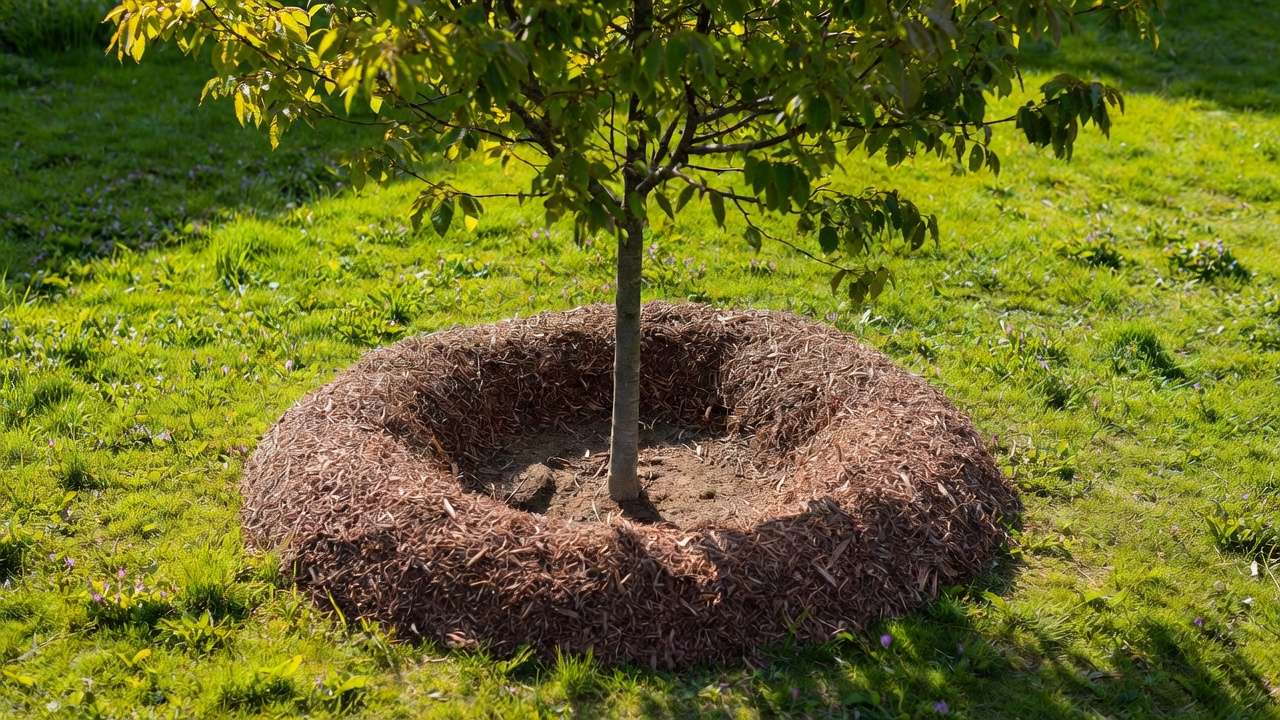
- Shape It Right — Form a “donut” or shallow bowl: slope away from trunk for drainage and airflow.
- Keep the Trunk Clear — Maintain 2-6 inches mulch-free around base to prevent rot and pests.
- Water After — Lightly soak to settle mulch and eliminate air pockets.
Common Mistakes to Avoid (and How to Fix Them) 🚫
Even well-intentioned mulching can go wrong — here’s what to watch:
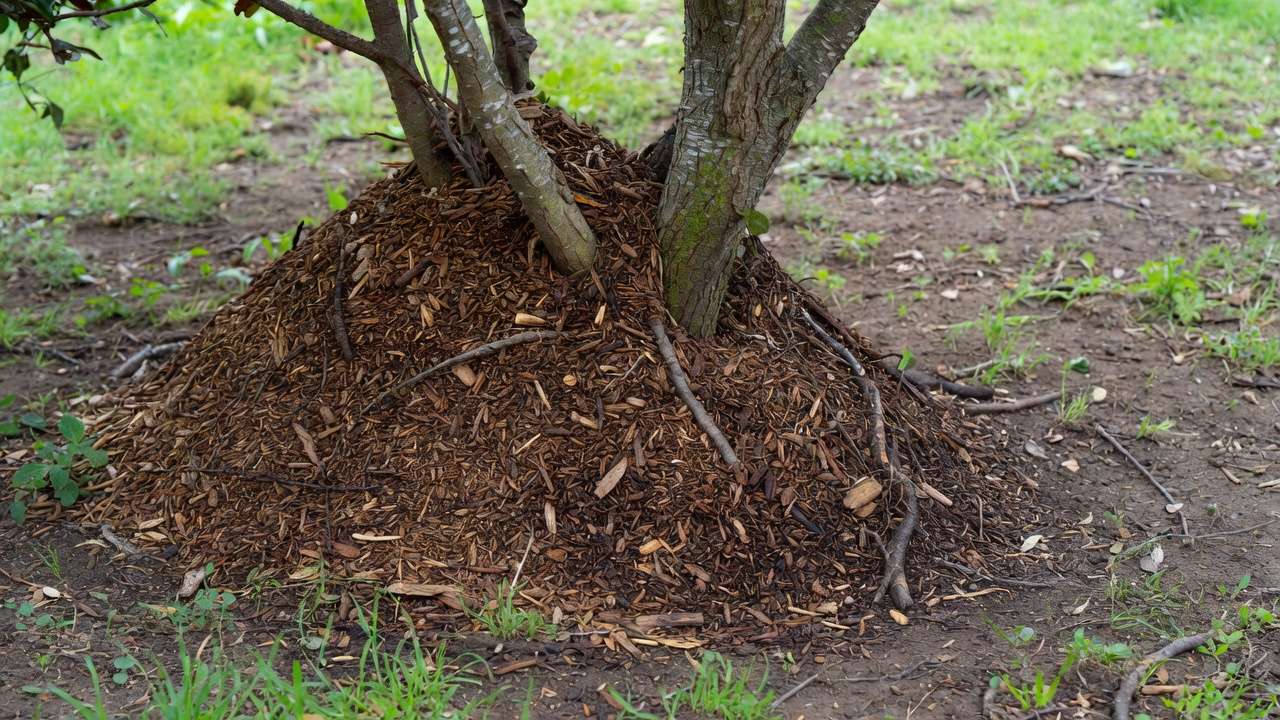
- Volcano Mulching 🌋 — Piling against trunk causes rot, girdling roots, pests, and decay. Fix: Pull back to expose root flare; correct early to save trees.
- Over-Mulching — >4 inches suffocates roots, repels water, breeds fungi. Fix: Rake to proper depth annually.
- Mulch Against Trunk — Invites insects and disease. Fix: Always leave a gap.
- Ignoring Depletion — Not refreshing leads to bare soil stress. Fix: Check seasonally.
- Poor Timing — Mulching frozen or too-early spring soil delays growth. Fix: Follow seasonal windows.
Real-World Example: “Volcano” mulching on young maples often leads to stem girdling roots — visible as bark cracking at base, weakening the tree long-term.
Seasonal Maintenance Checklist for Year-Round Success
- Spring — Weed thoroughly, refresh 1-2 inches, fluff compacted spots.
- Summer — Monitor depth/moisture, spot-fill thin areas during droughts.
- Fall — Clear excess leaves, apply protective layer.
- Winter — Inspect for erosion; avoid disturbing frozen mulch.
FAQs About Mulch Application for Seasonal Tree Health
Q: How often should I mulch trees? A: Refresh 1-2 inches annually (spring/fall) or biannually to maintain ideal depth without overdoing it.
Q: Can mulch harm trees? A: Only when misapplied — stick to 2-4 inches, keep away from trunk, and time seasonally for safe, effective results!
Q: Is mulch necessary for mature trees? A: Absolutely beneficial for all ages — extend to drip line for maximum moisture retention, weed control, and soil improvement.
Q: What’s the best mulch for fruit trees? A: Organic hardwood or compost blends — they avoid excess acidity (unlike pine) while nourishing roots for better fruit production.
Conclusion: Commit to Seasonal Mulching for Lifelong Tree Health
Mastering mulch application for seasonal tree health — with thoughtful timing (spring refresh for growth, fall protection for winter), proper techniques, and organic materials — gives your trees unmatched resilience against stress, pests, and weather extremes. Start with one tree this season: clear the base, apply correctly, and observe the transformation in vigor and beauty. 🌳💚
Your landscape will thank you with healthier growth, fewer issues, and stunning seasonal displays. Ready to mulch smarter? Grab your tools and give your trees the gift of year-round strength!











