
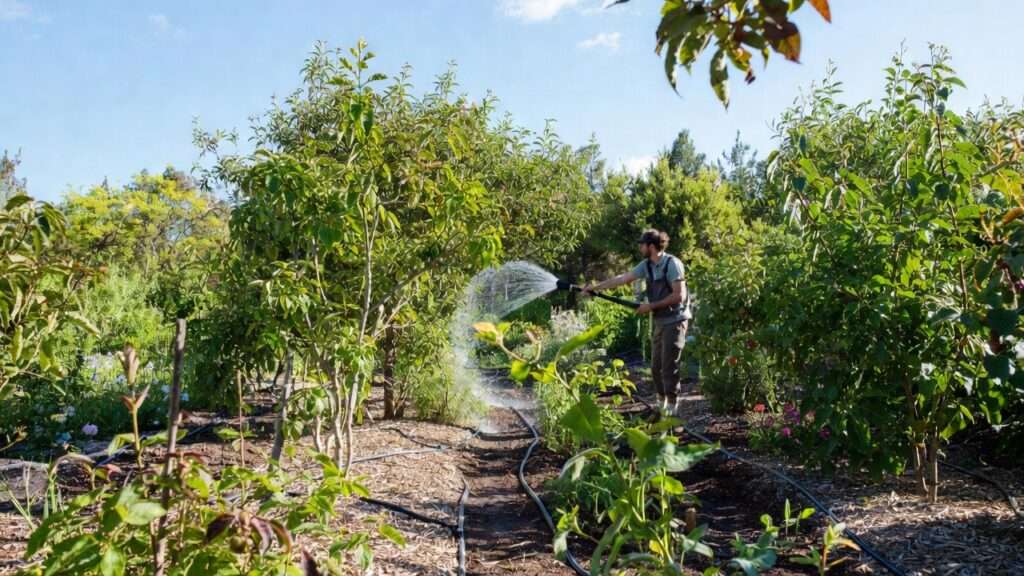
Imagine stepping into your backyard to find your favorite rose bush drooping sadly, leaves curling at the edges, and that majestic shade tree you planted years ago showing hints of brown scorch on its tips. 😔 The sun beats down relentlessly, rain is nowhere in sight, and water restrictions are in full force. Drought doesn’t just stress your garden—it can threaten the very plants and trees you’ve nurtured for seasons. But here’s the good news: with the best watering methods during drought, you can dramatically reduce water loss, build deeper roots for future resilience, and keep most of your landscape thriving even when supplies are limited. 🌱
In this comprehensive guide, we’ll dive into science-backed strategies drawn from university extension services, arboretums like The Morton Arboretum, and real-world gardening expertise. Whether you’re dealing with young transplants, mature oaks, veggies in raised beds, or perennials, these techniques focus on efficiency—delivering water where it matters most: to the roots—while conserving every precious drop. By the end, you’ll have a clear plan to protect your investment and even lower your water bill. Let’s turn drought stress into garden strength! 🚀
Understanding Drought Stress in Plants and Trees 🌱🚨
Drought hits plants hard because water is essential for photosynthesis, nutrient transport, and cooling through transpiration. When soil moisture drops, plants close stomata (tiny leaf pores) to conserve water, slowing growth and reducing energy production. Prolonged stress weakens roots, making them vulnerable to pests, diseases, and secondary issues like borers or fungal infections. 🍂
Early signs of drought stress include:
- Temporary wilting — Leaves droop during the day but perk up at night 🌅
- Permanent wilting — No recovery even in cooler hours
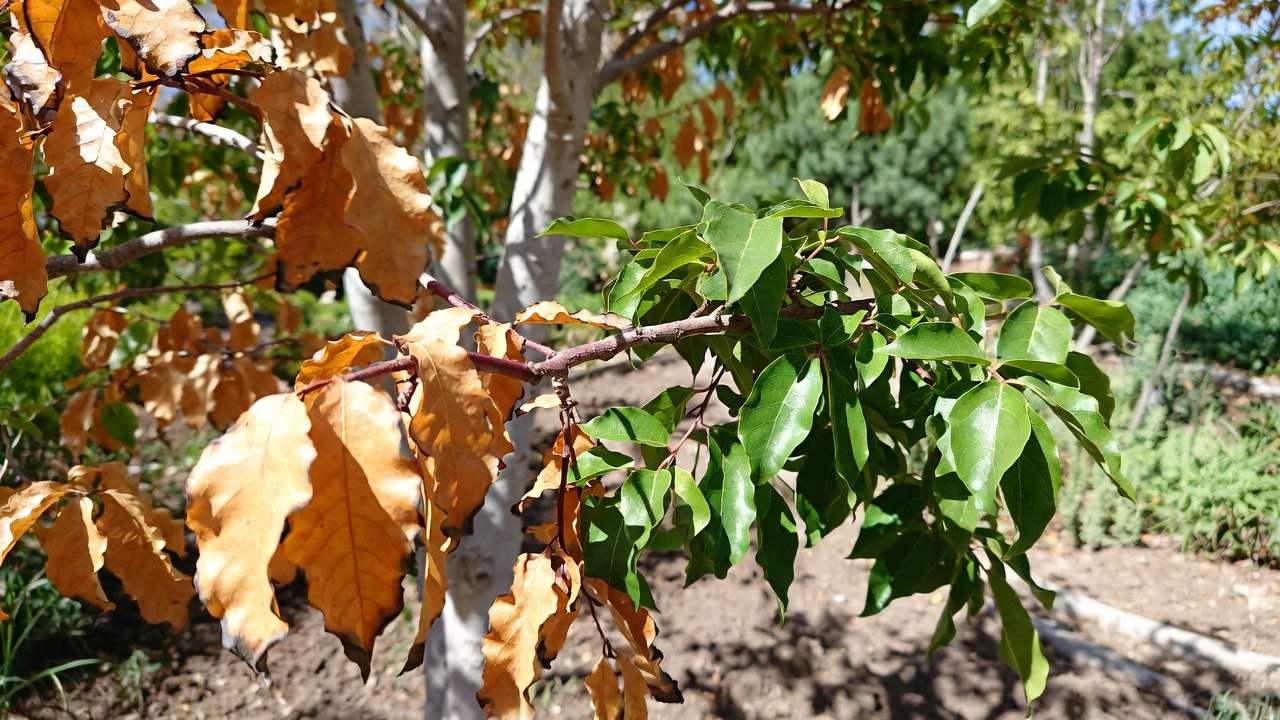
- Leaf scorch — Brown, crispy edges or tips, often starting at the top or outer canopy 🔥
- Yellowing or early fall color — Leaves turn yellow prematurely or drop early
- Thinning canopy — Sparse foliage, small leaves, or dieback in branches
For trees, symptoms often appear first in the upper crown or newer growth. Evergreens may show needle browning from tips inward. Veggies and annuals wilt quickly, while established perennials might go dormant but recover with rain. The key? Act preventively—before visible wilting sets in—to avoid long-term damage like branch dieback or tree mortality. ⚠️
Why does shallow watering fail? It encourages shallow roots that dry out fast in heat. Deep, infrequent watering promotes deeper root systems that access moisture lower in the soil profile, boosting drought tolerance over time. 📏 This principle is central to all effective drought watering strategies.
Prioritizing What to Water: Save the Most Important First 🎯
Not everything needs equal attention during restrictions. Prioritize based on vulnerability and value:
- Newly planted or young trees/shrubs (1–5 years old) — Top priority! Their root systems are limited, so they dry out fastest. Water them deeply weekly to every 10 days. 🌳
- Specimen trees, fruit trees, evergreens — These provide shade, fruit, or year-round structure; they’re worth protecting.
- Established perennials and vegetables — Next, especially edibles that produce food.
- Lawns — Last! Let grass go dormant (brown but alive); it recovers quickly with rain and uses far less water overall.
Quick priority checklist:
- High urgency (water now!): New transplants, wilting veggies, young evergreens
- Medium : Mature fruit trees showing early scorch
- Low : Established natives, dormant lawns
Focusing here maximizes impact and saves water where it counts most.
Best Time to Water During Drought ⏰
Timing matters hugely—up to 50% of water can evaporate if mistimed! ☀️
- Morning (4–9 AM) is ideal: Cooler temps reduce evaporation, foliage dries quickly (lowering disease risk), and plants absorb water before peak heat.
- Avoid midday/afternoon: High evaporation and wind loss.
- Late evening? Only if necessary—wet leaves overnight invite fungal issues like powdery mildew.
Adjust for your microclimate: Sandy soils dry faster than clay; shaded areas retain moisture longer.
Core Principle: Water Deeply and Infrequently 💦
This is the #1 rule experts repeat: Deep + infrequent beats frequent shallow every time. It trains roots to grow downward, accessing subsoil moisture during dry spells and improving long-term resilience. 🌿
General guideline: Deliver 1 inch of water per session (about 0.6 gallons per square foot) to soak 6–12 inches deep. Use the “tuna can test”: Place empty cans in the watering zone; stop when they collect 1 inch.
Frequency examples (adjust for soil/rain):
- Young trees/shrubs: Every 7–10 days
- Established trees: Every 2–4 weeks
- Perennials/veggies: Check soil; often weekly in extreme heat
Always let the top few inches dry between waterings—roots need oxygen too!
How to Check Soil Moisture Like a Pro 🔍
Forget the calendar—check actual conditions!
- Finger test: Dig 6–8 inches near the drip line (outer edge of canopy). If dry and crumbly, water.
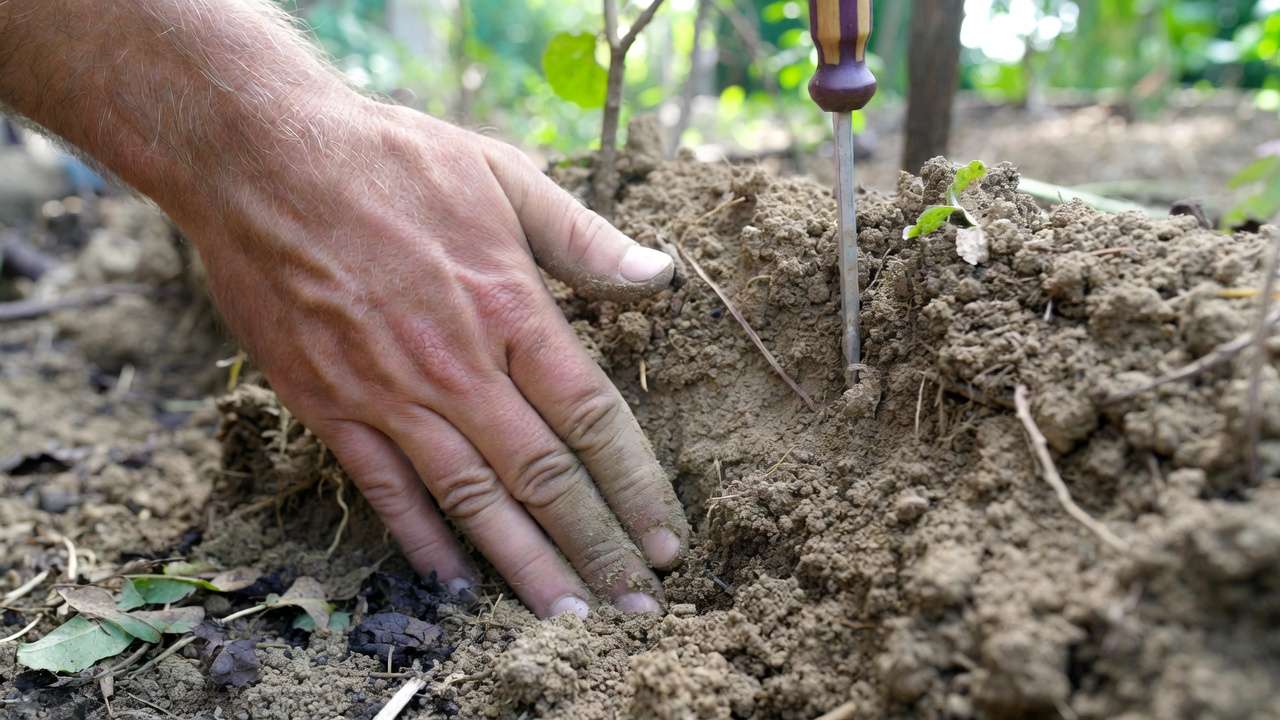
- Screwdriver probe: Push a long screwdriver in; easy entry with moist soil clinging = good. Hard resistance = dry!
- Moisture meter: Inexpensive tool for precise readings.
Test multiple spots—yards have microclimates (e.g., under trees vs. open beds).
Top Proven Watering Methods & Tools 🛠️
Soaker Hoses & Drip Irrigation – The Gold Standard 🌊
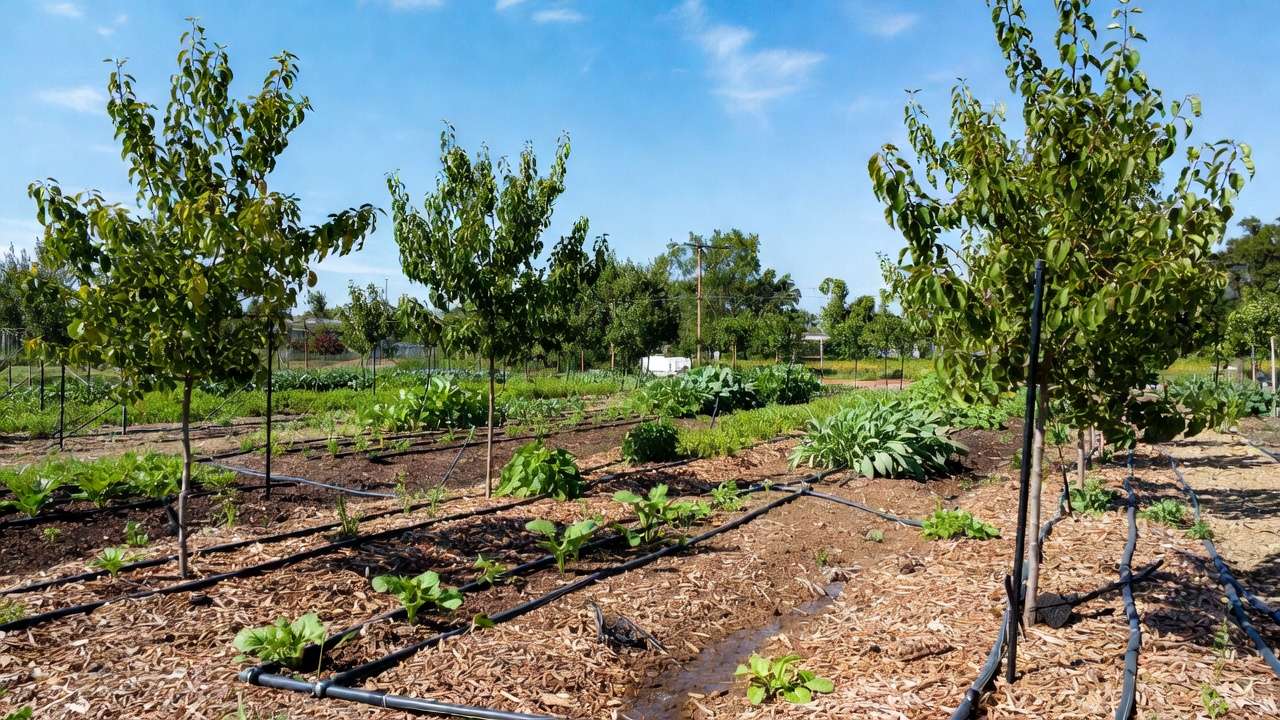
These deliver water slowly and directly to roots, cutting waste by 30–50%. Lay soaker hoses under mulch in beds or around tree drip lines. Setup tip: Run on low pressure for hours to penetrate deeply without runoff. Ideal for veggies, perennials, and shrubs.
Slow-Drip Techniques for Trees 🪣
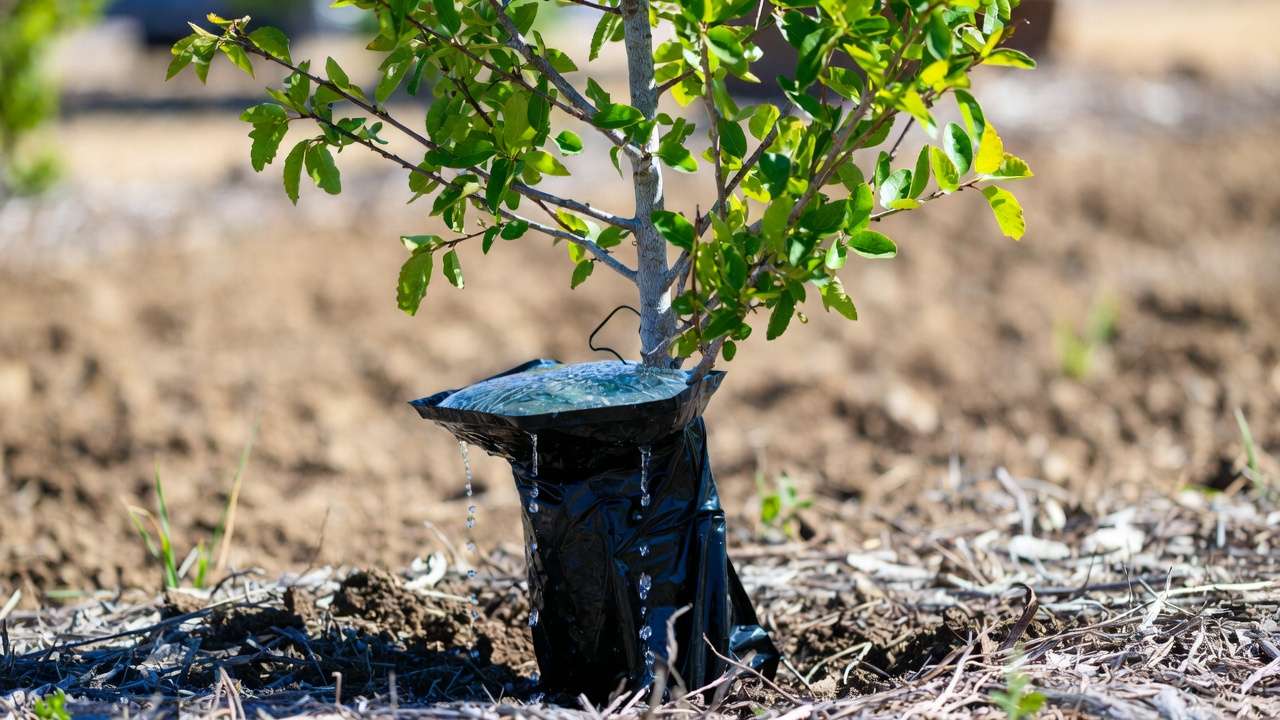
- Tree gator bags or watering bags: Hold 15–20 gallons, dripping slowly over hours—perfect for young trees.
- DIY bucket/jug method: Poke small holes in a 5-gallon bucket or milk jug bottom; fill and place near trunk for gradual release.
Deep Root Watering Wands & Probes
Great for clay soils—insert to deliver water 12+ inches deep.
Hand Watering Best Practices
Use a wand or nozzle aimed at the base/drip line. Water slowly in circles to encourage even absorption.
Avoid These Common Mistakes ❌
- Overhead sprinklers: High evaporation (up to 50% loss).
- Watering only trunk base: Roots are at drip line!
- Light daily sprinkles: Promote shallow roots and fungal issues.
Mulching: Your Secret Weapon Against Drought 🍂
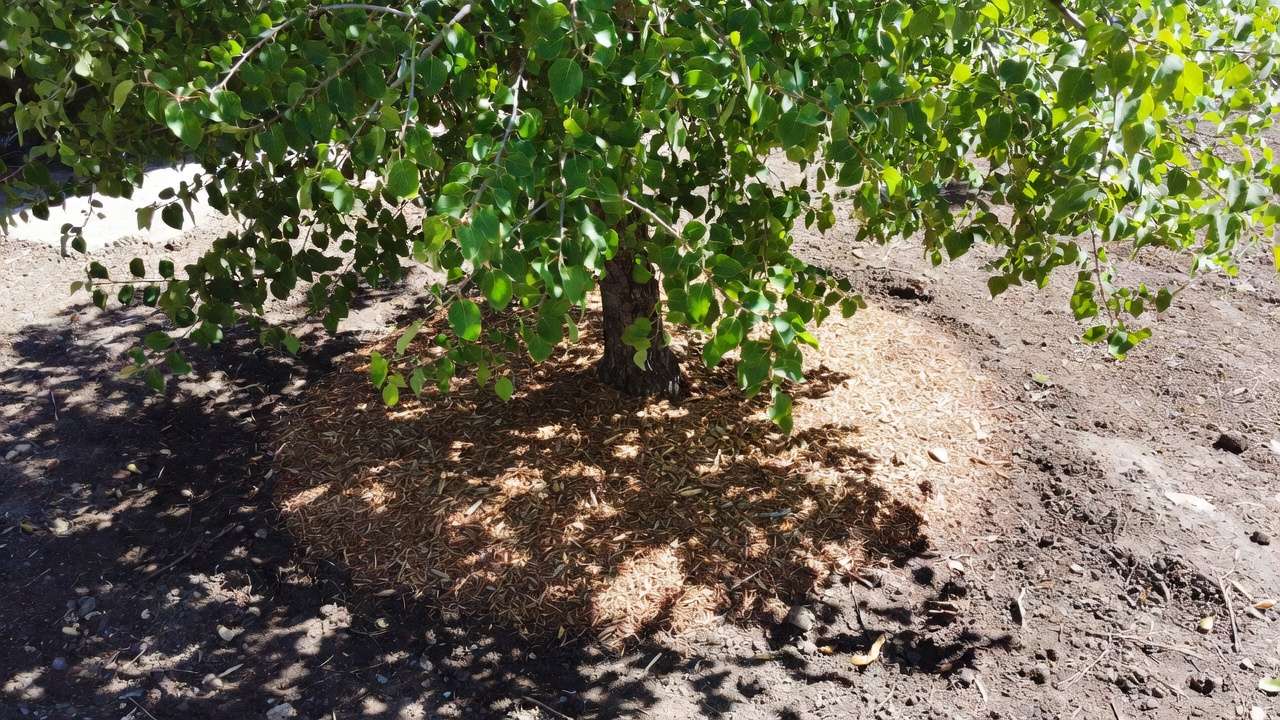
Mulch is magic! A 3–4 inch layer of organic material (wood chips, bark, straw, shredded leaves) around trees/shrubs (2–3 inches for beds) retains soil moisture, cools roots, suppresses weeds, and adds nutrients as it breaks down.
Benefits: Reduces evaporation dramatically, moderates temperature swings, improves soil health over time.
Pro tip: Keep mulch 2–6 inches from trunks—no “volcano” piles that trap moisture and cause rot! Apply after watering for max retention.
Additional Drought-Survival Strategies 🌵
Beyond direct watering, a few smart tactics can stretch every drop further and reduce overall stress on your plants.
- Hydrozoning (grouping by water needs): Organize your garden into zones—high-water lovers (like thirsty annuals or veggies) together near efficient irrigation, medium-needs perennials in another area, and drought-tolerant natives or xeriscape plants in low-water spots. This prevents overwatering one group to save another. 🗺️
- Improve soil structure with amendments: Add organic matter like compost or aged manure before drought hits (or lightly top-dress now). Healthy soil holds more water—like a sponge—releasing it slowly to roots. Avoid heavy tilling in dry conditions, which exposes moisture to evaporation.
- Pruning during drought? Keep it minimal. Remove only dead or damaged branches to reduce water demand slightly, but avoid heavy pruning—plants use energy to heal cuts, and new growth needs water you might not have.
- Hold off on fertilizer: Synthetic fertilizers push new leafy growth that demands extra water. Skip feeding until conditions improve; focus on survival first.
These layered approaches create a more forgiving landscape that bounces back faster when rain returns.
Real-World Examples & Case Studies 📖
Let’s look at practical success stories to see these methods in action.
Example 1: Saving a Young Maple in Prolonged Dry Spell A homeowner in a Midwest suburb planted a 6-foot red maple three years ago. During a hot summer with only sporadic rain, leaves began scorching. Following extension advice, they switched to weekly deep soaks using a tree watering bag (15 gallons slow-dripped over 8–10 hours) placed at the drip line, mulched with 4 inches of wood chips (kept away from trunk), and checked soil moisture with a screwdriver probe. Result? The tree retained most foliage, grew new buds the next spring, and showed no dieback—proving young trees respond dramatically to consistent deep watering.
Example 2: Reviving a Vegetable Garden on Restrictions In a California backyard facing strict limits, a gardener used drip lines on timers (low flow, 2–3 hours every 5–7 days) under thick straw mulch. They prioritized tomatoes and peppers (high value), let squash go semi-dormant, and hand-watered basil only when soil was dry 6 inches down. Yield dropped 20–30% vs. normal years but stayed productive—far better than total loss from shallow daily sprinkles.
Expert Insight (paraphrased from The Morton Arboretum and University extensions like UMD and UMN): “Established trees may need watering only every 2–3 weeks in drought, but 1 inch deeply applied keeps the top 12 inches moist where most feeder roots live. Prioritize new plantings—they have the shallowest, most vulnerable roots.” These real applications show the power of patience and precision.
(Add suggested visuals here: Before/after photos of mulched trees, drip setup diagrams, soil moisture probe in use.)
Long-Term: Building Drought-Resilient Gardens 🏡
The best defense is preparation. Shift your landscape toward resilience so future droughts hurt less.
- Choose drought-tolerant and native plants: Opt for species adapted to your region (e.g., black-eyed Susans, coneflowers, or native oaks in many areas). They need less supplemental water once established.
- Collect and store rainwater: Install rain barrels under downspouts or create simple swales/depressions to direct runoff toward beds and trees. Passive harvesting can provide “free” water for critical deep soaks.
- Transition lawns wisely: Replace thirsty turf with clover, buffalo grass, or groundcovers like creeping thyme. Or expand mulched beds—less lawn = less watering overall.
- Build healthy soil year-round: Regular compost additions improve water-holding capacity by up to 20–30% over time.
These steps turn your yard from drought-vulnerable to drought-smart, saving time, money, and stress in the long run.
Frequently Asked Questions (FAQ) ❓
How much water does a mature tree really need in drought? According to The Morton Arboretum and similar experts, aim for at least 1 inch of water every 10–14 days (or every 2–3 weeks for very large trees) applied deeply under the drip line. That’s roughly 10–20 gallons per inch of trunk diameter, slow-dripped to avoid runoff.
Can I water during water restrictions? Check local rules—many allow hand-watering or drip systems even in Stage 2/3 restrictions. Prioritize trees over lawns, and use efficient methods to stay compliant.
What’s the best mulch for retaining moisture? Organic options like wood chips, shredded bark, or straw work best—they decompose to improve soil. Avoid rubber mulch or stones alone (they heat up and don’t retain as much moisture long-term).
How do I revive a drought-stressed plant? Water deeply but slowly to rehydrate roots without shocking them. Mulch immediately, provide afternoon shade if possible, and prune only dead parts. Recovery can take weeks—be patient and consistent.
What about container plants vs. in-ground? Containers dry out fastest—check daily, water until it drains out the bottom, and group in shade. Use larger pots with moisture-retaining soil mixes for better buffering.
Conclusion 🌟
Drought doesn’t have to mean garden loss. By mastering the best watering methods during drought—checking soil moisture accurately, watering deeply and infrequently, using efficient tools like soaker hoses and drip systems, mulching generously, and prioritizing wisely—you can protect your plants and trees while conserving water. These proven techniques, backed by university extensions and arboretums worldwide, promote deeper roots, healthier soil, and greater long-term resilience.
Start small: Pick one tree or bed today, check the soil, apply a deep soak, and add mulch. Your landscape will reward you with stronger growth when rains return—and you’ll feel empowered knowing you’ve given them the best possible care. Your garden is tougher than you think, and with these strategies, it’ll thrive through the toughest dry spells. Keep nurturing—happy gardening! 💚🌳











