

Imagine watching your beautiful backyard oak or beloved fruit tree struggle through a scorching summer—leaves yellowing, branches thinning, and growth stalling despite your best efforts to keep the soil damp. 😩 The heartbreaking truth? Most homeowners unknowingly water shallowly, only wetting the top few inches of soil. This encourages weak, surface-level roots that dry out quickly, leaving trees vulnerable to drought, high winds, pests, and diseases.
But there’s a better way: deep root watering methods. By delivering moisture slowly and deeply (typically 12–18 inches into the soil), you encourage roots to grow downward where moisture lasts longer, building tougher, more resilient trees that thrive even in tough conditions. 🌱
In this comprehensive guide, we’ll explore proven deep root watering methods, backed by arborist recommendations and tree biology science. You’ll learn why shallow watering harms trees, the best techniques for different situations, step-by-step instructions, tool recommendations, common mistakes to avoid, and seasonal tips to make your trees stronger and healthier for years to come. Whether you’re caring for newly planted saplings, mature shade trees, or drought-stressed evergreens, these strategies will solve the real problem of inadequate hydration and help your landscape flourish. Let’s dive in! 🚀
Why Deep Root Watering Matters: The Science Behind Stronger Trees 🧬🌿
Tree roots aren’t just anchors—they’re dynamic systems that absorb water, nutrients, and oxygen. Most people assume roots plunge deep like a carrot, but science shows otherwise: 80–90% of a tree’s absorbing feeder roots (the tiny, hair-like ones responsible for uptake) live in the top 12–18 inches of soil, spreading 2–4 times wider than the canopy.
However, shallow watering (quick sprinkles or daily light sprays) only moistens the surface, training roots to stay shallow. These surface roots compete with grass and evaporate fast during heat, making trees prone to stress. In contrast, deep root watering saturates the soil slowly, allowing water to percolate downward. This encourages roots to extend deeper, accessing stable moisture reserves and improving anchorage against storms. 🌪️
Key benefits include:
- Enhanced drought resistance — Deeper roots tap into subsoil moisture when surface layers dry.
- Better nutrient uptake — Roots explore richer soil layers.
- Water efficiency — Less evaporation and runoff mean lower bills and conservation. 💧
- Reduced pest/disease risk — Healthier trees resist issues like borers or fungal root rot.
- Longer lifespan — Resilient trees withstand extreme weather and urban stress.
When do trees need deep watering most? Look for signs like leaf scorch (browned edges), wilting despite moist surface soil, early fall color, or branch dieback. New plantings, hot/dry climates, compacted soils, or periods without rain (especially fall/winter prep) demand it most. Established trees in lawns often suffer from competition—deep watering gives them the edge.
Top Proven Deep Root Watering Methods Compared 🔍💦
Not all methods are equal—here’s a breakdown of the most effective ones, based on arborist best practices and real-world results.
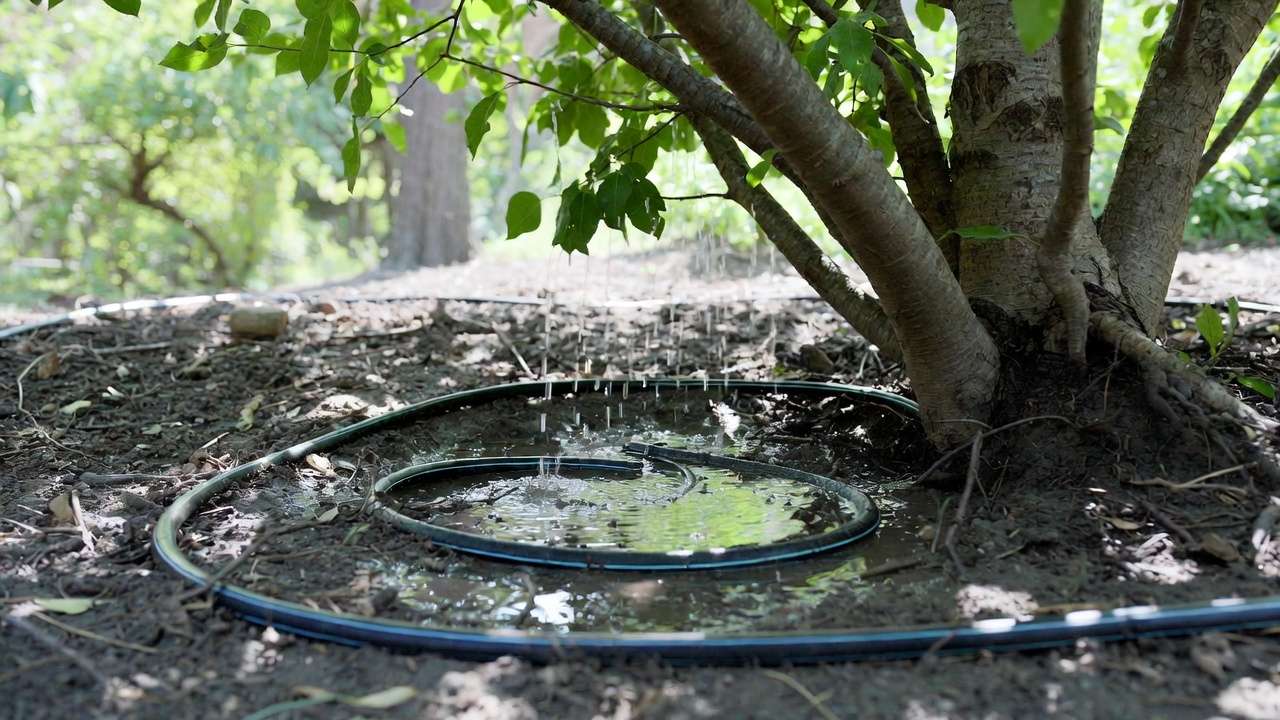
Method 1: Slow Soaker Hose or Drip Irrigation (Most Recommended for Most Trees)
Place a soaker hose in a spiral or loop around the drip line (the outer edge of the canopy where rain naturally drips). Run it slowly for 4–8 hours (or longer) to allow deep penetration without runoff.
Pros: Highly efficient, automated options available, minimal evaporation, encourages even root growth. Cons: Setup time for large trees. Best for: Established trees, orchards, multiple plants.
Method 2: Deep Root Watering Tools / Irrigation Needles (Targeted Deep Injection)
Tools like deep root irrigators or forks insert 8–12 inches into soil (avoid going deeper than feeder roots need oxygen). Connect to a hose on low pressure and let water flow slowly.
Pros: Precise for compacted soils or stressed trees. Cons: More labor-intensive; risk of over-injection causing rot if misused. Best for: Urban trees, clay soils, quick spot treatments.

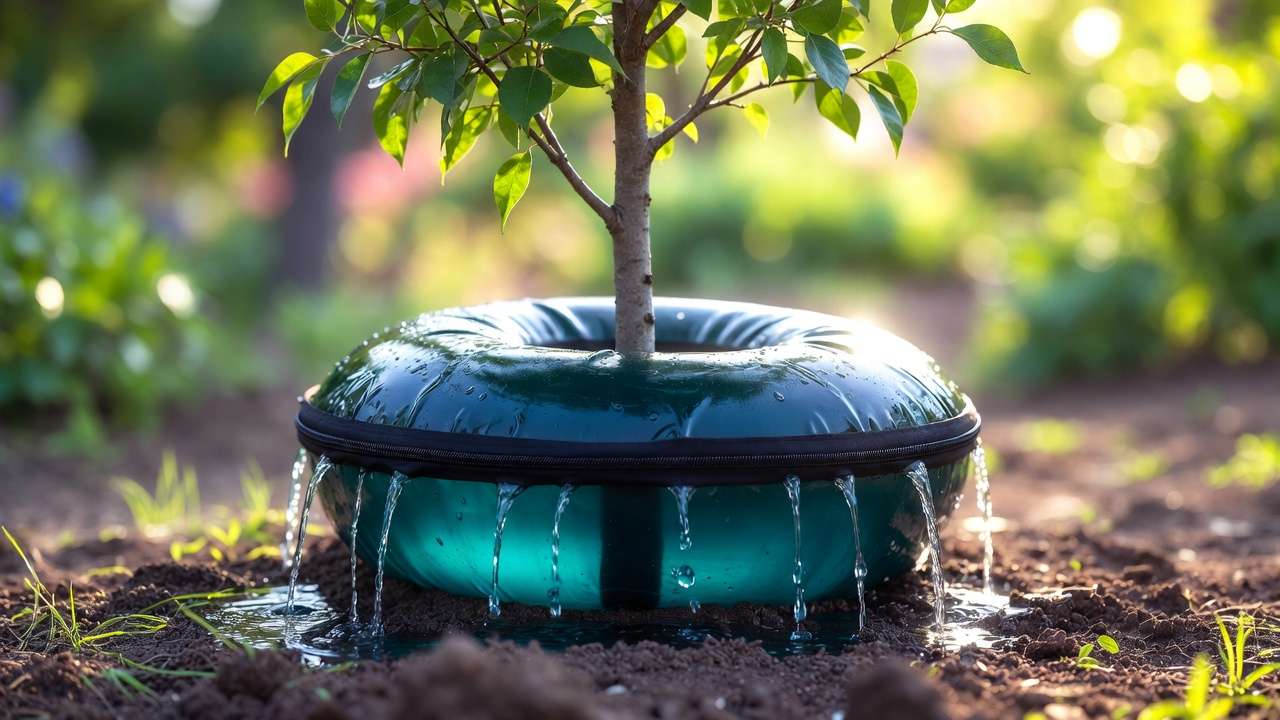
Method 3: Tree Watering Bags / Donuts (Ideal for New Trees)
Fillable bags wrap around the trunk base and slowly release 15–20 gallons over 5–9 hours.
Pros: Set-it-and-forget-it, great for transplants. Cons: Limited to smaller trees; need refilling. Best for: Newly planted saplings in first 1–2 years.
Method 4: Basin / Berm Watering (Simple DIY Classic)
Build a 4–6 inch soil ring around the drip line to create a basin. Fill slowly with a hose or buckets until water soaks in deeply.
Pros: No special tools needed, effective for large areas. Cons: Can cause runoff if soil is compacted. Best for: Budget-friendly, large mature trees.

Method 5: Aeration Tubes / Deep Root Spikes (Advanced for Poor Soils)
Perforated tubes installed near roots deliver water + oxygen.
Pros: Improves compacted or oxygen-poor soils. Cons: Installation effort; debated effectiveness in natural settings (roots naturally grow where air/water balance is best). Best for: Street trees or heavy clay.
Quick Comparison Table Suggestion (visualize this in the final article):
- Efficiency: Soaker/Drip > Bags > Basin > Tools > Tubes
- Ease: Bags > Soaker > Basin > Tools > Tubes
- Cost: Basin (lowest) → Soaker → Bags → Tools → Tubes
Choose based on tree age, soil type, and your effort level—soaker hoses often win for everyday use.
Step-by-Step Guide: How to Deep Water Your Trees Effectively 📋🛠️
Follow this proven process for consistent results.
Step 1 – Locate the Critical Root Zone (Drip Line Magic)
Measure the canopy edge—water in a band from halfway to the trunk out to (and slightly beyond) this line. Avoid the trunk base to prevent rot.
Step 2 – Check Soil Moisture First (Avoid Overwatering!)
Use a long screwdriver or trowel: If it slides in easily 6–8 inches and soil feels cool/moist, skip watering. Dry/hard? Time to soak!
Step 3 – Choose & Apply the Right Amount of Water
General expert rule: 10–15 gallons per inch of trunk diameter (measured at knee height), delivered slowly to reach 12–18 inches deep. Example: 6-inch trunk = 60–90 gallons per session. Adjust for climate: More in hot/sandy soils, less in clay or cool areas.
Step 4 – Time It Right (Best Days & Times)
Water early morning to minimize evaporation. Deeply but infrequently—every 7–14 days in dry spells (less if rain occurs).
Step 5 – Monitor & Adjust (Aftercare Tips)
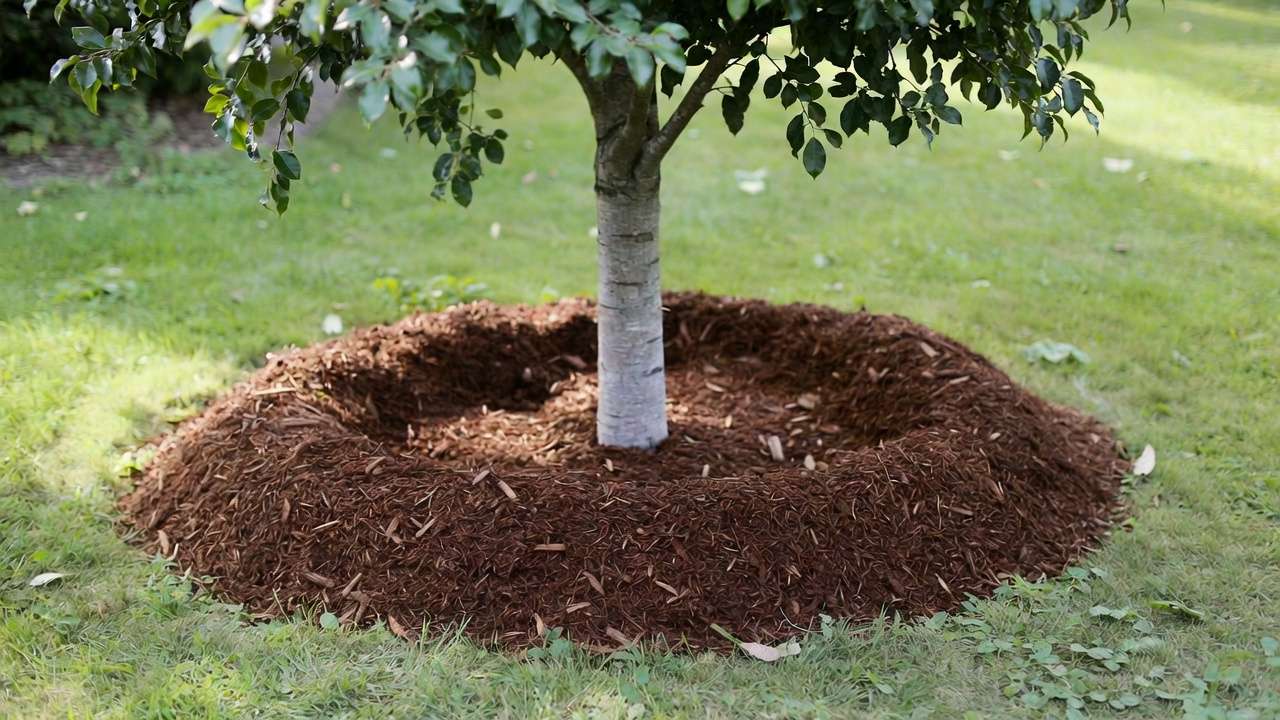
Mulch 2–4 inches deep (keep off trunk) to retain moisture. Re-check soil weekly during heat.
Essential Tools & Products for Deep Root Watering Success 🛒🔧
Equipping yourself with the right tools makes deep watering easier, more efficient, and consistent. Here are the most reliable options based on arborist recommendations and practical performance:
- Soaker Hoses (Top Pick for Versatility) Porous hoses that ooze water slowly along their length. Brands like Swan SoakerPRO or generic heavy-duty versions work best. Lay them in a spiral or grid pattern under mulch around the drip line. Why they shine: Minimal evaporation, even distribution, and easy automation with timers. Great for established trees and groups of plants. Budget-friendly (often $20–50 for 50–100 ft).
- Drip Irrigation Kits Emitters or tubing systems deliver precise drops directly to the root zone. Ideal for larger landscapes or orchards. Pros: Highly water-efficient, customizable, low maintenance once installed.
- Tree Watering Bags / Donuts (Gator Bags) 15–20 gallon collapsible bags that zip around the trunk base and slowly release water over 5–9 hours. Perfect for new transplants in the first 1–2 years. Pros: Foolproof slow release, protects against forgetfulness. Cons: Best for trees under ~6–8 inch diameter; larger trees need multiple or alternatives.
- Deep Root Irrigators / Needles / Forks Metal or plastic wands (e.g., stainless steel root feeders with shut-off valves) that inject water 6–12 inches deep. Some include fertilizer chambers. Pros: Targeted for compacted soils or stressed trees. Cons: More hands-on; avoid over-insertion to prevent root damage. Use low pressure only.
- DIY Options 5-gallon buckets with small holes drilled in the bottom (placed around the drip line) or a standard hose on trickle mode. Simple and zero-cost starters!
Pro Tip 🌟: Always pair tools with 2–4 inches of organic mulch (wood chips, bark) over the root zone (but never piled against the trunk) to lock in moisture, suppress weeds, and moderate soil temperature. This combo can cut watering needs by 20–50%!
Maintenance advice: Rinse soaker hoses after use, store watering bags out of sun to prevent cracking, and clean irrigator tips to avoid clogs.
Common Mistakes to Avoid When Deep Watering Trees 🚫😬
Even well-intentioned gardeners slip up—here are the biggest pitfalls and how to dodge them:
- Watering Too Frequently but Shallowly — Daily sprinkles keep roots near the surface, making trees drought-vulnerable. Fix: Aim for deep, infrequent sessions (every 7–14 days in dry weather).
- Watering Only at the Trunk Base — This risks crown rot and misses the feeder roots at the drip line. Fix: Focus 50–100% of water outward from halfway to the trunk to the canopy edge.
- Ignoring Soil Type — Sandy soils drain fast (water more often), clay holds water longer (space sessions further apart). Fix: Probe soil moisture before each watering.
- Overwatering or Poor Drainage — Soggy soil starves roots of oxygen, inviting root rot. Fix: Ensure water percolates in 1–2 hours; improve drainage with aeration if needed.
- Using High-Pressure Deep Tools Incorrectly — Injecting too deep or too forcefully compacts soil or damages roots. Fix: Limit to 8–12 inches max, low flow only.
- Forgetting to Check First — Watering wet soil wastes resources and harms trees. Fix: Always test with a screwdriver or trowel.
Expert insight: Many “deep root spikes” underperform because they deliver water in narrow columns—roots won’t chase it unless the surrounding area is moist. Stick to broad-area methods like soakers for best results.
Bonus Tips for Maximum Tree Health & Resilience 🌟
Combine with Mulching & Aeration
Mulch retains moisture and feeds soil biology. Aerate compacted soil annually (with a garden fork) to improve oxygen and water penetration.
Seasonal Deep Watering Calendar
- Spring: Weekly for new growth (after rain check).
- Summer: Every 7–10 days during heat waves.
- Fall: Deep soak 1–2 times before ground freezes to prep for winter.
- Winter: Only during prolonged dry spells (evergreens especially need it).
Special Cases
- Fruit Trees: Need consistent deep moisture during fruit set; avoid wet foliage to prevent disease.
- Evergreens: More prone to winter desiccation—deep water in fall.
- Drought-Prone Areas: Install permanent drip lines for reliability.
Eco-Friendly Angle
Deep watering conserves water (up to 50% less than sprinklers), supports local wildlife, and reduces runoff pollution. Win-win for your yard and the planet! ♻️
When to Call a Professional Arborist
If trees show severe stress, soil is heavily compacted, or you suspect root issues—get certified help for diagnosis and advanced treatments.
Frequently Asked Questions (FAQs) ❓
How often should I deep water established trees? Every 7–14 days in dry weather, or when the top 6–9 inches of soil feel dry. Adjust for rain, soil, and climate.
Is deep root watering better than sprinklers? Yes—sprinklers wet foliage (promoting disease) and encourage shallow roots. Deep methods target roots efficiently.
Can deep watering help save a stressed tree? Absolutely, if caught early. Combine with mulch, reduced stress, and possibly professional care.
Best time of year for deep root watering? Year-round as needed, but critical in summer droughts and fall for winter prep.
How much water for a 10-inch diameter tree? Roughly 100–150 gallons per session (10–15 gallons per inch of trunk diameter), delivered slowly.
Do deep root spikes really work? They can help in compacted soils but are less effective than broad soakers for overall root health—use as a supplement.
Should I water new trees differently? Yes—more frequently (2–3 times/week initially) but still deeply; use bags or soakers for consistency.
Conclusion
Mastering deep root watering methods is one of the single most impactful things you can do for the long-term health, beauty, and resilience of your trees. 🌱
Shallow, frequent watering might feel like you’re “taking care” of your landscape, but it quietly trains roots to stay weak and vulnerable—leaving your trees at the mercy of the next heatwave, dry spell, or strong wind. By contrast, consistent deep watering builds a robust, downward-growing root system that taps into stable soil moisture, accesses deeper nutrients, anchors the tree securely, and helps it withstand environmental stress for decades.

The payoff is worth it:
- Lush, vibrant canopies year after year
- Lower water bills and less runoff
- Fewer pest and disease problems
- Trees that become true assets to your property rather than liabilities
Start small: Pick one method that fits your situation—maybe a simple soaker hose spiral for your mature shade tree, or tree watering bags for that new apple sapling you just planted. Give your trees that first deep, slow drink this week. Then make it a seasonal habit.
Monitor how they respond—stronger leaf color, new growth, better storm resistance—and you’ll quickly see why arborists and experienced gardeners swear by deep root watering as a foundational practice.
Your trees are living investments in shade, beauty, wildlife habitat, and even home value. Treat their roots right, and they’ll reward you generously for many years to come. 🌳❤️
Have you tried any of these deep watering techniques already? Which method are you planning to use first? Drop a comment below—I’d love to hear your experiences and answer any follow-up questions!
Happy watering, and here’s to stronger, healthier trees in your yard! 🚀💚











