
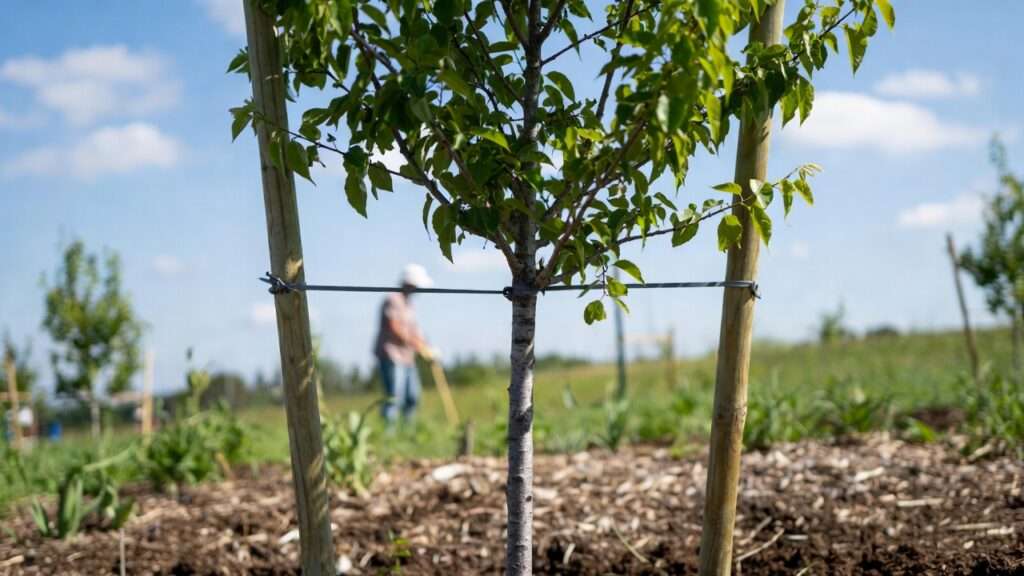
You’ve just brought home that perfect young tree — maybe a vibrant maple, a fruitful apple, or a sturdy oak sapling 🌱 — and planted it with care in your yard. But then a strong breeze hits, and the trunk sways dramatically. Your first instinct? Grab some stakes and secure it right away! Most homeowners do exactly that… but here’s the surprising truth from arborists and university extension experts: staking a newly planted tree is often unnecessary and can actually harm your tree in the long run 😲.
In fact, over-staking is one of the most common mistakes in tree care, leading to weak trunks, girdling damage, and slower root establishment. Studies and guidelines from the International Society of Arboriculture (ISA), University of Minnesota Extension, and other trusted sources show that trees develop stronger root systems and thicker, more tapered trunks when allowed natural movement during their critical establishment phase.
How to stake a newly planted tree properly — and more importantly, when you should skip staking entirely — is the key to giving your tree the best start for a healthy, long life. In this comprehensive guide, we’ll walk you through evidence-based decisions, step-by-step staking methods (if needed), common pitfalls to avoid, and aftercare tips to help your tree thrive. Whether you’re a new homeowner planting your first backyard tree or a seasoned gardener, this article will help you avoid costly mistakes and build a stronger, more resilient tree. Let’s dig in! 💚
When Should You Stake a Newly Planted Tree? (And When Should You Skip It?) ⚖️
The golden rule from leading arboriculture experts is clear: Most newly planted trees do NOT need staking.
Trees are designed to flex and move with wind — this natural “exercise” stimulates thicker trunk taper (the desirable widening at the base), stronger wood fibers, and faster root anchorage into surrounding soil. When you stake rigidly or unnecessarily, you rob the tree of this strengthening process, resulting in skinny, whip-like trunks that snap easily in future storms 🌪️.
The #1 Rule – Most Newly Planted Trees Do NOT Need Staking
- According to the University of Minnesota Extension and ISA recommendations, unstaked trees often establish faster and develop better structural integrity.
- Myth busted: Staking “just in case” or for “protection” frequently backfires, causing dependency on supports and reduced natural resilience.
Situations Where Staking Is Truly Beneficial (or Essential)
Stake only when the tree cannot stand upright on its own or risks uprooting:
- Top-heavy trees — Large canopy relative to small root ball (common in container-grown or balled-and-burlapped specimens).
- Exposed, windy locations — Open fields, coastal areas, or hilltops with constant strong winds 🌬️.
- Loose or unstable root ball — If the tree rocks easily when gently pushed or after heavy rain/transplant shock.
- Large caliper trees — Trees taller than 8–10 feet or with trunks over 2–3 inches in diameter often need temporary support.
- High-risk sites — Steep slopes, areas with foot traffic/pets/kids/mowers 🐶🚜, or post-storm damaged trees.
- Bare-root trees — These lose more roots during digging and may need extra help initially.
Red Flags That Mean SKIP Staking
- The trunk stands straight and firm when gently rocked side to side.
- The planting site is sheltered with good soil structure and proper planting depth (root flare visible at soil level).
- Small to medium trees with balanced root-to-shoot ratio (healthy nursery stock).
Quick Decision Checklist ✅
- Does the tree stay upright without leaning excessively? → Skip staking.
- Can you lift the root ball easily by the trunk? → Consider staking.
- Is the site very windy or exposed? → Stake temporarily.
- Will people/animals bump into it? → Use protective (not supportive) barriers instead.
If your tree passes the “no-stake” test, celebrate! You’re already giving it the best possible start 🌟.
Common Mistakes That Harm Your Tree (And How to Avoid Them) ❌
Even when staking is needed, improper techniques cause more damage than good. Here are the top errors — backed by arborist observations and extension services:
- Staking too rigidly / no allowed movement Trees need to sway 1–2 inches in wind to build strength. Rigid ties create weak, etiolated trunks prone to breaking.
- Using damaging materials Bare wire, thin rope, or garden hose slices into bark as the tree grows, causing girdling (a constriction that cuts off nutrient flow, often killing the tree years later). Avoid these!
- Leaving stakes on too long Beyond one growing season (usually 6–12 months), trees become “stake-dependent,” with weak trunks and poor anchorage.
- Attaching ties too high on the trunk Ties should be low (1/3 up the trunk) to encourage natural flexing higher up.
- Staking into the root ball Stakes driven into the root ball damage roots and prevent expansion.
- Ignoring root flare burial Planting too deep (common when staking hides poor depth) suffocates roots and compounds staking issues.
Real-world example: Many girdled maples show hidden scars years later when the top suddenly dies — often traceable to forgotten wire ties. Always use wide, flexible, tree-specific straps or padded ties! 🛡️

Step-by-Step Guide: How to Properly Stake a Newly Planted Tree 🛠️
If your tree truly needs support (based on the decision checklist above), the goal is temporary, minimal intervention that allows natural flexing while preventing excessive rocking or uprooting. Below are the three most recommended staking methods used by professional arborists and landscape installers.
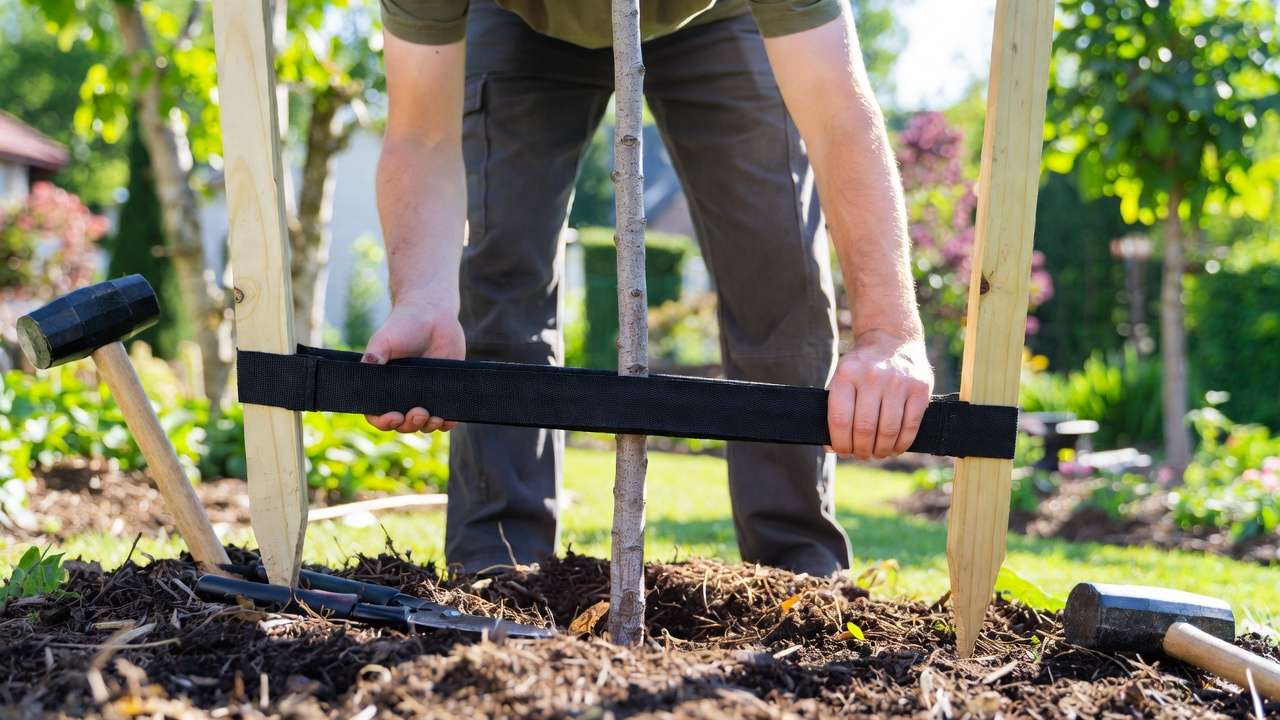
Tools & Materials You’ll Need
Gather these before you start:
- Stakes: 5–6 ft long, sturdy wooden (2×2 inch hardwood or treated lumber) or metal T-posts (for very windy sites). Avoid thin bamboo or rebar — they break or rust quickly.
- Ties: Wide, flexible tree straps, arborist-grade rubber ties, or canvas webbing with grommets. Never use bare wire, nylon rope, garden hose, or zip ties — these cut into bark as the trunk expands 🌿.
- Padding: Short sections of old garden hose or purpose-made tree trunk protectors to cushion contact points.
- Tools: Mallet or sledgehammer, pruning shears (to trim ties later), measuring tape.
- Optional: Tree staking kits from garden centers (they often include padded straps and instructions).
Pro tip: Buy materials labeled specifically for tree staking — they’re designed to degrade or stretch over time without girdling.
Method 1 – Single Angled Stake (Best for Small/Young Trees)
Ideal for trees up to 8 ft tall in moderately windy areas.
- Drive one sturdy stake into the ground outside the root ball, on the upwind side (direction of prevailing winds), at a 45° angle pointing away from the tree.
- Position the stake so the top is about 18–24 inches below the lowest branches.
- Attach a single flexible tie loosely around the trunk at roughly 1/3 to ½ height from the ground (lowest effective point).
- Loop the tie through the stake, add padding where it touches the bark, and secure so the trunk can still move 1–2 inches in any direction 🌬️.
- Double-check: The tree should sway gently but not whip violently or lean permanently.
This method is simple, uses minimal materials, and encourages the most natural movement.
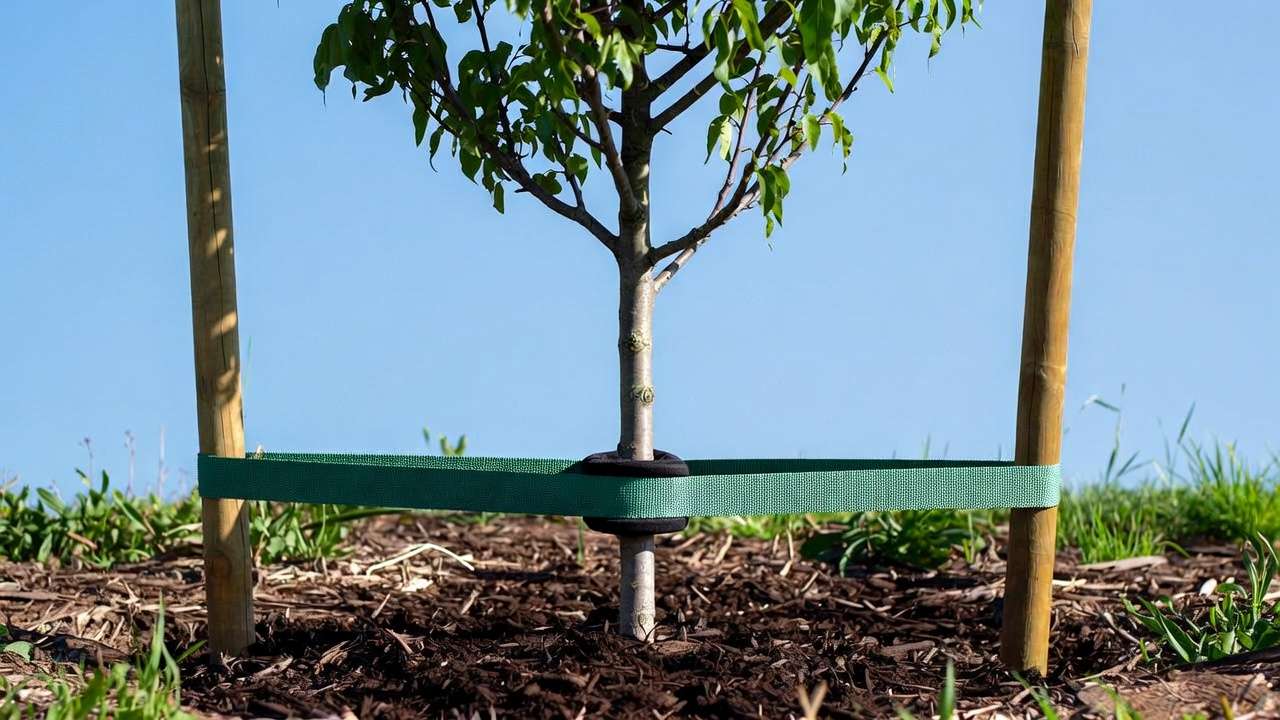
Method 2 – Double Stakes (Most Common & Recommended)
The go-to choice for medium-sized trees or consistently breezy locations.
- Drive two stakes into undisturbed soil, parallel to the prevailing wind direction, about 18–24 inches away from the trunk on opposite sides.
- Make sure stakes are firmly anchored (at least 2 ft deep) and won’t pull out in rain or wind.
- Attach two separate ties (one to each stake) at the same low point on the trunk (about 1/3 up).
- Use padded ties or slip a piece of hose over the contact area.
- Adjust tension so the trunk remains vertical but can flex 1–2 inches side to side when pushed gently.
Double staking provides balanced support without over-restricting movement — perfect for most residential plantings.
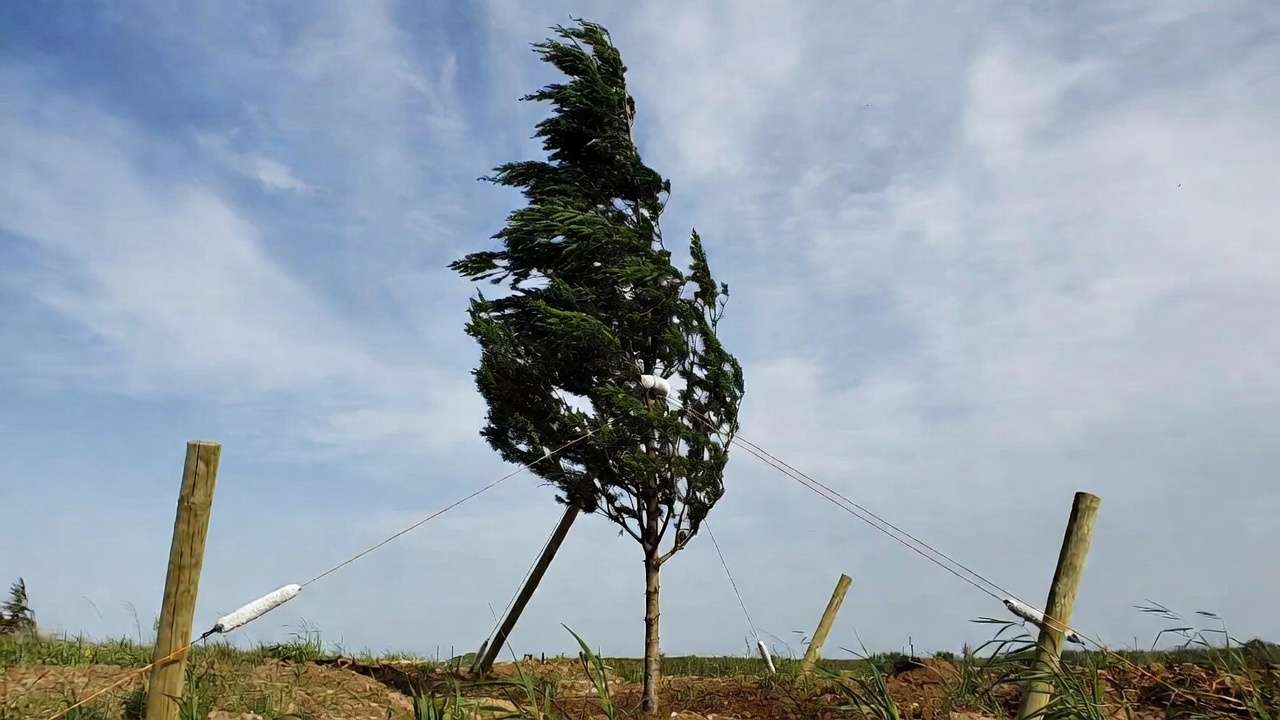
Method 3 – Three Stakes / Guying (For Larger or Very Windy Sites)
Use for trees over 10 ft tall, very top-heavy specimens, or extremely exposed sites.
- Place three stakes in a triangle around the tree, each 2–3 ft from the trunk and outside the root ball zone.
- Drive stakes at a 45° angle outward.
- Attach three guy lines (flexible straps or ropes with padding) at about 2/3 trunk height or just below the lowest branches.
- Tension each line evenly so the tree stands straight but retains slight give.
- For very large trees, use underground dead-man anchors instead of surface stakes for a cleaner look.
This 360° support is stronger but still allows some sway — critical for long-term health.
Key Rules for All Methods
- Always allow movement — Rigid staking = weak trees.
- Attach ties low on the trunk (1/3–½ height max) to let the upper stem flex and strengthen.
- Remove nursery stakes/bamboo immediately after planting — they’re only for transport.
- Check ties monthly for rubbing or tightness as the trunk grows.
- Never stake into the root ball — it damages roots and prevents spread.
(Visual suggestion: Imagine clean diagrams here showing stake angles, tie placement, and “correct vs. incorrect” examples — these boost reader understanding and time-on-page! 📸)
How Long Should You Leave Stakes On? ⏳
Rule of thumb: Remove stakes after one full growing season — typically 6 to 12 months, depending on climate and tree species.
- Fast-establishing trees (maples, birches, many ornamentals): Often ready after one spring/summer season.
- Slower species (oaks, conifers, fruit trees): May need up to 18 months in windy areas.
- How to test readiness: Gently rock the trunk. If it stands firm with minimal lean and no excessive root ball movement, remove the stakes.
- Best time: Late spring or early summer after the first strong winds have passed — this lets the tree experience natural forces before full leaf-out.
Never leave stakes longer than 2 years — prolonged support creates “crutch dependency,” resulting in tall, skinny, weak trunks that snap in the next big storm 🌪️.
Pro tip: Mark your calendar and inspect every 2–3 months. Cut old ties carefully with pruners to avoid bark damage during removal.
Aftercare Tips to Help Your Tree Thrive Without (or After) Staking 🌿
Staking (or skipping it) is only one piece of the puzzle. The real magic happens in the first 1–3 years of establishment. Follow these expert-recommended aftercare steps to maximize root growth, trunk strength, and overall health — whether you used stakes or not.
- Water deeply and infrequently 💧 Newly planted trees need consistent moisture, but overwatering is worse than slight drought stress.
- Year 1: Water 2–3 times per week (10–15 gallons per session for a 2-inch caliper tree), allowing the top 2–4 inches of soil to dry slightly between waterings.
- Year 2+: Reduce to once a week during dry spells.
- Always water slowly at the root zone (not the trunk) to encourage deep rooting.
- Mulch properly (no volcano mulching!) 🪵 Apply 2–4 inches of organic mulch (wood chips, shredded bark) in a wide 3–4 ft diameter ring around the tree.
- Keep mulch 2–3 inches away from the trunk to prevent rot and pests.
- Mulch conserves moisture, moderates soil temperature, and suppresses weeds — all of which reduce stress on a young tree.
- Prune only for structure and safety ✂️ In year 1, remove only dead, damaged, or crossing branches.
- Wait until the second or third year for major structural pruning.
- Never “top” the tree — it creates weak regrowth and invites disease.
- Monitor for pests, diseases, and girdling roots 🕵️ Check monthly for signs of trouble: wilting despite watering, bark splitting, insect bore holes, or circling roots at the base. Early intervention (e.g., adjusting mulch, treating minor issues) prevents big problems later.
- Fertilize sparingly (or not at all) in year 1 🌱 Most nursery trees come with enough nutrients. Excess nitrogen in the first year pushes leafy growth at the expense of roots.
- Wait until year 2, then use a slow-release, balanced fertilizer (e.g., 10-10-10) only if soil tests show deficiency.
- Encourage natural movement after stake removal Once stakes are gone, resist the urge to re-stake if you see minor leaning after a storm — gentle rocking helps the tree continue building strength.
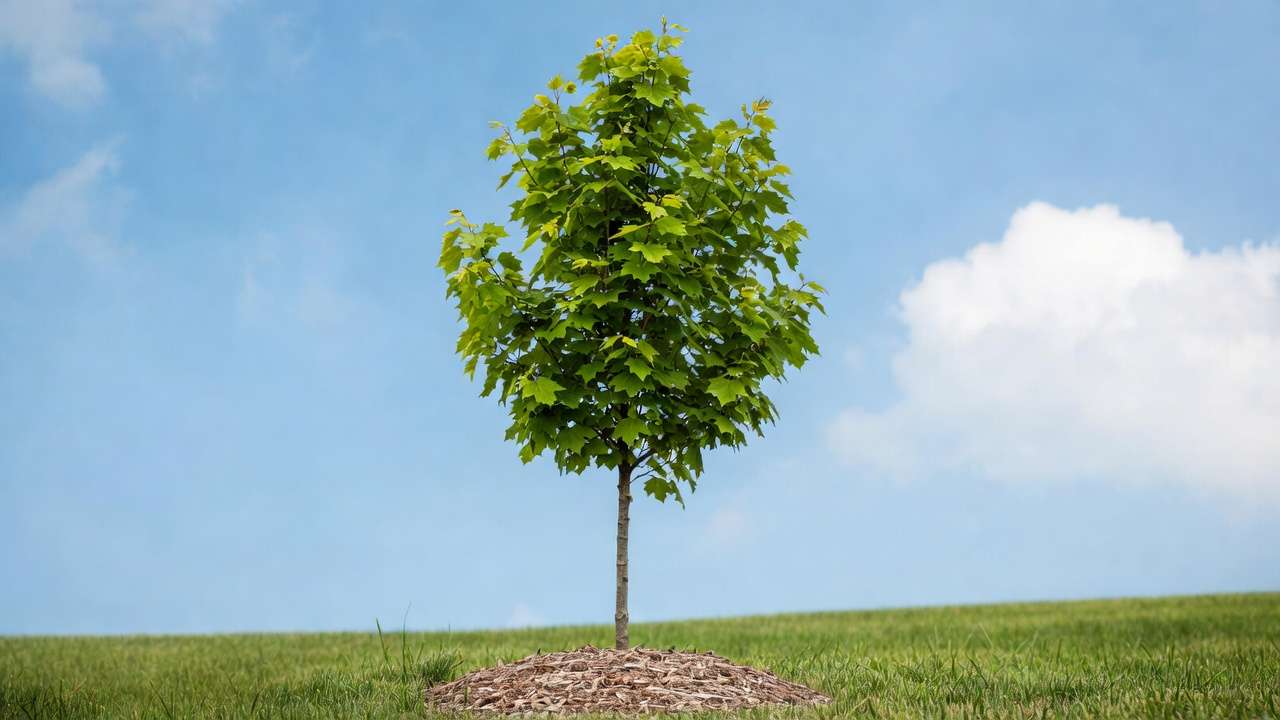
Follow these practices and your tree will reward you with vigorous growth and impressive resilience year after year! 🌳💪
Expert Insights & What Arborists Really Say 📣
Leading tree-care organizations and university extensions are nearly unanimous on modern staking philosophy:
- University of Minnesota Extension: “Staking should be viewed as a last resort. Trees need to move to develop the structural strength necessary to withstand wind and other environmental stresses.”
- International Society of Arboriculture (ISA): “Proper staking uses the minimal amount of support necessary and allows for some movement of the trunk. Stakes should be removed after one growing season.”
- Bartlett Tree Experts (one of the largest global arborist firms): “Over-staking is more damaging than under-staking in almost every case.”
- Oregon State University Extension: “The goal of staking is temporary stabilization until roots can anchor the tree — typically less than one year.”
Regional experts also add nuance:
- In windy Midwest plains or coastal zones → temporary staking is more commonly justified.
- In sheltered suburban yards with good soil → almost never needed for properly planted nursery stock.
The consensus is clear: help when truly necessary, but trust the tree’s natural processes as much as possible. That’s the professional secret to long-lived, storm-resistant trees.
Frequently Asked Questions (FAQs) ❓
Do all new trees need stakes? No — the vast majority do not. Only stake if the tree cannot stand upright on its own or risks uprooting in wind.
Can staking kill a tree? Yes, if done incorrectly or left on too long. Girdling from tight wires, weak trunks from rigid support, and root damage from stakes driven into the root ball are common causes of early death.
What’s the best material for tree ties? Wide, flexible, UV-resistant tree straps or arborist-grade rubber bands. Avoid wire, rope, zip ties, or garden hose — they cut into bark as the trunk grows.
How do I remove stakes safely? Cut ties with pruning shears (don’t pull them off), then gently rock the tree to loosen soil around stakes before pulling them straight up. Fill any holes with soil and water lightly.
My tree is leaning after planting — should I stake or straighten it? Gently straighten it first (pack soil firmly on the low side), then test for natural stability. If it still leans excessively in wind, use minimal temporary staking.
Are there differences for bare-root, container, or balled-and-burlapped trees? Yes:
- Bare-root: Often need temporary staking due to major root loss.
- Container-grown: Usually the most stable — rarely need staking if planted correctly.
- Balled-and-burlapped: Check root ball stability; stake only if it rocks easily.
Conclusion 🎉
You now have the full picture: how to stake a newly planted tree the right way — and, more importantly, when you should confidently skip it altogether. By following evidence-based guidelines from arborists, university extensions, and decades of field experience, you can avoid the epidemic of over-staking that weakens so many backyard trees.
Remember the key takeaways:
- Most trees thrive without stakes — natural movement builds stronger trunks and deeper roots.
- Stake only when truly necessary, using minimal, flexible support for the shortest time possible (usually one season).
- Proper planting depth, watering, mulching, and monitoring matter far more than staking for long-term success.
Take a quick walk to your newly planted tree today. Give it a gentle test push. Does it stand proud on its own? Then celebrate — you’re already ahead of the game! If it needs help, use the methods in this guide and remove supports promptly next year.
With smart, patient care, that little sapling will grow into a magnificent, resilient tree that shades your home, feeds wildlife, and becomes part of your family’s legacy for generations to come. 🌳💚
Happy planting — and feel free to drop a comment below sharing your tree’s story or asking any follow-up questions. We’re rooting for you (pun intended)! 😄🌱











