
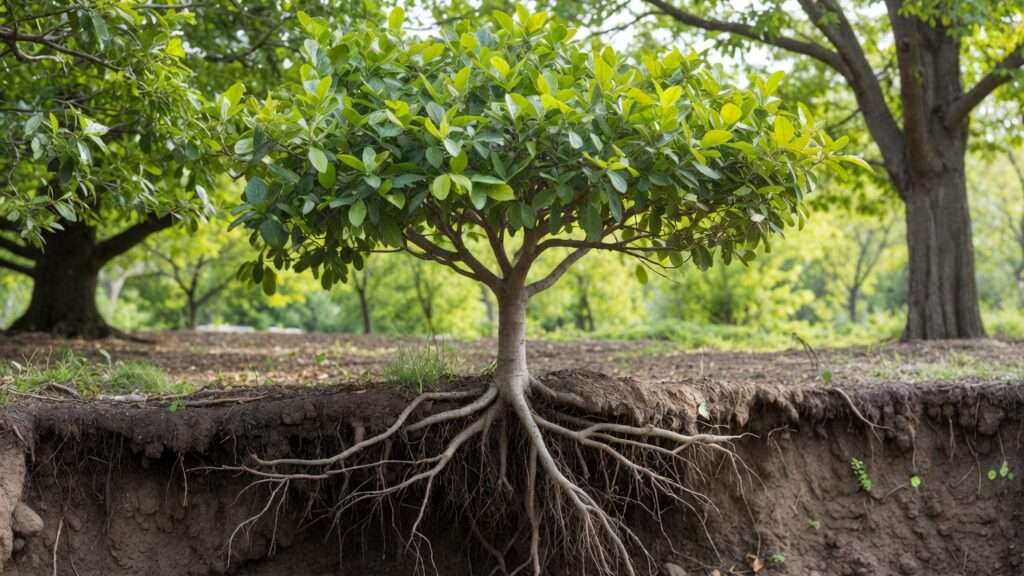
Have you ever watched a beautiful tree in your yard suddenly lean precariously after a storm, develop sparse leaves and dieback, or cause cracks in your driveway from aggressive roots? 😔 These common issues often stem from one hidden problem: an imbalance between the tree’s canopy (the leafy crown above ground) and its root system below. Many homeowners and gardeners unintentionally create this mismatch through poor planting choices, over-fertilization, heavy pruning mistakes, or urban constraints that limit root space while allowing the canopy to expand freely.
Balancing canopy size and root growth is the cornerstone of long-term tree health, stability, and resilience. When the canopy grows too large relative to what the roots can support, the tree struggles with water and nutrient demands, leading to stress, weakened structure, and higher risk of failure. Conversely, restricted roots can’t sustain a healthy canopy, resulting in stunted growth or decline. Understanding and maintaining this delicate root-to-canopy balance (also called root:crown or root-shoot equilibrium) prevents these problems and helps trees thrive for decades.
As a tree care expert drawing from arboricultural research by organizations like the International Society of Arboriculture (ISA), university extension services (e.g., Colorado State, Iowa State, UF/IFAS), and decades of practical field experience, this comprehensive guide will walk you through the science, warning signs, causes, and proven strategies to achieve perfect harmony. Whether you’re planting a new sapling, maintaining mature landscape trees, or troubleshooting an urban specimen, you’ll gain actionable insights to grow stronger, safer, and more beautiful trees. Let’s dive in and solve this for good! 🌱
Why Balancing Canopy Size and Root Growth Matters 🌿
Trees aren’t just pretty additions to your landscape—they’re living systems that rely on a functional equilibrium between their above-ground and below-ground parts. This balance ensures efficient resource exchange: roots absorb water and minerals while anchoring the tree, and the canopy performs photosynthesis to produce energy.
The Science Behind Root-to-Canopy Balance
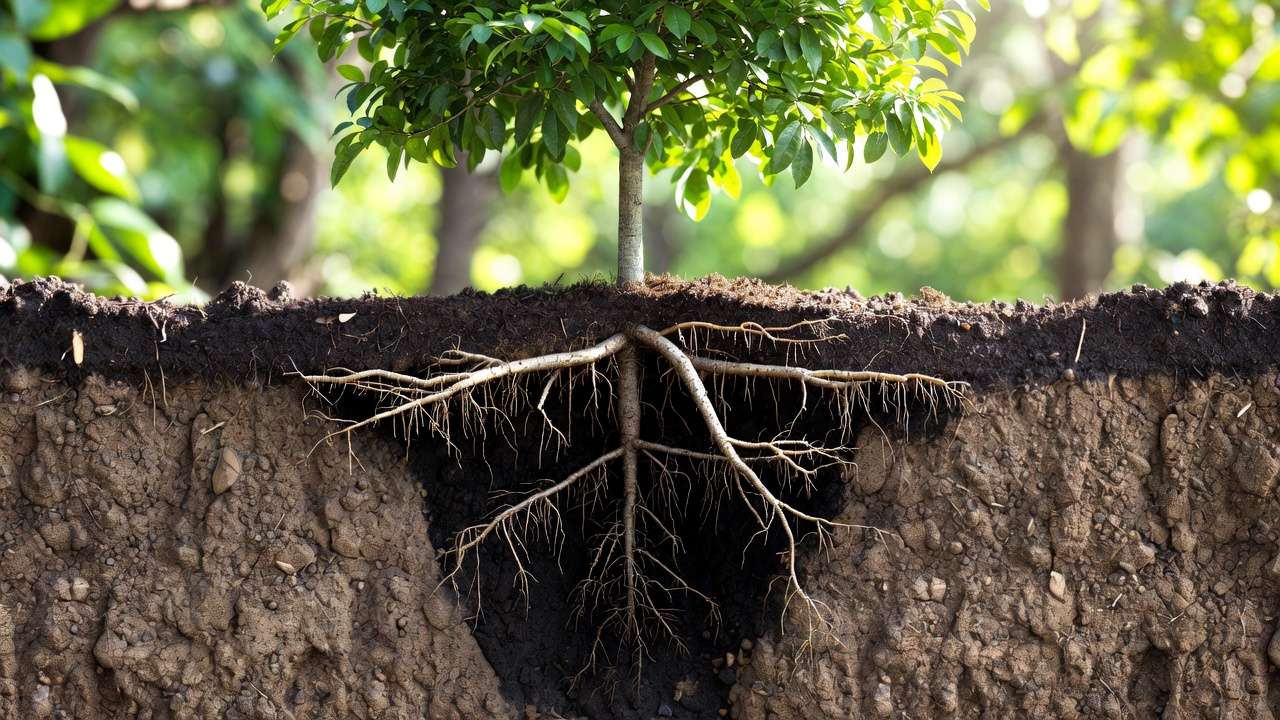
At its core, this is about the root-to-shoot ratio (or more precisely, root-to-crown balance), which measures the biomass relationship between roots and the above-ground portion. For most mature trees under normal conditions, this ratio is roughly 1:5 to 1:6—meaning the canopy (top) is 5–6 times heavier than the roots. This isn’t arbitrary; it’s a physiological equilibrium shaped by evolution.
Roots produce hormones like cytokinins and gibberellins that promote shoot growth, while shoots produce auxins that encourage root development. When balanced, these signals keep everything in check. Imbalance disrupts this harmony: excessive canopy growth (from high nitrogen fertilizer or light exposure) increases transpiration demands that strained roots can’t meet, while root loss (from compaction or digging) reduces hormone supply to the crown, causing dieback.
Research from the ISA and studies in Arboriculture & Urban Forestry emphasize that root:crown balance is more accurate than simple root:shoot, as it accounts for the entire canopy’s water and nutrient utilization.
Consequences of Poor Balance
An imbalanced tree faces serious risks:
- Top-heavy canopies increase windthrow (uprooting) and branch failure, especially in storms. Uneven load shifts stress roots unevenly, weakening anchorage.
- Restricted or damaged roots lead to drought stress, leaf scorch, sparse foliage, twig dieback, and overall decline—even if the canopy looks large.
- In urban settings, pavement or compacted soil limits roots while open light encourages canopy expansion, creating dangerous mismatches that damage hardscapes or cause tree failure.
- Long-term effects include reduced lifespan, lower property value, safety hazards, and lost ecosystem benefits like shade, carbon sequestration, and wildlife habitat.
Preventing these issues starts with understanding how roots and canopies actually develop.
Understanding Tree Root Systems vs. Canopy Growth
How Far Do Tree Roots Really Spread?
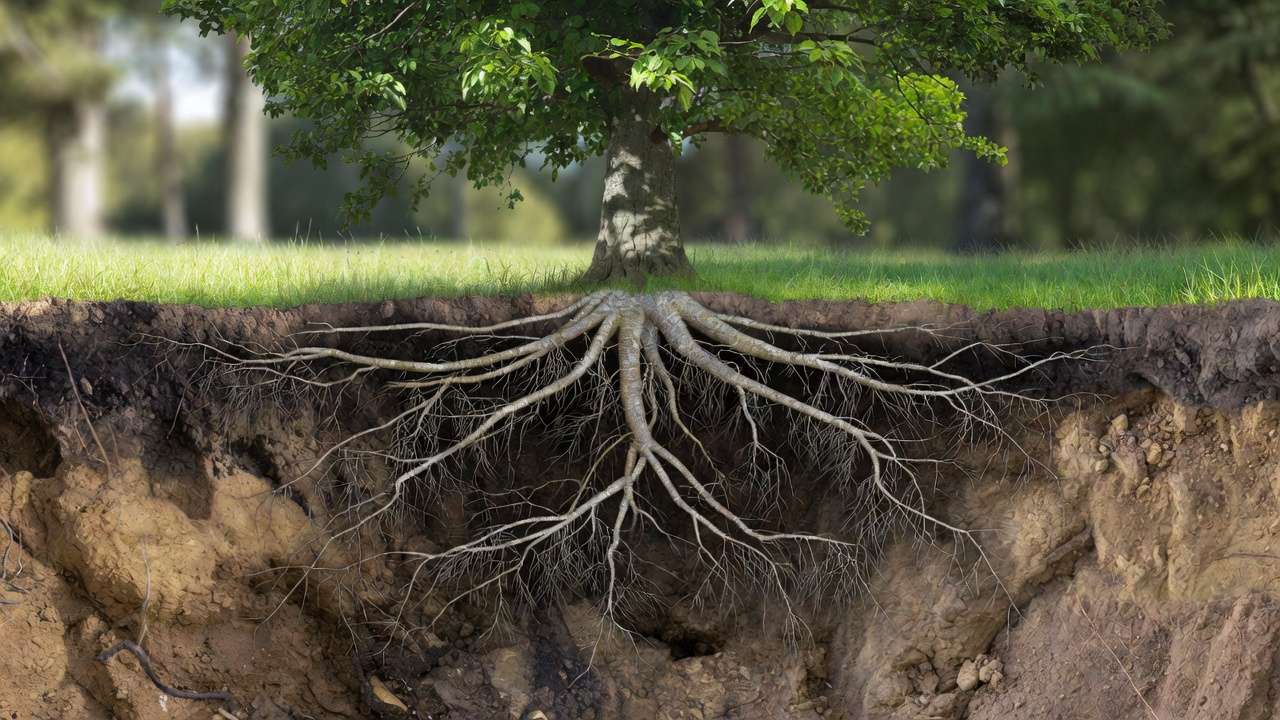
A big myth: “Roots mirror the canopy.” Reality? Tree roots are shallow but wide-spreading. Most absorbing fine feeder roots (the ones that take up water/nutrients) stay in the top 12–18 inches of soil, with over 50% in the top 6 inches. Horizontally, roots often extend 2–5 times (or more) the canopy radius beyond the dripline (edge of branches).
Studies from Colorado State University and Iowa State show roots commonly occupy 2–4 times the crown diameter, while some extend 5–8 times in ideal (sandy, moist) soils. For a tree with a 20-foot canopy diameter, roots could spread 40–100+ feet! Factors include:
- Soil type: Sandy soils = wider spread; clay = more compact.
- Species: Shallow-rooted like maples vs. deeper systems in oaks.
- Moisture: Roots chase water, extending farther in dry conditions.
Visualize a wide, plate-like root plate for anchorage, not a deep taproot in most mature trees. This spread explains why construction damage far from the trunk can still kill trees.
Canopy Growth Dynamics
The canopy captures sunlight for photosynthesis, driving energy production. Larger canopies demand more resources—water, nutrients, and hormonal signals—from roots. In open landscapes, trees develop broad, balanced crowns; in forests, they grow taller and narrower to compete for light.
Natural adjustments occur: Trees in resource-limited sites allocate more to roots for survival. But human interventions (pruning, fertilizing) can force unnatural growth, tipping the balance.
Common Causes of Imbalance in Home Landscapes
Imbalance doesn’t happen overnight—it’s often from these everyday mistakes:
- Planting oversized species in confined spaces (e.g., large oak near house).
- Over-fertilizing with high-nitrogen products, spurring shoot growth over roots.
- Excessive watering encourages shallow roots; infrequent deep watering promotes deeper ones.
- Construction/compaction near trunk crushes roots while canopy grows unchecked.
- Topping or lion-tailing pruning shocks the tree, causing vigorous watersprouts that unbalance load.
- Container-grown trees with circling roots transplanted without correction.
- Urban issues: Pavement over roots, grade changes burying flare.
Recognizing these helps you avoid or fix them early.
How to Achieve and Maintain Balance: Practical Strategies
The good news? You can actively guide your trees toward healthy root-to-canopy balance at every life stage. Below are evidence-based, step-by-step methods used by certified arborists and supported by university extension research.
At Planting: Set the Foundation Right 🌱
Most imbalance problems begin at planting. Getting this stage correct prevents decades of trouble.
- Choose the right species for the site Match mature canopy size and root habits to available space. Use resources like the USDA Plant Hardiness Zone Map, local extension guides, or the ISA’s Tree Selection Database. Example: Avoid planting silver maples (wide, shallow roots + large canopy) near foundations; opt for smaller, deeper-rooted species like serviceberry or hornbeam in tight urban yards.
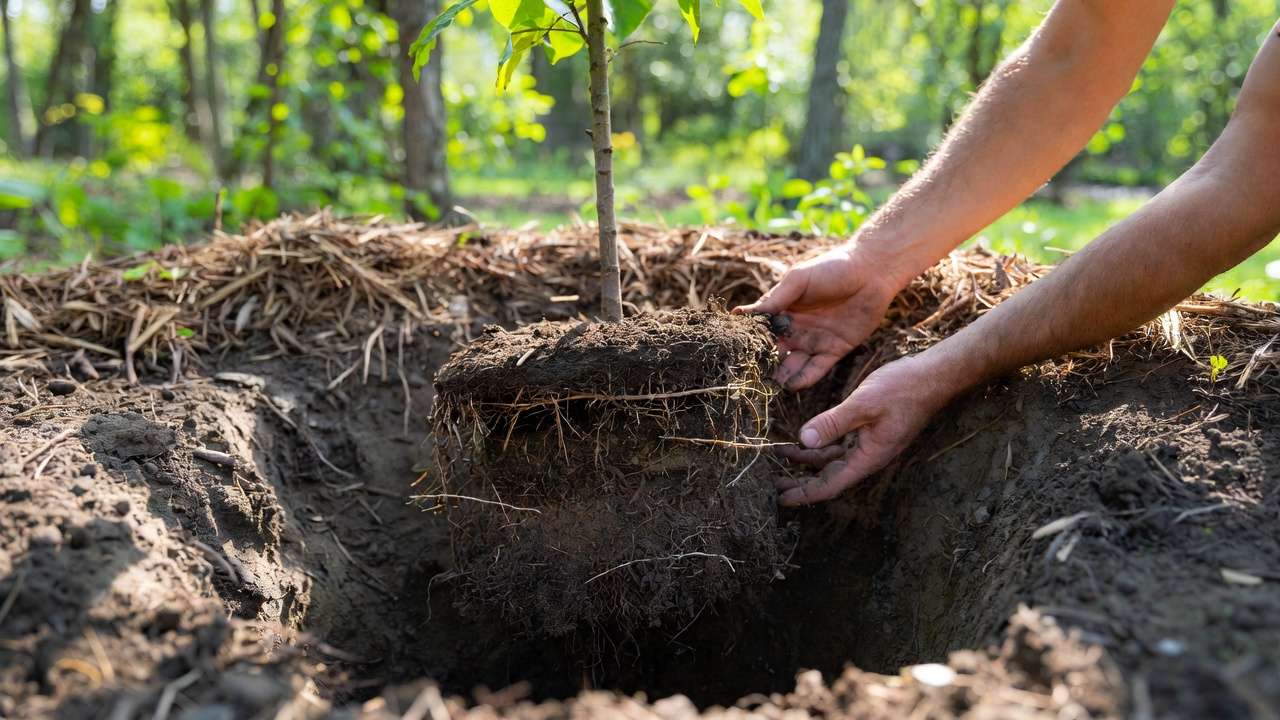
- Plant correctly to protect the root flare Always plant so the root flare (where trunk widens at base) sits slightly above soil grade. Burying the flare restricts oxygen to roots and encourages circling roots or girdling. Remove any circling roots from container stock by making vertical cuts or teasing them apart.
- Minimize root loss and encourage spread Dig a wide, shallow planting hole (2–3× wider than the root ball, same depth). Backfill with native soil (avoid heavy amendments in the hole). Create a 3–4 inch mulch ring (no volcano mulching!) extending to the dripline to retain moisture and suppress weeds while keeping the trunk base clear.
- Avoid heavy crown pruning at planting Contrary to old advice, removing large amounts of canopy at planting does not balance lost roots — it actually stresses the tree more by reducing photosynthesis when energy is needed most for root regeneration. Limit pruning to dead, damaged, or crossing branches only.
- Water wisely from day one Deep, infrequent watering (1–2 inches per week, depending on soil and weather) encourages deep root growth rather than shallow surface roots.
Pruning Techniques for Balance ✂️
Pruning is one of the most powerful tools to restore or maintain balance — but only when done correctly.
- Structural pruning (young trees) Develop strong architecture early: Remove co-dominant stems, narrow branch angles (<45°), and defects. Goal: Even load distribution so no single branch carries disproportionate weight.
- Reduction pruning (mature trees) Reduce canopy size selectively to lower water demand without shocking the tree. Remove 10–25% of live foliage at most, targeting longest branches back to laterals of at least ⅓ the diameter of the branch being removed. Never “top” a tree — topping creates weak, fast-growing watersprouts that worsen imbalance.
- Timing matters Best time: Late winter/early spring (dormant season) for most deciduous trees. Avoid heavy pruning during active growth or drought stress. Evergreens are more forgiving but still prefer cooler months.
- Root pruning (special cases) In orchards or bonsai, intentional root pruning controls vigor and promotes fruiting. In landscapes, root pruning is rare and risky — only perform under arborist supervision when necessary (e.g., sidewalk heaving). Cut cleanly with sharp tools and water deeply afterward.
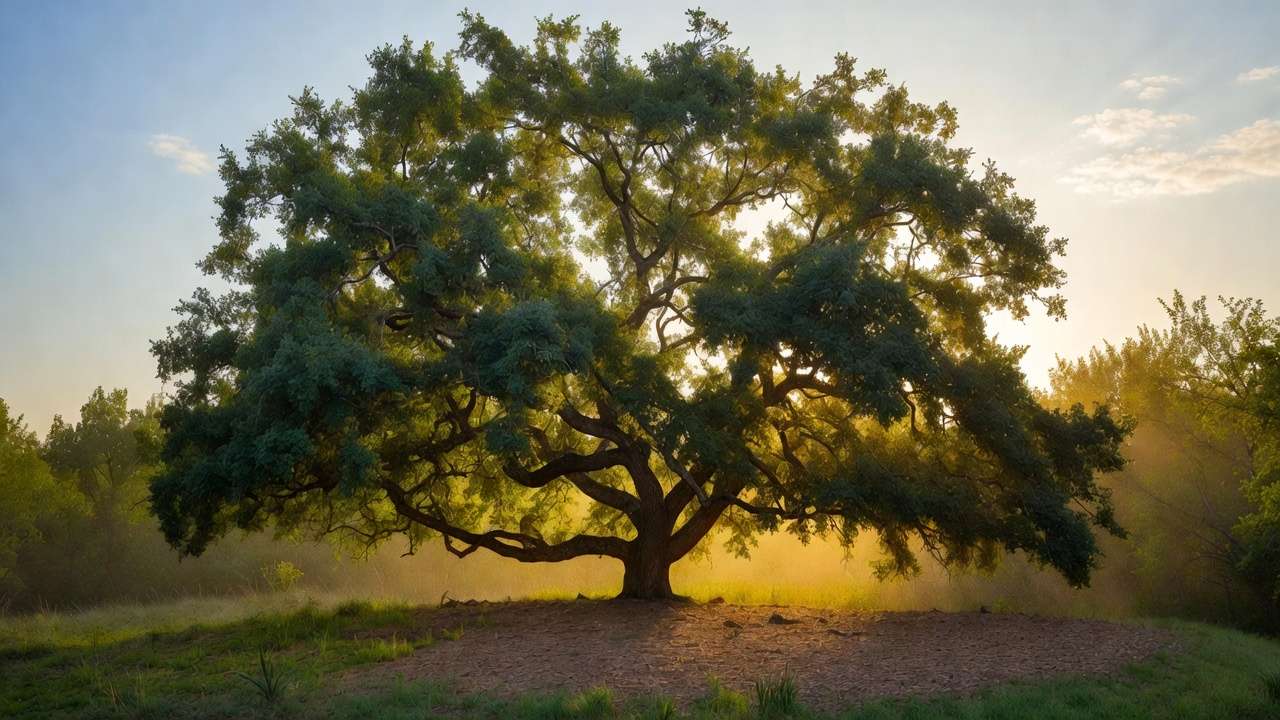
Soil and Root Care Practices
Healthy roots = healthy canopy support.
- Increase soil volume In urban areas, use structural soil cells, expanded planting pits, or suspended pavement systems to give roots 400–800+ cubic feet of uncompacted soil per tree.
- Aerate and decompact Core aeration or vertical mulching relieves compaction, improving oxygen and water infiltration.
- Mulch properly Apply 3–4 inches of organic mulch (wood chips, bark) in a wide ring. Keeps soil cool, moist, and biologically active.
- Fertilize thoughtfully Avoid high-nitrogen spring blasts that favor shoots. Use slow-release or organic fertilizers based on soil tests. Many mature trees need little to no supplemental fertilizer.
- Consider mycorrhizae Inoculating with mycorrhizal fungi at planting improves nutrient and water uptake, especially in poor soils.
Species-Specific Tips and Examples
Different trees respond differently to balance challenges:
- Oaks — Deep taproots when young, wide-spreading later. Very sensitive to root loss; avoid construction within dripline. Prune lightly — they compartmentalize poorly.
- Maples (especially silver/red) — Shallow, aggressive roots. Prone to surface rooting and pavement damage. Keep canopies moderate through regular reduction pruning.
- Fruit trees (apple, peach, citrus) — Often grafted; balance is critical for production. Annual dormant pruning removes excess canopy to focus energy on fruit and maintain root support.
- Urban-tolerant species (e.g., ginkgo, littleleaf linden, Zelkova) — Naturally better at handling restricted roots, but still benefit from wide mulch rings and deep watering.
If you have a specific species in mind, observing its natural form in open-grown vs. landscape settings helps guide balance decisions.
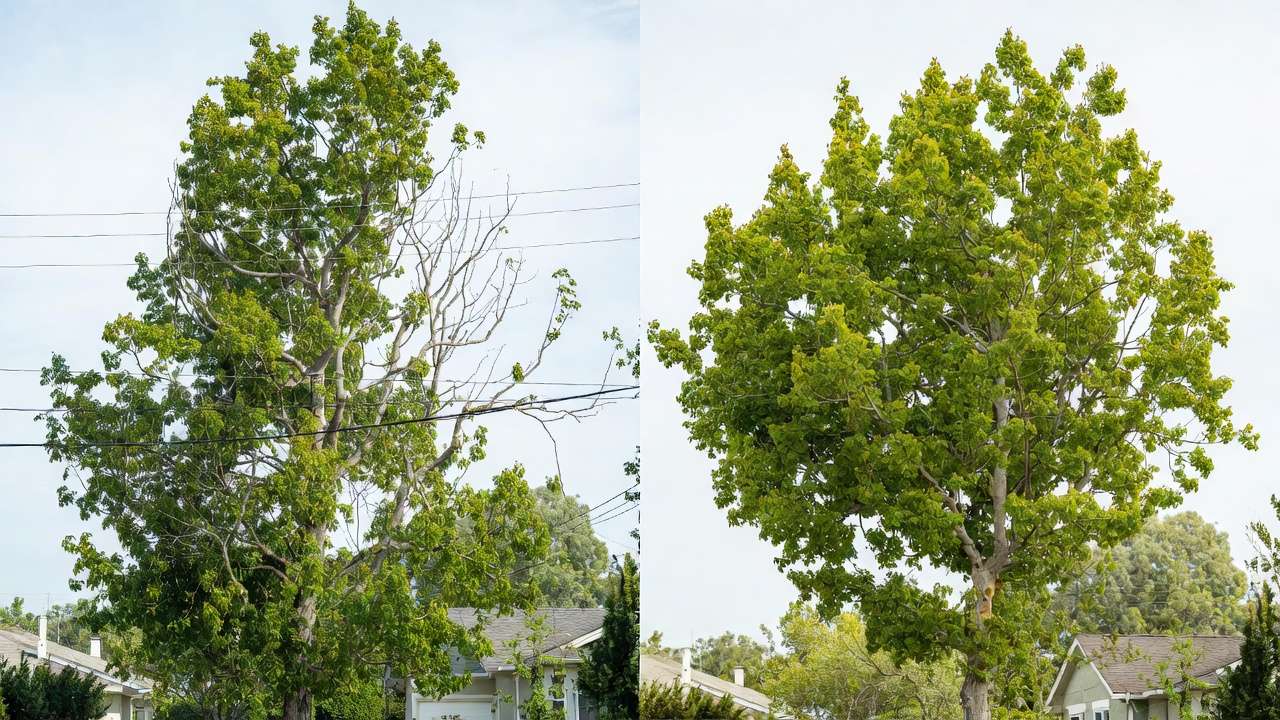
Signs Your Tree Is Out of Balance — And What to Do 🚨
Catching imbalance early can save a tree that might otherwise decline or become hazardous. Look for these classic symptoms:
- Early / subtle signs
- Leaf scorch (browned leaf edges, especially on newer growth) — roots can’t supply enough water.
- Smaller-than-normal leaves or reduced leaf size.
- Sparse canopy density or thinning upper branches.
- Excessive surface roots cracking sidewalks or heaving soil.
- Slow or no new growth despite good conditions.
- Moderate / advancing signs
- Twig and branch dieback starting from the tips inward.
- Leaning or noticeable shift in trunk posture (especially after rain/wind).
- Cracks or splits in the bark near the base (compression from top-heavy load).
- Mushrooms or conks at the base — sign of root decay from chronic stress.
- Severe / emergency signs
- Large dead branches falling unexpectedly.
- Major lean with lifted soil on the opposite side (root plate failure starting).
- Sudden wilting of the entire crown during normal weather.
Immediate diagnostic steps you can take
- Expose and inspect the root flare — if buried, carefully remove soil/mulch until you see the flare.
- Walk the dripline and look for circling roots, soil mounding, or pavement heaving.
- Check soil moisture 8–12 inches deep in several spots — consistently dry or waterlogged soil stresses roots.
- Gently probe soil with a soil knife or trowel to feel for compacted layers.
- Take photos from multiple angles and note changes over seasons.
Recovery strategies
- Reduce canopy demand immediately with careful reduction pruning (remove no more than 15–20% live foliage in one year).
- Install a wide mulch ring and begin deep, infrequent watering schedule.
- Aerate compacted zones (avoid damaging remaining roots).
- Avoid fertilizer until the tree stabilizes — feeding a stressed tree often worsens shoot growth.
- Call a certified arborist (ISA Board Certified Master Arborist preferred) for root crown excavation, soil amendment, or cabling/bracing if lean is advanced.
Early intervention frequently reverses moderate imbalance; severe cases may require removal for safety.
Advanced Insights from Experts 📚
Recent arboricultural research continues to refine our understanding of canopy-root dynamics:
- Minimum soil volume guidelines — Studies by the Morton Arboretum and Bartlett Tree Research Laboratories recommend approximately 1,000–2,000 cubic feet of uncompacted soil per inch of trunk diameter (measured at 4.5 ft height) for long-term urban tree health. That often translates to 400–800+ cubic feet for a 6–10 inch trunk — far more than most sidewalk cutouts provide.
- Root loss tolerance — Healthy trees can typically survive losing up to 20–30% of their root system if the loss is gradual and the remaining roots are healthy. Sudden loss of >50% usually leads to decline or death within 3–5 years.
- Storm resilience data — Post-hurricane analyses (e.g., after Hurricanes Katrina, Irma, Ian) consistently show that trees with good root-to-crown balance, wide planting pits, and structural pruning suffer dramatically lower failure rates than top-heavy or root-restricted specimens.
- Climate adaptation angle — As drought and heat waves increase, prioritizing deep rooting and moderate canopy size helps trees better withstand water stress. Species with naturally higher root-to-shoot ratios (e.g., many oaks, pines) show better survival in changing climates.
These findings underscore why proactive balance management is one of the highest-ROI practices in modern tree care.
FAQs ❓
Does pruning the canopy balance out lost roots after transplanting or construction damage? No — reducing the crown helps reduce demand on remaining roots, but it does not magically regenerate lost roots. The tree still needs time, water, and care to regrow absorbing roots. Heavy crown reduction right after root loss often delays recovery.
How much root damage can a mature tree tolerate? Rule of thumb: Up to 20–25% gradual loss is often recoverable with excellent aftercare. Over 50% sudden loss usually leads to long-term decline or death, especially in older trees.
Can I encourage more root growth without reducing the canopy? Yes — deep infrequent watering, wide mulching, soil aeration, mycorrhizal inoculation, and avoiding compaction all promote root expansion. However, if the canopy is already oversized for the site, root encouragement alone may not fully correct the imbalance.
What’s the ideal root-to-canopy ratio for young vs. mature trees? Young nursery trees often have artificially high root-to-shoot ratios (more roots relative to top) to aid establishment. As trees mature in open conditions, the ratio shifts toward 1:5 to 1:6 (roots : crown biomass). The exact “ideal” varies by species, site, and age, but the key is functional equilibrium — roots can support the canopy’s water, nutrient, and anchorage needs.
Should I balance canopy and roots differently for fruit trees vs. shade trees? Yes. Fruit trees are deliberately kept in tighter balance through annual pruning to direct energy into fruit rather than excessive vegetative growth. Shade trees are allowed larger canopies for aesthetic and environmental benefits, but still require periodic reduction to prevent hazard.
Conclusion: Grow Smarter for Lifelong Tree Health 🌟
Balancing canopy size and root growth isn’t about keeping trees artificially small — it’s about creating harmony between what grows above ground and the support system below. When you plant thoughtfully, prune strategically, care for soil and roots proactively, and monitor for early warning signs, you give trees the best chance to reach their full potential: strong, stable, beautiful, and long-lived.
The payoff is substantial — safer yards, lower maintenance costs, higher property values, better storm resilience, and meaningful contributions to your local environment through shade, carbon storage, and habitat.
Take a walk around your property this week. Look at your trees with fresh eyes. Where do you see signs of balance… or imbalance? Start with one small improvement — a wider mulch ring, a gentle structural prune, or a species-appropriate watering routine — and watch how quickly your trees respond.
Healthy trees don’t happen by accident. They happen by intention. 🌱











