
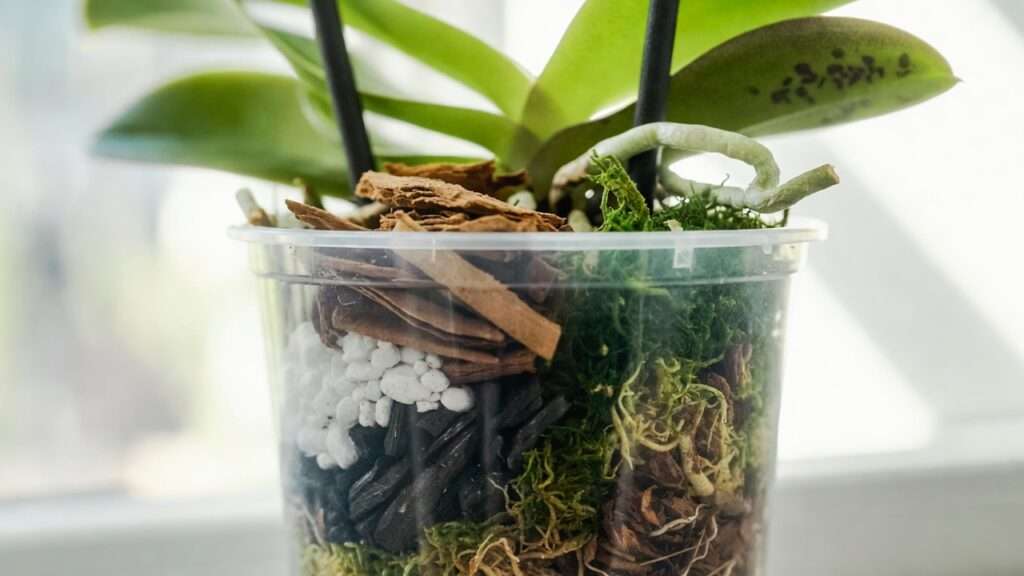
Have you ever stared at your beautiful Phalaenopsis orchid, wondering why those once-vibrant blooms have vanished for over a year? 😩 The leaves look okay, but the roots are dark and mushy, the potting mix stays soggy for days, and no matter how carefully you water, root rot seems inevitable. If this sounds familiar, you’re not alone — thousands of home growers face the same frustration with generic store-bought orchid mixes.
The good news? You can create a homemade orchid potting mix that’s fresher, more customizable, better-draining, and often far superior to most commercial options — at a fraction of the cost. After years of experimenting with over 50 different orchids (from delicate Phalaenopsis to robust Cattleyas and moisture-loving Paphiopedilums), I’ve found that homemade mixes allow precise control over particle size, moisture retention, and aeration. This leads to healthier roots, more frequent blooms, and fewer headaches.
In this complete guide, we’ll cover why store mixes often fail, the science behind ideal orchid media, essential ingredients, my go-to master recipe (and variations for different orchids and climates), step-by-step mixing and repotting instructions, pro tips, troubleshooting, and answers to the most common questions. By the end, you’ll have everything needed to craft the perfect homemade orchid potting mix tailored to your plants and home environment. Let’s rescue those orchids! 🌸
Why Most Store-Bought Orchid Mixes Disappoint (and How Homemade Wins)
Commercial orchid potting mixes promise convenience, but many fall short for serious growers. Here’s what commonly goes wrong:
- Too fine or inconsistent texture — Many use finely ground bark or fillers that compact quickly, trapping water and suffocating roots. Root rot follows fast.
- Low-quality or aged bark — Often sourced from mulch-grade pine or fir that’s already partially decomposed, leading to faster breakdown (sometimes within 6–9 months) and nutrient imbalances.
- Mystery additives — Some include fertilizers that burn sensitive roots or cheap fillers like soil particles that hold excess moisture.
- One-size-fits-all approach — Generic mixes suit average Phalaenopsis in moderate conditions but fail in humid tropical homes (like many in Bangladesh) or dry winter heating.
Homemade wins because you control freshness and ratios. Fresh fir or pine bark decomposes slower, releasing nutrients gradually. You adjust for your local humidity — more perlite for muggy Mathbaria summers, extra sphagnum for drier indoor air. Cost savings add up: a large bag of quality bark + perlite + charcoal often makes 3–5x more mix than a small commercial bag, saving 40–70% long-term.
Scientifically, epiphytic orchids (most houseplant types) evolved on tree branches with 50–80% air-filled porosity in their rooting zone — far more than typical soil’s 10–20%. Good mixes mimic this: excellent drainage prevents rot while retaining just enough moisture for velamen-covered roots to absorb water quickly.
Understanding Orchid Potting Mix Science: The 4 Key Requirements
A truly effective mix must satisfy these non-negotiable needs:
- Superior drainage & high aeration — Roots need constant oxygen; standing water causes rot. Aim for fast water flow-through and 50%+ air space.
- Balanced moisture retention — Enough to prevent desiccation between waterings, but never soggy. Velamen acts like a sponge — it swells when wet, shrinks when dry.
- pH buffering & toxin absorption — Orchids prefer slightly acidic conditions (pH 5.5–6.5). Horticultural charcoal absorbs excess salts/impurities from water/fertilizer.
- Slow decomposition — Organic materials break down over 18–36 months; fresh, high-grade bark lasts longer without turning to mush.
Your home’s humidity, temperature, watering habits, and pot type (clear plastic vs. terracotta) all influence the ideal balance. In humid Barisal Division conditions, lean toward chunkier, drier mixes; in air-conditioned rooms, add more moisture-holding elements.
Essential Ingredients for the Perfect Homemade Mix
Here’s a detailed look at core components, with pros/cons and sourcing tips:
- Orchid bark / fir bark / pine bark 🌲 — The backbone (50–70% of most mixes). Fir bark (Douglas fir preferred) is ideal: porous, slow to break down, slightly acidic. Pine bark works well but can be more resinous. Avoid landscape mulch — it may contain dyes/pesticides. Source: garden centers, online orchid suppliers, or bulk from agricultural stores (sieve for uniform size: medium ½-inch for most Phals).
- Perlite / pumice / sponge rock — Aeration superstars (10–25%). Perlite is lightweight/volcanic; pumice heavier/more durable. Both prevent compaction. Perlite is cheap and widely available.
- Horticultural charcoal — Essential (5–15%)! Absorbs toxins, stabilizes pH, prevents sour smells. Use chunks, not BBQ charcoal.
- Sphagnum moss (New Zealand long-fiber preferred) — Moisture magic (5–25%). Holds water without sogginess; great top-dress for new roots 🌱. Pre-soak and fluff before mixing.
- Coconut husk chips / coir — Sustainable alternative to bark (10–20%). Excellent drainage, eco-friendly, less acidic.
- Optional boosters — Lava rock (extra weight/drainage), tree fern fiber (for finer-rooted types), peat moss (sparingly for terrestrials).
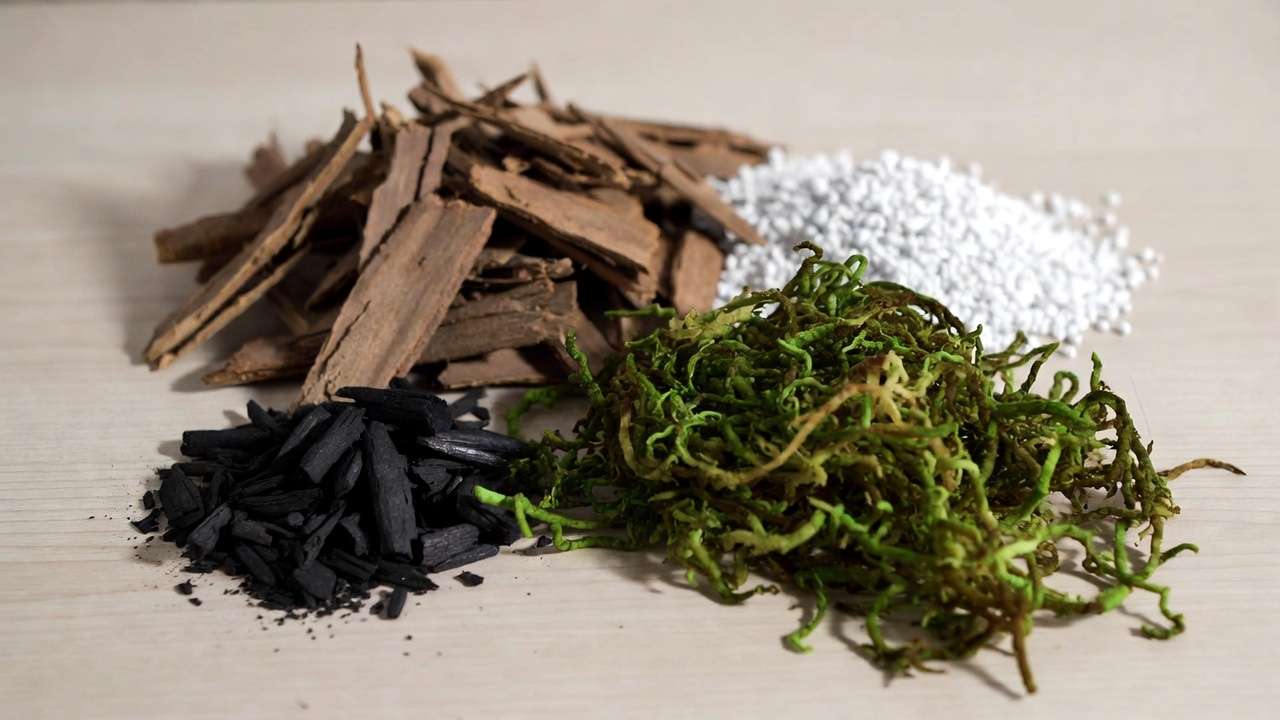
Quick comparison:
- Ingredient | Drainage | Moisture Hold | Longevity | Approx. Cost
- Fir bark | High | Medium | 18–36 mo | Medium
- Perlite | Very high | Low | Indefinite | Low
- Charcoal | High | Low | Long | Medium
- Sphagnum | Medium | High | 12–24 mo | Medium-high
The Ultimate “Better-Than-Store” Basic Recipe for Phalaenopsis & Most Houseplant Orchids
This master recipe outperforms most commercial mixes with fresher bark, balanced ratios, and customizable airflow. Makes ~8–10 liters (enough for 10–15 medium pots).
Ingredients (by volume):
- 50–60% medium-grade fir bark (or pine bark)
- 15–20% perlite or pumice
- 10–15% horticultural charcoal
- 10–15% chopped New Zealand sphagnum moss (pre-soaked 30 min, squeezed, fluffed)
Step-by-step mixing:
- Gather tools: large bucket, gloves, measuring cup, sieve (optional for bark).
- Sieve bark to remove dust/fines — dust compacts and holds water.
- Soak sphagnum in lukewarm water 30 min; drain and fluff (breaks clumps).
- In bucket: add bark first, then perlite/charcoal, mix dry.
- Add fluffed sphagnum last; blend thoroughly (hands work best!).
- Test: squeeze a handful — should feel airy, barely damp, no dripping.
Why this beats store-bought: Fresher bark releases trace nutrients slowly; higher aeration prevents rot common in dense commercial mixes. Many growers report bigger spikes and longer-lasting blooms after switching.
Custom Variations: Tailor the Mix to Your Orchid Type & Climate 🌍
One of the biggest advantages of making your own orchid potting mix is customization. The basic Phalaenopsis recipe works wonderfully for many beginners, but tweaking it based on genus and your local environment (like the warm, humid conditions common in Barisal Division) can dramatically improve results.
- Phalaenopsis & Vanda (standard airy mix) — Stick close to the master recipe: 55% bark, 20% perlite, 15% charcoal, 10% sphagnum. Vandas love even chunkier versions — increase bark to 65% and reduce moss to 5% for maximum airflow in high-humidity homes.
- Dendrobium & Oncidium (drier-loving types) — These prefer faster drying. Use: 65% medium/large bark, 20% perlite/pumice, 10% charcoal, 5% sphagnum (or skip moss entirely in very humid areas). Add 5–10% coconut husk chips for extra structure.
- Slipper orchids (Paphiopedilum) & jewel orchids (Ludisia, Anoectochilus) — These terrestrials/ semi-terrestrials need more moisture retention. Adjust to: 40% fine/medium bark, 15% perlite, 10% charcoal, 25–30% sphagnum or peat moss blend, plus 5–10% fine coir. They thrive with slightly denser mixes that stay evenly moist.
- Cattleya, Brassavola & Laelia (chunky & fast-drying) — Go big: 60–70% large-grade bark/chips, 15–20% pumice or lava rock, 10% charcoal. Minimal moss (0–5%) — these pseudobulb types hate wet feet.
Climate adjustments cheat sheet (especially useful in Bangladesh):
- High humidity/hot summers (Mathbaria/Bhola style) → Increase bark/perlite, decrease moss/charcoal slightly to prevent rot.
- Dry winters or air-conditioned rooms → Boost sphagnum to 20–25% for better moisture buffer.
- Very rainy monsoon periods → Use more charcoal (15–20%) to absorb excess salts from frequent watering.
Experiment in small batches — orchids are forgiving teachers!
Step-by-Step: How to Repot with Your New Homemade Mix
Repotting is the perfect time to switch to your fresh homemade mix. Signs it’s needed: roots growing over the pot rim, mix breaking down to dust, no blooms for 12+ months, or visible rot.
- Timing — Best right after blooming (spring/early summer for most) or when new roots appear. Avoid during peak flower or extreme heat.
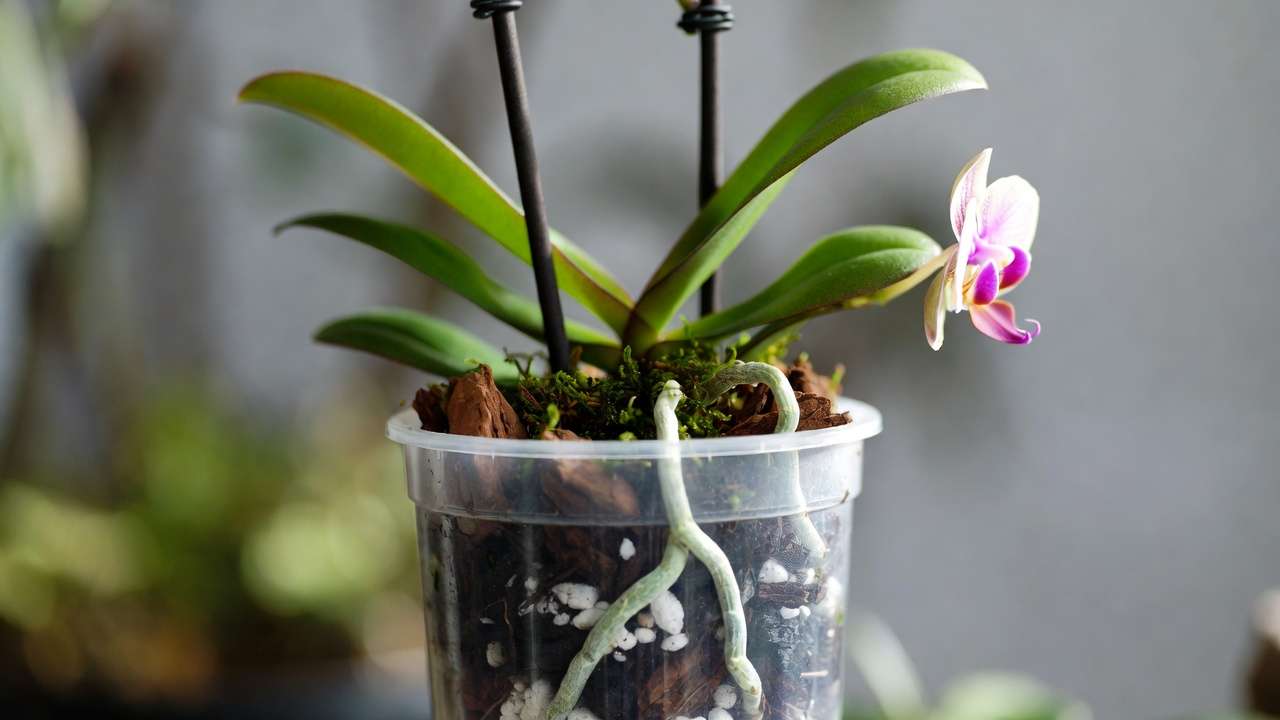
- Pot choice — Clear plastic pots let you monitor roots (highly recommended for beginners). Slotted orchid pots or terracotta work too for extra drying. Size: only 1–2 inches larger than root mass.
- Prep the plant — Gently remove from old pot. Rinse roots under lukewarm water. Trim dead/black mushy roots with sterilized scissors (leave healthy white/green ones). Healthy roots look plump and silvery-white when dry.
- Fill technique — Place a layer of large bark at bottom for drainage. Position orchid so base sits just below rim. Fill around roots with mix, gently pressing to eliminate large air pockets — but don’t compact tightly! Leave ½ inch space at top for top-dressing.
- Top-dress — Add a 1-inch layer of fresh sphagnum moss for humidity and baby root encouragement 🌱.
- Aftercare — Water lightly the first time (soak pot in water 10–15 min), then wait until mix is almost dry before next watering. No fertilizer for 3–4 weeks. Place in bright, indirect light.
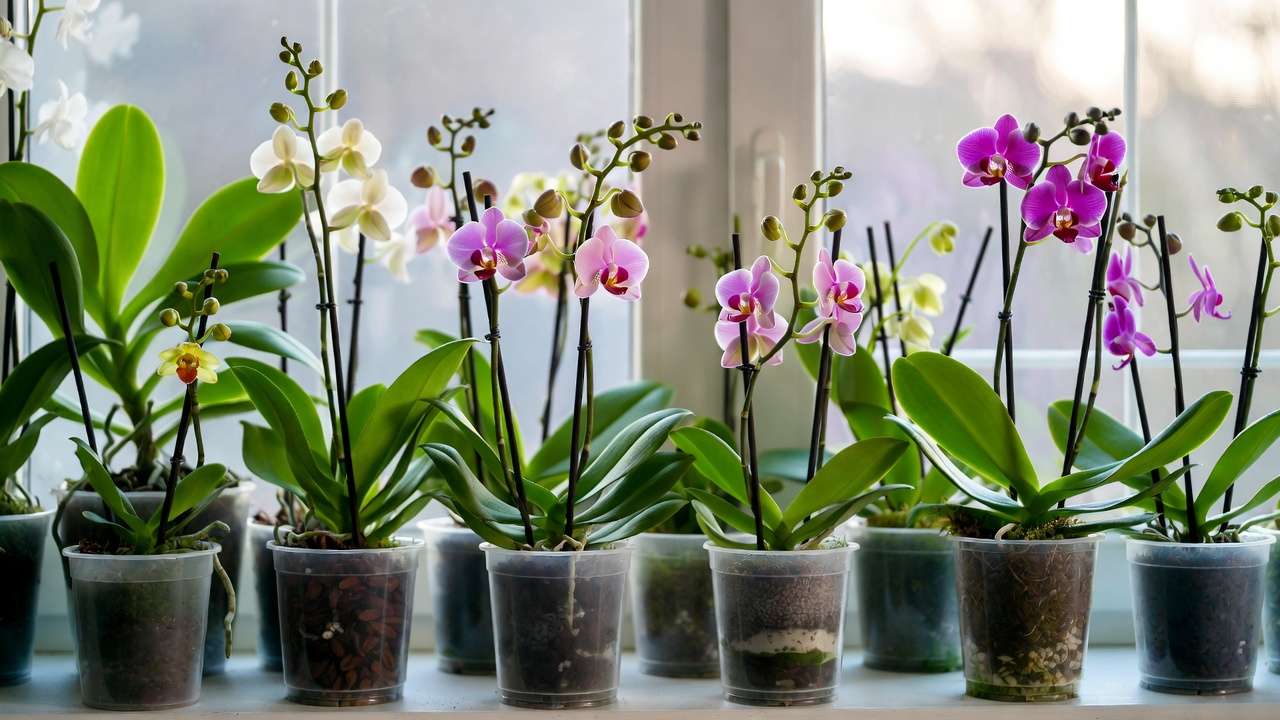
Here are some visual examples of clear pots showing healthy root development after repotting:
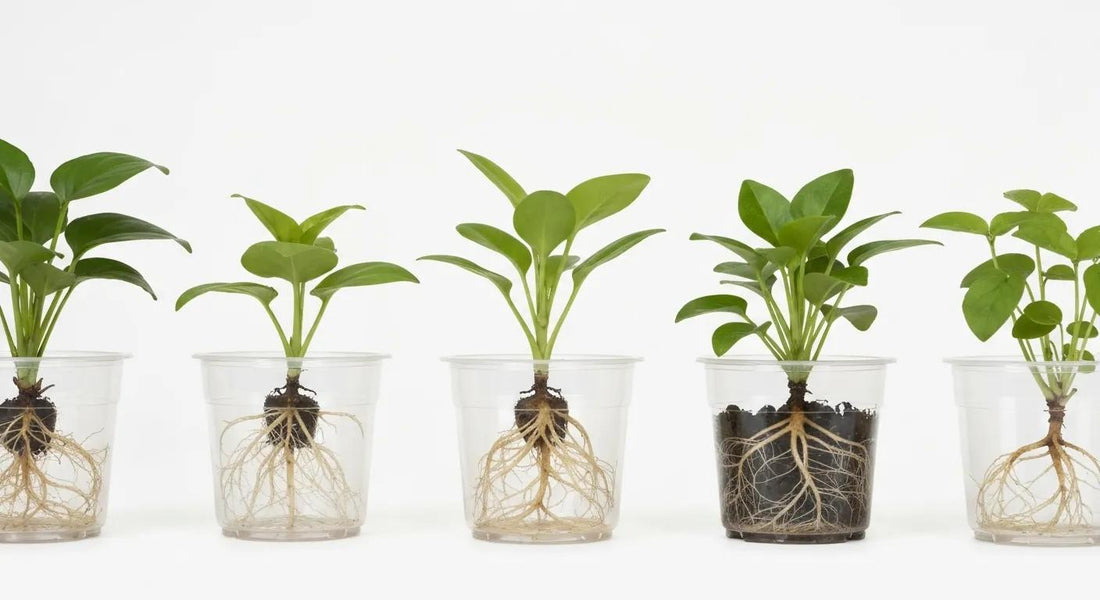
(These show transparent pots with thriving roots — perfect for monitoring progress!)
Pro Tips & Common Mistakes to Avoid
- Top-dress magic — A thin layer of live sphagnum encourages new root growth and looks beautiful.
- Fertilizer compatibility — Use balanced orchid fertilizer (e.g., 20-20-20 at ¼ strength) every other watering. Homemade mixes flush salts well thanks to charcoal.
- Refresh schedule — Replace mix every 18–24 months (fir bark lasts longest). Older mix compacts and loses aeration.
- Biggest mistakes — Using dyed mulch bark (toxic), over-packing mix (suffocates roots), ignoring root inspection, or watering on a calendar instead of feeling the mix weight.
Troubleshooting: What Your Orchid Roots Are Telling You
Roots speak volumes:
- White/plump/silvery — Happy and hydrated!
(Example of healthy white roots — aim for this!)
- Mushy/black/brown — Root rot from too much moisture → switch to chunkier mix, improve drainage.
- Shriveled/silver-gray — Too dry → increase sphagnum or water more frequently.
- Green tips — Good light exposure and overall health.
Regular root checks (thanks to clear pots) prevent small issues from becoming big ones.
FAQs (Frequently Asked Questions)
Can I use regular potting soil for orchids? No — soil compacts and holds too much water, causing instant rot. Orchids need open, airy media.
Is pine bark safe, or is it too acidic? Pine bark is fine (pH ~4.5–5.5); most orchids tolerate it well. Fir is slightly less acidic, but both work. Rinse well before use.
How long does a homemade mix last? 18–36 months depending on bark quality, watering, and climate. Fir lasts longest; watch for breakdown.
Where can I source ingredients affordably in Bangladesh? Local nurseries in Barisal, online garden shops (Daraz, Facebook plant groups), or agricultural suppliers for bulk bark/perlite. Charcoal is available at aquarium stores.
Can I sterilize and reuse old mix? Partially — discard badly decomposed parts, rinse thoroughly, bake at 180°C for 30 min to kill pathogens, then remix with fresh ingredients.
Final Thoughts & Next Steps
You’ve now got the knowledge to craft a superior homemade orchid potting mix that beats most store-bought versions — fresher, cheaper, and perfectly tuned to your orchids and home. Start with the basic Phalaenopsis recipe, observe how your plants respond, and tweak from there. The reward? Healthier roots, more reliable blooms, and the satisfaction of growing like a pro. 💜
Once you try this, your orchids will thank you with spikes that last months longer. Share your mix experiments, before/after photos, or questions in the comments — I’d love to hear how it goes for you in Mathbaria! Subscribe for more in-depth plant care guides tailored to our region.
Happy growing











