
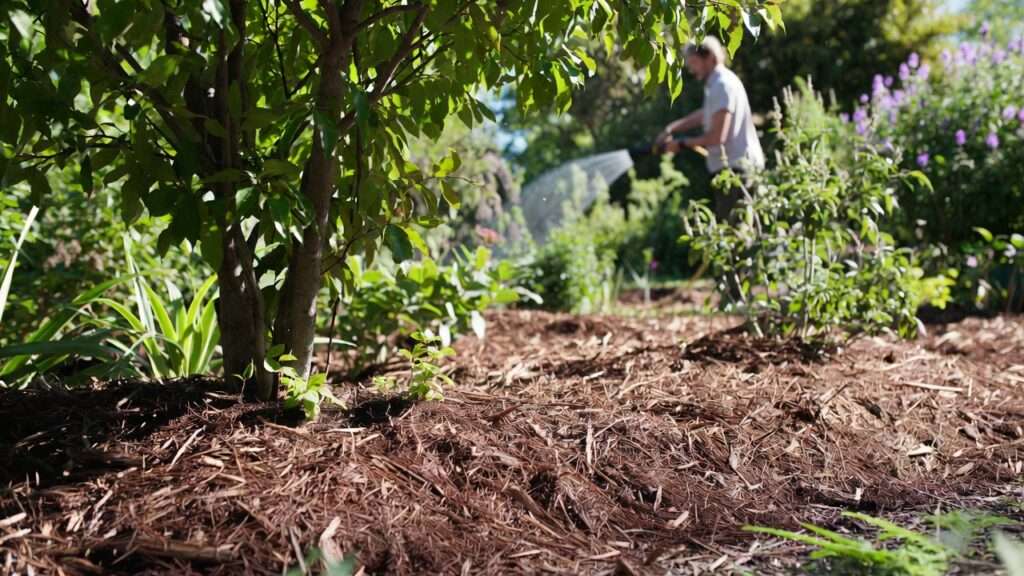
Imagine stepping into your garden during a scorching summer heatwave, only to find your prized plants wilting despite daily watering, while your water bill climbs higher each month. 😩 Now picture this: with one simple, low-effort change—a smart layer of mulch—you could slash your watering needs by up to 50%, keep roots cool and hydrated, and watch your plants thrive like never before. That’s the real power of mulching strategies to conserve moisture! In regions facing erratic rainfall, rising temperatures, and increasing water costs (like many areas in Bangladesh and beyond), effective mulching isn’t just a gardening tip—it’s essential for sustainable plant and tree care. 🌱
As an experienced horticulturist focused on practical, science-backed plant care, I’ve seen firsthand how proper mulching transforms struggling gardens into resilient, water-efficient oases. Research from university extensions and studies consistently shows that mulching reduces soil evaporation dramatically—often by 30–60% or more—while delivering bonuses like weed suppression, soil temperature moderation, and improved root health. In this comprehensive guide, we’ll dive deep into proven mulching strategies, the best materials for moisture retention, step-by-step application, common pitfalls, and advanced tips tailored for home gardeners, tree enthusiasts, and eco-conscious homeowners. By the end, you’ll have everything needed to implement these techniques and enjoy healthier plants with noticeably lower water bills. Let’s get started! 📈
Why Mulch is a Game-Changer for Soil Moisture Conservation 🌡️
At its core, mulch acts as a protective blanket over your soil, tackling moisture loss head-on. Bare soil loses water rapidly through evaporation—especially under direct sun and wind—leading to dry, cracked surfaces and stressed plants. Mulch blocks sunlight, shades the soil, breaks wind impact, prevents crusting (which causes runoff), and reduces weed growth that competes for water.
Scientific evidence backs this up strongly:
- A University of Florida study found mulch reduced soil water loss to evaporation by about 33% compared to bare soil.
- Other research, including from Cal Poly and various meta-analyses, shows reductions of 40–58.8% in evaporation with proper layers, particularly in the early days after watering when losses are highest.
- In dryland agriculture reviews, mulching can increase plant-available water, boost water use efficiency (WUE) by 20–70% depending on type, and sometimes cut irrigation needs significantly.
Beyond moisture, mulch moderates soil temperatures—keeping roots cooler in hot summers (reducing stress) and insulated in cooler periods—while slowly decomposing organic types add nutrients and improve soil structure for better long-term water holding capacity. For trees and shrubs in tropical or subtropical climates (like Barisal’s humid yet sometimes dry spells), this means deeper, healthier roots and greater drought resilience. Your plants stay vigorous, and you water less frequently—saving time, effort, and money! 💚
Best Types of Mulch for Maximum Moisture Retention 🪴
Choosing the right mulch is key to success. Organic options generally excel for moisture conservation in home gardens because they create a breathable barrier that retains water while enriching soil over time.
Organic Mulches: Top Choices for Long-Term Benefits 🌿 Coarse-textured organics outperform finer or synthetic types in most studies for moisture retention:
- Wood chips or shredded bark — Often the winner in university trials (e.g., UNL Water research) for conserving soil moisture due to excellent shading and airflow. Lasts 2–5 years, adds nutrients as it breaks down.
- Straw or hay (seed-free preferred) — Lightweight, affordable, and highly effective in vegetable gardens; retains up to 70–80% moisture in some tests.
- Compost or leaf mold — Nutrient-rich and improves soil water-holding capacity as it decomposes.
- Pine needles — Acidic (great for acid-loving plants), slow to break down, and excellent at blocking evaporation.
- Grass clippings (untreated) — Free and retain around 73% water in short-term studies.
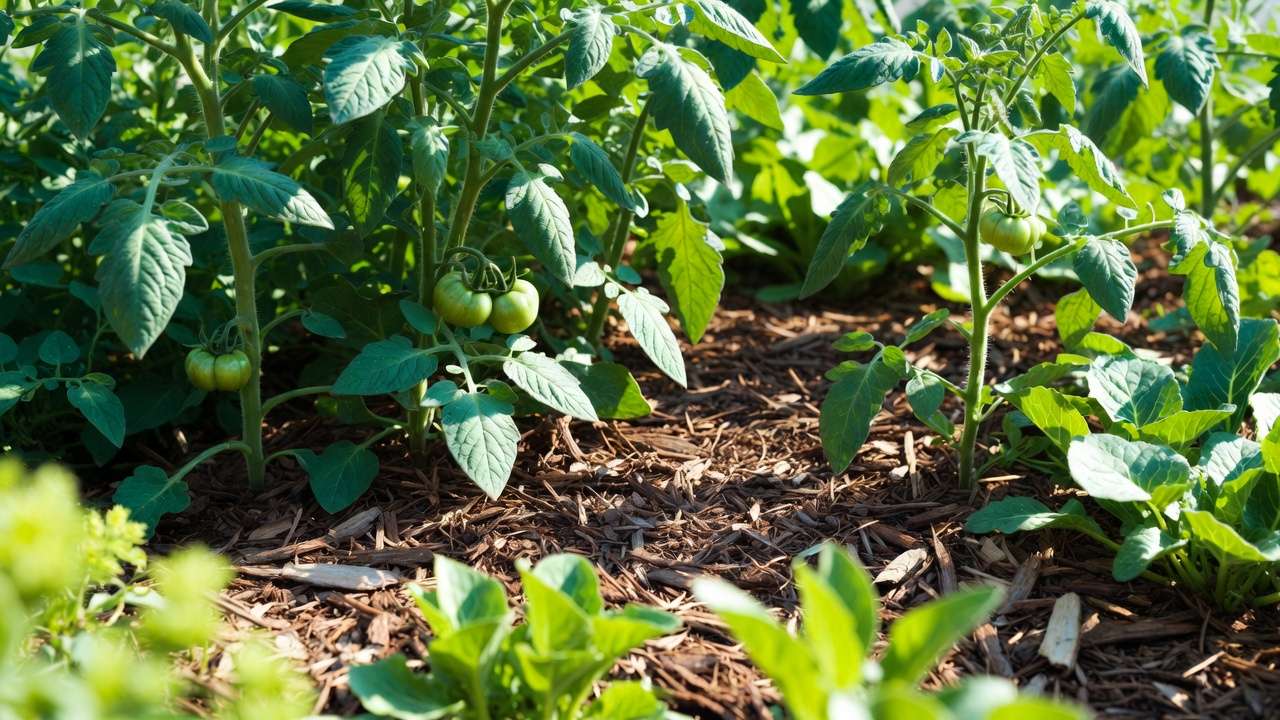
Pros: Build soil health, support microbes/earthworms, cost-effective long-term. Cons: Need reapplication every 1–3 years; some may temporarily tie up nitrogen (use aged materials).
Inorganic Mulches: When to Use Them 🪨
- Gravel, river rock, or decomposed granite — Long-lasting (decades), low maintenance, but less effective at moisture retention than organics in many comparisons—can allow more evaporation unless thick. Better for xeriscaping or paths.
- Landscape fabric (under rock) — Weed barrier, but can become hydrophobic (repel water) over time; not ideal alone for moisture.
Overall: Coarse organic mulches like wood chips usually outperform inorganic for moisture in gardens and around trees. In humid-tropical areas, organics help prevent excess wetness issues too by improving drainage.
Proven Mulching Strategies and Techniques 📏
Optimal Mulch Depth for Moisture Conservation Aim for 2–4 inches (5–10 cm):
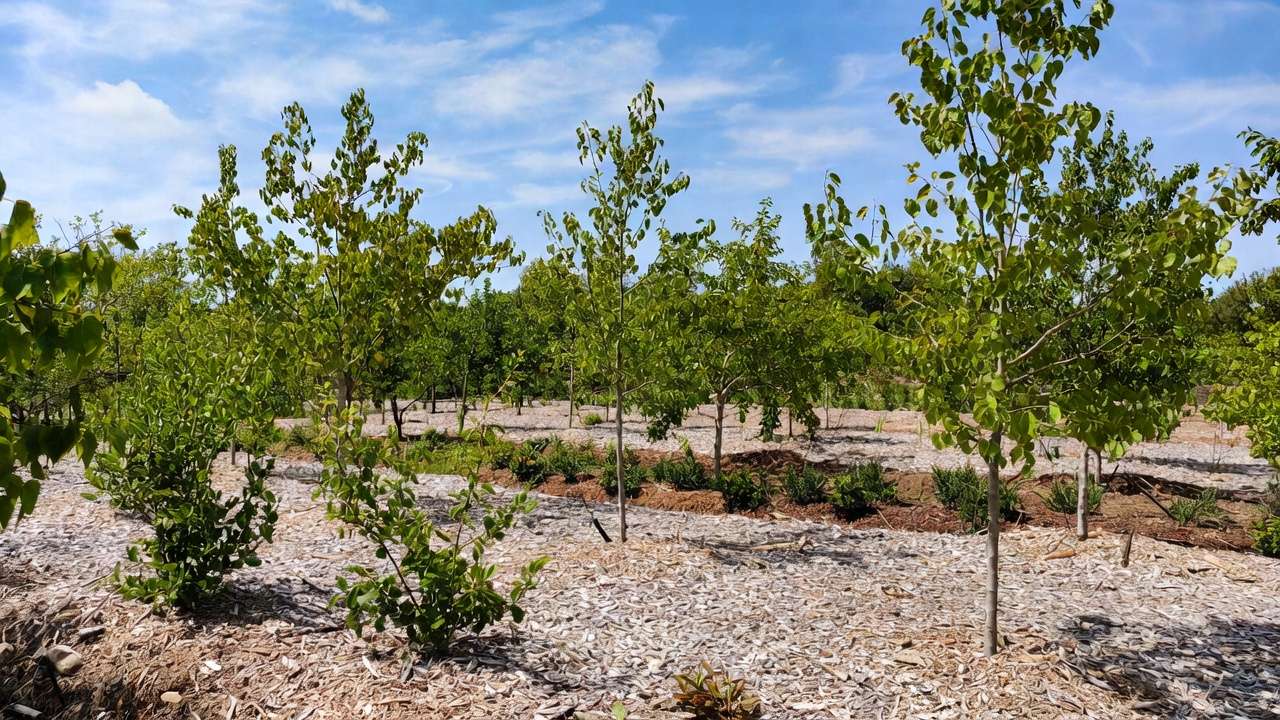
- 3–4 inches for trees/shrubs (extending to the drip line).
- 2–3 inches for vegetables, flowers, or beds. Thinner layers fail to block evaporation effectively; thicker risks matting, rot, or oxygen deprivation. On sandy soils (common in some regions), go thicker; on heavy clay, slightly less to avoid waterlogging.
Timing and Seasonal Application Strategies ☀️❄️
- Spring (after soil warms): Ideal for summer moisture savings.
- Fall: Adds winter protection and preps for next season. Reapply annually or as it thins—refresh in hot/dry periods. Apply after rain or watering for best results.
Layering Techniques for Enhanced Results
- Sheet mulching (lasagna style): Lay cardboard/newspaper base to smother weeds, then add compost and top with 3–4 inches organic mulch. Builds soil rapidly while maximizing retention—perfect for new beds. Benefits include superior moisture hold and no-dig convenience.
- Double-layering for stubborn weeds.
- Pair with drip irrigation: Mulch + targeted watering = synergy for up to 50%+ water savings.
Advanced Strategies for Specific Scenarios
- Vegetable gardens: Straw or compost for quick decomposition and nutrient boost.
- Ornamental beds/trees: Wood chips for longevity and root protection.
- Drought-prone spots: Prioritize coarse organics over plastic (debated, but organics often win for soil health).
- Integrate with no-dig gardening for ongoing moisture and fertility gains.
Step-by-Step Guide: How to Apply Mulch Like a Pro 🛠️
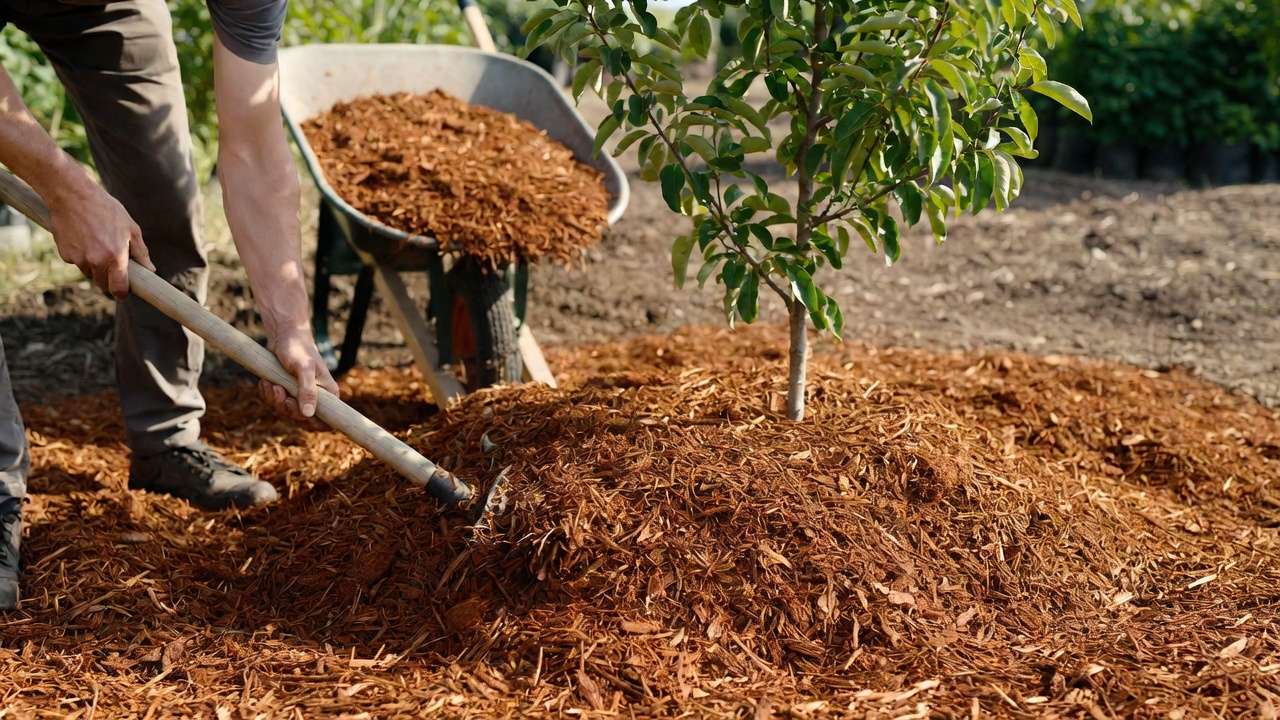
- Prepare the area — Remove weeds, loosen soil lightly, and water deeply first (moist soil absorbs better).
- Choose & source mulch — Opt for coarse organic; buy bulk for savings.
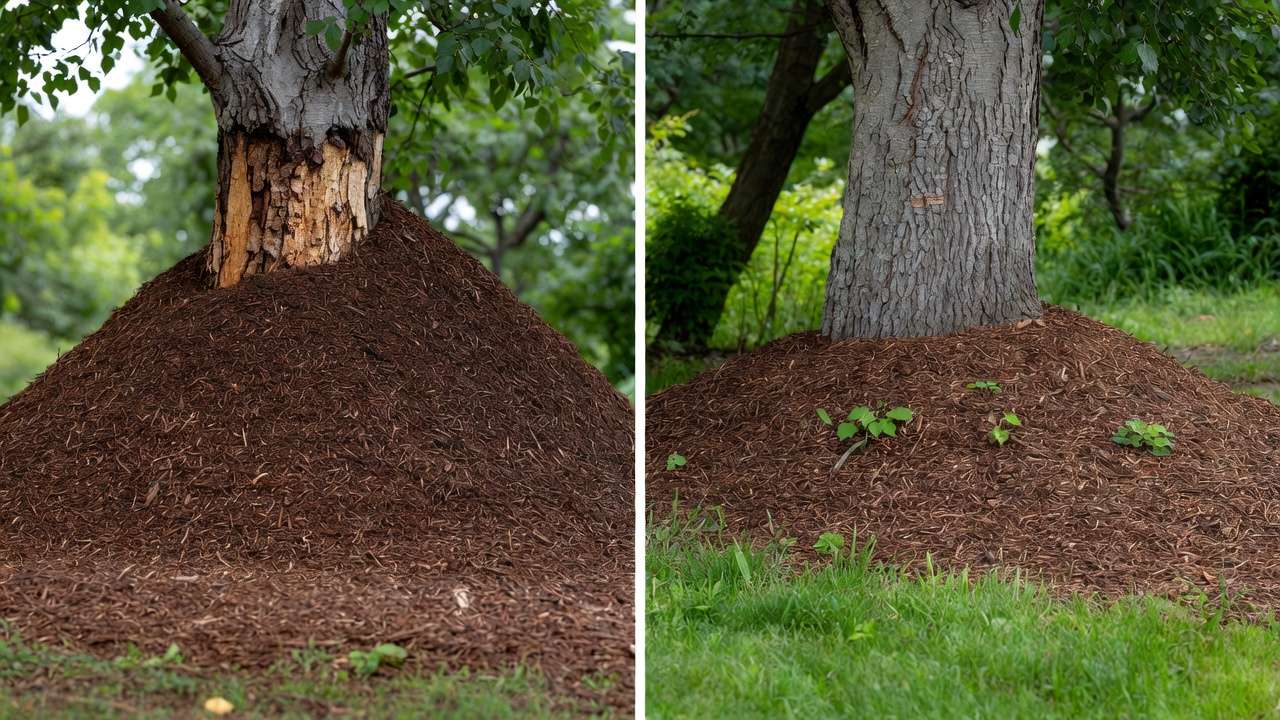
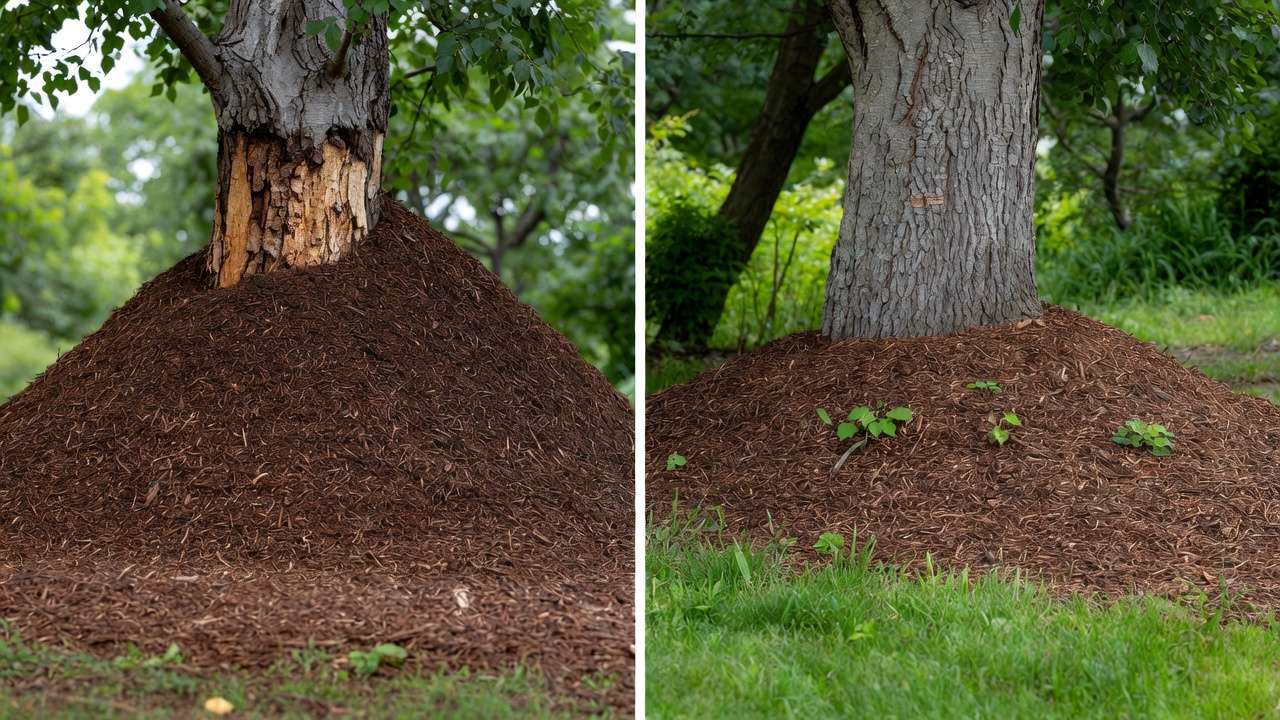
- Apply evenly — Spread in a ring or bed, 2–4 inches deep. Crucial: Keep mulch 2–6 inches away from trunks/stems to prevent rot—no “mulch volcanoes”! 🚫🌳
- Water after — Lightly soak to settle.
- Monitor & maintain — Check moisture with a finger test; replenish as needed.
Visual tip: Before/after photos show dramatic soil moisture differences!
Common Mulching Mistakes That Waste Water (And How to Avoid Them) ⚠️
Even experienced gardeners can fall into habits that reduce the effectiveness of mulching. Here are the most frequent mistakes I’ve observed in home gardens, community plots, and even professional landscapes — along with simple fixes.
Mistake #1: Creating “Mulch Volcanoes” Around Trees and Shrubs Piling mulch high against the trunk (looking like a volcano) is one of the most damaging errors. It traps moisture against the bark, leading to rot, fungal infections, insect entry, and girdling roots over time. Fix: Always maintain a 2–6 inch (5–15 cm) mulch-free zone around the base of trees, shrubs, and even perennials. The mulch should form a flat donut, not a mountain. 🌳🚫
Mistake #2: Applying Mulch on Dry or Crusted Soil If the soil is bone-dry and compacted when you mulch, water struggles to penetrate the surface. The mulch then locks in the existing dryness. Fix: Water the area deeply 1–2 days before mulching. This pre-moistening dramatically improves how well the mulch conserves subsequent water applications.
Mistake #3: Using Mulch That’s Too Fine or Using Fresh Grass Clippings in Thick Layers Very fine materials (fresh grass, sawdust) can form a crusty, water-repellent layer when they dry out — a phenomenon called hydrophobicity. Fix: Choose coarser textures (wood chips, coarse compost, straw). If using grass clippings, spread them thinly (1 inch max) and let them dry slightly before applying another layer.
Mistake #4: Applying Mulch Too Thin A thin ½–1 inch layer looks tidy but barely reduces evaporation. Studies show that moisture conservation increases significantly starting at about 2 inches and peaks around 3–4 inches. Fix: Commit to the recommended depth — even if it means buying more material initially.
Mistake #5: Never Replenishing the Mulch Mulch breaks down, gets blown away, or gets incorporated into the soil. After 6–12 months, many people end up with almost no coverage left. Fix: Inspect every spring and fall. Top up to maintain the target depth.
Quick Reference Checklist
- No mulch touching stems or trunks? ✅
- Soil pre-watered? ✅
- Coarse texture used? ✅
- 2–4 inch depth maintained? ✅
- Reapplied every 1–2 years? ✅
Avoiding these mistakes alone can double the water-saving impact of your mulching efforts.
Real-World Examples and Case Studies 🌍
Case Study 1: Urban Backyard in a Hot, Dry Summer A homeowner in a semi-arid climate applied 3 inches of hardwood chips around fruit trees and vegetable beds after sheet mulching with cardboard. Result: Watering frequency dropped from every 2 days to once every 7–10 days. Tomato plants showed no blossom-end rot (often caused by inconsistent moisture), and the water bill decreased by ~42% over three months compared to the previous year.
Case Study 2: Young Shade Tree Establishment A community tree-planting project mulched new saplings with 4 inches of arborist wood chips out to the drip line (but never touching the trunk). Result: Survival rate increased from ~65% to 94% during the first two dry seasons. Trees grew noticeably faster with deeper root systems.
Case Study 3: Vegetable Garden in a Humid but Hot Region In a region with hot, humid summers followed by occasional dry spells (similar to parts of Bangladesh), a gardener used rice straw mulch renewed every monsoon season. Result: Soil stayed evenly moist during dry periods, reduced fungal issues on lower leaves, and cut irrigation water use by approximately 55%.
These examples show that — when applied correctly — mulching delivers measurable, repeatable results across different climates and garden types.
Additional Benefits: Beyond Moisture Conservation ♻️
While moisture conservation is the primary goal, the ripple effects make mulching one of the highest-ROI practices in home horticulture:
- Weed suppression — Blocks light and reduces weed seed germination by 70–90% when applied at proper depth
- Soil temperature moderation — Roots stay 10–20°F (5–11°C) cooler in summer and protected from freezing in winter
- Soil structure & fertility — Organic mulches feed earthworms, mycorrhizal fungi, and beneficial microbes
- Erosion & runoff control — Prevents soil splash, compaction, and nutrient leaching during heavy rain
- Lower long-term maintenance — Fewer weeds to pull, less frequent watering, healthier plants = less disease and pest pressure
- Environmental bonus — Reduces municipal water demand, sequesters carbon in the soil, and often repurposes local “waste” materials (leaves, arborist chips, straw)
When you combine these benefits, mulching becomes one of the most powerful tools for creating a low-maintenance, climate-resilient garden.
FAQs: Mulching Strategies to Conserve Moisture ❓
How much water can mulching really save? Realistically 30–70% reduction in evaporation and irrigation needs, depending on mulch type, depth, climate, and soil. Most gardeners see 40–60% savings in the first season.
What’s the best mulch for fruit trees? Coarse wood chips or shredded bark (3–4 inches deep, kept away from the trunk). They provide excellent long-term moisture retention and gradual nutrient release.
Can mulch cause problems during rainy seasons? Yes — if applied too thickly on heavy clay soils or right against stems. Keep proper distance from trunks and avoid over-thick layers (>5 inches) in poorly drained areas.
Organic vs inorganic — which conserves more moisture? Coarse organic mulches (wood chips, straw) consistently outperform gravel and rock in most university and extension trials for moisture conservation in living plant beds.
How often should I reapply mulch? Most organic mulches need refreshing every 12–24 months. Check depth in spring and after major rain events. Wood chips often last longer than straw or grass clippings.
Is it okay to mulch over existing weeds? Only if you first smother them properly with sheet mulching (cardboard/newspaper + mulch). Otherwise, weeds will grow through thin layers.
Conclusion 🌳💚
Mulching is far more than a cosmetic garden practice — it’s one of the smartest, most cost-effective ways to conserve soil moisture, build healthier plants, and reduce your water bills at the same time.
When done correctly — with the right material, proper depth, correct placement, and regular maintenance — mulching creates a self-sustaining microclimate that helps your garden thrive even when rainfall is unreliable or temperatures soar.
Start small: pick one tree, one raised bed, or one border this weekend. Apply the techniques you’ve learned here, observe the difference in soil moisture and plant vigor over the next few weeks, and then expand.
Your plants will thank you. Your water meter will thank you. And your future self — watering less and enjoying a more resilient garden — will thank you most of all.
Here’s to building healthier, more water-wise gardens — one thoughtful layer at a time. 🌱✨











